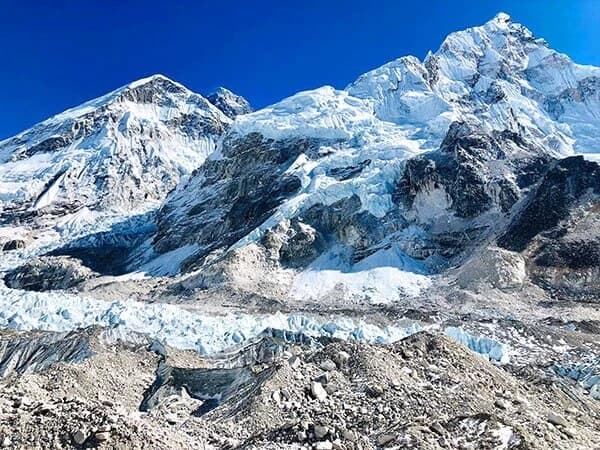
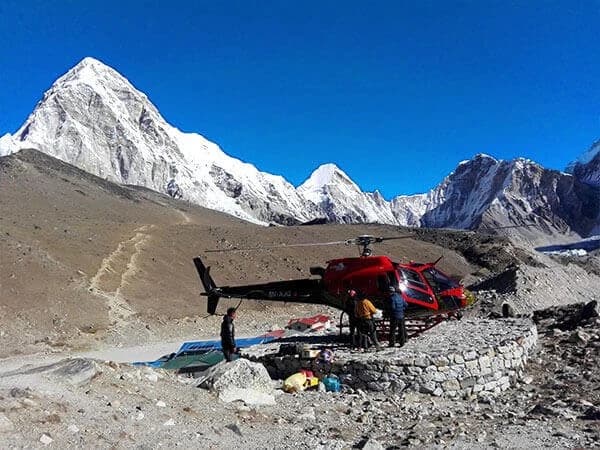
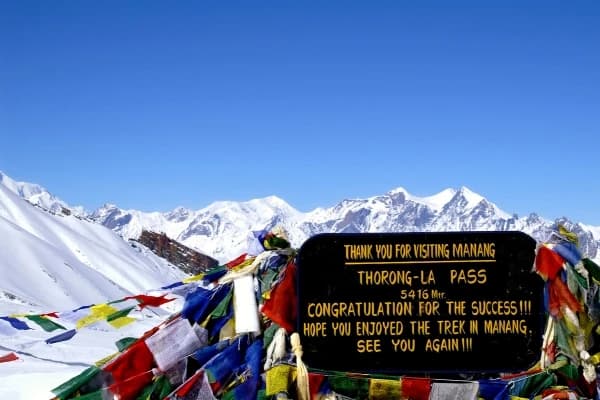
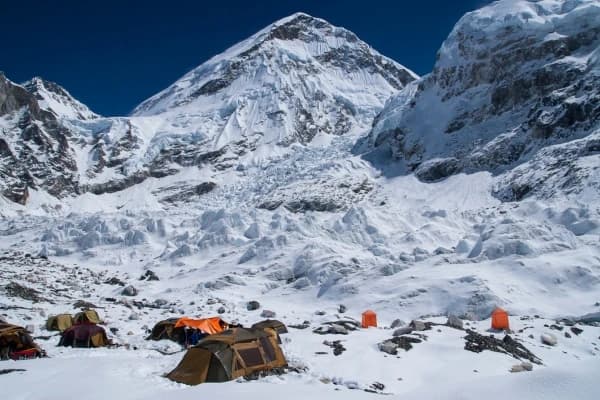
Picture yourself walking under crystal-clear skies along rugged trails adorned by vibrant rhododendron blooms and towering peaks. That is exactly how it feels to trek to Everest Base Camp in March and April.
Often characterized by the perfect blend of mild temperatures, crisp air, and clear skies, these months aren’t just ideal for the Everest experience—they’re actually spectacular! With the frigid winter losing its grip, the valley of Khumbu finally starts breathing a new life during this season.
This is perhaps one of the best times to enjoy the snow-covered giants at their best, basking in the sunlit mornings. The chilly evening weather of the Himalayas invites you to warm up in cozy teahouses and enjoy delicious hot meals.
Having said that, the spring season also brings its own set of challenges. Let’s take a deep dive into what it’s like to Everest Base Camp Trek in March and April—from trek highlights and challenges to planning the route and gear checklist.
Highlights of Everest Base Camp Trek in March and April
Fly to one of the world’s most extreme airports—Tenzing-Hillary Airport in Lukla.
Weather and Climate Conditions for Everest Base Camp Trek in March/April
After the harsh winter, March and April mark the arrival of the much-anticipated spring season in the Everest region.
While the temperature tends to rise in March, the early days of the month may still feel slightly cold in the higher altitudes. Below 4,000 meters, you can expect warm, pleasant weather with clear blue skies. Although the sky does not remain as crisp and clear in spring as in the winter, there is no compromise on mountain views, especially after mid-March.
The winter snow along the route begins to melt, thanks to the extended days and stronger sunlight. However, if you’re traveling in early March, you may still find thin snow sticking around in the upper reaches.
The average daytime temperature along the routes of Everest Base Camp Trek in March can range from 13°C to -1°C, while the nighttime temperature drops significantly from -3°C to -15°C.
April, however, brings much better weather for the Everest Base Camp Trek. Although the lower reaches may feel a bit warm, the temperature is fantastic in the upper parts of the trek. By this time of year, almost all winter snow has melted, bringing warmth and freshness to the air.
In April, the weather becomes more steady and predictable as the winter season completely loses its hold. The day often begins with bright, crystal-clear skies offering breathtaking mountain sceneries. However, afternoons usually welcome thick cloud covers that obstruct the views.
Precipitation in April is relatively low and erratic. Even when it occasionally rains or snows, it contains quickly, sometimes within a few minutes. The average daytime temperature on the Everest Base Camp Trek in April ranges from 17°C to 3°C, while the nighttime temperature drops around 5°C to -9°C.
Quick Look of Everest Base Camp Trek Weather in March and April
Month
Daytime Temperature
Nighttime Temperature
Snow & Trail Conditions
Sky & Visibility
Precipitation
Notes
March
13°C to -1°C
-3°C to -15°C
Winter snow begins to melt; thin snow may remain at higher altitudes
Mostly clear skies; mountain views excellent after mid-March
Low
Early March still cold at higher altitudes; lower regions pleasan
April
17°C to 3°C
5°C to -9°C
Most winter snow melted; trails warmer and fresher
Bright mornings, sometimes thick clouds in afternoon
Low and erratic
Weather steadier and more predictable; excellent for trekking and photography
Why Trek to Everest Base Camp in March and April?
Whilst the journey to Everest Base Camp in any season is an unforgettable experience, March and April add a unique charm to the adventure. Here are a few reasons why these months are considered a top choice for avid trekkers:
Stunning Mountain Sceneries
Unlike the monsoon, the weather in March and April remains dry and stable throughout the day. The skies are clear and cloudless in the mornings, making it one of the best times to enjoy the mountain scenery of the Everest region.
Although thick clouds tend to cover the skies in the afternoon, they do not continuously disrupt the scenery. With minimal chances of rain or snow, the soaring mountains and rugged landscapes adorn the trekking trails for almost the entire day during these months.
Blooming Rhododendrons Forests
By mid-March, the spring season swirls its way into the high Himalayas of Nepal. After shaking off residual winter snow, the trails of Everest Base Camp turn into a palette of reds, whites, purples, and pinks with blooming rhododendrons and other wildflowers.
The contrasting colors of the wildflowers dominating the foreground with the snow-capped peaks settling in the back is a rare sight. Moreover, the forested trails in the lower elevations are surrounded by lush vegetation, creating a refreshing atmosphere for trekking.
Great Weather and Temperatures
March and April offer favorable weather for trekking to Everest Base Camp. The temperature usually remains mild, stable, and dry during this season. Although the mornings and evenings are relatively chilly, the afternoons are sunny and warm, ideal for long-distance trekking.
Nighttime temperatures often drop below freezing during these months. However, the cozy rooms and warm meals of the teahouses provide a comfortable shelter to help you beat the cold.
Migratory Birds Sightings
During the spring, hundreds of species of birds migrate to the Everest region to breed. As the weather warms in the Himalayas, the trails are usually rich with the soothing calls and songs of these migratory birds.
Therefore, March and April are great months for birdwatchers to witness rare migratory bird sightings in the Everest region. Birds like the Himalayan Monal, Tibetan Snowcock, Blood Pheasant, Himalayan Griffon, Yellow-billed Choughs, golden eagle, and Bar-Headed Geese dominate the skies during these months.
Suggested Itinerary for Everest Base Camp in March and April
If you’re planning your Everest Base Camp trek in March or April, here’s a popular 14-day itinerary that balances trekking, acclimatization, and sightseeing. Spring is one of the best times for EBC, with clearer skies, blooming rhododendrons, and stunning mountain views.
Day 1: Arrival in Kathmandu Land in the city, settle into your hotel, and spend the evening grabbing any last-minute gear in Thamel.
Day 2: Flight to Lukla and trek to Phakding Take the famous mountain flight to Lukla. Once you land, it is an easy 3-hour walk to Phakding to start the journey.
Day 3–4: Climb to Namche and Acclimatization A steep 6-hour climb brings you to Namche Bazaar. You’ll spend the next day here resting and doing a short hike to the Everest View Hotel to help your body adjust.
Day 5: Trek to Tengboche A 5-hour hike takes you to Tengboche. The highlight here is the monastery and the incredible views of Ama Dablam.
Day 6–7: On to Dingboche and Acclimatization Head further up the valley to Dingboche (5 hours). You’ll take another rest day here, usually hiking up Nangkartshang Peak for better views and more thin-air practice.
Day 8: Trek to Lobuche The landscape gets rugged and rocky on this 5-hour trek. You’ll pass the climbers' memorials before reaching Lobuche at nearly 5,000 meters.
Day 9: Everest Base Camp and back to Gorak Shep The big day. You’ll hike to Gorak Shep, drop your bags, and push on to Base Camp itself before heading back to Gorak Shep for the night.
Day 10: Kala Patthar and down to Pheriche A pre-dawn hike to Kala Patthar for the ultimate Everest sunrise. Afterward, you’ll start the long descent down to Pheriche.
Day 11: Trek back to Namche Bazaar Retrace your steps through the valley. Descending into the thicker air of Namche feels amazing after the high-altitude push.
Day 12: The final leg to Lukla One last day on the trail. It’s a long walk back to Lukla, where you can finally celebrate with your team.
Day 13: Flight back to Kathmandu Catch an early flight out of the mountains and head back to the city for a hot shower and a real meal.
Day 14: International Departure Final breakfast and then off to the airport for your flight home.
Pro Tip: Spring weather is usually great, but flights to Lukla can be delayed. Adding an extra day or two as a buffer can save you a lot of stress.
How Much Does the EBC Trek Cost in March and April?
Planning your budget for Everest Base Camp doesn’t have to be a headache. Here is a quick look at what you will likely spend if you're heading out in March or April:
Expense
Estimated Cost (USD)
Full 14-day package (Guide, porter, stay, meals)
$1,300 – $1,800
Lukla round-trip flights
$180 – $250
Permits (National Park + local fees)
~$30 – $50
Guide & porter daily fees
$25 – $35
Tea house meals & bed (if booking solo)
$20 – $35 per day
Personal extras (Wi-Fi, showers, snacks)
$50 – $100
Quick Tips for Your Wallet:
Book early: March and April are busy, so locking in your spot early saves money and stress.
Get a guide/porter: It's safer and lets you actually look at the view instead of your feet.
Carry extra cash: You will want it for small things like a hot tea, local snacks, or a souvenir you find along the path.
How Crowded is the EBC Trail in March and April?
March and April are two of the most popular months for the EBC Trek. With the cold winter slowly slipping away, the first week of March signals the start of the trekking season in the Everest region. By this time, the trail remains relatively quiet, with only a few trekkers braving their way to the Everest Base Camp. However, traffic increases significantly from the second week onward.
April is the second busiest month after October, drawing approximately 16 percent of annual trekkers. Consequently, you’ll have to deal with crowded trails, lively dining halls, and fierce competition to take that perfect selfie at Kala Patthar.
If you’re trekking to Everest Base Camp in spring, we advise you to prepare for the hustle and embrace the company of fellow adventurers along the trail.
Alternative Trails Near Everest in March and April
If you want to look beyond the classic Everest Base Camp route, March and April are fantastic for exploring nearby trails. These months offer incredible views and high-altitude adventure on paths that aren't quite as crowded.
In March, all the flights to Lukla are operated directly from the domestic terminal of Tribhuvan International Airport (TIA) in Kathmandu. This is because the flow of tourists is relatively low throughout the country.
Weather disturbances, including occasional rain showers and snowfalls, are quite likely during March, so prepare for possible flight delays. However, the chances of flight cancellations are minimal, as the disruptions are usually short-lived. Adding a buffer day to your itinerary for worst-case scenarios is a good idea.
In April, all flights to Lukla are usually diverted to Manthali Airport in Ramechhap. This is because the influx of tourists in the country is significantly higher, causing air traffic congestion at Kathmandu Airport.
You’ll have to drive five hours from Kathmandu to Manthali Airport in Ramechhap to catch a flight to Lukla in April. The benefit, however, is that the chance of flight delays and cancellations is significantly less while flying from Ramechhap.
Plane landed at Lukla Airport—A Tiny Mountain Airstrip in Himalayas
Challenges of Trekking to Everest Base Camp in March & April
Despite the favorable weather and stunning scenery, the spring season also presents its own set of challenges. Here are a few challenges you should be prepared for:
Difficulty Level
Trekking to Everest Base Camp in March and April is generally seen as moderate to challenging. While spring gives you much better weather and clearer views than winter, you still have to deal with high altitudes and long days of hiking.
Because this is peak season, the trails can get crowded, and mountain weather is always a bit unpredictable. Being physically fit, preparing well, and taking your acclimatization seriously are the keys to making sure you actually enjoy the experience rather than just struggling through it.
Trail Congestion
Spring’s popularity as one of the peak trekking seasons means the trails to Everest Base Camp will be crowded with trekkers, especially from mid-March onwards. While the company of fellow trekkers can be uplifting at times, it usually adds more to the challenges.
Walking past several trekking groups, porters, and yak mules throughout the day can be tedious and exhausting. The narrow sections, particularly in the upper reaches of the trek, can become bottlenecks. Besides that, the dining areas can become highly congested, resulting in excessive noise, a reduced sense of solitude, and sharing tables.
Unstable Weather Conditions
While spring usually offers stable weather, higher altitudes can still experience unpredictable changes. In early March, for example, you may expect strong winds, snowfalls, and thunderstorms.
Moreover, the weather can significantly change between the day and night. While daytime temperatures are manageable, nights can drop below freezing, particularly in the upper reaches.
We highly recommend you pack weather-appropriate gear and do proper layering to stay warm and protected.
Increased UV Exposure
While clear skies are great for enjoying mountain views, they also bring high UV exposure at higher altitudes. Although the temperatures are still cool, and skin protection may not seem necessary, the opposite is true. Also, the skin is often more sensitive to UV radiation after limited sun exposure in winter.
Prolonged trekking under the sun without proper protection can increase the risk of sunburn during these months. Therefore, we recommend wearing a wide-brimmed hat, polarized sunglasses, and high-SPF sunscreen to stay protected.
Competition for Scenic Spots
Most scenic locations, such as Hillary Bridge, Namche Bazaar, Kala Patthar, and Everest Base Camp, can get overcrowded in March and April. You may have to wait in long queues or compete for the limited space to soak in the views and take pictures at these iconic spots.
This can take away the essence of the trek and cause frustration among the trekkers. Although this is a tough one to tackle, we advise you to start early to avoid peak crowds at these spots.
Logistical Delays
During the peak season, particularly in April, you might have to deal with several logistic delays while trekking to Everest Base Camp. The most obvious one is the Lukla flight. Excessive crowds, air traffic congestion, and inconsistent weather often delay flights to Lukla during spring. Therefore, you should add a buffer day to your itinerary and prepare for these circumstances.
Due to excessive crowds, you may also encounter long queues at permit checkpoints in Lukla and Monjo. These checkpoints progress slowly and usually take time to get things done. So, plan extra time for these delays to ensure you stay on schedule without rushing.
Increased Demand for Resources
The influx of trekkers to Everest Base Camp is significantly high during March and April. This can increase demand for accommodation, meals, charging facilities, hot showers, Wi-Fi, and heating facilities. In some places, this often results in service delays or higher rates.
We recommend booking your trek as early as possible through a reputable company to mitigate such scenarios. This gives the travel company enough time to book your flights and accommodations in advance and plan your itinerary so that you arrive at your destinations early and avoid delays.
Trekking to Everest Base Camp involves significant altitude gains, with the route ascending from 2,840 meters at Lukla to 5,545 meters at Kala Patthar. Although March and April present favorable weather conditions for the EBC Trek, altitude challenges remain a concern. The causes include rapid altitude gain, reduced oxygen levels, psychological demands, and accelerated dehydration.
The colder nights of spring can add more difficulties. With temperatures dropping below freezing at higher elevations, you’ll likely have frequent sleep disturbances and uneasiness at night. As a result, you may have fatigue and stress on the body and mind, eventually leading to altitude sickness.
Tips to Overcome Altitude Challenges
Ascent gradually to let your body acclimate to the increasing elevation naturally.
Have proper acclimatization days in Namche Bazaar and Dingboche.
Stay hydrated and avoid alcohol on the trek.
Take enough rest and eat nutritious food to stay energized.
Pack weather-appropriate gear and layer properly to stay protected from the harsh weather.
Carry altitude medications like acetazolamide (Diamox) for preventive use.
Training and Preparation for EBC Trek in March and April
Whilst it is not necessary to be an elite athlete or bodybuilder to trek to Everest Base Camp, decent physical fitness and prior trekking experience are recommended to make it comfortable and enjoyable.
By the standard route, Everest Base Camp is not a very technical or challenging trek. However, it involves steep rocky sections, rugged terrain, high valleys, and high altitudes. Therefore, you should be physically and mentally prepared to tackle these challenges.
Here are a few pre-trek training and preparation tips to improve your fitness level for this trek. We recommend beginning the training at least four to six weeks before the trek.
Go for weekly or bi-weekly conditioning hikes on the nearby trails in your hometown that replicate similar conditions to the Everest Base Camp Trek. Start slow with short-distance hikes and gradually increase the distance, duration, and intensity of the hikes.
Engage in 4 to 5 steady-state cardio sessions per week to build the stamina required to walk steep ascents and descents comfortably. Some effective cardio exercises include running, cycling, brisk walking, jogging, swimming, rowing, and rope jumping.
Build strength in your core and upper body to improve posture, stability, and balance. This will allow you to navigate rough, challenging terrains for an extended period without fatigue or aches.
Build your leg muscles to improve your agility, speed, and endurance as you walk through the uneven terrain of Everest Base Camp. Strong leg muscles also help support and balance your backpack’s weight.
Add a few dynamic stretches and yoga practices to your training regimen to enhance joint mobility and flexibility. Regular stretching also supplies oxygen-rich blood to your body, improves blood circulation, and aids muscle recovery.
Take at least one or two days off for rest and recovery. Adequate rest helps restore energy, prevent burnout, and boost your body’s overall performance.
Packing Essentials for EBC Trek in March and April
Packing the right gear is crucial to ensuring comfort, safety, and preparedness for the varying weather and challenging terrain of the Everest region. Here’s a comprehensive packing list for trekking to Everest Base Camp in March and April.
Clothing Essentials
Trekking Shirts: Combine 5 to 6 long-sleeve and short-sleeve shirts.
Trekking Pants: 2 to 3 quick-dry hiking pants and one thermal-lined pant.
Outer Layers: Heavy-duty waterproof/windproof jacket and trousers.
Base Layers: At least two pairs of merino wool base thermal sets.
Insulating Layers: One lightweight down jacket and a fleece jacket or pullover.
Underclothes: Carry 4 to 5 pairs of lightweight and breathable options.
Sleepwear: A set of thermal base layers and warm trousers.
Headwear and Gloves
A cap or wide-brim hat for sun protection.
Warm beanie or woolen hat.
Buff or neck gaiter.
Sunglasses with UV protection.
Headlamp (with spare batteries).
Liner gloves.
Outer insulated gloves.
Footwear
Trekking Boots: Sturdy, waterproof hiking boots with decent ankle support.
Camp Shoes: A pair of sandals or lightweight trainers for evenings.
Socks: 4 to 5 pairs of trekking socks and a few warm thermal socks.
Trekking Bags and Equipment
Trekking Bags: 80L duffle bag and 40L daypack.
Sleeping Gear: Four-season sleeping bag rated at -10°C with a sleeping bag line.
Trekking Poles: A pair of lightweight trekking poles (collapsible recommended).
Other Essentials
Reusable water bottle with straw filters.
Water purification tablets or drops.
Hydration salts or electrolyte powder.
High-energy snacks.
Sunscreen and lip balm with 50+ SPF.
Toothbrush and toothpaste.
Quick-dry towel and face wipes.
Hand sanitizer.
Soap and shampoo.
Toilet paper rolls.
Personal medications and a small first-aid kit.
Feminine hygiene products (if applicable)
Universal travel adapter.
Smartphone and charger.
Camera with spare batteries and memory cards (optional).
High-capacity power bank or solar charger (10,000mAh or higher).
Passport and permits.
Copies of passport-sized photos.
Cash for extra expenses (in small denominations).
Permits and Regulations
Regardless of the season, trekkers must obtain two permits for the EBC Trek.
Khumbu Pasang Lhamu Rural Municipality Permit
You can obtain this essential permit at the checkpoints in Lukla or Monjo. This permit costs Rs.2000 for all international trekkers, including SAARC nationals.
Sagarmatha National Park Permit
You can acquire this park entry permit from the park entrance gate in Monjo or the Nepal Tourism Board (NTB) office in Kathmandu. It costs Rs.1500 for SAARC nationals and Rs.3000 for other international travelers.
Accommodation and Meals
You can find a wide variety of accommodation options in the Everest Base Camp Trek. Compared to other treks in Nepal, the accommodation in the Everest region is better and more facilitated, especially in the lower sections.
Most teahouses have small rooms with twin or triple beds and shared bathroom facilities. They also usually have a large, well-decorated dining area, often packed with trekkers enjoying meals and relaxing by the heating stove. Almost all the teahouses in the Everest region offer hot showers and Wi-Fi services.
Even in peak trekking seasons like March and April, the teahouses rarely reach full capacity in stops like Lukla, Phakding, and Namche Bazaar. However, the teahouses in the upper parts of the trail can reach full capacity due to limited rooms. You may have to settle for shared accommodations or dining hall floors in such cases. Therefore, we recommend you book your accommodations in advance, especially if you plan to trek to Everest Base Camp in April.
The teahouses and restaurants in the Everest region offer diverse food options, from local delicacies to continental cuisines. Most menus include Dal Bhat, momo, chowmein, fried rice, noodle soup, spaghetti, pizza, sandwiches, and pancakes. The services are usually fast and reliable. However, due to the high flow of tourists in March and April, the teahouses may struggle to meet the food demand and cause delays in food preparation.
Cluster houses and teahouses in Namche Bazaar - "A Gateway to Mount Everest"
Safety and Travel Insurance
Trekking to Everest Base Camp in March and April brings a few safety concerns that require careful consideration. Although the weather is generally moderate and stable this season, unpredicted rain, snow, and strong winds can pose challenges, especially at higher elevations.
While the route of Everest Base Camp is safe and well-maintained, it can become congested, particularly after mid-March. Overcrowding on narrow sections with the endless flow of trekking groups, yak caravans, and porters can increase the risk of accidents. If you see yaks and porters approaching from the other end, navigate them cautiously and avoid collisions.
Moreover, maintaining hydration and hygiene can be challenging at the upper sections of the trek. Although the teahouses provide boiled water for drinking, we recommend carrying a water bottle and purification tablets for extra safety. Likewise, the hygiene facilities in these regions are relatively basic. So, use hand sanitizers and wet tissues to maintain good hygiene and avoid illness.
Considering the safety concerns, travel insurance is a must-have for the Everest Base Camp Trek in March and April. We highly recommend buying a policy that covers high-altitude trekking, emergency evacuation, medical expenses, and trip cancellation.
Tips for a Successful Trek to Everest Base Camp in March and April 2025/2026
Take time to let your body naturally acclimate to the increasing elevation and decreasing oxygen level. Stick to the standard itinerary that includes at least two acclimatization days throughout the trek.
Train and prepare for the trek adequately. Indulge in cardio exercises, strengthen your body, and build endurance to withstand the challenging conditions you’ll likely endure on the trek.
Drink plenty of fluids and eat nutritious meals to stay energized. Stick to the vegetarian meal option throughout the trek to maintain a healthy gut and improve digestion.
Pack the essentials for varying weather conditions and invest in decent-quality gear for extra comfort and safety.
Carry a reusable water bottle with a straw filtration system to filter the tap/boiled water. You should also use water purification tablets or drops to treat the water before drinking.
Book your accommodations, flights, and permits months before the trek to avoid hassles, especially in the peak trekking seasons.
Start your trek early each day to avoid peak crowds and afternoon winds.
Always lean towards the mountainside and yield to yaks and porters approaching from the other side on narrow trails.
Prepare yourself mentally for the mountain lifestyle and embrace living with the basic amenities of the Himalayas for a couple of weeks.
Final Thoughts
Trekking to Everest Base Camp in March and April is a truly magical experience. The trails come alive with blooming rhododendrons, and the mornings usually bring the kind of crystal-clear skies that make the snow-capped peaks feel close enough to touch. It’s a favorite time for a reason: you get that perfect mix of manageable temperatures, crisp air, and some of the best scenery on the planet.
Of course, a journey like this has its hurdles. You’ll likely deal with crowds, the occasional flight delay, freezing nights, and the physical toll of the altitude. But honestly? Those challenges are exactly what make reaching the base of the world’s highest mountain so rewarding.
If you come prepared, with the right gear, a bit of training, and a solid plan, March and April will give you an Everest experience you’ll never forget. So pack your boots, lean into the adventure, and get ready for a trip where every single turn in the trail offers a view that will leave you speechless.
Ready to Trek to Everest? Let’s Make It Happen
Thinking about standing at the base of the world’s tallest peak this spring? It’s a huge goal, and Nepal Gateway Trekking is here to make sure you actually get to enjoy the journey without stressing over the logistics. We handle the "boring" stuff so you can just focus on the views and the challenge.
Why jump on a trek with us?
Guides who actually know the trails: You’ll be walking with licensed locals who don’t just know the way—they know the Sherpa culture and the best hidden tea spots along the route.
We do the heavy lifting (planning-wise): From booking those tricky Lukla flights to sorting out permits and finding the best teahouses, we’ve got it all covered.
Your safety isn't a guess: We take acclimatization seriously. You’ll get expert advice on gear and full medical support throughout the trek.
It’s your trip, not a template: Want to hit the Gokyo Lakes or tackle the Three Passes instead? We can easily tweak the itinerary to fit exactly what you’re looking for.
Trek with a conscience: We’re big on responsible travel. By booking with us, you’re supporting a team that cares about local sustainability and the mountain environment.
Let’s get your spring trek started! Got questions? Send us an inquiry or give us a shout at +977 98510 55520. We’d love to help you plan your Everest adventure.
Frequently Asked Questions (FAQs) – Everest Base Camp Trek in March & April
Is March actually a good time to visit?
Yes, March is basically the "Goldilocks" window. It’s warmer than the deep freeze of January but much quieter than the peak rush in April. You’ll see the rhododendrons starting to bloom in the lower forests, and while the nights are still biting, the daytime sun makes for perfect trekking weather.
Should I expect crowds in April?
April is one of the most popular months for a reason—the weather is incredibly stable and the views are crystal clear. The trade-off is that the trails and teahouses get busy. If you’re heading out in April, definitely book your flights and guides early to avoid missing out.
How cold does Everest really get?
It varies. During the day, you might see 13°C to 17°C, which feels quite warm when you’re moving. But once the sun drops, so does the temperature. Expect it to hit -15°C in March and around -10°C in April at the higher stops like Gorak Shep. A high-quality sleeping bag is non-negotiable.
What is the toughest part of the EBC trek?
Most people find Day 9—the push from Lobuche to Gorak Shep and then on to Base Camp—to be the hardest. You’re hiking at over 5,000 meters where oxygen is scarce, and the terrain is rocky and uneven. It’s a long, exhausting day, which is why those rest days in Namche are so important.
What are the main risks to watch out for during the trek?
Altitude sickness is the big one. Even if you’re fit, the thin air doesn't care. Other risks include "traffic jams" on narrow trails with yaks, and flight delays in and out of Lukla if the clouds roll in. Having a buffer day at the end of your trip is always a smart move.
Any tips for avoiding the crowds?
If you want the Everest views without the 200 other people on the trail, look into the Gokyo Lakes Trek or the Three Passes Trek. They are much quieter in March and offer views that some trekkers actually think are better than the standard Base Camp route.
Is "Camp 4" part of the trek?
No, and that’s a good thing! Camp 4 is at 8,000 meters, right in the "Death Zone" where the human body can’t survive for long. As a trekker, your journey ends at Base Camp (5,364m). Only climbers with specialized gear and oxygen go up to Camp 4.
When is the coldest time at EBC?
January and February are the coldest, with heavy snow and temperatures that rarely get above freezing. By the time March and April roll around, you’re in the much milder spring season.
I am Ram Adhikari, a passionate traveler and trekking enthusiast and a co-founder of Nepal Gateway Trekking.
I was born in the Ganesh Himal region, northeast of Kathmandu Valley. With my passion to travel around Nepal, I joined the trekking field in 2000 as a porter. I have been to most parts of the country as a guide, leading international groups to Everest, Annapurna, Langtang, Mustang, and other major regions of Nepal.
With more than 2 decades of experience in the trekking industry, I’ve been sharing my love for the Himalayas with adventurers from around the world, guiding them through Nepal’s most iconic and hidden trails. Through the blog, I aim to inspire fellow travelers, provide expert tips, and showcase the raw beauty and cultural richness of Nepal. Whether you’re dreaming of Everest Base Camp or exploring off-the-beaten paths like the Manaslu Circuit, I’m here to help you discover the magic of trekking in Nepal—one step at a time.