Gokyo EBC Trek
Trekking to EBC Gokyo
Gokyo EBC Trek Nepal

Gokyo Lake With Everest Base Camp Trek

310 reviews in TripAvisor

Are you looking for an unforgettable journey to Everest Base Camp with pristine Gokyo Lakes? The Gokyo Lake with Everest Base Camp Trek is the best Everest trekking trail, offering incredible mountain views.

Trip at a Glance
Duration17 Days
Trip GradeVery Strenuous
?
DestinationNepal
Maximum Altitude5,545 m
AccommodationHotel/Tea House
Starts/EndsKathmandu
ActivitiesTrekking
Best TimeMarch to May & September to November

Gokyo Lake with Everest Base Camp is often regarded as the most iconic extension of the standard Everest Base Camp Trek. This clockwise extension combines the secluded wonders of the Gokyo Valley with the traditional route to the base camp.

It delivers everything that you’d expect from a high-altitude adventure: the world’s highest mountains, remote wilderness, Sherpa heritage, pristine lakes, glacial moraines, and breathless mountain passes.

The 17-day itinerary takes you to some of the most celebrated landmarks across the Everest region. The journey begins with an electrifying flight to Tenzing-Hillary Airport in Lukla. Trudging through the traditional Sherpa villages, you’ll explore the pristine lakes of Gokyo and visit the world-famous Everest Base Camp. 

Besides that, Gokyo Lake with Everest Base Camp takes you to the summit of two legendary viewpoints of the Everest region, Gokyo Ri and Kala Patthar. The summit rewards you with a 360-degree panorama of some of the world’s highest peaks, including Mt. Everest, Lhotse, Makalu, and Cho Oyu. One of the major highlights of this grueling adventure is crossing the formidable Cho La Pass at 5,420 meters.

The Everest region is home to the indigenous Sherpa tribe, with a rich heritage, culture, and lifestyle shaped by the high Himalayas. Along the route, you’ll explore a few iconic Sherpa settlements, including Lukla, Namche Bazaar, Gokyo Valley, and Pheriche.

The Sherpa villages are often adorned with colorful prayer flags, stone-built houses, ancient monasteries, mani walls, and stone gates. You’ll also visit the ancient Buddhist monasteries of Khumjung, Tengboche, and Pangboche for deep cultural and spiritual immersion.

As Nepal’s first natural World Heritage Site, Sagarmatha National Park shelters a variety of wildlife. It hosts over 200 bird species, including Himalayan monals, bearded vultures, snowcocks, and alpine choughs. Likewise, it hosts some of the world’s most elusive creatures, such as the snow leopard, musk deer, Himalayan tahr, and Himalayan serow.

The Everest region remains a popular trekking destination, welcoming thousands of avid trekkers each year. Although widely commercial, this strenuous trek is best suited for seasoned trekkers willing to brave steep mountain terrain, extreme altitudes, and adverse weather. 

Important Note: During the peak season, flights will be operated from Manthali Airport, Ramechhap, to Lukla. In the spring, from mid-March to mid-May, and in the fall, from late September to mid-November, all flights take off and land at Manthali Airport.

The Manthali airport in Ramechhap is 142 km from Kathmandu, a 4-5-hour drive. To catch a flight to Lukla from Ramechhap, you must depart from Kathmandu between 1 a.m. and 2 a.m.

We highly recommend that you allow at least one extra day for jet lag, especially given the early morning drive to Manthali Airport, which benefits from adequate rest and sleep beforehand.

The Major Highlights of Gokyo Lake with EBC Trek

  • Take exhilarating flights in and out of the world-famous Tenzing-Hillary Airport in Lukla.
  • Cross the formidable Cho La Pass, one of Nepal’s highest mountain passes, at 5,420 meters.
  • Stand at the foothills of the mighty Everest and savor the majestic view of Khumbu Glacier and Khumbu Icefall.
  • Explore the three pristine lakes of Gokyo—Longpanga Tsho, Taujung Tsho, and Dudh Pokhari—and spend a night at the iconic Gokyo Valley.
  • Scale two of the finest viewpoints in the Everest region—Gokyo Ri and Kala Patthar—and enjoy the dramatic vistas of the world’s highest peaks, including Mt. Everest, Lhotse, Makalu, Ama Dablam, and Cho Oyu.
  • Walk across the Himalayas’ largest glacier, Ngozumpa Glacier.
  • Explore the bustling Sherpa capital of the Khumbu region, Namche Bazaar.
  • Visit the ancient Buddhist monasteries of Khumjung, Tengboche, and Pangboche.

Gokyo Lake with Everest Base Camp Route

The adventure of Gokyo Lake with Everest Base Camp Trek begins with a thrilling 30-minute flight to Tenzing-Hillary Airport in Lukla. Upon landing, you’ll set off on foot along the banks of Dudh Koshi River, passing through lush forests and suspension bridges towards the small settlement of Phakding.

From Phakding, the route passes through the settlement of Monjo and Jorsalle to enter the Sagarmatha National Park. From here, the trail climbs steeply towards the Sherpa Capital of Khumbu, Namche Bazaar. Here, you’ll have the first acclimatization day of Gokyo Lake with Everest Base Camp Trek. For the acclimatization hike, you’ll visit the Hotel Everest View and explore the Khumjung Valley.

After the acclimatization day at Namche, you’ll diverge from the main Everest Base Camp route and walk past several remote settlements, including Dole and Machhermo. Beyond Machhermo, the trail leaves the lush forest behind and opens into alpine meadows and barren landscapes. You’ll walk along the shores of three Gokyo Lakes—Longpanga Tsho, Taujung Tsho, and Dudh Pokhari—before arriving at the Gokyo Valley.

You’ll spend another acclimatization day at Gokyo Valley. On this day, you’ll hike to the summit of Gokyo Ri at 5,357 meters. The top rewards you with a breathtaking 360-degree panorama of the world’s highest mountains, Gokyo Lakes, and Ngozumpa Glacier.

After the acclimatization day, you’ll cross the icy rocks and crevasses of Ngozumpa Glacier and head towards Dragnag.  This barren settlement marks the final camp before crossing the formidable Cho La Pass.

You’ll begin the climb across Cho La early the next morning. At 5,420 meters, the top of Cho La Pass offers dramatic vistas of Himalayan giants, including Mt. Everest, Ama Dablam, Cholatse, Makalu, Cho Oyu, and Nuptse. Descending from the pass, the route navigates through the massive Cho La Glacier towards Dzongla.

As you head out of Dzongla, the trail rejoins the main Everest Base Camp route at Lobuche. From here, you’ll continue the trek to the iconic Everest Base Camp via Gorak Shep. You’ll stand at the foothills of the world’s highest mountain, relishing the close-up views of the Khumbu Icefall, Khumbu Glacier, and the Himalayan giants.

The next morning, you’ll hike to the summit of Kala Patthar to enjoy the glorious mountain panorama. At 5,545 meters, Kala Patthar marks the highest elevation point in Gokyo Lake with Everest Base Camp Trek.

After that, you’ll head back to Namche Bazaar via Pheriche. From Namche, you’ll retrace your steps back to Lukla and catch a flight to Kathmandu to conclude your trek.

Why Gokyo Lake with Everest Base Camp Trek with Nepal Gateway Trekking?

  • Nepal Gateway Trekking holds a strong stature as one of Nepal’s leading trekking companies. We have been operating high-altitude treks and expeditions in the Everest region for over a decade. Over the years, we have refined the itinerary of Gokyo Lake with Everest Base Camp Trek, drawing on a thorough understanding of altitude, terrain, and local culture to ensure authentic trekking experiences.
  • From your arrival at Kathmandu Airport to your final departure, our team of experts will handle all trek logistics, including accommodations, meals, domestic flights, and permits, to ensure a hassle-free experience.
  • Our company follows stringent safety protocols, including WFR-certified guides, advanced medical kits, daily health monitoring, and emergency support. Moreover, our in-house team in Kathmandu monitors weather patterns in the mountains regularly to handle emergency logistics if necessary. 
  • We make early hotel reservations to avoid last-minute hassle and secure the best rooms, even during peak seasons. Our package includes 3-star accommodation in Kathmandu and local teahouses on the trek.
  • We provide one crew member for every three trekkers to maintain an appropriate staff-to-trekker ratio and ensure personalized support.
  • Our team at Nepal Gateway Trekking is dedicated to reducing the carbon footprint on the fragile mountain environment. Therefore, all our on-field staff are trained to follow sustainable practices and minimize plastic use throughout the trek.
  • We provide each client with an exclusive duffel bag and a high-quality T-shirt. 

Itinerary

This is our standard and recommended Gokyo Lake with Everest Base Camp Trek itinerary.

Trip PlanExpand all

Your adventure holiday begins with a touchdown at Tribhuvan International Airport, Kathmandu. After clearing customs, our representative will greet you and transfer you to your 3-star hotel.

After checking in, take time to recover from jet lag, freshen up with a hot shower, and enjoy some local delicacies. If your Kathmandu arrival is scheduled early, you may have some time to stroll around the hotel and acclimate to the bustling streets of Kathmandu. You can take a short walk from Thamel to Kathmandu Durbar Square and explore the city’s historical complexes, ancient temples, and colorful markets.

In the evening, your lead guide will meet you at the hotel for a short pre-trek briefing and team introduction. During the briefing, your guide will provide information on trek difficulty, teahouses, trail conditions, and safety protocols. He’ll conclude the day by distributing complimentary duffel bags and company T-shirts to each team member.

Pro Tip: Please prepare and pack your trekking bags before bedtime. You’ll be checking out early the following day to catch a flight to Lukla.

Accommodation: Hotel

Begin the day with an early morning flight from Kathmandu to Lukla. The 30-minute flight to the world-famous Tenzing-Hillary Airport gives you the first aerial glimpse of the snow-clad mountains. 

Upon landing, you can gear up for the walk, while your trekking crew will organize your luggage. The trek begins with a gentle descent through pine forests towards the bank of the Dudh Koshi River. The trail passes through a few Sherpa villages before reaching the iconic mani stone at Thado Koshi Khola. From here, you’ll gently follow the forested trail along the Dudh Koshi River until you reach Phakding.

The first day of the trek is deliberately designed to be short and gradual, allowing your body to adapt to the terrain and altitude. 

Important Note: During the peak season, flights will be operated from Manthali Airport, Ramechhap, to Lukla. In the spring, from mid-March to mid-May and late September to November in the autumn season, all flights take off and land at Manthali Airport.

The Manthali airport, Ramechhap, is 142 km from Kathmandu, a 4-5 hour drive. To catch a flight to Lukla from Ramechhap, you must depart around 1 a.m. to 2 a.m. from Kathmandu. 

Meals: Breakfast, lunch and dinnerAccommodation: Teahouse

The day begins with your first mountain breakfast at the teahouse. You’ll head out of Phakding with a gradual walk through a pine forest. As you approach the village of Monjo, you’ll get a distant glimpse of Mt. Thamserku.

From here, the trail descends towards the entrance gate of Sagarmatha National Park at Jorsalle. After securing the permit, you’ll walk past a cluster of large mani walls and continue towards the high suspension bridges. You’ll cross the iconic Hillary Bridge before a strenuous climb to Namche Bazaar. About halfway up, you’ll get your first glimpse of Mt. Everest from this steep hill.

Namche Bazaar sits like an amphitheater against the mountainside, clustered with teahouses, gear shops, bakeries, restaurants, and trekkers from around the world. In the evening, stroll through the lively streets of Namche and enjoy a freshly brewed coffee.

Meals: Breakfast, lunch and dinnerAccommodation: Teahouse

A well-deserved acclimatization day in Namche Bazaar. On this day, you’ll follow the “climb high, sleep low” principle to let your body acclimatize to the high altitude. After breakfast, you’ll take a scenic three-hour hike to the Hotel Everest View (3,880 meters). The sundeck area of this luxurious property offers panoramic views of Mt. Everest, Lhotse, Ama Dablam, and Thamserku.

If you’ve got some energy left, you can continue the acclimatization hike to Khumjung. The green valley of Khumjung is home to one of Khumbu’s oldest Buddhist monasteries that houses the iconic “Yeti Scalp.” You can also visit the famous Sir Edmond Hillary School, established by Sir Ed himself in 1961.

On your way back to Namche, you can visit the Sherpa Culture Museum to explore its extensive collection of cultural artifacts and ancient photographs of the Sherpa people. In the evening, return to the teahouse and settle in by the fireplace to recover from the hike.

Meals: Breakfast, lunch and dinnerAccommodation: Teahouse

You’ll head out of Namche Bazaar with a steep climb towards the northern ridge of the town. Upon reaching the top, you’ll be rewarded with a distant view of Ama Dablam, Mt. Everest, Lhotse, and Nuptse. You’ll follow the main Everest Base Camp route until Kyangjuma.

From here, the route diverges northwest and climbs a steep, dusty trail towards Mong La. You’ll walk past the small settlement of Phortse Tenga, then climb steadily to a cluster of teahouses in Dole. After spending a couple of nights in the bustling town of Namche, Dole feels much quieter and isolated.

Meals: Breakfast, lunch and dinnerAccommodation: Teahouse

The day begins with a gradual ascent out of Dole. You’ll soon leave the lush forest behind and head into the alpine meadows with scrub juniper. On a clear day, the trail rewards you with the views of Machhermo Peak and Cholatse.

You’ll pass through the alpine pastures of Lapharma Kharka and Luza Kharka before reaching the valley of Machhermo. You’ll be settled into your teahouse by lunchtime. This day is deliberately kept short to support gradual acclimatization. It is advisable to spend the rest of the afternoon by the fireplace, relaxing and recovering.

Meals: Breakfast, lunch and dinnerAccommodation: Teahouse

After breakfast, you’ll begin a gradual climb from Machhermo towards Pangka. Although strenuous, the ridge offers stunning views of Kangtega and Cho Oyu in the backdrop. From here, the trail descends towards a small river flowing from the west end of Ngozumpa Glacier.

As you continue the walk on a steep, rugged slope beside the glacial moraine, you’ll arrive at the first (Longpanga Tsho) and second (Taujung Tsho) lakes of Gokyo. The third lake (Dudh Pokhari), located a few minutes north, is much larger than the previous two. 

The final approach to Gokyo Valley follows the narrow trail alongside the pristine third lake. The small teahouse settlement of Gokyo Valley sits between Gokyo Lake and the Ngozumpa Glacier. Spend the evening by the lakeshore, admiring its iridescent turquoise waters.

Meals: Breakfast, lunch and dinnerAccommodation: Teahouse

You’ll set out on the trail before first light with stars still blanketing the pre-dawn sky. At 5,357 meters, Gokyo Ri is often considered the best viewpoint in the Everest region (many seasoned trekkers argue it’s even better than Kala Patthar).

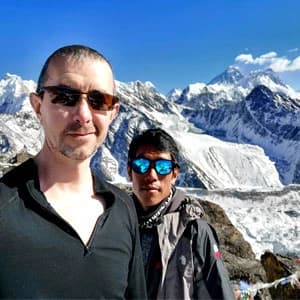
The two-hour hike is steep and relentless, zig-zagging through a switchback trail northwest of the valley. We recommend you keep your headlight and trekking poles handy for this hike. Upon reaching the summit, you’ll be rewarded with a picture-postcard view of Mt. Everest, Lhotse, Makalu, and Cho Oyu. You can also see the turquoise chain of all three Gokyo Lakes and the massive spread of Ngozumpa Glacier right below.  

You can enjoy your packed breakfast at the summit of Gokyo Ri, relishing the 360-degree vista of mountains, lakes, and glaciers. After an hour or so at the top, you’ll retrace the route back to Gokyo Valley.

If you have some more energy to spare, you can hike to the fourth (Thonak Tsho) and fifth (Ngozumpa Tsho) lakes of Gokyo. If not, you can simply rest and recover at the teahouse.

Meals: Breakfast, lunch and dinnerAccommodation: Teahouse

The walk from Gokyo Valley to Dragnag is short and comfortable. You’ll begin the day with a gradual walk to the second lake of Gokyo (Taujung Tsho). Here, the trail climbs and crosses a small ridge alongside the glacial moraine.

Hereon, the trail passes through dirt, debris, icy rocks, and crevasses of the Ngozumpa Glacier. Although the trail is relatively flat, crossing some boulder fields and glacier ice can be technically challenging. 

Also, the route across the glacier changes every season. Therefore, crossing this section can take anywhere from an hour to 90 minutes. Once you climb up the moraine wall on the western end of the glacier, you’ll reach the barren settlement of Dragnag.

With only a handful of teahouses, Dragnag serves as the staging camp for Cho La Pass. Once you check into your teahouse, make sure to take enough time to rest, recover, and mentally prepare for tomorrow’s push to Cho La Pass.

Meals: Breakfast, lunch and dinnerAccommodation: Teahouse

This is perhaps the most challenging day on Gokyo Lake with Everest Base Camp Trek. Today, you’ll wake up around 3 in the morning and head out of Dragnag to cross the formidable Cho La Pass. We recommend keeping your headlamp and trekking poles ready for the ascent.

The day begins with a gradual uphill out of Dragnag. The trail passes through a series of rocky switchbacks and ravines towards Cho La Phedi. From here, the trail climbs steeply over a massive boulder wall with loose rock and scree. Upon reaching the top of this rocky ridge, the summit of Cho La Pass unfolds in the distance. You’ll continue the climb through boulders and scree pathways until you reach the summit of Cho La Pass at 5,420 meters.

Marked by colorful prayer flags and stone cairns, the summit offers a dramatic panorama of Himalayan giants, including Ama Dablam, Cholatse, Nuptse, Cho Oyu, Makalu, and Mt. Everest. From the top, the trail immediately descends towards the Cho La Glacier. Here, you’ll be walking across a massive sheet of ice and snow. Although the glacier section is relatively flat, it can often be slippery. So, we recommend using crampons or microspikes to cross this section.

Upon crossing the glacier section, you’ll continue the steep descent through rocky terrain. The final section of the day is relatively gradual along a high-altitude meadow towards the small settlement of Dzongla.

Meals: Breakfast, lunch and dinnerAccommodation: Teahouse

Following yesterday’s long, strenuous trek, the 4-hour walk from Dzongla to Lobuche feels almost leisurely. The day begins with a gradual downhill through the moraine alongside Cho La Lake. In the distance, you can see the majestic Ama Dablam soaring to the sky, while the village of Pheriche spreads down the valley.

Instead of heading towards Pheriche, the trail turns left across the moraine to rejoin the classic Everest Base Camp route you left behind at Namche Bazaar. From here, you’ll continue on a gradual path until you arrive at the small teahouse settlement of Lobuche. 

If you still have energy in your legs, you can take a short acclimatization hike to a nearby ridge to enjoy breathtaking views of Khumbu Glacier, Nuptse Wall, Pumori, and Lobuche Peak. Upon returning to the teahouse, spend the rest of the evening by the fireplace and relax your muscles before a long day tomorrow.

Meals: Breakfast, lunch and dinnerAccommodation: Teahouse

After breakfast, you’ll head out of Lobuche on a rocky, barren path across the terminal moraine of the Khumbu Glacier. Although strenuous, this trail rewards you with a close-up view of Nuptse, Pumori, and other surrounding mountains. After a few hours of steep climb, you’ll cross the treacherous Changri Nup and Changri Shar Glacier to arrive at Gorak Shep.

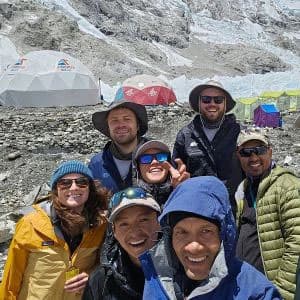
Upon arrival, you’ll drop your backpack in your room and continue to the Everest Base Camp. The trail from Gorak Shep to Everest Base Camp passes through rocky dunes, small streams, and glacial moraines. After two hours of a grueling hike, you’ll arrive at the foothills of the world’s highest mountain, located at 5,364 meters.

The base camp offers a marvelous sight of the iconic Khumbu Icefall, Khumbu Glacier, Nuptse, Pumori, and a little bit of Everest. During the climbing season, you can see colorful expedition tents clustered in the gray boulder field nearby. After spending some time at the base camp, you’ll retrace the route back to the barren lands of Gorak Shep to settle in for the night.

Meals: Breakfast, lunch and dinnerAccommodation: Teahouse

Today, you’ll prepare for a pre-dawn departure to scale the summit of Kala Patthar at 5,545 meters. The two-hour climb is relatively steeper and more challenging than Gokyo Ri. We recommend keeping your headtorch and trekking poles handy for the ascent.

At 5,545 meters, Kala Patthar marks the highest elevation point of the trek. The summit offers a dramatic 360-degree panorama of Mt. Everest, Lhotse, Ama Dablam, Nuptse, Thamserku, and Pumori. Breathe in the cold mountain air, take pictures, and enjoy one of the best sunrises of your lifetime from the top. You’ve earned this!

After spending some time at Kala Patthar, you’ll descend back to Gorak Shep. You’ll have a warm, hearty breakfast at the teahouse and continue your journey towards Pheriche. The trail drops steeply through rocky moraine towards Lobuche, then gently continues to Pheriche.

Meals: Breakfast, lunch and dinnerAccommodation: Teahouse

After breakfast, you’ll depart from Pheriche on a gentle path heading down to the Tsola River. Upon crossing the river, the route climbs gradually towards Pangboche. Here, you’ll take a short break and visit the oldest Buddhist monasteries in the Khumbu region. 

You’ll pass several Sherpa settlements, including Deboche, Tengboche, and Phungi Thenga. Since the trail mostly navigates through the lush rhododendron and juniper forest, you may encounter rare birds and wildlife, including musk deer, pheasants, Himalayan griffons, and wild goats. 

From Phungi Thenga, the trail ascends steeply for about an hour until you reach the small village of Sanasa. The final stretch to Namche Bazaar involves a gradual walk from Sanasa alongside the Dudh Koshi River. This section offers excellent views of Ama Dablam, Nuptse, Lhotse, and Mt. Everest. After a long day, you can rest at your teahouse or take a short stroll around Namche Bazaar.

Meals: Breakfast, lunch and dinnerAccommodation: Teahouse

Your final trekking day in the mountains. The day begins with a steep descent towards Jorsalle. You’ll retrace your steps through lush pine forests, crossing familiar settlements and suspension bridges.

Upon crossing the Sagarmatha National Park entry gate, the trail becomes relatively flat and comfortable. The final stretch of the day involves a steady climb from the riverbanks of Dudh Koshi to the bustling town of Lukla.

You can celebrate the final evening in Lukla by hosting a farewell dinner with the trekking crew. This is a good time to thank the team, offer tips, exchange contact details, and share trip photos.

Meals: Breakfast, lunch and dinnerAccommodation: Teahouse

Today, you’ll bid farewell to the mountains with an early morning flight to Kathmandu. Enjoy the last glimpse of the Himalayas as your flight takes off from the tiny airstrip of Lukla.

Upon your arrival at Kathmandu Airport, a representative from Nepal Gateway Trekking will greet you and transfer you to your hotel. Within 30 minutes, you’ll transition from a high-altitude airstrip to the refined luxury of Kathmandu Valley.

You’ll have a free afternoon in Kathmandu. You can either relax at the hotel with a post-trek wellness treatment or stroll around Thamel to buy souvenirs for family and friends back home.

Meals: BreakfastAccommodation: Hotel

You can start your final morning in Kathmandu at your own pace. After a scrumptious breakfast at the hotel, start packing your bags and preparing your documents for your international flight.

Depending on your flight time, we’ll arrange a hotel pickup and escort you to the Tribhuvan International Airport for the final departure. Your pickup time at the hotel will be scheduled 3.5 hours before the flight.

Nepal Gateway Trekking wishes you a safe flight back home. Until our next adventure!

Meals: Breakfast
If the above itinerary doesn’t meet your needs, we can design a Tailor-Made Program based on your travel plans and requirements,Reach our travel experts.
Customize Trip

Dates & Availability

Private trip
Select Departure Dates
Feb 2026
Mar 2026
Apr 2026
May 2026
Jun 2026
Jul 2026
Aug 2026
Sep 2026
Oct 2026
Nov 2026
Dec 2026
Departure Date
Price
Status
Departure Date
Begin: 11 Feb, 2026Finish: 27 Feb, 2026
Price
US$1610
Status
Guaranteed
Departure Date
Begin: 18 Feb, 2026Finish: 06 Mar, 2026
Price
US$1610
Status
Guaranteed
Departure Date
Begin: 25 Feb, 2026Finish: 13 Mar, 2026
Price
US$1610
Status
Guaranteed

Cost Includes

  • All ground transportation as per itinerary.
  • Two nights’ accommodation at a three-star category hotel in Kathmandu, inclusive of breakfast.
  • Round-trip flight ticket (Kathmandu/Lukla/Kathmandu or Ramechhap/Lukla/Ramechhap) inclusive of domestic airport taxes.
  • Three meals (breakfast/lunch/dinner) on the trek. 
  • All accommodations (twin-sharing common room) during the trekking.
  • One highly experienced English-speaking & friendly trekking guide.
  • Required porters, including their expenses. A porter omits Solo Trekker.
  • Sagarmatha National Park permit and TIMS card.
  • Gokyo Lake Everest Base Camp Trekking Map.
  • Nepal Gateway Company T-shirt. 
  • Nepal Gateway Trekking Company duffle bags for trekking. 
  • Local fresh fruits (apples, oranges, and pomegranates).
  • First aid kit.
  • Evacuation assistance.
  • All necessary government taxes.
  • Office service charge.

Cost Excludes

  • Lunches and dinners in Kathmandu.
  • Your travel insurance (compulsory).
  • Nepal entry visa. 
  • Your international flight ticket to/from Kathmandu.
  • All kinds of hot drinks (tea, coffee, and hot water) on the trek.
  • Cold drinks (mineral water, Coke, and Fanta) and alcoholic beverages on trekking.
  • Your personal nature expenses, equipment, and medical kit.
  • Hot shower, internet, and phone call unless it is free.
  • Tipping to field staff (tipping is not mandatory but expected).

Route Map

Gokyo Lake with Everest Base Camp Trek Map

Good To Know

Gokyo Lake with Everest Base Camp Trek Cost

As with any other trek in the Himalayas, the cost of Gokyo Lake with Everest Base Camp Trek may vary depending on several factors, including trek duration, transportation, and accommodation quality.

The standard 17-day package is priced at USD 1610 per person, including all the logistics and services, such as accommodation, meals, airport transfer, guides, porters, permits, etc.

The package includes 3-star accommodation in Kathmandu on a BB basis and local teahouses on a full-board basis during the trek. Likewise, the cost also includes domestic airfares to and from Tenzing-Hillary Airport in Lukla on a regular flight.

Your fees fund the salary and daily wages of senior guides, porters, and crew members who provide navigation, luggage transport, and safety support throughout the trek. It also covers their critical operational expenses, including comprehensive insurance and emergency preparedness.

If you’re traveling to Nepal in a large group, Nepal Gateway Trekking offers a special discount of up to USD 150 per person, depending on the group size. Note that this is a standard package with basic services and rooms during the trek.

If you’re looking for a comfortable, luxurious experience, you can upgrade from the standard to the premium package. In this option, you’ll upgrade to high-end mountain lodges with ensuite bathrooms, electric blankets, hot showers, complimentary Wi-Fi, and in-room charging facilities. For greater comfort and reliability, you can upgrade your flights to and from Lukla to a premium helicopter service.

You can contact us with your special requirements, preferred travel dates, and group size to request a customized package tailored to your comfort level and budget.

Best Time for Gokyo Lake with Everest Base Camp Trek

Like most treks in the Everest region, the best time for Gokyo Lake with Everest Base Camp Trek is during autumn and spring. These months bring stable weather, ideal walking conditions, clear skies, and stunning mountain views.

Autumn (September to November)

Autumn reigns as the best trekking season in the Everest region. During these months, the seasonal rain washes away the dirt, debris, and loose rocks from the trail. Moreover, the weather remains dry and stable with crisp mornings and warmer days. 

Autumn brings ideal conditions for crossing Cho La Pass, with minimal precipitation and a sun-baked path. Unlike other seasons, the skies are almost guaranteed to remain clear throughout the day. Hence, the mountains are at their absolute best in these months. October, in particular, is considered the sweet spot for Nepal, with the perfect blend of good weather, mountain scenery, and a festive atmosphere. 

However, the trails and teahouses in the Everest region are usually crowded with trekkers during these months. For trekkers who prefer solitude, autumn may feel less appealing than other seasons.

Spring (March to May)

Spring brings a distinct combination of blooming wildflowers, mild temperatures, and crisp mountain views. The lower section of the trek is often adorned with rhododendrons, orchids, and other wildflowers in shades of red, pink, and white. Hence, these are the favorite months for bloom chasers and nature enthusiasts.

Spring temperatures are similar to autumn temperatures, but slightly warmer. The day typically begins with crisp air and crystal-clear skies, offering exceptional mountain scenery. However, the afternoon winds often invite thick cloud cover and bad weather. We recommend starting early for Cho La Pass, Gokyo Ri, and Kala Patthar hikes to avoid sudden weather changes.

Like autumn, these months also attract heavy crowds, with busy trails and teahouses throughout the Khumbu region. You may also have to deal with occasional flight delays and cancellations due to changing weather patterns.

Winter (December to February)

Winter brings extreme conditions for trekking, especially in the upper Everest region. Although the trek is doable, you must brave the freezing temperatures and snow-covered trails during this time of the year.

Compared to other seasons, the daylight hours in winter are relatively short, with a drastic temperature drop in evenings and mornings. While daytime temperatures are tolerable, nighttime temperatures can drop to -20 degrees in the upper regions. These extreme conditions pose a high risk of altitude sickness, hypothermia, snow blindness, and sunburn. During peak winter, the trail across Cho La Pass may be unnavigable due to heavy snowfall and extreme weather.

However, the clarity of the winter sky is unrivaled. The combination of snow-clad peaks and clear blue skies makes the scenery truly dramatic. Moreover, you’ll get to witness a rare sight of frozen Gokyo Lakes during these months. However, it is crucial to plan, prepare, and pack appropriately if you want to do Gokyo Lake with Everest Base Camp Trek in winter.

Monsoon (June to August)

The monsoon brings persistent rainfall, slippery trails, and unstable weather. Hence, it is often considered the least favorable time to trek in the Himalayas. While the upper section of the trek usually stays dry, the lower section brings hazardous conditions with wet, muddy paths and treacherous leeches.

Unlike the main trekking seasons, the stunning panoramas from Gokyo Ri and Kala Patthar can be severely disrupted for several days by thick clouds and mist. Moreover, poor visibility and uncertain weather can cause frequent delays and cancellations of the Lukla flight. Consequently, the delays and cancellations can disrupt your itinerary.

Despite the drawbacks, these months usually deliver absolute solitude. Monsoon is the best time to escape the typical crowds of the Everest region and enjoy a solitary experience.

Gokyo Lake with Everest Base Camp Trek Permit

Like any other trek in the Everest region, Gokyo Lake with Everest Base Camp Trek requires: 

Khumbu Pasang Lhamu Rural Municipality Permit 

It is mandatory to obtain the Khumbu Pasang Lhamu Rural Municipality Permit for Gokyo Lake with Everest Base Camp Trek. This new regulatory requirement was introduced in 2018 by the local government to replace the traditional TIMS Card in the Khumbu region. The fees collected from the permit are used to maintain trekking trails, repair suspension bridges, and install signboards throughout the Everest region.

Where can you get the Khumbu Pasang Lhamu Rural Municipality Permit?

You can get this permit at the Khumbu Pasang Lhamu Rural Municipality Office in Lukla. It costs NPR 2,000 for all foreigners.

Sagarmatha National Park Permit

Since you’ll spend most of your trekking days within Sagarmatha National Park, it is mandatory to obtain this entry permit. Protected as a UNESCO World Heritage Site, this national park is home to some of the world’s highest mountains, deep valleys, glaciers, and several rare species. The park entry fees are used directly to preserve and protect the fragile alpine ecosystem and endangered species throughout the national park.

Where can you get the Sagarmatha National Park Permit?

You can get this permit at the national park entrance gate in Monjo or at the Nepal Tourism Board office in Kathmandu. It costs NPR 3,000 for international trekkers and NPR 1,500 for SAARC Nationals.

Gokyo Lake with Everest Base Camp Trek Difficulty

Gokyo Lake with Everest Base Camp Trek is a strenuous, high-altitude trek in the remote Khumbu region. Although the trek does not demand any technical or climbing skills, it includes rocky terrains, steep ascents, narrow ridges, and high mountain passes. Considering its altitude and remoteness, this trek is best suited for seasoned trekkers.

The most significant challenge of Gokyo Lake with Everest Base Camp Trek is the altitude. On the 17-day itinerary, you’ll spend 12 successive nights over 3,000 meters. Likewise, you’ll scale the summit of two viewpoints above 5,000 meters: Kala Patthar (5,545 meters) and Gokyo Ri (5,357 meters).

Another challenging section of Gokyo Lake with Everest Base Camp Trek is crossing the formidable Cho La Pass at 5,420 meters. At such an elevation, lower oxygen levels and air pressure put you under constant risk of high-altitude sickness. Therefore, it is crucial to maintain a steady pace and acclimate naturally to complete this trek.

This trek requires 6 to 7 hours of steady walking over rough terrain and in adverse weather. Although most routes are well-maintained, a few treacherous sections require a decent level of fitness and cardio conditioning. Likewise, the teahouses in the high altitudes are relatively basic, with small rooms, no in-room heating, and shared toilets.

If you plan this trek during the monsoon or winter, you’ll have to deal with extra setbacks. These months bring extreme weather, with excessive snow, strong winds, slippery trails, and occasional snowstorms. Under the worst conditions, crossing Cho La Pass can be extremely challenging or even untraversable during these seasons. Therefore, we recommend avoiding these months for Gokyo Lake with Everest Base Camp Trek.

Our 17-day itinerary is rigorously designed with these extreme conditions in mind. Therefore, it includes adequate acclimatization days, carefully planned elevation gains, and slow-paced walks to ensure safety and comfort.

Training for Gokyo Lake with Everest Base Camp Trek

Gokyo Lake with Everest Base Camp Trek is one of the most strenuous treks in the Everest region. It involves crossing a high-altitude mountain pass, scaling two viewpoints over 5000 meters, and reaching the base camp of the world’s highest mountain. Unlike moderate treks, this high-altitude adventure demands intense preparation, strength, mental resilience, and stamina.

The level and intensity of your training depend on your fitness level. The golden rule for a trek of this level is to start training at least 8 to 12 weeks before the trek. A combination of cardio endurance, strength training, stretching, breathing exercises, and conditioning hikes will improve your fitness and make the trek more comfortable.  

Remember, your goal with this fitness program is to start slow and level up gradually. Do not go overboard from the start, as it often results in excessive fatigue, muscle cramps, and injuries.

Cardio Endurance

This trek requires climbing steep, high-altitude terrain in the Khumbu region. Having a strong cardiovascular system builds your stamina and enhances your lung capacity, helping your body work more effectively with less oxygen.

Therefore, you should start your training with low-intensity cardio activities such as brisk walking, jogging, rope jumping, cycling, and swimming. We recommend targeting at least 4 to 5 low-intensity 30-minute cardio sessions per week. Over time, you can gradually progress to hour-long sessions for better results.

Strength Training

Although you do not need to train like a bodybuilder, having a strong core and legs will significantly enhance your experience in the Himalayas. A strong core improves overall balance, stability, and endurance for better movement and backpack load management. Likewise, strong leg muscles help you navigate the rough, rugged terrain of the mountains with less fatigue.

We recommend combining core exercises (planks, Russian twists, dead bugs, mountain climbers) and leg exercises (squats, lunges, step-ups, calf raises, stair climbing) in your training regimen. Indulge in at least 3 to 4 strength sessions per week with two sets of 10 to 12 repetitions.

Stretching Workouts

Although highly neglected in favor of cardio and strength training, stretching workouts can be extremely beneficial for Gokyo Lake with Everest Base Camp Trek. These lightweight workouts provide your body with a wide range of flexibility and joint mobility, enhancing your ability to navigate rough terrains.

We recommend incorporating 15-20 minutes of dynamic stretching, focusing on the quads, hip flexors, calves, and hamstrings. Regular yoga and dynamic stretches improve your blood circulation, deliver oxygen-rich blood to your body, and support muscle recovery.

Conditioning Hikes

The best way to prepare for Gokyo Lake with Everest Base Camp Trek is by simulating its terrain and challenging conditions. Look for a hiking route nearby with a similar landscape and go on weekly or biweekly hikes.

We recommend starting slow with a 3-kilometer hike and a lightweight backpack. Gradually increase the intensity, distance, elevation, and pack weight to achieve better results. It is also advisable to wear your trekking boots and gear during training hikes to become comfortable with them.

If you don’t have decent hiking trails in your hometown, you can use an inclined treadmill or climb up and down the stairs with a weighted pack every other day.

Altitude Preparation

Gokyo Lake with Everest Base Camp Trek is a high-altitude adventure that requires crossing a 5000+ meter mountain pass. Given the high risk of acute mountain sickness (AMS), proper altitude preparation and awareness are crucial for this trek.

Although you can not simulate altitude in the gym or at home, we recommend focusing on aerobic fitness and practicing deep breathing to improve your lung capacity at altitude. If time permits, add extra days in Kathmandu before the trek to acclimate to the altitude. It is also advisable to maintain healthy habits, including a nutritious, high-carb diet, proper hydration, and avoiding alcohol, to support energy levels and acclimatization.

Mental Preparation

With extreme altitude, rough terrain, cold weather, and basic facilities, this trek can be mentally demanding, even for seasoned trekkers. It is essential to build patience and prepare for the potential challenges before the trek.  

If you’re feeling nervous, read guidebooks and articles about the trek to understand what to expect. One great way to build resilience is to try visualization exercises, in which you mentally rehearse difficult moments on the trail and tackle them.

Moreover, we encourage you to practice daily mindfulness to disrupt redundant worrying and cultivate a positive mindset.

Rest and Recovery

You should always take time to rest and recover your body after intensive training sessions. Remember, overtraining is generally worse than undertraining, as it leads to excessive fatigue and increases the risk of injury. Therefore, you should have at least two rest days per week to restore energy, repair muscles, and prevent burnout.

You can engage in light activities, such as gentle yoga, dynamic stretches, and foam roller routines, on rest days to reduce muscle tension and injury risk. Also, prioritize sound sleep, good hydration, and a balanced diet throughout the training period.

Travel Insurance

Gokyo Lake with Everest Base Camp Trek is a high-altitude adventure in the remote wilderness of the Everest region. It involves scaling two viewpoints above 5,000 meters and crossing one of Nepal’s highest mountain passes. Therefore, all clients must have a valid travel insurance to sign up for this adventure with Nepal Gateway Trekking. 

Here are a few logistical demands your insurance policy must cover for this trek:

  • Since this trek reaches 5,545 meters, your insurance policy must provide coverage up to 6,000 meters.
  • Considering the physical and altitude risks on the trek, your insurance policy must cover medical expenses and hospital bills for altitude-related illnesses or accidental injuries.
  • Your insurance policy must provide coverage for helicopter evacuation up to 6,000 meters.
  • Your policy must include coverage for trip cancellation and compensation on flight delay or cancellation (especially applicable for the Lukla flight)
  • Your policy must include coverage for personal belongings in the event of loss, theft, or damage.

Pro Tip: Please email a digital copy of your insurance certificate at least two weeks before your arrival. This allows us to coordinate with your insurer and rescue operators in the unlikely event of an emergency.

Acclimatization and Safety

Gokyo Lake with Everest Base Camp Trek is a high-altitude journey that involves spending several nights above 3,000 meters. It requires you to climb two of Khumbu’s highest viewpoints, Gokyo Ri at 5,357 meters and Kala Patthar at 5,545 meters. Besides that, you’ll be crossing one of Nepal’s highest mountain passes, Cho La Pass at 5,420 meters.

Hence, the risk of acute mountain sickness (AMS) is significantly high on this trek. Most trekkers begin to experience the effects of high altitude above 3,000 meters. Once you’re above 4,000 meters, you’re most likely to experience mild symptoms, such as headache, difficulty sleeping, faster breathing, and loss of appetite.

Remember, everybody responds to high altitude differently, regardless of age, gender, or physical condition. Some trekkers may adapt to the altitude more quickly than others. The best way to prevent acute mountain sickness is to let your body acclimate naturally before climbing higher and to stay aware of altitude-related risks.  

Things You Should Do to Acclimatize

  • Maintain a gradual and rhythmic pace, regardless of how easy or difficult the trail feels. On shorter days, go for afternoon hikes to higher altitudes to let your body acclimatize more quickly. Once you’re above 3,000 meters, limit your daily elevation gain to 500 meters whenever possible.
  • At high altitude, your body loses water nearly twice as fast through respiration and sweat. Make it a habit to drink 3 to 4 liters of water daily to stay properly hydrated. Keep a water bottle handy and sip small amounts frequently, even if you don’t feel thirsty. We also recommend adding electrolyte tablets to your water to help your body retain fluids more effectively.
  • Our itinerary includes two well-planned acclimatization days in Namche Bazar and Gokyo Valley. Take advantage of these days by trekking to higher elevations to acclimate to the thin air. Also, make time for adequate rest and recovery after the hike.
  • Although losing appetite is common at high elevations, you should always eat reasonable portions even when you do not feel hungry. It is advisable to consume high-energy, carbohydrate-rich foods such as rice, pasta, potatoes, and bread to support digestion and maintain adequate energy levels. We also advise you to keep your favorite snacks within reach to fuel your body during breaks.
  • We recommend strictly avoiding alcohol, tobacco, cigarettes, and excessive caffeine during the ascent. These stimulants often dehydrate your body, increase your heart rate, and mask altitude-related symptoms.
  • At altitude, always dress in a three-layer system to protect yourself from harsh weather and regulate body temperature. You should also cover your head, arms, and neck, especially at higher altitudes, to prevent excessive heat loss and sunburn.
  • Be aware of the early symptoms and warning signs. If you notice any symptoms, including fatigue, nausea, headache, loss of appetite, and shortness of breath, stop immediately and inform your senior guide to prevent the condition from worsening.
  • Focus on deep, conscious breathing to improve oxygen intake and prevent hyperventilation at the upper reaches of the trek.

Accommodation

Your trek bookends in Kathmandu with 3-star accommodation. This luxurious property offers spacious rooms, en-suite bathrooms, high-speed internet, in-room heating or air conditioning, and spa/sauna services.

During the trek, you’ll stay in cozy mountain lodges and teahouses, often run by local families. Compared to other trekking regions, the Khumbu Valley offers a diverse range of accommodation, from small, family-run teahouses to luxury mountain lodges. These teahouses have decent rooms with twin/triple beds, foam mattresses, and warm blankets. Unless you stay in luxury mountain lodges, the teahouses in the Everest region do not offer heated blankets, in-room heating, or en-suite bathrooms. 

Like most teahouses in the Himalayas, they feature a communal dining area that is kept warm and inviting by an evening fire. The dining area is usually the most happening space in teahouses, where most trekkers gather for meals, relaxation, and socializing. 

Meals

Compared to other treks in Nepal, the menu options on Gokyo Lake with Everest Base Camp Trek are surprisingly diverse. Most teahouses offer a wide selection of Nepali staples, Tibetan delicacies, and Western cuisine.

For breakfast, teahouses offer chapati roti, porridge, pancakes, toast, Tibetan bread, and eggs. For lunch and dinner, Dal Bhat (a combination of rice, lentils, and local veggies) is the most popular choice among locals and foreigners alike. This simple meal is quite nourishing and readily available in most teahouses in the mountains.

Other options for lunch and dinner include thukpa, momo, garlic soup, roti, noodles, fried rice, potato soup, spaghetti, macaroni, and Tibetan bread. The teahouses in the lower towns also offer western dishes, such as pizza, burgers, and sandwiches. It is highly advisable to bring your favorite snacks and bars to avoid repetitive taste during the trek.

You can also get a variety of beverages, including instant coffee, milk tea, masala tea, hot lemon, hot juice, soft drinks, and bottled water. Most restaurants and cafes in the lower towns of Khumbu also offer Espresso drinks, such as Americano, Latte, and Cappuccino. 

Note: The typical meal plan includes breakfast only in Kathmandu and full board during the trek. Since snacks, extra meals, and beverages are not included in the package cost, you should cover their cost yourself.

Drinking Water 

Teahouses in the Everest region provide tap, boiled, and bottled water for drinking. Although most locals drink untreated tap water, we strongly advise against it. Untreated tap water is often the leading cause of water-borne diseases in the Himalayas.

Boiled water, on the other hand, is much safer to drink and helps keep your body warm in cold weather. So, carry a filtered water bottle and fill it with boiled water at the teahouses. Most teahouses in the Everest region charge a nominal fee for boiled water. We recommend using chlorine—or iodine-based purification tablets or drops to treat the water before drinking.

Bottled water is readily available in local shops and teahouses throughout the region. However, we do not recommend buying bottled water in the mountains to reduce plastic waste. 

Hot Shower

Nearly all teahouses in the Everest region provide hot showers for a small fee. You can expect electric or gas-powered hot showers in the lower section of the Khumbu region. In these regions, the teahouses will charge you around $2 to $3 per shower. However, shower time may be limited to a quick wash to reduce water and energy use.

At higher altitudes, hot showers often become a luxury. Most teahouses in the upper reaches offer bucket showers heated by wood-fired stoves. Here, the price can range from $5 to $6 per shower.

Showers are generally not advised above 3,500 meters due to the high risk of altitude sickness and hypothermia. If you’re uncomfortable skipping showers for a few days, we recommend using wet wipes or a damp towel as an alternative.

Mobile Network and Internet Connectivity

Mobile connectivity has yet to reach all parts of the Everest region. The lower stretches are well-connected with a reliable network and 4G coverage from both Ncell and NTC. The network is excellent for standard voice calls, text messaging, and using social platforms.

However, the network becomes slow and unreliable once you’re above Namche Bazaar. Most teahouses offer paid Wi-Fi services for around $4 to $5 per device. While internet speed is generally decent throughout the trek, it is often affected by bad weather, heavy usage, and technical issues.

For a faster and more reliable experience, we recommend buying a volume-based internet card from Everest Link. Unlike mobile data, this satellite-based Wi-Fi service is available in all major trekking routes across the Everest region.

Electricity

Electricity is available throughout the villages of Gokyo and Khumbu Valley. The lower reaches primarily rely on a mini-hydropower station, while the upper reaches use solar energy.

So, you can readily charge your mobile phones and electronic devices on the trek. Most teahouses have a communal charging station in the dining room. During peak seasons, these charging stations can fill up quickly, leading to long waits to power your devices. 

The teahouses often charge $2 to $5 to charge one device fully. The cost may increase at higher altitudes and may also vary depending on device type. We recommend buying a Type-C or Type-D adaptor and a 220V–240V charger for convenience. Although electricity is available throughout the trek, it is advisable to carry a power bank (20,000 mAh or higher) or a portable solar charger for emergencies.

ATMs and Money Exchange

While a few teahouses and local shops in the Everest region accept foreign currency, most still prefer Nepalese rupees (NPR). So, you should carry cash for unexpected expenses during the trek.

While there are a few ATMs and Exchange Centers in Lukla and Namche Bazaar, you cannot always count on them. Therefore, we recommend exchanging your currency in Kathmandu. You can visit several exchange centers in Thamel to find the best possible rate. 

There are several 24/7 ATM lounges in Thamel for cash withdrawals. Be aware that ATM withdrawals usually come with a fee of $4 to $5 per transaction.

Note: Although most ATMs around Thamel display Visa or Mastercard signs outside the booth, they usually do not accept international cards. For international card transactions, Standard Chartered, Nabil Bank, and Himalayan Bank are considered safe options in Nepal.

Guide and Porter Information

Nepal Gateway Trekking provides an exceptional team of local guides and porters to ensure a safe, comfortable, and hassle-free adventure in the Himalayas. Our senior trekking guides are WFR-certified with more than a decade of experience in high-altitude trekking and expeditions.

With years of experience and knowledge, our guides help you navigate the remote trails of the Everest region and share deep insights into its natural, historical, and cultural heritage. In addition, our guides handle all logistics, monitor weather conditions, and conduct health screenings to ensure a smooth and successful trek.

Our porters, on the other hand, are the backbone of all our treks. These highly reliable individuals carry your luggage across the steep terrain of the Gokyo and Khumbu Valleys with remarkable grace and strength. To ensure their well-being, we implement a strict weight limit policy and maintain an appropriate porter-to-trekker ratio.

At Nepal Gateway Trekking, we strictly follow the ethical guidelines of the International Porter Protection Group (IPPG). We provide all our on-field staff with above industry-standard wages, high-quality mountain gear, and comprehensive insurance policies. We also conduct annual training and workshops on first aid, safety standards, and responsible practices to maintain consistent service quality.

Gratitude for the Trekking Crew

It’s important to understand that tipping your guides and porters is not mandatory in Nepal. It is more like a standard ritual to honor their hard work and expertise. If you’re satisfied with their service during the trek, tipping is the best way to show gratitude.

There is no hard-and-fast rule for the tipping amount. Based on the service quality and trek duration, you can tip them any amount you feel is reasonable. It is a common practice in Nepal to tip the trekking crew on the final evening of the trek, with a small celebration. 

If you want to be more thoughtful, you can also donate or gift your trekking clothes, accessories, and gear to the crew members. As long as your pre-owned items are in decent condition, they will be more than happy to accept them and use them for years to come. Moreover, you can write reviews and share your experiences on online platforms and personal blogs to help them gain exposure and connect with like-minded travelers.

FAQs

Gokyo Lake with Everest Base Camp is a strenuous trek that involves high altitude, long day hikes, glacial sections, and mountain pass crossings. Anyone attempting this trek should have proper physical fitness, mental resilience, and, ideally, prior experience of trekking at altitude. Considering its difficulty, this trek is best suited for seasoned trekkers with prior high-altitude experience.

The extended Gokyo Lake with Everest Base Camp Trek typically takes around 17 to 20 days, depending on the itinerary. Our curated itinerary includes acclimatization days, Cho La Pass crossing, and summit attempts at Gokyo Ri and Kala Patthar.

At 5,545 meters, Kala Patthar marks the highest elevation point on the Gokyo Lake with Everest Base Camp Trek. The summit of this world-famous viewpoint offers a stunning vista of Mt. Everest, Lhotse, Nuptse, Khumbu Glacier, and Khumbu Icefall.

The trek distance and duration change each day. On average, you can expect to cover around 10 to 12 kilometers per day, typically taking 5 to 7 hours depending on the terrain and altitude. The longest and most challenging trekking days occur during the Cho La Pass crossing and the approach to Everest Base Camp, which can take about 7 to 9 hours.

Although the distance may not seem much, the combination of high altitude and steep terrain makes it significantly more challenging. Make sure you maintain a slow, steady pace throughout the trek to aid acclimatization.

Flights to Lukla typically depart from Tribhuvan International Airport in Kathmandu. However, during peak season (autumn and spring), regular flights are rerouted to Manthali Airport in Ramechhap to avoid air traffic congestion at Kathmandu Airport.

Manthali Airport is approximately 130 kilometers from Kathmandu and takes about 5 hours to reach by jeep. At Nepal Gateway Trekking, we confirm the departure point in advance and arrange the necessary ground transfers to ensure a hassle-free journey.

Lukla Airport is infamous for frequent flight delays and cancellations due to bad weather and poor visibility. If your flight is delayed, you may have to wait at the airport until the weather conditions at Lukla improve, which can take anywhere from a few hours to several days.

Therefore, we strongly advise keeping at least 2 buffer days in Kathmandu to account for potential flight disruptions. If you have a tight schedule, you can opt for a helicopter option at an additional cost.

Yes, there is a strict weight limit on all flights to Lukla for safety reasons. The total baggage allowance is typically 15 kg per person, divided into 10 kg checked baggage and 5 kg hand carry. If you exceed baggage limits, the airline charges about $1 to $2 per kg. Therefore, we strongly advise you to pack lightly for the trek.

You’ll stay in local teahouses with twin-bed rooms, shared bathrooms, and communal dining halls. While the teahouses in the lower reaches are relatively comfortable, lodges at higher altitudes offer basic facilities. We highly recommend carrying a sleeping bag for extra warmth and hygiene in the mountains.

The teahouse offers a wide selection of local and western cuisines, including dal bhat, momo, thukpa, pasta, spaghetti, and Tibetan bread. Hot drinks like coffee, tea, hot lemon, and hot juice are widely available throughout the trek.

Yes, travel insurance is mandatory to book this trip with Nepal Gateway Trekking. Make sure your insurance policy has high-altitude coverage up to 6,000 meters. Additionally, it should cover trip cancellation, medical expenses, and helicopter evacuation in the unlikely event of an emergency.

Traveler’s Experience with Us?

Unforgettable Trip of a Lifetime

Absolutely amazing trip, and one we will never forget!! We booked our Everest Base Camp and Gokyo Lake trip a year in advance, and Nepal...

read more +
Derek K- United States
June 10, 2024
Derek K
Trip of a lifetime

I organized my trekking with Nepal gateway trekking after reading some good reviews online. I emailed them what I was interested in doing and they...

read more +
Mr. Chris Armsden- Taiwan
December 28, 2022
Mr. Chris Armsden

You May Also Like

Did not find the perfect trip? No worries!
Contact us to start planning your tailor-made dream trip!
Need Help? Call Us+977 98510 55520