Standing inside the Annapurna Sanctuary, ringed by ten giants above 6,000 meters, is one of the most powerful experiences Nepal offers. The Annapurna Base Camp Trek (often called the ABC Trek or Annapurna Sanctuary Trek) takes you there, through rhododendron forests, past ancient Gurung villages, across suspension bridges over wild rivers, all the way up to 4,130 m (13,550 ft) at the foot of Annapurna I, the world's tenth-highest peak.
Your Gateway to The Himalayas

Annapurna Base Camp Trek
Trip at a Glance
Duration13 Days
Trip GradeModerate
DestinationNepal
Maximum Altitude4,130 m
AccommodationHotel/Tea House
Starts/EndsKathmandu
ActivitiesTrekking
Best TimeMarch to May and September to November
This is a 13-day trek that fits almost any schedule. It is challenging enough to feel like a real mountain adventure, yet accessible enough for first-time trekkers who are reasonably fit and well-prepared. Every year, trekkers from the UK, USA, Australia, and all over the world complete this route and leave Nepal with memories they talk about for the rest of their lives.
Nepal Gateway Trekking has been leading groups to Annapurna Base Camp for years. We know every teahouse, every shortcut worth taking, and every warning sign to watch for on the trail. We tell you everything you need to know before you book.
The Major Highlights of Annapurna Base Camp Trek
- Standing in the Sanctuary: Experience the raw power of being completely ringed by a 360-degree wall of ten towering peaks above 6,000 meters.
- The Poon Hill Sunrise: Wake up early to catch the first golden light breaking over the massive Annapurna and Dhaulagiri ranges.
- Deep Cultural Encounters: Walk into the daily lives, stone houses, and warm hospitality of the indigenous Gurung, Magar, and Thakali communities.
- Rapidly Changing Landscapes: Watch the scenery transform daily, from terraced rice paddies and subtropical forests up through blooming rhododendrons to stark, rocky glacial valleys.
- The Sacred Foot of Fishtail: Rest at Machhapuchhre Base Camp (3,700 m), looking up at a holy, unclimbed peak slicing straight into the sky.
- Touching Base Camp: Stand at 4,130 meters (13,550 ft) at the foot of Mt. Annapurna I, the world’s tenth-highest and notoriously fierce peak.
- A Amphitheater of Stars: Step outside your teahouse at ABC as night falls to see thousands of sharp, freezing stars lighting up the icy walls around you.
- Riverside Hot Springs: Ease your aching muscles on the way down with a long, natural soak in the therapeutic waters of Jhinu Danda.
- Unwinding in Pokhara: Wrap up the adventure by relaxing at a lakeside cafe or boating on the quiet waters of Nepal's city of lakes.
Annapurna Base Camp Route Overview
Your Annapurna Base Camp trek begins with an early morning bus journey from Kathmandu to Pokhara (822m), a lakeside city framed by the Annapurna and Machhapuchhre ranges. After a restful night in Pokhara, you drive to Nayapul (1,070m), where the trail begins.
The first day follows the Modi River through terraced fields, suspension bridges, and small Gurung settlements, ending at Tikhedhunga (1,540m). The next day climbs through dense rhododendron and oak forests to Ghorepani (2,860m), a traditional Gurung village sitting beneath the Annapurna, Dhaulagiri, Nilgiri, and Machhapuchhre ranges.
Before dawn, you ascend Poon Hill (3,210m), one of the most celebrated sunrise viewpoints in Nepal. As light breaks over the horizon, the entire Annapurna massif shifts from deep violet to gold. The trail then winds through rhododendron forest to Tadapani (2,630m) for the night.
The following day brings one of the trek's most physically demanding sections. From Chhomrong (2,170m), you descend more than 2,000 stone steps into the valley, cross a swing bridge over the Modi Khola, and climb steeply up to Sinuwa (2,360m). The reward is a wide open view of Machhapuchhre and the Annapurna South face. You continue through bamboo forest past cascading waterfalls to Dovan (2,600m), then on to Deurali (3,230m), where two massive waterfalls and the famous Hinku Cave mark your passage into the upper sanctuary.
At Machhapuchhre Base Camp (3,700m), the landscape opens dramatically. The sacred fishtail peak of Machhapuchhre towers to the east while the Annapurna range fills the western sky. From here, the final push to Annapurna Base Camp (4,130m) takes you past glacial streams and scattered moraines until the full amphitheater of peaks surrounds you on all sides including Annapurna I (8,091m), Annapurna South, Hiunchuli, Gangapurna, and Machhapuchhre.
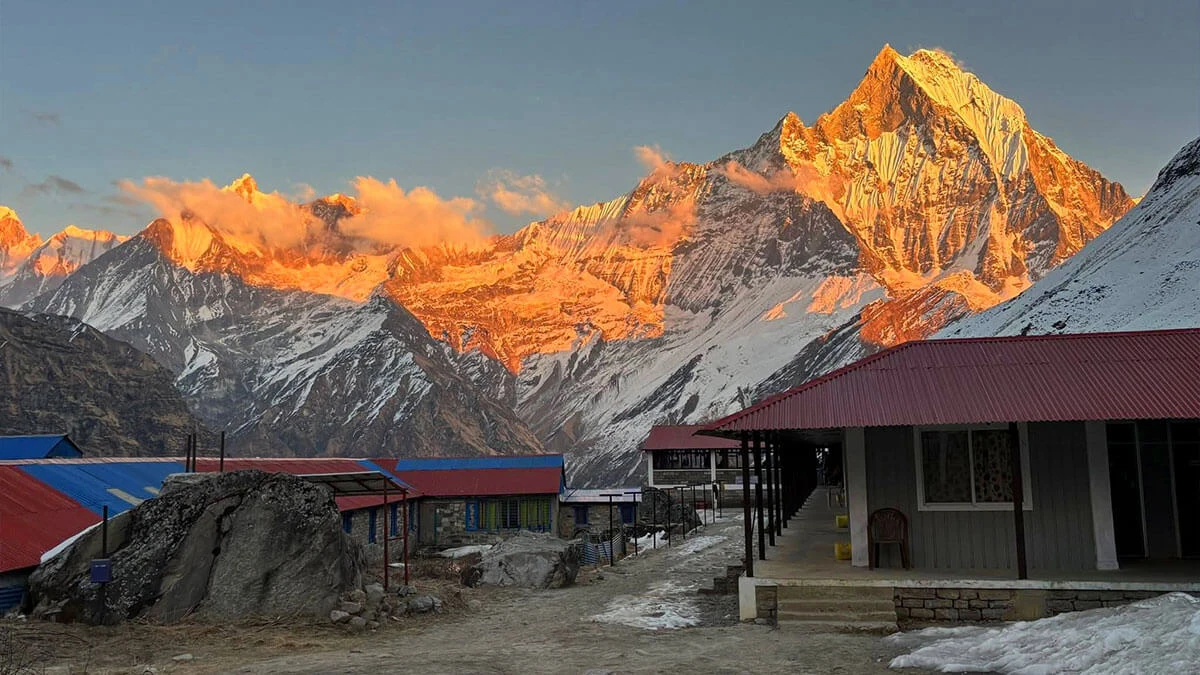
That evening at base camp, the sky above the Annapurna Sanctuary fills with stars in a way that is difficult to describe until you have seen it. The next morning, you wake before dawn to watch the sunrise paint the Annapurna range in shades of orange and pink, a moment that stays with most trekkers long after they return home.
The descent retraces the route to Bamboo (2,310m), where teahouse meals take on a well-earned warmth. You continue down to Jhinu Danda (1,780m), where natural hot springs along the Modi Khola offer genuine relief for tired legs. A short walk the next morning brings you back to the jeep point, then Pokhara for a final night, before the bus returns you to Kathmandu.
Why Choose Nepal Gateway Trekking for the Annapurna Base Camp Trekking?
We are a Kathmandu based, Nepal Tourism Board registered trekking company. We have guided over 500 trekkers to Annapurna Base Camp and know this route better than most.
Expert Local Guides and Safety
- Licensed English-speaking guides with more than a decade of experience
- Comprehensive first-aid knowledge and altitude sickness prevention
- 24/7 emergency support throughout your trek
Customized Trek Experience
- Flexible ABC trek itineraries for all fitness levels (7-14 days available)
- Small group sizes (maximum eight trekkers)
- Acclimatization days included for safety
Premium Service and Comfort
- Quality teahouse accommodation booking
- Nutritious meals from local kitchens
- Porter service
- All ABC trekking permits and paperwork are handled
Sustainable Trekking
- Eco-friendly practices
- Local community support initiatives
- Fair wages for porters and staff
- Cultural preservation efforts
Best Value Guarantee
- Competitive prices starting from $940
- No hidden costs
- Early bird and group discounts
- Free trek preparation guide
Added Benefits
- Complimentary airport transfers
- Photo session at Annapurna Base Camp
- Trek certificate upon completion
We pay our porters fair wages, support local Gurung and Magar communities along the trail, and follow eco-friendly practices throughout the Annapurna Conservation Area.
Itinerary
This is our standard and recommended Annapurna Base Camp Trek itinerary.
Trip PlanExpand all
Welcome to Nepal! When you land at Kathmandu Airport, our friendly staff from Nepal Gateway Trekking will meet you at the arrival gate. They will hold a sign with your name. After collecting your bags and going through immigration, we'll take you to the hotel. You can rest and freshen up there.
Later in the day, you'll meet our manager to brief the program and address your needs. Then, you meet the trekking guide. The guide will tell you about the ABC trek details and check your trekking gear. If you need any gear, you can buy or rent it in the Thamel area, which has many tourist shops.
In the evening, have dinner and then return to the hotel. Pack your bag tonight because tomorrow you'll leave early for Pokhara.
Today, you'll start the ABC trekking journey with a scenic drive from Kathmandu to Pokhara by tourist bus. This comfortable bus ride takes 6-7 hours, passing through vibrant landscapes, terraced fields, and small villages along the Trishuli River. The bus makes 2-3 stops for breakfast, lunch, and restroom breaks.
Enjoy the views of lush hills and distant mountains as you head toward the lakeside city of Pokhara. Upon arrival, the guide will transfer you to the hotel. Evening free to explore Pokhara's charming streets, cafes, and serene Phewa Lake.
Retire to bed early, as tomorrow you start your journey to ABC with an early morning drive to Nayapul, a trailhead for the ABC trek.
After breakfast, drive about 1.5 hours from Pokhara to Nayapul, where the Annapurna Base Camp hiking begins. At Birethanti, your guide will handle the Annapurna Conservation Area Project (ACAP) permit to check. The trail follows the Modi River, passing through the charming villages of Birethanti, Sudame, and Hille.
You'll see splendid terraced fields carved into the mountainsides and traditional stone houses along the way. From Hille, the trail climbs steeply upward. Cross several suspension bridges over rushing rivers and walk through small farming villages until you reach Tikhe Dhunga.
Today's trek begins with the famous climb up 3,200 stone steps to reach Ulleri village. Though challenging, the climb rewards you with spectacular views of terraced hillsides and the deep valley below. The trail continues through small settlements, offering staggering views of Annapurna South and Machhapuchhre (the Fishtail) peak.
After passing Banthanti village, the path turns into beautiful rhododendron forests, bursting with pink and red blooms in springtime. The trail becomes more rugged here, with rocks and tree roots.
After reaching the picturesque mountain village of Nangethanti, continue along a mixed dirt and stone path for about 1.5 hours until you reach the bustling settlement of Ghorepani. After the permit check, proceed from Lower Ghorepani to your overnight stop in Upper Ghorepani.
Today you'll wake up early for the hike to Poon Hill. Poon Hill is one of the best viewpoints for the sunrise over the high snow-capped peaks. The viewpoint offers 360-degree sweeping views of the Annapurna and Dhaulagiri Himalayan ranges. Witness an unforgettable sunrise as the first golden rays touch the snow-capped peaks.
The mountains gradually come alive, bathed in warm hues of orange and pink—a magical scene against the crisp morning sky. After taking in this highlight of the ABC trek, return to Ghorepani for breakfast.
Then, begin your trek towards Tadapani. The walk is relaxing as you cross a ridge line in the forest, with great angles of Annapurna South and Machhapuchhre. Continue the downhill trek, following a stream and passing by large boulders. After around 1.5 hours, you'll reach the village of Tadapani.
As you leave Tadapani, you'll officially begin the trek on the Annapurna Base Camp trail, marking the completion of the first half of the Poon Hill trek. The path winds through Kimrong and leads to the dramatic Chomrong Pass, with the magnificent Annapurna range as your constant companion.
The trail brings you to Chomrong, one of the Annapurna region's largest and most lovely Gurung villages. This bustling settlement serves as a central hub for trekkers.
You must stop at the tourist checkpoint to show your ABC trekking permits and documents here. After Chomrong, the trail descends dramatically via 2,000+ stone steps to reach the Chomrong River below. Crossing the river on a long suspension bridge, you'll face a challenging uphill climb out of the valley.
After roughly 45 minutes of steep ascent, you reach Lower Sinuwa. You can continue to Upper Sinuwa, which sits 150 m higher. However, be prepared for a steep climb between these two villages.
Start your journey from Sinuwa, enjoying an amusing close-up glance of Mt. Fishtail. After a couple of hours, reach Khuldigar and descend steeply to Bamboo. The trail then goes through lush forests filled with roots, rocks, and a magical atmosphere. Continue to Dovan, offering stunning views of Macchapuchhre and Annapurna III.
After a rest, hike uphill to Himalaya, passing dense forests, waterfalls, and moss-covered boulders. Explore a sprawling waterfall before a steep climb to Himalaya, the last village before Deurali. This trekking section is one of the most challenging days on your Annapurna Base Camp trek itinerary.
From Himalaya to Deurali, the trail includes gradual inclines, stair ascents, and a water crossing. You'll pass Hinku Cave (3,170 m), drier forests, and sheer cliffs with a waterfall before reaching Deurali.
Starting today's hike, you'll walk carefully through an avalanche-risk area and reach Machhapuchhre Base Camp (MBC). At MBC, rest and ponder the mind-blowing Machhapuchhre Peak (6,997 m). After MBC, everything changes—there are no more plants or trees, just snow and wide paths that curve through the valley.
You'll see the tall Annapurna mountains playing hide and seek with clouds. The last part of ABC is a steady uphill walk. You'll see the ABC lodges from far away, but don't get too excited—they're farther than they look! It'll take about 2.5 hours from MBC.
When you finally reach the base camp, you'll see one of the world's most picture-perfect landscapes: a 360-degree panorama of the towering Himalayas, including the entire Annapurna range.
Today starts with an early morning wake-up to watch the sunrise. The sight is magical as the first light hits the Annapurna peaks, turning them golden. The morning view from the base camp is truly unforgettable. Take a short walk to the viewpoint after sunrise.
Here, you'll see the massive south face of Annapurna I up close. The view includes other peaks—Hiunchuli, Khangsar Kang, Gangapurna, Annapurna III, and Machhapuchhre—in a 360-degree panorama.
Enjoy breakfast surrounded by these stunning mountains. The trek back to Bamboo goes through the same path you climbed earlier. The trekking path comes across Deurali, Himalaya, and Dovan villages again.
The trail feels easier this time since you're going down and are familiar with the route. The day ends at a cozy teahouse in Bamboo.
From Bamboo, the hiking continues through valleys and lush forests until you reach the charming village of Sinuwa. After lunch, the trail heads down to Chomrong Khola, where you'll cross a bridge. Then comes the day's biggest challenge—climbing over 2000 stairs to Chomrong village. Though demanding, this is your final major climb of the ABC hike.
From Chomrong, it's just an hour's walk to reach Jhinu. At Jhinu Danda, celebrate the near completion of your ABC trek by soaking in the natural hot springs. These soothing waters are perfect for relaxing your tired muscles after many days of trekking in the Annapurna foothills.
Start the day with a short walk around Jhinu village. A brief hike takes you to the trip's highest and longest suspension bridge, which spans a river gorge, connecting to green terraced fields and forested hills on the other side.
After crossing the bridge, walk up to the road where Jeeps wait to take you to Pokhara. The journey follows narrow, winding mountain roads, including a unique spot where vehicles pass through a small waterfall. After two to three hours of driving, you'll arrive at Pokhara's lakeside area, where you can check into the hotel and relax.
The tourist bus journey from Pokhara to Kathmandu traverses the picturesque Prithivi Highway. The route offers panoramic views of terraced farmlands, flowing rivers, and green hills and mountains in the distance.
You'll observe the authentic Nepalese lifestyle in numerous rural settlements and small towns. The bus makes regular stops for meals and breaks, making the long journey comfortable. Finally, as you near Kathmandu, the bustling city streets signal the end of the Annapurna adventure.
We'll pick you up from the hotel three hours before flight time on the final day. One of our Nepal Gateway Trekking staff will accompany you to the airport to ensure a smooth departure.
If you are interested in more adventures, we can help you plan other treks in Nepal, Bhutan, or Tibet. We wish you a safe journey home with wonderful memories of your Annapurna Base Camp trek!
If the above itinerary doesn’t meet your needs, we can design a Tailor-Made Program based on your travel plans and requirements,Reach our travel experts.
Dates & Availability
Private tripSelect Departure Dates
Oct 2026
Nov 2026
Dec 2026
Jan 2027
Feb 2027
Mar 2027
Apr 2027
May 2027
Jun 2027
Jul 2027
Aug 2027
Sep 2027
Oct 2027
Nov 2027
Dec 2027
Departure Date
Price
Status
Cost Includes
- Complimentary airport pick-up and drop-off services
- All ground transportation as per the program by tourist bus and private vehicle.
- Two nights’ accommodation at a three-star category hotel in Kathmandu, inclusive of breakfast.
- Two nights’ accommodation at a tourist-standard hotel in Pokhara, inclusive of breakfast.
- Three meals (breakfast, lunch, and dinner) during the ABC Trek
- Twin-sharing accommodations during the trekking.
- One highly experienced English-speaking friendly trekking guide.
- Required porters (1 porter between 2 trekkers). A porter is not included for solo trekkers.
- Annapurna Conservation Area Project permit and TIMS card.
- Annapurna Base Camp Trekking Map.
- Nepal Gateway Trekking T-shirt and duffle bags.
- Local fresh fruits such as apples, bananas, pears, oranges, pomegranates, etc. These fruits are served as a dessert after dinner.
- First aid kit with oximeter.
- Evacuation assistance if it is needed.
- All necessary government taxes.
- Office service charge.
Cost Excludes
- Lunches and dinners in Kathmandu and Pokhara.
- Your medical travel insurance.
- Nepal entry visa.
- Your international flight ticket to/from Kathmandu.
- Your personal nature expenses, equipment, and medical kit.
- All kinds of hot drinks (tea, coffee, hot water).
- Cold drinks (mineral water/coke/Fanta) and alcoholic beverages in trekking.
- Hot shower, internet, and phone call unless it is free.
- Tipping to field staff (tipping is not mandatory but expected).
Route Map

Trip Gallery


Good To Know
Annapurna Base Camp Trek Cost 2026
Our standard 13-day ABC trek package starts at USD 970 per person, fully inclusive with no hidden fees.
What the Standard Package Includes
- Round trip transportation from Kathmandu and Pokhara
- TIMS and ACAP trekking permits
- Three meals daily throughout the trek
- Licensed English speaking guide
- Porter service (1 porter per 2 trekkers)
- Teahouse accommodation
- All paperwork and government taxes
Package Options
- Budget ($700 – $800): Group trek with basic teahouse stays, shared guide and porter. Good option if you are flexible and travelling solo or want to meet other trekkers on the trail.
- Standard ($900 – $1,200): Our most popular choice. Dedicated guide, better accommodation, and the option to trek privately or join a small group.
- Luxury ($1,200 – $1,500): Fully private trek with a personal guide and porter, premium lodge bookings, and a customized itinerary built around your pace.
We also have short Annapurna Base Camp Trek or you can customize your trip with us.
Extra Costs to Plan For
These are not covered by any package:
- Nepal visa: $30 – $100
- Travel insurance: $50 – $100
- Gear rental or purchase: $100 – $300
- Wi-Fi on trail: $2 – $5 per day
- Hot shower: $3 – $5 per use
- Device charging: $2 – $4 per charge
- Snacks and personal drinks: $5 – $10 per day
- International flights
What Affects Your Final Price
- Season: Peak months (March to May, October to November) cost more. Off-season is cheaper but weather and trail conditions are less predictable.
- Group size: The more people sharing the trek, the lower the per-person cost. Private treks cost more but give you full control over pace and schedule.
- Duration: The standard trek runs 12 to 13 days. Adding Poon Hill, Mardi Himal, or other extensions will increase the total.
- Service level: Accommodation quality and guide experience are the biggest price variables between budget and luxury packages.
What You Will See and Experience on the Annapurna Base Camp Trek
The ABC trail packs more variety into a single trek than most routes manage in twice the distance. Here is what stays with people long after they return home.
- Landscapes That Change Every Day: You start in subtropical warmth, walking through terraced rice paddies, banana groves, and bamboo forest. By the time you reach the upper sanctuary, you are surrounded by glaciers, moraines, and bare rock. The shift happens gradually but hits you all at once when you clear the treeline.
- Gurung and Magar Villages: The trail passes through stone built villages like Ghandruk and Chhomrong that have sat in these hills for centuries. The architecture, the people, and the pace of life here are genuinely unlike anywhere else. It is one of the quieter highlights of the trek that most trekkers do not fully expect.
- The Annapurna Sanctuary: Nothing quite prepares you for arriving at base camp. You are not looking at a mountain from a distance. You are standing inside a 360 degree bowl of peaks. The mountains you will see on the Annapurna Base Camp journey include Annapurna I (8,091m), Annapurna South (7,219m), Gangapurna (7,455m), Hiunchuli (6,441m), and the sacred unclimbed Machhapuchhre (6,993m). At sunrise, the light hits the faces of these peaks in a way that is hard to put into words.
- Hot Springs at Jhinu Danda: On the descent, Jhinu Danda offers natural geothermal hot springs right on the banks of the Modi Khola River. After days of stone steps and steep climbs, sitting in warm water with the sound of the river beside you is exactly what your legs need.
When is the Best Time for the Annapurna Base Camp Trek?
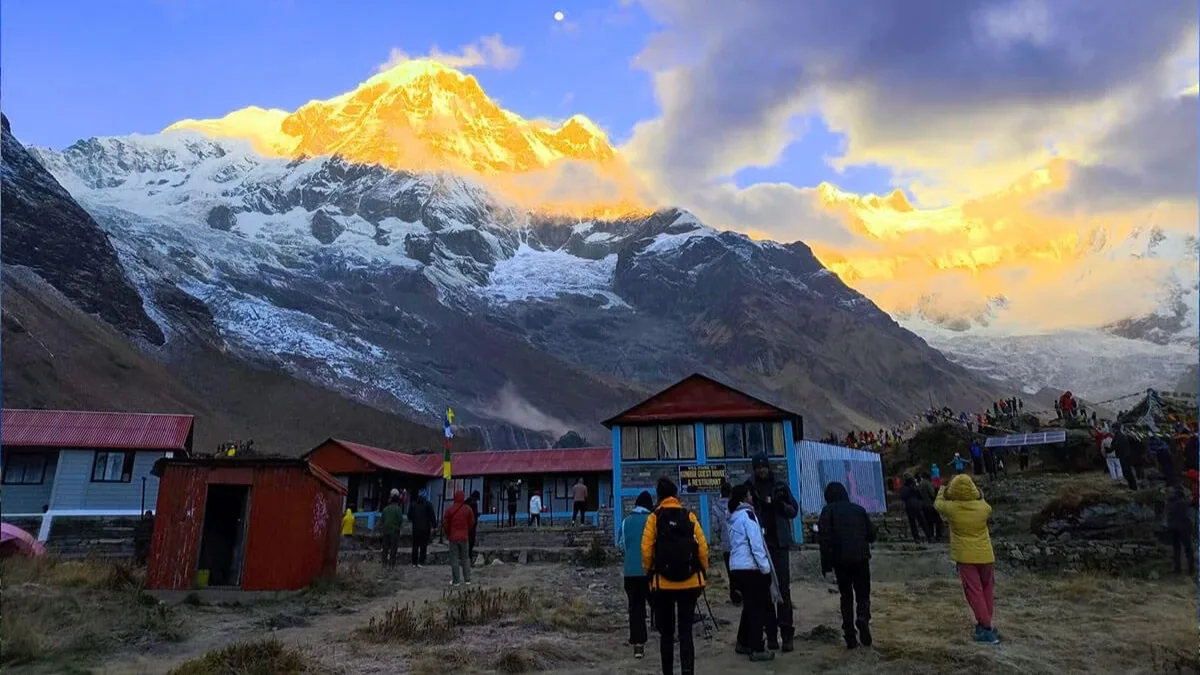
Autumn and Spring is considered as the best time to trek Annapurna Base Camp. The season you choose shapes the entire character of your trek. While the trail is technically open year-round, some months offer significantly better weather and mountain visibility than others.
Autumn (September, October, November) - Crystal Skies and Stable Trails
Autumn is the undisputed peak trekking season in Nepal, favored for its sharp visibility and stable mountain weather. After the summer monsoon washes the dust from the air, October delivers the crispest, most panoramic views of the Annapurna range you will ever see.
The trails are dry, the temperatures are moderate, and conditions are ideal. Because October is the busiest month on the trail, teahouses fill up incredibly fast booking your trip early is highly recommended. By November, things cool down quickly, and higher elevations can see early winter dustings of snow.
Spring (March, April, May) - The Blooming Wilderness
Spring is a magnificent time to hit the trail. Weather is settled and warm at lower elevations, with daytime temperatures up at base camp reaching around 5°C to 10°C (41°F to 50°F).
The defining feature of a spring trek is the blooming forest, the entire hillside between Ghorepani and Tadapani erupts into deep red, crimson, and pink rhododendrons. Mountain views are spectacular, especially in the clear mornings, though afternoon clouds are common. March and early April see smaller crowds, while late April and May become significantly busier as the climbing season peaks.
Monsoon (June, July, August) - For the Quiet Adventurer
Trekking during the summer monsoon demands a specific mindset. Rainfall is heavy and daily, usually moving in during the afternoons and evenings. The trails can be slippery, leeches emerge on the lower forest sections, and the high peaks are frequently hidden behind thick cloud cover.
However, if you don't mind the rain, the landscape becomes extraordinarily lush, green waterfalls appear around every corner, and you’ll have the trails completely to yourself.
Winter (December, January, February) - Cold, Crisp, and Rewarding
Winter trekking on the ABC route is highly rewarding but requires proper cold-weather gear. Nighttime temperatures at Annapurna Base Camp (4,130 m) regularly plunge down to -10°C to -15°C (14°F to 5°F).
Snowfall can temporarily block the narrow gorge between Deurali and MBC, meaning you have to be flexible with your schedule. But if you are well-equipped, December and January often serve up crisp, cloudless blue-sky days with completely unobstructed mountain vistas and zero crowds on the trail.
Seasonal Overview
|
Season |
Months |
Weather |
Trail Conditions |
Crowds |
Recommended? |
|
Autumn |
Sep–Nov |
Clear, crisp, and stable |
Excellent |
High (Peak) |
Highly Recommended |
|
Spring |
Mar–May |
Warm days, blooming forests |
Excellent |
Moderate to High |
Highly Recommended |
|
Winter |
Dec–Feb |
Freezing nights, clear days |
Icy at high altitudes |
Very Low |
Experienced and Prepared Only |
|
Monsoon |
Jun–Aug |
Wet, humid, and muddy |
Slippery with leeches |
Extremely Low |
Rainy Season Mindset Required |
Height and Elevation of the Annapurna Base Camp Trek
Understanding how the altitude changes helps you prepare for exactly what the trail asks of your legs. Annapurna Base Camp sits at 4,130 meters (13,550 feet) above sea level. While it is a serious high-altitude trek, it stays lower than Everest Base Camp (5,364 m) or the Annapurna Circuit’s Thorong La Pass (5,416 m), making it a fantastic choice if you want a massive Himalayan experience without pushing into extreme, high-risk elevations.
- Trek Start Point: Nayapul (1,070 m / 3,510 ft)
- Maximum Elevation: Annapurna Base Camp (4,130 m / 13,550 ft)
- Total Elevation Gain: Approximately 3,060 m (10,040 ft) from the trailhead
- Hardest Altitude Day: Climbing from Dovan (2,600 m) straight up to Machhapuchhre Base Camp (3,700 m), a challenging 1,100-meter vertical gain in a single afternoon.
- The Final Push: A gentle two-hour walk gaining 430 meters from MBC to the main base camp the next morning.
The trail doesn't just climb straight up; it follows the roller-coaster rhythm of the Himalayas. Leaving lakeside Pokhara (822m), you'll drive to Nayapul to lace up your boots. The route winds through Tikhedhunga (1,540m) and scales the famous stairs to Ghorepani (2,860m) for the Poon Hill (3,210m) sunrise. It then drops into the Chhomrong Valley (2,170m) before forcing you straight back up a brutal stone staircase to Sinuwa (2,340m), pushing past Bamboo (2,310m), Dovan (2,600m), and Deurali (3,230m) into the thin alpine air.
Once you step into base camp (4,130m), you are standing inside a massive, 360-degree bowl of rock and ice. Slicing into the sky beside you is Machhapuchhre (6,993 m / 22,943 ft), the holy, unclimbed "Fish Tail" mountain. Guarding the rest of the freezing skyline are the sheer walls of Hiunchuli (6,441 m), Gangapurna (7,455 m), Annapurna South (7,219 m), and the legendary Annapurna I (8,091 m / 26,545 ft), the world's tenth-highest peak.
Difficulty of the Annapurna Base Camp Trek
The ABC trek difficulty is rated moderate. That rating is accurate, but it deserves a proper explanation so you know what you are actually signing up for.
This trek does not require any technical climbing. You do not need rope skills, ice axe experience, or previous Himalayan trekking experience. The trails are clear and well-marked. Teahouses are available every 1 – 3 hours on most days.
What makes it genuinely challenging:
- Daily walking hours: You walk 5 – 7 hours per day, every day for 10 days. Some days involve significant elevation gain. By Day 3 and 4, your legs will tell you they are working. This is normal, and it gets better. But you need to arrive with a reasonable base of fitness.
- Stone staircases: The ABC trail is famous for its stone staircases. Thousands of steps, both climbing and descending. These are harder on the knees than most people expect, especially on the way down. Trekking poles make a real difference.
- Altitude above 3,500 m (11,480 ft): Above this elevation, altitude sickness is possible regardless of fitness level. The body needs time to acclimatize. Our 10-day itinerary is designed to manage this by keeping elevation gains gradual.
- Remoteness above Chhomrong: Once you pass Chhomrong, you are in serious mountain terrain. There are no roads. Medical facilities are basic. In an emergency, helicopter evacuation is the only quick exit. This is why a guide, travel insurance, and proper preparation matter.
Who can do this trek and is it beginner-friendly?
The short answer is yes, the Annapurna Base Camp Trek is beginner-friendly, but it shouldn't be underestimated. You don't need any technical climbing experience or ropes to complete this route, it is a purely non-technical "walk-up" trail. If you have never trekked in the mountains before, this is actually one of the absolute best entry-level routes to experience the deep Himalayas.
Most healthy adults between 15 and 65 who exercise regularly (walking, cycling, gym, hiking) can complete the Annapurna Base Camp Trek comfortably. If you are over 65 or have any cardiovascular, respiratory, or joint conditions, consult your doctor first and let us know, we will design the itinerary carefully.
Training recommendation: Spend at least 6 – 8 weeks before the trek doing regular cardio, hiking with a loaded pack is ideal. Build up to 3 – 4 hour walks over hilly terrain. Strong legs before you arrive means a far more enjoyable experience on the mountain.
Permits and Insurance Required for the Annapurna Base Camp Trek
Every foreign trekker on the ABC route must carry official documentation. When you book your adventure with Nepal Gateway Trekking, our team handles all the paperwork, and all required clearances are fully included in your package.
- ACAP (Annapurna Conservation Area Permit): This permit directly funds vital conservation work, trail maintenance, and community development projects in the villages you pass through. Cost for Foreign Nationals is NPR 3,000 (approx. USD 23), SAARC Nationals is NPR 1,000, and Children Under 10 are free.
- Trekker Safety & Guide Registration: Following recent updates, independent solo trekking is no longer permitted on the ABC route. All safety tracking, registration, and required checkpoints are fully managed by our licensed guiding staff before you depart.
Travel Insurance - Mandatory, Not Optional
While travel insurance is not included in our base package, we do not allow any trekker on the trail without a valid policy. This isn't just bureaucracy, it is your ultimate safety net in the Himalayas.
An emergency helicopter evacuation from the Annapurna Sanctuary costs between USD 2,500 and USD 5,000. Without a comprehensive insurance policy, those emergency costs must be paid completely out of pocket during a medical crisis.
Your policy must explicitly cover:
- High-altitude trekking up to at least 5,000 meters (16,404 ft)
- Emergency helicopter evacuation and mountain rescue
- Medical treatment and hospitalization expenses
- Trip cancellation, delays, and curtailment
Reliable providers frequently used by trekkers in Nepal include World Nomads, SafetyWing, and Battleface. Please ensure you purchase your policy before arriving in Nepal, carry a printed copy on the trail, and share your emergency policy number with your guide on Day 1.
Is the Annapurna Base Camp Trek Safe?
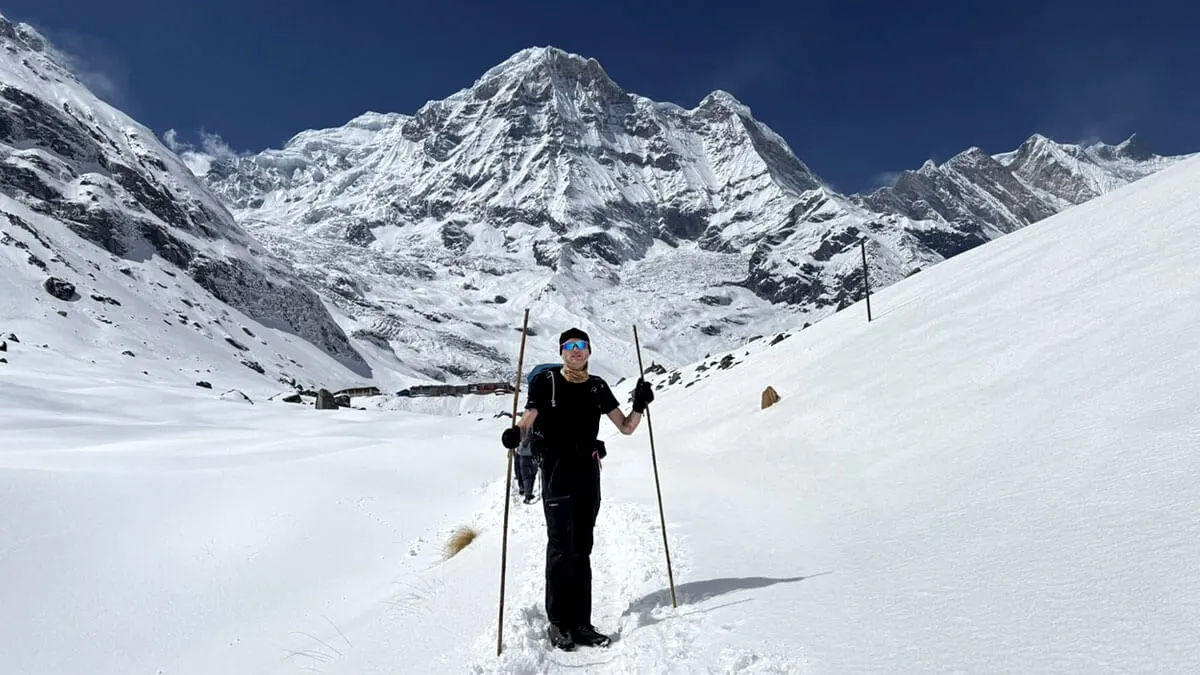
Yes, the Annapurna Base Camp Trek is widely considered one of the safest high-altitude treks in the world, making it an ideal choice for first-time Himalayan hikers or female trekkers. Because the maximum elevation tops out at 4,130 meters, the risk of severe altitude sickness is dramatically lower than on the Everest Base Camp Trek (5,364 m) or the Thorong La Pass (5,416 m).
The trail itself is highly developed, clearly defined, and non-technical. There are no glacier crossings, vertical rock climbing, or ropes involved, it is entirely a walk-up route.
You can see many female trekkers either trekking solo or in group on your way to Annapurna Base Camp. So ABC trek is also safe for solo female trekkers if done correctly.
The Real Risks to Keep in Mind:
- The Knee Factor: The main physical risk comes from the thousands of steep stone stairs. Fatigue on these steps can lead to twisted ankles or knee strain, which is why trekking poles are highly recommended.
- The Deurali-MBC Avalanche Zone: There is a specific section of the trail between Deurali and Machhapuchhre Base Camp that crosses a natural avalanche chute. During winter or early spring (following heavy snowfall), this specific stretch can become dangerous. When you trek with a licensed guide, they monitor local weather reports daily and will safely timing this crossing or adjust the itinerary if snow conditions shift.
Safety Measures to Apply While Trekking to Annapurna Base Camp
Safety on a Himalayan trek comes down to smart preparation, constant environmental awareness, and a total willingness to listen to your body. Here is what we consider non-negotiable on the trail.
1. Trek with a Licensed, Experienced Guide
Since 2023, a licensed guide is legally required to navigate the ABC route. Beyond government regulations, your guide is your ultimate lifeline. An expert guide spots early signs of altitude sickness before you do, carries first-aid gear, manages emergency evacuation routes, and interfaces smoothly with local teahouse networks.
2. Acclimatize Wisely - Respect the Elevation
Acute Mountain Sickness (AMS) is a real factor on this trek. Mild symptoms usually present themselves above 2,500 m (8,200 ft) and can include a dull, persistent headache, lightheadedness, nausea, or loss of appetite.
To ensure you reach the sanctuary safely, we strictly enforce the core rules of high-altitude medicine:
- Slow Ascents: Above 3,000 m, never increase your sleeping altitude by more than 300 to 500 meters per day.
- Aggressive Hydration: Drink 3 to 4 liters of clean water every single day to counteract the dry, thin air.
- No Sedatives or Alcohol: Avoid sleeping tablets (which suppress respiratory drive) and avoid alcohol entirely above 3,500 m.
Mild mountain sickness resolves with a rest day. It is a biological response to pressure changes, affecting marathon runners and beginner hikers equally. However, if symptoms worsen into loss of coordination, confusion, or a persistent cough, it signals a severe condition like HAPE (fluid in the lungs) or HACE (brain swelling).
In these critical cases, immediate descent is the only cure. Our guides carry pulse oximeters to track your blood oxygen saturation at every single high-altitude checkpoint.
3. Fuel and Hydrate Your Body
Your body burns vastly more energy and loses hydration much faster through breathing at high altitudes than it does at sea level. Dehydration mimics and accelerates mountain sickness, so keep drinking even when you don't feel thirsty.
Additionally, make sure you eat full meals even if your appetite drops in the thin air. Traditional Nepali dal bhat (rice, lentil soup, and local vegetable curry) is the ultimate fuel for the trail, it is rich in clean carbohydrates, served hot, highly filling, and freshly prepared everywhere you go.
4. Pack for Drastic Weather Shifts
Himalayan weather is famously unpredictable. A clear, sunny morning at Machhapuchhre Base Camp can shift into a cold, biting snowfall within two hours. We recommend using a strict layering system: a moisture-wicking base layer, an insulating mid-layer (fleece or down), and a reliable waterproof/windproof outer shell. Keep your rain gear and warm layers inside your personal daypack at all times, no matter how clear the sky looks at breakfast.
Average Annapurna Base Camp Temperatures:
- Spring / Autumn (Daytime): 5°C to 12°C (41°F to 54°F)
- Spring / Autumn (Nighttime): -5°C to -10°C (23°F to 14°F)
- Winter (Nighttime): -10°C to -20°C (14°F to -4°F)
5. Find Your Rhythm and Use Trekking Poles
The most common mistake beginners make is rushing out of the gate on the first three days, exhausting their leg muscles and increasing their vulnerability to altitude fatigue. There is no prize for finishing the daily trail first. Find a slow, conversational pace that keeps your heart rate stable, and maintain it.
We strongly recommend using two trekking poles. The historic stone staircases on the ABC trail can place immense stress on your knees and easily roll an ankle when fatigue sets in. Poles effectively reduce joint stress by 20% to 30% on those long, steep descents.
6. Emergency Medical Facilities on the Trail
There are basic local health posts in major trail hubs like Ghorepani and Chhomrong to handle minor illnesses.
For serious medical emergencies or critical altitude complications, an immediate emergency helicopter evacuation is arranged to fly you directly to the multi-disciplinary tertiary care hospitals in Pokhara (such as Manipal Teaching Hospital) or major facilities in Kathmandu. A typical rescue flight takes just 20 to 40 minutes from the high sanctuary back down to a proper medical ward.
Keep the following emergency contacts saved on your mobile device:
- Nepal Government General Emergency Number: 100
- Nepal Tourism Board 24-Hour Hotline: 01-4256909
- Your personal travel insurance emergency assistance line
Essential Trekking Gear Checklist For Annapurna Base Camp Trek
You do not need to ship expensive gear across the world. Premium mountain equipment can be rented or purchased in Kathmandu's Thamel district or Pokhara's Lakeside at a fraction of standard international prices.
- Footwear: Sturdy, waterproof trekking boots with strong ankle support (properly broken in before your trip).
- Insulation: A heavy down jacket and a cold-weather sleeping bag rated down to at least -10°C (Nepal Gateway Trekking provides both on loan if needed).
- Outerwear: A high-quality waterproof rain jacket and windproof trousers.
- Layers: 2 to 3 sets of thermal base layers (wool or synthetic) and a mid-layer fleece jacket.
- Accessories: A warm beanie, a sun hat, UV-rated sunglasses (to prevent snow blindness), lightweight liner gloves, and insulated mittens.
- Skincare: SPF 50+ sunscreen and a UV-protectant lip balm.
- Medical / Water: Personal medications, a basic blister kit, rehydration salts, a reliable headlamp with extra batteries, and water purification tablets or a SteriPen.
Accommodation and Food on the Annapurna Base Camp Trek
The ABC route is a teahouse trek, meaning you sleep in family-run mountain lodges every night rather than camping. This is one of the features that makes the Annapurna Base Camp trek accessible and enjoyable even for first-time trekkers.
Accommodation on the ABC Trek
Teahouse quality varies by location. In larger villages like Ghorepani and Chhomrong, lodges are comfortable with heated dining rooms, attached bathroom options, and reliable hot showers. At smaller, more remote stops like Dovan, Bamboo, Himalaya, and Machhapuchhre Base Camp, lodges are simpler with shared bathrooms. Rooms are twin or triple sharing as standard throughout the route.
During peak seasons in October and April, teahouses fill up quickly. On our packages, we book accommodation in advance so you always have a confirmed bed waiting at the end of each day.
Food on the ABC Trek
Food along the route is surprisingly varied and genuinely good. Most teahouses serve dal bhat, fried rice, noodles, pasta, teahouse style pizza, momo, eggs, porridge, pancakes, soups, and a full range of teas and coffees. Dal bhat remains the best value and most nourishing option throughout the trek.
As you climb higher toward Deurali and Machhapuchhre Base Camp, menus become simpler and prices increase slightly because everything is carried up by porter or mule. Our standard package covers three meals daily for the full duration of the trek.
Drinking Water on the Trek
Do not drink untreated water anywhere on the trail. Single use plastic bottles are strictly banned past Chhomrong and inside the Annapurna Sanctuary under local conservation laws. Bring a reusable bottle or hydration bladder and use purification tablets, drops, or a SteriPen to treat tap water at teahouses. This keeps both you and the trail in good shape.
Phone, Wi-Fi, and Equipment Charging on the ABC Trek
Staying connected and keeping your camera batteries charged is entirely possible on the Annapurna Base Camp route, but it requires some planning as you ascend.
- Mobile Network & Data: Nepal’s two main networks, Ncell and Nepal Telecom (NTC), work quite well on the lower half of the trek. Ncell generally offers better data speeds at lower altitudes, while NTC tends to hold a weak signal a bit higher up. However, once you push past Himalaya Hotel and enter the deep gorge toward Machhapuchhre Base Camp (MBC) and ABC, mobile signals drop completely.
- Wi-Fi: Most teahouses offer Wi-Fi for a small daily fee (usually around NPR 200 to NPR 500 / USD 2 to USD 4). As you get closer to base camp, the connection relies on satellite links, meaning it can become very slow or cut out entirely during bad weather or high-traffic evening hours.
- Charging Batteries: Electricity is available at almost every teahouse along the route, powered by solar panels or local micro-hydro schemes. Outlets are rarely available inside your private room; instead, a communal charging station is set up in the dining room. Teahouses charge a small fee per device (NPR 200 to NPR 600), which increases with altitude.
Pro Tip: Bring a high-capacity power bank (20,000mAh or higher) to save money and stay independent. Keep your phone, power bank, and camera batteries inside your sleeping bag at night, the freezing high-altitude temperatures drain lithium-ion batteries incredibly fast even when the devices are turned off.
Recent Updates and New Rules for the Annapurna Base Camp Trek
If you last trekked this route a few years ago or are planning your first visit, a few things have changed on the ground that are worth knowing before you book.
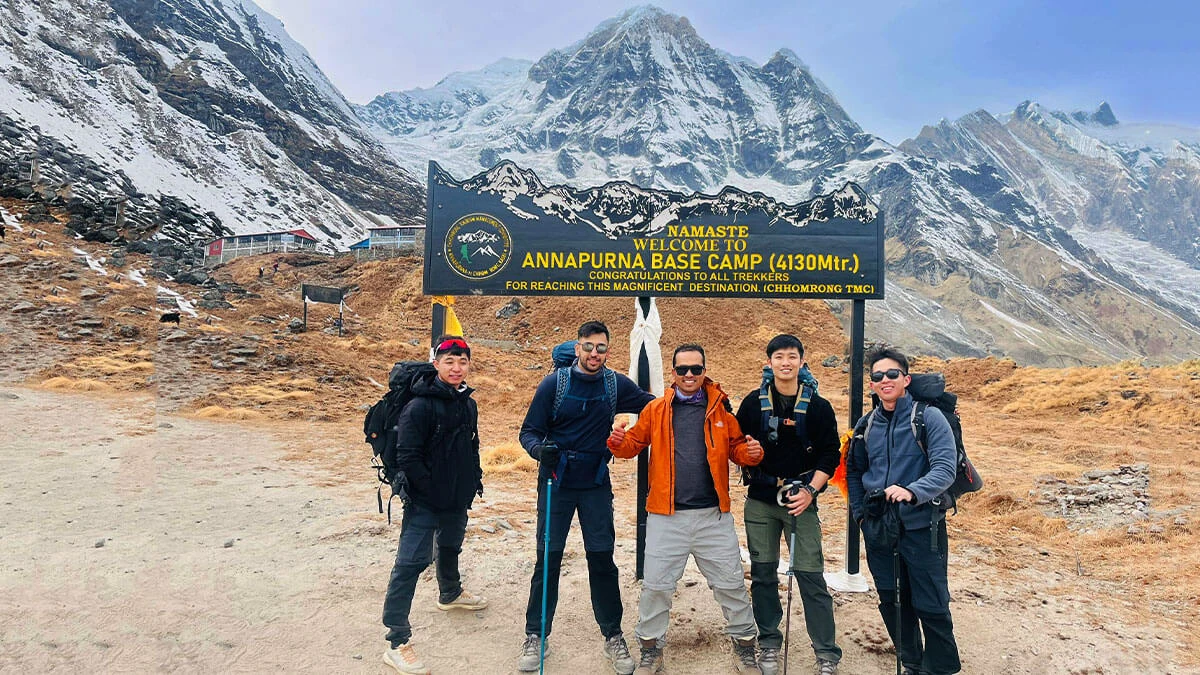
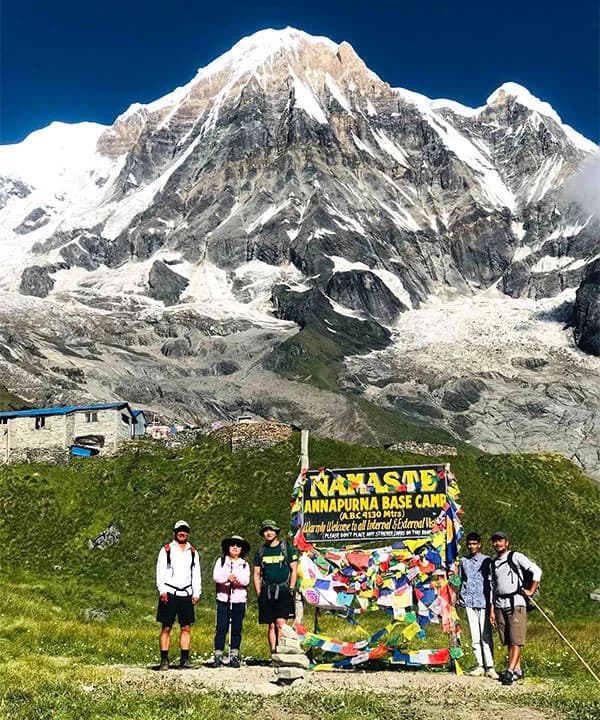
- New Signboard at Base Camp (December 2025): The old weathered sign at 4,130 meters has been replaced. A new weather-resistant signboard now stands at the top with the elevation, peak names, and a Namaste welcome message. It has quickly become the go-to photo spot the moment trekkers arrive at the sanctuary.
- Avalanche Risk Between Deurali and ABC: The gorge section between Hinku Cave, Deurali, and MBC has always been exposed, but recent late-season snowfall triggered a serious avalanche near the high trail that injured a solo trekker. Local authorities have tightened monitoring on these sections considerably. Guides now receive real-time weather updates and are authorized to hold groups at lower camps when conditions above are unsafe. This is not something to take lightly on this route.
- Mandatory Licensed Guide Rule: Solo unguided trekking for foreign nationals is no longer permitted. You cannot obtain permits or clear checkpoints at Birethanti and Chhomrong without a government-licensed guide registered through an official agency. This rule is actively enforced.
- Digital Permit System: Paper checks at trail entry points are being phased out. Nepal now runs a QR code-based digital permit tracking system. Your details are uploaded when your agency registers the trek and scanned at major checkpoints. In an emergency, authorities can locate your last registered position on the mountain.
- Trail and Bridge Repairs: The stone staircase up to Ulleri has been repaired and stabilised after years of erosion from heavy foot traffic. Several suspension bridges in the gorge between Bamboo and Deurali have been replaced with heavier steel structures built to handle river flows during peak season.
Why Annapurna Base Camp Is Different From Every Other Trek?
A lot of Himalayan treks give you views of mountains from a distance. The Annapurna Base Camp Trek delivers something rarer; it puts you inside the mountains. The Annapurna Sanctuary is a high glacial basin surrounded on almost every side by enormous peaks. When you finally walk into that amphitheater, there is nowhere else to look but up.
Along the way, you trek through some of the most diverse landscapes in Nepal. The trail begins in subtropical lowlands where banana trees and rice paddies line the path. It climbs through forests of rhododendron and oak that turn vivid red and pink in spring. Higher up, the trees fall away, and you are walking through open alpine terrain with views of Machhapuchhre (6,993 m / 22,943 ft), the sacred "Fish Tail" peak, growing larger with every step.
You also pass through the heartland of the Gurung and Magar communities, two of Nepal's proudest mountain peoples. Villages like Ghandruk, Chhomrong, and Sinuwa have welcomed trekkers for decades, but they still feel genuinely off the beaten track. You eat dal bhat cooked by the family who runs the lodge. You wake up to roosters and distant prayer flags. This is not a resort experience. It is the real Nepal.
Explore Our Annapurna Base Camp Trek Blogs and Plan your next ABC Trek
What to Pack for the Annapurna Base Camp Trek, Tips for Trekking to Annapurna Base Camp, Mountains to See on the Way to Annapurna Base Camp Trek, Best Treks in Annapurna, Best Time to Do the Annapurna Base Camp Trek, Annapurna Base Camp Trek Permit, Annapurna Base Camp Trek Map, Annapurna Himalaya: Complete Guide to Trekking Routes, Annapurna Himalaya Nepal, Annapurna Base Camp Trekking Routes, Annapurna Base Camp Trek in January, Annapurna Base Camp Trek in May, Annapurna Base Camp Trek or Everest Base Camp Trek, Annapurna Base Camp vs Annapurna Circuit in Nepal, Annapurna Base Camp New Signboard, Annapurna Sanctuary
FAQs
The Annapurna base camp trek distance is approximately 70-115 km (43-71 miles) round trip. It usually takes 8-13 days to complete. The trek ascends through various ABC altitudes, reaching its highest point at 4,130m at base camp. The trek duration can be adjusted based on your pace and whether you include optional side trips along the route.
The Annapurna base camp trek difficulty level varies with individual fitness levels. Most trekkers find the steep stone steps between Bambo and Deurali challenging, combined with altitude effects above 3,000m. The final ascent to ABC can be demanding due to the thin air. Many trekkers struggle with the 2,000+ stone steps ascending to Chomrong village during the return journey.
The Annapurna Base Camp trek is an 8–13-day journey directly to the Annapurna Sanctuary, featuring close mountain views. The Annapurna Circuit Trek is a longer 12-18 day trek that circles the entire massif, crossing Thorong La Pass (5,416 m) and diverse landscape.
The ABC hike is generally safe, with well-marked trails and teahouses. However, risks like altitude sickness, weather changes, and physical strain still exist. Acclimatizing properly, staying hydrated, and listening to your body is essential.
Trekking with a guide or group can enhance safety, especially for beginners. Always check the weather forecast and be prepared for sudden changes in conditions.
The best time to trek to Annapurna Base Camp is spring (March to May) and autumn (September to November). These two seasons offer stable weather, clear mountain vistas, and comfortable temperatures for trekking.
The ABC trek route features comfortable teahouse lodging. These teahouses provide basic rooms with twin beds and blankets. With bathrooms typically shared, the accommodation is clean and tourist-friendly. Facilities may be simpler at higher elevations, so bringing your sleeping bag is recommended for extra warmth.
The ABC trekking package costs between $800 and $1500 per person. This price includes trekking permits, guide/porter fees, accommodations, meals, and transportation. Additional costs may apply for extras, like flying to Pokhara instead of taking a bus ($200 extra). The final cost varies based on your chosen services and comfort level.
Yes, the ABC hike is absolutely worth it. The trail offers photogenic sights of Annapurna and Machhapuchhre peaks and diverse landscapes from lush forests to glacial basins. It is worth experiencing the rich local culture in mountain villages and comfortable teahouse accommodations. At 4,130m, the base camp's amphitheater of peaks provides an unforgettable Himalayan experience.
While both treks offer stunning Himalayan panorama, Annapurna Base Camp (4,130m) is generally better for first-time trekkers due to its lower altitude and shorter duration. It's more budget-friendly and less crowded.
However, the Everest Base Camp trek (5,364m) remains the more prestigious choice, offering iconic views of Mt. Everest and a more challenging high-altitude experience. Choose ABC for a scenic and accessible trek with great value, or EBC if you're an experienced trekker seeking the ultimate Everest adventure. Both treks offer excellent teahouse accommodations and well-maintained trails.
The weather on the Annapurna base camp trek varies with the season and altitude. Spring (March-May) and autumn (September-November) offer clear skies, with daytime temperatures ranging from 25-30°C at lower elevations and cooler nights around 5-10°C. Higher elevations can drop to -5°C. Monsoon (June-August) brings rain and muddy trails, while winter (December-February) is cold with potential snow.
You can wear moisture-wicking base layers, warm fleece or down jackets, waterproof outer layers, and durable trekking pants for the Annapurna base camp hike. Sturdy hiking boots, gloves, a hat, and thermal socks are essential. Dress in layers to adapt to changing temperatures.
For the Annapurna Base Camp trek, carry Nepalese rupees, as credit cards aren't accepted in remote areas. Daily expenses average USD 20-30 for food and accommodation in teahouses—budget extra for snacks, hot showers, Wi-Fi, and emergencies. If booking through a tour operator, you'll need less cash as most expenses are pre-paid.
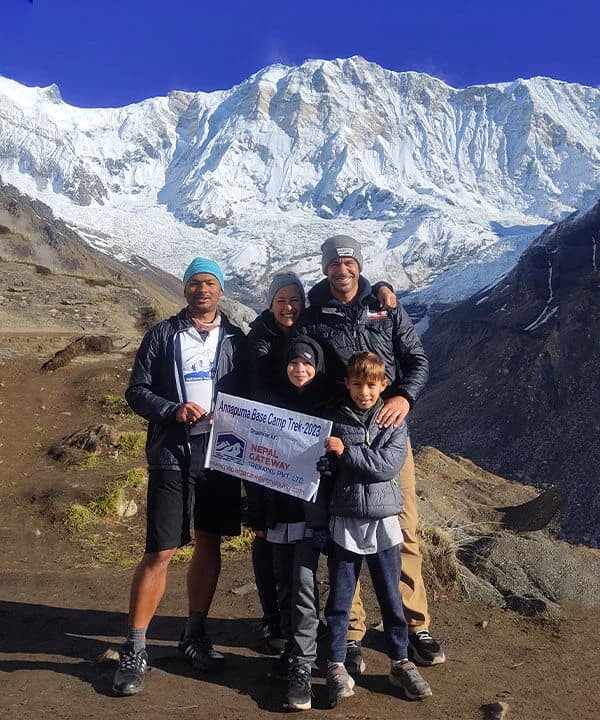
Traveler’s Experience with Us?
Magical trek to Annapurna Basecamp
We made an enquiry to NGT because we had booked with a UK based firm that wanted to charge us more because they didn't have...
Ian Guiver (Ian G)- United Kingdom
April 03, 2025I
Amazing time and Nepal Gateway Trekking really took care of us!
Wow! Amazing trip even when the weather or other circumstances got in the way our guide and Nepal Gateway Trekking took care of every detail....
Dan Dixon- United States
March 31, 2025D
Best Trekking Company for Annapurna Base Camp
Wow!! One of the best experiences of my life completing the Annapurna Base Camp Trek with the most amazing tour company, Nepal Gateway Trekking! Ram...
Zara Yaxley- Australia
February 21, 2025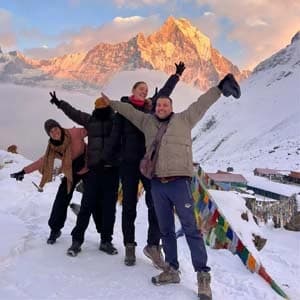
You May Also Like
Did not find the perfect trip? No worries!
Contact us to start planning your tailor-made dream trip!
Need Help? Call Us+977 98510 55520