You explore two beautiful regions, Langtang and Helambu, with their spectacular landscapes and spiritual cultures with sacred lakes, Gosaikunda.
Your Gateway to The Himalayas


Langtang Gosaikunda Lauribina Pass Trek
Trip at a Glance
Duration15 Days
Trip GradeStrenuous
DestinationNepal
Maximum Altitude5,030 m
AccommodationHotel/Tea House
Starts/EndsKathmandu
ActivitiesTrekking
Best TimeMarch to May and September to November
Langtang Gosaikunda Lauribina Pass Trek is one of Nepal’s most rewarding trekking experiences, combining the raw wilderness of the Langtang Valley with the sacred lakes of Gosaikunda. The 15-day itinerary takes you through subtropical forests, alpine meadows, glaciated valleys, remote villages, high-altitude lakes, and mountain passes.
Located just a few hours’ drive from Kathmandu, the Langtang and Helambu regions are among the most accessible Himalayan regions from the capital. Despite its proximity to the city, this trek offers a sense of remoteness and otherworldliness.
It takes you across some of the most iconic Tamang villages, including Langtang Village, Mundu, Kyanjin Gompa, Sing Gompa, and Kutumsang. These traditional communities are often decorated with stone houses, colorful prayer flags, mani walls, chortens, and mani gates, showcasing the rich culture and mountain lifestyle of the Tamang people.
The trek reaches its highest point at 5,030 meters on Tserko Ri. The summit of this well-known viewpoint offers close-up views of Langtang Lirung, Langtang II, Dorje Lakpa, Baden Powell Peak, and Yala Peak. The trek continues with a crossing of Lauribina Pass at 4,610 meters. While it is considered one of Nepal’s most comfortable mountain passes, it certainly stands out as a memorable experience on this journey.
The 15-day adventure offers more than just mountains. It takes you to the sacred Gosaikunda Lake at 4,380 meters. Revered as the holy abode of Lord Shiva and Gauri, this high-altitude lake is a major pilgrimage site for Hindus and Buddhists. Along the way, you’ll also encounter several holy lakes, including Surya Kunda, Barda Kunda, and Nilkantha Kunda. You’ll also visit the centuries-old Buddhist monasteries of Kyanjin Gompa and Sing Gompa to witness the region’s rich cultural heritage.
The trail passes through two of Nepal’s renowned protected areas with exceptional ecological significance—Langtang National Park and Shivapuri Nagarjun National Park. These areas are home to some of the world’s most elusive wildlife, including snow leopards, red pandas, Himalayan tahr, ghoral, Himalayan brown bears, and musk deer. Additionally, they are premier bird-watching destinations with over 350 bird species, including the impeyan pheasant, crimson-horned pheasant, ibisbill, snow partridge, and tragopan.
The Langtang Gosaikunda Lauribina Pass Trek delivers the very best of the Himalayas. It bundles the towering peaks, sacred lakes, glaciated valleys, rich culture, elusive wildlife, and untouched wilderness—all on a single route.
Highlights of Langtang Gosaikunda Lauribina Pass Trek
- Traverse the diverse landscapes of the Langtang and Helambu regions, starting from subtropical jungles to alpine meadows, glacial moraines, and high-altitude wilderness.
- Trek through two of Nepal’s renowned protected areas, Langtang National Park and Shivapuri Nagarjun National Park.
- Reach the summit of Tserko Ri at 5,030 meters and enjoy a breathtaking vista of Langtang Lirung, Langtang II, Dorje Lakpa, Baden Powell Peak, and Yala Peak.
- Explore Nepal’s most beautiful mountain settlements at Langtang Village and Kyanjin Gompa.
- Visit the ancient Buddhist monasteries of Kyanjin Gompa and Sing Gompa.
- Stand beside the sacred lakes of Gosaikunda, Surya Kunda, Barda Kunda, and Nilkantha Kunda.
- Cross the dramatic Lauribina Pass at 4,610 meters, the gateway between the Langtang and Helambu regions.
- Visit two of Nepal’s oldest cheese factories in Kyanjin Gompa and Sing Gompa and taste locally produced yak cheese.
- Enjoy one of the finest sunrise views from Chisapani, overlooking the Himalayas from Dhaulagiri to Mount Everest.
- Experience the rich culture and warm hospitality of the Tamang and Sherpa peoples in the remote mountain villages of the Langtang and Helambu regions.
Langtang Gosaikunda Lauribina Pass Route Overview
The Langtang Gosaikunda Lauribina Pass Trek starts with a scenic 8-hour drive from Kathmandu to Syabrubesi. Leaving the main bazaar, the trail follows the Langtang Khola upstream through dense subtropical forest. The gradual ascent passes through several Tamang settlements, including Bamboo and Rimche, before reaching the teahouse settlement of Lama Hotel.
From Lama Hotel, the trail continues along the Langtang Khola, climbing steeply through thick bamboo and birch forest. After a few hours, you’ll leave the treeline behind and step into the glacial meadows of Ghoda Tabela. The trail passes through several high-altitude settlements, including Thyangsyap, Chyamki, Langtang Village, and Mundu, before reaching Kyanjin Gompa at 3,860 meters. Here, you’ll take a rest day and hike to Tserko Ri at 5,030 meters.
The climb to the summit involves a challenging series of switchbacks over rocky boulders and loose scree. Often regarded as one of the best viewpoints in the Himalayas, the summit of Tserko Ri offers a breathtaking view of Langtang Lirung, Langtang II, Dorje Lakpa, Dagpachen, Changbu, Baden Powell Peak, and Yala Peak.
After spending some time at the top, you’ll retrace your steps to Kyanjin Gompa and then descend to Lama Hotel. From here, the trail branches southwest toward Thulo Syabru, leaving the main Langtang Valley route. Heading out of Thulo Syabru, the trail ascends through dense rhododendron forest to Sing Gompa.
From Sing Gompa, the trail follows the rocky hillside to reach the sacred Gosaikunda Lake at 4,380 meters. You’ll spend a night at a local teahouse by the shores of this sacred lake, soaking in its serene, spiritual atmosphere. Early the next morning, you’ll begin the steep climb through rocky switchbacks to the summit of Lauribina Pass. The high ridge of Lauribina Pass at 4,610 meters separates two of Nepal’s popular trekking regions—the Langtang and Helambu regions.
The trail drops steeply from Lauribina Pass toward the grassy meadows of Ghopte, then continues onto the Helambu ridge. You’ll walk past several small villages, including Thadepati, Magingoth, Kutumsang, and Chisapani, before making the final descent to Sundarijal via Shivapuri Nagarjun National Park. You’ll catch a local bus from Sundarijal Bus Park and drive back to Thamel to conclude your trek.
Why Langtang Gosaikunda Lauribina Pass Trek with Nepal Gateway Trekking?
- Nepal Gateway Trekking stands out as one of Nepal’s leading trekking and expedition companies. Our expert team has decades of firsthand experience operating treks and expeditions in the Langtang and Helambu regions. Our years of knowledge ensure better teahouse selection, genuine cultural connections, and insider knowledge of the region.
- We handle every logistical detail from your arrival in Kathmandu to your departure. We provide airport transfers, accommodations, meals, permits, pre-trek briefings, equipment advice, and 24/7 emergency support throughout the trek.
- We maintain an impeccable safety record through strict protocols. Our safety measures include well-designed acclimatization schedules, daily health checks, comprehensive medical supplies, and emergency evacuation support. Additionally, our team in Kathmandu consistently monitors mountain weather and remains ready to coordinate rescue efforts if needed.
- Our senior guides have over a decade of trekking experience in the Himalayas and are certified in wilderness first aid and mountain rescue protocols. They are trained to recognize early signs of altitude sickness, make crucial safety decisions, and adjust itineraries when necessary.
- We make early reservations at hotels and teahouses to secure the best available rooms, even during busy trekking seasons. This way, you won’t have to spend time searching for accommodations after a long day on the trail.
- We are dedicated to the ethical treatment of every team member. Our guides and porters receive above-industry wages, quality equipment, proper accommodations, insurance coverage, and fair weight limits. We maintain a crew-to-trekker ratio of one staff member for every three trekkers.
- We, at Nepal Gateway Trekking, feel a strong responsibility toward the mountains and communities we pass through. Our practices include reducing single-use plastic, following “Leave No Trace” principles, supporting local businesses, and contributing to trail conservation efforts in the Langtang and Helambu regions.
- We provide each client with an exclusive Nepal Gateway Trekking duffel bag and T-shirt as a souvenir.
Itinerary
This is our standard and recommended Langtang Valley with Gosaikunda Lauribina Pass Trek itinerary.
Trip PlanExpand all
Your Langtang Gosaikunda Lauribina Pass Trek begins with a touchdown at Tribhuvan International Airport in Kathmandu. Upon clearing customs, our airport representative, holding a “Nepal Gateway Trekking” placard, will greet you in the arrivals area and transfer you to your hotel in Thamel.
After checking in, you’ll have a free afternoon to freshen up, rest, and recover. If you arrive in Kathmandu early in the afternoon, you can spend some time exploring the ancient city and acclimating to its bustling atmosphere. You can take a short walk along the old, narrow streets of Thamel, Ason Bazar, and Kathmandu Durbar Square to explore the ancient market centers, bookstores, souvenir shops, historical complexes, royal squares, and centuries-old temples.
In the evening, return to your hotel for a short pre-trek briefing and team introduction. Your lead trekking guide will cover all the essential aspects of the trek, including the trek route, trail conditions, safety protocols, and packing essentials. This is a good time to ask questions, review your gear, and buy any last-minute supplies if necessary.
After an early breakfast, you’ll catch a local express bus from Kathmandu and drive northwest to the trailhead at Syabrubesi. As you head out of Kathmandu, the journey winds through lush valleys, terraced hillsides, rustic villages, and roadside bazaars. On a clear day, you can get a distant glimpse of Annapurna, Manaslu, and Ganesh Himal from the bus window.
The drive mostly follows a narrow, winding road along the Trishuli River, with occasional drop-offs and bumpy stretches. You’ll drive through the bustling Trishuli Bazar before climbing up towards Dhunche. You’ll make a brief stop at the Langtang National Park Checkpost at Dhunche for permit verification and registration. The final stretch of the drive includes an hour-long descent to reach the mountain town of Syabrubesi.
Syabrubesi is a lively Tibetan border town that serves as a gateway to Langtang Valley. Situated at the confluence of the Bhote Koshi and Langtang Khola, this small settlement is clustered with lodges, teahouses, restaurants, cafes, and local markets.
Start the day by enjoying your first mountain breakfast at Syabrubesi. After breakfast, you’ll leave the main bazaar area along a stone-paved trail and cross suspension bridges over the Bhote Koshi and Langtang Khola.
After crossing the bridges, the trail navigates through relatively pleasant grasslands until you reach the teahouse settlement of Pahiro. From here, the trail climbs steadily under the shades of rhododendrons, oaks, maple, and alder trees. On a lucky day, you may spot elusive wildlife such as langurs, red pandas, yellow-throated martens, and wild boar in the forested sections.
You’ll continue the climb along the riverbanks of the Langtang Khola towards the small Tamang settlement of Bamboo. After a short break at Bamboo, the route climbs steeply towards the northern flank of the canyon to arrive at Rimche. The final stretch of the day involves a short, gentle downhill from Rimche to the overnight destination at Lama Hotel.
Heading out of Lama Hotel, the trail continues to ascend steeply through the dense forests along the Langtang Khola. After about an hour, you’ll reach a tiny teahouse settlement at Riverside. From here, you’ll catch a distant glimpse of Langtang Lirung rising above the saddle between two hills.
As the climb continues, you’ll emerge from the treeline onto the high meadows of Ghoda Tabela. After a lunch break at Ghoda Table, the trail menders uphill through a wide valley of yak pastures and seasonal settlements. You’ll walk past several chortens, water-driven mills, prayer wheels, and scenic Tamang villages, including Thyangsyap, Chyamki, and Gompa, before arriving at Langtang Village.
Langtang Village is the largest permanent settlement in the region with numerous mountain lodges, hotels, tea shops, restaurants, and local stores. This settlement was relocated and rebuilt after the 2015 catastrophic earthquake, which destroyed almost the entire original settlement. The new village stands as a testament to the locals’ resilience and features improved amenities, including better accommodation, solar-powered lodges, and Wi-Fi.
Today is a relatively short day. Heading out of Langtang Village, the trail gently climbs through high valleys and yak pastures. After about half an hour of gradual uphill, you’ll reach the small settlement of Mundu.
From Mundu, the trail passes through high alpine shrubs and barberry bushes, across several streams and glacial moraines. With every step, the valley opens up even further, offering extensive vistas of surrounding ridges, mountains, and glaciers.
You’ll walk past a series of water mills, chortens, prayer wheels, and large mani walls. The day ends with a short, steep climb before reaching Kyanjin Gompa, nestled beneath a dramatic amphitheater of towering Himalayan peaks.
At 3,860 meters, Kyanjin Gompa is the highest permanent settlement in the Langtang region. Since you’ll arrive at the village around lunchtime, you’ll have plenty of time to explore the ancient Buddhist monastery and visit the local cheese factory. If time and energy permit, you can also take an afternoon hike to Kyanjin Ri to enjoy the stunning views of the surrounding mountains and glaciers.
This is one of the most challenging days of the Langtang Gosaikunda Lauribina Pass Trek. Today, you’ll wake up around 4 in the morning and begin the full-day hike to Tserko Ri. We strongly recommend dressing in layers, carrying a head torch, and keeping your trekking poles handy for the ascent.
The trail from Kyanjin Gompa climbs steeply through a series of switchbacks towards the top of a ridge. Beyond this point, the hike becomes relentlessly steep, with several twists and turns over rocky boulders and loose scree. After four hours of grueling ascent, you’ll arrive at the prayer-flag-festooned summit of Tserko Ri.
At 5,030 meters, this summit marks the highest point in the Langtang Gosaikunda Lauribina Pass Trek. You can enjoy a jaw-dropping panorama of Langtang Lirung, Langtang II, Dorje Lakpa, Dagpachen, Changbu, Baden Powell Peak, and Yala Peak.
Take some time to soak in the mountain atmosphere before retracing your steps back to Kyanjin Gompa. Upon arriving at the village, you can spend the rest of the evening relaxing by the fireplace at the teahouse.
After breakfast at Kyanjin Gompa, you’ll retrace the route back to Lama Hotel. The trail descends through the settlements of Mundu and Langtang Valley, before arriving at Ghoda Tabela. At this teahouse settlement, you’ll stop briefly for lunch and then continue the steep downhill.
Heading out of Ghoda Tabela, the trail re-enters the forested section of the lower Langtang Valley. The last stretch of the day involves a steep descent towards the settlement of Lama Hotel. After the grueling downhill, take a well-deserved rest at the teahouse and let your knees and legs recover.
Leaving Lama Hotel, the trail first descends to Rimche and then continues down to the Langtang Khola. After crossing the bridge, the trail diverges from the main Langtang Valley route and heads southwest toward Thulo Syabru.
The route gently climbs over several small ridges and enchanting forested hills, shrouded in bamboo, juniper, and pine trees. Along the way, you’ll get occasional glimpses of Langtang Himal peeking between the trees. After a few hours of gradual climb, you’ll arrive at Thulo Syabru to settle in for the night.
Thulo Syabru is a traditional Tamang town with several stone-built houses, local teahouses, stocked shops, and terraced farmlands. Nestled on the sunny ridgeline, this spread-out settlement offers a spectacular view of Langtang Himal and Ganesh Himal. You can spend the rest of the afternoon exploring the town and visiting the Buddhist monastery.
The day begins with a steep ascent out of Thulo Syabru through thick rhododendron and oak forest. In spring, this forested section blooms with rhododendrons in shades of red, pink, and white. After a few hours of uphill, you’ll arrive at the small settlement of Dursagang. On a clear day, you’ll get a striking view of Langtang Lirung and Dorje Lakpa from the village.
As you ascend further, the trail eventually emerges at the top of Phoprang Danda, with even better views of the Ganesh Himal. The lush rhododendron and oak trees gradually give way to high-altitude forests and alpine meadows. The final section of the trail winds around the forested hillside, gradually climbing to the settlement of Sing Gompa.
Sing Gompa, also known as Chandanbari, is a small monastery settlement with around 10-12 basic teahouses. It serves as a three-way junction for trails leading to Dhunche, Thulo Syabru, and Laurebina. This small settlement is home to an ancient Buddhist monastery and a local yak cheese factory.
After breakfast, you’ll begin the day with a gradual climb through lush rhododendron forests towards a small ridge. From here, the route contours along the hillside before reaching the teahouse settlement of Cholang Pati at 3,585 meters.
Heading out of Cholang Pati, the route follows a wide path with handrails for much of the course. You’ll slowly emerge from the treeline into the high grasslands with juniper shrubs and grazing yaks at Lauribina. From here, the trail climbs steeply on a narrow, rocky hillside towards Goasaikunda. Along the way, you’ll get distant views of Saraswati Kunda and Bhairav Kunda to the right.
Gosaikunda is one of Nepal’s most sacred alpine lakes, holding deep religious significance for Hindu and Buddhist pilgrims. This holy lake sits at 4,380 meters in a glacially carved cirque, surrounded by rugged, rocky peaks. It is one of the most popular pilgrimage destinations, particularly on the auspicious day of Janai Purnima in July, when thousands of devotees make the climb to take a holy dip in the icy-cold waters.
Spend the rest of the afternoon by the lakeshore, soaking in the view, or circumambulate the sacred waters of Gosaikunda.
This is one of the longest and most challenging days of the entire Langtang Gosaikunda Lauribina Pass Trek. After an early breakfast, you’ll start the walk at first light on the eastern side of Gosaikunda Lake. Compared to other mountain passes in Nepal, Lauribina Pass is considered relatively easy due to its gradual ascent and well-maintained path.
You’ll pass several small lakes on the way to the summit of the pass, including Barda Kunda, Nilkantha Kunda, and Surya Kunda. After roughly two hours of steady climbing, you’ll reach the top of Lauribina Pass, marked by colorful prayer flags and an emergency shelter. The ridge of Laurbina Pass separates two of Nepal’s popular trekking regions—the Langtang Valley and Helambu.
After spending some time at the pass and enjoying the breathtaking mountain scenery, you’ll start the steep descent down stone-built staircases towards Phedi High Camp. The descent from Lauribina Pass to High Camp is steeper than the ascent on the opposite side of the pass. Shortly before reaching Phedi, the trail re-enters the treeline.
The trail from Phedi to Ghopte follows a series of switchbacks through lush forest and grassy meadows. Once in Ghopte, enjoy some downtime by the fireplace to recover from the day’s strenuous walk.
Heading out of Ghopte, the trail descends gently through the beautiful rhododendron forest. After a short while, the trail begins to climb, eventually emerging from the forest onto the broad ridge of Thadepati. Nestled on a hilltop, this small teahouse settlement offers splendid views of Langtang and Jugal Himal.
Soon after leaving Thadepati, you’ll reach a three-way junction where trails branch toward Gosaikunda, Helambu, and Magingoth. You’ll take the straight route towards Magingoth and continue descending on the stone staircases through lush forest.
After a lunch break at Magingoth, the route is mostly downhill all the way to Kutumsang. Before entering the village, you’ll make a brief stop at an army checkpost for a bag and permit check. After days in the remote Himalayas, Kutumsang offers more comforts, including hot showers, attached rooms, reliable mobile data, and paid Wi-Fi.
Despite the long distance, much of this day involves a gradual, comfortable walk. Leaving Kutumsang, the trail navigates through the beautiful ridges of Helambu. You’ll pass through several scenic Sherpa and Tamang villages, including Gul Bhanjyang and Pati Bhanjyang.
The trail continues zigzagging along the ridge, offering a distant panorama of Langtang, Ganesh Himal, and Jugal Himal. The forests here are among the finest in the Helambu region, with thick rhododendron and oak trees draped in moss and lichen. On a lucky day, you may spot a variety of birdlife in this section, including the Spiny Babbler, Golden-breasted Tit, flycatchers, laughingthrushes, and warblers.
The final section of the day involves a gentle downhill through dense woodlands and grassy meadows towards Chispani. Nestled on top of a ridge, Chisapani is a popular overnight stop, known for its spectacular sunrise and panoramic mountain views. On a clear day, you’ll get sweeping views of the Himalayas, ranging from Dhaulagiri to Mount Everest.
The final morning of the trek begins with a spectacular sunrise view over the Himalayas from Chisapani. After breakfast, the route climbs steeply for about half an hour towards the ridge of Borlang Bhanjyang. From here, you’ll descend steadily southwards through the lush subtropical forest of Shivapuri Nagarjun National Park.
The trail follows the well-maintained path of the national park toward the small settlement of Mulkharka. This Tamang village has a few teahouses, restaurants, local shops, and roadside eateries. The descent from Mulkharka to Sundarijal is short and gradual along the banks of the Bagmati River.
After lunch at Sundarijal, you’ll catch a local bus from the nearby bus park and drive to Kathmandu. The drive passes through the suburbs of Gokarna, Jorpati, and Boudha before reaching your hotel in about one and a half hours. Upon arrival, check into your hotel, enjoy a well-deserved shower, and stroll around Thamel to buy souvenirs for family and friends.
You can start your final morning in Nepal at a relaxed pace. After a scrumptious breakfast at the hotel, pack your bags and prepare your documents for the international flight. Depending on your flight schedule, you may have time for last-minute shopping if you didn’t manage to do it last evening.
Our airport representative will arrive at the hotel lobby approximately 3.5 hours before your departure time to transfer you to Tribhuvan International Airport. Before checking out of the hotel, make sure you have all your belongings and essential travel documents.
Nepal Gateway Trekking wishes you a safe flight home. Until our next adventure!
If the above itinerary doesn’t meet your needs, we can design a Tailor-Made Program based on your travel plans and requirements,Reach our travel experts.
Dates & Availability
Private tripSelect Departure Dates
Oct 2026
Nov 2026
Dec 2026
Jan 2027
Feb 2027
Mar 2027
Apr 2027
May 2027
Jun 2027
Jul 2027
Aug 2027
Sep 2027
Oct 2027
Nov 2027
Dec 2027
Departure Date
Price
Status
Cost Includes
- Complimentary airport pickup and drop-off services.
- All ground transportation is as per the program by local express bus and private vehicle.
- Two nights' accommodation at a three-star category hotel in Kathmandu, including breakfast.
- Your three meals (breakfast, lunch, and dinner) on the Langtang Gosaikunda Trek.
- Twin-sharing accommodations during the trekking.
- A highly experienced, well-trained government license holder and English-speaking trekking guide.
- Required porters (1 porter between 2 trekkers). A porter is not included for solo trekkers.
- Langtang National Park permit.
- TIMS card (Trekkers Information Management System).
- Langtang Gosaikunda Lauribina Pass Trekking Map.
- Nepal Gateway Trekking Company T-Shirt.
- Nepal Gateway Trekking duffle bags for trekking.
- Fresh local fruits (apple, orange, pomegranate, etc.), which will be served as dessert after dinner.
- First aid kit with an oximeter to monitor heartbeats and oxygen levels regularly.
- All government taxes.
- Office service charges.
Cost Excludes
- Lunches and dinners in Kathmandu.
- Travel insurance.
- International flight tickets to and from Kathmandu.
- Nepal entry visa fee.
- All kinds of hot drinks (tea, coffee, hot water) on the trek.
- Cold drinks (mineral water, Coke, and Fanta) and alcoholic beverages during the trip.
- Your first aid kit, equipment, and items of a personal nature.
- Battery charging fees for electronic devices (mobile, camera, laptop, etc.) during the Langang hike.
- Snacks and desserts (apple pie, chocolate pie, chocolate bar)
- Tips for trekking staff and drivers. Tipping is expected but not mandatory.
- Extra accommodations in Kathmandu.
Route Map

Trip Gallery


Good To Know
Langtang Gosaikunda Lauribina Pass Trek Cost
Our 15-day Langtang Gosaikunda Lauribina Pass Trek costs USD 1,070 per person. Typically, the trek cost covers all logistics from your arrival at Kathmandu Airport to your final departure, including guides, porters, accommodation, permits, and transportation.
Our standard package includes a 3-star hotel in Kathmandu and teahouse accommodation during the trek. Breakfast is provided at the hotel in Kathmandu, while all three meals (breakfast, lunch, and dinner) are included throughout the trek. The package also includes private ground transfers for airport pickups, hotel drop-offs, and local transportation to and from the trailhead.
The package fees cover the daily wages and salary of the lead guide, porters, and crew members who handle navigation, luggage transport, and safety support. Additionally, a large portion of the cost covers travel insurance, emergency support planning, and trekking equipment for all ground staff.
Groups are eligible for special discounts of up to USD 120 per person, depending on the number of trekkers. Feel free to contact us with your preferred travel dates, group size, budget range, and any special requirements to receive a customized itinerary and quote.
Note: Our package cost does not include international flights, visa fees, travel insurance, gear purchase, tips, or personal expenses during the trek.
Best Time for Langtang Gosaikunda Lauribina Pass Trek
As with most trekking regions in Nepal, autumn and spring bring out the best in the Langtang Gosaikunda Lauribina Pass Trek. While this trek can be attempted year-round, these months provide the best conditions for high-altitude trekking.
Autumn (September to November)
Autumn is considered the best trekking season in the Himalayas of Nepal. The post-monsoon atmosphere delivers arguably the most consistent weather and clear skies. The mountains and landscapes remain at their absolute best, making this the favorite season for mountain lovers and photographers.
Daytime temperatures are perfect for long-distance walking, ranging from 10°C to 16°C at lower regions and 0°C to 8°C at higher regions. Nighttime temperatures can plunge from 0°C to -10°C, depending on altitude.
October offers the perfect balance of stable weather, clear views, comfortable temperatures, and a vibrant festive atmosphere. It also sees minimal precipitation, ensuring more reliable and safer conditions for crossing Lauribina Pass and hiking to Tserko Ri.
However, the best trekking conditions bring an outrageous number of trekkers to the Langtang and Helambu regions. Most teahouses and rest stops along the trail are packed with trekkers and mountaineers during these months.
Spring (March to May)
Spring is another exceptional trekking season for the Langtang Gosaikunda Lauribina Pass. These months bring stable weather, mild temperatures, crisp mountain views, and blooming wildflowers. While the forested areas in the lower section are in full bloom, with a variety of wild flora, including rhododendron, birch, and orchids, the high alpine meadows are carpeted with colorful wildflowers.
Temperatures in spring are comparable to those in autumn but slightly warmer. Daytime temperatures remain warm, ranging from 15°C to 20°C at lower regions and 5°C to 10°C at higher regions. Nighttime temperatures can drop to -5°C or below at altitudes above 4,000 meters.
Spring mornings typically offer the clearest skies and best mountain views of the year. By late afternoon, however, the clouds build up progressively and disrupt the visibility. The extended daylight hours of spring allow you to maintain a steady pace and safely tackle challenging sections like Tserko Ri and Lauribina Pass.
After autumn, spring brings the second-highest number of trekkers to the Langtang region. So, prepare yourself for crowded teahouses and rest stops during these months.
Winter (December to February)
Winter transforms the Langtang region into a snow-covered wilderness. These months bring extreme conditions for trekking, including heavy snowfalls, blistering cold, strong winds, and occasional snowstorms.
If you’re willing to brave the extreme conditions, early December and late February can still offer good trekking conditions. During this time, the trails are far less crowded compared to peak seasons. Winter skies typically remain crystal clear, offering exceptional views of snow-covered peaks against deep blue skies. You may also witness the rare beauty of the frozen Gosaikunda Lake.
Nonetheless, these months demand serious commitment and prior high-altitude experience. January is the coldest month, with average temperatures ranging from 5°C to -15°C. Many teahouses in the upper sections close entirely as locals move to lower altitudes to escape the harsh conditions.
Trails to Tserko Ri and across Lauribina Pass are often covered in deep snow, making them extremely challenging, or even impassable, without basic mountaineering skills and equipment. Therefore, we do not recommend winter trekking for beginners without prior high-altitude experience.
Monsoon (June to August)
The monsoon is generally considered the least favorable season for trekking in Nepal as it brings heavy, persistent rainfall. While the upper sections of the Langtang region receive less rainfall, the lower forested areas often have muddy trails, slippery sections, leeches, and an increased risk of landslides.
Daytime temperatures remain warm, ranging from 10°C to 25°C at lower altitudes and 0°C to 15°C at higher altitudes. Nighttime temperatures average around 0°C to 5°C. Unlike in peak seasons, the mountain views are often obscured by thick cloud cover for much of the day during these months.
If you time your trek during Janai Purnima in August, you’ll get to witness a rare sight of spiritual devotion in Gosaikunda. During this time of year, this holy lake becomes one of Nepal’s major pilgrimage sites, as thousands of pilgrims and shamans gather to bathe in its sacred waters and perform rituals honoring Lord Shiva.
Langtang Gosaikunda Lauribina Pass Trek Permit
For Langtang Gosaikunda Lauribina Pass Trek, you’ll need to obtain three different permits—the Langtang National Park Permit, the Shivapuri Nagarjun National Park Entry Permit, and the TIMS Card.
Langtang National Park Permit
The Langtang National Park Permit is your official entry ticket into Langtang National Park. Established in 1976, this protected area covers 1,710 square kilometres of glaciers, forests, and high-altitude wilderness. Trekkers must carry this permit at all times during the trek, as it will be checked at several checkpoints, including Dhunche, Syabrubesi, Ghoda Tabela, and Kutumsang. The fees collected from the permit are used to protect the region’s endangered species and its fragile alpine ecosystem.
Where can you get the Langtang National Park Permit?
You can obtain the Langtang National Park Permit at the Nepal Tourism Board Office in Kathmandu or at the Dhunche Checkpoint. The permit costs USD 30 for foreign nationals and USD 15 for SAARC citizens.
Shivapuri Nagarjun National Park Entry Permit
Langtang Gosaikunda Lauribina Pass Trek passes through Shivapuri Nagarjun National Park towards the end of the journey. Entering the park at Chisapani, you continue the walk within this protected area until Sundarijal. You must obtain a separate permit to access this section. The national park spans 159 square kilometers, covering parts of Kathmandu, Nuwakot, Sindhupalchowk, and Dhading. The permit fees are used to protect the region’s elusive wildlife and maintain the trails.
Where can you get the Shivapuri Nagarjun National Park Permit?
You can obtain the Shivapuri Nagarjun National Park Permit at the Nepal Tourism Board Office in Kathmandu or at the park entry gate in Chisapani. The permit costs USD 8 for foreign nationals and USD 5 for SAARC citizens.
TIMS Card (Trekkers’ Information Management System)
The TIMS Card is another mandatory trekking permit required for the Langtang Gosaikunda Lauribina Pass Trek. Managed jointly by the Nepal Tourism Board (NTB) and the Trekking Agencies Association of Nepal (TAAN), this permit ensures trekkers’ safety and controls illegal trekking activities. A portion of the fees collected from the TIMS Card is used to fund the insurance of trekking staff.
Where can you get the TIMS Card?
You can obtain the TIMS card at the Nepal Tourism Board (NTB) and Trekking Agencies Association of Nepal (TAAN) offices in Kathmandu. The TIMS Card costs USD 10 for foreign nationals and USD 6 for SAARC citizens.
Langtang Gosaikunda Lauribina Pass Trek Difficulty
Langtang Gosaikunda Lauribina Pass Trek is a moderately challenging, high-altitude trek suitable for seasoned trekkers and determined beginners alike. Although the trek does not require prior high-altitude experience or technical skills, it involves steep sections, rocky terrain, mountain passes, landslide-prone areas, and narrow ridges.
Altitude is the single biggest challenge on the Langtang Goasaikunda Lauribina Pass Trek. The route passes through several high-altitude settlements, eventually reaching 5,030 meters at Tserko Ri and crossing Lauribina Pass at 4,610 meters. The low oxygen levels and thin air pressure at these altitudes constantly expose you to the risk of acute mountain sickness (AMS), regardless of age or fitness level. Therefore, you should maintain a steady pace and let your body adjust naturally during the trek.
While much of the route is well-maintained with stone-paved paths, there are a few treacherous sections in the upper reaches of the trek. These sections are rough, rocky, and occasionally covered in thick snow, making navigation more difficult. The hike from Kyanjin Gompa to Tserko Ri involves a relentless climb on a rocky ridge. Moreover, the ascent over Lauribina Pass involves steep sections with potential snow cover, strong winds, and unpredictable weather.
On average, the trek requires 6 to 8 hours of walking per day on uneven terrain over 12 days. Therefore, it demands decent physical fitness and cardio conditioning. Compared to other trekking areas, the teahouses and mountain lodges here are fairly basic.
The difficulty of the trek can also vary by season. During winter or the monsoon season, you may encounter harsh weather conditions, including heavy snowfall, freezing temperatures, strong winds, and occasional snowstorms. If you plan your trek during these months, make sure you prepare thoroughly and carry appropriate gear to handle setbacks.
Training for Langtang Gosaikunda Lauribina Pass Trek
Langtang Gosaikunda Lauribina Pass Trek is a moderate adventure that requires good fitness, proper preparation, and mental resilience. This 15-day journey involves numerous days of walking over steep, high-altitude terrain and crossing a 4,610-meter mountain pass.
Whether you’re a beginner or an experienced trekker, we strongly recommend 8 to 12 weeks of well-balanced, dedicated training before the trek. Your training plan should include cardio exercises, strength training, stretching, and breathing exercises.
The goal of your training is to progress gradually and arrive at the trailhead confident in your physical abilities. It’s important to avoid pushing too hard during training, as this can lead to muscle cramps, excessive fatigue, and serious injuries.
Cardiovascular Endurance
The Langtang Gosaikunda Lauribina Pass Trek typically involves 7 to 9 hours of high-altitude walking. Such effort demands consistent aerobic capacity and a strong cardiovascular system. Therefore, your training should include steady-state cardio to boost stamina and lung capacity, helping your body cope better with lower oxygen levels.
Begin with low-intensity activities like jogging, brisk walking, cycling, swimming, and jump rope to build a solid aerobic base. Target 3-4 cardio sessions per week, starting with 30-minute workouts and gradually increasing to an hour.
Strength Training
Strong legs are non-negotiable on the Langtang Gosaikunda Lauribina Pass Trek. Your knees, quads, and ankles are constantly under a lot of stress on steep ascents and long descents. A balanced routine to strengthen your legs can make these sections more manageable and enjoyable.
Focus on leg exercises like squats, lunges, single-leg exercises, and step-ups to replicate the movement patterns encountered on the trek. We highly recommend starting with bodyweight and gradually adding weight as you get stronger to challenge your muscles. Aim for at least four strength sessions a week with two sets of 10 to 12 repetitions.
Core Stability and Balance
Having a strong core can make a significant difference in technical sections above 4,000 meters. Although often overlooked, core stability improves balance on uneven terrain, protects your lower back during long ascents, and reduces overall fatigue.
Incorporate exercises like planks, dead bugs, single-leg balance, and bird dogs into your training routine to build core strength and stability. Regular yoga can also be highly beneficial, as it develops deep stability and flexibility that traditional gym exercises may miss. Aim for at least four core and stability sessions per week, each lasting about 15-20 minutes.
Stretching
Joint mobility and muscle recovery are as important as strength and endurance for this trek. Daily stretching enhances joint mobility, improves stride efficiency, reduces injury risk, and accelerates muscle recovery. Add 15-20 minutes of dynamic stretches focusing on the hip flexors, quads, hamstrings, calves, ankles, and lower back before each session.
Moreover, you should include static stretching after every training session or at the end of your trekking days, while muscles are warm. A short stretching routine will reduce muscle soreness and stiffness. It also improves blood circulation, aids muscle recovery, and improves oxygen delivery to the body.
Conditioning Hikes
Conditioning hikes are the single most important part of your training. No amount of gym work can fully replicate the terrain and conditions of an actual trek. So, look for a suitable hiking route near your home and go on weekly or biweekly hikes. These hikes help train your body for sustained effort, build foot and ankle resilience, and allow you to get comfortable with your gear.
We recommend starting with 3-kilometer hikes with a lightweight pack in the early weeks. Over time, increase the distance, intensity, and pack weight to enhance your condition. You can also practice stair climbing or train on an inclined treadmill to condition your legs for steep sections.
We strongly recommend using your conditioning hikes to test all your gear. Wear the same boots, use your trekking poles, and carry a fully loaded backpack to get comfortable with them. This also helps identify any issues with your gear, which are better fixed at home than on the trail.
Altitude Preparation
The Langtang Gosaikunda Lauribina Pass Trek is a high-altitude adventure that involves hiking to Tserko Ri at 5,030 meters and crossing Lauribina Pass at 4,610 meters. At this elevation, you’re constantly at risk of acute mountain sickness (AMS). You must allow your body to acclimate properly and stay aware of altitude-related risks to complete the trek safely.
If you live at sea level, training alone cannot replicate the effects of reduced oxygen at altitude. The best way to prepare is to hike in high hills or mountains. You can also practice breathing and aerobic exercises to boost your lung capacity. Although not essential, you can consider altitude-simulation options, such as hypoxic tents or training chambers, if they are available in your city.
You can also support acclimatization by pacing your walks, getting enough sleep, staying hydrated, eating a high-carb diet, and avoiding stimulants during the trek.
Rest and Recovery
Rest days are an essential part of your training schedule. Your body requires downtime to recover and build muscle strength between intensive training sessions. Overtraining often leads to excessive fatigue and increases the risk of injury.
Therefore, we recommend having at least two rest days a week to restore energy, prevent burnout, and repair muscles. You can engage in some light activities, such as stretching, foam rolling, and gentle yoga, on rest days to maintain conditioning and reduce muscle soreness. On these days, make sure to prioritize sleep, nutrition, hydration, and recovery.
In the last two weeks before the trek, taper your training intensity by 40% to 50% to ensure you arrive fresh and well-rested.
Acclimatization and Safety
Langtang Gosaikunda Lauribina Pass Trek is a multi-day, high-altitude adventure that involves trekking above 2,500 meters for most of the journey. The route also climbs to Tserko Ri at 5,030 meters and crosses Lauribina Pass at 4,610 meters. At these altitudes, oxygen levels decrease by about 40-45% compared to sea level, making altitude the biggest challenge on this trek.
Altitude symptoms can appear anywhere above 2,500 meters. Most trekkers begin to experience mild altitude symptoms above 4,000 meters. Mild symptoms, such as headache, fatigue, dizziness, loss of appetite, disturbed sleep, and shortness of breath, are common and manageable when recognized and treated early.
Our itinerary for the Langtang Gosaikunda Lauribina Pass Trek is designed with acclimatization in mind. The gradual ascents through the Langtang Village, along with a dedicated rest day at Kyanjin Gompa, allow your body to adapt naturally to the altitude.
Things You Should Do to Acclimatize
- Walk slowly and maintain a steady pace during the trek to aid acclimatization. On shorter days, take brief afternoon hikes at higher elevations to help your body naturally adapt to the thinner air.
- Drink at least 4-5 liters of water each day to stay properly hydrated. Dehydration accelerates the onset of altitude symptoms. We recommend keeping a water bottle or hydration bladder within reach and sipping a small amount throughout the day, even if you don’t feel thirsty. You can also add electrolyte tablets or powders to help your body retain fluids more effectively and cope with altitude.
- Loss of appetite is a common and frustrating side effect of altitude. However, your body needs consistent fuel to acclimatize and maintain energy during the trek. Therefore, you should never skip your meals, even if you don’t feel hungry. Eat carbohydrate-rich foods like dal bhat, pasta, potatoes, and bread to maintain your energy levels and support digestion.
- Alcohol and tobacco are known to interfere with acclimatization by causing dehydration and disrupting breathing patterns. We strongly recommend avoiding or limiting these substances during ascents.
- Always dress in a three-layer system at high altitude to protect against harsh weather and regulate body temperature. Be sure to cover your head, neck, and arms to reduce heat loss and prevent sunburn.
- Make a habit of checking in with yourself to identify early symptoms. If you notice any symptoms, reach out to your senior guide immediately. Our guides are trained to recognize the early signs of AMS and prevent the condition from worsening.
- It is much better to take frequent short breaks during the trek to adapt to the altitude and reduce fatigue. Pause for five minutes each hour to maintain a steady heart rate and avoid breathlessness. At higher elevations, you should practice slow, deep breathing to boost oxygen intake and prevent hyperventilation.
Travel Insurance
The Langtang Gosaikunda Lauribina Pass Trek is a challenging high-altitude adventure that involves multi-day trekking, a climb to Tserko Ri at 5,030 meters, and crossing Lauribina Pass at 4,610 meters. At these elevations, the risks of injuries, altitude sickness, and weather-related emergencies are significant.
Because of this, travel insurance is mandatory to participate in the Langtang Gosaikunda Lauribina Pass Trek with Nepal Gateway Trekking. Although it’s not legally required by the Government of Nepal, we strictly ask for it during the booking process to ensure you are protected in emergencies and for medical support.
Below are some logistical requirements your insurance policy should cover for the Langtang Gosaikunda Lauribina Pass Trek.
- As the trek reaches a maximum altitude of 5,030 meters at Tserko Ri, your travel insurance must cover high-altitude trekking up to at least 5,500 meters. Many standard policies exclude trekking or impose altitude limits, so always check that your plan explicitly covers both the activity and the maximum elevation before purchasing.
- Helicopter evacuation from the mountains to Kathmandu can cost thousands of dollars. Make sure you purchase an insurance policy that covers emergency helicopter evacuations and rescue operations up to 5,500 meters to avoid financial burdens.
- Given the physical demands and altitude-related risks, your insurance policy must cover medical expenses for altitude sickness or accidental injuries, including hospitalization in Nepal and medical repatriation to your home country.
- It’s recommended to choose a travel policy that covers trip cancellation, personal liability, and protection against loss or theft of personal belongings, trekking gear, and travel documents.
Pro Tip: Provide a digital copy of your insurance certificate at least two weeks prior to arrival. This allows us to coordinate with your insurer and emergency rescue teams if needed.
Accommodation
On your arrival and departure nights in Kathmandu, you’ll stay at a well-appointed 3-star hotel in Thamel. The hotel offers clean, comfortable rooms, en-suite bathrooms, hot showers, reliable Wi-Fi, and air conditioning.
On the trail, you’ll stay in the best available teahouses or mountain lodges at each overnight stop. These traditional family-run facilities provide basic rooms, shared bathrooms, and a communal dining hall. Rooms are often simple but comfortable, with twin or triple beds, foam mattresses, mink blankets, and pillows. Only a few guesthouses in Syabrubesi, Thulo Syabru, and Kyanjin Gompa have en-suite bathrooms.
The dining area is usually the largest, most decorated, and busiest part of the teahouses, where trekkers gather for meals and relaxation. It is often kept warm and inviting by a traditional wood-burning stove at the center. Despite their simple facilities, these teahouses offer a warm, welcoming atmosphere where you can rest comfortably and experience genuine local hospitality.
Meals
Our standard package includes breakfast in Kathmandu and all meals—breakfast, lunch, and dinner—during the trek. The meals are prepared fresh and served at teahouses. The menu options, even in the upper Langtang region, are quite diverse, featuring a mix of Nepali staples, Tibetan delicacies, and Western dishes.
Breakfast options include Tibetan bread, chapati, porridge, muesli, pancakes, eggs, and toast. The teahouses usually serve breakfast with a hot drink of your choice, typically tea or coffee. For lunch and dinner, the classic Nepali Dal Bhat is the most popular choice among trekkers, guides, and porters alike. This traditional Nepali meal consists of steamed rice, lentil soup, vegetable curry, and pickles.
Other popular options include noodles, pasta dishes, spaghetti, momo, thukpa, thenduk, chowmein, vegetable soup, fried rice, and potato dishes. Vegetarian options are plentiful throughout the trek. Although meat dishes are available in most teahouses, we strongly suggest avoiding them above 2,500 meters.
You can also find snacks and chocolate bars at small shops and teahouses along the trail. However, we recommend bringing your own snacks, such as energy bars, nuts, dried fruit, and chocolate, to supplement meals and sustain energy on long trekking days.
Drinking Water
Teahouses in the Langtang and Helambu regions provide tap and boiled water. Although many locals, guides, and porters drink untreated tap or stream water, we strongly advise against doing so. Untreated water can cause serious waterborne illnesses that could ruin your entire trek.
Instead, carry a filtered water bottle and refill it with boiled water at each teahouse and rest stop. Boiled water is the safest choice in the Himalayas. Most teahouses in the Langtang region charge USD 1-5 for a liter of boiled water. While safer, we recommend using purification drops or tablets to further treat the water before drinking. Also, bring a few packs of electrolyte powder or flavored options to improve taste and hydration.
Although teahouses and shops along the Langtang trail sell bottled water, we advise against buying it for environmental reasons.
Hot Shower
Hot showers are available at most teahouses along the Langtang Gosaikunda Lauribina Pass Trek for a small fee. In lower villages like Syabrubesi, Thulo Syabru, and Chisapani, you can typically expect gas-powered hot showers for around USD 2-5.
In more remote, high-altitude villages, teahouses usually offer bucket showers heated with wood-fired stoves. Water is often limited to a single bucket, enough for a quick wash, to conserve resources.
We recommend avoiding showers above 3,500 meters due to the risk of extreme cold and hypothermia. Consider skipping showers for a few days at higher altitudes, then freshen up properly once you descend to lower elevations. If you’re uncomfortable skipping showers for a few days, a damp towel or wet wipes can be a practical alternative.
Mobile Network and Internet Connectivity
Mobile network and internet access are available in most parts of the Langtang and Helambu regions. Major carriers like Nepal Telecom and Ncell offer reliable network and 4G services throughout much of the lower Langtang Valley. The coverage works well for standard voice calls, text messaging, and social media platforms.
Signal becomes unreliable, with little to no coverage, as you ascend to the upper villages of Langtang and Gosaikunda. Wi-Fi is available in most teahouses along the route for a small fee of USD 4-5 per device. While internet speed is decent in the lower valleys and larger villages, it becomes less consistent in the remote, high-altitude villages. At high altitude, Wi-Fi connectivity can also be affected by heavy usage, technical issues, and bad weather.
We recommend letting your family and friends know that communication might be limited during the trek and contact them whenever possible.
Electricity
Electricity is available in nearly all teahouses along the main trail of the Langtang Gosaikunda Lauribina Pass Trek. In the lower areas, electricity is primarily supplied by local hydroelectric stations. In the upper regions, most teahouses still depend on solar power.
Charging facilities for your mobile phones, cameras, and other electronic devices are available throughout the trail. In lower villages like Syabrubesi and Thulo Syabru, most teahouses have charging sockets in their rooms and include charging facilities in the room rates. In the upper villages, however, teahouses offer communal charging stations in the dining halls that often fill up quickly during busy seasons. Expect to pay around USD 2-5 per hour or per device for charging.
Since many teahouses rely on solar power, charging availability depends on the weather. On cloudy days, it may be limited or unavailable. Therefore, we strongly recommend bringing spare batteries and a power bank (20,000 mAh or higher) to keep essential devices like phones, cameras, and headlamps charged.
ATMs and Money Exchange
Most teahouses and local shops in the Langtang region do not accept foreign currency or card payments. They prefer transactions in Nepalese Rupees (NPR). Therefore, you should carry enough cash for unexpected expenses, including snacks, drinks, hot showers, Wi-Fi, and charging batteries.
Syabrubesi is the last stop along the trail with ATMs and currency exchange services. However, these facilities are often out of cash or out of order. It’s best to exchange your currency in Kathmandu for better rates and reliability. While most exchange centers offer similar rates, it’s worth comparing a few places in Thamel to find the best deal.
Kathmandu’s commercial neighborhoods offer plenty of 24-hour ATMs for cash withdrawals. However, most transactions incur a fee of around USD 4–5. While many machines display Visa or Mastercard logos, they don’t always accept international cards. For international transactions, ATMs operated by Standard Chartered, Nabil Bank, or Himalayan Bank are considered the most reliable options in Nepal.
Guide and Porter Information
For the Langtang Gosaikunda Lauribina Pass Trek, we provide an experienced team of English-speaking guides, porters, and crew members to ensure safety, comfort, and a smooth adventure. Our lead guide is the most critical member of all our treks and expeditions. Therefore, all trekking guides at Nepal Gateway Trekking are WFR-certified and have comprehensive training in first aid, mountain rescue protocols, and altitude sickness management.
Our trekking guides have extensive high-altitude experience and offer valuable insights into the local culture and mountain lifestyle of the Langtang region. They are primarily responsible for route navigation, team coordination, and overall logistics. Additionally, they are trained to make critical safety decisions, including monitoring altitude-related symptoms, evaluating weather and trail conditions, and adjusting the pace to ensure a safe and successful journey.
Our porters are the backbone of every trek and expedition. These highly dependable individuals transport your luggage and essential supplies across the high-altitude terrain of the Langtang region to ease your physical load. At Nepal Gateway Trekking, we enforce strict weight limits and maintain an appropriate porter-to-trekker ratio to protect the health and well-being of our porters.
We also follow the ethical guidelines of the International Porter Protection Group (IPPG), offering wages above industry standards, proper equipment, comprehensive insurance, and suitable accommodations. Moreover, we conduct annual training and workshops on safety, first aid, and responsible practices to maintain high standards.
Gratitude for the Trekking Crew
Tipping is a common way to show appreciation to your trekking crew. Although not mandatory, this small gesture is generally expected and appreciated in Nepal’s trekking industry. For most guides, porters, and field staff, tips make up a significant part of their income and livelihood.
You can tip any amount you feel is appropriate based on the quality of their service, trek duration, difficulty, and group size. If you’re unsure, a general guideline is to tip about 10-15% of the trip cost to the lead guide and about 10% to the porters and field staff. The best practice is to give your guides and crew members tips in individual envelopes at the farewell ceremony in Chisapani or Sundarijal.
Although cash tips are most appreciated, crew members also welcome non-monetary gestures. You can donate gently-used gear, such as trekking boots, down jackets, clothing, or accessories. You can also support them by leaving honest reviews and sharing your experience on online platforms or personal blogs to help their future work opportunities.
FAQs
Syabru Besi is the starting point of the Langtang Gosaikunda Lauribina Pass Trek. If you want to travel by public bus, you must take an early morning bus ride from Macchapokhari. If you can afford the extra cost of a comfortable private four-wheel jeep drive, you can start any time before 9 a.m. from your hotel.
The Langtang Gosaikunda Lauribina Pass Trek is rated as a moderate-to-challenging adventure due to high altitudes, long trekking days, and the need to cross a high mountain pass. It involves two weeks of walking over rough mountain terrain, averaging 6 to 8 hours per day.
Although this trek does not include any technical sections, good physical fitness, mental resilience, and prior trekking experience are strongly recommended. The most demanding days of the Langtang Gosaikunda Lauribina Pass Trek are the Tserko Ri hike on Day 6 and the Lauribina Pass crossing on Day 11.
The best seasons for the Langtang Gosaikunda Lauribina Pass Trek are autumn (September to November) and spring (March to May). October and April are especially considered the best months, offering the most reliable weather, clearest skies, and the best mountain views.
Although this trek is doable during winter (December to February) and monsoon (June to August), we advise against it unless you are an experienced trekker. These months tend to bring extreme cold, poor visibility, slippery trails, and obscured mountain vistas.
The Langtang Gosaikunda Lauribina Pass Trek reaches its highest point at 5,030 meters on Tserko Ri. The summit offers stunning views of Langtang Lirung, Langtang II, Dorje Lakpa, Dagpachen, Changbu, Baden Powell Peak, and Yala Peak. Along the trail, you’ll stay overnight in Gosaikunda at 4,380 meters and cross Lauribina Pass at 4,610 meters.
Yes, altitude sickness is a serious concern on the Langtang Gosaikunda Lauribina Pass Trek. Much of the trek involves walking above 2,500 meters, summiting Tserko Ri (5,030 meters), and crossing Lauribina Pass (4,610 meters). At these elevations, altitude sickness can affect anyone regardless of age, experience, or fitness level.
Our itinerary is carefully designed with gradual altitude gain and acclimatization in mind. Moreover, our guides are trained to recognize and respond to AMS symptoms early and effectively. We strongly recommend that you trek at a gradual pace, stay hydrated, get sufficient sleep, and consume a nutritious diet to further support acclimatization.
On the trail, you’ll stay in the best available teahouses at each overnight stop. These family-run lodges offer simple twin or triple rooms, shared bathrooms, and communal dining halls. While teahouses in the lower village provide decent amenities, they become more basic at higher elevations. The teahouses typically offer hot showers, Wi-Fi, and charging facilities for a small fee. We strongly recommend bringing a high-quality sleeping bag for extra warmth and hygiene in the mountains.
Teahouses in the Langtang region offer a wide variety of local and Western cuisines. Dal Bhat is the staple in the mountains and is considered the ideal trekking food. Additionally, teahouses serve momo, chowmein, noodles, pasta dishes, thukpa, thenduk, eggs, and Tibetan bread. The menus also include plenty of options for vegetarians.
Yes, travel insurance is mandatory and non-negotiable when booking this trek with Nepal Gateway Trekking. Your insurance policy must explicitly cover high-altitude trekking and emergency helicopter evacuation up to 5,500 meters. It’s best to purchase a policy that includes medical expenses and trip cancellation coverage.
Your trekking guide will conduct health screenings twice daily during the trek to ensure you stay in good condition. Usually, the daily check includes monitoring heart rate, pulse oximetry, blister formation, and altitude-related symptoms.
For mild conditions or early altitude symptoms, the best approach is to rest, stop ascending, and allow your body to recover. If symptoms worsen, your guide will arrange an immediate descent and monitor your condition for improvement.
In more serious cases, emergency helicopter evacuation to Kathmandu may be necessary for advanced treatment. That is why comprehensive travel insurance covering high-altitude trekking and helicopter rescue is absolutely essential for this trek.
Your journey begins with a drive to Syabrubesi, approximately 122 kilometers northwest of Kathmandu. Our standard package includes a local bus ride from Machha Pokhari Bus Park to Syabrubesi on Day 2, which takes about 7-8 hours. After finishing the trek at Sundarijal, you will catch a local bus from Sundarijal Bus Park and drive back to your hotel in Thamel.
Although cost-effective, local buses can often be slow and uncomfortable. For a more comfortable experience, you can upgrade to a private jeep for an extra fee.
Wi-Fi is available in most teahouses along the Langtang-Gosaikunda route. Although connections are generally better at lower elevations, they tend to slow down and become less reliable at higher elevations. Both Ncell and NTC offer decent mobile coverage early in the trek, but there is little to no coverage in upper villages such as Langtang Village, Gosaikunda, and Ghopte. It’s best to inform your family and friends in advance that communication may be limited during the trek.
There are no ATMs beyond Syabrubesi, and most teahouses along the trail do not accept card payments. You should withdraw cash in Kathmandu for additional expenses and emergencies during the trek. A general guideline is to carry between USD 20 and 30 per day for snacks, Wi-Fi, hot showers, battery charging, and other unexpected costs.
Gosaikunda Lake is a holy and sacred lake for Hindu pilgrims. It lies in the Langtang National Park at an elevation of 4,380 meters.
The Langtang Gosaikunda Laurebina Pass Trek is moderate to strenuous. The terrain is rough and offbeat. For many days, you walk past dense and damp forests. There are several steep ascents and descents along the way. Likewise, the facilities along the route are also basic. The trek is mostly an uphill walk, which demands strong stamina and physical fitness.
The Gosaikunda Laurebina Pass Trekking is 15 days long. In 15 days, you can comfortably complete this beautiful hike in Langtang. The trek can be customized as per your needs and time frame.
The Gosaikunda Lake is 25.5 meters deep, and the water level increases by 40 cm in the rainy season.
Yes, you can do the Gosaikunda Laurebina Pass Trekking independently, but many trekkers were abandoned while doing it individually. Se, we suggest you doing this trek with a guide or porter.
Yes, you can join this Gosaikunda Lauribina Pass Trek as a beginner. Our guide and porter will properly take care of you to complete this trip.
The Gosaikunda Lauribina Pass Trekking route is, of course, safe for everyone to enjoy their hike in the Langtang region. If you hike this Langtang trekking route with a guide, it is safer.
No, you cannot fly to the Langtang Gosaikunda region because there is no single airport. You must use private or public transport to trek to the Langtang region.
The Langtang Gosaikunda Lauribina Pass Trekking route is very beautiful. The Langtang trail offers stunning views of Langtang Lirung and other peaks in Langtang Valley. Tserko Ri is the highlight point of this trekking, where you can witness panoramic mountain views and Langtang Glacier, the largest glacier in the world. The views from Lauribina to Gosaikunda Lake are heavenly and beautiful.
During your journey to Langtang Valley and Gosaikunda Lake, you will also learn about traditional Buddhist cultures and visit centuries-old monasteries.
Lauribina Pass is one of the easiest passes to cross while trekking in Nepal. Its elevation is only 4,610 meters. The trail from Gosaikunda Lake to Lauribina Pass is gradual and almost flat. The only concern is after the pass because the trail goes steeply down to Ghopte.
Traveler’s Experience with Us?
A Fantastic Adventure
The Langtang Gosaikunda Lauribina Pass Trek was the trip we did and it was the most rewarding experience I have had, it was very enduring...
Mr. Chris McEwen- Australia
April 29, 2023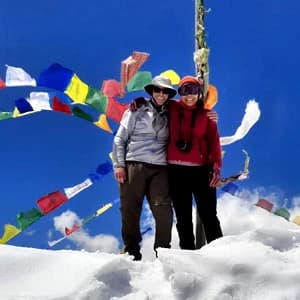
Langtang Gosaikunda and Helambu trek
Amazing trip! Spectacular scenery walking up the Langtang valley through rhododendron forest towards impressive snow-capped mountains. Spectacular climb to the top of Chorka Ri. Gosaikunda...
Mrs. Linda King- Australia
April 27, 2023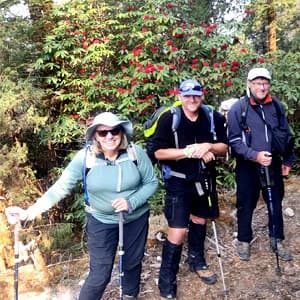
Amazing 10 days trekking to Langtang Valley national park and Gosaikunda Lake
Thank you very much Rajendra Thapa and Nepal Gateway Trekking for our amazing 10 days trekking to Langtang Valley national park and Gosaikunda Lake. The trek was very well organized...
Mrs. Maud Palmieri- France
February 09, 2016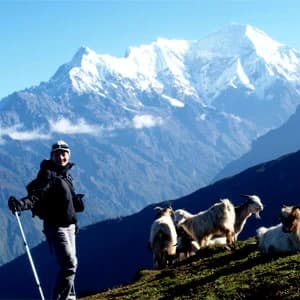
You May Also Like
Did not find the perfect trip? No worries!
Contact us to start planning your tailor-made dream trip!
Need Help? Call Us+977 98510 55520