The Langtang Valley Trek is a supreme experience of natural beauty and cultural enrichment for every trekker around the world.
Your Gateway to The Himalayas


Langtang Valley Trek
Trip at a Glance
Duration10 Days
Trip GradeModerate
DestinationNepal
Maximum Altitude5,030 m
AccommodationHotel/Tea House
Starts/EndsKathmandu
ActivitiesTrekking
Best TimeMarch to May and September to December
Langtang Valley Trek stands out as one of Nepal's most celebrated trekking destinations. Though less commercial than treks in Everest and Annapurna, this high-altitude adventure offers a remarkable diversity, from subtropical forests in the lower areas to alpine meadows and glacial valleys higher up.
Located only a few hours from Kathmandu, the Langtang Valley is more accessible than other major trekking regions in Nepal. Despite its close proximity, it provides a raw, authentic, and quieter experience in the Himalayas. Starting at 1,460 meters in Syabrubesi, the trail climbs to 5,030 meters at the summit of Tserko Ri, with peaks like Langtang Lirung, Dorje Lakpa, and Langtang II dominating the skyline.
The Langtang Valley Trek passes through some of the most iconic Tamang villages, including Lama Hotel, Langtang, Mundu, and Kyanjin Gompa. These traditional settlements reflect ancient Tibetan roots with stone-built houses, mani gates, prayer wheels, chortens, and prayer flags. You'll visit the 600-year-old Buddhist monastery at Kyanjin Gompa and observe monks in prayer and meditation to embrace the region's spiritual side.
The entire trek to the Langtang Valley passes through Nepal's most biodiverse protected area—Langtang National Park. Established in 1976 as the country's first Himalayan national park, it is home to some of the most elusive wildlife, including red pandas, snow leopards, Himalayan brown bears, and musk deer. Additionally, this protected area hosts over 350 bird species, such as the Himalayan monal, ibisbill, snow partridge, crimson-horned pheasant, and tragopan.
Although close and accessible, the Langtang Valley Trek showcases the Himalayas at their very best. The 10-day itinerary provides a perfect mix of towering peaks, high valleys, rich cultures, rustic lifestyles, elusive wildlife, and raw wilderness.
The Major Highlights of Langtang Valley Trek
- Explore Langtang National Park with diverse landscapes.
- Trek entirely within one of Nepal's most biodiverse protected areas—Langtang National Park.
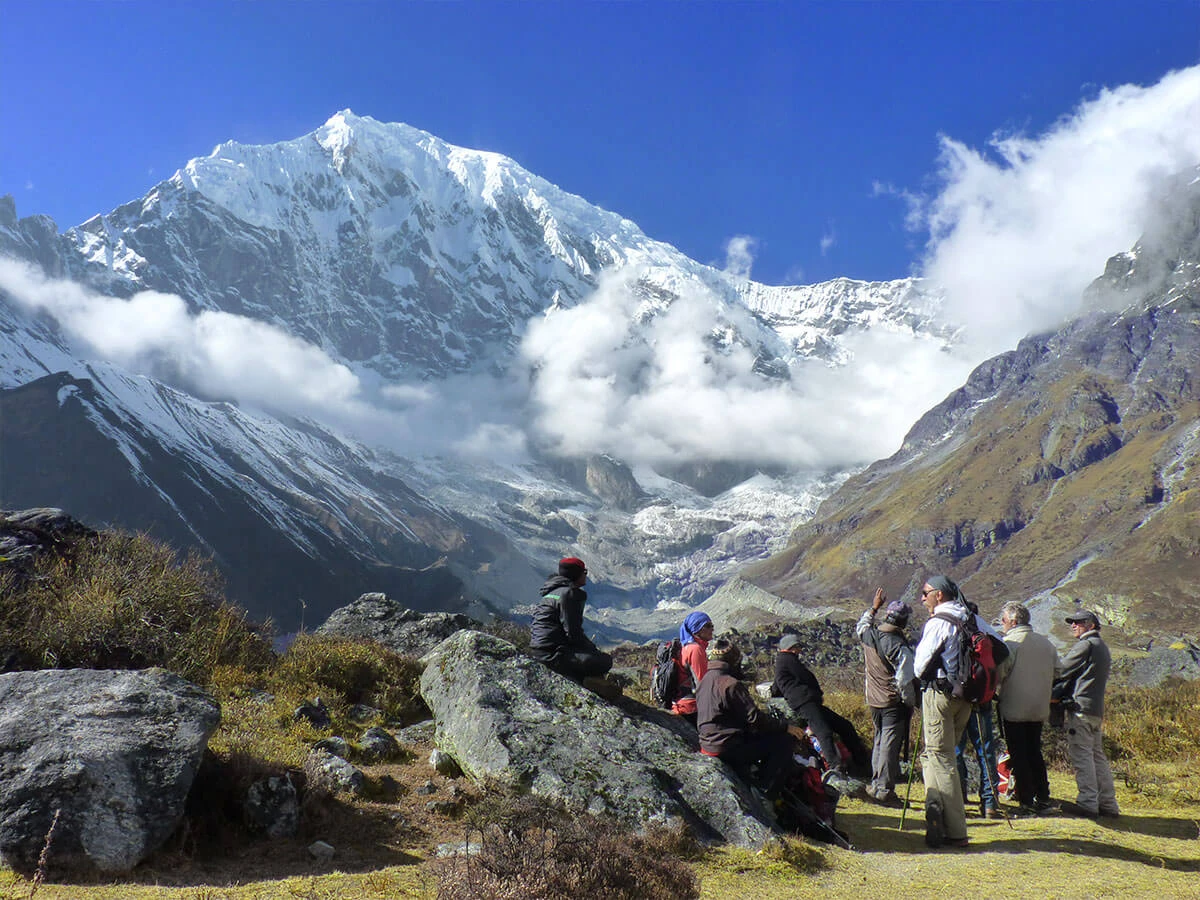
- Stand at the summit of Tserko Ri at 5,030 meters and enjoy the 360-degree panorama of Langtang Lirung, Dorje Lakpa, Langtang II, Yala Peak, and Baden Powell Peak.
- Explore two of Nepal's most scenic mountain villages—Langtang Village and Kyanjin Gompa.
- Visit the 300-year-old Buddhist monastery and Nepal's oldest cheese factory in Kyanjin Gompa.
- Experience the rich culture and warm hospitality of the Tamang people as you trek through their traditional stone-built settlements.
- Walk through dense forests of rhododendron, bamboo, and oak in the lower Langtang valley and experience their full bloom in spring.
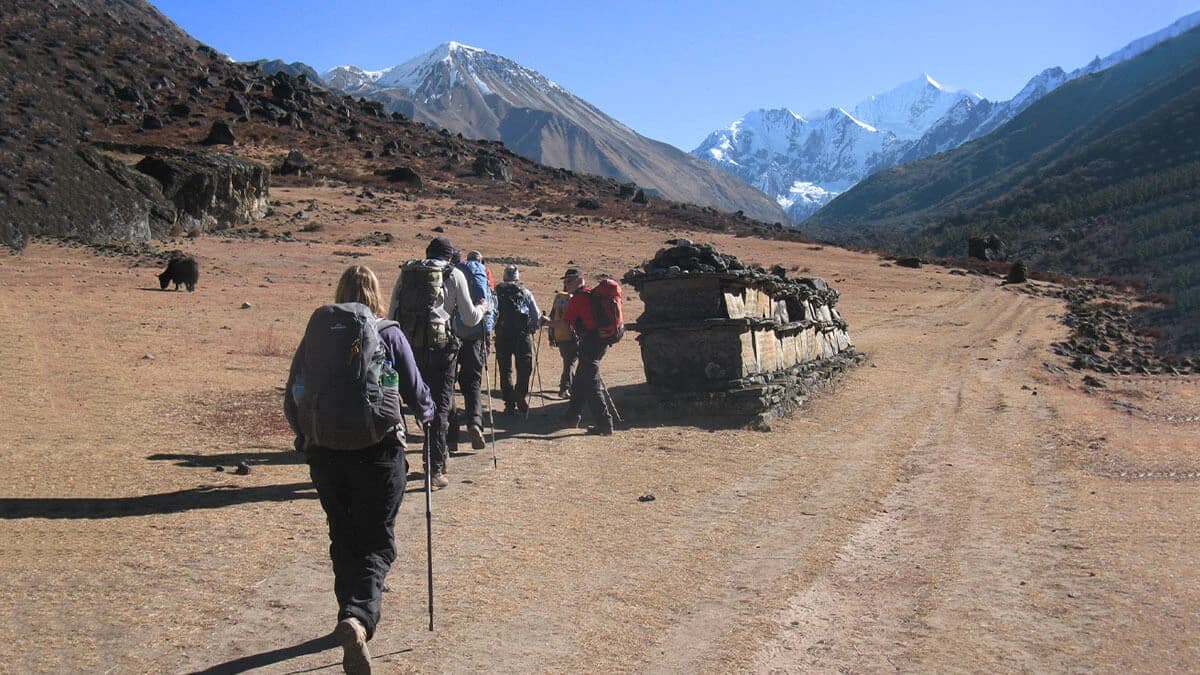
- Walk past several mani walls, chortens, prayer wheels, and Buddhist stupas along the trail.
- Cross dramatic suspension bridges over the glacial rivers of Bhote Koshi and Langtang Khola.
Langtang Valley Trek Route Overview
The Langtang Valley Trek follows a well-defined, out-and-back route through one of Nepal's most stunning mountain valleys. The journey begins with an 8-hour scenic bus ride from Kathmandu to the trailhead at Syabrubesi.
After assembling the crew, you'll start the walk by leaving the main bazaar and following the Langtang Khola gorge. The trail gradually climbs through dense subtropical forest, filled with rhododendrons, bamboo, and oak trees. You'll pass several Tamang villages, including Bamboo and Rimche, until you reach the teahouse settlement of Lama Hotel. After a few hours, you'll break through the treeline and enter the high meadows of Ghoda Tabela.
The trail navigates through several high-altitude villages, including Thyangsyap, Chyamki, Langtang, and Mundu, before arriving at Kyanjin Gompa at 3,860 meters. On the rest day at Kyanjin Gompa, you'll hike up to the summit of Tserko Ri at 5,030 meters. This full-day hike begins early in the morning with a steep ascent over rocky boulders and loose scree. The summit offers a breathtaking view of Langtang Lirung, Langtang II, Dorje Lakpa, Dagpachen, Changbu, Baden Powell Peak, and Yala Peak.
After the successful climb of Tserko Ri, you'll retrace your route back to Kyanjin Gompa. From there, you'll start descending back to Syabrubesi along the same trail. You'll pass through the high alpine valleys of Mundu, Langtang, and Ghoda Tabela to reach Lama Hotel.
The trail then re-enters the forested section as you continue downhill to Syabrubesi. You'll catch a local express bus from the main bazaar of Syabrubesi and drive back to Kathmandu to conclude your trek.
Kathmandu (1,310m) → Syabrubesi (1,460m): The approach drive takes 7–8 hours via the Prithvi Highway, then north through Trishuli Bazar and Dhunche. The last section climbs into Rasuwa District; terraced farmland gives way to forested hillsides and the first views of the Himalayan foothills.
Syabrubesi sits at the confluence of the Langtang and Bhote Koshi rivers, right at the edge of Langtang National Park. Permits are checked at Dhunche (20 minutes before Syabrubesi); we arrange these in Kathmandu before departure.
Syabrubesi (1,460m) → Lama Hotel (2,470m) | ~11 km, 5–6 hrs: The first day on the trail follows the Langtang River through its lower gorge. Dense old-growth forest, steep valley walls, and a series of suspension bridges over the river. There are two route options.
- the lower riverside trail and
- a higher alternative
that avoids the most flood-damaged sections. We recommend the lower trail for most groups. Lama Hotel is named after the original lodge owner, not for any actual hotel, except basic teahouses, shared bathrooms, and excellent dal bhat. This area is where red panda sightings start to become possible.
Lama Hotel (2,470m) → Langtang Village (3,430m) | ~14 km, 6–7 hrs: The longest walking day and the one most people underestimate. The trail climbs steadily through rhododendron and oak forest, past the army post at Ghoda Tabela (3,030m), a park checkpoint where permits are checked again.
After Ghoda Tabela, the trees thin, the valley opens slightly, and the first snow peaks appear above the ridgeline. You cross several mani walls in the last hour of walking; the cultural landscape starts to shift here toward its Tibetan-influenced character.
Langtang Village (3,430m) → Kyanjin Gompa (3,860m) | ~7 km, 3 hrs: The shortest walking day is intentional; it's built into the itinerary as passive acclimatization. The trail is gradual, crossing yak pastures and small seasonal settlements.
Kyanjin Gompa (3,860m) → Tserko Ri (5,030m) and back | ~10 km round trip, 6–7 hrs: An early start, around 5am, gives you the best chance of clear views before afternoon clouds build. The trail to Tserko Ri climbs steeply for 3–4 hours.
There's no technical section, but the gradient and altitude demand a slow, steady pace. At the top, the panorama is unobstructed in every direction: Langtang Lirung and Langtang II to the west, Ganesh Himal and Dorje Lakpa to the south, and the Tibetan plateau visible on the northern horizon. Descent takes 2–3 hours.
This is the hardest day of the trek; most people find it worth it. If Tserko Ri feels too ambitious, Kyanjin Ri (4,773m) is a shorter alternative with only marginally less impressive views.
Return: Kyanjin Gompa → Lama Hotel → Syabrubesi → Kathmandu: The descent covers the same trail in reverse, typically completed over two days of walking and one final drive back to Kathmandu. The return pass is faster than the ascent, bodies are acclimatized, the trail is familiar, and the valley is seen from a different angle going downhill.
Why Langtang Valley Trekking with Nepal Gateway Trekking?
- Nepal Gateway Trekking is one of Nepal's top trekking companies with decades of firsthand experience operating trips in the Langtang region. With extensive knowledge, we guarantee better teahouse selection, local insight into the region, and genuine cultural connections.
- Our expert team manages every logistical detail from your arrival at Kathmandu Airport to your departure. We offer accommodations, meals, permits, airport transfers, pre-trek briefings, and emergency support throughout the trek.
- Our guides are highly experienced professionals with over ten years of leading high-altitude treks and expeditions. They are Wilderness First Responder (WFR) certified and trained to recognize early signs of altitude sickness, handle medical emergencies in remote areas, and make critical safety decisions.
- We maintain an impeccable safety record through strict protocols. Our safety measures include daily health screenings, advanced medical kits, proper acclimatization schedules, and emergency evacuation support.
- We make early reservations at hotels in Kathmandu and teahouses along the trail to secure the best rooms, even during peak trekking seasons.
- At Nepal Gateway Trekking, we treat every team member fairly. We pay our guides and porters above-industry wages, while providing quality equipment, proper accommodations, and insurance coverage. We also keep a balanced crew-to-trekker ratio of one staff member for every two trekkers to protect their health and well-being.
- We carry a strong responsibility to the mountains and communities we pass through. We are fully dedicated to reducing single-use plastics, supporting local businesses, protecting trails, and following "Leave No Trace" principles.
- We give each client an exclusive Nepal Gateway Trekking duffel bag and T-shirt as a souvenir.
Itinerary
This is our standard and recommended Langtang Valley Trek itinerary.
Trip PlanExpand all
Welcome to Kathmandu. Your adventure holiday begins with a touchdown at Tribhuvan International Airport. After clearing customs and reaching the arrivals area, our airport representative with the "Nepal Gateway Trekking" placard will greet you and transfer you to your hotel in Thamel.
You'll have a free afternoon in Kathmandu to relax, rest, and recover from the long, exhausting flight. Depending on your flight schedule, you might have time to explore the city and acclimate to its chaotic atmosphere. You can stroll through the narrow, old streets of Thamel, Ason Bazaar, and Kathmandu Durbar Square to see ancient markets, gear shops, bookstores, centuries-old temples, royal squares, and historic sites.
In the evening, return to your hotel to meet your senior trekking guide for a short pre-trek briefing and team introduction. Your guide will brief you on the route conditions, safety protocols, and packing essentials during the session. Lastly, he will conduct a gear check to see if you need any last-minute supplies.
Your trekking guide will meet you at the hotel lobby after breakfast and then take you to Machhapokhari Bus Station, where you'll board a local express bus to the trailhead at Syabrubesi. This 8-hour drive heads north from the capital through terraced hillsides, lush valleys, roadside markets, and dramatic gorges above the Trishuli River. If you manage to get a seat on the right side of the bus, you'll enjoy stunning views of the valleys and mountains from the window.
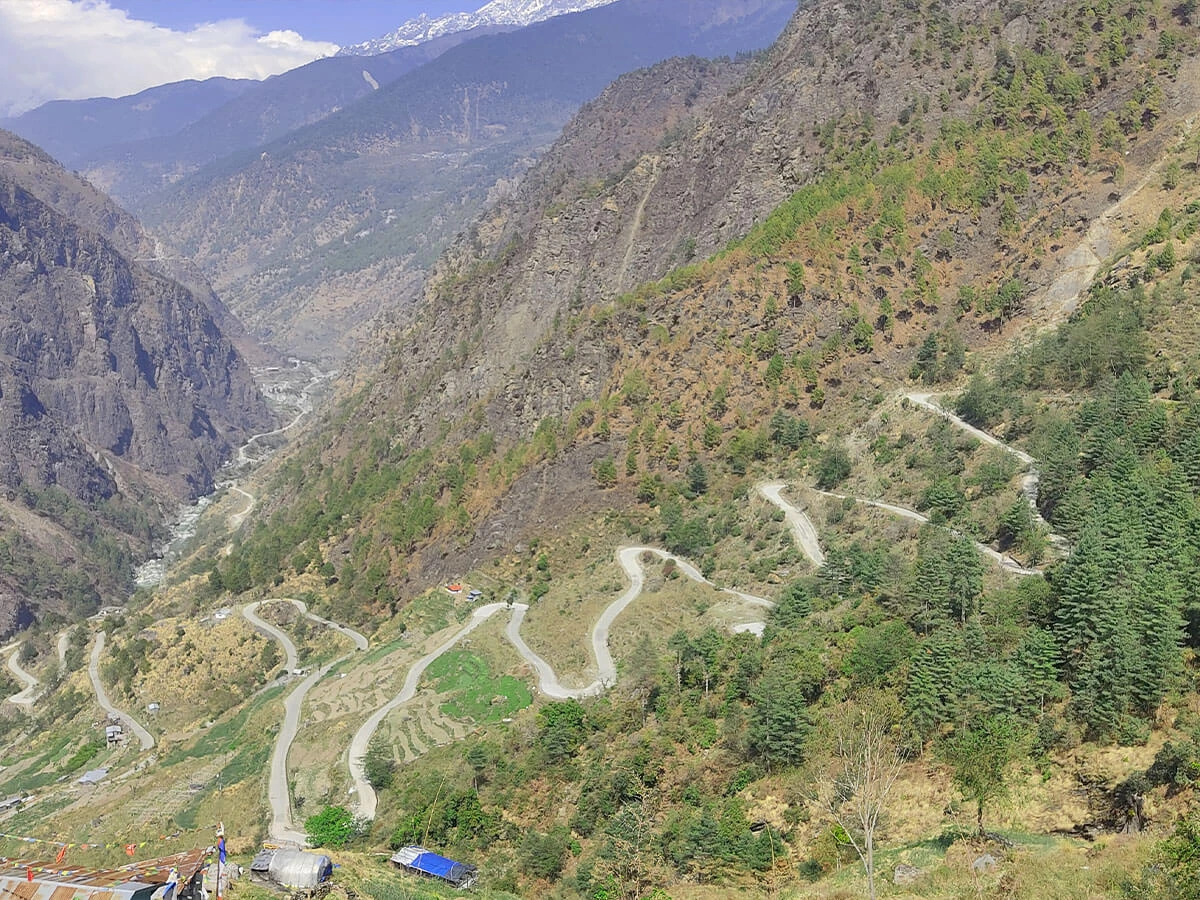
Although the drive is long and rough, it mostly follows a paved road, with occasional bumpy patches. After passing the busy town of Trishuli Bazar, the smooth asphalt road gives way to a rocky mountain track. You will stop at the Langtang National Park Checkpost in Dhunche to verify and register your permits. The final part of the drive involves an hour-long descent along a narrow gorge from Dhunche into the mountain town of Syabrubesi.
Syabrubesi is a border settlement that serves as a gateway to Langtang Valley. Situated at the confluence of the Bhote Koshi and Langtang Khola, this small settlement features local shops, a permit checkpoint, mountain lodges, teahouses, and restaurants.
Your trek into the Langtang Valley begins today. Heading out of Syabribesi, you'll cross two suspension bridges over the Bhote Koshi and Langtang Khola. After crossing the bridges, the trail follows a gradual path alongside Langtang Khola until you reach Pahiro.
From Pahiro, the trail gradually ascends through one of the most beautiful forests in the Himalayas. For the first two hours, you'll walk under the shade of dense bamboo groves and rhododendron forests. In spring, this forest bursts with red, pink, and white rhododendron blooms adorning the entire trail. Keep an eye out for elusive wildlife, including red pandas, wild boar, langurs, and yellow-throated martens in this section.
The path continues climbing alongside the Langtang Khola toward the small Tamang settlement of Bamboo, perched on a narrow ridge above the river. After a short break, you'll continue the ascent to the northern side of the canyon towards Rimche. Here, the forest briefly opens up to reveal the distant view of the Langtang Valley.
The final stretch of the day involves a gentle downhill walk from Rimche, contouring the thinning forest to your overnight stop at Lama Hotel. Despite its name, Lama Hotel is not a single hotel. Instead, it is a loose cluster of teahouses and lodges set on a flat bend alongside Langtang Khola. Settle in at one of the top teahouses in Lama Hotel and spend the evening relaxing by the fireplace in the dining area.
After breakfast, you'll ascend out of the Lama Hotel along the narrow, forested trail. After about an hour, you'll reach the teahouse settlement of Riverside. From here, you'll get your first glimpse of Langtang Lirung rising between the hills in the distance.
Leaving Riverside, the forest gradually thins out before opening onto the high meadows of Ghoda Tabela. You'll stop for lunch at one of the teahouses, set beneath the dramatic valley walls on both sides. After lunch, the trail climbs uphill through a wide, open valley filled with seasonal settlements and yak pastures. You'll continue the gentle climb past several chortens, prayer wheels, water-driven mills, and Tamang villages, before reaching your overnight stop at Langtang Village.
Langtang Village is the largest permanent settlement in the region. It is home to a wide range of lodges, tea shops, restaurants, and local stores. The original Langtang Village was destroyed by the earthquake in 2015. The village you walk into today was relocated and almost entirely rebuilt from scratch.
Today's walk from Langtang Village to Kyanjin Gompa is fairly short. The day begins with a gentle climb through alpine meadows, high valleys, and yak pastures. The trail offers stunning views of the towering Langtang Lirung and Dorje Lakpa in the background. After about half an hour of climbing, you'll reach a small stone-built settlement of Mundu.
After a quick tea break at Mundu, you'll continue the gradual climb through high-altitude shrubs and barberry bushes. The trail occasionally crosses small streams and glacial moraines. As you approach Kyanjin Gompa, the valley widens, offering expansive views of the surrounding mountains, glaciers, and rocky ridges.
The final part of the day involves a short, steep climb past a series of chorten, prayer wheels, and mani walls to reach the overnight stop at Kyanjin Gompa. Located at 3,860 meters, Kyanjin Gompa is the highest permanent settlement in the Langtang region.
Nestled beneath a dramatic amphitheater of Himalayan peaks, this settlement features a cluster of mountain lodges, cafes, bakeries, and local shops. In the afternoon, explore the 600-year-old Tibetan Buddhist monastery and one of Nepal's oldest yak cheese factories. If you still have energy, take an evening hike to Kyanjin Ri for breathtaking sunset views of the surrounding mountains and glaciers.
Today is the most challenging day of the Langtang Valley Trek. You'll wake up around 4 AM, pack your meals, and begin the full-day hike to Tserko Ri. We strongly recommend dressing in layers, carrying a headlamp, and keeping your trekking poles ready for the steep climb.
Leaving Kyanjin Gompa, you'll hike across the valley floor on a relatively gentle path. After a short while, the trail ascends steeply through switchbacks over rocky terrain toward the top of a ridge. Beyond this point, the path becomes relentlessly steep, navigating through several twists and turns over loose scree and rocky boulders. After four hours of grueling ascent, you'll reach the prayer-flag-adorned summit of Tserko Ri at 5,030 meters.
The summit offers one of the finest panoramas in the Himalayas, with sweeping views of Langtang Lirung, Dorje Lapka, Baden Powell Peak, and Yala Peak. Take a moment to enjoy the mountain atmosphere, snap some photos, and celebrate your achievement.
Afterward, you'll retrace your steps to Kyanjin Gompa for the overnight stay. The steep descent can be tough on the knees, so make good use of your trekking poles. Once back in the village, you'll have a free afternoon to relax and recover from the long, strenuous climb or unwind by the fireplace at the teahouse.
After a hearty breakfast in Kyanjin Gompa, you'll start descending to lower elevations. The first few hours can be tough on your knees, but it gets easier as you go. You'll retrace your steps through familiar settlements like Mundu and Langtang Valley, before reaching the wide plateau of Ghoda Tabela.
After lunch at Ghoda Tabela, the trail re-enters dense forest, lined with rhododendron and wildflowers. Although you've walked this route before, the descent provides a fresh perspective, revealing details you may have missed on the way up. The final stretch is a steady downhill to Lama Hotel, where you'll arrive by mid-afternoon.
Settle into the teahouse, enjoy a hot meal, and take a well-deserved rest.
The final day on the trail. After a restful night at Lama Hotel, you'll start retracing your steps back to Syabrubesi. This day is shorter and more gradual compared to the previous couple of days. The trail descends through lush rhododendron and pine forests toward Rimche.
Beyond Rimche, the forest becomes much denser, offering chances to spot the elusive wildlife of the lower Langtang region. You'll pass through several Tamang settlements, including Bamboo, Pahiro, and Domen. You'll cross suspension bridges over Langtang Khola and Bhote Koshi to reach the lively town of Syabrubesi.
After spending several nights in the remote villages of the upper Langtang region, Syabrubesi feels much busier and more chaotic. The return to Syabrubesi brings access to better facilities, shops, restaurants, and internet cafes. You'll have plenty of time in the afternoon to relax, shower, and explore the town.
It's time to bid farewell to the Himalayas. After breakfast in Syabrubesi, you'll catch a local bus and drive the same route back to Kathmandu. The scenic, 8-hour drive passes through lush river valleys, terraced fields, roadside markets, and rustic villages.
The first half of the drive follows a rocky mountain track until you reach the busy town of Trishuli Bazaar. From there, the rough track gives way to a smoother asphalt road for most of the journey. While much of the road is paved, you'll encounter bumpy patches every once in a while.
You will arrive at the Machhapokhari Bus Station in Kathmandu in the late afternoon. Your lead guide will then transfer you to your hotel in Thamel and assist with check-in formalities. After checking in, you can finally enjoy a long, hot shower for the first time in weeks. You can spend the rest of the afternoon relaxing at the hotel with a post-trek wellness treatment or exploring Thamel for souvenirs.
Start your morning at a relaxed pace and enjoy a delicious breakfast at the hotel. Afterward, pack your bags and get your documents ready for your international flight.
Our airport representative will meet you in the hotel lobby about 3.5 hours before your departure time and transfer you to Tribhuvan International Airport. Before leaving, double-check that you have all your belongings and essential travel documents.
Nepal Gateway Trekking wishes you a safe flight home. Until our next adventure!
If the above itinerary doesn’t meet your needs, we can design a Tailor-Made Program based on your travel plans and requirements,Reach our travel experts.
Dates & Availability
Private tripSelect Departure Dates
Oct 2026
Nov 2026
Dec 2026
Jan 2027
Feb 2027
Mar 2027
Apr 2027
May 2027
Jun 2027
Jul 2027
Aug 2027
Sep 2027
Oct 2027
Nov 2027
Dec 2027
Cost Includes
- Complimentary airport pickups and drop-offs.
- All ground transportation as per the program.
- Two nights' accommodation in Kathmandu, including breakfast.
- Your three meals (breakfast, lunch, and dinner) during the Langtang Valley Trek.
- Twin-sharing accommodations during the trekking.
- A highly experienced, well-trained, English-speaking trekking guide.
- Required porters and their expenses (1 porter between 2 trekkers). Porter is not included for solo trekkers.
- Langtang National Park permit.
- TIMS card (Trekkers Information Management System). Please bring two passport-size photos.
- Langtang Valley Trekking Map.
- Nepal Gateway Trekking Company T-shirt.
- Nepal Gateway Trekking Company duffle bags for trekking.
- Fresh local fruits (apples, oranges, pears, pomegranates, etc.) as dessert.
- First aid kit with an oximeter to check heartbeats and oxygen levels.
- Emergency rescue assistance if it is necessary.
- All government taxes.
- Office service charges.
Cost Excludes
- Lunches and dinners in Kathmandu.
- Travel insurance.
- International flight tickets to and from Kathmandu.
- Nepal entry visa fee.
- All kinds of hot drinks (tea, coffee, hot water) on the trek.
- Cold drinks (mineral water, Coke, and Fanta) and alcoholic beverages during the trip.
- Your first aid kit, equipment, and items of a personal nature.
- Battery charges for devices (mobile, camera, laptop, etc.) during the Langang hike.
- Snacks and desserts (apple pie, chocolate pie, chocolate bar)
- Tips for trekking staff and drivers. Tipping is expected but not mandatory.
- Extra accommodations in Kathmandu.
Route Map

Trip Gallery






Good To Know
The Langtang Valley and the 2015 Earthquake
On 25 April 2015, the Gorkha earthquake, 7.8 magnitude, triggered a serac collapse on Langtang Lirung. The resulting ice, rock, and debris avalanche hit Langtang Village at speed, burying it completely. 310 people were killed at that location: 175 villagers and 135 trekkers. The debris field covers approximately 2 kilometers.
The rubble is still there. Walking through Langtang on Day 4, you pass the edge of it. There are stone memorials, prayer flags, and a small stupa built to mark the site. Trekkers often stop here without fully understanding what they're looking at. Now you will.
The Tamang community rebuilt the village within two to three years. Most of the current teahouses were constructed post-earthquake, they're newer and, in many cases, cleaner than what existed before. The community chose to stay, which says something about the people who live here.
Trekking in Langtang now is a direct act of economic support for that community. The guides, porters, teahouse owners, and cheese factory workers in this valley are the same families that were here in 2015. Tourism returned slowly. It's still not at pre-earthquake levels. When you book a Langtang trek, part of that decision has a dimension that most travel choices don't.
What Makes the Langtang Valley Trek Different?
There are shorter treks in Nepal. There are longer ones. The Langtang Valley Trek sits in an intriguing middle ground, long enough to feel like a proper Himalayan expedition and short enough to finish in a standard ten-day holiday. But the thing that actually separates it from the Annapurna or Everest circuits isn't the length. It's the access.
You drive from Kathmandu to the trailhead at Syabrubesi. That's it. No 6am flights to Lukla, no weather delays sitting in an airport hotel, and no helicopter reroutes burning your contingency budget. You leave Kathmandu after breakfast, arrive at Syabrubesi in the afternoon, sleep there, and start walking the next morning.
Once you're on the trail, the valley does the rest. The first two days walk through the lower Langtang River gorge, dense forest, and suspension bridges with waterfalls dropping from ridgelines you can't see the top of. By Day 4, the trees thin out and the mountains appear properly for the first time. Langtang Lirung at 7,234m rises directly above the valley floor. Most people stop walking for a moment when they see it.
Kyanjin Gompa, at 3,860 m, is where the trail ends and the acclimatization begins, a small village with a 16th-century monastery, a working yak cheese factory, and unobstructed views of peaks most people only see in photographs. From here, an optional summit hike to Tserko Ri (5,030 m) adds a full day and a panorama that takes in Ganesh Himal, Dorje Lakpa, Langtang II, and, on clear autumn mornings, the outline of Shisha Pangma in Tibet.
Langtang Valley Trek Package and Cost
Our standard 10-day Langtang Valley Trek package costs USD 780 per person. The package price includes all logistics from your arrival at Kathmandu Airport to your departure.
The package offers 3-star hotel stays in Kathmandu for arrival and departure nights, and teahouse accommodations during the trek. Your stay in Kathmandu is on a Bed and Breakfast (BB) basis, while all three meals—breakfast, lunch, and dinner—are included during the trek.
Your package includes a government-licensed senior trekking guide with dedicated porters and crew members to assist with navigation, luggage transport, and safety. It covers their daily wages, salaries, meals, accommodation, travel insurance, and trekking gear.
The package also covers the fees and arrangements for all necessary permits, including the Langtang National Park Permit and TIMS Card. Additionally, it includes round-trip local bus transportation between Kathmandu and Syabrubesi, as well as private ground transfers for airport pickups and hotel drop-offs.
We offer special discounts of up to USD 120 per person, depending on group size. For customizations, contact our team with your preferred travel dates, group size, and budget.
Note: The package cost does not include international flights, visa fees, travel insurance, gear purchase, tips, or personal expenses during the trek.
Langtang Valley Trek Cost Breakdown
The cost of the Langtang Valley trek starts at USD 760 per person, with final pricing based on group size:
Solo trekker (1 person): USD 780
Small group (2 to 4 people): USD 720 per person
Medium group (5 to 10 people): USD 680 per person
Large group (11 to 16 people): USD 660 per person
Traveling in a group lowers the per-person cost, making the trek more budget-friendly for friends, families, or organized groups.
The price generally includes teahouse accommodation along the trail, all meals during the trek, permits, transportation, and support from experienced guides and staff.
Permits for the Langtang Valley Trek
For the Langtang Valley Trek, you need to get two permits—the Langtang National Park Permit and the TIMS Card. All trekkers must carry these permits with them at all times during the trek, as they will be checked at multiple checkpoints along the trail.
Langtang National Park Permit
The Langtang National Park Permit is the official entry ticket required to access the protected area of the Langtang region. Covering 1,710 square kilometers, the national park protects high-altitude wilderness, forests, and glaciers. The fees collected from the permit directly support the conservation of the park's fragile ecosystem and endangered wildlife.
Where can you get the Langtang National Park Permit?
You can obtain the Langtang National Park Permit at the Nepal Tourism Board (NTB) office on Pradarshani Marg in Kathmandu or at the park entry checkpoints in Dhunche or Syabrubesi. The permit costs USD 30 for foreign nationals and USD 15 for SAARC citizens.
TIMS Card (Trekkers' Information Management System)
The TIMS Card is a trekker registration system introduced by the Nepal Tourism Board (NTB) and the Trekking Agencies Association of Nepal (TAAN). This mandatory trekking permit helps ensure trekkers' safety, enhances tracking, and prevents illegal trekking activities. It records your identity, trekking route, and emergency contact details for rescue operations. Fees collected from the TIMS Card are used to fund insurance for trekking staff.
Where can you get the TIMS Card?
You can obtain the TIMS Card at the Nepal Tourism Board (NTB) and Trekking Agencies Association of Nepal (TAAN) offices in Kathmandu. The permit costs USD 10 for foreign nationals and USD 6 for SAARC citizens.
Two permits are required to trek in the Langtang region. Both are included in our package price. If you're arranging independently, here's exactly what you need, what it costs in 2026, where to get it, and which checkpoints will ask to see it.
Best Time for Trek to Langtang Valley
Although autumn and spring are considered the most popular seasons, the Langtang Valley Trek can be done year-round. Each season brings different weather, trail conditions, visibility, challenges, and overall experience. Here's a brief overview of each season to help you choose the best time for your trip.
Autumn (September to November)
Autumn has long been considered the best trekking season in Nepal, and Langtang Valley is no exception. The post-monsoon atmosphere delivers cloudless skies, stable weather, crisp temperatures, and dry trails.
During these months, the mountains and landscapes are at their absolute best, making it a favorite season for mountain lovers and landscape photographers. Besides that, these months also experience minimal rainfall, providing safer, more reliable conditions for Tserko Ri.
Daytime temperatures are perfect for long days on the trail, ranging from 10°C to 16°C in lower regions and 0°C to 8°C at higher elevations. At night, however, temperatures can drop to between 0°C and -10°C, depending on the altitude.
Autumn attracts the most trekkers to the Langtang Valley. If you're planning your trek during these months, expect crowded trails and busy teahouses.
Spring (March to May)
Spring is the second-best season for the Langtang Valley Trek. These months bring mild temperatures, stable weather, crisp morning views, and blooming wildflowers. The forests in the lower villages, from Syabrubesi to Ghoda Tabela, burst with color as rhododendrons come into full bloom. The high, alpine meadows of Langtang Valley are also carpeted with colorful wildflowers.
Spring temperatures are warm and comfortable at lower elevations and manageable with proper layering at higher altitudes. Above 4,000 meters, nighttime temperatures can often drop below -5°C.
The trail conditions are pretty good, and the mountains remain covered in thick winter snow. Typically, spring mornings offer crisp, clear mountain views. However, clouds and pre-monsoon haze begin to build, disrupting visibility by late afternoon. The longer daylight hours let you keep a steady pace and safely climb Tserko Ri.
Winter (December to February)
Winter turns the Langtang Valley into a snowy wilderness. This season presents challenging conditions for long-day trekking, including frequent snowfall, strong winds, cold weather, and occasional snowstorms.
Early December and late February offer the most comfortable trekking conditions during winter. Although snowfall is common above 3,000 meters, these times reward you with clear skies and unobstructed mountain views. Additionally, these months tend to be less crowded compared to peak seasons.
Except for early December and late February, winter demands serious commitment to brave the extreme conditions. The average winter temperature in the upper valleys ranges from 5°C to -15°C. The trail to Tserko Ri can be extremely challenging or potentially closed due to deep snow. Most teahouses in the upper section also shut down, as locals move to lower altitudes to escape the harsh winter conditions.
While winter trekking in Langtang is possible and rewarding, we strongly recommend it only for experienced trekkers.
Monsoon (June to August)
The monsoon brings heavy, persistent rain to the lower village of Langtang. While the upper valleys receive less rain, the forested areas become muddy, slippery, and infested with leeches. The risk of landslides also increases significantly on the steeper sections above Ghoda Tabela.
Although temperatures remain warm and manageable with proper layering, persistent rain and challenging conditions make this season one of the least favorable for trekking. Additionally, mountain views are almost entirely obscured by thick clouds for much of the day during these months.
That said, the monsoon transforms the lower Langtang Valley into a lush, green paradise. Late August marks a transition, with weather conditions gradually improving as the month progresses. Experienced trekkers seeking quieter trails and empty teahouses can consider late August to be a good option.
How difficult is the Langtang Valley Trek?
The Langtang Valley Trek is categorized as a moderate trek in Nepal's high Himalayas. While it doesn't require previous high-altitude experience or climbing skills, it does demand good physical fitness and mental resilience. The route includes rocky terrain, steep climbs, slippery descents, landslide-prone areas, and glacial moraines.
The hike from Kyanjin Gompa to Tserko Ri involves a strenuous climb over rocky boulders and exposed ridges. Aside from this difficult section, most of the route in the Langtang Valley is well maintained, with stone-paved paths and clear markings.
On average, the trek involves 6 to 8 hours of continuous walking each day for nearly a week. Additionally, the terrain changes significantly from humid, subtropical forests in the lower regions to rocky, wind-exposed valleys higher up. You'll need a steady footing, decent physical fitness, and proper cardio conditioning to handle these sections.
Altitude is undoubtedly one of the biggest challenges on the Langtang Valley Trek. Starting from 1,460 meters at Syabrubesi, the trail quickly climbs to 5,030 meters at the summit of Tserko Ri. Above 3,000 meters, lower oxygen levels put you at constant risk of acute mountain sickness (AMS), regardless of fitness level or age. Maintain a steady pace and allow your body to acclimate naturally during the ascent.
Training for Trekking to Langtang Valley
Although moderately challenging, the Langtang Valley Trek demands good fitness and thorough preparation. The trek involves walking over steep, high-altitude terrain for nearly a week. We strongly recommend starting your dedicated training program at least 8 to 12 weeks before the trek.
If you're already active, eight weeks of focused training should be sufficient for this trek. If you're starting with a low fitness level, we suggest a 12-week routine to build a solid foundation. Your training should include strength training, cardio exercises, breathing exercises, and regular stretching.
The aim is to progress gradually and reach the trailhead feeling confident and prepared. It's important to avoid pushing too hard during training, as this can cause muscle cramps, excessive fatigue, and serious injuries.
Cardiovascular Endurance
The Langtang Valley Trek involves 6 to 8 hours of high-altitude walking over the course of a week. This effort requires a strong cardiovascular system and consistent aerobic fitness. Your training should include four to five steady-state cardio sessions to enhance stamina and lung capacity.
Low-intensity activities like cycling, swimming, jogging, rope jumping, and brisk walking are great options for building a solid cardiovascular foundation. Start with short 30-minute sessions and gradually extend them to an hour as the week goes on.
Leg Strength and Stability
The steep, uneven terrain of the Langtang Valley puts constant stress on your knees, quads, hamstrings, and ankles. Therefore, strong legs can make navigating these sections easier and more enjoyable.
Include at least four strength sessions per week in your training routine. Focus on compound movements like squats, lunges, step-ups, calf raises, deadlifts, and single-leg extensions. Also, add core exercises such as planks, bird dogs, and dead bugs to help protect your lower back during descents. Start with bodyweight exercises and gradually increase weight as your strength progresses.
Conditional Hikes
No amount of gym work can match the terrain and conditions of a real trek. The best way to prepare for these conditions is to go outside and hike similar routes near your home as often as possible. Include at least one long-distance hike each week on actual outdoor terrain to help your body train for sustained effort and strengthen your legs.
Start with 3-kilometer hikes on hilly terrain carrying a lightweight pack in the early stages. Gradually increase the distance, pack weight, intensity, and duration of your hikes each week. For steep sections, you can also train on an inclined treadmill or practice stair climbing with a loaded pack to condition your body.
We highly recommend wearing your trekking boots, using your trekking poles, carrying a fully loaded backpack, and employing other gear during the conditioning hikes. This helps you become comfortable with the equipment while also testing it in trail conditions.
Stretching and Flexibility
Most trekkers often overlook stretching and flexibility in their trek preparation. However, joint mobility and muscle recovery are just as crucial as strength and endurance during any long-distance trek. Daily stretching boosts joint flexibility, improves stride efficiency, accelerates muscle recovery, and reduces the risk of injury.
Dedicate at least 15 to 20 minutes to dynamic stretches before every training session. Your dynamic stretches should strictly focus on the hip flexors, hamstrings, quads, calves, ankles, and lower back.
Moreover, you should incorporate gentle static movements after each training session or at the end of your trekking days when your muscles are warm and receptive. A brief, 10-minute static stretching routine can reduce muscle soreness, improve blood circulation, and enhance muscle recovery. Try practicing 30-minute yoga sessions to strengthen core stability, increase body awareness, and improve breath control.
Altitude Preparation
While physical training makes you fitter and more resilient on the trail, it cannot prepare your body for high altitude. Regardless of fitness level, experience, and age, altitude sickness can affect anyone if they are not well prepared. Therefore, proper acclimatization and altitude awareness are essential for a safe trek.
If you're based at sea level, training alone cannot simulate the effects of reduced oxygen at altitude. The best altitude preparation is to go outside and hike at higher elevations. Breathing exercises and aerobic training can also enhance your lung capacity to handle thinner air. Although not essential, consider altitude-simulation options, such as hypoxic tents or training chambers, if they are available in your city.
During the trek, simple habits such as steady pacing, proper hydration, proper nutrition, and adequate sleep can also support acclimatization.
Rest and Recovery
Your body needs downtime to build muscle, repair tissue, and restore mental clarity between intense training sessions. Overtraining without adequate rest can lead to excessive fatigue and increase the risk of injury.
It is essential to have at least two rest days a week to prevent burnout, restore energy, and repair muscles. This does not mean complete rest! We recommend active recovery that includes gentle, low-intensity exercises, such as stretching, foam rolling, and gentle yoga. Gentle, low-intensity movement promotes blood flow to tired muscles, helps maintain mobility, and reduces muscle soreness.
In addition, you should also prioritize sleep, nutrition, and hydration. We strongly recommend tapering your training intensity by 40% to 50% about two weeks before the trek.
Acclimatization and Safety
The Langtang Valley Trek is a high-altitude adventure that starts at 1,460 meters in Syabrubesi and reaches 5,030 meters at the summit of Tserko Ri. It involves walking above 2,500 meters for much of the journey and has a total altitude gain of over 3,500 meters. At these altitudes, the atmospheric pressure drops significantly, making it harder to breathe normally.
Altitude symptoms can occur anywhere above 2,500 meters. While some trekkers adjust to altitude quickly, others may take longer to do so. Most experience mild symptoms such as headache, fatigue, dizziness, loss of appetite, disturbed sleep, and shortness of breath above 4,000 meters.
Recognizing these early warning signs and acting quickly can be the difference between success and failure on the trek. Our Langtang Valley Trek itinerary is designed with acclimatization in mind. The gradual climbs and dedicated rest days help your body adapt naturally to the altitude.
Things You Should Do to Acclimatize
- Walk at a comfortable, steady pace throughout the trek, even if it feels almost too easy. On shorter days, go for short afternoon hikes at higher altitudes to help your body adapt naturally.
- Stay well hydrated with 4-5 liters of water each day, even if you don't feel thirsty. Keep a water bottle or hydration bladder within reach and sip a small amount throughout the day. It is advisable to add electrolyte powders or tablets to help your body retain fluids more effectively.
- Although loss of appetite is common at high altitudes, you should always eat full meals along the trek to fuel your body and maintain energy. It is best to consume carbohydrate-rich foods like dal bhat, pasta, potatoes, and bread in high altitudes to maintain your energy levels and support digestion.
- Make it a habit to go to bed early each night. Although sleep quality is often lighter at altitude, getting enough rest helps with recovery and supports acclimatization.
- It is best to avoid or strictly limit alcohol and tobacco during ascents. These stimulants are known to hinder acclimatization by disrupting breathing patterns and increasing dehydration.
- Dress in a three-layer system to protect against harsh, high-altitude weather and regulate body temperature. Also, cover exposed skin (head, neck, arms), wear UV-protective sunglasses, and wear a hat or buff to protect against cold winds and intense sun at altitude.
- Make it a habit to check in with yourself regularly to identify early symptoms. If you notice any, such as a persistent headache, breathlessness, or nausea, contact your guide immediately. Our senior guides are trained to recognize early signs of altitude sickness and prevent the condition from worsening.
- Take regular short breaks during the trek to reduce fatigue and help your body adapt to the altitude naturally. Pausing for 5-10 minutes now and then can help keep a steady heart rate and prevent breathlessness.
Travel Insurance
The Langtang Valley Trek is a moderate, high-altitude adventure that traverses remote mountain trails and reaches 5,030 meters at Tserko Ri. In such remote wilderness, physical injuries, altitude sickness, and medical emergencies can happen to anyone, regardless of age, fitness level, or experience.
Therefore, it is mandatory to have travel insurance that covers high-altitude trekking in Nepal when booking the Langtang Valley Trek with Nepal Gateway Trekking. You must provide proof of a valid policy during the booking process to ensure you are protected in the event of an emergency.
Below are some logistical requirements your insurance policy should cover for the Langtang Valley Trek.
- Your travel insurance must cover high-altitude trekking to at least 5,500 meters. Many standard travel insurance policies exclude trekking activities or have altitude limits, so always verify that your plan explicitly includes these coverages before purchasing.
- In case of a serious injury or altitude sickness, helicopter evacuation from the mountain to Kathmandu can cost thousands of dollars. To prevent financial burden, you should buy a policy that covers emergency helicopter rescues and evacuations up to 5,500 meters.
- Given the physical demands and altitude risks, consider purchasing an insurance policy that covers medical expenses for accidental injuries and altitude sickness, including treatment in Nepal and emergency repatriation to your home country.
- Your insurance policy should also cover trip cancellation and protection against loss or theft of trekking gear, personal belongings, and travel documents.
Pro Tip: Send us a digital copy of your insurance certificate at least two weeks before your arrival so we can coordinate with your insurer and rescue teams in case of an emergency.
Langtang Valley Trek Route Options and Extensions
The standard 10-day Langtang Valley Trek is a round trips, Syabrubesi to Kyanjin Gompa and back the same way. But there are several variations worth knowing about, especially if you have more time or want a different challenge.
8-Day Langtang Valley Trek: Skip the Tserko Ri summit day and replace it with a Kyanjin Ri hike (4,773m, 3–4 hours return). Reduces the hardest day, cuts two nights from the itinerary, and still reaches the core of the valley. Suitable for people with limited time who are less interested in the summit experience.
Langtang Valley Trek + Gosaikunda (13–14 days): From Kyanjin Gompa, a high route via Lauribina La (4,610m) leads to the sacred alpine lakes at Gosaikunda (4,380m). This is a harder extension requiring good fitness and an extra 3–4 days. The route descends to Kathmandu via Helambu, making it a one-way traverse rather than a return trip. This is one of the classic long treks in the Nepal Himalaya and significantly underrated.
Langtang Valley Trek + Tamang Heritage Trail (12–13 days): Before or after the main valley trek, the Tamang Heritage Trail adds a 3-day cultural loop through traditional Tamang villages, Gatlang, Nagthali viewpoint (3,165 m), and Tatopani hot springs. Lower altitude, very different character. Good for people who want cultural depth alongside the Himalayan scenery.
Ganja La Pass Trek (14–16 days): For experienced trekkers only. The Ganja La (5,122m) connects the Langtang Valley to the Helambu circuit via a high mountain pass that requires crampons and ice axe experience in some conditions. One of the more serious high-route options in central Nepal.
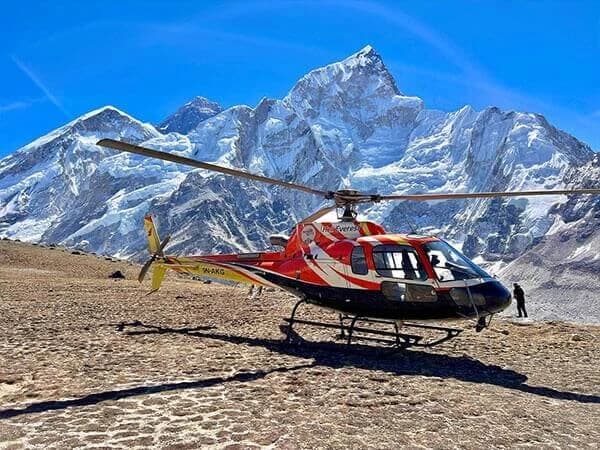
Langtang Helicopter Day Tour: For people with very limited time, a helicopter flight from Kathmandu to Kyanjin Gompa and back is possible as a day trip. You see the valley from above and spend a few hours at Kyanjin. You don't experience the trek, but you see the landscape. We operate this as a separate package, ask us about dates and availability.
Accommodation on the Langtang Trek
Our standard package includes an overnight stay at a 3-star hotel on your arrival and departure nights in Kathmandu. The 3-star accommodation offers comfortable rooms, en-suite bathrooms, hot showers, high-speed internet, and air conditioning.
During the trek, you'll stay in the best available teahouses or mountain lodges at each overnight stop. These family-owned facilities offer simple rooms with two single beds, mink blankets, foam mattresses, and pillows. Compared to other trekking regions, the teahouses in the Langtang Valley are surprisingly well-equipped. Many facilities in Syabrubesi, Langtang Village, and Kyanjin Gompa have attached bathrooms, in-room charging sockets, and solar-heated water.
The teahouses typically have a communal dining hall, where trekkers gather for meals and relaxation. The dining hall is often kept warm and inviting by the traditional wood-burning stoves at the center.
Meals
Our standard package includes breakfast in Kathmandu and all meals—breakfast, lunch, and dinner—during the trek. Breakfast and dinner are served at your overnight teahouse, while lunch is provided at rest stops along the trail.
Teahouse menus in the Langtang region are simple but diverse, offering a mix of Nepali, Tibetan, and Western dishes. Breakfast options include porridge, chapati, muesli, eggs, toast, and Tibetan bread. They're usually served with a hot drink of your choice, typically tea or coffee. Dal bhat is the most popular choice for lunch and dinner. This traditional meal features steamed rice, lentil soup, seasonal vegetables, and pickles.
Other options for lunch and dinner include momo, thukpa, thenduk, noodle soups, fried rice, pasta dishes, spaghetti, and potato dishes. At Kyanjin Gompa, teahouses serve the legendary yak cheese pizza and toasted cheese sandwiches, made with fresh cheese from the local factory.
Although the local shop along the trail offers snacks, energy bars, dried fruits, and chocolates, we recommend bringing your own snacks to supplement meals and maintain energy on long trekking days.
Drinking Water
Clean drinking water is available throughout the Langtang Valley Trek. Every teahouse along the trail offers boiled or filtered tap water. Although locals, guides, and porters usually drink tap water, we strongly recommend against doing so.
Instead, we suggest carrying a filtered bottle and refilling it with boiled water at teahouses and rest stops. Boiled water costs about USD 1-5 per liter in the Langtang region. For extra safety, use chlorine or iodine-based purification tablets or drops to treat the water before drinking. It is also smart to bring a few packets of flavored electrolyte powder to improve taste and help you stay hydrated.
Bottled water is available along the Langtang trail, but we advise avoiding it to protect the environment.
Hot Shower
Hot showers are available at almost all teahouses along the Langtang Valley Trek for a small fee. In the lower villages, you can usually find electric or gas-powered hot showers for about USD 2-5.
As you ascend higher, hot showers become weather-dependent, since most teahouses rely on solar-heated water. On cloudy days, you'll have to settle for bucket showers heated with wood-fired stoves at best. The teahouses often provide a single bucket of hot water, enough for only a quick wash.
It is best to avoid showers above 3,500 meters due to the risk of extreme cold and hypothermia. We recommend skipping showers for a few days at high altitude and freshening up properly once you reach lower elevations. If you can't go a few days without a shower, use a damp towel or wet wipes to clean up at the end of the day.
Mobile Network and Internet Connectivity
Mobile and internet connectivity are available in most parts of the Langtang Valley. In Syabrubesi, major carriers like NTC and Ncell provide reliable network and 4G service. While some guesthouses offer basic Wi-Fi for a small fee, most include it in the room rate. Coverage in the lower region is sufficient for standard voice calls, text messaging, video calls, and social media.
Beyond Syabribesi, mobile signals become inconsistent and unreliable, with little to no coverage. Wi-Fi is available in most teahouses along the trail for a small fee of about USD 4-5 per device. As you climb higher into the valley, internet speeds slow down and become less reliable. Since most teahouses in the upper sections rely on satellite Wi-Fi, the connection can be affected by bad weather and heavy usage.
Electricity
Electricity is available throughout the Langtang Valley Trek. In Syabrubesi and Lama Hotel, electricity is mainly supplied by a combination of local hydropower and solar energy. Most teahouses in Syabrubesi offer charging facilities included in the room rates, while those at Lama Hotel charge a small fee per device.
Beyond Lama Hotel, the villages entirely rely on solar power for electricity. In the upper villages, teahouses have a communal charging station in their dining halls, where you can charge devices for USD 2-5 per device. On sunny days, the solar supply is sufficient for device charging, but on cloudy days, it is often limited.
A portable power bank (20,000 mAh or higher) is highly recommended to keep essential devices like phones, cameras, and headlamps charged. We suggest bringing a universal travel adapter compatible with Type-C and Type-D sockets, which are commonly used in Nepal's remote mountains.
ATMs and Money Exchange
Most teahouses and shops in the Langtang Valley do not accept card payments or foreign currency. Therefore, you need to carry enough cash in Nepali Rupees (NPR) for personal expenses, such as hot showers, Wi-Fi, snacks, drinks, and battery charging.
Kathmandu is the best place to manage your cash before starting the Langtang Valley Trek. ATMs are widely available throughout Kathmandu's tourist and commercial areas. Most ATMs accept all major international cards, including Visa and Mastercard. However, international card withdrawals usually come with a fee of about USD 4-5 per transaction.
You can also find plenty of money exchange counters in Thamel. These exchange centers offer competitive rates for most major currencies and are reliable. If you're unsure, you can visit a few counters in Thamel to compare exchange rates and find the best deals.
There are a few exchange counters and ATMs in Syabrubesi. However, we strongly recommend withdrawing and exchanging all the cash you need in Kathmandu, as facilities in Syabrubesi are often unreliable and out of cash.
Guide and Porter Information
On the Langtang Valley Trek, you'll be accompanied by an experienced team of guides, porters, and crew members to ensure a safe, comfortable, and hassle-free adventure. Our guides are the most critical members of all our treks and expeditions.
They have extensive experience leading high-altitude treks and have operated countless treks in the Langtang region. While their main responsibilities include route navigation, team coordination, and overall logistics, they also offer in-depth knowledge of local cultures and mountain lifestyles that no guidebook can match.
Additionally, all our guides are WFR-certified professionals with extensive training in first aid, mountain rescue protocols, and altitude sickness management. Each day on the trail, they make crucial safety decisions, including assessing the weather, evaluating trail conditions, and adjusting the trekking pace. They also perform health screenings twice daily to monitor your heart rate, pulse oximetry, blister formation, and altitude-related symptoms.
Our porters are the hardworking individuals who carry your luggage and essential supplies across the high-altitude terrain of the Langtang region so you can walk with a light daypack. At Nepal Gateway Trekking, we enforce strict weight limits and keep an appropriate porter-to-trekker ratio. We assign one porter for every two trekkers to protect their health and well-being.
We also adhere to the ethical guidelines of the International Porter Protection Group (IPPG). Our porters receive wages above industry standards, comprehensive insurance, proper gear, and suitable accommodations.
Gratitude for the Trekking Crew
Tipping is a common way to show appreciation to your guides, porters, and trekking crew. Although not mandatory, this small gesture is generally expected and appreciated in Nepal's trekking industry. For most porters and crew members, your small tip makes up a significant part of their income and livelihood.
There is no fixed amount for tipping. It depends entirely on the quality of their service, trek duration, and group size. However, a general guideline is to tip about 15% of the trip cost to the lead guide and about 10% to the porters and crew members. The best practice is to give individual members their tips in separate envelopes during the farewell ceremony in Syabrubesi.
While cash tips are most appreciated, porters and field staff are also happy to accept non-monetary gestures. After the trek, you can donate your used trekking gear and accessories, including trekking boots, down jackets, clothing, sunglasses, trekking poles, and headlamps. You can further support them by leaving honest reviews on online platforms and personal blogs.
FAQs
The Langtang Valley Trek is considered a moderate adventure in the Himalayas. Although this trek does not require technical climbing skills, it demands serious physical fitness and mental resilience. It involves long hours of trekking across rugged mountain terrain and high-altitude settlements.
You'll need to walk an average of 6 to 8 hours daily for more than a week through the rough terrain to complete this trek.
The highest point of the Langtang Valley Trek is the summit of Tserko Ri at 5,030 meters. The full-day hike starts pre-dawn from Kyanjin Gompa and gains over 1,000 meters in altitude. The summit offers a breathtaking panorama of Langtang Lirung, Langtang II, Dorje Lakpa, Baden Powell Peak, and Yala Peak.
No, you don't need prior trekking experience for the Langtang Valley Trek. However, having prior experience can be a significant advantage on such high-altitude adventures. If you're a first-time trekker, we recommend building a strong physical and mental foundation for long trekking days with focused training at least 8–12 weeks before the trek.
Autumn and spring are the best seasons for the Langtang Valley Trek. These months offer the most stable weather, clearest skies, and stunning mountain views. While spring is famous for the spectacular rhododendron blooms in the lower regions, autumn delivers the best mountain vistas of the year.
Although the Langtang Valley Trek can be done during the winter and monsoon seasons, we do not recommend it unless you're an experienced trekker. These seasons bring harsh conditions, low visibility, slippery trails, and poor mountain views.
Yes, altitude sickness is a serious concern on the Langtang Valley Trek. It involves walking above 2,500 meters for most of the journey, spending the night at 3,860 meters in Kyanjin Gompa, and climbing to 5,030 meters at Tserko Ri. At these elevations, the risk of altitude sickness is much higher.
Therefore, you should always trek slowly, stay hydrated, get enough rest, and eat a balanced diet to help your body acclimate. If you notice any symptoms, inform your guide immediately so they can respond quickly and effectively.
Travel insurance is required and non-negotiable when booking the Langtang Valley Trek with us. Your policy must include coverage for high-altitude trekking and helicopter evacuation up to 5,500 meters. Additionally, your policy should cover medical expenses, trip cancellations, and theft or loss of personal belongings.
Our standard package includes a local bus ride from Kathmandu to Syabrubesi, the starting point of the Langtang Valley Trek. The 122-kilometer drive begins at Machha Pokhari Bus Park on the second day of the trip and takes about 7 to 8 hours.
After the trek, you'll take the same route back to Kathmandu from Syabrubesi via a local bus. If you prefer a more comfortable, faster experience, you can upgrade to a private jeep for an additional fee.
Compared to other trekking regions in Nepal, the Langtang Valley offers a variety of accommodation options, even in the higher elevations. Our team will make sure you stay in the best available teahouses at each overnight stop during the trek.
These family-run facilities provide private rooms with two single beds, warm blankets, shared bathrooms, and communal dining halls. Hot showers, charging stations, and Wi-Fi are available in most teahouses for a small fee.
The teahouse menus are simple yet diverse, offering a mix of local and Western cuisines. Dal Bhat is the staple among guides, porters, and trekkers alike. Other food options include momo, thukpa, thenduk, pasta, spaghetti, eggs, and Tibetan bread.
At Kyanjin Gompa, the freshly made yak cheese appears in various forms on the menu. All meals (breakfast, lunch, and dinner) throughout the trek are fully included in your package.
The packing essentials for the Langtang Valley Trek include a good pair of trekking boots, trekking poles, a sleeping bag, a down jacket, waterproof layers, thermal base layers, a sun protection hat, sunglasses, a water bottle, and a headlamp with spare batteries.
Although our lead guide will carry a comprehensive first-aid kit on each of our treks, we recommend carrying a basic personal kit, including any prescription medications.
Your lead guide will conduct daily health checks at the teahouse to ensure you remain in good condition during the trek. These checks include monitoring heart rate, blister formation, pulse oximetry, and altitude-related symptoms.
For mild conditions, the guide will advise you to stop ascending and rest completely while he observes your condition for improvement. If symptoms do not get better, your guide will arrange an immediate descent. In more severe cases, you may require an emergency helicopter evacuation to Kathmandu for advanced treatment.
There are no ATMs or money exchange counters beyond Syabrubesi. However, we strongly recommend withdrawing and exchanging all your cash for Nepali Rupees in Kathmandu, as facilities in Syabrubesi are often unreliable and run out of cash.
Teahouses and shops in the Langtang Valley don't accept card payments. So, bring enough cash for unexpected expenses and emergencies during the trek. We suggest carrying about USD 20-30 per day for Wi-Fi, hot showers, charging your battery, and snacks beyond your included meals.
In October and November — the peak season — night temperatures at Kyanjin Gompa (3,860m) drop to -5°C to -10°C. Mornings on Tserko Ri summit can reach -15°C with wind. Daytime temperatures at Kyanjin are typically 8–14°C in October. Pack a proper down sleeping bag and a quality down jacket — teahouse blankets alone are not sufficient above 3,500m.
Yes, Langtang Valley Trekking is open now. The 2015 earthquake terribly damaged Langtang village. The locals have built a new teahouse just above the old village. They have also made a trail over the landslide section to Kyajing Gompa and Tserko Ri.
Trekkers will have the opportunity to visit ancient monasteries, prayer walls, and chortens, as well as participate in local traditions. You will also have the chance to sing and dance with the Tamang communities, who are eager to share their culture.
Yes. Langtang is one of the safer trekking regions in Nepal for solo women. The trail is well-used, teahouses are family-run, and the Tamang community is generally very welcoming. Our female clients who have trekked here solo consistently report feeling safe and comfortable.
The Langtang Valley is situated north of Kathmandu in Nepal. The Lantang region has a border with Tibet and is dominated by the Langtang Himalayas.
To reach the Langtang Valley from Kathmandu, you have to take a public bus from Machhapokhari (the bus station in Kathmandu) to Syabru Besi. You can also drive to Syabru Besi by private four-wheel jeep, which is more comfortable. From here, you hike to Langtang Valley for a wonderful trekking experience, passing Lama Hotel, Langtang Village, and Kyanjing Gompa.
The major highlights of the Langtang Valley Trek are dense cedar forests and numerous flowers. Trekkers can also look forward to close views of the giant Himalayan mountains and huge glaciers. Likewise, they get to see the cultural heritage of the locals, Tamangs and Sherpas.
Yes, Langtang Valley Trekking is safe for everyone interested in doing this incredible hike. Our well-made itinerary prevents altitude sickness, and professional crew members support you during the trek.
The Langtang Valley Hike takes 8-10 days, depending on your needs and time frame. You can also extend the trek to Gosaikunda Lake to the Helambu region.
Usually, you can trek independently to Langtang Valley. However, we strongly suggest you go on this trek with a guide and porter. The trekking route is remote, and trails are not well maintained.
The Langtang Glacier is the largest glacier in the world. It is approximately 36 kilometres long and extends from 4,700 to 8,000 meters.
Traveler’s Experience with Us?
Personalised and Flexible Trekking Company- Excellent!
The number of trekking companies in Kathmandu is daunting- I contacted several, and am delighted that we selected Nepal Gateway Trekking. If you want personalised...
sarah6666 (Dianne Stewart)- United Kingdom
May 19, 2025s
Amazing Trek with Nepal Gateway Trekking
Our group of 5 friends and family just returned from completing a 7 day trek in the Langtang Valley with Nepal Gateway Trekking.
WOW!...
Jim Scott- Canada
March 22, 2025J
Amazing. Langtang Valley
The entire trek that Ram put together was top notch from day one until our final jeep ride back to our home base. Ram is...
Nick Meloche (nick m)- Canada
March 22, 2025N
You May Also Like
Did not find the perfect trip? No worries!
Contact us to start planning your tailor-made dream trip!
Need Help? Call Us+977 98510 55520