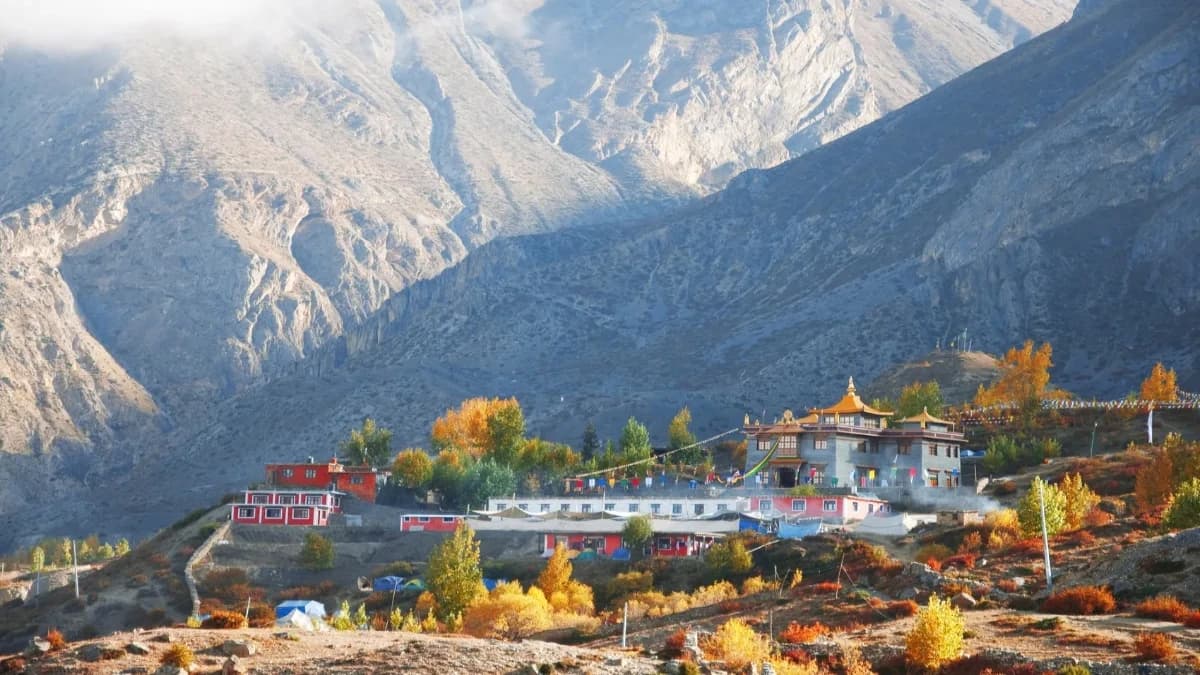
Muktinath is one of Nepal’s most famous and spiritual places, and every year it draws thousands of pilgrims and trekkers. So, where is Muktinath? It’s in the Mustang district in northern Nepal, sitting 3,710 meters (12,170 feet) above sea level, surrounded by the huge Himalayas.
This place is home to the well-known Muktinath Temple, a sacred shrine for Lord Vishnu, which makes it an important pilgrimage spot for both Hindus and Buddhists. It’s about 22 kilometers (14 miles) north of Jomsom and lies at the base of the Thorong La Pass. Muktinath is surrounded by the Annapurna and Dhaulagiri mountain ranges. With its amazing mountain views, peaceful river valley, and spiritual vibe, Muktinath is not just an awesome trekking spot but also one of the most respected holy sites in the Himalayas.
Muktinath Geography and Location
Muktinath is set in one of Nepal’s most amazing landscapes, where huge Himalayan peaks, dry desert valleys, sacred rivers, and quiet high-altitude villages all come together. It’s tucked away in the Mustang Region of northern Nepal, where tall mountains meet dry, desert-like valleys.
This high-altitude setting gives the area a special charm. Snow-covered mountains rise above empty cliffs, sacred rivers cut deep gorges, and calm villages rest peacefully in the rugged land.
Here’s what makes Muktinath’s location so special:
- It sits at about 3,710 meters (12,172 ft), just below the Thorong La Pass (5,416 m), one of the highest trekking passes in the world.
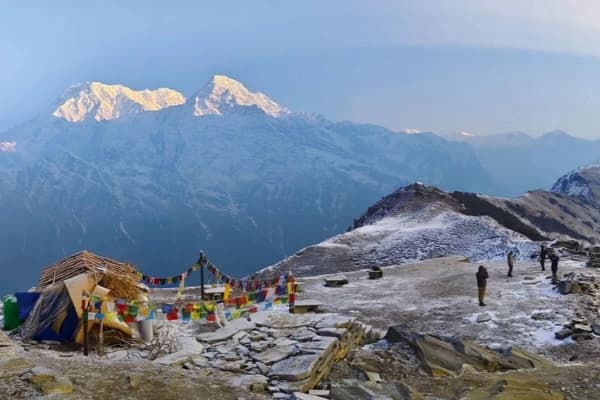
- The valley is surrounded by the Annapurna and Dhaulagiri ranges, giving amazing views, especially at sunrise when the mountains turn golden.
- Being in the rain shadow of the Himalayas, Mustang’s land is dry and rough, with red and orange cliffs, rocky canyons, and open desert-like spaces, which is very different from Nepal’s green hills.
- The Kali Gandaki River flows nearby, creating one of the world’s deepest gorges and adding both spiritual meaning and natural beauty to the area.
- Muktinath is inside the Annapurna Conservation Area, which protects its natural landscapes and rich cultural history.
- The nearest town, Jomsom, is the main gateway, connecting travelers to trekking routes like the Annapurna Circuit, Jomsom–Muktinath Trek, and Upper Mustang.
With its mix of dramatic mountains, high-altitude desert, sacred rivers, and calm villages, Muktinath’s location is as amazing as its spiritual importance. Nepal Gateway Trekking can help you plan a safe, meaningful, and comfortable trip, making sure you enjoy all the spiritual and scenic beauty of this Himalayan gem.
Where Is Muktinath Temple Located?
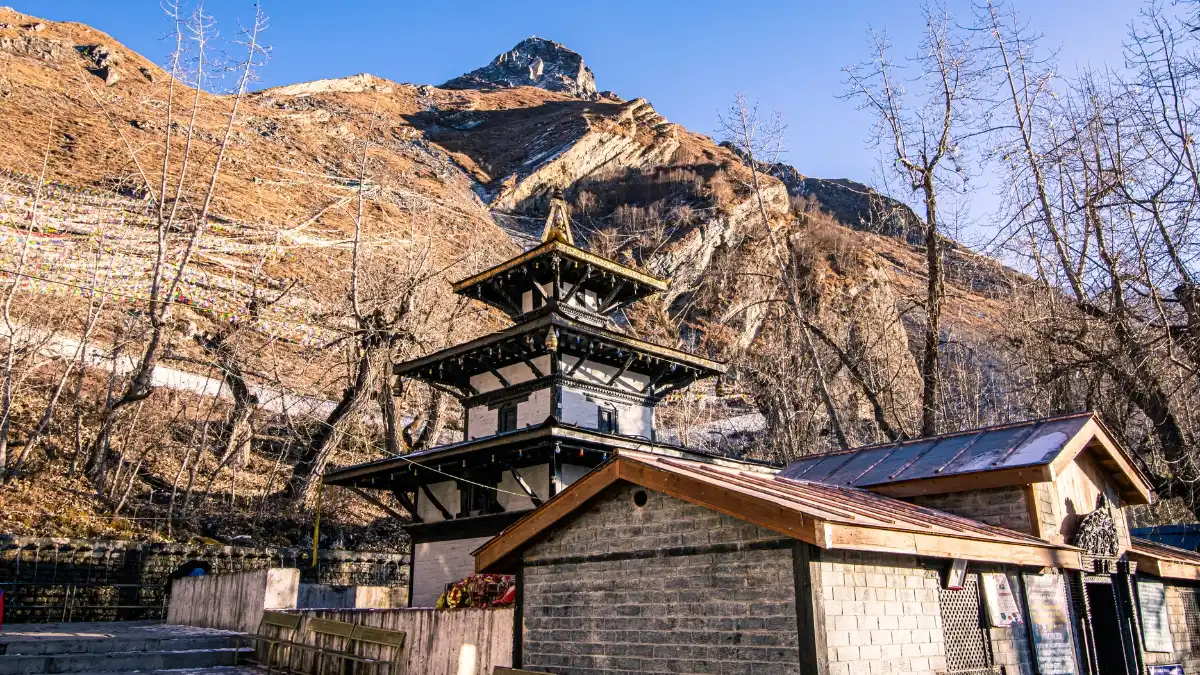
Muktinath Temple is located in the Muktinath Valley of the Mustang District in northern Nepal, at an elevation of 3,710 meters (12,172 ft). It lies below the Thorong La Pass (5,416 m), one of the world’s highest trekking passes, and is part of the protected Annapurna Conservation Area.
Quick Geographical Location Guide
- Country: Nepal
- Province: Gandaki Province
- District: Mustang
- Municipality: Baragung Muktichhetra
- Nearest Town: Jomsom
- Altitude: 3,710 meters
- Region: Annapurna Conservation Area
- Nearby Treks: Annapurna Circuit, Jomsom–Muktinath Trek, Upper Mustang
Significance of Muktinath Temple: Cultural & Spiritual Meaning
Muktinath is one of Nepal’s most sacred spiritual places, respected by both Hindus and Buddhists for hundreds of years. With its peaceful surroundings, ancient stories, and strong spiritual energy, it’s a place where faith and nature come together in a very special way.
Why Hindus Respect Muktinath
For Hindus, Muktinath is one of the most important temples dedicated to Lord Vishnu. It’s seen as a place where people can leave behind past negativity and move closer to spiritual purity.
Hindus respect Muktinath because:
- It is one of the eight sacred shrines of Lord Vishnu.
- It is one of the 108 Divya Desams in Vaishnavism.
- It is called Muktikshetra, which means the Place of Liberation.
- It is linked to the story where Lord Vishnu was freed from Brinda’s curse.
Many Hindu pilgrims believe that visiting Muktinath can cleanse their karma and bring inner peace.
Why Buddhists Honor Muktinath
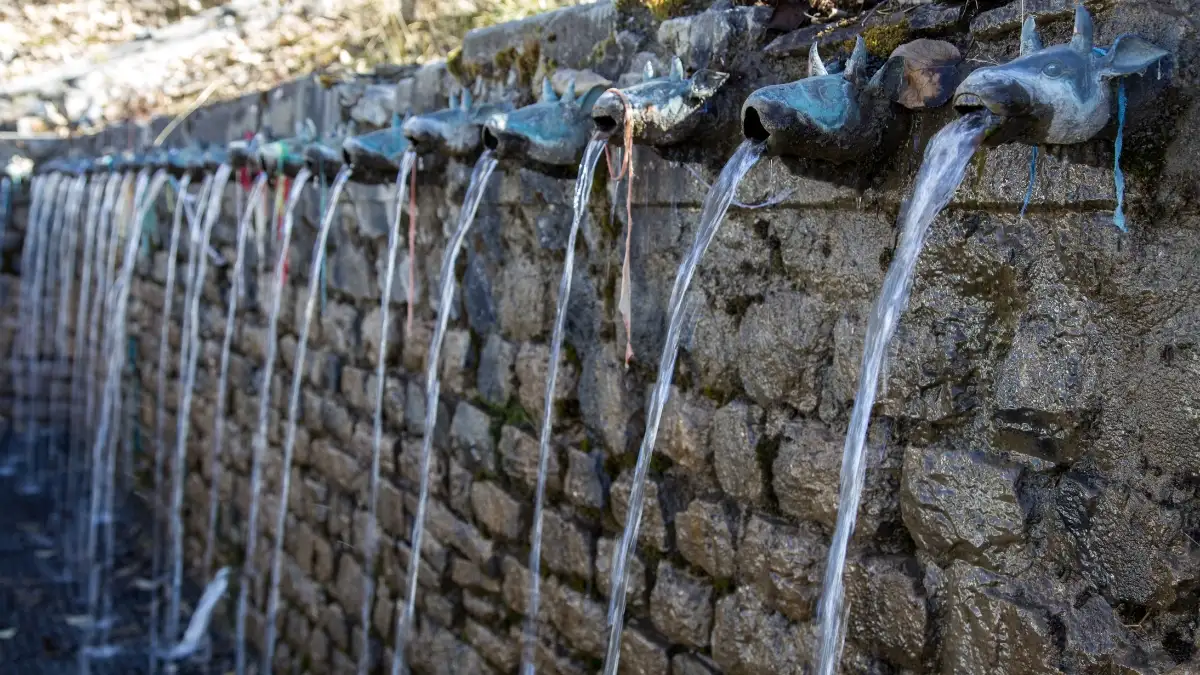
Buddhists also consider Muktinath sacred and call it Chumig Gyatsa, which means the Place of 108 Waterspouts. It holds a very important place in Tibetan Buddhist traditions.
Buddhists honor Muktinath because:
- They worship Lord Vishnu here as Avalokiteśvara, the God of Compassion.
- Guru Rinpoche (Padmasambhava) is believed to have meditated in this area.
- The site represents a balance between spiritual practice and the natural world.
For Buddhist pilgrims, Muktinath is a symbol of compassion, reflection, and the journey toward enlightenment.
If you want to trek through Damodar Kunda, Upper Mustang Damodar Kunda Trek is highly recommended.
How to Reach Muktinath Location?
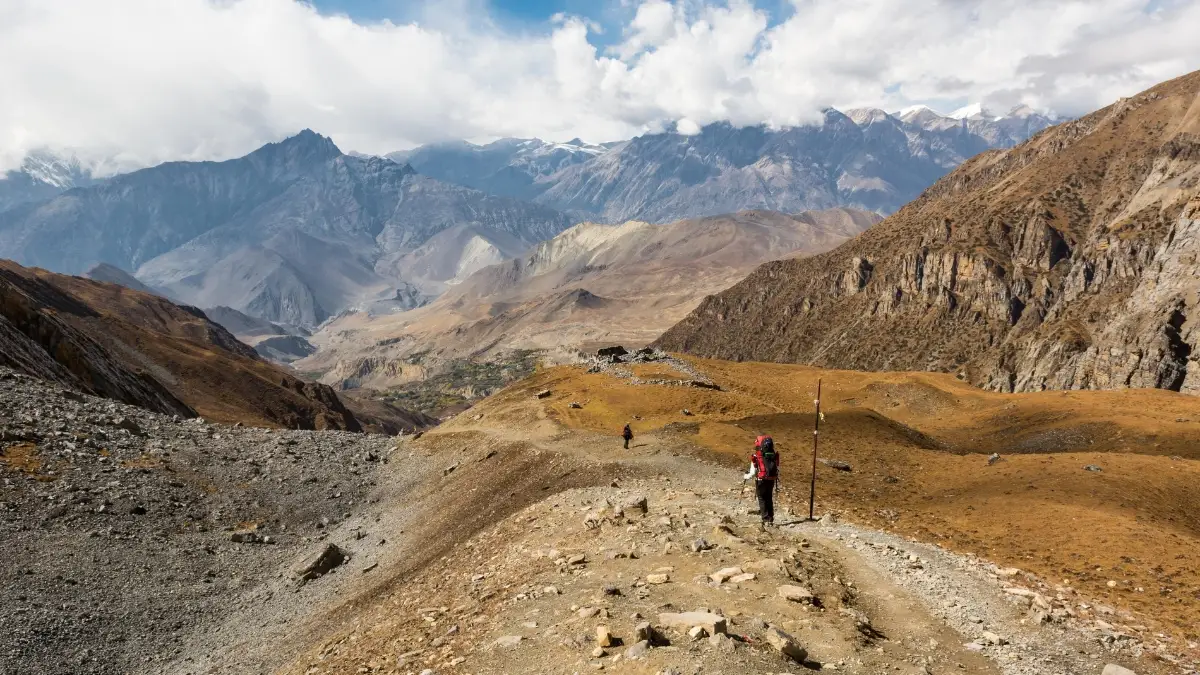
Muktinath can be reached by road, flight, helicopter, or trekking, depending on your time, comfort, and budget. Each way gives a different experience, from scenic drives and adventurous treks to quick and easy flights.
By Road (Jeep or Bus)
Traveling by road is the most popular and budget-friendly way to get to Muktinath. The journey has amazing mountain views, though the roads can be bumpy.
- Pokhara to Jomsom: 8–10 hours
- Jomsom to Ranipauwa (Muktinath area): 1.5–2 hours
- Ranipauwa to Muktinath Temple: 20–30 minutes on foot or by horse
By Flight + Jeep (Fastest Combination)
The quickest way is to take a short flight to Jomsom, then a jeep ride. Flights only run in the morning because of the wind.
- Pokhara to Jomsom flight: 20 minutes
- Jomsom to Muktinath by jeep: 1.5–2 hours
By Helicopter (Luxury & Senior-Friendly)
Helicopters are perfect for older travelers or anyone short on time. They go straight to Muktinath from major cities.
- Pokhara to Muktinath: 45–60 minutes
- Kathmandu to Muktinath: 1.5–2 hours
Trekking Routes
For adventure lovers, trekking to Muktinath is an unforgettable experience, mixing spiritual journey with Himalayan adventure. Popular treks include:
- Annapurna Circuit Trek: Manang → Thorong La → Muktinath (10–14 days)
- Jomsom to Muktinath Trek: 2–3 days
- Upper Mustang Trek: Lo Manthang → Chhuksang → Muktinath (7–10 days)
- Tatopani to Muktinath Trek: Tatopani → Marpha → Kagbeni → Muktinath (5–6 days)
- Marpha to Muktinath Short Trek: Perfect for a 2-day adventure
By Local Bus
Local buses are a cheap option for budget travelers. They follow the same routes as jeeps but can be rough because of road conditions.
- Pokhara to Jomsom
- Jomsom to Ranipauwa
Whether you choose a scenic road trip, a quick flight, or a trekking adventure, reaching Muktinath itself is part of the journey, offering stunning views of the Annapurna and Dhaulagiri ranges, desert valleys, and the Kali Gandaki River.
Best Time to Visit Muktinath
The best time to visit Muktinath is in spring (March to May) and autumn (September to November). During these months, the weather is nice, the skies are clear, valleys are full of flowers, and the Himalayan views are amazing, perfect for sightseeing and spiritual activities.
Winter (December to February) is very cold, and sometimes snow can block the trails, but it also makes for a quiet and peaceful visit. During the monsoon (June to August), traveling is still possible because Mustang’s rain shadow keeps the area mostly dry, though flights can be unpredictable.
Major festivals like Janai Purnima (August), Muktinath Jatra (spring and autumn), the Yarlung Horse Festival (August full moon), and Tihar (October–November) bring thousands of pilgrims. Visiting during these festivals gives you a chance to enjoy both the spiritual journey and rich cultural experiences.
Things to Do in Muktinath
Visiting Muktinath is an experience that touches both your soul and your senses. Set in the peaceful Himalayas, this sacred place offers a mix of spiritual energy, stunning landscapes, and rich cultural traditions. Whether you come for devotion, adventure, or just to enjoy the calm surroundings, Muktinath has something special for everyone.
- Admire the breathtaking Himalayan views of Annapurna and Dhaulagiri.
- Take a holy dip or cleanse under the 108 sacred water spouts (Muktidhara) for purification.
- Visit the twin sacred pools, Laxmi Kunda and Saraswati Kunda, for blessings.
- See the eternal flame at Jwala Mai Temple, a rare natural wonder.
- Explore ancient Buddhist monasteries nearby and experience the harmony of Hinduism and Buddhism.
- Wander through Kagbeni village to see mud-brick houses, prayer flags, and Tibetan-influenced culture.
- Look for sacred Shaligram stones along the Kali Gandaki River, believed to be manifestations of Lord Vishnu.
- Taste local Thakali dishes and traditional Himalayan food for a real cultural experience.
- Use Muktinath as a base for treks or jeep routes, including connections to Thorong La Pass.
In Summary
With its dramatic Himalayan peaks, high-altitude desert, sacred rivers, and peaceful villages, Muktinath is more than just a place to visit—it’s an experience that stays with you. From the calm landscapes to the spiritual energy of the temple, every moment here leaves a lasting impression.
Nepal Gateway Trekking is here to make your trip easy, safe, and memorable. Whether you’re looking for adventure, a spiritual pilgrimage, or a cultural escape, we can help plan every detail. Contact us today to start your unforgettable journey to Muktinath.
FAQs
Where is the Muktinath Temple Located?
Muktinath Temple is in the Muktinath Valley, which is in the Mustang District of Nepal. It’s right below the Thorong-La Pass on the Annapurna Circuit and sits really high up at 3,710 meters.
What altitude is Muktinath Temple situated at?
The temple is at 3,710 meters (12,172 ft) above sea level. Because it’s so high, the air is thinner and colder, so you might feel a little short of breath or more tired than usual. That’s why a lot of travelers spend a night in Jomsom or Kagbeni to get used to it before going higher.
How far is Muktinath from Kathmandu?
It’s about 300 km from Kathmandu. Even though it doesn’t sound far, the mountain roads make the trip take much longer. By road, it can take 12–16 hours. If you fly, it’s faster—you can take a short flight to Pokhara or Jomsom and then a jeep ride, which takes around 2–3 hours total.
Which city is closest to Muktinath?
Jomsom is the closest city. It has hotels, restaurants, and a small airport, so most people stay there the night before going to Muktinath.
Is Muktinath in Upper Mustang?
No, it’s in Lower Mustang, in Baragung Muktichhetra Municipality. Upper Mustang needs a special permit, but you don’t need one to go to Muktinath.
Is Muktinath Temple located near Thorong-La Pass?
Yes, it’s just below the Thorong-La Pass, which is 5,416 meters high. Trekkers usually stop at the temple after crossing the pass from Manang to Mustang. It’s like an important checkpoint for both pilgrims and trekkers.
Which region or district is Muktinath Temple in?
It’s in Mustang District, which is one of the most beautiful parts of the Himalayas. The area has a lot of Tibetan-influenced culture, sandy cliffs, and stunning mountain views.
How is the weather at the Muktinath location?
Since it’s so high up, it’s cool to cold most of the year. Spring and autumn are the best times to go because the skies are clear and the temperatures are comfortable. In winter, it can be snowy and windy. During the monsoon, some roads can get tricky, even though Mustang stays pretty dry compared to other parts of Nepal.