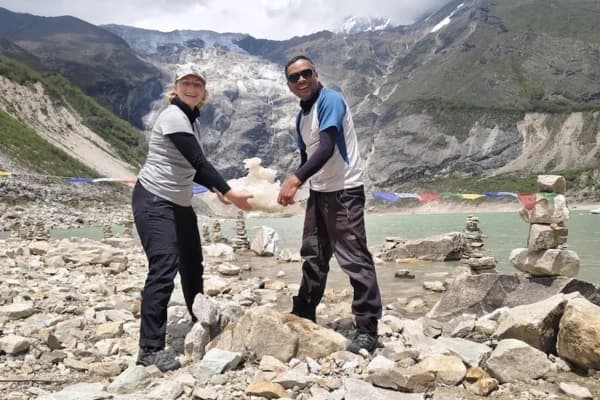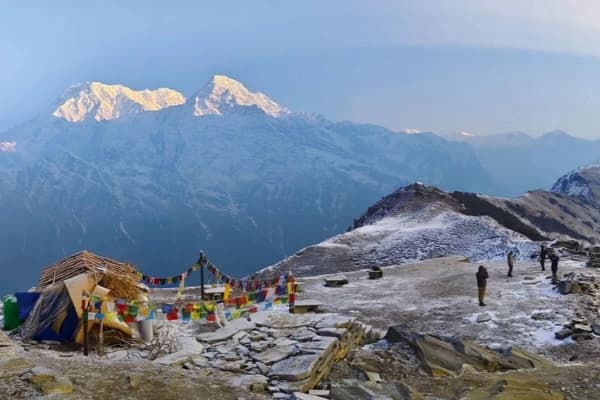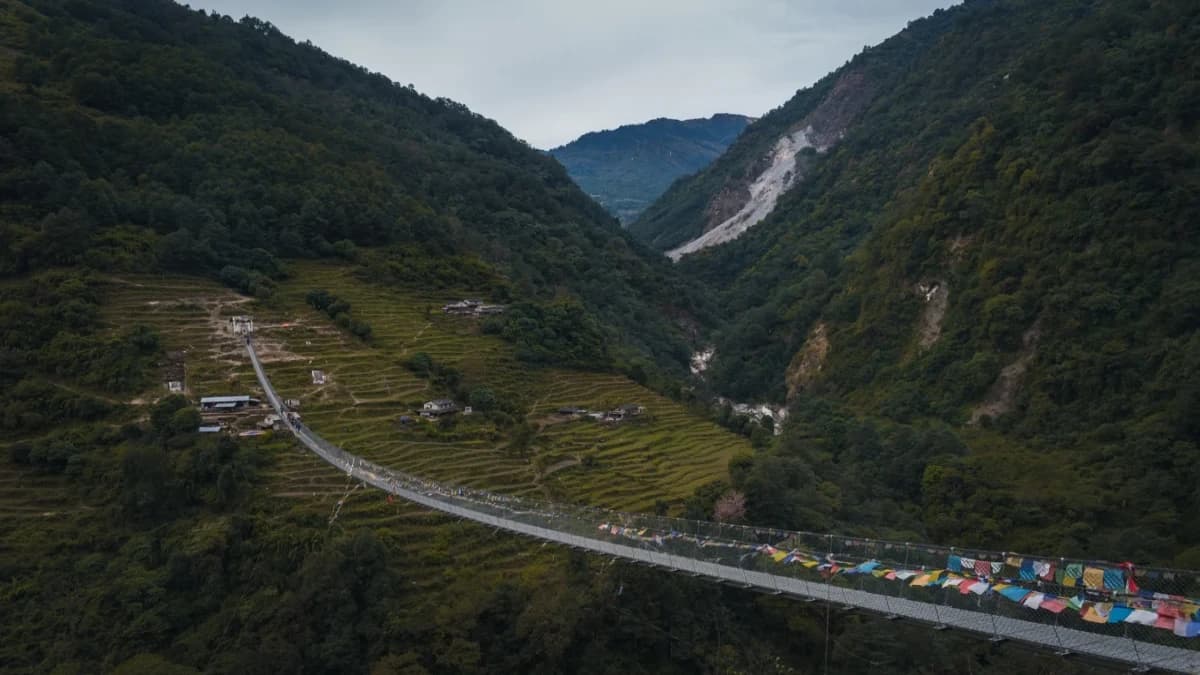
Jhinu Danda is a quiet little Jhinu Danda trekking village in the Annapurna region of Nepal. It’s surrounded by green hills, river valleys, and Himalayan views, and it’s most famous for the Jhinu Danda hot spring right by the river.
These springs sit along the Modi Khola River and draw hundreds of trekkers every year who need to rest their tired muscles after a few days of hiking.
For anyone walking the Jhinu Danda Annapurna Base Camp route, this place is the perfect stop. After long days on forest and mountain trails, soaking in warm mineral water feels amazing.
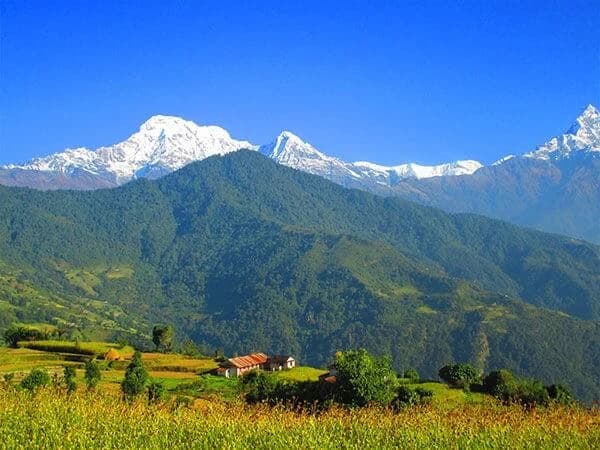
At around 1,780 meters, the village also gives you beautiful views of peaks like Annapurna and Machhapuchhre.
Now, Jhinu Danda is known as one of the best spots to relax on the Jhinu Danda Annapurna trek, with its mix of nature, local culture, and those soothing Jhinu Danda hot spring waters.
Where is Jhinu Danda Located?
Jhinu Danda is a tiny, peaceful village in the Kaski District of Nepal, right inside the Annapurna Conservation Area. It sits at about 1,780 meters (5,840 ft), and all around you, there are rhododendron and bamboo forests. Walking here feels calm, almost like the world slows down a bit. No wonder trekkers love stopping here on the Annapurna Base Camp trek.
The village is along the Modi Khola valley and is best known for its riverside Jhinu Danda hot spring. After a long day of hiking, chilling in those warm waters is just wow. It’s the kind of thing that makes all the uphill climbs worth it.
Quick Facts About Jhinu Danda
|
Feature |
Details |
|
Location |
Annapurna region, Nepal |
|
Altitude |
1,780 meters |
|
District |
Kaski |
|
Famous for |
Natural hot springs |
|
Nearby river |
Modi Khola |
|
Nearest city |
Pokhara |
|
Accessibility |
You can get here by trekking, usually coming down from Chhomrong |
|
Proximity |
About 1.5 to 2 hours of hiking from Chhomrong |
Villages Near Jhinu Danda
Jhinu Danda isn’t just about the hot springs. The area is surrounded by a bunch of charming little villages, which makes the Jhinu Danda Annapurna Base Camp trek even more scenic and interesting.
- Chhomrong (2,170m): About 1.5–2 hours uphill. It’s basically the gateway to the Annapurna Sanctuary.
- Landruk (1,565m): 2–2.5 hours away. A traditional Gurung village with those classic stone houses you see in postcards.
- Ghandruk (1,940m): 3–4 hours from here. Famous for its cultural museum and amazing views of Annapurna South and Machhapuchhre.
- Sinuwa (2,340m): 5–6 hours if you go via Chhomrong. This is where higher-altitude trekking really starts.
- Tolka (1,700m): A tiny village, but the valley views from here are stunning.
- New Bridge (1,340m): Right by Modi Khola. You usually pass this on the way to Landruk.
These nearby villages make the Jhinu Danda way more than just a stop for the hot springs. You get a mix of local culture, beautiful scenery, and trekking experiences that stick with you long after you leave.
Jhinu Danda Altitude and Landscape
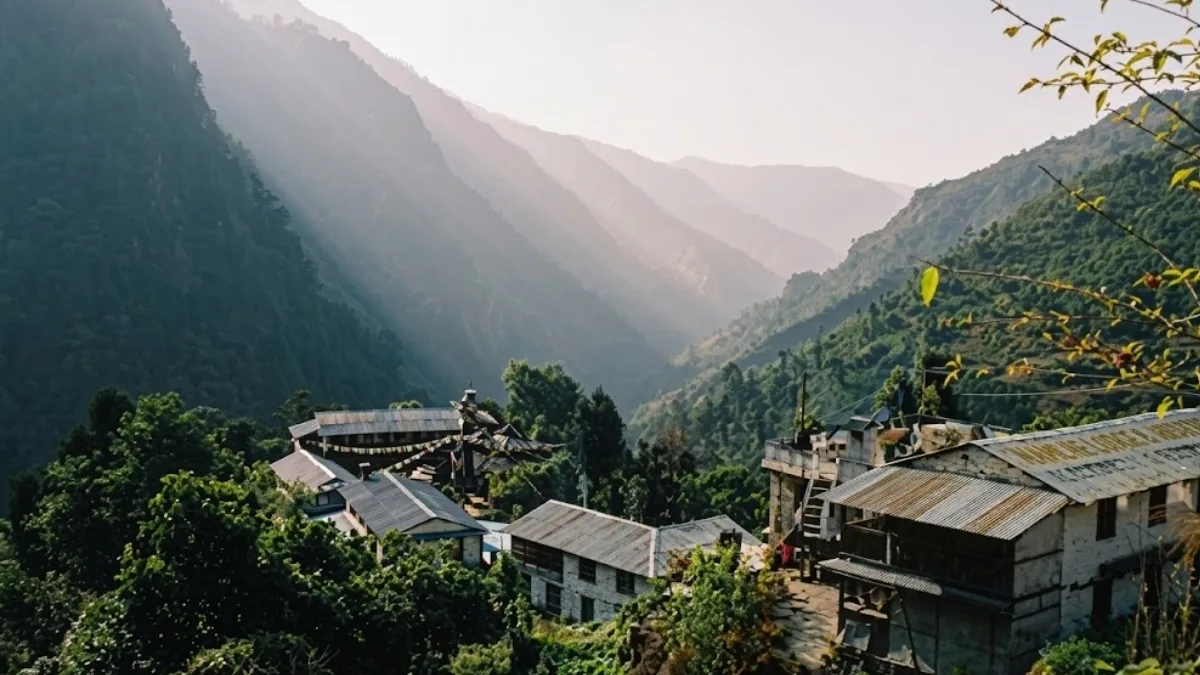
Jhinu Danda sits at about 1,780 meters, which makes for a really comfortable climate and easy trekking, plus the Himalayan views are just stunning.
Altitude and Climate
Since it’s lower than most stops on the Annapurna Base Camp trek, the air here feels lighter and the oxygen levels are comfortable. It’s a great place to rest and recover before heading higher.
- Pleasant weather almost all year
- Easy breathing for trekking
- Less tough than the higher Himalayan trails
Natural Landscape
The scenery around the village is just gorgeous. You’ve got:
- Deep valleys along the Modi Khola
- Dense rhododendron and bamboo forests
- Terraced farming hillsides
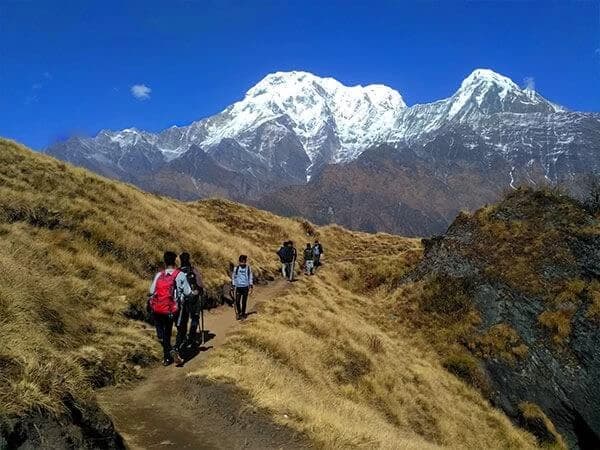
- Panoramic views of the Himalayan mountains
All of this makes Jhinu Danda one of the most scenic little villages in the Annapurna region. It’s the kind of stop where you can take a break, enjoy nature, and soak in the views during the Jhinu Danda trek.
Jhinu Danda Hot Springs - Major Attraction

The Jhinu Danda hot springs, located just 15–20 minutes downhill from the village, offer pure bliss after a day of trekking. The springs sit right on the riverbank of the Modi Khola, so you get the warm water plus the sound of the river flowing; it’s super calming.
After hiking up and down the trails on the Jhinu Danda Annapurna Base Camp route, dipping into these pools feels like your muscles are saying, “thank you.” The forest around you adds this peaceful vibe, making it one of the best spots to just relax and soak it all in.
Here’s the lowdown:
- Water temperature: 35–40°C—perfectly warm, not too hot
- Pools: 2–3 natural ones to choose from
- Distance from village: about 15–20 minutes' walk downhill
- Location: right on the riverbank beside Modi Khola
- Entry fee: small local fee, around NPR 150–300 in 2026
So yeah, if you’re doing the Jhinu Danda trek, this little hot spring stop is a must. It’s not just about the water, it’s the whole vibe, the river, the forest, the mountain, it all comes together.
Benefits of the Natural Hot Springs
The Jhinu Danda hot springs are more than just warm water. After a long day on the trail, they feel like a little miracle. The mineral-rich water really helps your body bounce back.
Some of the best things about soaking here:
- Your tired muscles finally get to chill out
- Blood circulation gets a nice little boost
- You warm up after those cold mountain hikes
- Sitting by the river while you soak is just pure calm
Honestly, for a lot of trekkers, stopping at the Jhinu Danda hot spring ends up being the highlight of the whole trek. It’s not just about relaxing. It’s about feeling the river, the forest all around, and catching those insane Annapurna views at the same time.
Trekking Routes That Pass Through Jhinu Danda
Jhinu Danda is a key stop on a bunch of Annapurna trekking routes. With the hot springs, beautiful views, and calm vibe, it’s a perfect place to rest, whether you’re heading up or coming down from high-altitude trails.
Since it’s right on the Modi Khola riverbank and just below Chhomrong, it’s kind of a central hub in the Annapurna Conservation Area. Most trekkers stop here on the way down to soak in the Jhinu Danda hot springs, but it also connects to several trekking routes in the region.
Here’s a quick look at the main trekking routes that pass through:
|
Trek Name |
Typical Duration |
Role of Jhinu Danda |
Key Highlights |
|
7–12 Days |
Major recovery stop on descent |
Reach 4,130m, 360° mountain views |
|
|
5–6 Days |
Starting/ending trailhead |
Rapid base camp ascent via jeep |
|
|
Poon Hill & Hot Spring Trek |
5–6 Days |
Final relaxation stop |
Sunrise at Poon Hill (3,210m) |
|
Khopra Danda Trek |
9–13 Days |
Transition point |
Off-the-beaten-path, sacred Khayer Lake |
|
5–7 Days |
Optional hot spring detour |
Close-up views of Machhapuchhre |
|
|
Ghandruk Cultural Trek |
3–5 Days |
Village loop connection |
Gurung culture and museums |
|
4–7 Days |
River-side finish |
Community-based eco-trek |
|
|
5–6 Days |
Wellness and relaxation |
Low-altitude, beginner-friendly |
Why Trekkers Pass Through Jhinu Danda?
- Strategic location: It’s right below Chhomrong and along the Modi Khola.
- New trailhead access: You can take a jeep back to Pokhara from the road near New Bridge.
- Thermal therapy: After tough routes like ABC or Mardi Himal, the 35–40°C Jhinu Danda hot springs are perfect for easing sore muscles.
So yeah, Jhinu Danda isn’t just a place to take a break. It’s kinda like a little hub where trekking routes meet, and you get a taste of local life, relax in the hot springs, and just soak in some of the best mountain views on the Annapurna trails.
If you’re thinking about an adventure in Nepal, Nepal Gateway Trekking is the go-to local agency. We make planning your trek super easy, and you’ll get to explore mountains, villages, and hot springs without any stress.
Distance to Jhinu Danda from Major Locations
Getting to Jhinu Danda is pretty straightforward, especially if you’re coming from nearby trekking hubs like Pokhara, Nayapul, Chhomrong, or Ghandruk. That’s one reason it’s such a popular stop on the Jhinu Danda trek or if you just want to visit the hot springs.
Here’s a quick look at distances and travel times:
|
Location |
Distance |
Approx. Travel Time |
|
Pokhara |
60 km |
3–4 hours drive plus trekking |
|
Nayapul |
42 km |
4–5 hours trek |
|
Ghandruk |
6 km |
Around 4 hours |
|
Chhomrong |
2 km |
About 1.5 hours |
Since it’s only a short hike from Chhomrong, Jhinu Danda is an easy and popular stop, especially on the way down. It’s perfect for stretching your legs, taking a break, and maybe even soaking in the hot springs after a long trek.
How to Reach Jhinu Danda?
Getting to Jhinu Danda is pretty easy, especially from Pokhara, which is the main gateway to the Annapurna region. You can either take a jeep or trek through some beautiful villages along the way.
1. Direct Drive from Pokhara (Fastest)
The quickest way is by 4WD jeep. Here’s how it usually goes:
- Departure Point: Jeeps leave from Hari Chowk, near Bindhyabasini Temple in Pokhara.
- Duration: Around 3–4 hours for the 60 km journey.
- Road Condition: Paved up to Nayapul or Birethanti, then a rough off-road track.
- Final Leg: Jeeps drop you at Samrong or Matque station. From there, it’s a 15–30 minute walk across a long suspension bridge to reach the village.
2. Trekking via Ghandruk or Landruk (Scenic)
If you’re in no rush and want to enjoy the scenery:
- Via Ghandruk: Drive from Pokhara to Ghandruk (about 3 hours), then trek downhill 3–4 hours to Jhinu Danda.
- Via Landruk: Trek across the valley from Landruk, which usually takes 2–3 hours.
3. Traveling from Kathmandu
- By Air: 25-minute flight to Pokhara.
- By Bus/Car: 7–8 hours by tourist bus or around 6 hours in a private car.
Transportation Costs (Estimates)
|
Option |
Estimated Cost (NPR) |
Best For |
|
Shared Jeep |
1,000 – 1,500 |
Solo travelers or budget pairs |
|
Private Jeep |
10,000 – 15,000 |
Groups of 4–7 people |
|
Public Bus |
500 – 700 |
Most economical; slower option |
Step-by-Step Trekking Route (Classic ABC Route)
- Drive from Pokhara to Nayapul or Siwai.
- Trek to Ghandruk village.
- Continue to Chhomrong.
- Walk downhill to Jhinu Danda village.
- Hike 15–20 minutes to reach the Jhinu Danda hot springs.
This route is amazing because you get scenic villages, lush forests, and, of course, the relaxing hot springs. It’s honestly one of the most memorable parts of the Jhinu Danda Annapurna Base Camp trek.
Important Note: Road access can be blocked during monsoon (June–August) because of landslides or muddy conditions. Always check the latest road status before heading out from Pokhara.
Permits Required to Visit Jhinu Danda
If you’re planning a trip to Jhinu Danda and the Annapurna region, there are some rules to keep in mind. As of 2026, solo trekking isn’t allowed for foreign nationals, you’ll need a licensed trekking guide with you.
1. Mandatory Licensed Guide
The Nepal Tourism Board (NTB) requires all trekkers to hire a licensed guide through a government-registered trekking agency.
- Why? For your safety, quick emergency or medical help if needed, and to support the local economy.
- Verification: Guides have to show their official license at checkpoints in Birethanti, Chhomrong, and other key spots.
2. Required Permits & Costs
You can’t get these permits on your own, they’re handled by your registered trekking agency. Here’s a quick look at what’s needed:
|
Permit Type |
Cost (Foreigners) |
Cost (SAARC Nationals) |
Purpose |
|
ACAP Permit |
NPR 3,000 |
NPR 1,000 |
Entry to Annapurna Conservation Area |
|
Blue e-TIMS Card |
NPR 2,000 |
NPR 1,000 |
Digital tracking for safety and rescue |
Pro Tip: Make sure your travel insurance explicitly covers helicopter evacuation up to 6,000 meters. Checkpoints now often ask to see insurance before letting you pass into higher-altitude zones.
3. Hot Spring Entry Fee
The Jhinu Danda hot springs are run by a local community committee.
- Entry Fee: Around NPR 150–300 per person (2026).
- Hours: Usually open 7:00 AM to 6:00 PM.
- What to Bring: Your own towel and swimwear. There are changing rooms on-site.
Stopping at the hot springs is a nice way to reward yourself after a long day of trekking, just remember the entry rules, and you’re good to go.
When Is the Best Time to Visit Jhinu Danda?
The best times to hit Jhinu Danda are spring (March to May) and autumn (September to November). The weather is comfortable, the skies are clear, and the landscapes are just stunning. Monsoon (June to August) is usually a no-go because of heavy rain and slippery trails.
Spring (March–May)
- Rhododendron forests are in full bloom, showing off bright colors.
- The weather is perfect for trekking, not too hot, not too cold.
- Himalayan views are clear and breathtaking.
Autumn (September–November)
- This is the most popular trekking season in Nepal.
- Weather is stable and perfect for long hikes.
- Crisp, clear mountain views make it ideal for photography.
Winter (December–February)
- Temperatures drop and there might be some snow.
- Fewer trekkers around, so the Jhinu Danda hot springs feel extra peaceful.
- Trekking can be a bit challenging because it’s cold, but the quiet vibe is worth it.
Monsoon (June–August) – Not Recommended
- Trails can get very slippery with heavy rain.
- Landslides are a risk in the Annapurna region.
- Forests look lush and green, but trekking becomes tricky and potentially unsafe.
If you plan your trip in spring or autumn, you can enjoy the Jhinu Danda trek, soak in the hot springs, and take in stunning mountain views without worrying about bad weather.
Things to Do and Culture in Jhinu Danda

Jhinu Danda isn’t just a stop on the trek, it’s a place to actually slow down, relax, and soak in the mountain vibes. There’s plenty to do, whether you’re after hot springs, culture, or just a little peace and quiet.
Relax and Enjoy Nature
- Jump into the Jhinu Danda hot springs after a long day on the trail. Your muscles will thank you.
- Sit by the Modi Khola river, listen to the water, and just let your mind wander.
- The Himalayan views? Totally Instagram-worthy, no filters needed.
- It’s the perfect spot to catch your breath, recharge, and just take in the fresh mountain air.
Experience Local Life
The village is home to Gurung and Magar communities, so it’s a chance to see real mountain living:
- Check out the traditional houses tucked into the hills.
- Watch farmers tending their terraced fields.
- Say hi to locals, they’re usually super welcoming to trekkers.
Even just walking around the nearby villages gives you a sense of the Annapurna region’s culture and lifestyle.
Eat, Drink, and Refuel
- Dig into Dal Bhat, Nepal’s classic rice and lentil combo.
- Warm up with noodles or soups.
- Try Tibetan bread with a cup of tea, it’s simple but filling.
These meals help you bounce back from trekking and get ready for the next day’s adventure.
Sleep and Stay Comfortable
- Cozy tea houses and lodges give you a place to rest with hot meals.
- Some spots even have charging stations and a bit of internet if you need it.
- Many trekkers stay overnight so they can take their time at the Jhinu Danda hot springs without rushing.
All in all, Jhinu Danda is more than a quick pit stop. Between the relaxing hot springs, local culture, and welcoming vibes, it’s one of those places you’ll remember long after your trek.
Final Thoughts
Jhinu Danda isn’t just another stop on a trekking map. It’s one of those peaceful spots where nature, culture, and a bit of relaxation all come together.
The hot springs, the amazing landscapes, and the friendly mountain community make it one of the most loved places on the Annapurna Base Camp trekking route. If you want to really enjoy the trek through Jhinu Danda and explore the Annapurna region, you can reach out to Nepal Gateway Trekking for guidance and trips.
Whether you’re trekking deep into the Annapurna region or just exploring the Himalayas, a stop at Jhinu Danda gives you that unforgettable mix of mountain views and a soothing hot spring soak that you won’t forget. Book your Annapurna trek with Nepal Gateway Trekking.
Frequently Asked Questions
What is Jhinu Danda famous for?
Jhinu Danda is famous for its natural hot springs right by the Modi Khola River. After trekking in the Annapurna region, there’s nothing better than soaking your tired muscles and just relaxing while listening to the river.
Where is Jhinu Danda located?
It’s in Kaski District, Nepal, inside the Annapurna Conservation Area. The village sits along the Annapurna Base Camp trekking route, so most trekkers pass through on their way to or from ABC.
What is the altitude of Jhinu Danda?
Jhinu Danda sits at around 1,780 meters above sea level. Low enough to make it easy to breathe and rest, but high enough to enjoy those stunning Himalayan views.
How far is Jhinu Danda from Pokhara?
It’s about 60 km from Pokhara. Usually, that means a 3–4 hour drive plus a bit of trekking to reach the village. You can combine jeep rides and walking for a scenic approach.
How long does it take to reach the hot springs from the village?
The hot springs are just 15–20 minutes downhill from the main village. So, it’s a quick walk, perfect for after a long day of trekking.
What permits are required to visit Jhinu Danda?
You’ll need the Annapurna Conservation Area Permit (ACAP) and a TIMS Card. Most trekking agencies or guides will arrange these for you, so you don’t have to worry about it.
Can beginners visit Jhinu Danda?
Absolutely. Jhinu Danda is beginner-friendly and is often included in shorter Annapurna trekking routes. You don’t need to be a pro to enjoy the hot springs or the views.