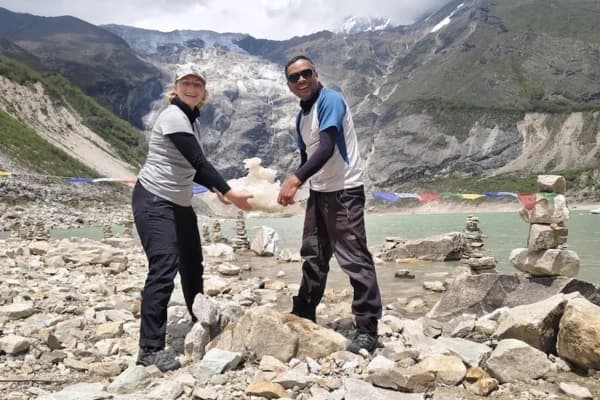
Nepal just made it easier for solo foreign trekkers to enter its most remote and protected zones. But the headlines are creating confusion, and that confusion could cost you your permit, your trek, or both.
In March 2026, Nepal's Department of Immigration (DoI) issued an official notice updating the rules for restricted area permits. The change is real and significant. But it's not what most trekkers think it is. Before you book your flights and pack your bags for Upper Mustang or Manaslu, here's exactly what the 2026 solo restricted area trekking permit update means, and what it doesn't.
Implementation Notice (As of March 2026): The solo restricted area permit update was officially announced by the Department of Immigration on March 21–22, 2026. As of March 23, some trekking agency sources noted the policy may still be transitioning through final government approval channels. Major news outlets, including the Kathmandu Post, have reported the decision as confirmed. We strongly recommend verifying current implementation status directly with your TAAN-registered agency before submitting any application or booking flights.
The Big Misconception: What "Solo Permit" Actually Means in 2026?
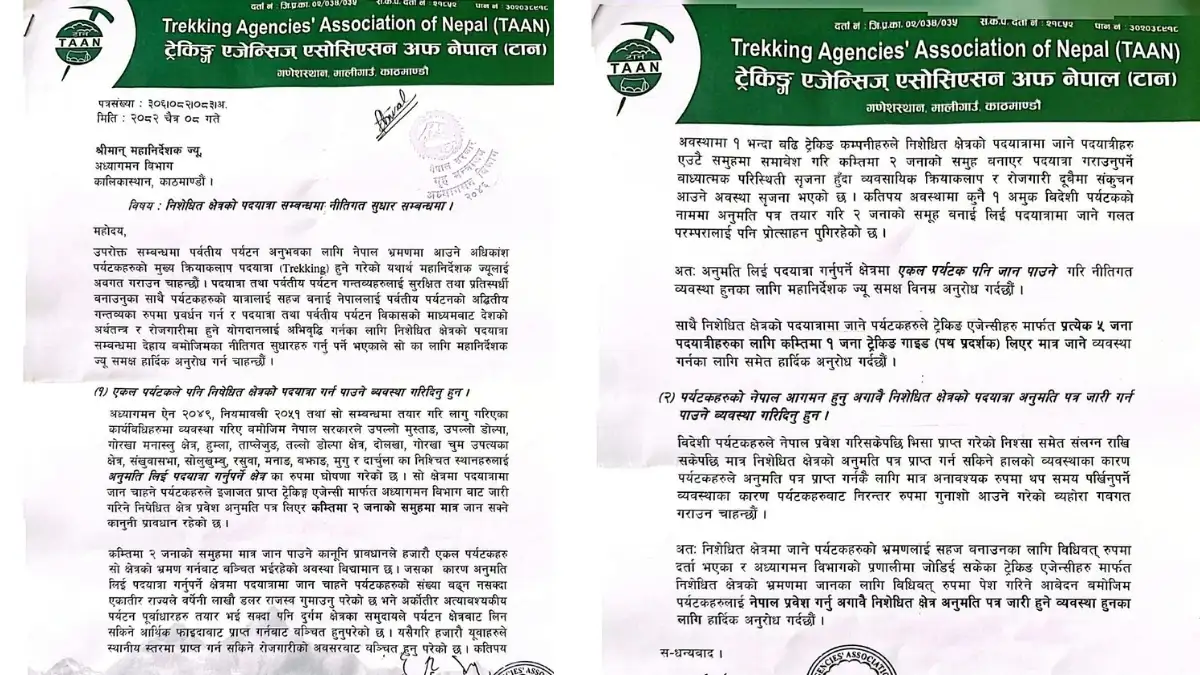
The 2026 update allows solo foreign trekkers to apply for a Nepal restricted area permit individually, without needing a second trekker in their group. It does not allow independent, guideless trekking in restricted zones. A licensed guide and a TAAN-registered trekking agency are still legally mandatory, no exceptions.
Department of Immigration (DoI) spokesperson Tikaram Dhakal confirmed this clearly when the notice was issued. The word "solo" in this context refers to permit application eligibility, not the freedom to trek Nepal's border zones without supervision.
Here's what actually changed versus what stayed the same:
|
Rule |
Before 2026 |
After March 2026 |
|
Minimum group size |
2 trekkers required |
1 trekker (solo) allowed |
|
Licensed guide |
Mandatory |
Still mandatory |
|
Registered trekking agency |
Mandatory |
Still mandatory |
|
Permit application method |
Via agency only |
Individual apply via Submission ID |
|
TIMS card (solo) |
Green TIMS card |
Replaced by e-TIMS digital system |
|
Agency rescue responsibility |
Recommended |
Now legally mandated |
If you've read a headline saying Nepal "opened" restricted areas to solo trekkers, that's half the story. The gate opened. The guide still walks through it with you.
The policy change also closes a long-running loophole. Previously, trekkers would register as a group of two but travel independently on the trail. The 2026 update formalizes solo access while reinforcing guide and agency accountability, removing the incentive to game the system.
Complete List — All 13 Districts and Restricted Areas Covered Under the 2026 Solo Permit
Nepal's March 2026 Department of Immigration (DoI) notice covers 13 specific districts, home to approximately 15 restricted trekking zones. This is not a blanket permit for all Nepal trekking, only these designated areas fall under the new solo application rules.
All 13 districts share borders with Tibet (China) or India and contain geopolitically sensitive or culturally protected zones, which is the primary reason trekking access in these areas remains regulated regardless of the solo permit update.
|
Restricted Area |
District |
Non-SAARC / SAARC Fee (USD) |
Special Condition |
Best Season |
|
Upper Mustang |
Mustang |
$50 per day |
No 10-day minimum |
Mar–Nov |
|
Dolpa |
$500 (first 10 days) |
+$50/day after day 10 |
Jun–Oct |
|
|
Dolpa |
$20 per week |
+$5/day extra |
Jun–Oct |
|
|
Gorkha |
$100/wk (Sep–Nov) |
$75/wk (Dec–Aug) |
Mar–May, Sep–Nov |
|
|
Gorkha |
$40/wk (Sep–Nov) |
$30/wk (Dec–Aug) |
Mar–May, Sep–Nov |
|
|
Manang |
$100/wk (Sep–Nov) |
$75/wk (Dec–Aug) |
Mar–May, Sep–Nov |
|
|
Taplejung |
$20 per week |
First 4 weeks |
Mar–May, Oct–Nov |
|
|
Humla / Simikot |
Humla |
$50 per week |
+$10/day extra |
May–Oct |
|
Limi Valley |
Humla |
$50 per week |
+$10/day extra |
Jun–Sep |
|
Remote NW (Mugu) |
Mugu |
$100 per week |
+$15/day extra |
Jun–Sep |
|
Northern Langtang |
Rasuwa |
$20 per week |
Flat weekly rate |
Mar–May, Oct–Nov |
|
Kimathanka / Makalu |
Sankhuwasabha |
$20 per week |
First 4 weeks |
Mar–May, Oct–Nov |
|
Northern Khumbu |
Solukhumbu |
$20 per week |
First 4 weeks |
Mar–May, Oct–Nov |
|
Rolwaling Valley |
Dolakha |
$20 per week |
Flat weekly rate |
Mar–May, Oct–Nov |
|
Far-West (Darchula) |
Darchula |
$90 per week |
+$15/day extra |
May–Sep |
|
NW (Bajhang) |
Bajhang |
$90 per week |
+$15/day extra |
Jun–Sep |
Important: The mandatory 10-day flat Upper Mustang trekking fee of $500 has been scrapped. You now pay a flexible rate of $50 per day based on your actual itinerary. For example, a 7-day trek in the restricted zone now costs $350 instead of the previous $500 minimum.
What It Really Costs to Trek Solo in a Restricted Area | Full 2026 Budget Breakdown
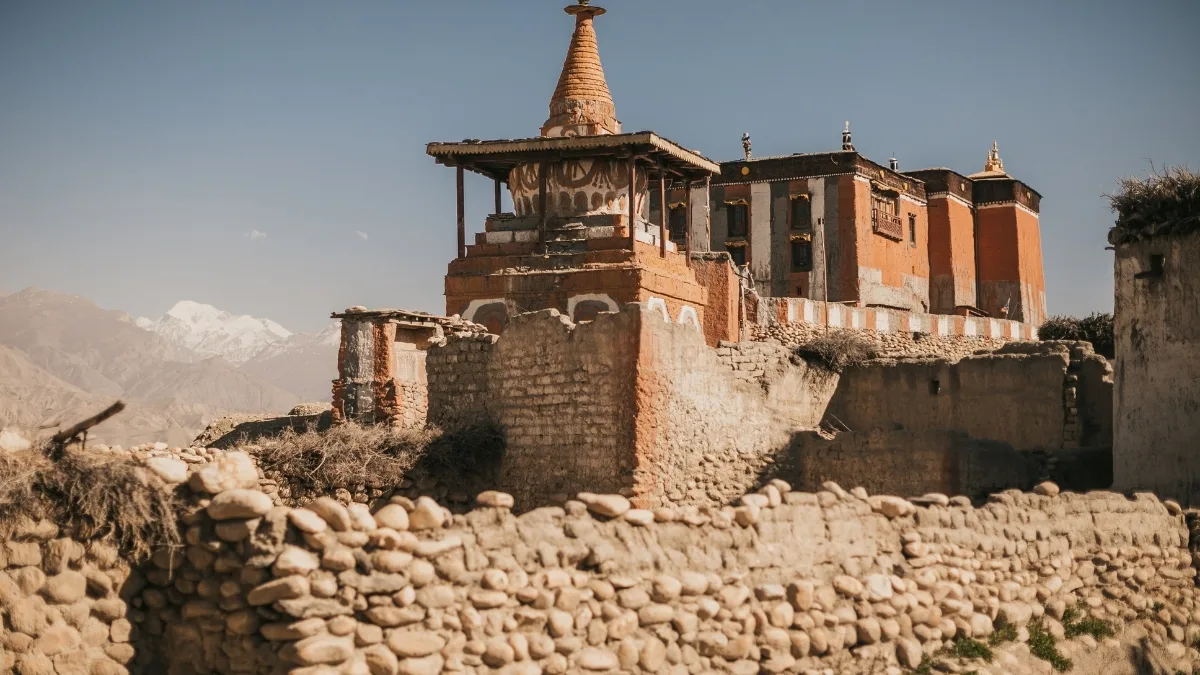
Here's the part most trekking blogs skip: solo restricted area trekking in Nepal is expensive. Not because the permit itself is priced differently for solo trekkers, but because you're paying for everything alone.
No partner means no cost-sharing on guide fees, agency fees, or permits. Here's what that looks like for Upper Mustang, the most popular restricted zone:
|
Cost Item |
Group Trekker (split between 2) |
Solo Trekker (you pay all) |
|
RAP Permit — 10 days, non-SAARC |
$250 per person |
$500 full cost |
|
Licensed Guide — 10 days |
$200–$250 split |
$200–$250 full |
|
Trekking Agency Fee |
$150–$300 per person |
$150–$300 full |
|
ACAP Conservation Fee |
$30 |
$30 |
|
Helicopter Rescue Insurance |
$80–$150 |
$80–$150 |
|
Estimated Total |
$710–$980 |
$960–$1,230 |
Solo trekkers in restricted areas typically pay $350–$600 more than trekkers splitting costs with one partner. The bulk of that gap comes from covering a licensed guide's full daily wage, approximately $25–$30 per day, alone.
How to Apply for Your Solo Restricted Area Permit in 2026 | Step by Step
The 2026 update introduced a digitized application pathway. You can now initiate the process from your home country before landing in Kathmandu. Here's the exact process:
Step 1 — Choose a TAAN-Registered Trekking Agency
Your agency handles the formal permit submission. They must be registered with the Trekking Agencies Association of Nepal (TAAN). Verify their license number and confirm they can assign a guide with the correct certification level for your route altitude Basic (up to 4,000m), Advanced (up to 5,500m), or Expedition-certified (above 5,500m).
Don't assume the cheapest agency assigns the right guide level automatically. Ask before you sign anything.
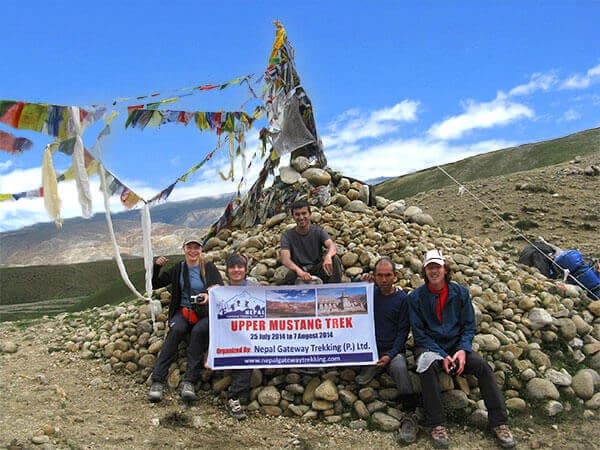
Nepal Gateway Trekkingis one of the registered and trusted agencies in Nepal. We have been providing awesome and memorable trekking journeys to every trek lover.
Step 2 — Prepare Your Documents
Have these ready before your agency submits the application:
- Valid passport, minimum 6 months validity beyond your trek end date
- Nepal visa or visa-on-arrival confirmation number
- Two passport-sized photos
- Travel insurance certificate in English, must explicitly state helicopter rescue coverage above 4,000m
- Agency authorization letter
- Planned trek itinerary with entry and exit dates
Step 3 — Get Your Application Submission ID
Your TAAN-registered agency initiates the application through the Department of Immigration (DoI) portal at nepaliport.immigration.gov.np. While the digital workflow begins online, the permit is not "active" until physically printed in Kathmandu.
- The Link to Your Visa: Your Nepal visa number (or the 15-digit Visa Submission ID from your arrival) is required at this stage to verify your legal entry status.
- The Application Submission ID: Once the agency uploads your documents, you will receive a unique Application Submission ID. This serves as a tracking reference, but it is not a valid travel document.
- The Physical Requirement: You can monitor the status from abroad, but the Department of Immigration will not issue the final permit until your agency presents your original physical passport and proof of visa at the Maitighar office in Kathmandu.
Pro-Tip: Do not plan to fly to Kathmandu and head straight to the mountains the same day. You must allow at least one business day in the capital for the agency to take your physical passport to the DoI office to finalize the "Solo" permit sticker.
Technical Support: For portal glitches or to verify a Submission ID, the DoI’s dedicated 2026 help desk can be reached at: +977-9761423636.
Step 4 — Pay and Collect at the DoI Office
Final permit collection happens in person at the Department of Immigration office, Maitighar, Kathmandu. Payment is accepted in USD or NPR. Processing takes:
- 2–4 hours during peak season (March–May, September–November)
- As little as 30 minutes during the off-season
- Your permit is issued per trekker; your name, passport number, and permitted zone are printed directly on it.
Step 5 — Verify at Checkpoints
Nepal's restricted area checkpoints now use the e-TIMS digital verification system, which includes QR code scanning at entry gates. Officials check your restricted area permit, e-TIMS registration, guide credentials, and insurance certificate at each gate. Always carry physical copies, connectivity in remote restricted zones is unreliable, and officials do not accept screenshots as substitutes.
Mandatory Rules Every Solo Trekker Must Follow in 2026
The 2026 policy eased the group-size rule. It tightened everything else. These are legal requirements with real consequences, not advisory guidelines.
The 1:7 Guide-to-Trekker Ratio
Nepal requires one licensed guide for every seven trekkers in a group. For solo trekkers, that means one guide dedicated entirely to you. Your guide's certification level must match your route:
- Basic certification — routes up to 4,000m
- Advanced certification — up to 5,500m
- Expedition certification — above 5,500m
Larger groups requiring more than one guide must obtain multiple permits and hire additional certified guides accordingly.
Your Agency Is Legally Responsible for Your Rescue
Under Nepal's 2026 regulations, the TAAN-registered agency facilitating your permit bears full legal responsibility for emergency rescue coordination. This is no longer advisory; it is a legal mandate. Agencies that fail to respond adequately to trekker emergencies face license suspension from Nepal's Department of Tourism.
This means your agency choice is a safety decision, not just a logistical one. Choose based on track record and emergency response capacity, not only price.
Travel Insurance Is Non-Negotiable
Helicopter medical evacuation insurance above 4,000m is legally mandatory. Your policy must:
- Be written in English
- Explicitly state helicopter rescue coverage
- Carry a minimum recommended coverage of USD $100,000
- Be submitted to your agency before the trek begins
Policies that don't explicitly state evacuation coverage are rejected at the DoI office during permit collection. Buy the right policy before you apply, not after.
Consequences of Non-Compliance
Trekking in a restricted area without a valid permit results in immediate fines and deportation. Trekking beyond the zone specified in your permit triggers cancellation and potential entry blacklisting. Agencies facilitating noncompliant treks face license revocation.
These zones border Tibet. Enforcement is active and consistent, not occasional spot checks.
Which Restricted Areas Are Best for Solo Foreign Trekkers in 2026?
Not every restricted area suits a solo first-timer equally. Here's a practical comparison based on difficulty, cost, and what each zone actually delivers:
|
Restricted Area |
Best For |
Solo Difficulty |
Permit Cost |
Standout Feature |
|
Upper Mustang |
Culture + desert plateau |
Moderate |
$50 per days |
Lo Manthang walled city; open during the monsoon |
|
Manaslu Circuit |
High-altitude challenge |
Hard |
$100/week |
Larkya La Pass (5,106m); fewer crowds than Everest |
|
Nar Phu Valley |
Remote adventure |
Hard |
$90/week |
Untouched Tibetan villages; extreme isolation |
|
Tsum Valley |
Sacred culture |
Moderate |
$35/day |
Beyul Kyimolung; ancient Bon-Po monasteries |
These areas are restricted for specific reasons. They border Tibet and China, contain fragile high-altitude ecosystems, and shelter indigenous communities, including the Bon-Po people of Dolpo and the sacred Beyul Kyimolung valley in Tsum. The mandatory guide and agency system exists partly to protect all of this, not just to generate revenue.
Final Thoughts - Plan Smart, Trek Solo, Stay Compliant in 2026
Three things matter most from this update:
- Solo permit applications are now officially open across all 13 restricted districts
- A licensed guide and registered agency are still legally required, which has not changed
- Solo trekking costs significantly more; budget honestly before you commit
Nepal's restricted areas are among the most extraordinary trekking destinations on earth. The 2026 rule change makes them more reachable for committed solo travelers. But the bureaucracy is real, the costs are real, and the consequences of cutting corners are serious.
Verify the current implementation status with your agency. Get your documents right. Choose a guide whose certification matches your route. Then go.
Planning your solo restricted area trek for 2026? Our team specializes in restricted area permits, certified guide placement, and full agency support for solo foreign trekkers. We handle your Application Submission ID, DoI paperwork, insurance coordination, and guide matching, so you focus entirely on the trail.
Contact us to book your next trek in Nepal.
Frequently Asked Questions About Nepal's Solo Restricted Area Trekking Permit 2026
Can I trek Nepal's restricted areas completely alone in 2026?
No. Nepal's 2026 update allows solo permit applications, not independent trekking. A licensed guide hired through a TAAN-registered agency is still legally required for all restricted area treks. "Solo" refers to permit eligibility for individual applicants, not the freedom to trek without a guide or agency support.
Which districts are covered under the new 2026 solo permit rule?
The March 2026 DoI notice covers 13 districts, including Mustang, Dolpa, Gorkha, Manang, Taplejung, and Humla. Key zones include Upper Mustang, Upper and Lower Dolpo, Manaslu Circuit, Tsum Valley, Nar Phu Valley, Kanchenjunga, Humla, and Limi Valley. Verify the full current list directly with the DoI before applying.
How much does a solo restricted area permit cost in Nepal in 2026?
Upper Mustang and Upper Dolpo cost USD $50 per person for 1 days for non-SAARC nationals, equivalent to $50 per day. The Manaslu Circuit costs $100 per week during peak season. Solo trekkers pay the full amount alone with no partner to split costs. The total all-in solo budget for Upper Mustang runs approximately $960–$1,230.
How much more does solo trekking cost compared to trekking with a partner?
Solo trekkers in restricted areas typically pay $350–$600 more than trekkers splitting costs with one partner. The largest single cost driver is the licensed guide's daily wage, approximately $25–$30 per day, which a solo trekker covers entirely alone rather than splitting with a group.
What is the Application Submission ID for Nepal trekking permits?
The Application Submission ID is a unique tracking reference generated when your TAAN-registered agency submits your permit application via Nepal's DoI portal at nepaliport.immigration.gov.np. Introduced in 2026, it allows you to monitor your application status from your home country before traveling to Nepal. Your Nepal visa number is required to generate it.
Can I apply for a restricted area permit before arriving in Nepal?
Yes, partially. Your agency can submit the application and generate a Submission ID while you're still abroad. However, you must collect the physical permit and pay the fee in person at the DoI Maitighar office in Kathmandu. The process cannot be completed entirely remotely.
Do I still need a TIMS card for restricted area trekking in 2026?
The old Green TIMS card for solo trekkers has been replaced by the e-TIMS digital system in most restricted areas. Requirements vary by zone, and some checkpoints still use legacy verification. Confirm current TIMS requirements with your agency before departure; do not assume the old system no longer applies to your specific route.
What insurance do I need for restricted area trekking in Nepal?
Travel insurance covering helicopter medical evacuation above 4,000 m is legally mandatory. A minimum coverage of USD $100,000 is recommended. The policy must be in English, explicitly state helicopter rescue coverage, and be submitted to your agency before the trek begins. Policies without clear evacuation coverage are rejected at the DoI permit office.
Is Upper Mustang open for solo trekkers during the monsoon season?
Yes. Upper Mustang sits in a Himalayan rain-shadow zone and stays dry during Nepal's monsoon season (June–September). It is the only major restricted area that operates year-round. This makes it a strong option for solo trekkers who want a quality trekking window outside Nepal's crowded spring and autumn peak seasons.
What happens if I trek in a restricted area without a permit?
Trekking in a restricted area without a valid permit results in immediate fines and deportation from Nepal. Trekking beyond your permitted zone triggers permit cancellation and possible entry blacklisting. Your agency also faces license revocation. Checkpoints in border-sensitive zones near Tibet are actively monitored, and enforcement is consistent throughout the season.
What guide certification do I need for high-altitude restricted areas?
Nepal's 2026 guide framework uses three certification levels: Basic (up to 4,000 m), Advanced (up to 5,500 m), and Expedition-certified (above 5,500 m). For high-altitude routes like the Manaslu Circuit or Nar Phu Valley, confirm your agency assigns a guide with the correct certification for your specific route altitude before signing any contract.
Who is legally responsible if something goes wrong on my solo trek?
Under Nepal's 2026 regulations, the TAAN-registered agency facilitating your permit is fully legally responsible for emergency rescue coordination. Agencies that fail to respond face license suspension from Nepal's Department of Tourism. This is a legal mandate, which is why selecting a reputable, experienced agency matters far more than finding the lowest price.