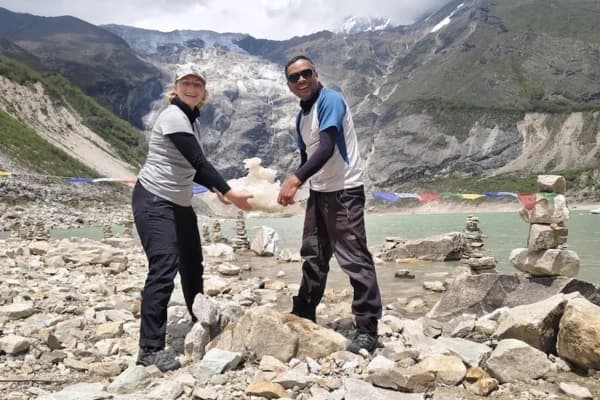
Want the best view of Everest without strapping on crampons and signing up for a full expedition? Kala Patthar is it. This rocky ridge in the Khumbu region of Nepal has become a popular spot for trekkers, photographers, and anyone who wants to see the world's highest mountain up close and actually see it properly.
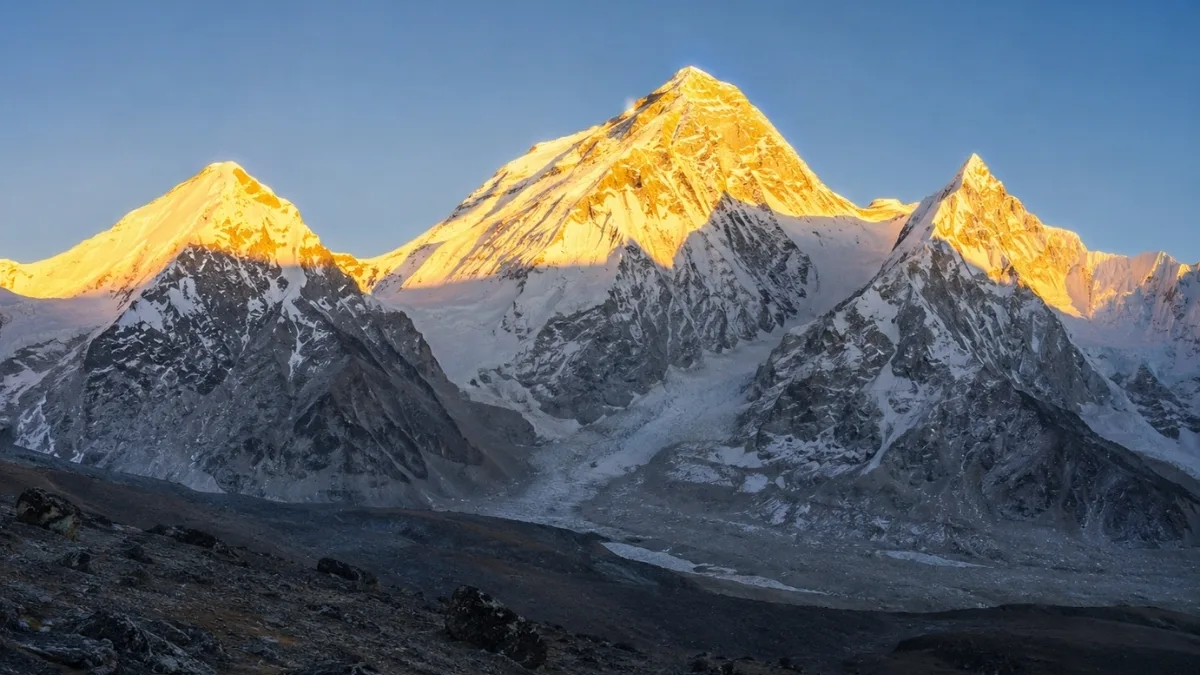
People travel from every corner of the world just to watch the sunrise from here. It lives up to the hype. The early light hits the Everest massif and turns the snow golden in a way that creates unforgettable moments. Kala Patthar, Nepal's most famous Everest viewpoint, is that kind of place.
Quick Review
- Kala Patthar is the most famous viewpoint of Mount Everest in Nepal.
- The name “Kala Patthar” means “Black Rock” in Nepali.
- It is located above Gorak Shep on the south ridge of Pumori.
- Kala Patthar sits at an altitude of around 5,545–5,644 meters.
- It offers a clearer view of Everest than Everest Base Camp because Nuptse blocks part of the Everest view from EBC.
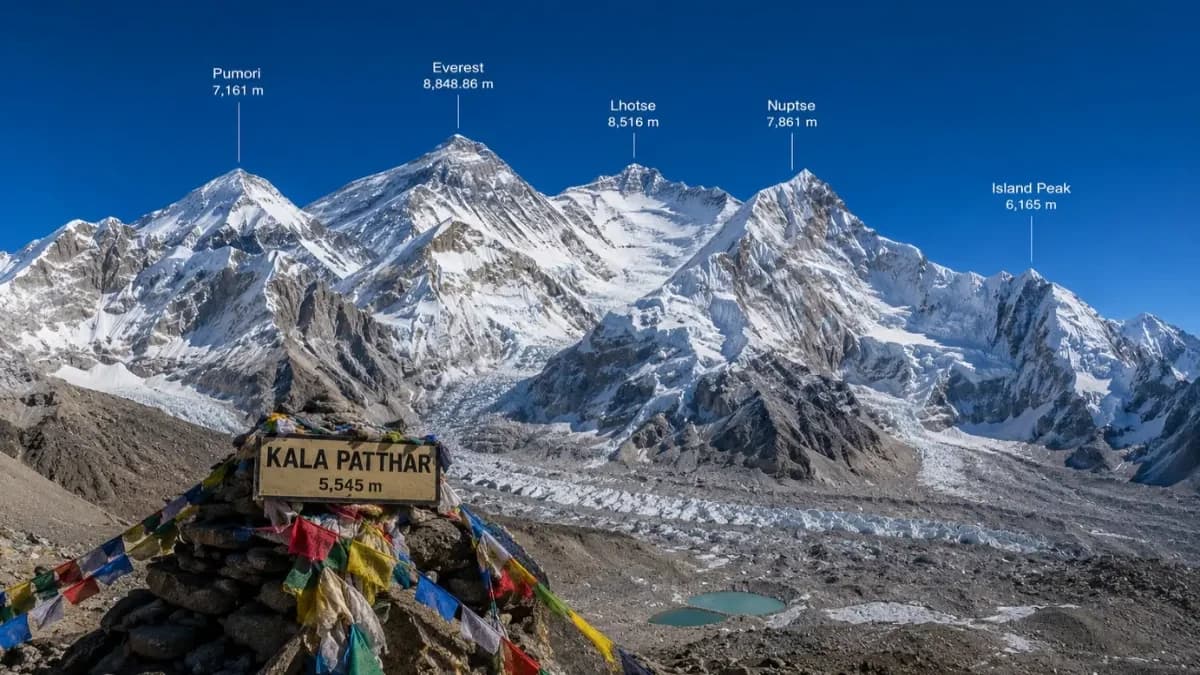
- Visitors can also see Lhotse, Changtse, Ama Dablam, and the Khumbu Glacier from the viewpoint.
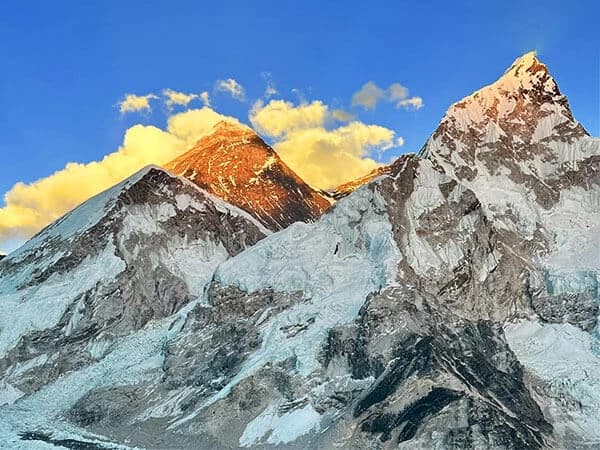
- Sunrise at Kala Patthar is renowned for its golden light over the Himalayan peaks.
- The viewpoint became globally popular after Everest trekking routes expanded in the 1960s and 70s.
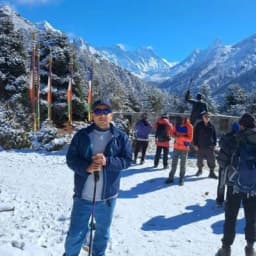
- Prayer flags, dramatic rocky landscapes, and Everest photography make Kala Patthar iconic.
- It is considered one of the best and most accessible Everest viewpoints in the Himalayas.
Kala Patthar Meaning
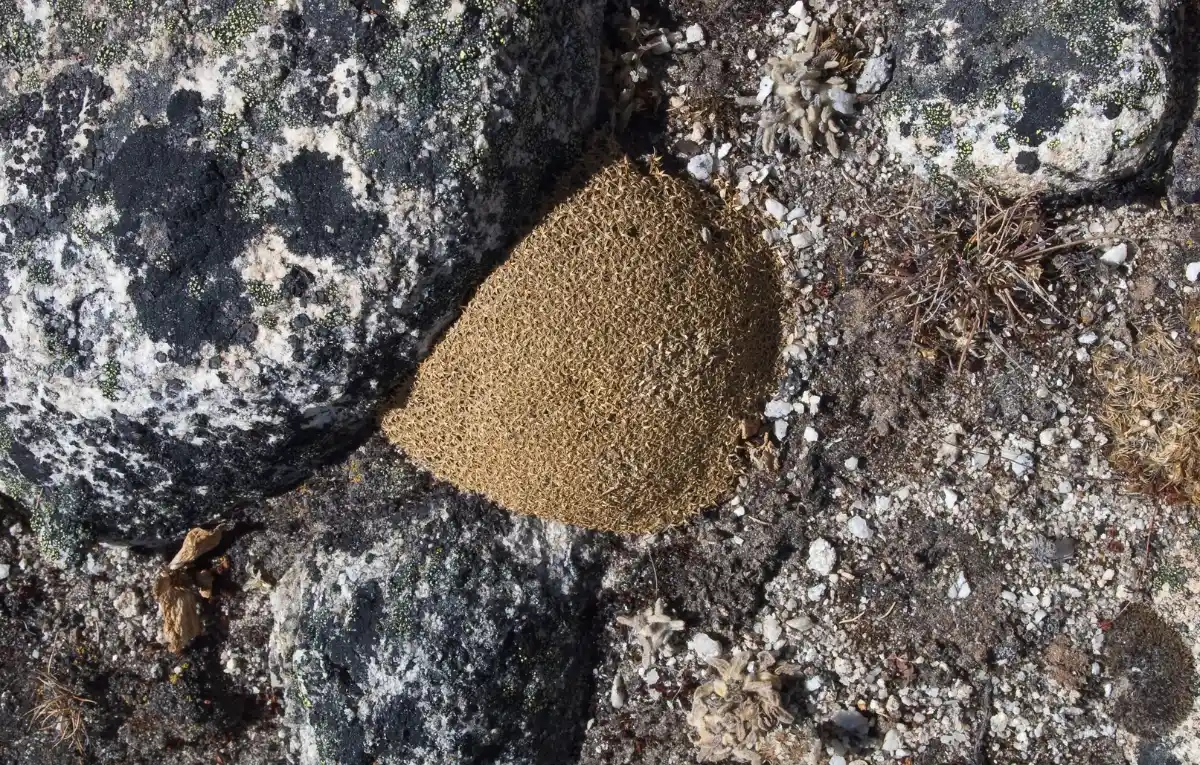
The name says it plainly. Kala Patthar translates to "Black Rock" in Nepali, and the name comes from the dark, volcanic-looking rock that makes up the ridge. When you find yourself surrounded by snow-white peaks and pale glaciers, that dark rocky terrain really stands out.
|
Feature |
Detail |
|
Name Meaning |
"Black Rock" in Nepali |
|
Region |
Khumbu Himal, Sagarmatha Zone, Nepal |
|
Ridge |
South ridge of Pumori |
|
Type |
Himalayan viewpoint (not a technical peak) |
|
Nearest Settlement |
Gorak Shep |
The reason it became globally famous is simple: no other accessible point in the entire Everest region gives you a clearer, more open view of Everest's summit pyramid. Once that became known, everyone wanted to come.
Where Is Kala Patthar Located?
Kala Patthar sits in the heart of the Khumbu Himal, northeast Nepal. Geographically, it's positioned just above the small settlement of Gorak Shep, which is the last inhabited stop before Everest Base Camp.
- Coordinates: 27°59′29″N, 86°49′50″E (approximate summit)
- Nearest Landmark: Gorak Shep (about 1.5 km away)
- Surrounding Terrain: Khumbu Glacier to the east, Pumori to the north, Everest and Nuptse to the northeast
The landscape up there is stark and dramatic. Glacial moraines, frozen streams, and bare rock everywhere. It feels like you're standing at the edge of the world.
The History of Kala Patthar
Sherpa communities and early Everest expedition teams likely used the name “Kala Patthar,” meaning “Black Rock,” long before it became famous worldwide.
The viewpoint gained global attention after Sir Edmund Hillary and Tenzing Norgay successfully climbed Mount Everest in 1953, bringing international focus to the Khumbu region.
As Everest trekking routes developed during the 1960s and 1970s, more travelers climbed above Gorak Shep and discovered that Kala Patthar offered a far clearer view of Everest than Everest Base Camp itself. Over time, it became one of the most famous viewpoints in the Himalayas.
Gorak Shep also holds historical importance because it served as the original Everest Base Camp during early expeditions.
Prayer flags placed by Sherpa communities later became a defining symbol of Kala Patthar, while the Mount Everest webcam and modern GPS elevation studies added even more global recognition to the landmark.
From climbing Everest over 30 times to conquering all 14 peaks above 8,000 meters, Nepali climbers have achieved unbelievable records. Learn about the mountaineers who inspired the world. Have a look at our blog Famous Nepali Mountaineers
Kala Patthar: Height, Altitude, and Geography
Here's where it gets a little complicated, so let's break it down clearly.
|
Measurement |
Elevation |
|
Commonly listed height |
5,545 – 5,550 m |
|
GPS-recorded summit elevation |
5,644.5 m |
|
Gorak Shep (starting point) |
5,164 m |
|
Vertical gain from Gorak Shep |
380–480 m |
|
Prominence |
Moderate (south ridge of Pumori) |
The ridge itself has multiple high points, which is one reason for the confusion. The most commonly visited summit, which is covered in prayer flags and typically reached by most trekkers, is recorded at an altitude of around 5,545 to 5,550 meters in older guidebooks and trekking resources.
But a Garmin GPS study found a higher point on the same ridge at approximately 5,644.5 meters.
Why Is There Confusion About Kala Patthar's Height?
Essentially, it depends on which point on the ridge you're measuring. The Pumori south ridge has several rocky summits, and the "main" Kala Patthar summit, as most trekkers know it with the prayer flags, is not necessarily the geographically highest point on the entire ridge.
WGS84 coordinate-based GPS measurements recorded a higher elevation for a point further along the ridge.
That point at roughly 5,644.5 meters uses the WGS84 geodetic datum, which is the global standard for GPS measurements. So technically, both numbers are correct they're just measuring slightly different points.
For trekkers, the prayer flag summit at around 5,545–5,550 meters is the standard destination. And that's already extraordinarily high.
Ready to tackle the Kala Patthar altitude safely? Nepal Gateway Trekking structures every itinerary around safe altitude gain. Let us help you get there and actually enjoy it.
Why Is Kala Patthar Famous?
A few things make it different from other places in the Everest region.
- The clearest view of Everest without a mountaineering permit, the summit pyramid is plainly visible and not blocked by Nuptse the way it is at Base Camp
- Panoramic Himalayan views: You're looking at multiple 8,000-meter peaks at once
- Accessible to non-climbers: no technical skills needed, just fitness and acclimatization
- Sunrise and sunset photography: The lighting conditions here are genuinely world-class
- Emotional impact: There's something about standing above 5,500 meters, surrounded by the highest mountains on earth, that hits differently
The altitude of Kala Patthar alone makes it remarkable. But it's the combination of elevation, geography, and the view that makes it special.
Interesting Facts About Kala Patthar
- Highest point most people reach without permits: Kala Patthar is often described as the highest point reachable by non-climbers without any special climbing permit, making it genuinely accessible to any fit trekker.
- Mount Everest webcam: A live webcam was once installed at Kala Patthar, streaming real-time footage of Everest to online viewers around the world. It made the location famous globally even among people who had never trekked there.
- Prayer flags: The summit is adorned with traditional Tibetan Buddhist prayer flags, placed by Sherpa communities. They flutter constantly in the wind and have become one of the defining images of the Everest region.
- GPS elevation surprise: A Garmin GPS study identified a summit point at approximately 5,644.5 meters, significantly higher than the commonly listed 5,545–5,550 meters sparking renewed interest in the actual geography of the ridge.
- Geocaching: Kala Patthar has had trackable geocache items placed near the summit, making it an unusual addition to the global geocaching community.
- Cultural significance: The name Kala Patthar, while practical in origin, has become deeply embedded in Sherpa cultural identity and the spiritual atmosphere of the Everest region.
- Gorak Shep connection: The nearby settlement of Gorak Shep served as the original Everest Base Camp in early 1950s expeditions, adding historical weight to the entire area.
Other Mountains Visible From Kala Patthar
On a clear day and in spring or autumn, you'll often get clear days. The panorama from Kala Patthar is genuinely breathtaking. Here's a rough overview of what you can see:
|
Peak |
Elevation |
Notes |
|
Mount Everest |
8,849 m |
Clear view of summit pyramid and upper ridges |
|
Nuptse |
7,861 m |
The massive west face dominates the right side of the view |
|
Lhotse |
8,516 m |
Visible behind and to the right of Everest |
|
Changtse |
7,543 m |
Everest's north ridge peak, visible over the col |
|
Pumori |
7,161 m |
Right behind you, you're literally on its south ridge |
|
Ama Dablam |
6,812 m |
Recognizable by its distinctive spire shape |
|
Khumbu Glacier |
— |
Visible below in the valley |
Mount Everest View From Kala Patthar
This trek is the main event. From Kala Patthar, the Everest view is unobstructed enough that you can see the famous Hillary Step area, the Southeast Ridge, and the summit itself.
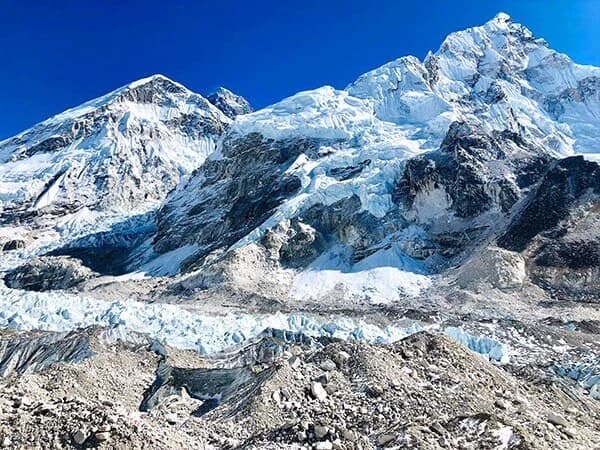
The Khumbu Icefall tumbles down toward Base Camp in the valley below, and the whole upper mountain spreads out clearly above the ridgeline.
At Base Camp, Nuptse's massive bulk cuts across your view. At Kala Patthar, you're elevated and positioned at a different angle so that obstruction is removed. It's a real difference, not just a slight improvement but a fundamentally better viewing angle.
Other Peaks Seen From Kala Patthar
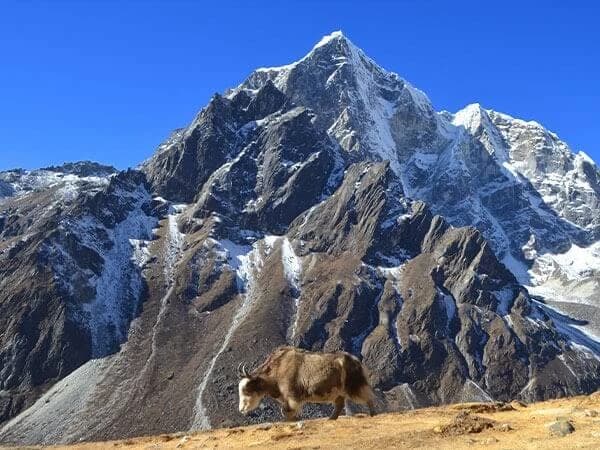
Pumori is right above you, which is a strange feeling. Lhotse's south face is enormous from this vantage. Ama Dablam, with its distinctive hanging glacier and sharp ridgeline, is visible further south.
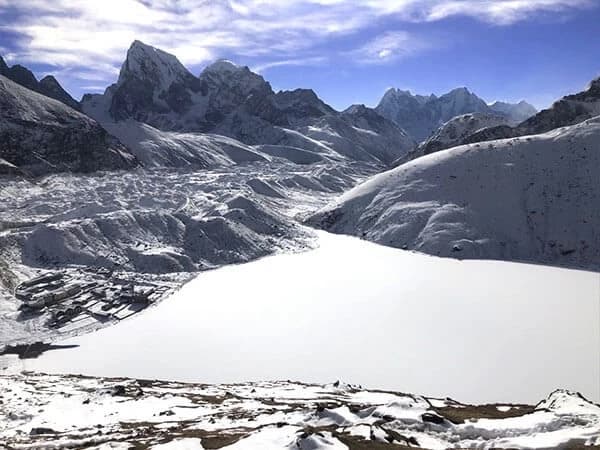
The Khumbu Glacier stretches out below you like a frozen highway leading toward Base Camp, dotted with seracs and moraines.
Sunrise and Sunset Views From Kala Patthar
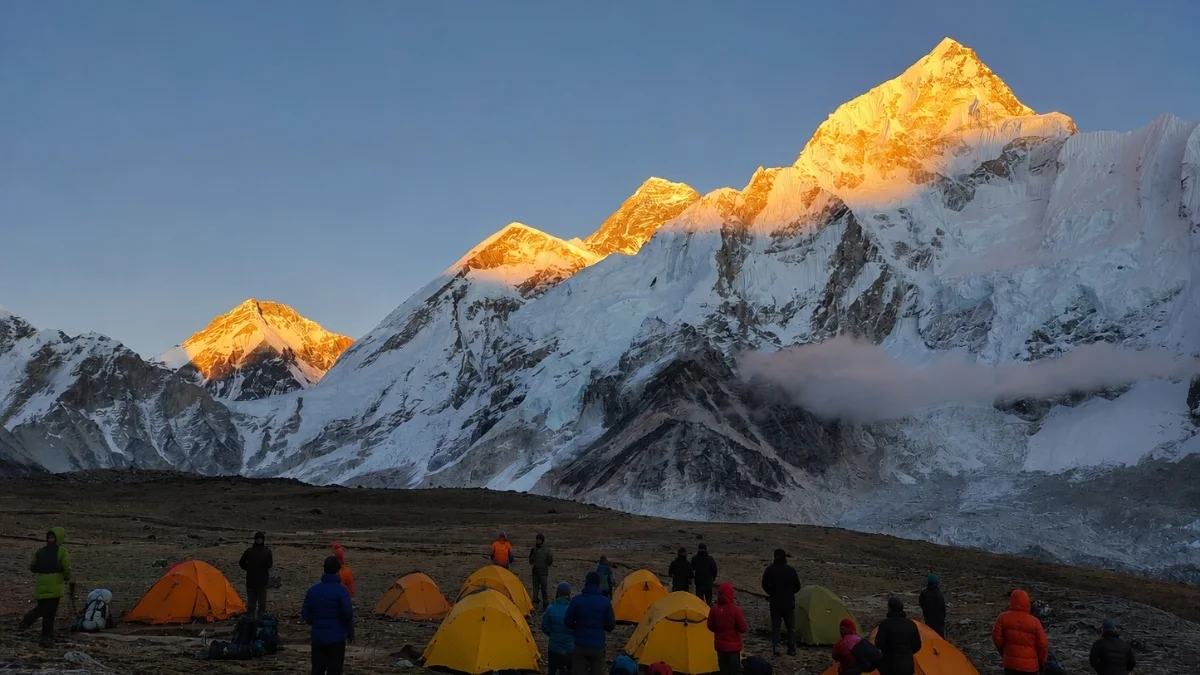
Sunrise at Kala Patthar is one of the genuinely special experiences in Himalayan trekking. Most people wake up in the dark at Gorak Shep, usually around 3 or 4 AM, and start the hike in headlamps and multiple layers. It's cold. Really cold. Wind is almost always present. But the payoff is worth every shivering step.
As the sky lightens, the Himalayan peaks start to emerge from the dark in silhouette. Then the first light catches the summit of Everest and turns it from grey to gold to white. Nuptse, Lhotse, and Changtse all shift color in sequence as the sun rises.
The whole sequence takes maybe twenty minutes, and photographers go somewhat wild during it.
Sunset is a different mood, quieter, warmer-toned, and usually with fewer people around. The light hits the peaks from the other side, creating long shadows across the glaciers below. Both are worth experiencing if your schedule allows it.
Ready to watch Everest turn gold at sunrise from 5,500 meters? Nepal Gateway Trekking plans your Kala Patthar itinerary around the best light, the right acclimatization schedule, and the clearest seasonal windows. Get in touch, and we'll build your trek around that moment.
Which Is Better: Sunrise or Sunset at Kala Patthar?
|
Factor |
Sunrise |
Sunset |
|
Light quality |
Golden, dramatic, directional |
Warm, softer, longer shadows |
|
Crowds |
More crowded (popular ritual) |
Generally quieter |
|
Weather clarity |
Usually clearest in early morning |
Can cloud over by afternoon |
|
Cold |
Extreme plan for it |
Cold but slightly less brutal |
|
Photography |
Iconic Everest glow shots |
Silhouettes and warm tones |
Most people prefer sunrise, mainly because morning weather tends to be clearer in the mountains. Clouds often build through the afternoon, especially in shoulder seasons. But if you're at Gorak Shep for two nights, doing both is easily manageable and recommended.
Dreaming of the perfect Everest sunrise photo from Kala Patthar? Our trekking team helps you reach the viewpoint at the right time, in the right season, with expert local guides beside you.
Kala Patthar and Everest Base Camp: What Is the Difference?
This is probably the most common question people ask when planning their trek. Both are on the same route, but they're completely unique experiences.
|
Feature |
Kala Patthar |
Everest Base Camp |
|
Elevation |
5,545–5,644 m |
5,364 m |
|
Everest View |
Clear and direct |
Partially blocked by Nuptse |
|
Type of Destination |
Rocky viewpoint ridge |
Glacial moraine at expedition base |
|
Permit Required |
No |
No (for trekkers) |
|
Best For |
Panoramic views, photography |
Expedition atmosphere, EBC experience |
|
Summit Feel |
Yes, you're at a high point |
More of a walk-in to a flat area |
So which should you prioritize? Both, really. However, if you have time for only one option and want to see Everest, Kala Patthar is the better choice. The Everest Base Camp vs. Kala Patthar debate always comes back to that one point: from EBC,
Everest is partially hidden. From Kala Patthar, you can see it clearly. Most itineraries go to EBC first, then Kala Patthar the following morning for sunrise. That's the standard approach for good reason.
We design itineraries that hit both landmarks without rushing your acclimatization. Talk to our team and let's customize your trip.
The Route and Landscape of Kala Patthar
The trail starts from Gorak Shep, the small cluster of lodges at around 5,164 meters. Here's roughly how it goes:
- Gorak Shep to the lakebed: You cross a flat, ancient lakebed, dry and sandy now but once a frozen glacial lake. The footing is easy here.
- Lower slopes: The trail begins climbing on loose scree and rocky terrain. It's gradual at first.
- Steep switchbacks: Things become more serious as the ridge approaches. The switchbacks are relentless, and the altitude starts making itself known.
- Boulder scramble: Near the upper section, there's some light scrambling over larger rocks. No technical skill is required, but hands are useful.
- Summit ridge: You arrive at the prayer flag summit. Wind is usually strong up here. The views open up completely in every direction.
The whole thing from Gorak Shep takes roughly 1.5 to 2.5 hours depending on pace and acclimatization. The descent is faster, usually an hour or so. The landscape is wild and austere up there. There's almost no vegetation above a certain point. Just rock, ice, sky, and those incredible peaks.
Weather and Climate at Kala Patthar
At over 5,500 meters, the weather is not forgiving. Understanding what to expect is important for planning.
|
Season |
Months |
Conditions |
|
Spring |
March – May |
Clear skies, stable weather, some wind, mild compared to winter |
|
Monsoon |
June – August |
Heavy cloud, rain, reduced visibility, summit often obscured |
|
Autumn |
September – November |
Excellent clarity, dry conditions, best overall visibility |
|
Winter |
December – February |
Extreme cold, heavy snowfall, very windy, challenging but possible |
Temperature at the summit can drop well below -20°C in winter, and the wind chill makes it feel even colder. Even in spring and autumn, temperatures at the summit before dawn can be around -10°C to -15°C. The wind is almost constant.
There's rarely a truly calm morning at Kala Patthar's altitude; always budget for a good windproof layer.
Best Time to Visit Kala Patthar
- Autumn (October–November) is arguably the best time. Post-monsoon skies are crystal clear, views are exceptional, and the temperatures are cold but manageable. It's also peak trekking season, so trails and lodges are busy.
- Spring (March–May) is a strong second. Pre-monsoon weather is generally good, flowering rhododendrons make the lower trail beautiful, and Everest summit attempts are happening, which adds to the atmosphere up high.
- Winter is hardcore. The views on a clear winter day are extraordinary, but the cold is brutal, and many lodges reduce services or close. Experienced trekkers who are properly equipped can do it.
- Monsoon is not recommended. Cloud cover means you'll likely see nothing at the summit, and the trail lower down becomes wet and slippery.
Not sure when to visit Kala Patthar? See why trekkers choose Travel With Us for safe and memorable Everest experiences.
Why Kala Patthar Is One of Nepal's Most Iconic Himalayan Landmarks
Ultimately, Kala Patthar is more than a viewpoint. It's become a symbol of what draws people to Nepal's mountains in the first place: the combination of raw natural power and quiet human presence in one of the most extreme environments on earth.
For photographers, it's one of the most extraordinary locations on the planet. For trekkers, reaching the summit is a genuine achievement the altitude alone ensures that.
For anyone connected to Himalayan culture, the prayer flags, the mountain backdrop, and the Sherpa traditions embedded in the landscape make it deeply meaningful.
Tourism in the Khumbu region has grown enormously over the decades, and Kala Patthar has grown with it. What started as a rocky ridge on an expedition support trail is now a destination in its own right. Tens of thousands of visitors make the climb each year.
But somehow, it doesn't lose its impact. No matter how many people have stood there before you, the moment you see the sun hit Everest on a clear morning and the whole Himalayan panorama opens up, it still feels personal. That's the thing about stunning natural viewpoints. They're patient. They just keep showing up.
Final Thoughts
Kala Patthar is one of those places that's impossible to exaggerate. The Kala Patthar Everest view really is as stunning as the photos suggest, sometimes better, because photos can't capture the cold air, the silence above the clouds, and the feeling of being genuinely small in front of truly enormous mountains.
The Kala Patthar altitude makes it challenging, but not out of reach.
With proper acclimatization, a reasonable fitness level, and decent gear, most people can get there. And the Kala Patthar sunrise view, especially on a clear autumn or spring morning, is one of the most photographed and most deserving moments in all of Himalayan trekking.
Is it worth the days of trekking, the altitude sickness risk, the early morning starts, and the cold? Ask anyone who's been there. The answer is always yes.
Want to explore the breathtaking beauty of Kala Patthar and the Everest region? ContactNepal Gateway Trekking for expert local guidance and unforgettable Himalayan experiences.
FAQs
What does Kala Patthar mean?
Kala Patthar means "Black Rock" in Nepali. The viewpoint is named after its dark rocky terrain and dramatic Himalayan landscape near Mount Everest.
What is the height of Kala Patthar?
Kala Patthar is commonly listed between 5,545 and 5,550 meters, but modern GPS measurements recorded the summit at around 5,644.5 meters above sea level.
Why is Kala Patthar famous?
Kala Patthar is famous because it provides one of the clearest and closest panoramic views of Mount Everest without needing a mountaineering permit.
Can you see Mount Everest clearly from Kala Patthar?
Yes, Kala Patthar offers a much clearer view of Mount Everest than Everest Base Camp because the Everest massif is less blocked by Nuptse from this viewpoint.
Which mountains are visible from Kala Patthar?
Visitors can see Mount Everest, Nuptse, Lhotse, Changtse, Ama Dablam, Pumori, and the Khumbu Glacier from Kala Patthar on clear days.
Where is Kala Patthar located?
Kala Patthar is located in the Khumbu region of Nepal, above Gorak Shep, on the south ridge of Pumori in the Himalayan range.
What is the best time to visit Kala Patthar?
Spring and autumn are considered the best seasons because skies are clearer, visibility is better, and weather conditions are more stable.
Is Kala Patthar a mountain?
Kala Patthar is not considered a proper mountain peak. It is a famous rocky viewpoint and ridge in the Everest region of Nepal.
Why is Everest not clearly visible from Everest Base Camp?
Mount Everest is partly blocked by Nuptse from Everest Base Camp. Kala Patthar offers a higher and more open viewing angle of Everest.
What makes sunrise at Kala Patthar special?
Sunrise at Kala Patthar creates golden light across Everest and nearby Himalayan peaks, making it one of the most beautiful mountain views in Nepal.