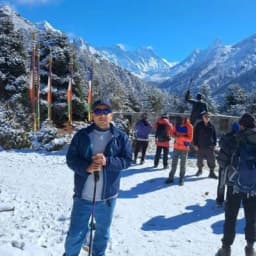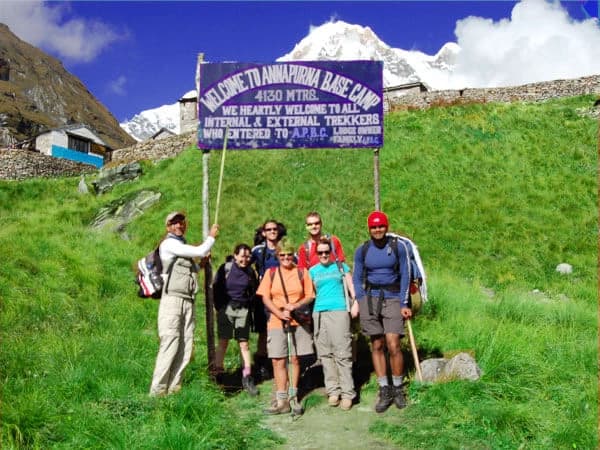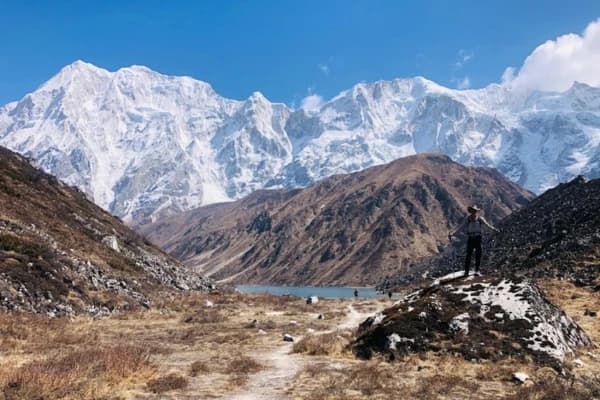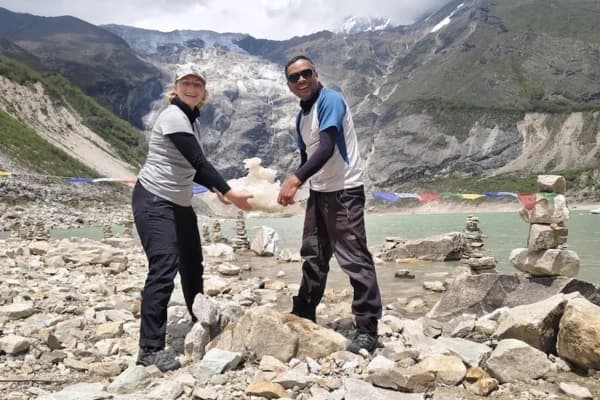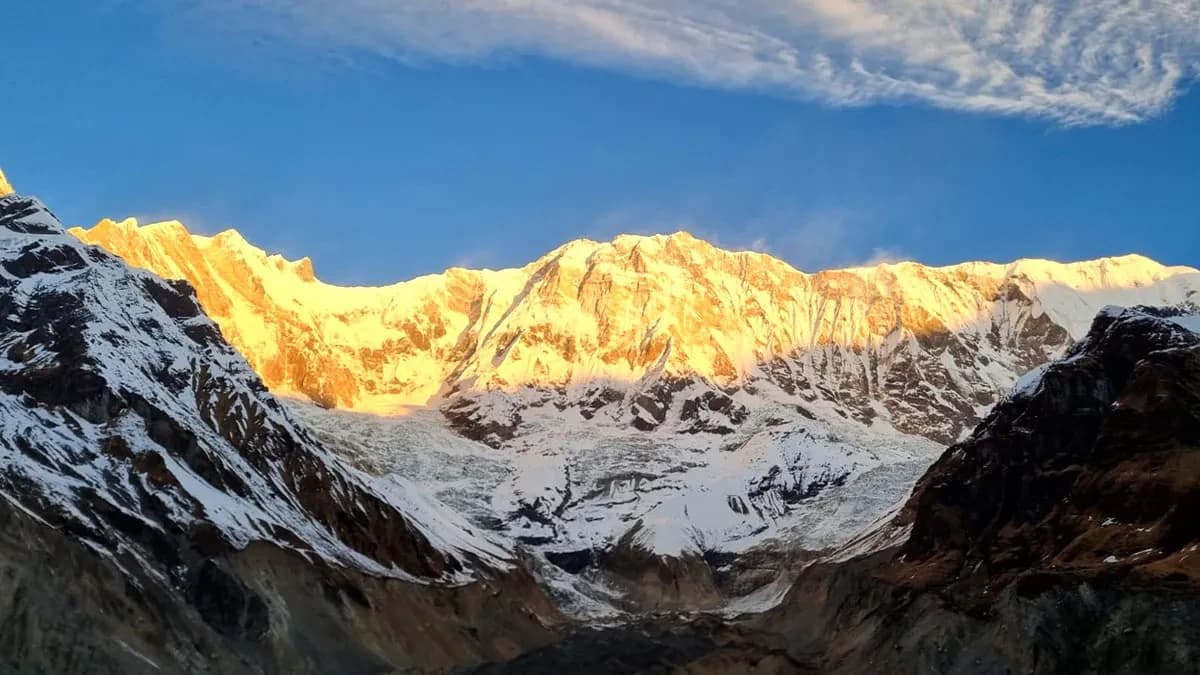
The mountains to see on the way to the Annapurna Base Camp Trek are the true stars of this journey. From the moment you step onto the trail, the Himalayas slowly rise around you like the curtains opening on a grand stage. Many trekkers say this route feels special because the mountain views stay with you almost the entire way. This is the kind of moment that fills your heart with excitement.
Imagine walking through tiny villages, stone steps, and whispering forests, then looking up to see Fishtail shining like a silver blade or Annapurna South glowing in the morning sun. It’s almost like nature is cheering you on with every step.
In this blog, you’ll explore all the major mountains visible on the ABC trek, including famous peaks like Machhapuchhre, Annapurna South, Hiunchuli, and Annapurna I.
Why is the Annapurna Base Camp Trek famous for mountain views?
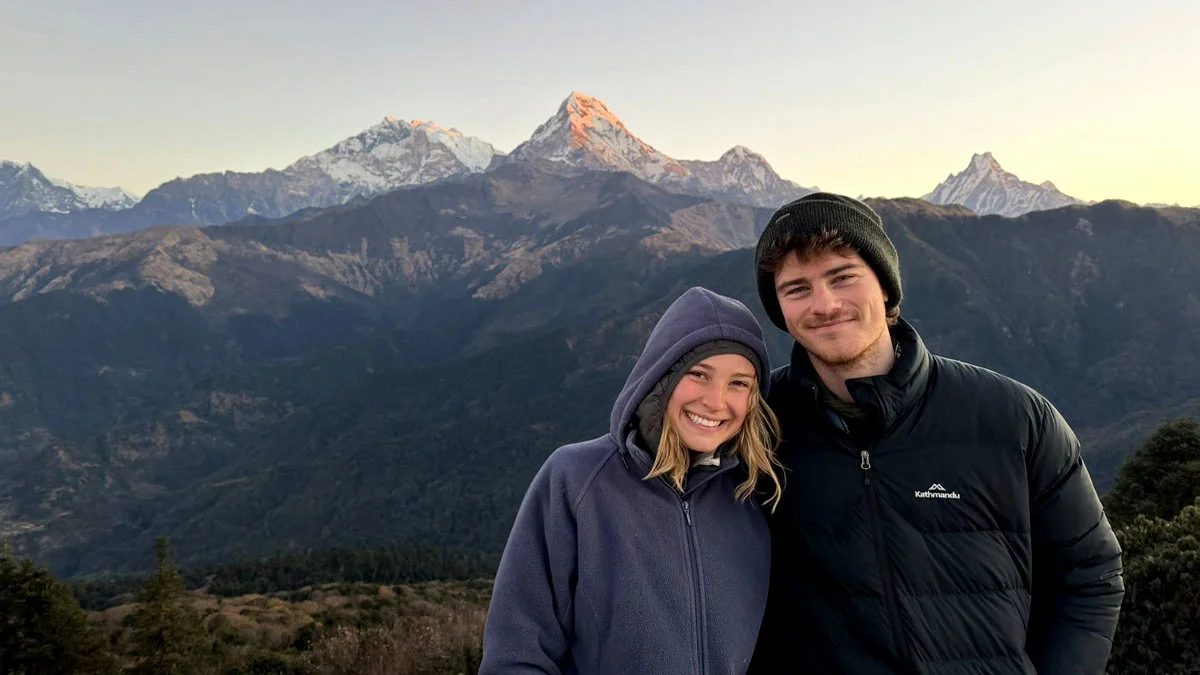
The Annapurna Base Camp Trek is loved by trekkers all over the world because it offers some of the best mountains to see on the way to Annapurna Base Camp trek. Unlike many other routes where the peaks stay far away, the ABC trail brings you close-up views of giant mountains every single day.
One reason the views feel so special is the Annapurna Sanctuary. This high mountain bowl is shaped like a giant 360-degree amphitheater, where peaks surround you from all sides. As you continue along the trail, you get to enjoy Annapurna Base Camp mountain views that include Machhapuchhre, Annapurna South, Hiunchuli, and even Annapurna I, the highest peak in the region.
These Himalayan peaks on the ABC route appear throughout villages like Ghandruk and Chhomrong, forested paths near Sinuwa, open valleys around Deurali, and panoramic spots at Machhapuchhre Base Camp. Every part of the trail has something special to offer.
Start Your Annapurna Journey with Confidence! Nepal Gateway Trekking offers safe, guided treks with local experts who know every viewpoint, every village, and every hidden mountain angle.
Stunning Mountains To See On The Way to Annapurna Base Camp Trek
Walking toward Annapurna Base Camp feels like traveling through a real life mountain museum. At every turn, a new peak rises in front of you, looking sharper, brighter, or closer than before. These are the best mountains to see on the way to Annapurna Base Camp trek, and each one adds its own charm to the journey.
1. Machhapuchhre (Fishtail): The Symbol of the Annapurna Region
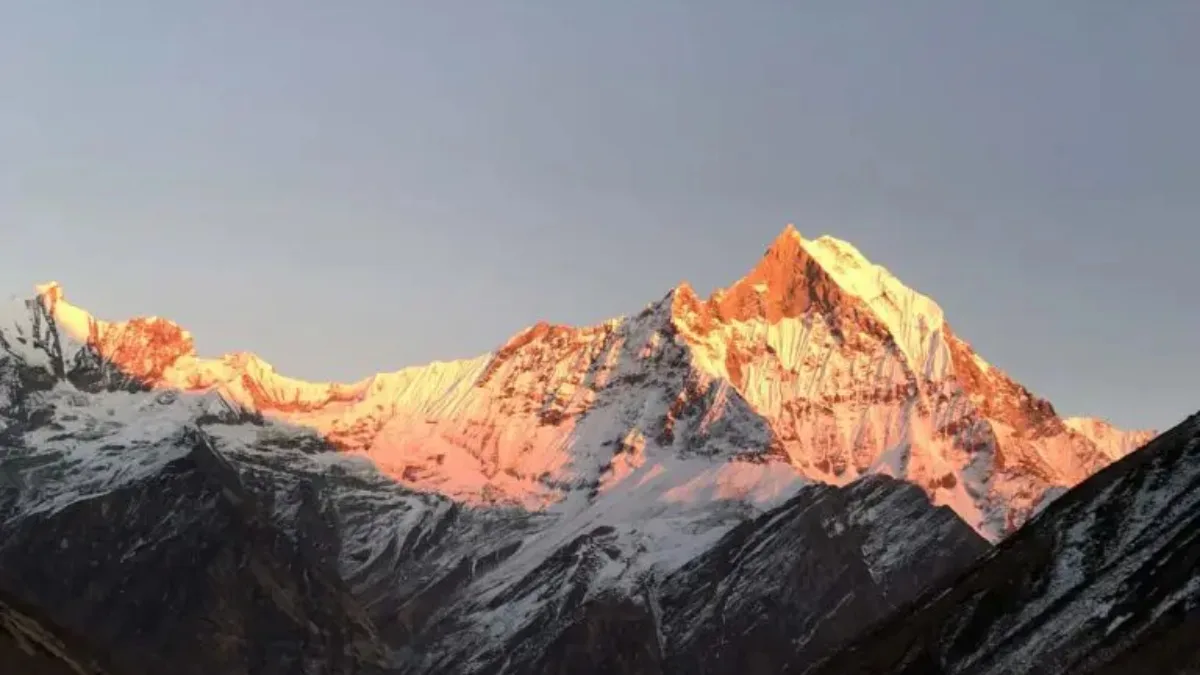
Machhapuchhre (6,993 m) is one of the most iconic Himalayan peaks on the ABC route. Its double-pointed top looks like a fishtail, giving it a dramatic shape that shines during sunrise. This mountain is considered sacred, so no one has ever climbed it. We can see it clearly from Pokhara, Ghandruk, Chhomrong, and Machhapuchhre Base Camp.
Trekkers love the sharp, unique shape with a bright sunrise glow appearing along the Himalayan peaks on the ABC route.
2. Annapurna South: A Towering Wall of Snow
Annapurna South (7,219 m) rises like a giant shield above the foothills. Its wide face catches light beautifully, making it one of the most photographed peaks on this trail. It is also part of the larger Annapurna mountain range, which dominates the region.
The best viewpoints are from Ghandruk, Tadapani, and Thhomrong. The closer you walk, the taller it seems, almost like a frozen wave standing still.
Still curious about the trail? Our Annapurna Himalaya guide explains things most trekkers miss.
3. Hiunchuli: The Quiet Guardian of the Sanctuary
Hiunchuli (6,441 m) stands beside Annapurna South like a silent guardian. Many trekkers overlook it at first, but once you continue toward Sinuwa and Bamboo, its long ridge becomes clearer.
Since it marks the entrance to the deeper valley, it plays a big role in shaping the Annapurna Base Camp mountain views. Chhomrong, Sinuwa, and Bamboo provide the best views. Its snowy lines add balance to the skyline as you progress deeper into the Sanctuary.
4. Annapurna I: The Highest Peak on the Route (8,091 m)
Annapurna I is the 10th-highest mountain in the world. Although you only see parts of it along the trail, the full view opens dramatically at Annapurna Base Camp.
Standing at ABC and watching this massive wall rise before you feels powerful and unforgettable, as it is also the main peak that forms the Sanctuary's north wall.
For a journey that feels well-planned and unhurried, Nepal Gateway Trekking offers Annapurna region treks guided by people who know these trails well.
5. Gangapurna: The Glacier-Carved Beauty
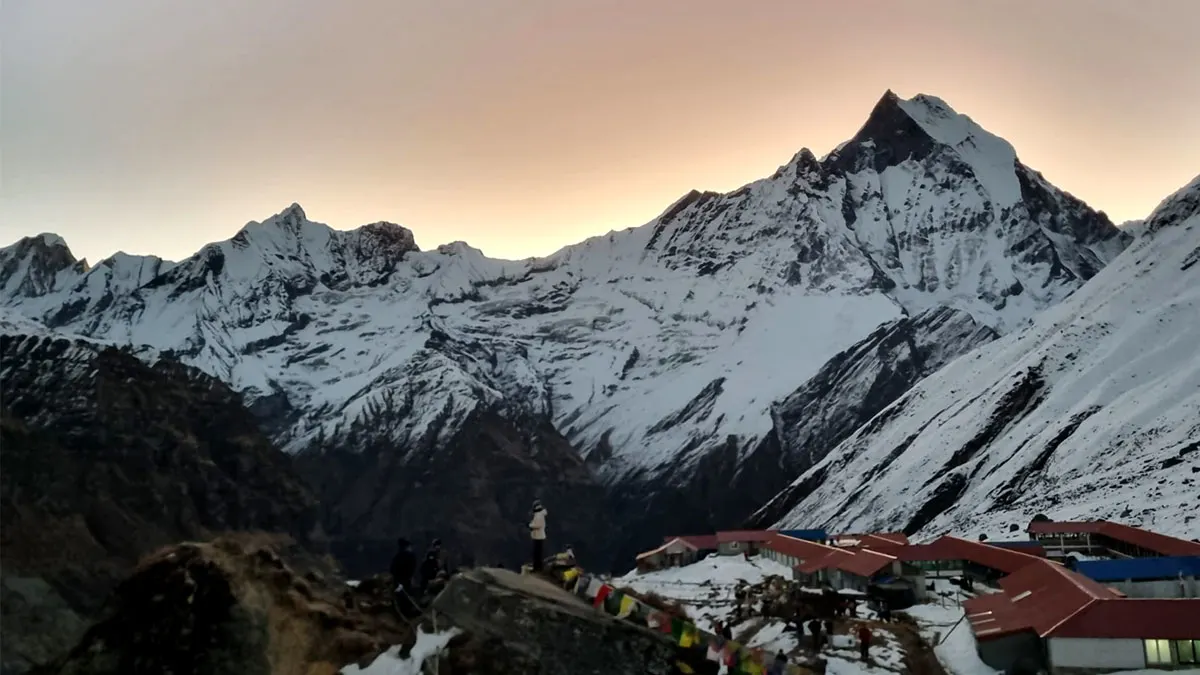
Gangapurna (7,454 m) is easy to recognize because of its shiny glaciers and clean ridgelines. It appears near Deurali and MBC, often with hanging glaciers that shine like frozen waterfalls. It is also a popular spot for photos near MBC. On sunny days, its icy face almost looks like polished glass.
6. Annapurna III: A Long Frozen Ridge
Annapurna III (7,555 m) stretches across the skyline like a horizontal blade of snow. It is partly hidden behind other peaks, so you need clear weather to see its long ridge properly. On clear days, we can often see it near Deurali and inside the Sanctuary, adding depth to the mountains visible on ABC trek and completing the ridgeline.
7. Tent Peak (Tharpu Chuli): The Climber’s Choice
Tent Peak (5,663 m) rises in the heart of the Sanctuary. Its shape looks like a perfect tent, which is how it got its name. Many beginner climbers train on this peak before trying higher mountains. It is best seen from Annapurna Base Camp and the upper parts of the Sanctuary; the pointed shape stands out sharply among the surrounding giants.
8. Singu Chuli: The Fluted Snow Peak
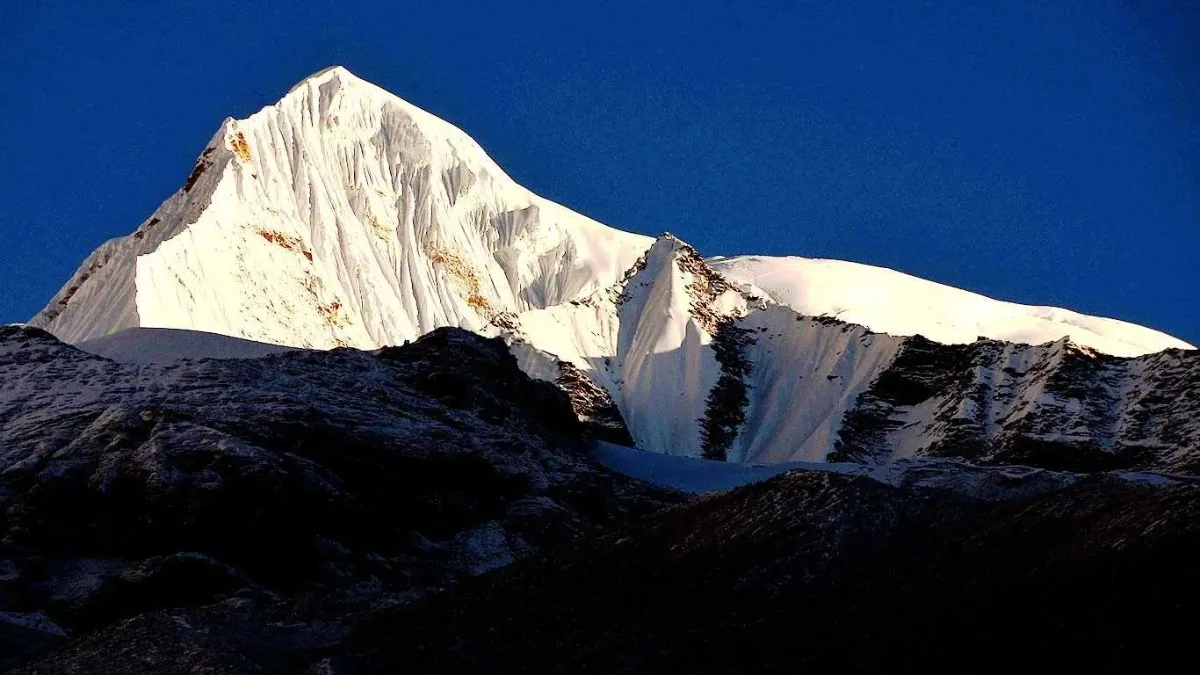
Singu Chuli (6,501 m) is known for its beautifully carved snow ridges, often compared to flute lines. When sunlight hits its long ridges, it glows softly above the valley. It is most visible at Machhapuchhre Base Camp and Annapurna Base Camp which adds an artistic touch to the Annapurna Base Camp mountain views.
9. Gandharva Chuli: The Hidden Gem of the Sanctuary
Gandharva Chuli sits between Hiunchuli and Annapurna III. Though many trekkers do not know its name, its tall, sharp edges appear clearly as you approach MBC and ABC. We can get the best viewpoints from Deurali and MBC. This peak often surprises trekkers with its dramatic shape once they recognize it.
Don’t just walk the trail, see it fully. Contact Nepal Gateway Trekking to plan your Annapurna Base Camp trip and enjoy unforgettable mountain views with local guidance.
Lesser-Known Peaks Visible on the ABC Trek
While the major peaks often steal the spotlight, several lesser-known mountains visible on the way to the Annapurna Base Camp trek add even more beauty to the journey. These smaller peaks appear quietly along the trail, yet they make the landscape richer and more memorable.
Even though they may not be as famous as Machhapuchhre or Annapurna South, they help shape the incredible Annapurna Base Camp mountain views that trekkers love so much. Seeing them feels like uncovering hidden gems along the way.
Mardi Himal (5,587 m)
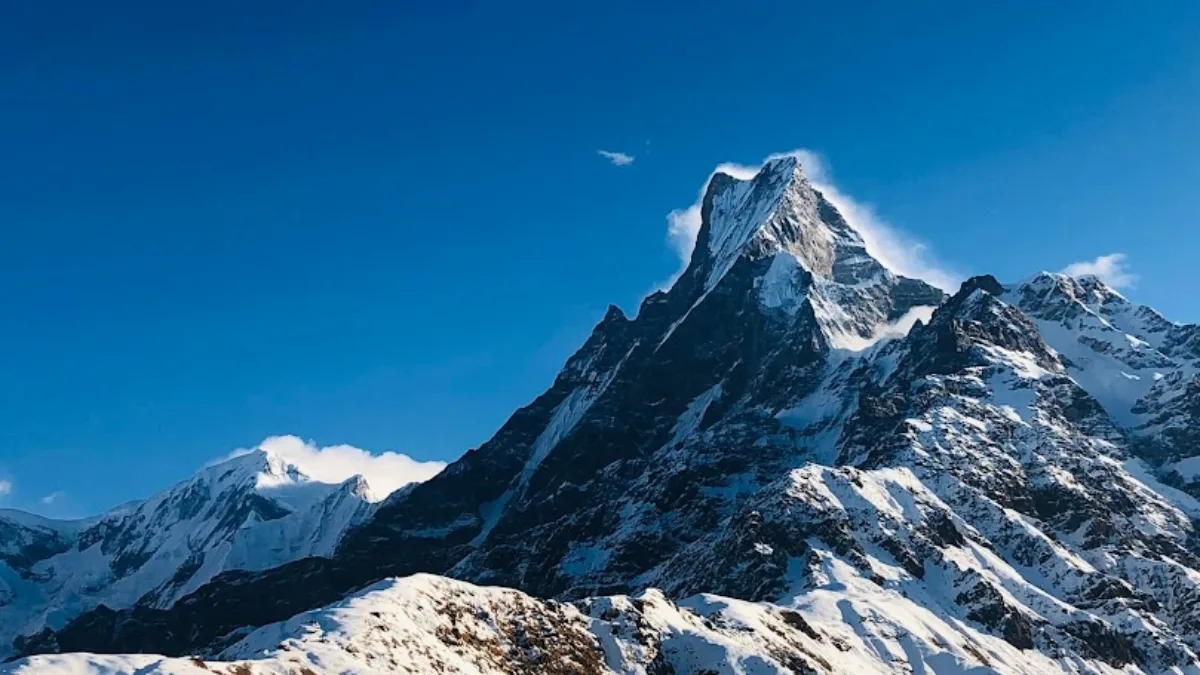
Mardi Himal stands on a long ridge connected to Machhapuchhre. You usually see it on clear mornings near Ghandruk or from open sections of the trail. Its sharp shape and clean ridge line make it a beautiful addition to the skyline and a nice introduction to the mountains visible on the ABC trek.
Baraha Shikhar (Annapurna Fang)
Baraha Shikhar, also known as Annapurna Fang, appears close to Annapurna I. You may only notice its full shape after reaching Annapurna Base Camp, where the view opens widely. Although it is not as famous, it plays a vital role in shaping the views of the Annapurna Base Camp from within the Sanctuary.
Lamjung Himal
Lamjung Himal rises far to the east and is usually visible only during the early parts of the trek. When the weather is clear around Pokhara or Ghandruk, you can see its broad snowy ridge stretching across the horizon. Its distant outline adds more layers to the Himalayan peaks on the ABC route.
Nilgiri
Nilgiri is rarely seen on this trail, but on very clear days above 3,500 meters, its tall, pointed summit may appear faintly in the distance. Even though the view is brief, spotting Nilgiri feels special, almost like catching a hidden detail in a painting.
Together, these peaks create a quiet but beautiful backdrop that enriches the overall trekking experience.
Some of the most beautiful peaks don’t shout for attention; explore these hidden mountains and plan your trip with Nepal Gateway Trekking by your side.
Best Viewpoints on the Annapurna Base Camp Route
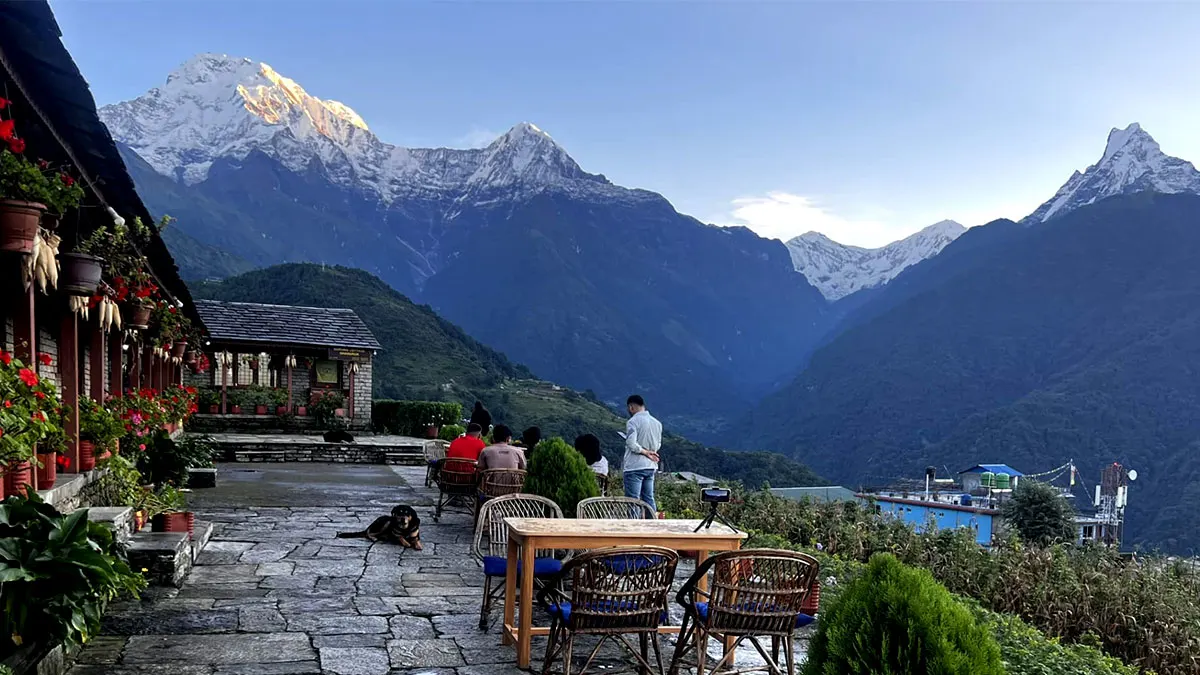
The Annapurna Base Camp trail feels like a moving viewpoint. As you continue walking higher, the scenery keeps opening wider, giving you fresh angles of the mountains to see on the way to Annapurna Base Camp trek.
The best viewpoints are listed below, with brief descriptions to help trekkers understand what to expect.
Ghandruk & Chhomrong
These two villages provide some of the best Annapurna Base Camp mountain views early in the trek. Their expansive terraces and open rooftops make ideal sunrise locations, especially when the sky turns golden.
The mountains are visible from Machhapuchhre (Fishtail), Annapurna South, and Hiunchuli. Because the peaks stand close and clear, many trekkers say this is the first moment they feel truly excited about the journey.
Sinuwa to Bamboo
This section is mostly forested, yet you still catch short but beautiful views of the Himalayan peaks on the ABC route, especially Hiunchuli.
From here, trekkers can see Hiunchuli and limited views of Annapurna South when the trees open up. The serene forest walk gets you ready for the breathtaking views that lie ahead, even though there aren't as many mountain views here.
Himalaya to Deurali
As you continue past Himalaya, the valley begins to open. This is where the landscape starts looking more alpine, and the mountains appear taller and sharper.
The mountains visible from here are Gangapurna and Singu Chuli. These peaks rise proudly above the valley, making it clear that you’re entering the gateway to the mountains around Annapurna Sanctuary.
Machhapuchhre Base Camp (MBC)
It is one of the best panoramic locations. Reaching Machhapuchhre Base Camp (MBC) feels like entering a natural balcony overlooking the Himalayas. The mountains appear close, bright, and powerful.
The visible peaks are Machhapuchhre (very close), Annapurna South, Hiunchuli, and Gangapurna. Because the views here are wide and dramatic, many trekkers prefer staying an extra night at MBC to enjoy the calm morning light.
Annapurna Base Camp (ABC)
ABC is the grand highlight of the entire trek. This is where the best mountains to see on the way to Annapurna Base Camp trek finally gather around you from every direction. Trekkers often say standing here feels like being at the center of the world.
The Visible Peaks at ABC are Annapurna I, Annapurna South, Baraha Shikhar, Singu Chuli
And Tent peak. The circular shape of the Sanctuary creates a full 360-degree mountain panorama, which is why ABC is one of Nepal’s most loved viewpoints.
Want to know which peaks will leave you speechless? Get in touch with Nepal Gateway Trekking will show you the best mountain views on the way to Annapurna Base Camp, from Machhapuchhre to the Annapurna range.
Best Season for Mountain Visibility on the ABC Trek
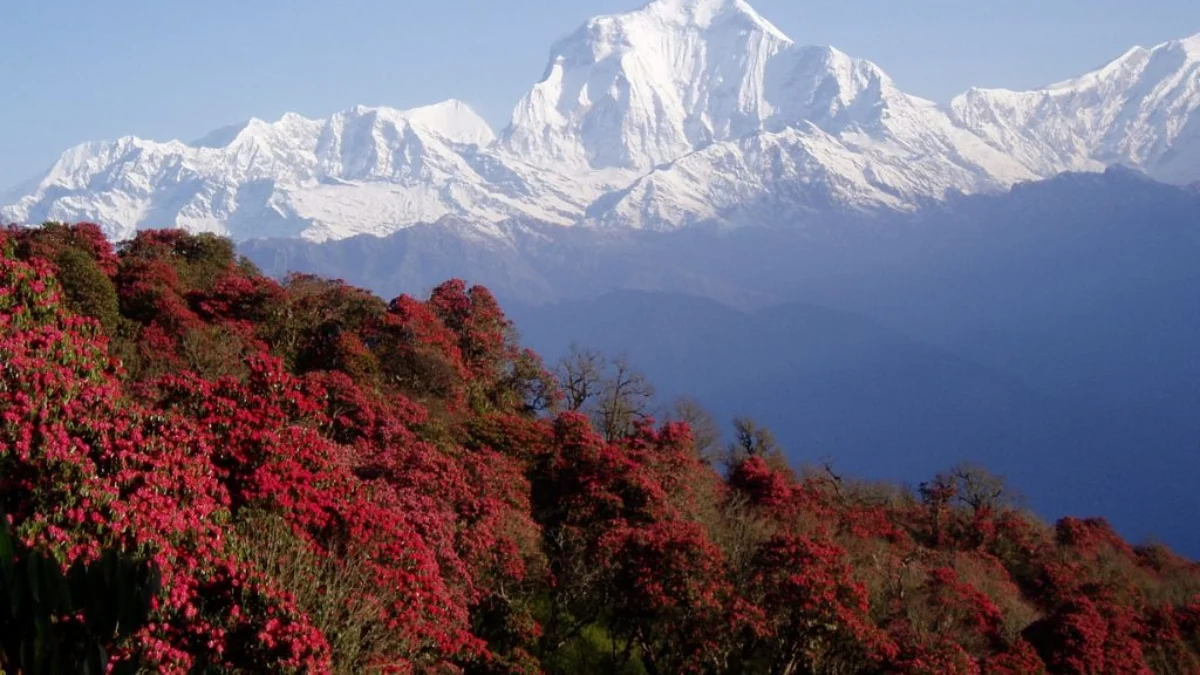
Choosing the best time can make a big difference in how clearly you see the mountains to see on the way to Annapurna Base Camp trek. The Annapurna region changes with every season, and so does the quality of the views.
Autumn (September–November)
Autumn is the most popular season because the skies become clean and blue after the monsoon. The dry air makes the whole Annapurna mountain range appear sharp, especially during sunrise.
It is ideal for crystal-clear mountain views, comfortable trekking temperatures, and bright colors in the valleys. Many trekkers say this season gives the strongest Annapurna Base Camp mountain views from every viewpoint.
Spring (March–May)
Spring brings warm weather and blooming rhododendron forests. Although afternoons can be slightly hazy, mornings still offer beautiful views of the Himalayan peaks on the ABC route.
Travellers can expect clear mornings for photography and snow peaks glowing soft gold in the sunrise light. This season is perfect for trekkers who enjoy both mountain views and colorful landscapes.
Winter (December–January)
Winter offers some of the clearest visibility because the air is cold and dry. Trekkers who don’t mind the chilly mornings can enjoy very sharp views of the mountains around Annapurna Sanctuary. It is good for crystal-clear mountain lines, peaceful trails with fewer trekkers, and amazing sunrise colors at MBC and ABC.
However, it is important to stay warm and prepared for icy sections.
Monsoon (June–August)
Monsoon is the rainy season, and clouds often block the mountains visible on ABC trek. The trails become slippery, and heavy fog reduces visibility. We can expect limited mountain views, frequent rain, and landslide risks in this season.
The following seasons are ideal for photography:
- Autumn for clear, wide views
- Winter for sharp details and early sunrises
- Spring for warm light and colorful scenery
If your journey does not feel complete after ABC, Nepal Gateway Trekking makes it easy to continue toward the Annapurna Circuit, where new valleys and mountain views slowly unfold.
Tips for Getting the Best Mountain Views on the ABC Trek
Even with beautiful peaks all around, a few simple habits can help you enjoy the best mountains to see on the way to Annapurna Base Camp trek. Clear views depend on timing, weather, and how well you prepare.
- Start Early in the Morning: Mornings usually bring the clearest skies in the Himalayas. As the day warms up, it gives Clear visibility of the Annapurna mountain range
- Stay an Extra Night at MBC or ABC: If you want great Annapurna Base Camp mountain views, staying one more night make a big difference. Weather in the mountains changes quickly, so having more time increases your chances of seeing the perfect sunrise and panoramic views of Machhapuchhre.
- Check Local Weather Apps and Ask Your Guide: Checking local forecasts or asking your guide can help you plan the best time to walk, rest, or take photos. Reliable weather apps display morning clarity, cloud movement, and temperature changes, allowing you to catch clear views of the Himalayan peaks on the ABC route.
- Choose the Right Trekking Month: The season directly affects how clearly you see the mountains visible on ABC trek. Autumn, spring, and winter are known for their incredible visibility. Choosing the right month sets the stage for amazing scenery from start to finish.
- Bring a Polarizing Filter for Photos: If you enjoy photography, a polarizing filter can help remove glare and make the snowy peaks look sharper, as you will notice deeper blue skies, stronger contrast, and more detailed snow textures.
- Take Short Breaks to Enjoy the View: Sometimes we get excited and walk too fast. Taking slow, steady breaks lets you truly enjoy the impressive mountains around Annapurna Sanctuary instead of rushing past them.
For official information about the Annapurna region, including geography, culture, and conservation, you can also explore resources shared by theTourism Board Nepal.
Final Thoughts
The mountains to see on the way to Annapurna Base Camp trek make this journey truly unforgettable. As you walk through villages, forests, and open valleys, the peaks appear closer each day. From the bright face of Annapurna South to the sharp outline of Machhapuchhre, the Annapurna Base Camp mountain views stay with you long after the trek ends.
Standing inside the Annapurna Sanctuary feels special because the Himalayan peaks on the ABC route surround you from every side. Many trekkers say this moment is the highlight of their entire adventure. If these views inspire you, this might be the perfect time to plan your own journey.
Walk the Annapurna Base Camp route with Nepal Gateway Trekking and experience the Himalayas the way they are meant to be seen: up close, unrushed, and unforgettable. Contact Us Now!
FAQs
How many mountains can you see on the Annapurna Base Camp Trek?
You can see more than a dozen major peaks along the trail, including Machhapuchhre, Annapurna South, Hiunchuli, Gangapurna, Tent Peak, and Annapurna I.
Which mountain is most visible on the ABC Trek?
Machhapuchhre (Fishtail) is the most visible because it appears from Pokhara all the way to MBC. Its sharp shape makes it one of the most eye-catching mountains visible on the ABC trek.
Which mountains can you only see from Annapurna Base Camp?
You get the best views of Annapurna I, Baraha Shikhar, and parts of the north wall of the Sanctuary only at ABC. This is where the Annapurna Base Camp mountain views feel the strongest.
Are the mountain views better at Machhapuchhre Base Camp or Annapurna Base Camp?
MBC offers wide, dramatic views of Machhapuchhre and Annapurna South. However, ABC gives the full 360° panorama of the Annapurna mountain range, including Annapurna I. Both are stunning, but ABC has the complete picture.
What is the best season to see clear mountain views on the ABC trek?
Autumn and spring are the best seasons. They offer clean skies and bright mornings, making the Himalayan peaks on the ABC route look clear and sharp.
Which mountains are visible from Ghandruk and Chhomrong?
From these villages, you can see Machhapuchhre, Annapurna South, and Hiunchuli clearly. These peaks create the first major Annapurna Base Camp mountain views of the trek.
Do you see any 8,000-meter peaks on the ABC trek?
Yes. You can see Annapurna I, which stands at 8,091 m. It appears most clearly when you reach Annapurna Base Camp.
What time of day is best for seeing mountains clearly on the ABC trek?
Early morning is the best time. The air is cooler and cleaner, which helps you see the mountains around Annapurna Sanctuary.
Can beginners enjoy the same mountain views on the ABC trek?
Yes, beginners enjoy the same views. The trek is moderate, and anyone who walks steadily can enjoy the incredible Annapurna Base Camp mountain views throughout the route.
Are the mountains close enough for good photos during the trek?
Absolutely. Many of the best mountains to see on the way to Annapurna Base Camp trek appear close to the trail, especially near MBC and ABC. This makes the trek perfect for photography.