Nepal uses Type C, Type D, and Type M plugs. Nepal's voltage is 230V at 50Hz. Some hotels have universal sockets, but carrying a Nepal travel adapter is the smartest move, especially if you're heading into the mountains.
|
Feature |
Detail |
|
Plug Types |
Type C, Type D, Type M |
|
Voltage |
230V |
|
Frequency |
50Hz |
|
Adapter Needed? |
Yes, for most international travelers |
Quick Take
- Nepal uses Type C, D, and M plugs
- Type D is the most common socket in Nepal
- Nepal runs on 230V/50Hz electricity
- Most travelers need a travel adapter
- European plugs may work in some hotels
- India and Nepal use similar plug systems
- Check for “100–240V” on your charger
- A universal adapter works best in Nepal
- Power banks are essential for trekking
- Cold weather drains batteries fast
- Charging on treks may cost extra
- Thamel is the best place to buy adapters
What Plug Type Is Used in Nepal?
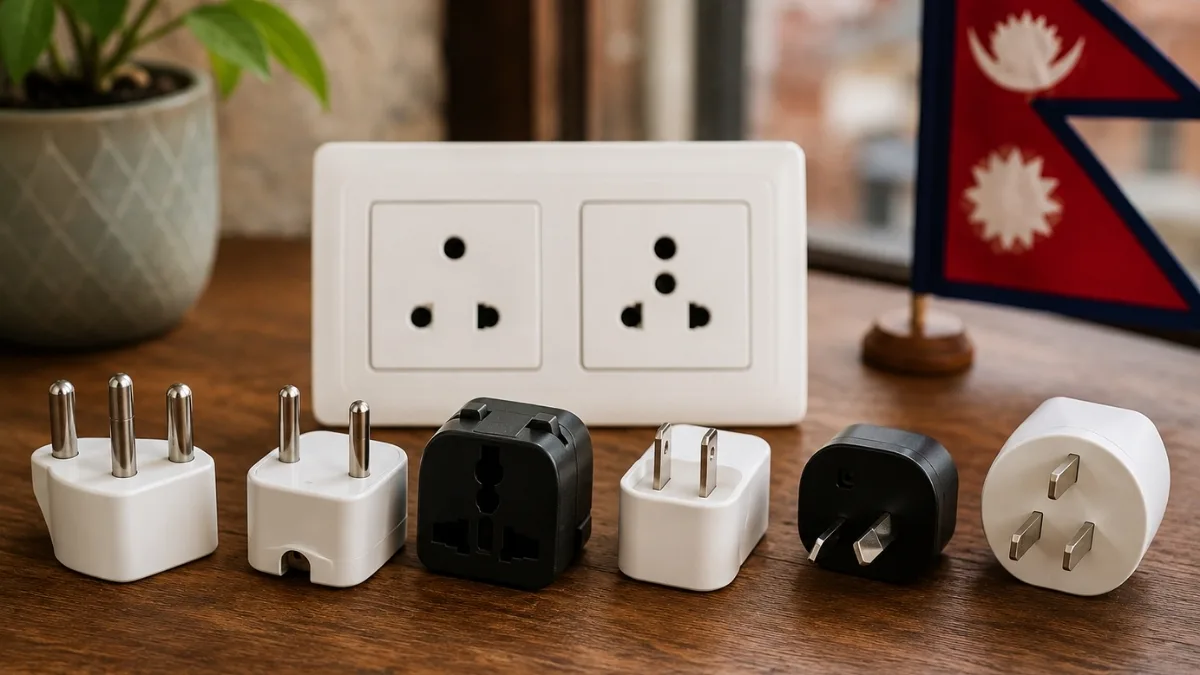
Nepal uses three main socket types. Knowing which type of accommodation applies to your destination, whether it is a city hotel, a teahouse lodge, or a mountain village, saves a lot of frustration.
|
Plug Type |
Design | Common In |
|
Type C |
Two round pins | Modern hotels, cafes, guesthouses |
|
Type D |
Three large round pins (triangular) | Homes, local lodges, teahouses |
|
Type M |
Three large round pins (bigger than D) | Luxury hotels, heavy appliances |
Type C Plug in Nepal
Type C is the standard Europlug with two small round pins. Many modern hotels, cafes, and newer buildings in Kathmandu and Pokhara have these. If your devices are from Europe, there's a good chance they'll just plug straight in.
Nepal's Socket Reality
Here's the thing nobody tells you even when the socket looks right, it can feel weirdly loose. Your charger might wobble or barely make contact. This issue is super common in mid-range hotels.
A quick local fix people use is lightly propping the charger at an angle, though be careful with that. A snug-fitting adapter solves this way better.
Type D Plug in Nepal
Type D is the classic Indian-style plug with three large round pins in a triangular layout. It's one of the most common plug types in Nepal, especially outside the main tourist areas. If you're staying in local teahouses along any trekking route, expect Type D sockets.
Type M Plug in Nepal
Type M looks similar to Type D, but the pins are bigger. You'll mostly find these in older buildings, luxury hotels, or connected to large appliances. Rare on trekking routes. So basically, don't worry too much about Type M unless you're at a high-end resort.
What Is the Most Common Adapter Type Used in Nepal?
The most common plug type used in Nepal is Type D; you'll see it everywhere from Kathmandu guesthouses to teahouse lodges on the Everest Base Camp trail.
Quick Nepal Plug Type Comparison Table
|
Plug Type |
Common Use | Availability on Treks | Best For |
|
Type C |
Hotels, cafes, modern buildings | High | European devices |
|
Type D |
Homes, teahouses, local lodges | High | Indian and universal adapters |
|
Type M |
Luxury hotels, larger appliances | Rare on treks | Heavy appliances |
Ultimately, Type D is the most common choice at ground-level teahouses, local homes, and budget lodges. Type C rules in tourist-facing modern spaces. Type M is primarily associated with luxury hotels.
Nepal Voltage and Frequency Explained
Nepal runs on 230V at 50Hz. That's the same as most of Europe, Australia, Asia, and Africa. So if your device is from one of those regions, you're probably fine.
Adapter vs Voltage Converter for Nepal
These two things are not the same, and mixing them up is a common mistake.
- An adapter changes the plug shape so it fits the socket. No voltage change.
- A voltage converter actually changes the electrical voltage.
Your phone charger, laptop, and Kindle almost always just need an adapter. Most modern electronics are dual voltage. Your hair dryer, straightener, or travel iron from the US? These likely need a converter unless they say "dual voltage" on the label.
Safety note: Some buildings in Nepal, older ones especially, have ungrounded outlets. If you're using a metal laptop and feel a faint tingle on the casing, that's the grounding issue. It's not usually dangerous, but switching to a grounded adapter or power strip helps. Don't ignore it if the tingle feels strong.
Power Surges and Safety Tips for Using Electronics in Nepal
Kathmandu's infamous load shedding is mostly gone now the city's power situation has improved a lot. But remote trekking areas are different.
A few simple rules to protect your gear:
- Use a surge protector for anything valuable
- Don't charge overnight in teahouses with weak or unstable power
- Unplug everything during thunderstorms monsoon and pre-monsoon seasons bring intense storms in the mountains
- Avoid charging right after a power cut comes back (the initial surge can spike)
How to Check if Your Device Is Dual Voltage
This information is mainly for travelers coming from the USA, Canada, or Japan, countries that run on 110V.
Please check the small text on your charger or adapter brick. If it says something like "100–240V," you're perfectly fine. That means it handles both voltages and you only need a plug adapter, not a voltage converter.
If it only says 110V or 120V, stop plugging that into Nepal's 230V outlet it could fry it. You'd need a voltage converter. Most modern phones, laptops, and camera chargers are dual voltage. Older appliances, such as hair dryers, often aren't energy efficient.
Not sure what to pack for Nepal trekking? From power banks to trekking permits and mountain gear, our local guides help travelers avoid common mistakes before arriving in Nepal. Explore Nepal trekking advice with Nepal Gateway Trekking.
Do you need a travel adapter for Nepal?
Yes, most travelers do. Here's a brief look at each country:
|
Your Country |
Plug Type | Nepal Compatible? | Need Adapter? |
|
India |
Type D | Yes | No |
|
Germany / France |
Type C | Mostly | Sometimes |
|
UK |
Type G | No | Yes |
|
USA / Canada |
Type A/B | No | Yes |
|
Australia |
Type I | No | Yes |
|
China |
Type A/C/I | Partially | Usually |
Beyond the plug shape, Nepal's electricity isn't always stable. In some areas, especially outside Kathmandu, power fluctuates. So protecting your electronics matters.
Best Universal Travel Adapter for Nepal
A universal travel adapter is the best pick. It handles Type C, D, and M sockets without any guesswork. Look for one with:
- Multi-plug compatibility (works in 150+ countries)
- Built-in USB-A and USB-C ports (so you skip extra adapters)
- Compact size important if you're trekking and keeping your bag light
- Surge protection if possible
Trekkers especially should go compact. You don't want a bulky adapter taking up space in your pack when you're on the Annapurna Circuit.
Is Nepal's plug type the same as India's?
Pretty much, yes. Nepal and India share a lot of electrical overlap both use Type D plugs and run on 230V/50Hz. So if you have an adapter that works in India, it'll likely work in Nepal too.
Is Nepal's plug type the same as Europe's?
Partly. Nepal uses Type C like many European countries. So European travelers often find their devices plug in without any adapter at all, at least in modern hotels. That said, carrying a small adapter is still smart because not every socket in Nepal will be Type C.
Charging Electronics During Trekking in Nepal
Charging on a trek is a real logistical thing to plan for. Whether you're on the Everest Base Camp Trek, the Annapurna Circuit Trek, or any remote Himalayan route, electricity becomes precious fast.
Charging Phones and Cameras in Teahouses
Most teahouses on popular trekking routes EBC, Annapurna, and Langtang offer charging. But here's what to expect:
- Charging fees: Usually NPR 100–300 per charge in higher-altitude lodges
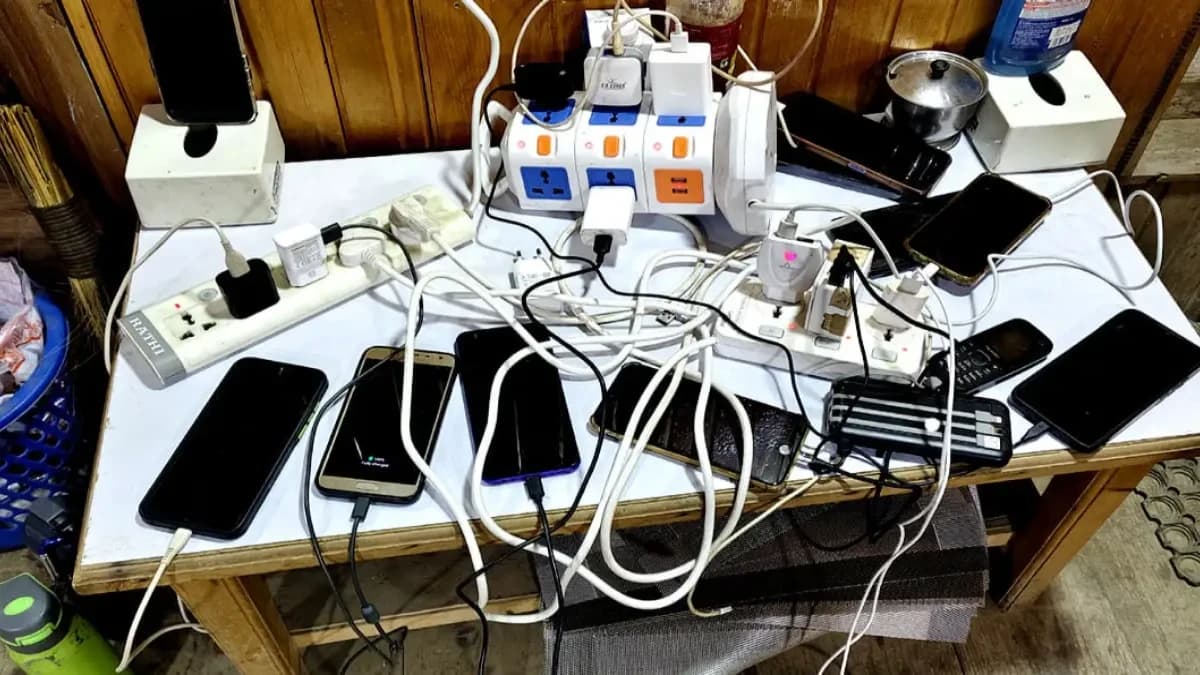
- Shared stations: One or two sockets for a whole room of trekkers
- Limited access: During peak trekking season (Oct–Nov, Mar–May), competition for sockets is real
- Altitude factor: The higher you go, the less reliable the power
So basically, plan around it. Charge whenever you can, not just when you're low.
Why a Power Bank Is Essential for Nepal Treks
This is non-negotiable. Carry on. Here's why: Cold Himalayan temperatures drain batteries shockingly fast. A phone that shows 40% at night can be dead by morning if left out in the cold. Keep your phone and power bank inside your sleeping bag overnight. It sounds weird, but it genuinely works.
For multi-day treks with limited charging access, a 20,000mAh power bank is ideal. It'll get you through 3–4 days of moderate phone use without a recharge. For the Manaslu Circuit Trek or other remote routes, a power bank isn't optional it's survival gear.
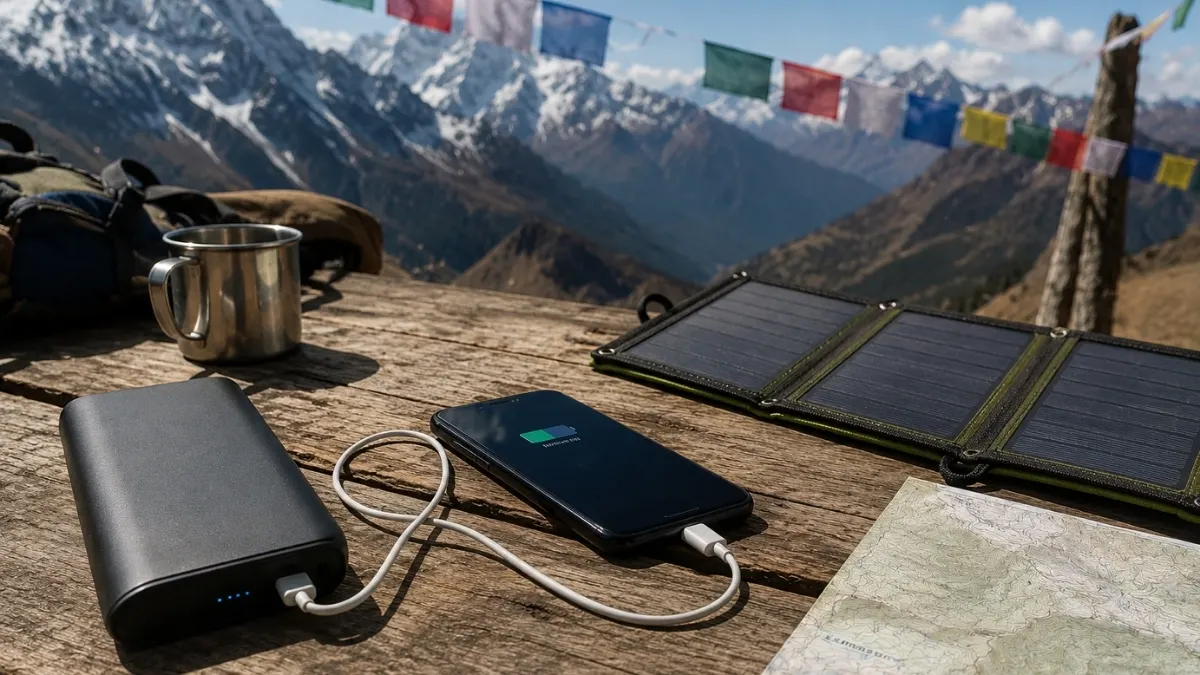
Solar Charger vs Power Bank for Nepal Trekking
Solar chargers sound fantastic on paper. In practice? Mountain shadows, narrow valleys, and the fact that you're moving most of the day make them unreliable.
- Solar charger: Works okay on long open ridge walks, but inconsistent. Slow charging.
- Power bank: Always reliable, fast, easy to use inside a tent or lodge.
The best setup for serious trekkers is to bring both. Use the solar charger on long sunny days to top up the power bank. Treat the power bank as your primary.
Planning a trek in Nepal? Get expert local advice, packing tips, and trekking support from Nepal Gateway Trekking. From Everest Base Camp to Annapurna and Manaslu, we help you prepare with confidence. Contact our trekking experts today
Where to Buy a Travel Adapter in Nepal
If you forget your adapter at home, don't panic. You can get one in Nepal.
Best places to buy:
- Thamel, Kathmandu, the go-to electronics and travel gear hub. Multiple shops sell adapters, power banks, and universal adapters. Prices are reasonable (NPR 300–1,500 depending on quality).
- Kathmandu airport has a few shops, but they are pricier and have a limited selection.
- While your hotel may sell or lend adapters, the quality of these can vary.
Quality-wise, local Thamel adapters are decent for short trips but may not have surge protection. If you're trekking for weeks, invest in something more reliable before you leave home.
Should You Buy a Travel Adapter Before Arriving in Nepal?
Yes, if you can. Here's the honest breakdown:
- Better quality options are available back home or online before you travel
- More reliable surge protection in international brands
- Emergency purchase in Kathmandu is easy Thamel has you covered if you forgot
- Don't wait until you're at a mountain trailhead there are no electronics shops in Namche Bazaar or Lukla worth counting on for quality gear
Suggestion:
It’s often better to buy a travel adapter or charger in Nepal because local adapters are made for Nepal’s socket types and voltage system. Shops in Thamel, Kathmandu, sell affordable adapters that fit Type C, D, and M plugs commonly used across the country.
It also saves you from carrying multiple adapters that may not fit properly in local sockets.
Are you traveling to Nepal for trekking or adventure travel? Let Nepal Gateway Trekking help you plan the small details that matter from trekking routes and accommodation to charging access in remote Himalayan villages.
Final Thoughts
Nepal uses Type C, D, and M plugs with a 230V/50Hz power supply. Most travelers will need a universal travel adapter, especially for trekking and travel outside major cities. A good power bank is also essential because remote mountain areas can limit charging, and cold temperatures can quickly drain batteries.
If you forget your adapter, shops in Thamel, Kathmandu, are convenient places to find affordable local options that fit Nepal’s sockets properly. Planning these small details before your trip can save you a lot of hassle during your Nepal adventure.
Planning a trek or cultural adventure in Nepal? Contact Nepal Gateway Trekking for expert trekking support, practical Nepal travel advice, and local guidance before your journey begins.
We've helped thousands of travelers plan everything from Everest Base Camp to hidden Himalayan routes, and we know the small details that really matter.
FAQs
What plug type is used in Nepal?
Nepal mainly uses Type C, Type D, and Type M plugs. Type D is one of the most common plug types in Nepal, especially in local homes and teahouses.
Do I need a travel adapter for Nepal?
Yes. Most international travelers need a Nepal travel adapter. A universal travel adapter works best because Nepal uses multiple socket types.
Is Nepal's plug type the same as India's?
Yes, Nepal and India share similar electrical systems both use Type D plugs and run on 230V/50Hz. An adapter that works in India will generally work in Nepal.
Is Nepal's plug type the same as Europe's?
Partly. Nepal uses Type C plugs in many modern hotels and cafes, so European devices often plug in directly. But carrying a universal adapter is still the safer move.
What voltage does Nepal use?
Nepal's voltage is 230V at a frequency of 50Hz. Travelers from 110V countries (USA, Canada, Japan) should check their device labels for dual-voltage compatibility before plugging in.
What is the best travel adapter for Nepal?
The best travel adapter for Nepal is a universal adapter that supports Type C, D, and M sockets, ideally with built-in USB ports and surge protection.
Can I charge my phone during trekking in Nepal?
Yes, most teahouses offer charging, but expect fees in higher-altitude lodges, limited sockets, and potential wait times during peak seasons.
Should I bring a power bank for trekking in Nepal?
Absolutely. Cold Himalayan temperatures drain batteries fast. A high-capacity power bank (20,000mAh+) is one of the most important pieces of gear for any Nepal trek.