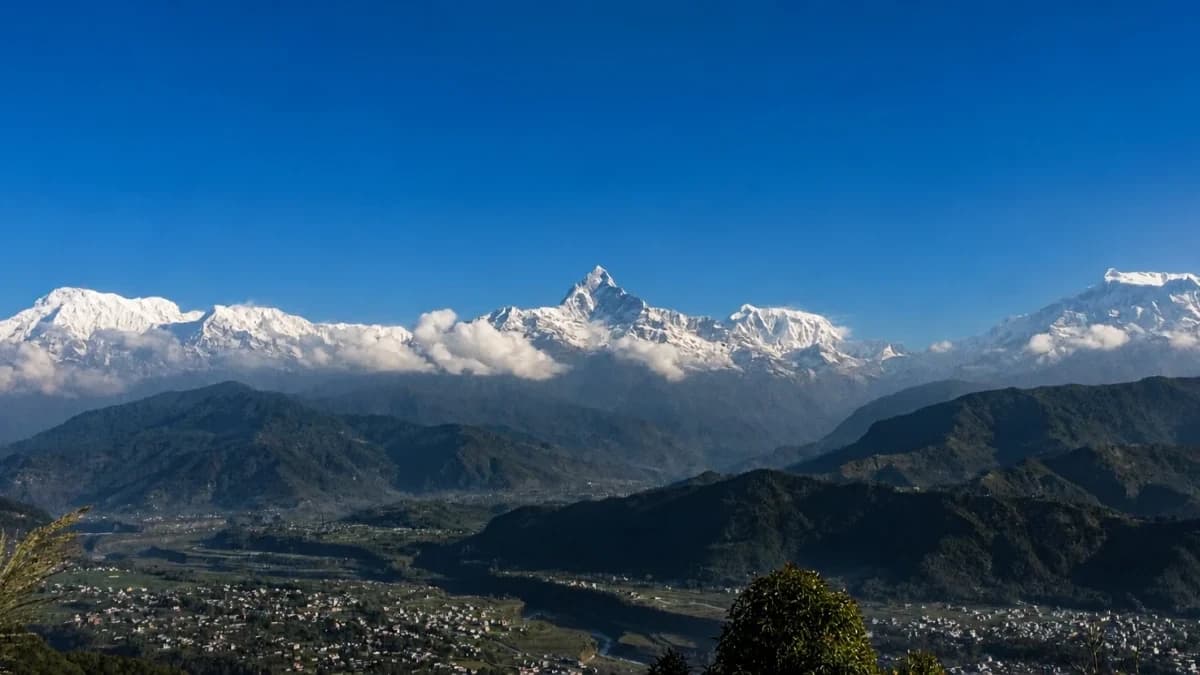
There's a moment by Phewa Lake in Pokhara, morning tea in hand, when you look up and see it. Machhapuchre. Rising sharply and proudly above the clouds, its twin peaks cut the sky like nothing else you've ever seen. It stops you. Every single time. Locals call it the "Fishtail Mountain," and once you see it, you understand it instantly.
But Machhapuchre isn't just stunning to look at. It's sacred and mysterious, and uniquely, it's a mountain no one is allowed to climb. That alone makes it one of the most fascinating Himalayan peaks in the world. So let's get into it. Everything you need to know about this incredible mountain.
Quick Facts, Height & Geographic Details of Machhapuchre
Machhapuchre is a sacred Himalayan peak in Nepal’s Annapurna region, famous for its fishtail-shaped summit, unclimbed status, and breathtaking views from Pokhara.
|
Feature |
Details |
|
Elevation |
6,993 meters (22,943 feet) |
|
Location |
Gandaki Province, Nepal |
|
Distance from Pokhara |
25 km north |
|
Mountain Range |
Annapurna Himal |
|
Climbing Status |
Prohibited (Sacred Peak) |
|
Coordinates |
28°29′42″N 83°56′57″E |
|
Prominence |
1,233 m (4,045 ft) |
|
First Ascent |
Unclimbed |
The Story Behind Machhapuchhre, Nepal's Sacred Fishtail Peak.
Machhapuchre (माछापुच्छ्रे) is a 6,993-meter peak sitting in the Annapurna Himalayas of Gandaki Province, Nepal. It's part of the massive Annapurna massif, a mountain range that holds some of the most dramatic landscapes on earth.
What makes Machhapuchre stand apart from its taller neighbors isn't raw height. It's character. The shape, the sacred story, the climbing ban this mountain has layers.
What is the meaning of Machhapuchhre?
The name comes straight from Nepali. The Machhapuchre meaning is simply "fish's tail," and that's precisely what the summit looks like. Two sharp ridges rise and converge at the top, forming a fork shape just like the tail of a fish flicking through water.
The Gurung people, who are the indigenous community of this region, call it Katasun Kliko in their language. Both names point to the same thing that unmistakable twin-peaked silhouette.
It's also nicknamed the "Matterhorn of Nepal," which makes sense once you see how dramatically it rises above the surrounding terrain.
Why Machhapuchre Is Famous Around the World?
Machhapuchre ticks every box. It's photogenic in a way that feels almost unfair. It's deeply spiritual. And it's technically unclimbed, which adds this whole mythic quality to it.
Travel photographers chase it. Trekkers plan entire trips around it. And it shows up on basically every piece of Nepal tourism content ever made. From Pokhara rooftop cafés to the Annapurna Base Camp trail, this mountain follows you.
Where Is Machhapuchhre Located in Nepal?
Machhapuchre sits in the Annapurna Himalayas of Gandaki Province in north-central Nepal. More specifically, it's located about 25 km north of Pokhara, Nepal's second-largest city and the gateway to the entire Annapurna region. The peak sits at the southern end of a long spur ridge that extends from the main Annapurna backbone.
This position is key it's what makes Machhapuchre so visible from Pokhara and the surrounding valleys. No other major peak is blocking its view from the south. It also marks the eastern boundary of the Annapurna Sanctuary, that famous natural amphitheater where trekkers head on the Annapurna Base Camp Trek.
Mountains and Landscapes Around Machhapuchre
The mountain sits in impressive company. Right nearby you've got the massive Annapurna I (8,091m), Annapurna South (7,219m), and Hiunchuli (6,441m). Further west, Dhaulagiri (8,167m) looms on the horizon.
The Modi Khola river flows through the valleys below. Dense rhododendron and bamboo forests cover the lower slopes. Higher up, glaciers and permanent snowfields take over. It's a full package rivers, forests, glaciers, and towering peaks all crammed into one region.
Why Machhapuchre Dominates the Pokhara Skyline
This is geography working in the mountain's favor. Because the terrain south of the Annapurna Himalayas is relatively low and open, Machhapuchre commands an almost absurd amount of vertical relief in a short horizontal distance.
Seeing Machhapuchre from Pokhara on a clear morning is one of those travel moments that surprises you. You're just in a lakeside city, going about your morning, and this giant, perfect peak is just hanging there in the north. Sunrise turns the peak golden pink.
At dusk it goes deep orange. No telescope is needed it's just there, dominating the northern skyline.
The Unique Shape and Beauty of Machhapuchre
Other mountains are tall. Machhapuchre is beautiful. There's a difference, and it matters. The twin-summit structure creates a silhouette that's instantly recognizable from any direction. Sharp ridges, near-perfect symmetry (from certain angles), and snow-capped year-round, this mountain photographs well whether you're shooting at dawn, dusk, or midday.
Why Machhapuchre Looks Different From Other Mountains?
- Sharp and symmetrical fishtail-shaped twin summit
- A razor-sharp north ridge creates a dramatic silhouette
- More visually striking than many single-summit mountains
- Appears isolated because of lower terrain to the south
- Dominates the skyline around Pokhara
- One of the most recognizable mountain profiles in Nepal
- Snow-covered ridges enhance its unique appearance
- Frequently described as Nepal’s most photogenic mountain
Why the Mountain Changes Color During Sunrise?
- First sunlight hits the eastern snow-covered face
- Colors shift from deep purple to pink and golden orange
- Snow texture reflects changing morning light beautifully
- Atmospheric conditions create dramatic color transitions
- Sunrise transformation usually lasts around 15–20 minutes
- Best viewed from Sarangkot and nearby viewpoints
- One of the biggest reasons photographers visit Pokhara early in the morning
- Clear autumn and spring skies offer the best sunrise views
Why Is Machhapuchre Sacred in Nepal?
This area is where things get really interesting. Machhapuchre isn't just a mountain to climb or photograph. For the communities who live in its shadow, it's a living presence, the home of a god.
Both the Gurung people and the wider Hindu community across Nepal consider the mountain sacred. Few other mountains are as deeply connected to the spiritual identity of the people who live there.
The Connection Between Machhapuchre and Lord Shiva
The most widely held belief is that Machhapuchre is the earthly home of Lord Shiva, one of the principal deities in Hinduism. Because of this belief, people treat the mountain with immense reverence.
This belief isn't just symbolic. It directly affects how the Nepali government and local communities approach the mountain. You don't build on sacred ground. You don't disturb it. And you certainly don't send expeditions trampling up its slopes.
What Local Communities Believe About the Mountain
For the Gurung people, especially, Machhapuchre is a deeply personal sacred site. Oral traditions passed down through generations describe the mountain as protected and spiritually powerful. Many locals believe that attempting to climb or desecrate the mountain brings misfortune.
These aren't just old stories they're living beliefs that shape how entire communities relate to this peak. The village of Chomrong, located on the approach route to Annapurna Base Camp, has a strong connection to the mountain's spiritual identity.
Why Is Climbing Machhapuchre Forbidden?
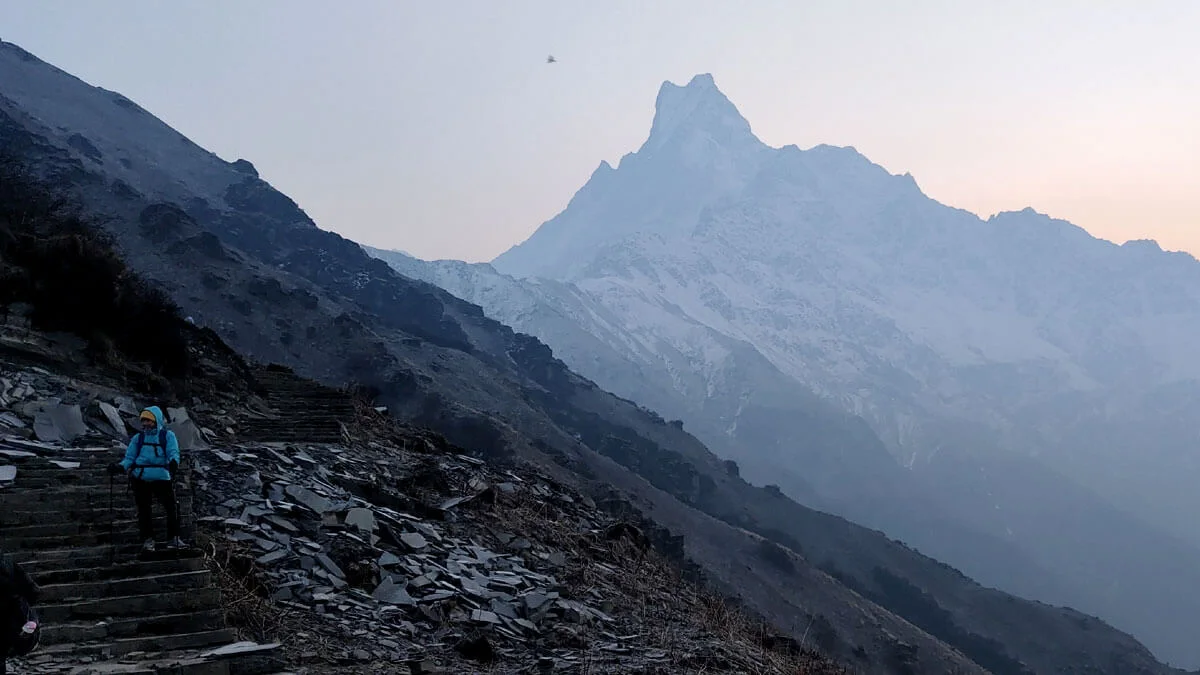
So here's the thing Machhapuchre isn't just difficult to climb. It's illegal to climb. The Nepali government has never issued a climbing permit for Machhapuchre, and there's no indication that will change anytime soon. This policy makes it one of the few mountains in the world formally off-limits to climbers, not for danger but out of respect.
First time trekking in Nepal? Refer to our beginner trekking guide to find the right trail for your fitness level.
The 1957 Expedition Attempt
The only confirmed climbing attempt happened in 1957. A British team led by Lieutenant Colonel Jimmy Roberts got remarkably close. Two climbers, Wilfrid Noyce and A.D.M. Cox, reached to within about 150 feet (46 meters) of the summit via the north ridge, hitting an altitude of roughly 6,947 meters.
Here's the thing, though: King Mahendra had given them permission to climb, but with one specific condition they were not allowed to step on the actual summit.
The team honored that agreement. They stopped just below the top. Noyce published the climbing record a year later. That remains the only official documented attempt ever made on the mountain.
There are unverified reports that a New Zealand climber named Bill Denz reached the summit illegally sometime in the early 1980s, but that's never been officially confirmed.
Why Nepal Still Protects Machhapuchre?
The climbing ban has been in place for over 60 years now. The reasons are layered religious respect is the main one, but environmental protection and cultural sensitivity play a role too.
Nepal has made a clear statement: some mountains are not for conquest. Machhapuchre is a sacred site first and a mountain peak second.
In a country where mountains are central to national identity, this kind of protection matters. It also makes the mountain more compelling. The fact that no one has stood on top of it adds something to the mystique that no amount of marketing could replicate.
Nearby Himalayan Peaks from Machhapuchre
The Annapurna region is filled with towering Himalayan giants that create one of the most breathtaking mountain landscapes in the world. Some of the major peaks surrounding Machhapuchre include:
- Mount Annapurna: Home to several massive peaks, including Annapurna I at 8,091 meters, the tenth-highest mountain on Earth.
- Annapurna South: A beautiful snow-covered peak that forms part of the dramatic Annapurna skyline.
- Hiunchuli: Located close to Machhapuchre, this mountain adds depth and beauty to the Himalayan panorama.
- Lamjung Himal: Known for its icy ridges and striking appearance rising above hills and valleys.
- Dhaulagiri: Visible to the west on clear days, Dhaulagiri stands at 8,167 meters and is the seventh-highest mountain in the world.
The Annapurna Himalaya contains three peaks over 8,000 meters, making this region one of the most concentrated areas of extreme altitude on Earth.
Together, these mountains create a natural amphitheater of snow, glaciers, forests, and deep river valleys that make the Annapurna region feel truly magical
Start planning your Nepal adventure today. Explore our best treks in the Annapurna region and find the perfect route to experience Machhapuchre for yourself.
Best Places to View Machhapuchre Mountain
- Sarangkot is the classic spot. A short drive or hike from Pokhara city takes you to a ridge with a panoramic view of the entire Annapurna range and Machhapuchre front and center. Sunrise from Sarangkot is genuinely one of Nepal's remarkable experiences.
- Phewa Lake offers a unique perspective on still mornings, the mountain reflects perfectly in the water. The view of Machhapuchre mirrored in Phewa Lake is one of the most photographed images in all of Nepal.
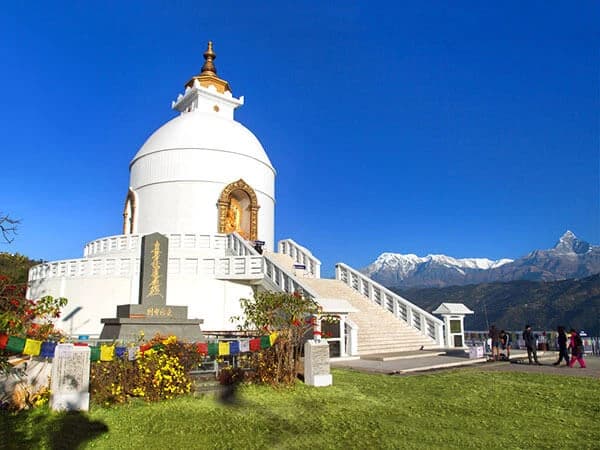
- The Peace Pagoda (World Peace Pagoda) sits on a ridge south of the lake and gives wide, unobstructed views toward the mountains. Good for late afternoon shots.
- Rooftop cafés in Lakeside just pick one. The mountain is visible from most of Pokhara's tourist area on a clear day. Order a coffee and wait.
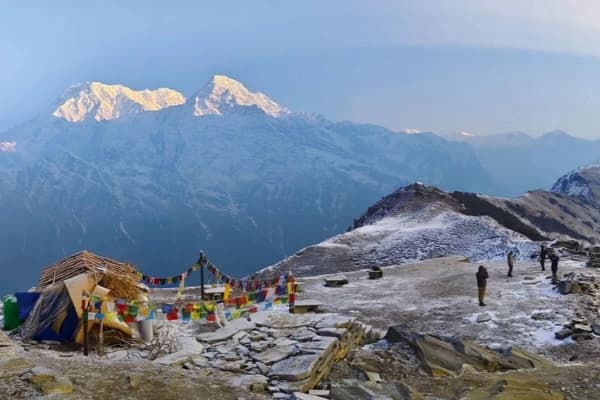
- For a closer, more immersive experience, the Mardi Himal Trek gets you right into the shadow of Machhapuchhre, offering arguably the best close-up views of the mountain anywhere.
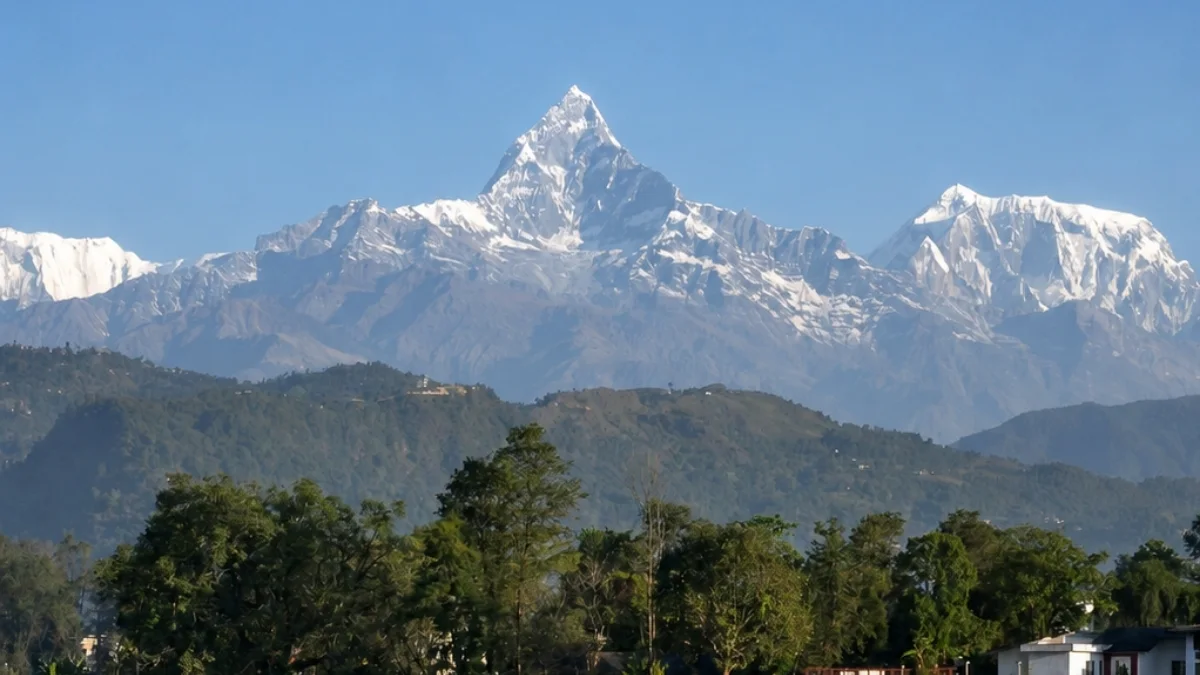
Best Sunrise and Sunset Spots
Sunrise is peak time. Clouds tend to build through the day in the Himalayas, so morning offers the clearest views, especially in autumn and spring. Sarangkot for sunrise. Phewa Lake for reflection shots in the early morning. Peace Pagoda at sunset. Check the weather the night before. Clear skies the previous evening usually mean a good mountain morning.
Machhapuchre in Nepali Culture, Tourism & Media
Ask anyone in Pokhara what defines their city, and Machhapuchre will come up within the first three sentences. It's on postcards, hotel logos, restaurant menus, and travel brochures it's basically the face of Pokhara tourism.
Why Machhapuchre Is a Symbol of Pokhara?
Pokhara's identity is built around two things Phewa Lake and Machhapuchre. The mountain isn't just a backdrop. It's a central character in the story of this city.
The Annapurna region brings hundreds of thousands of trekkers to Nepal every year, and Machhapuchre is the visual centerpiece of almost every trekking route through here.
The Annapurna Base Camp Trek, the Ghorepani Poon Hill Trek, and the Ghandruk village trail all feature Machhapuchhre.
Machhapuchre in Photography and Travel Content
On Instagram, on travel blogs, and in documentaries, Machhapuchre shows up everywhere. It's one of the most photographed mountains in the world, which is remarkable since it isn't even in the top 100 for height.
What makes it so camera-friendly is that combination of shape, accessibility, and dramatic setting. You don't need a telephoto lens or a high-altitude trek to get a stunning shot. The mountain comes to you.
Weather and Best Time to See Machhapuchre Clearly
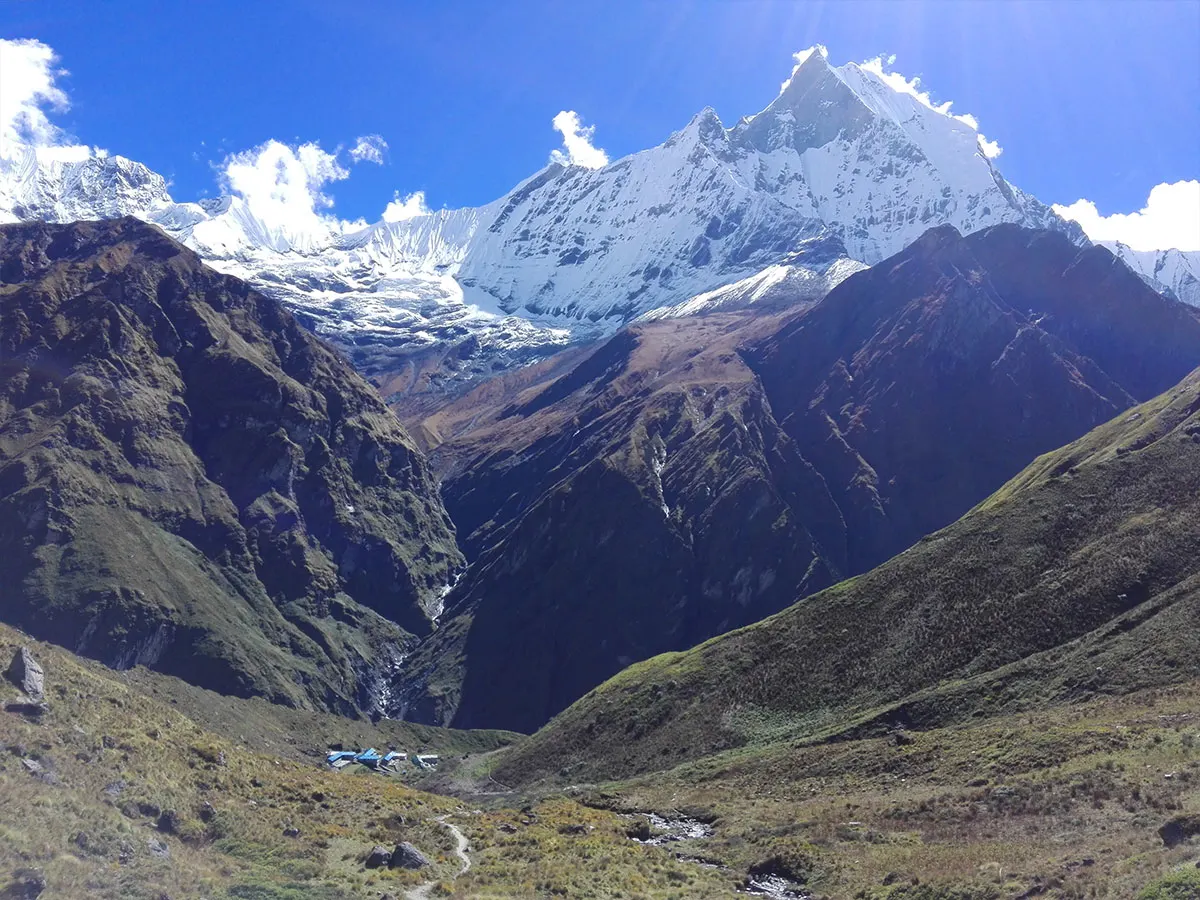
Nepal's mountain weather follows seasonal patterns, and knowing them makes a real difference in whether you see the mountain or just a wall of cloud.
Best Season for Clear Mountain Views
Autumn (September to November) is the golden window. The monsoon ends in late September, skies clear dramatically, and visibility stays sharp for weeks. October and November are peak trekking months for a reason.
Spring (March to May) is the second-best option. Skies are generally clear, wildflowers are blooming on the lower slopes, and the mountain looks spectacular. Late April and May bring some cloud buildup, but mornings are usually clear.
|
Season |
Visibility |
Conditions |
|
Autumn (Sep–Nov) |
Excellent |
Clear skies, stable weather |
|
Spring (Mar–May) |
Good to Excellent |
Clear mornings, some afternoon cloud |
|
Winter (Dec–Feb) |
Variable |
Cold but often clear; snow possible |
|
Monsoon (Jun–Aug) |
Poor |
Heavy cloud cover, rain most days |
Wondering about the best time to visit? Our Nepal trekking seasons guide breaks down every month so you can plan the perfect trip.
Interesting Facts About Machhapuchre You May Not Know
- No official climber has ever stood on the summit. The 1957 British team stopped 46 meters below the top by agreement with King Mahendra. That's basically the length of a basketball court away from history.
- The mountain is sometimes called the "Matterhorn of Nepal" because of its dramatic, isolated profile similar to the famous Swiss peak.
- Machhapuchre looks different from various angles. From the south, you see the classic twin-peak fishtail shape. Whether viewed from the east or the west, it presents itself as a single sharp summit.
- It holds the unique status of being a "virgin peak," a mountain that no one has officially reached the top of, purely by choice and government policy.
- The Gurung people have their name for it, Katasun Kliko, and have revered it as sacred long before it became a global travel icon.
- There are unverified reports of an illegal ascent in the early 1980s by a New Zealand climber, but no official confirmation exists.
- Machhapuchre is visible from Pokhara City without any special equipment, which is rare for a Himalayan peak of this caliber.
- The reflection of Machhapuchre in Phewa Lake is one of Nepal's most iconic images and has appeared in global travel publications countless times.
Machhapuchre Is One of Nepal's Most Photographed Peaks
Despite not being the tallest, it might be the most photographed mountain in Nepal. Its combination of accessible viewpoints, distinctive shape, and sacred mystique makes it endlessly compelling to visitors from every part of the world.
No One Has Officially Reached the Summit
This feat is genuinely rare in modern mountaineering. Almost every peak of this height has been climbed some dozens of times. Machhapuchre remains untouched at the top. Not because it's impossible, but because Nepal decided that some things are more important than summits.
Ready to see Machhapuchre up close? Step inside the Annapurna Sanctuary, a natural amphitheater where Machhapuchre towers above you on all sides. It's one of the most unforgettable trekking experiences in Nepal.
Final Thoughts
Machhapuchre is one of those rare places where natural beauty and human meaning overlap completely. It's not just a mountain. It's a sacred symbol, a photographic icon, a cultural cornerstone, and, uniquely, a summit that remains untouched by human feet.
Whether you see it from a Pokhara café or from the trail approaching Annapurna Base Camp, Machhapuchre leaves an impression that doesn't fade. That shape. That color at sunrise. That story. Ultimately, Nepal has thousands of peaks. But there's only one Fishtail Mountain.
Start planning your Nepal adventure today with Nepal Gateway Trekking and discover unforgettable journeys across the Himalayas. From the stunning Annapurna region to hidden mountain trails, find the perfect trek to experience the beauty of Machhapuchre for yourself. Have questions or need help planning your trip? Contact us and connect with our local trekking experts today.
FAQs
What is Machhapuchre famous for?
Machhapuchre is renowned for its unique fishtail-shaped twin summit, its sacred status as a home of Lord Shiva, and the fact that it remains officially unclimbed. It's one of Nepal's most photographed mountains.
How high is Machhapuchre Mountain?
Machhapuchre stands at 6,993 meters (22,943 feet) above sea level in the Annapurna Himalayas of Nepal.
Why is Machhapuchre called Fishtail Mountain?
The mountain has a twin-peaked summit that looks like the tail of a fish, two ridges that rise and fork at the top. That's how both the local name and the popular nickname "Fishtail Mountain" came about.
Can people climb Machhapuchre?
No. Climbing Machhapuchre is officially prohibited. The Nepali government has not issued any climbing permits for the mountain since 1957, primarily because it is considered sacred as a home of Lord Shiva.
Where is Machhapuchre located?
Machhapuchre is located in the Annapurna Himalayas of Gandaki Province, Nepal, about 25 km north of Pokhara.
What is the best place to see Machhapuchre?
Sarangkot, Phewa Lake, and Peace Pagoda in Pokhara all offer excellent views. For closer, more dramatic views, the Mardi Himal Trek and Annapurna Base Camp Trek get you right into the mountain's shadow.
What is the best time to view Machhapuchre clearly?
Autumn (September to November) and spring (March to May) offer the clearest mountain views. Mornings are almost always better than afternoons due to cloud buildup throughout the day.
Is Machhapuchre connected to Lord Shiva?
Yes. Local Hindu and Gurung communities believe Machhapuchre is the sacred home of Lord Shiva, which is a central reason why the Nepali government prohibits climbing it.
Why is Machhapuchhre important to Nepal tourism?
Machhapuchre is the visual symbol of Pokhara and the Annapurna region. It appears in countless travel campaigns, photographs, and tourism materials, and it's a key reason why millions of travelers visit this part of Nepal every year.
Has anyone ever reached the summit of Machhapuchre?
No official climber has ever reached the summit. The 1957 British expedition stopped 46 meters below the top by agreement with King Mahendra. There are unverified reports of an illegal ascent in the early 1980s, but nothing has been officially confirmed.