If you're planning to trek to Everest Base Camp, understanding the Everest Base Camp trek elevation is honestly one of the most important things you can do before you go. Not just for safety, but so you actually know what you're getting into day by day.
A lot of people focus on the distance. And yeah, the distance matters. But the elevation is what really tests you. It's what causes altitude sickness. It's what makes an average day feel like a hard day. And it's what makes reaching base camp feel genuinely earned.
So let's break it all down, the numbers, the profile, what changes each day, and what you need to know to get there safely.
What Is the Elevation of Everest Base Camp?
Everest Base Camp sits at an elevation of 5,364 meters (17,598 feet) above sea level on the south side of Mount Everest in Nepal's Khumbu region.
That's high. Really high. For comparison, simply standing at EBC already puts you at a higher altitude than the base camps of many famous mountains, including Mont Blanc and Mount Kilimanjaro.
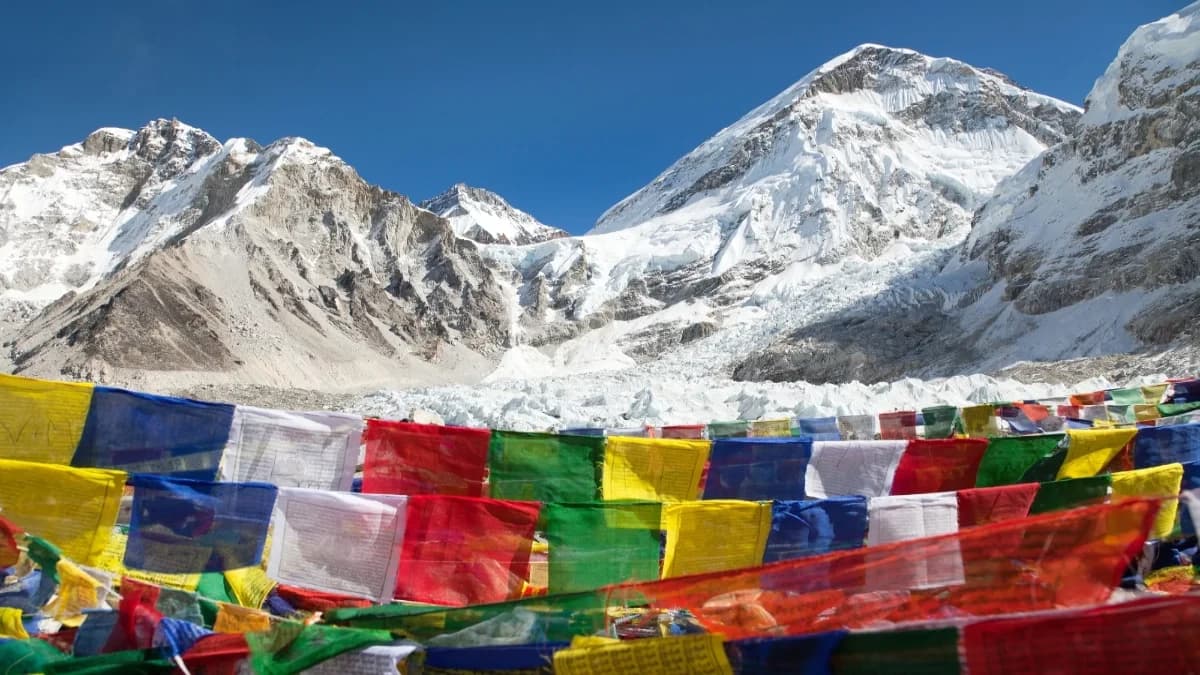
But here's something a lot of people don't realize EBC is not even the highest point on the trek. Most itineraries include a hike up to Kala Patthar, which stands at 5,644 meters (18,519 feet) and is actually higher than Everest Base Camp itself. Kala Patthar is also where you get the best views of Everest's summit. Ironically, the actual base camp is surrounded by glacial moraine, and you can't really see the peak clearly from there.
So, the true high point of the Everest Base Camp trek elevation is Kala Patthar, not EBC.
Everest Base Camp Trek Elevation Profile: The Route from Lukla to EBC
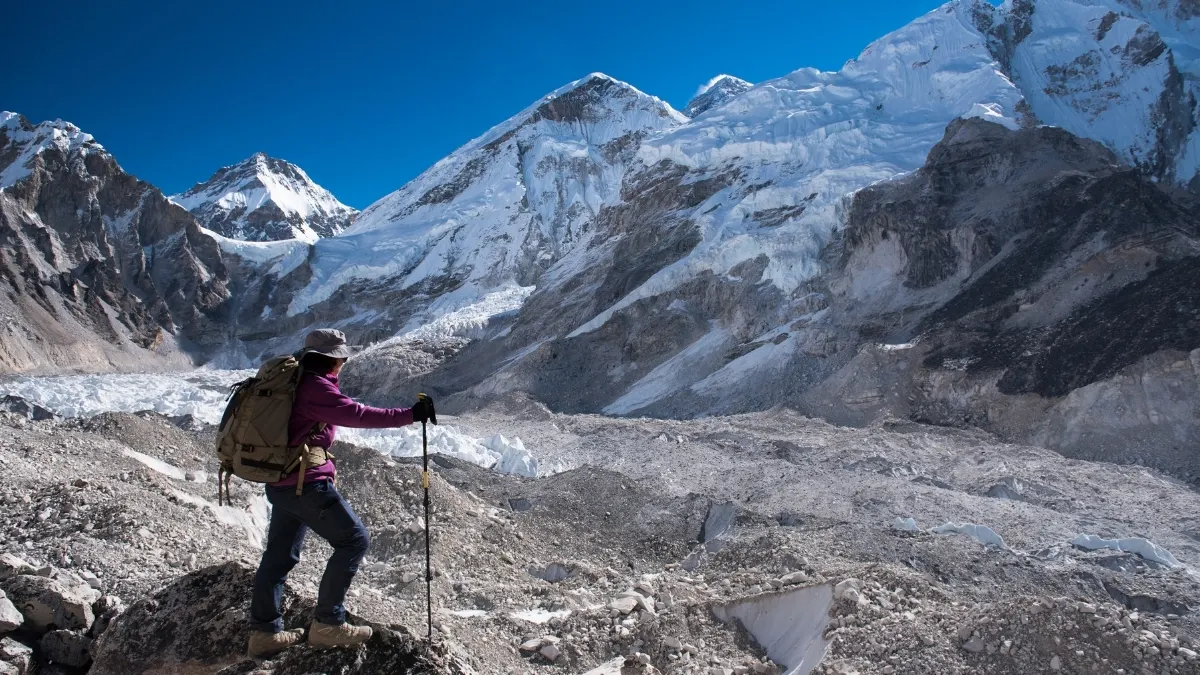
The Everest Base Camp trek elevation profile follows a gradual upward pattern, not a straight climb. The trail goes up, comes down slightly, and goes back up. That's intentional. It's how your body adjusts.
The trek typically begins with a flight from Kathmandu (1,400m) to Lukla (2,860m), then proceeds through Phakding (2,610m), Namche Bazaar (3,440m), Tengboche (3,860m), Dingboche (4,410m), Lobuche (4,910m), and Gorak Shep (5,164m) before reaching Everest Base Camp at 5,364m.
Notice something interesting there. The first move after landing in Lukla is actually downhill to Phakding. That slight drop early on helps your body settle in before things get real.
Here's a clean breakdown of the elevation at each major stop:
|
Location |
Elevation |
|
Kathmandu |
1,400 m / 4,593 ft |
|
Lukla |
2,860 m / 9,383 ft |
|
Phakding |
2,610 m / 8,563 ft |
|
Namche Bazaar |
3,440 m / 11,286 ft |
|
Tengboche |
3,860 m / 12,664 ft |
|
Dingboche |
4,410 m / 14,469 ft |
|
Lobuche |
4,940 m / 16,207 ft |
|
Gorak Shep |
5,164 m / 16,942 ft |
|
Everest Base Camp |
5,364 m / 17,598 ft |
|
Kala Patthar |
5,644 m / 18,519 ft |
That's the shape of the trek. Slow and steady going up, with a couple of planned rest days baked in.
Now you know the full Everest Base Camp elevation route from Lukla to EBC.
Plan your journey with Nepal Gateway Trekking and make it happen safely.
Everest Base Camp Trek Elevation Gain: How Much Are You Actually Climbing?
The elevation gain on the Everest Base Camp Trek refers to the total amount of vertical ascent you accumulate throughout the journey, not just the difference between your starting and ending altitude. It includes every uphill section you walk, even if you descend afterwards.
On paper, the total elevation gain from Lukla to EBC looks like about 2,500 meters. And that's technically the net gain. But that's not the full picture at all.
Throughout the entire trail, including acclimatization hikes, you will be gaining around 7,300 meters (24,000 feet) of elevation, roughly triple what most people expect.
That's because the trail constantly undulates. You climb, you drop, you climb again. Every uphill counts toward your total Everest Base Camp trek elevation gain, not just the net difference from start to finish.
On a typical trekking day, you'll gain between 400 and 800 meters in altitude. Some days are lighter. Some are brutally steep. The key sections that catch people off guard are:
- Phakding to Namche Bazaar: This is the first serious climb of the trek. You're gaining around 830 meters to reach Namche at 3,440m. The trail crosses several suspension bridges over the Dudh Kosi river before a sustained, steep push up to town. A lot of people feel the altitude for the first time here.
- Namche to Tengboche: Moderate gain, but you're now in the zone where oxygen levels start to matter. The trail traverses the hillside with great views of Ama Dablam.
- Dingboche to Lobuche: A 530-meter gain, taking you to 4,940m. Above 4,500m, fatigue hits differently. Short distances feel long.
- Lobuche to Gorak Shep to EBC: The final 254 meters of elevation gain to Base Camp may not seem like much on paper, but at that altitude, every single step is genuinely hard. You're fully in the high-altitude zone by this point.
Read: EBC to Lukla Flight Cost
Everest Base Camp Trek Elevation Map: Understanding the Shape of the Climb
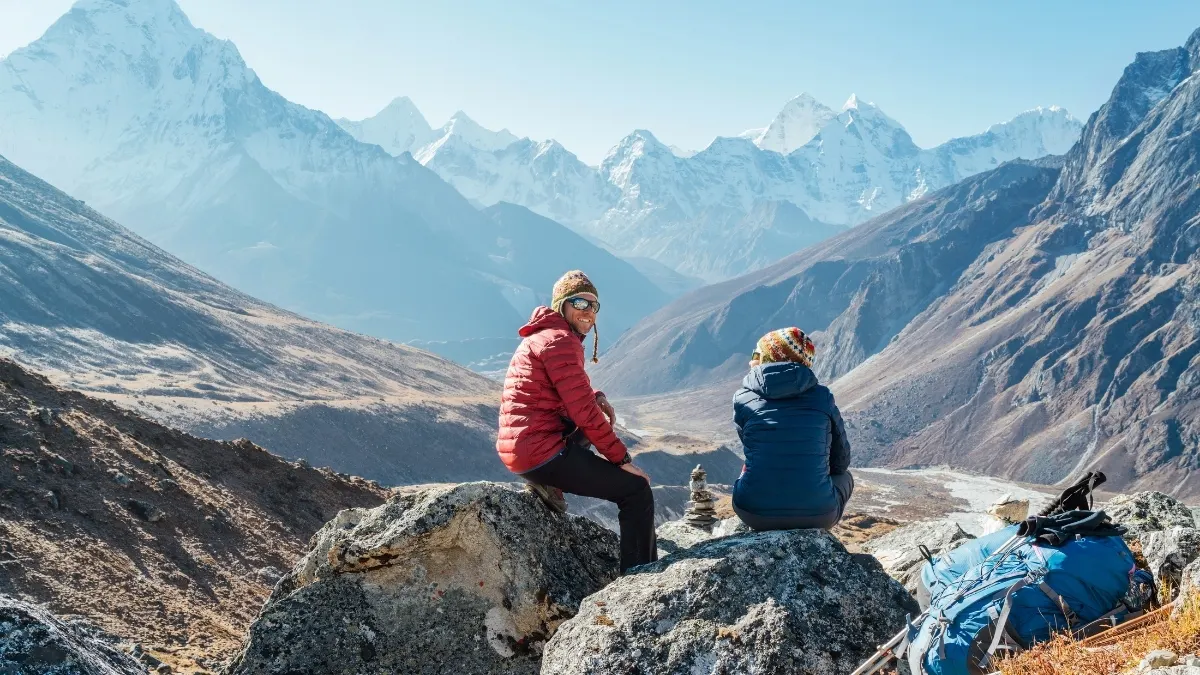
If you've seen an Everest basecamp trek elevation map, you'll notice the profile isn't a clean diagonal line going upward. It's jagged, rising, dropping, and rising again, with two obvious flat sections where the acclimatization days happen.
Those flat sections (Namche and Dingboche) are not lazy days. They are structured adaptation days. The principle is to climb higher during the day and return to sleep at a lower elevation, allowing the body to gradually adjust to reduced oxygen levels before moving above 4,000 meters.
This "climb high, sleep low" approach is genuinely what keeps people safe on this trek. Skip the acclimatization days, and your chances of altitude sickness go up significantly.
At higher elevations, the air becomes noticeably thinner, with oxygen levels dropping to around 50% of sea level at 5,000 meters. That's why even simple things, like rolling over in your sleeping bag, climbing a flight of stairs in a teahouse, can leave you winded.
Everest Base Camp Trek Distance and Elevation: The Full Numbers
The classic Everest Base Camp trek from Lukla to EBC and back is 130km long , 65km each way. That sounds like a lot, but spread across 12 to 14 days, it comes to roughly 10–15km per day.
The total hiking hours from Lukla to Everest Base Camp range between 60 to 70 hours of walking time. Each day usually involves 5 to 7 hours of trekking, depending on altitude, pace, and rest stops.
A few things that make the Everest Base Camp trek distance and elevation harder than those numbers suggest:
- Terrain: The trail is rocky, uneven, and steep in sections. You're not walking on a smooth path. You're navigating moraine, stone steps, river crossings, and narrow ridges.
- Altitude effect: At 5,000 meters, oxygen levels drop to about 50% of sea level, which can make a 5km stretch feel like 10km.
- Weight: Even just carrying a daypack adds fatigue at altitude. Most people hire a porter for their main bag, and honestly, that's a smart call.
Day-by-Day Elevation Gain Overview
Here's roughly what the elevation gain looks like each day on a standard itinerary:
Day 1. Lukla (2,860m) to Phakding (2,610m): You actually descend about 250m. Easy start. Your body is grateful.
Day 2.Phakding to Namche Bazaar (3,440m): Gain of ~830m. This is the hardest day early in the trek. The bridge crossings are spectacular, but the final climb to Namche is steep and long.
Day 3.Acclimatization in Namche: Still at 3,440 m. Short hike up to ~3,880m (Everest View Hotel area) and back down. Classic climb high, sleep low.
Day 4.Namche to Tengboche (3,860m): A mix of climbing and descending through forests. Net gain of around 420m. You start seeing Ama Dablam properly now.
Day 5.Tengboche to Dingboche (4,410m): Gain of ~550m. Above 4,000m now. The landscape changes, becoming sparser, rockier, and windier.
Day 6. Acclimatization in Dingboche: Rest day at 4,410 m. Usually includes a hike up to 5,000m+ and back. If you push through this day without resting, you're taking a real risk.
Day 7.Dingboche to Lobuche (4,940m): Gain of ~530m. Passing the Thukla memorial, small stone cairns for climbers who didn't make it back are visible. Sobering.
Day 8.Lobuche to Gorak Shep (5,164m) to EBC (5,364m): You reach Gorak Shep first, drop your bag, then push on to base camp. The final push to EBC is relatively short but slow. Elevation gain for this stretch is around 440 meters over 11 km, and the high altitude really slows you down.
Day 9.Gorak Shep to Kala Patthar (5,644m) then down: Early morning start, before sunrise if possible. The climb up Kala Patthar is steep and cold, but the view of Everest from up there is worth every labored breath.
Every day on this route brings new challenges and views. Let Nepal Gateway Trekking guide you through it step by step.
Altitude Sickness: Respecting the Everest Base Camp Elevation
Altitude sickness, or acute mountain sickness (AMS), is the single biggest factor that determines whether you reach Base Camp or turn back early. As you ascend, the atmospheric pressure drops. While the air still contains 21% oxygen, the molecules are less dense. By the time you reach Everest Base Camp, you are breathing roughly 50% of the oxygen available at sea level.
Most trekkers will feel "the altitude" (light headaches or slight breathlessness) above 3,500m. This is normal. However, AMS becomes dangerous when your body can’t keep up with the rate of ascent.
The Golden Rules of High-Altitude Trekking
To ensure you reach 5,364m safely, we follow five non-negotiable rules. These are built into every Nepal Gateway Trekking itinerary:
- The 500-Meter Rule: Once you are above 3,000 meters, try not to increase your sleeping altitude by more than 300 to 500 meters per night. This gives your blood chemistry time to adjust.
- Climb High, Sleep Low: This is the secret to successful acclimatization. We often hike to a higher point during the afternoon (like the Everest View Hotel at 3,880m) and then return to a lower elevation (Namche at 3,440m) to sleep. This "shocks" the system into producing more red blood cells while allowing for recovery at night.
- Hydrate Like It’s Your Job: The air in the Khumbu is incredibly dry, and your respiratory rate increases at altitude, causing you to lose water just by breathing. Aim for 3 to 4 liters of water daily. If your urine isn't clear, you aren't drinking enough.
- Listen to Your Body, Not Your Ego: A mild headache is common, but a "splitting" headache that doesn't go away with Ibuprofen and rest is a warning sign. If you experience nausea, loss of coordination (ataxia), or a persistent cough, you must stop ascending.
- The "Slow and Steady" (Bistari, Bistari) Pace: The EBC trek is not a race. The trekkers who walk the slowest on Day 1 and 2 are usually the ones who feel the best on Day 8. Keep your heart rate low and avoid overexertion.
A Note on Diamox (Acetazolamide)
Many trekkers use Diamox to help the body acidify the blood and stimulate breathing. It is not a "cure" for altitude sickness but a preventative aid.
Pro-Tip: If you plan to use Diamox, we recommend taking a trial dose at home before your trip to check for side effects (like tingling fingers or increased urination). Always consult your doctor before starting any medication.
The Acclimatization Strategy Built Into the EBC Elevation Profile
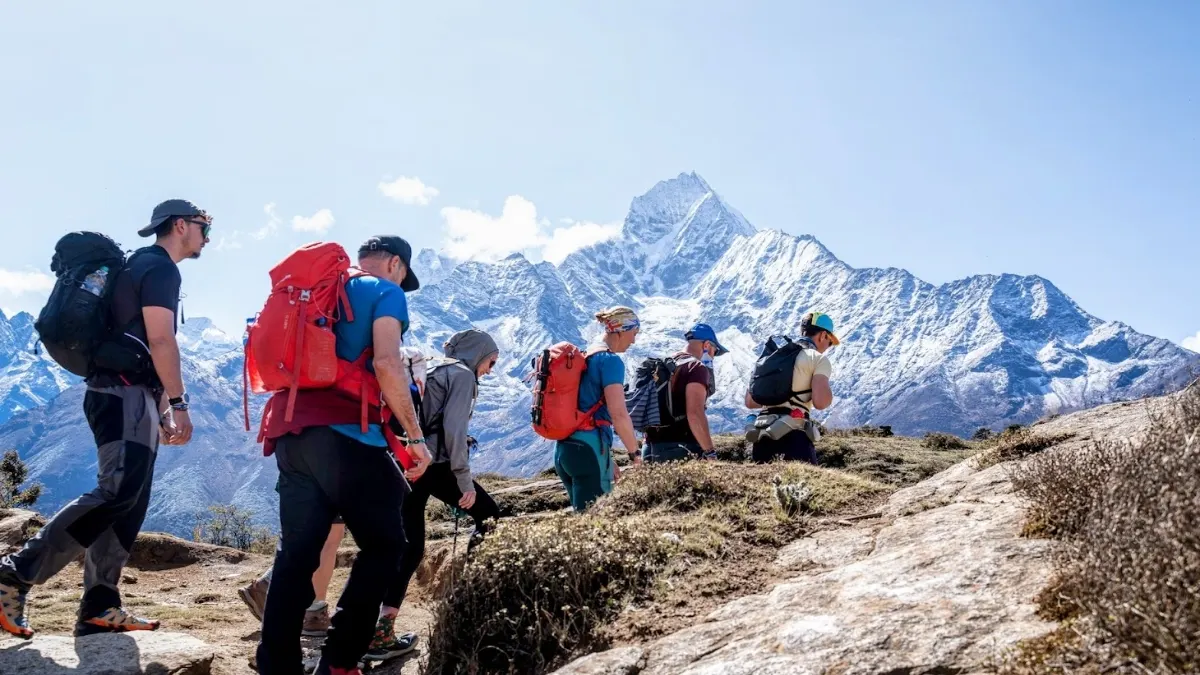
One of the reasons the Everest Base Camp route is so well-designed is that the elevation profile naturally forces acclimatization. It's not just a straight march uphill.
The two main acclimatization stops, Namche Bazaar and Dingboche, are placed exactly where they need to be:
- Namche (3,440m): After the big first climb from Phakding, you stay here for two nights. That 24-hour window at the same altitude, with a short acclimatization hike, is genuinely what helps you go higher afterward.
- Dingboche (4,410m): Above 4,000m, your body needs more time. The rest day here prepares you for the final push above 5,000m. Guides have found that the vast majority of altitude-related evacuations occur in the four key transition zones, and trekkers who skip the Dingboche acclimatization day make up a disproportionate share of those cases.
If you're on a tight schedule and thinking about cutting a day, don't cut the acclimatization days. Cut something else.
Is Everest Base Camp the Highest Point on the Trek?
No, Everest Base Camp is not the highest point on the trek.
Kala Patthar, at 5,644 meters (18,519 feet), is actually the true highest point on the EBC trek. The total net altitude gain from Lukla to the summit of Kala Patthar is around 2,784 meters (9,136 feet).
Most trekkers do both, reaching base camp on day 8, then summiting Kala Patthar early on day 9 before descending. The views from Kala Patthar are better for seeing Everest's actual peak, so it's absolutely worth the extra effort.
North Base Camp vs South Base Camp: A Quick Note on Elevation
There are actually two Everest Base Camps. The South Base Camp in Nepal sits at 5,364 meters and is accessible only by trekking or helicopter. The North Base Camp in Tibet is slightly lower at 5,150 meters (16,900 feet) and is reachable by vehicle via a road from China.
The South Nepal side is what the classic EBC trek refers to. The Lukla to EBC route. The teahouses, the Sherpas, and the Khumbu Icefall. That's what this guide covers.
Tips for Handling the Elevation on the EBC Trek
A few practical things that actually make a difference:
- Train before you go: You don't need to be a serious athlete, but you should be able to walk uphill for 5–6 hours carrying a daypack. Stair climbing and long hikes in the weeks before are good prep.
- Don't try to be a hero in the first few days: The people who blow up early in the trek are usually the ones who pushed too hard on days 1–3 when everything feels manageable.
- Sleep matters at altitude: A lot of people sleep badly above 4,000m. That's normal. Earplugs help. Melatonin helps some people. Diamox can improve sleep quality at altitude.
- Pulse oximeter: Small, cheap, and genuinely useful. Clip it on your finger each morning. Your oxygen saturation (SpO₂) should ideally stay above 85% during the trek. If it drops below 80% consistently, pay attention.
Final Thoughts
The Everest Base Camp trek elevation is challenging. There's no way to sugar-coat that. You're going from about 2,860m to 5,364m over 8–9 days, with your body constantly adjusting to thinner and thinner air. By the time you're walking the moraine to base camp, every step has real weight to it.
But here's the thing that's also what makes it worth it.
There's something about arriving at 5,364 meters on your own two feet that no helicopter tour can replicate. You've felt every meter of it. You've watched the vegetation disappear, watched the landscape go from pine forests to glacial rock, felt the cold bite harder each night. And when you get there, you know exactly what it cost you to stand there.
The elevation isn't the enemy. It's just the mountain making you earn it.
Ready to experience the Everest Base Camp trek yourself? Plan your journey with Nepal Gateway Trekking and trek with expert local guides.
FAQs
What is the elevation of Everest Base Camp?
Everest Base Camp sits at 5,364 meters (17,598 feet) above sea level on the Nepal side. It's high enough that even experienced trekkers feel the altitude pretty strongly by the time they arrive.
What is the highest point on the Everest Base Camp trek?
Kala Patthar at 5,644 meters is actually the highest point on the trek, not EBC itself. Most trekkers hit both on back-to-back days, and Kala Patthar gives you the better view of Everest anyway.
How much elevation do you gain on the Everest Base Camp trek?
The net gain from Lukla to EBC is around 2,500 meters, but total elevation gain including all the ups and downs, is closer to 7,300 meters. That's why your legs feel it way more than the straight numbers suggest.
How hard is the elevation gain day by day?
Most days involve 400 to 800 meters of gain, which sounds manageable until you're above 4,500 meters and your lungs disagree. The Phakding to Namche stretch and the final push to base camp are the two sections people find hardest.
Can altitude sickness affect you on the EBC trek?
Yes, and it's more common than people expect, most trekkers feel some symptoms above 4,000 meters. The key is not to rush, drink plenty of water, and never skip your acclimatization days no matter how good you feel.
What is the total distance and elevation of the Everest Base Camp trek?
The full round trip from Lukla is around 130 kilometers, with a net elevation gain of roughly 2,500 meters one way. Factor in the altitude effect, though, because those kilometers at 5,000 meters feel nothing like kilometers at sea level.
Do I need to be super fit to handle the EBC elevation?
You don't need to be an athlete, but you do need a solid base of cardio fitness before you go. If you can walk uphill for 5 to 6 hours with a daypack and recover the next day, you're in decent shape for the trek.