A Quick Update on Syabrubesi
On August 26, 2026, severe flash flooding along the Bhote Koshi River affected parts of Rasuwa, including Syabrubesi, damaging roads, bridges and other infrastructure. Syabrubesi is the traditional gateway for the Langtang Valley and Gosaikunda treks, so the damage has disrupted the usual access to these trekking areas.
The usual Kathmandu–Trishuli–Betrawati–Dhunche–Syabrubesi road has been affected. An alternative road from Kathmandu through Tokha–Chahare–Lachyang–Kalikasthan to Dhunche has been used to reconnect the area, while recovery work continues on the main route.
If you're planning a trek to Langtang, there's one place you'll almost certainly pass through first Syabrubesi. It's not flashy. It's not on any "top ten destinations in Nepal" list. But honestly, it's one of those places that quietly earns your respect the moment you arrive.
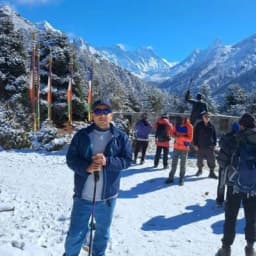
Tucked into a deep river valley in Rasuwa District, Syabrubesi Village is where the real Himalayan adventure begins. Whether you're starting the Langtang Valley Trek, heading into the Tamang Heritage Trail, or pushing up toward Gosaikunda, your journey kicks off right here.
This Syabrubesi Travel Guide covers everything you actually need to know getting there, what to expect on the road, the weather, where to sleep, permits, what to do, and what nobody really tells first-timers.
Quick Review
- Location: Mountain village in Rasuwa, Nepal, 122 km from Kathmandu, 1,503 m elevation; gateway to Langtang Valley.
- Travel: 6–9 hrs by bus, 6–7 hrs by jeep; roads vary with season.
- Best Time: Spring & Autumn; Monsoon is rainy, and Winter is cold.
- Nature: Rivers, forests, Himalayan peaks; wildlife includes red pandas, tahrs, leopards, and birds.
- Activities include exploring Tamang culture, visiting monasteries, crossing suspension bridges, tasting local food, soaking in hot springs, and taking photographs.
- Treks: Langtang Valley, Tamang Heritage, Gosaikunda, and Langtang Gosaikunda Helambu.
- Accommodation & Food: Teahouses, lodges, hotels; dal bhat, momos, thukpa.
- Permits: Langtang National Park Entry Permit and TIMS card; guide may be needed.
- Tips: Carry cash, check coverage, pack layers, rain gear, boots, first aid, and a power bank.
- Significance: The area is rich in Tamang culture, is strategically located near the Rasuwagadhi border, and offers an authentic Himalayan experience.
Where Is Syabrubesi? Location, History, and Strategic Importance
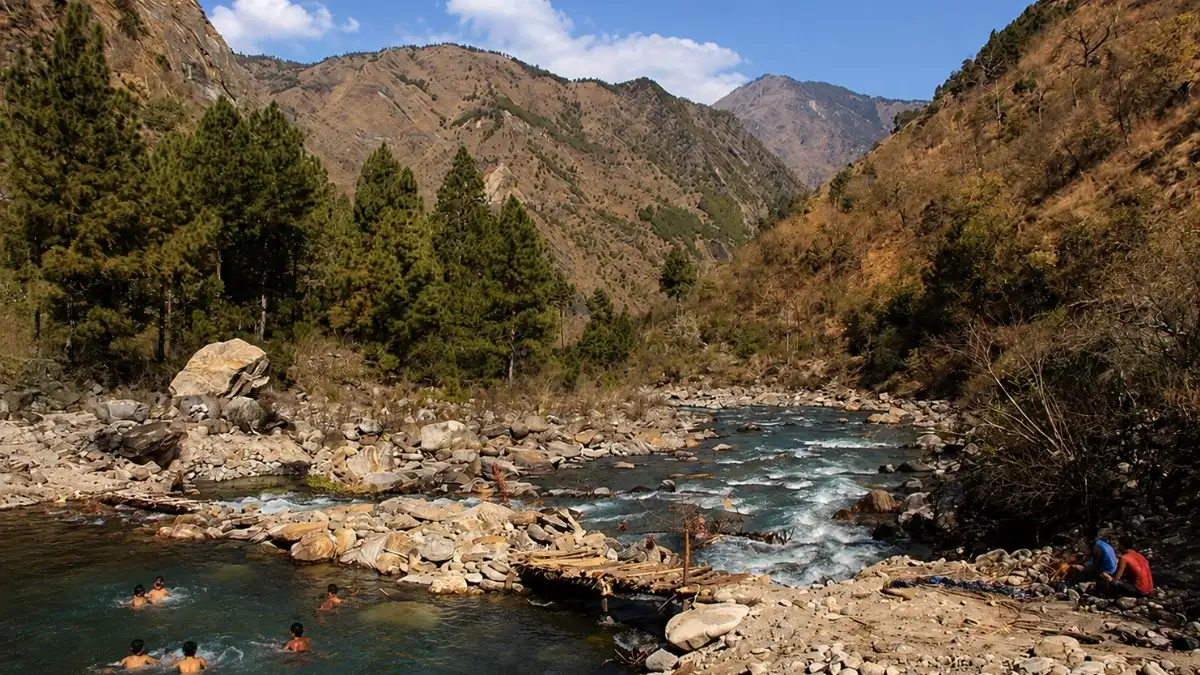 More than just a trekking stop, Syabrubesi is a vibrant mountain village known for its strategic location, Tamang heritage, and access to the Langtang region.
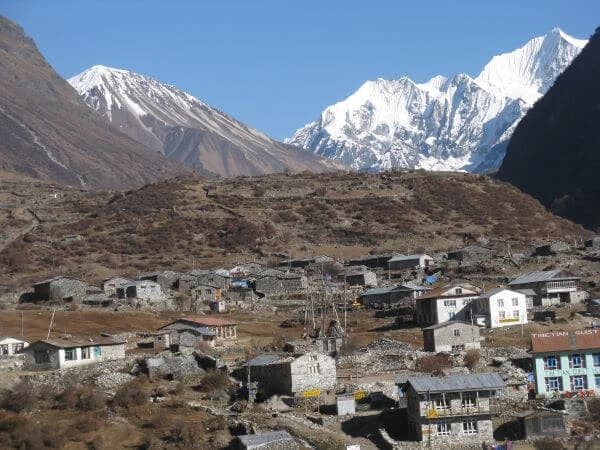
Syabrubesi sits inside Rasuwa District, Bagmati Province, roughly 122 km northwest of Kathmandu. It's positioned at the confluence of two rivers, the Bhote Koshi and the Langtang Khola, and sits right at the edge of Langtang National Park.
The location makes it a natural funnel. Almost every serious trek in the Langtang region starts or passes through here, which is precisely why the village has grown into a proper trekking hub over the last two decades.
Quick Facts About Syabrubesi
The Syabrubesi altitude sits at 1,503 meters (4,930 ft) above sea level, low enough that acclimatization isn't a concern in the village itself but high enough to remind you you're in the mountains.
|
Detail |
Information |
|
Elevation |
1,503 m (4,930 ft) |
|
Distance from Kathmandu |
122 km |
|
District |
Rasuwa |
|
Province |
Bagmati |
|
Coordinates |
28.1633° N, 85.3344° E |
Note: Syabrubesi, Syafrubesi, Syabru Besi, Syabrubensi, and Syabru Bensi all refer to the same village in Rasuwa District, Nepal. The different spellings come from variations in transliterating the Nepali name (स्याफ्रुबेँसी) into English.
While "Syabrubesi" is the most widely used spelling in trekking maps, guidebooks, and travel websites, you may encounter other versions on road signs, permits, GPS maps, and local documents.
Regardless of the spelling, they all refer to the main gateway village for the Langtang Valley Trek, Tamang Heritage Trail, and Gosaikunda Trek.
Historical Significance of Syabrubesi
The village has always had strategic value long before trekking became a thing. Syabrubesi sits on one of the ancient trade routes connecting Nepal with Tibet. For hundreds of years, merchants, pilgrims, and locals used these mountain paths to move goods back and forth across the high passes.
The area is predominantly Tamang, one of Nepal's indigenous communities with deep Tibetan cultural roots. Their presence shapes everything here the monasteries, the food, the festivals, and the general vibe of the place.
Syabrubesi's Importance as a Border Gateway
This is something a lot of travel guides skip over, but it matters. Syabrubesi isn't just a trekking hub it's a functioning border gateway. The Pasang Lhamu Highway runs through here, connecting Kathmandu to the Rasuwagadhi–Kerung border crossing with Tibet (China).
That border point is one of Nepal's key trade routes to Tibet, especially since the 2015 earthquake reopened trade discussions. You'll notice trucks and commercial vehicles sharing the same road as tourist jeeps.
Kathmandu to Syabrubesi: How to Make the Journey
Getting to Syabrubesi is the first step of any Langtang adventure. Although the village is relatively close to Kathmandu, the mountain roads make the journey longer than many travelers expect. Understanding the available transportation options, travel times, and road conditions will help you plan a smoother trip.
Understanding the Journey
The road from Kathmandu to Syabrubesi is roughly 122 km, but on paper, that distance is misleading. In reality, the road to Syabrubesi takes anywhere from 6 to 9 hours depending on the season, the vehicle, and how cooperative the mountains are feeling that day.
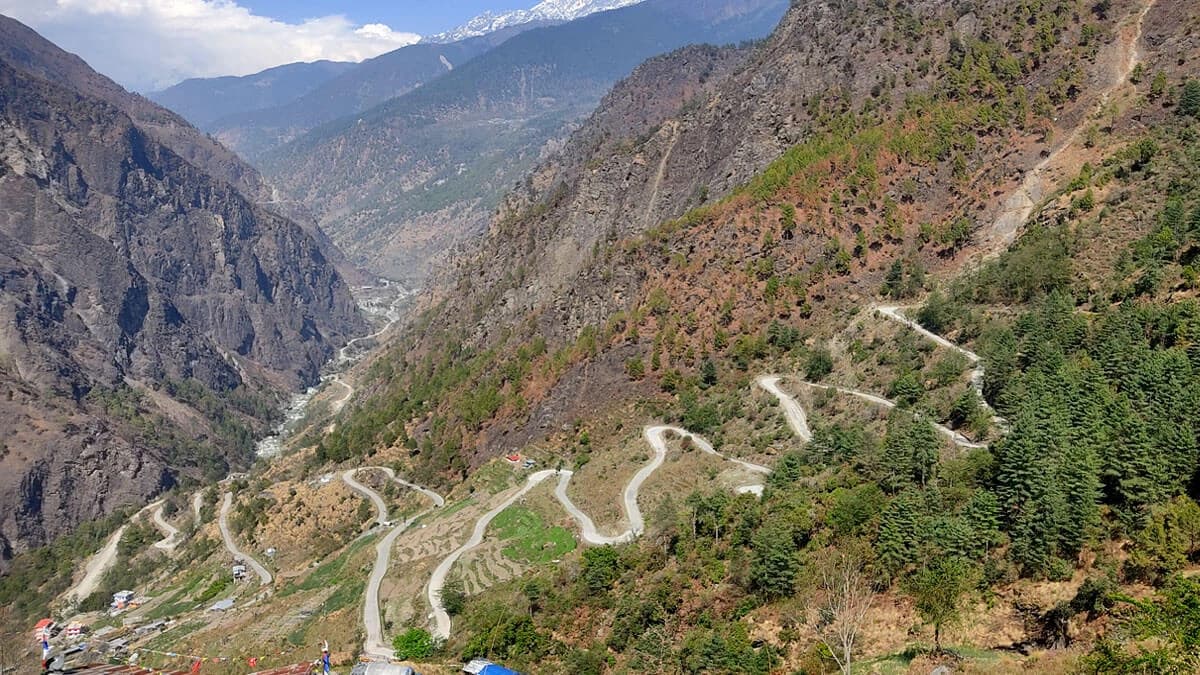
The Pasang Lhamu Highway is a mountain road narrow in sections, occasionally washed out during monsoon, and genuinely scenic in a way that sometimes makes you forget you're white-knuckling a jeep seat. Don't expect a smooth highway experience. Do expect stunning views.
By Local Bus
The most budget-friendly option is the local bus departing from Machhapokhari (also called Gongabu Bus Park) in Kathmandu. Buses to Syabrubesi run daily in the early morning, typically leaving between 6:00 and 7:00 AM.
- Departure point: Machhapokhari Bus Park, Kathmandu
- Travel duration: 7–9 hours
- Ticket cost: Approximately NPR 500–700
- Pros: Very cheap, social, gives you a real local travel experience
- Cons: Slow, crowded, stops frequently, and luggage space is tight
If you're on a tight budget and don't mind the extra time, the local bus works fine. Just book the night before or arrive early seats fill up.
By Shared Jeep
This mode of transport is probably the most popular option among trekkers. Shared jeeps depart from near Machhapokhari and fill up fast.
- Departure point: Near Machhapokhari/Gongabu area
- Travel duration: 6–7 hours
- Cost: Approximately NPR 800–1,200 per person
- Comfort: Noticeably better than the bus, though still bumpy
- Recommended for: Solo trekkers, small groups, budget travelers who want a faster ride
By Private Jeep
If you're traveling with family or a group or just want door-to-door comfort without squeezing in with strangers, a private jeep is worth the extra cost.
- Cost: NPR 8,000–14,000 per vehicle (depending on season and negotiation)
- Benefits: You set the schedule, you can stop for photos, and your gear stays with you
- Best for: Families, groups of 3–6, anyone carrying bulky trekking equipment
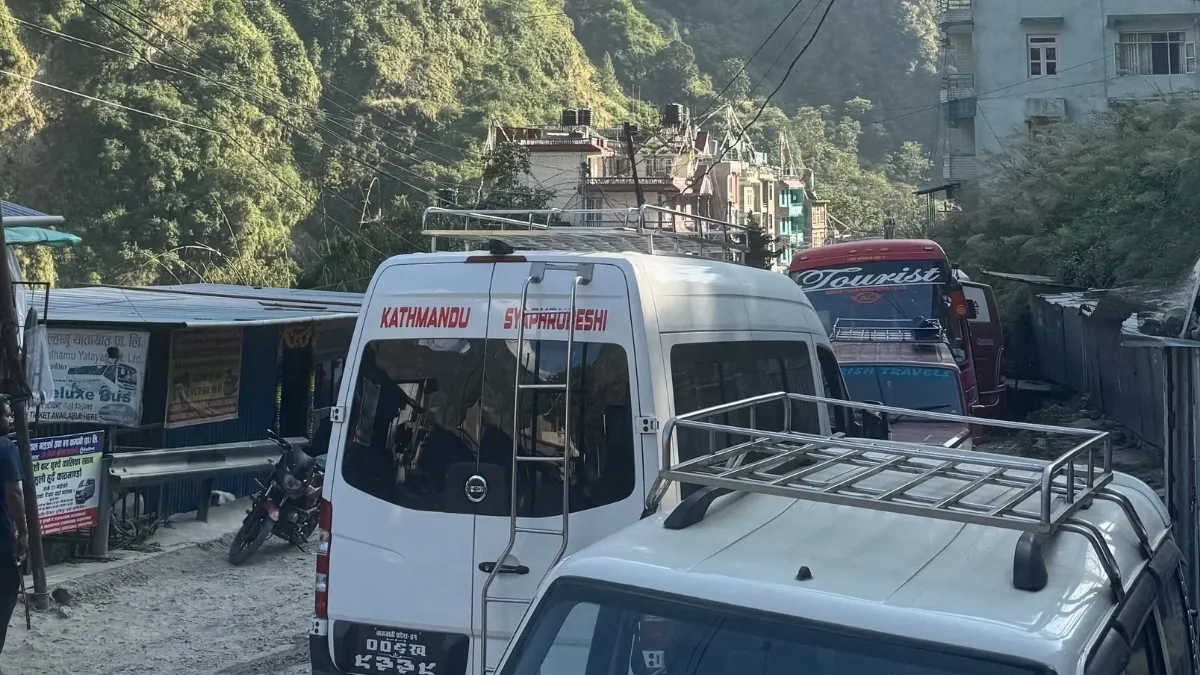
Not sure how to get to Syabrubesi? Our local trekking team can help you choose the best transportation option based on your budget, schedule, and trekking plans.
Syabrubesi Transportation Options at a Glance
Here's a quick comparison to help you decide which option suits your budget and travel style best.
|
Transport |
Duration |
Approx. Cost |
Comfort |
Recommended For |
|
Local Bus |
7–9 hours |
NPR 500–700/person |
Basic |
Budget travelers |
|
Shared Jeep |
6–7 hours |
NPR 800–1,200/person |
Moderate |
Solo/small group |
|
Private Jeep |
6–7 hours |
NPR 8,000–14,000/vehicle |
Good |
Families, groups |
Road Conditions and Travel Safety
The road is genuinely unpredictable from June through August. Monsoon landslides can block sections for hours, and occasionally they cut off roads for a day or two. If you're traveling during the monsoon, build flexibility into your schedule.
In winter (December–February), the road itself is usually fine, but early morning departures sometimes deal with frost or light snowfall on higher sections. Not dangerous, but worth knowing.
A few practical tips:
- Sit near the front or middle of vehicles to reduce motion sickness on winding roads
- Keep a light bag accessible you don't want to dig through packed luggage during a roadside stop
- The road improves near Dhunche and gets narrower again closer to Syabrubesi
Syabrubesi Weather, Climate, and Best Time to Visit
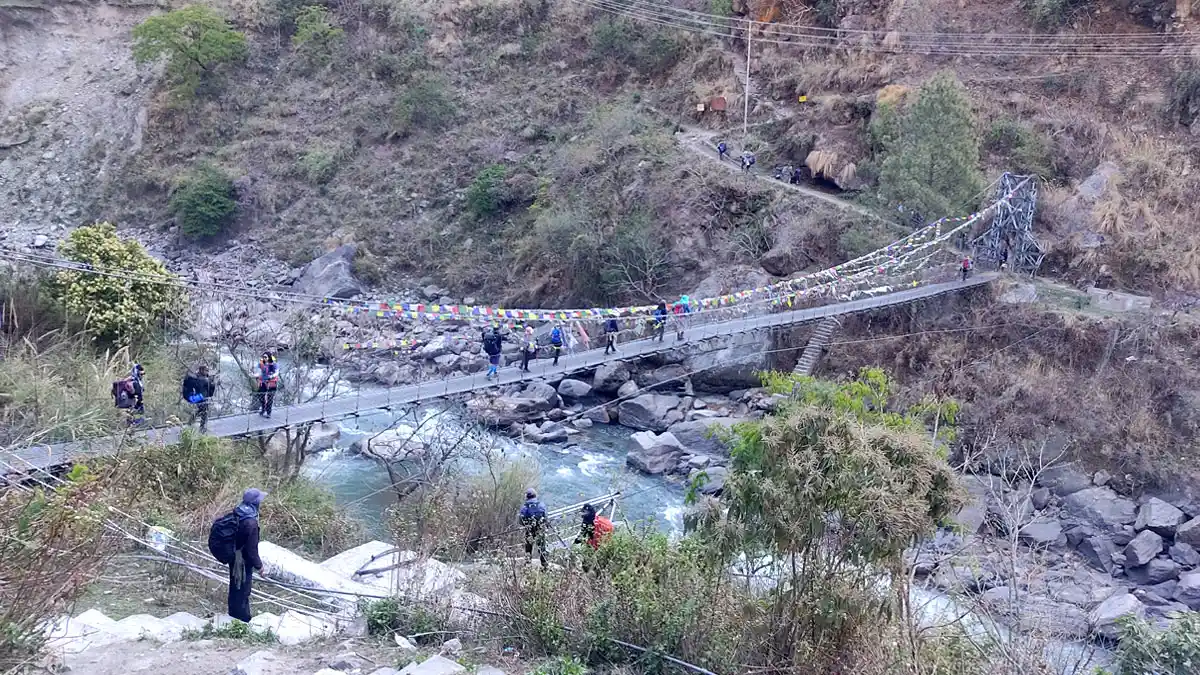
Best Season for Trekking from Syabrubesi
- Langtang Valley Trek: October–November and March–May
- Tamang Heritage Trail: October–April (avoids peak monsoon)
- Gosaikunda Trek: September–November (best), April–May (good alternative) avoid winter
Syabrubesi sits at around 1,500 meters, warm enough that it doesn't get extreme cold at the village level, but the surrounding mountain terrain means conditions change fast the moment you start climbing.
Spring (March–May)
This season is genuinely one of the best windows. Temperatures are comfortable, roughly 10–20°C, during the day, and the rhododendron forests in the lower Langtang Valley are in full bloom. Clear skies are common, mountain views are sharp, and the trails aren't too crowded yet.
Summer / Monsoon (June–August)
Rain is constant from June through mid-August. The trails get muddy, leeches appear on lower forest paths, and visibility can drop significantly. That said, the valleys turn intensely green, and waterfalls multiply. It's beautiful in a different way. Trekking is possible but harder, and you need proper rain gear throughout.
Autumn (September–November)
Peak season for a reason. Post-monsoon skies are crystal clear, mountains are stunning, and temperatures are ideal for trekking cool but not cold. October in particular is probably the single best month to be in Syabrubesi if you're starting a Langtang trek. Trails are busy but not overwhelming.
Winter (December–February)
Cold, quiet, and genuinely atmospheric. The village itself stays accessible, but higher elevations on the Langtang trail get snow. Kyanjin Gompa and beyond can see harsh conditions. For Gosaikunda, winter trekking is difficult and not recommended without proper preparation.
If you want a peaceful Syabrubesi experience without crowds and can handle the cold, winter actually has something to offer.
If you are targetting Gosaikunda, knowing Best Time For Langtang Gosaikunda Trek is important.
Geography, Rivers, and Mountain Views Around Syabrubesi
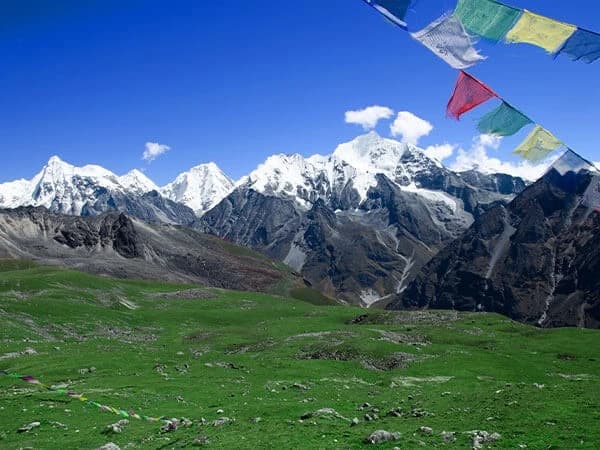
Rugged hills, rushing rivers, dense forests, and snow-capped Himalayan peaks surround Syabrubesi. Its location within the Langtang region creates a diverse landscape that combines natural beauty with rich biodiversity.
From river valleys and forested slopes to panoramic mountain views, the area offers visitors a glimpse of the stunning environment that makes Langtang one of Nepal's most popular trekking destinations.
The Confluence of Bhote Koshi and Langtang Khola
Right at the edge of the village, two rivers meet. The Bhote Koshi flows down from the Tibet border, and the Langtang Khola drains the glaciers of the Langtang Valley above. That confluence is one of the things that makes the village scenery feel dramatic even before you start climbing.
The roar of the rivers is constant. If you are staying overnight, it is the kind of sound that either helps you sleep or keeps you awake, depending on the individual.
Natural Landscape and Forests
Below Syabrubesi, the vegetation is subtropical. Above, as you gain elevation on the trek, it transitions into temperate forest dense with rhododendron, oak, and bamboo. Langtang National Park protects all of this, which is why the forests feel untouched compared to more developed trekking regions.
Mountains Visible from Syabrubesi
You won't see the biggest peaks from the village itself the valley walls block most of the high Himalayan views. But as you climb even 30–40 minutes up the trail, the mountains start revealing themselves. From the Langtang trail above the village:
- Langtang Lirung (7,227 m), the dominant peak of the region, massive and close
- Ganesh Himal range visible from various points along the lower trail
- Dorje Lakpa (6,966 m), a dramatic peak on the Nepal–Tibet border
- Langtang Himal Range the full wall of peaks backing the valley
Wildlife Found Around Syabrubesi
Langtang National Park is home to real biodiversity. The most talked-about resident is the red panda, elusive but present in the forest zones above the village. You're more likely to hear about a sighting than see one yourself, but it happens.
Himalayan tahr (large wild goats) are more commonly spotted on rocky hillsides higher up. The park also hosts leopards, deer, and a remarkable variety of birdlife if you're paying attention on the trail.
Following the recent Rasuwa flood on August 26, 2026, areas including Syabrubesi and Timure have been significantly affected, with damage to roads, settlements, and other infrastructure. If you are curious about the latest trekking situation or wondering Is It Safe to Trek in Nepal After the 2026 Rasuwa Flood?, simply contact Nepal Gateway Trekking for the latest route updates and advice on planning your trek.
Things to Do in Syabrubesi Before or After Your Trek
Most people rush through Syabrubesi to get on the trail. That's understandable, but a half-day in the village is genuinely worthwhile.
Explore Traditional Tamang Culture
The Tamang people have lived in this region for generations. Their culture has strong Tibetan influences in the architecture, the religious practices, and the food. Walk through the village slowly and you'll notice prayer walls, intricately carved wooden windows on older homes, and the general calm of a community that isn't primarily built around tourism.
Visit Local Monasteries and Prayer Wheels
There are small monasteries within and around Syabrubesi. They're simple, not heavily decorated, but atmospheric. Spin the prayer wheels, watch the monks if any are present, and take your time. No rush.
Walk Around the Village and Suspension Bridges
The suspension bridges crossing the Langtang Khola near Syabrubesi are a photo opportunity but also genuinely useful they're the crossing points for the trekking routes. The walk along the riverbank is pleasant in the mornings.
Experience Local Food and Hospitality
Teahouse owners in Syabrubesi are mostly local families. The food is honest dal bhat, Tibetan bread, thukpa noodle soup, and momos. Sit down for a meal, actually talk to the people running the kitchen, and you'll get more out of the experience than any guided tour could offer.
Visit Nearby Tatopani Hot Springs
About a 45-minute walk from Syabrubesi (also accessible on the Tamang Heritage Trail route), the Tatopani hot springs are worth the detour. After days on the trail, a soak in natural hot spring water does wonders. The springs are basic, with no resort setup, which makes them feel more authentic.
Photography and Scenic Viewpoints
The river confluence area at dawn is excellent for photography. The early morning mist in the valley, the suspension bridges, the forested hillsides it's genuinely cinematic. Bring your camera the evening before and scout the light.
Popular Trekking Routes Starting from Syabrubesi
This experience is really the core of why people come here. The Syabrubesi to Langtang Trek is the most well-known route in the region, but Syabrubesi is also the launchpad for three other major routes.
Langtang Valley Trek
The most popular route in the region and one of Nepal's best treks. Syabrubesi serves as the Langtang Valley Trek starting point. From here, the trail follows the Langtang Khola upriver through progressively stunning terrain.
Key Highlights:
- Bamboo-forested area with bamboo and rhododendron trees.
- Rimche, a small teahouse settlement beside the Langtang Khola.
- Lama Hotel Popular overnight stop in a dense forest.
- Ghodatabela is the first major viewpoint where the valley opens and mountain views emerge.
- Thangshyap Traditional settlement with beautiful alpine scenery.
- Langtang Village Historic Tamang village rebuilt after the 2015 earthquake.
- Mundu, a scenic village with traditional stone houses and yak pastures.
- Sindum, a small settlement before reaching Kyanjin.
- Kyanjin Gompa is famous for its monastery, cheese factory, and stunning views of Langtang Lirung.
Popular Side Trips from Kyanjin:
- Kyanjin Ri a viewpoint hike above the gompa, easier but rewarding
- Tserko Ri a more demanding climb to 4,984 m with panoramic views of the Langtang Himal
Tamang Heritage Trail
The Langtang Tamang Heritage Trail is less visited than Langtang, but it is genuinely special. The trail loops through Tamang villages with traditional culture largely intact.
Key Destinations:
- Gatlang, a stunning hilltop village
- Tatopani the hot springs
- Thuman
- Briddim a beautiful traditional village on the return leg
Gosaikunda Trek
A sacred lake trek at high altitude. Gosaikunda Lake sits at 4,380 m and is one of the most revered pilgrimage sites in Nepal.
Key Destinations:
- Sing Gompa (Chandanbari) cheese farm and forest setting
- Lauribina's high-altitude terrain is cold and dramatic
- Gosaikunda Lake the main destination, spiritually significant and visually extraordinary
Langtang Gosaikunda Helambu Trek
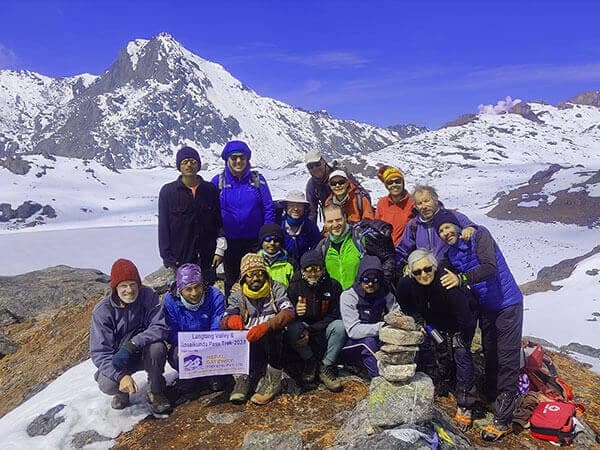
The grand circuit combines the Langtang Valley, crosses the Gosaikunda high passes, and descends through the Helambu region back toward Kathmandu. It's a serious multi-week route with proper high passes and everything in between.
Explore our Langtang Gosaikunda Lauribina Pass Trek
Accommodation, Food, and Travel Costs in Syabrubesi
As the main gateway to Langtang Valley, Syabrubesi has a good range of accommodations, restaurants, and traveler services. Whether you're looking for a budget-friendly teahouse or a comfortable lodge, the village offers practical options to suit most trekking budgets.
Types of Accommodation Available
Syabrubesi hotels range from basic teahouses to proper mid-range lodges a decent range for a village of this size. You've got:
- Teahouses' basic rooms, shared bathrooms, cheap
- Lodges slightly more structured, often with attached bathrooms
- Hotels a handful of better-quality options have opened in recent years
What to Expect from Hotels in Syabrubesi
Don't expect luxury. But you'll find clean rooms, hot showers (usually solar-powered, so morning showers tend to be better), Wi-Fi that works on good days, and charging facilities for your devices.
Most places run on Nepal Standard Time when it comes to service, things move at a relaxed pace. That's fine. Prices are modest. A basic room runs NPR 300–600. Mid-range rooms with attached bathrooms and better facilities go for NPR 800–1,500.
Local Food and Popular Dishes
The food in Syabrubesi teahouses is solid and consistent. The kitchen rotation looks roughly like this:
- Dal Bhat the default, always reliable, and often refillable
- Tibetan Bread fried flatbread, great with honey or jam
- Momos steamed dumplings, usually buff (buffalo) or vegetable
- Thukpa / Noodles warming after a cold day on the road
- Breakfast options porridge, eggs, toast, pancakes
The food gets simpler and more expensive the higher you go on the trail, so eat well in Syabrubesi while prices are reasonable.
Permits, Fees, and Trekking Regulations
You can't just show up and walk into Langtang National Park. You need proper permits, and it's easier to sort these in Kathmandu before you leave.
Langtang National Park Entry Permit
Required for all trekkers entering the park. This covers the Langtang Valley, Gosaikunda, Tamang Heritage Trail, and connecting routes.
TIMS Card Requirements
The Trekkers' Information Management System (TIMS) card is a trekker registration document. As of recent regulations, TIMS requirements have been updated. Confirm the current status before your trip, as rules for solo trekking and guided trekking differ.
Guide and Porter Regulations
Nepal's trekking regulations have evolved. Currently, independent solo trekking requires a licensed guide. This rule applies to areas within Langtang National Park. Check the most current Nepal Tourism Board guidelines, as requirements can change by season and area.
Recommended Read: Langtang Gosaikunda Trek Permits
Essential Travel Tips Before Leaving Syabrubesi
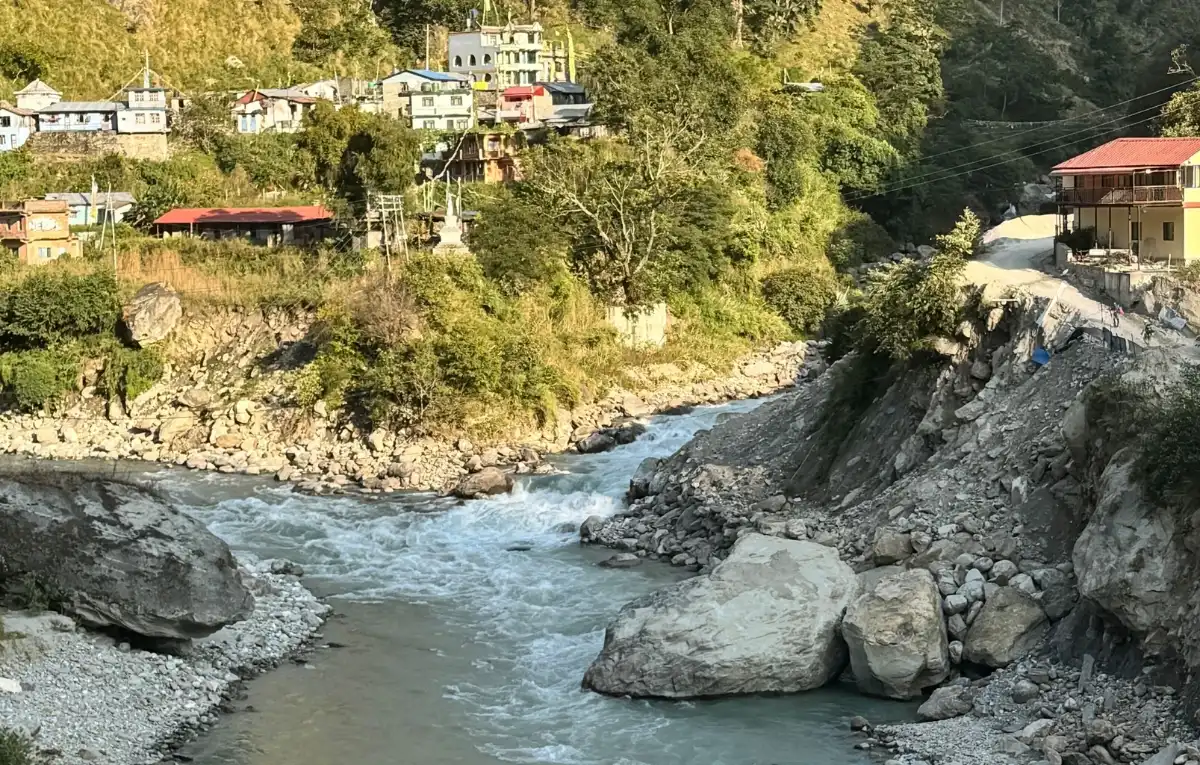
Syabrubesi is the last major stop before entering the higher reaches of the Langtang region. Taking time to organize your cash, gear, communication, and travel plans here will help ensure a safer and more enjoyable trek.
ATM and Cash Availability
There is an ATM in Syabrubesi, but don't rely on it. It's occasionally out of service or out of cash. Withdraw sufficient Nepali rupees in Kathmandu before leaving. Once you pass Syabrubesi on the trail, you will be in a cash-only economy.
Internet and Mobile Network Coverage
NTC (Nepal Telecom) has the strongest coverage in Syabrubesi and along the lower Langtang trail. Ncell works in the village but fades faster as you gain elevation. Most teahouses in the village have Wi-Fi, though speeds are basic. Don't plan to stream anything.
Emergency and Health Facilities in Syabrubesi
Syabrubesi has a basic health post. For any serious medical issue, evacuation to Kathmandu is the realistic option. If you're trekking above 3,500 m, know the symptoms of altitude sickness and don't ignore them.
Shopping and Last-Minute Supplies
You can buy trekking snacks, water, basic medications, SIM cards, and last-minute gear items (gloves, trekking poles, etc.) in Syabrubesi's small shops. Prices are higher than Kathmandu but lower than anything you'll find on the trail above. Stock up here.
Packing Essentials for Langtang Treks
- Layered clothing system (the temperature swings between village and high altitude are significant)
- Rain gear regardless of season
- Quality trekking boots, broken in before arrival
- Personal first aid kit including altitude sickness medication (Diamox)
- Portable power bank
- Cash in small denominations
- Head torch with spare batteries
Safety Tips for First-Time Visitors
- Register your trekking plan with the local checkpoint at the start of the trail
- Tell your accommodation host your planned daily route
- Don't rush acclimatization the altitude gain from Syabrubesi to Kyanjin Gompa is significant
- Trust local guides over generic travel apps when conditions change
Why Syabrubesi Is More Than Just a Trekking Trailhead?
Many travelers see Syabrubesi as the starting point of the Langtang Valley Trek, but the village offers much more than that. It is home to a vibrant Tamang community, rich cultural traditions, and a growing tourism economy that still retains its authentic mountain character.
Thanks to its strategic location near the Rasuwagadhi border and Langtang National Park, Syabrubesi plays an important role in both regional tourism and local livelihoods. Its blend of culture, history, and natural beauty makes it a destination worth exploring, not just passing through.
Final Thoughts
Syabrubesi is one of those places that works on you slowly. You arrive weary from the road, check into a teahouse, eat a decent dal bhat, and fall asleep to the sound of the river.
By morning, with the mist clearing off the valley walls and the smell of fresh mountain air coming through the window, you start to understand why trekkers keep coming back to the Langtang region.
It's not polished. The road is rough, the infrastructure is basic, and nothing goes on exactly the schedule it's supposed to. But that's kind of the point. Syabrubesi offers a real Himalayan experience the actual thing, not a curated version of it.
Ready to explore the Langtang region from Syabrubesi? Contact Nepal Gateway Trekking to create a customized itinerary with expert guides, transportation, and local support.
FAQs
What is the altitude of Syabrubesi?
Syabrubesi sits at 1,503 meters (4,930 feet) above sea level. It's relatively low compared to the high-altitude destinations on the Langtang trail, so most trekkers don't experience altitude issues here.
How far is Syabrubesi from Kathmandu?
The distance by road is approximately 122 km from Kathmandu. Due to mountain road conditions, this translates to a travel time of 6–9 hours.
How long does it take to reach Syabrubesi?
By local bus, expect 7–9 hours. By shared or private jeep, the journey typically takes 6–7 hours under optimal road conditions.
Do I need permits to trek from Syabrubesi?
Yes. You need a Langtang National Park Entry Permit and a TIMS card at minimum. If you're trekking independently in restricted zones, a licensed guide may also be required. Confirm current regulations before departure.
Are there ATMs in Syabrubesi?
There is an ATM in Syabrubesi, but it's unreliable. Always carry enough Nepali rupees from Kathmandu to cover your full trek, including emergency expenses.
Is a mobile network available in Syabrubesi?
Yes. NTC coverage is reliable in the village. Ncell also works but with a weaker signal. Both networks fade as you gain altitude on the trail above Syabrubesi.
Is Syabrubesi safe for tourists?
Yes, Syabrubesi is generally safe for tourists. Like any mountain destination, standard common-sense precautions apply stay aware of weather, keep emergency contacts informed of your plans, and be cautious on the road during monsoon season.
What makes Syabrubesi famous?
Syabrubesi is famous as the primary starting point for the Langtang Valley Trek, one of Nepal's most popular trekking routes. It's also known for its Tamang culture, its position as a Nepal–Tibet border gateway, and its access to multiple trekking routes in the Langtang region.
Is Syabrubesi worth visiting even if I am not trekking?
Yes. The village has its own cultural appeal Tamang monasteries, traditional architecture, the river confluence, nearby hot springs at Tatopani, and a genuine mountain atmosphere. Even without trekking, spending a day or two here is worthwhile.