At 4,850 meters, Broad Peak Base Camp sits close enough to the mountain that climbers can watch the route through binoculars. On the morning of 30 July 2026, whoever was watching saw something no one on that mountain wanted to see: a wall of snow releasing across the corridor between Camp 2 and Camp 3, carrying ten climbers with it.
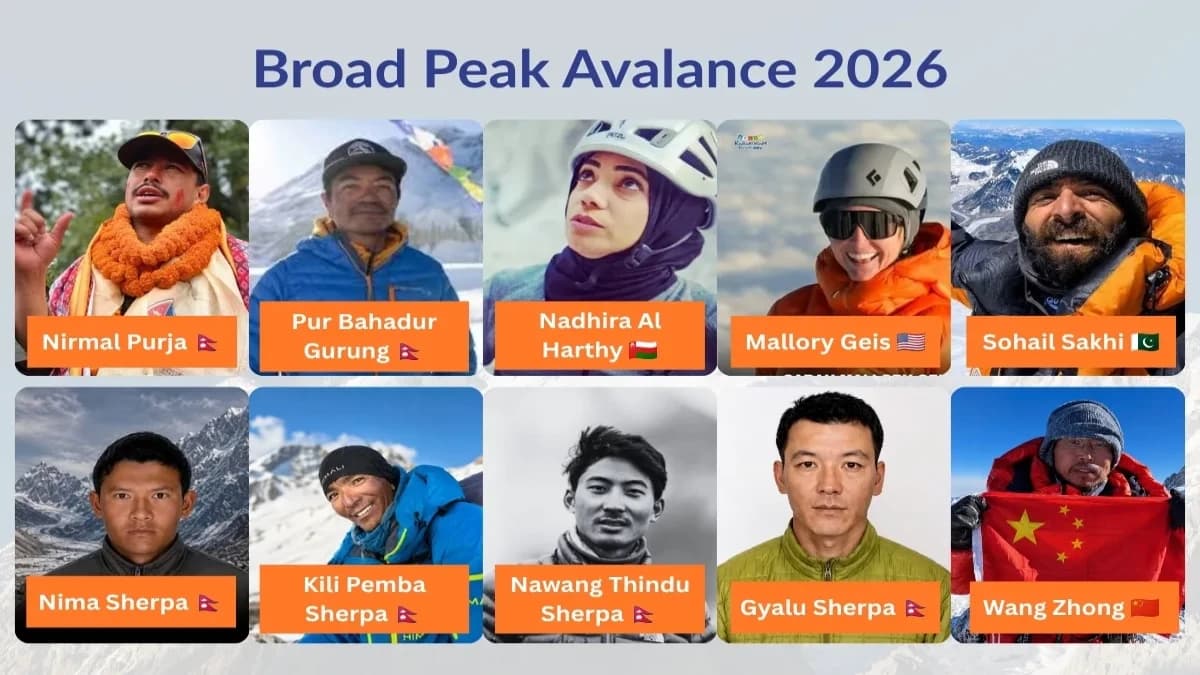
Within days, the world learned who some of those climbers were. Nirmal "Nims" Purja, the Nepali-British mountaineer who had redefined what was thought possible at extreme altitude, was among them. So were guides who had stood on the saltitude was winter, a client on her first eight-thousander, and some of the most respected high-altitude professionals working in the Himalaya and Karakoram today.
By 1 August 2026, the confirmation came: all ten were dead. It stands as one of the deadliest single accidents in Karakoram mountaineering history and one of the most closely followed because of exactly who was lost.
This is the complete, fact-checked account of what happened: the timeline, the rescue effort, who died, and why a mountain often dismissed as "K2's easier neighbor" turned lethal in under a minute.
Key Takeaways
- An avalanche struck Broad Peak's normal route at ~6,600 m on 30 July 2026, around 9:30 a.m. local time.
- All 10 climbers caught in the slide died, including Nirmal Purja, one of the most decorated mountaineers alive.
- Victims came from Nepal, the UK, the US, Oman, Pakistan, and China, high-altitude workers, and clients.
- Pakistan's altitude-limited helicopter access, unstable snow, and continued avalanche risk hampered rescue operations.
- The tragedy has reignited debate over risk management, rescue infrastructure, and the working conditions of Nepali and Pakistani high-altitude guides.
Quick Facts
|
Date |
30 July 2026, ~9:30 a.m. local time |
|
Location |
Broad Peak, Karakoram Range, Gilgit-Baltistan, Pakistan |
|
Avalanche site |
Route between Camp 2 and Camp 3, ~6,600 m (21,700 ft) |
|
Climbers caught |
10, from multiple expedition teams |
|
Confirmed deaths |
10 of 10 confirmed 1 August 2026 |
|
Highest-profile victim |
Nirmal Purja, 43 years old (Nimsdai) |
|
Coordinating body |
Alpine Club of Pakistan |
Where Is Broad Peak Located?
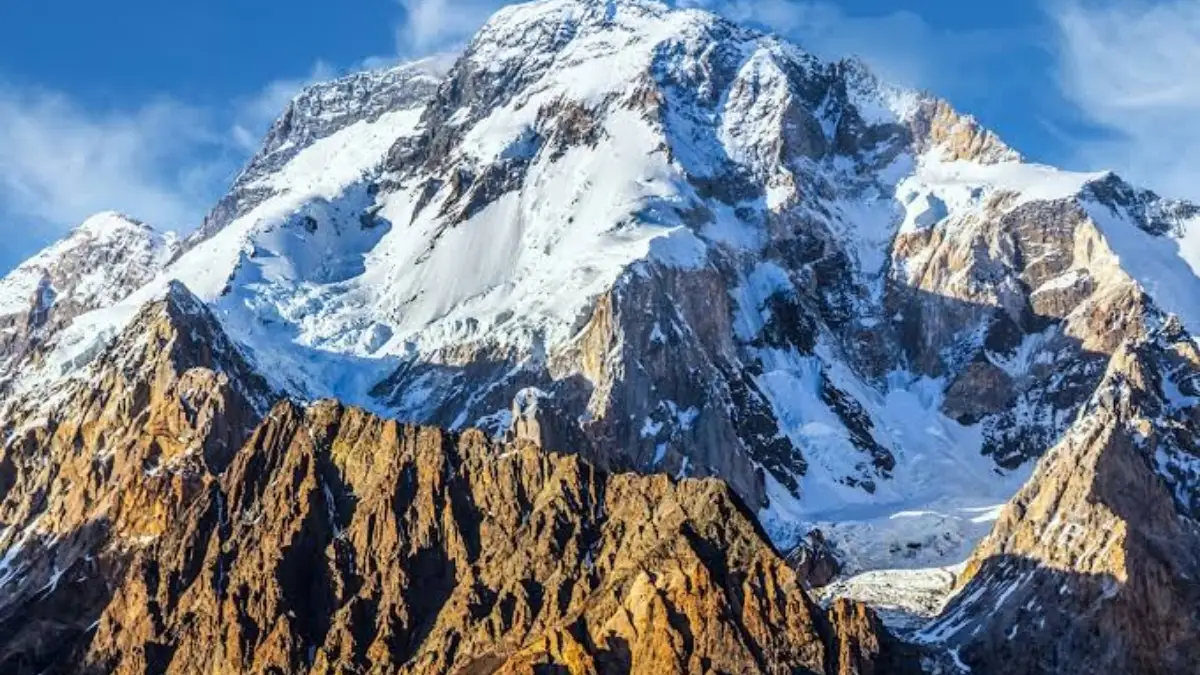
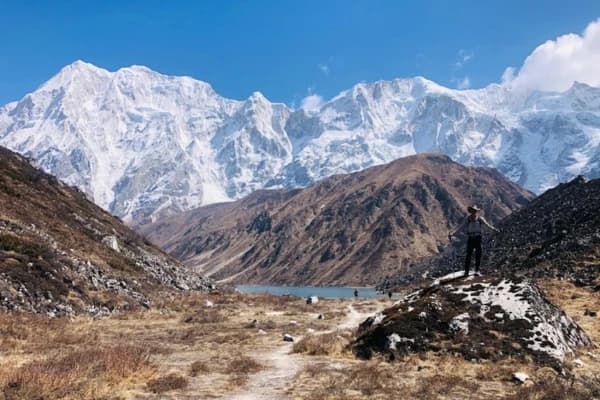
Broad Peak rises to 8,051 meters (26,414 ft) on the western edge of the Baltoro Glacier in Pakistan's Gilgit-Baltistan region, roughly 8 kilometers from K2. Both mountains share the same multi-day approach: climbers fly or drive to Skardu, trek in from the village of Askole, and cross the Baltoro Glacier to reach Broad Peak Base Camp at about 4,850 meters.
That proximity to K2 has shaped Broad Peak's reputation as the more approachable of the two, the 12th-highest mountain on Earth, but one many climbers treat as a warm-up or a secondary objective. That reputation has always been a little misleading, and the events of 30 July made the gap between reputation and reality impossible to ignore.
Broad Peak vs. K2: How the Two Compare
|
Broad Peak |
K2 |
|
|
Height |
8,051 m (26,414 ft) |
8,611 m (28,251 ft) |
|
World ranking |
12th highest |
2nd highest |
|
Technical difficulty |
Moderate long snow ridge, no major rock/ice pitches on the normal route |
Very high, steep, technical, exposed |
|
Primary objective hazard |
Avalanche-prone slopes, especially Camp 2–Camp 3 |
Rockfall, serac collapse, extreme exposure |
|
First ascent |
1957 (Austrian expedition) |
1954 (Italian expedition) |
|
First winter ascent |
1988 (Polish-led) |
2021 (all-Nepali team, including Purja) |
Broad Peak being "less technical" than K2 is true in a narrow sense there's no equivalent of K2's Bottleneck. But less technical does not mean less dangerous. It means the danger comes from a different source: not the climbing itself, but the snowpack underneath it.
Timeline: How the 2026 Broad Peak Avalanche Disaster Unfolded
- Days before mid-to-late July 2026: A major wind storm hit the region on 18 July. Climbers who had already left the mountain that season reported unusually high winds and elevated humidity, conditions that typically load fresh snow onto steep slopes and raise avalanche risk.
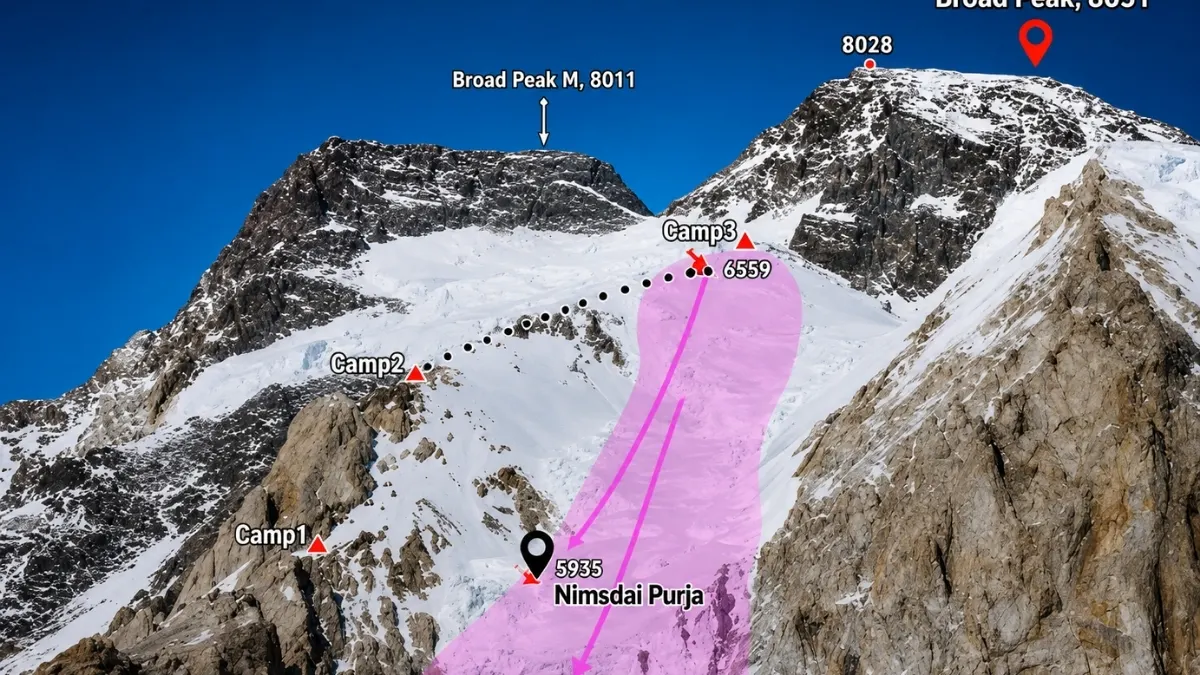
- 9:30 a.m., 30 July 2026: A large avalanche released on the route between Camp 2 and Camp 3, at roughly 6,600–6,700 meters, on terrain angled between 30 and 45 degrees, the range in which slab avalanches are most likely to occur. Ten climbers moving through that corridor toward a summit push were caught and carried down the mountain.
- Within the hour: Satellite GPS trackers recorded the scale of the fall. Purja's device showed a drop of roughly 800 meters. Nadhira Al Harthy's tracker registered a final position more than 1,700 meters below the avalanche's starting point, evidence of how far the debris field carried some climbers, with several coming to rest near Broad Peak Base Camp itself.
- 31 July: Two helicopters began aerial searches, working alongside ground teams from Camp 1. Drones surveyed the debris field but couldn't confirm identities from the air. Three victims, Nadhira Al Harthy, Pur Bahadur Gurung, and Mallory Geis, were formally identified and recovered from the base of the avalanche zone.
- 1 August 2026: EliteExped, Purja's own company, confirmed on social media what searchers had feared: all ten climbers, including Purja, had died.
Who Died on Broad Peak?
|
Name |
Nationality |
Role / Notable Background |
|
Nirmal Purja ("Nimsdai") |
Nepal |
Expedition leader, EliteExped; fastest ascent of all 14 eight-thousanders (2019) |
|
Pur Bahadur Gurung ("Yukta") |
Nepal |
IFMGA-certified guide |
|
Nima Sherpa |
Nepal |
High-altitude guide |
|
Nadhira Al Harthy |
Oman |
Client: first Omani woman to summit Everest (2019) |
|
Kili Pemba Sherpa ("Kilu") |
Nepal |
Guide; member of the 2021 K2 first-winter-ascent team |
|
Nawang Thindu Sherpa |
Nepal |
High-altitude guide |
|
Gyalu Sherpa |
Nepal |
High-altitude guide |
|
Sohail Sakhi |
Pakistan |
Karakoram guide, leading client Mallory Geis |
|
Mallory Geis |
United States |
Client, on her first eight-thousander expedition |
|
Wang Zhong |
China |
Climber |
Six of the ten who died were Nepali high-altitude workers, the guides, route-fixers, and load-carriers whose labor makes commercial 8,000-meter expeditions possible and who are consistently among the highest-risk, lowest-recognized people on any mountain.
Kili Pemba Sherpa and Purja both stood on K2's summit together during the historic 2021 winter ascent, a climb that many considered mountaineering's last great unsolved problem before that team completed it.
The Rescue Effort and Why It Was So Hard
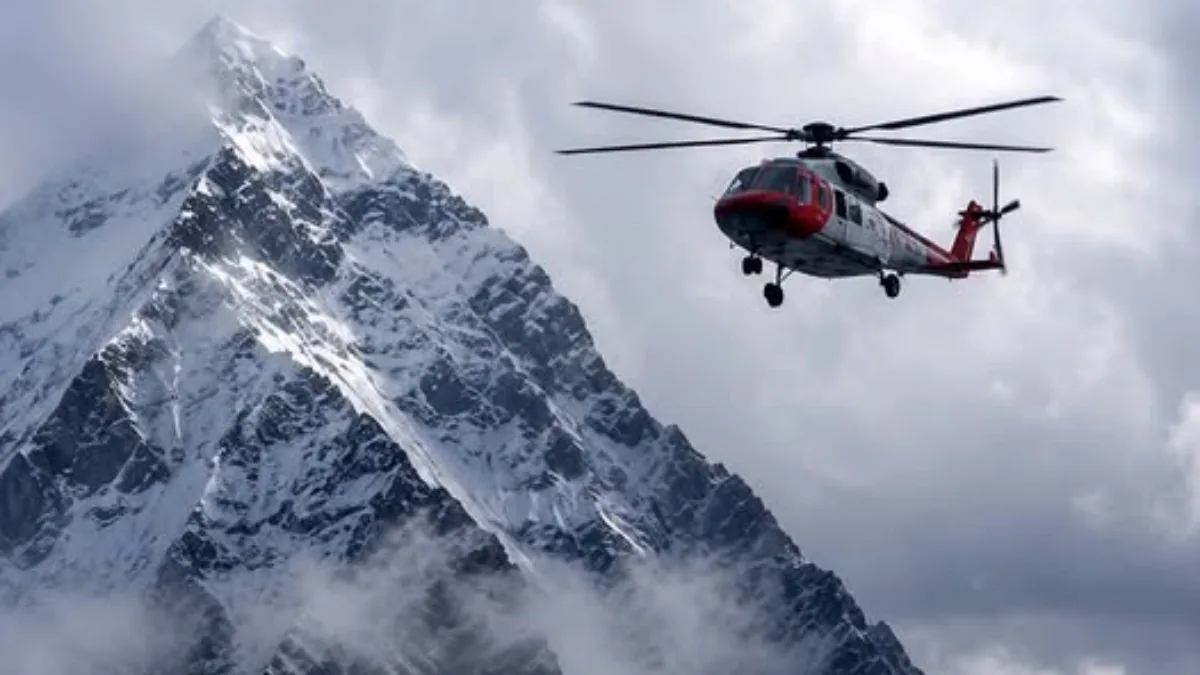
Search and rescue on Broad Peak runs into a structural problem that doesn't exist on the Nepal side of the Himalaya: in Gilgit-Baltistan, all aerial rescue is controlled by Askari Aviation, a Pakistan military aviation subsidiary. Independent commercial helicopter operators, the backbone of rapid rescue in Nepal's Everest region, cannot operate here.
Askari's helicopters can typically land safely only up to roughly 5,000 meters. The climbers were located between 5,800 and 6,600 meters well above that ceiling. That meant rescuers had two options, both slow and dangerous: a high-risk long-line hoist while hovering near 6,000 meters, a ground team dropped at 5,000 meters and climbed upward, a process that can take days rather than hours.
The Alpine Club of Pakistan coordinated the response. EliteExped flew in additional Nepali climbers to help search. Most expedition teams on neighboring K2 abandoned their summit attempts to assist a reflection of how tightly connected the climbing community on these two mountains is, even between competing operators.
Who Was Nirmal "Nimsdai" Purja?
Born in 1983 in Dana, a village in Nepal's Myagdi District, Purja grew up in a family with little money; by his account, he didn't own a pair of flip-flops as a child. He joined the Brigade of Gurkhas in 2003 and, in 2009, became the first Gurkha ever selected into the UK's elite Special Boat Service, where he served as a cold-weather warfare specialist for a total of 16 years in the British Armed Forces before leaving in 2018 to climb full-time.
He became a global name in 2019 with "Project Possible," summiting all 14 of the world's 8,000-meter peaks in just six months and six days, breaking the previous record by more than seven years. Netflix later turned the achievement into the documentary 14 Peaks: Nothing Is Impossible.
In January 2021, Purja was part of the ten-person, all-Nepali team that completed the first winter ascent of K2, a summit that had defeated expeditions for over three decades. By 2026 he had climbed more 8,000-meter summits than anyone in history, including a 2024 record for the fastest ascent of all 14 eight-thousanders without supplemental oxygen.
Broad Peak wasn't originally on his 2026 summer plan. He had traveled to Pakistan for Gasherbrum II, which he summited without bottled oxygen on 21 July 2026, his 57th eight-thousand-summit.
In a social media post before setting out for Broad Peak, he explained the last-minute decision: completing it would leave only Cho Oyu before he became the first person in history to climb all 14 eight-thousanders twice, without supplemental oxygen. "Opportunities don't scream," he wrote. "They whisper to those already working in silence. " He never reached that final summit.
You might be interested: Famous Nepali Mountaineers
Why Broad Peak Turned Deadly?
Three factors combined on 30 July 2026, and they're the same three factors that make Broad Peak dangerous every season:
- Avalanche-prone terrain at the wrong angle: The Camp 2–Camp 3 corridor sits on slopes between 30 and 45 degrees, precisely the range where wind-loaded snow is most likely to fail as a slab avalanche. It's steep enough to accumulate dangerous stress, but not so steep that snow sloughs off harmlessly before it builds up.
- A destabilized snowpack: The wind storm on 18 July and the humid conditions that followed created the precise pattern that builds dense slabs on top of weaker layers, a textbook setup for a large-scale release once triggered, whether by wind, temperature change, or simply the weight of a ten-person team moving across the slope.
- Altitude that punishes every mistake: Above 8,000 meters, the body operates on roughly a third of the oxygen available at sea level. Judgment slows, fatigue compounds, and self-rescue, the only realistic option in the minutes immediately after an accident at this altitude, becomes exponentially harder.
Broad Peak has seen fatal avalanches before, including a serac collapse in 2013 that killed three climbers. The 2026 accident is the deadliest in the mountain's modern climbing history.
International Tributes Pour In for Nirmal Purja and Fallen Climbers
Tributes arrived from across the mountaineering world and well beyond it. William, Prince of Wales, called Purja "one of the world's greatest mountaineers" and said his thoughts were with the families of everyone lost. UK Defence Secretary Wes Streeting described him as "an inspirational man" whose military service and mountaineering achievements were "known the world over."
In Nepal, Prime Minister Balendra Shah said the deaths of six Nepali climbers and four foreign climbers, including Purja, had "shocked us," adding that "the history of their courage, dedication, and contributions will always remain inspiring."
Purja's brother, Kamal, wrote that the family was heartbroken but remained "incredibly proud" of him.
Naila Kiani of the Alpine Club of Pakistan, who had climbed under Purja's leadership on previous expeditions, described him simply as "a well-experienced and fearless climber" and said the organization had feared the worst almost from the moment the search began.
What This Means for High-Altitude Climbing and Anyone Planning a Trek
Every major accident on an 8,000-meter peak reopens the same question inside the climbing community: how much of this risk can genuinely be managed, and how much simply has to be accepted as the price of the terrain? What makes the Broad Peak avalanche so difficult to sit with is that it didn't happen to an underprepared team. It happened to climbers who included first-winter-ascensionists of K2, record-holding speed climbers, and guides with decades of Karakoram experience between them, and the mountain gave almost no warning.
For anyone planning their own Himalaya or Karakoram trip even a trek nowhere near an 8,000-meter summit push the accident is a useful reminder of what separates managed risk from unmanaged risk: realistic acclimatization schedules, operators who actively track snowpack and weather windows rather than fixed departure dates, and guides with verified high-altitude rescue training. None of that removes objective danger at extreme altitude. It's still the difference that matters most when conditions turn.
Final Thoughts
The Broad Peak avalanche of 2026 is a heartbreaking reminder that even the world's most accomplished climbers are never beyond the reach of nature.
The loss of Nirmal Purja and nine other climbers has a lasting impact on the global mountaineering community while renewing conversations about avalanche forecasting, rescue capabilities, and the safety of high-altitude expeditions.
Their courage, skill, and dedication to climbing will keep motivating future generations, and their legacy will be remembered every time climbers look toward the peaks of the Karakoram.
To experience the majesty of the mountains safely and responsibly, Nepal Gateway Trekking offers expertly guided treks designed to let you take in the breathtaking scenery of the Himalayas from the secure, managed side of adventure. Contact us today to book your trek.
Frequently Asked Questions
What caused the Broad Peak avalanche?
Investigators point to a slab avalanche triggered by wind-loaded snow on steep terrain, following a period of storms and elevated humidity across the Karakoram in the weeks before 30 July 2026. Precise triggering mechanics on remote, high-altitude slopes are rarely established with full certainty after the fact.
How many people died in the Broad Peak avalanche?
All ten climbers caught in the avalanche died. Three victims were identified and recovered by 31 July; the deaths of the remaining seven, including Nirmal Purja, were confirmed by EliteExped on 1 August 2026.
Was Nirmal Purja killed in the avalanche?
Yes. Purja led the EliteExped team when the slide caught him, and he was one of the ten climbers confirmed dead.
Where did the avalanche occur?
The avalanche occurred on Broad Peak's normal route, on the section between Camp 2 and Camp 3, at approximately 6,600 meters (21,700 ft).
Who else died alongside Nirmal Purja?
Pur Bahadur Gurung, Nima Sherpa, Nadhira Al Harthy, Kili Pemba Sherpa, Nawang Thindu Sherpa, Gyalu Sherpa, Sohail Sakhi, Mallory Geis, and Wang Zhong.
Is Broad Peak more dangerous than K2?
K2 is generally considered more technically demanding, with steeper, more exposed climbing. Broad Peak's danger comes from a different source: avalanche-prone slopes on its normal route, extreme altitude, and limited rescue access above roughly 5,000 meters. Both require extensive high-altitude experience and have proven fatal to highly experienced teams.
How high is Broad Peak, and where is it located?
8,051 meters (26,414 ft), making it the 12th-highest mountain in the world. It sits in Pakistan's Gilgit-Baltistan region, in the Karakoram range, about 8 km from K2.
Why did rescue operations take so long?
Helicopter access in this part of Pakistan is limited to roughly 5,000 meters, well below where the climbers were located. Rescuers had to rely on high-risk hoist extractions or slow ground ascents, both of which take far longer than helicopter rescue at lower altitudes.