High Altitude Trek Preparation at a Glance
- Train for eight to twelve weeks with cardio, leg strength, and long hikes in your real boots and daypack.
- See your doctor before you start training.
- Choose a route with a gradual ascent and rest days, and keep the rise in your sleeping altitude to about 500 metres (about 1,600 feet) a night above 3,000 metres (about 9,800 feet).
- Drink and eat steadily, and skip alcohol early on.
- Tell your guide about any headache, nausea, or dizziness straight away, and never go higher with symptoms.
- Descend immediately for confusion, stumbling, or breathlessness at rest.
- Pack for cold and sun, and confirm your insurance covers your maximum altitude and helicopter evacuation.
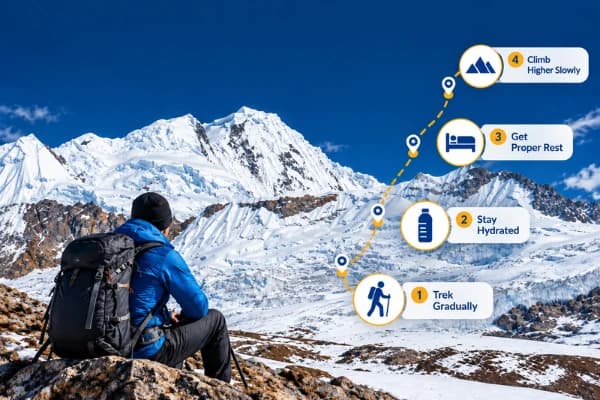
To prepare for trekking at high altitudes, train your cardio and legs for eight to twelve weeks, ascend slowly with rest days, drink and eat well, and pack for cold and sun. Tell your guide about any headache or nausea straight away.
Thin air slows everyone down, fit or not. The trekkers who struggle most are rarely the least fit. They are usually the ones who rushed their plan, climbed too fast, or kept quiet about a headache.
This guide shows how to prepare for trekking at high altitudes, step by step. A high altitude trek for beginners is very doable with the right plan, whether you are heading to the Himalayas, the Andes, or Kilimanjaro.
High Altitude Trekking Preparation: What to Do, Step by Step
Start preparing at least eight to twelve weeks before you fly. Work through these steps in order, because each one makes the next easier.
Step 1: Get a Medical Check-Up Before You Start Training
See your doctor before you change anything else. Heart, lung, blood, and other chronic conditions can behave differently in thin air.
- Bring your itinerary, including the highest point and the nights you will sleep above 3,000 metres (about 9,800 feet).
- Bring a list of your current medicines.
- Ask whether Diamox makes sense for you.
Step 2: Build Cardio Fitness and Leg Strength Early
Start early, and build up gradually. A trek is not one hard day. It is a week or more of steady effort, so train for that.
- Do cardio three to four times a week, such as hill walking, cycling, or stair climbing, at a pace where you can still talk.
- Do strength work twice a week, with squats, lunges, and step-ups for your legs.
- Add planks and core work so a loaded daypack doesn’t wear you out by afternoon.
Step 3: Practise Long Hikes With Your Real Boots and Daypack
Spend your weekends on real trails with real gear. Gym fitness doesn’t toughen your feet or teach you how to pace yourself.
- Build one long hike a week until it matches your longest trekking day.
- Wear your trek boots and carry a loaded daypack, so blisters and sore spots show up early.
- Ease off in the final week so your body can recover.
Step 4: Choose an Itinerary With a Gradual Ascent and Rest Days
Pick a route that climbs slowly. A fast itinerary with no spare days is a risky setup for a first-timer.
- Above 3,000 metres (about 9,800 feet), raise your sleeping altitude by no more than about 500 metres (about 1,600 feet) a night.
- Add a rest day roughly every 1,000 metres (about 3,300 feet) of gain.
- Count the days before you book, and choose the longer option when you can. Classic routes like the Everest Base Camp Trek or remote journeys such as the Upper Dolpo Trek explicitly schedule acclimatization days to let your body adjust naturally to higher elevations.
Step 5: Acclimatize With “Climb High, Sleep Low”
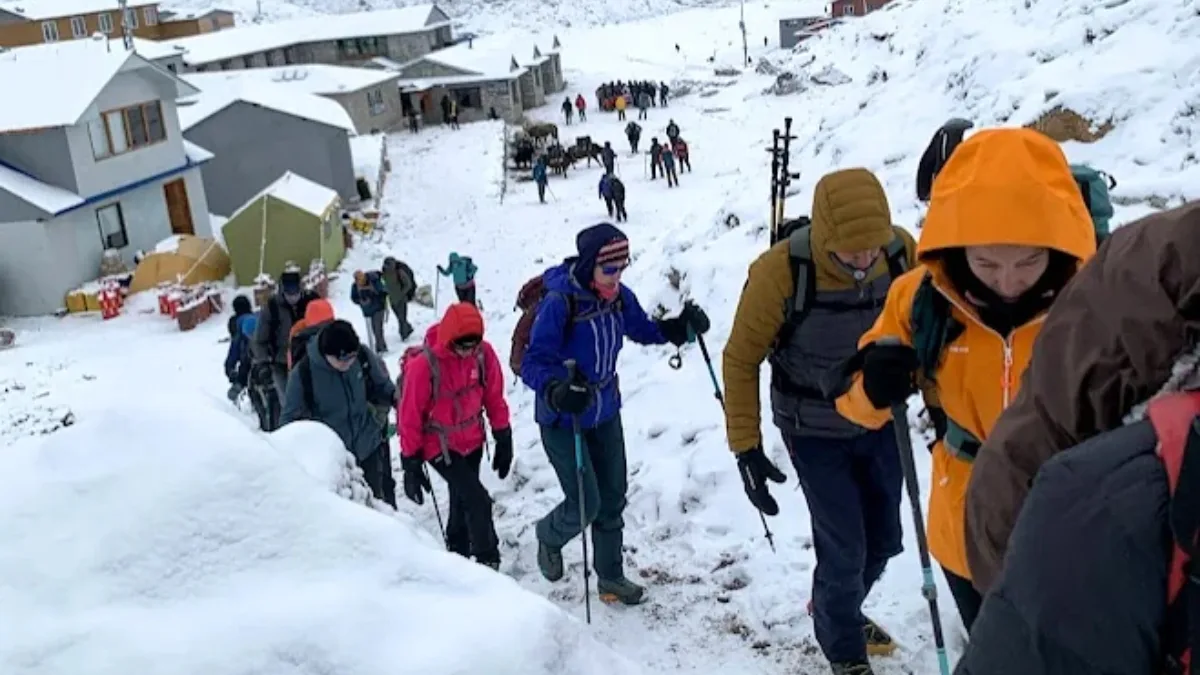
Walk high during the day, then sleep low. Your body gets a dose of thin air without a long, broken night at the top. Your sleeping altitude should still creep up gradually from one night to the next.
- On a rest day, hike 300 to 500 metres (about 1,000 to 1,600 feet) above your lodge, then return down for the night.
- Never skip planned acclimatization days, even when you feel strong.
- Don’t race ahead early, because the fastest walker on day three often struggles by day five.
Step 6: Build Hydration and Eating Habits Early
Drink steadily, and eat even when you aren’t hungry. Dry air and fast breathing drain water, and dehydration can make altitude symptoms worse.
- Practice during training: carry water on long hikes and snack on the move, so it feels natural on the trail.
- Drink regularly throughout the day to replace fluids lost through breathing and physical activity.
- Avoid forcing yourself to drink excessive amounts of water.
- Eat regular meals and maintain your energy levels.
- Choose easy carbohydrates such as rice, pasta, and porridge.
- Skip alcohol, especially in the first couple of days up high.
Step 7: Learn the Warning Signs of Altitude Sickness
Altitude sickness is the main problem in high altitude treks. Treat a headache as a signal, not a nuisance. Knowing the warning symptoms of altitude sickness early keeps small problems small.
- Stop and rest if you have a headache with nausea, dizziness, or unusual tiredness, and don’t go higher until it clears.
- Descend and get help for confusion, loss of balance, or breathlessness at rest.
- Tell your guide straight away if something feels off, however small.
Step 8: Pack Smart and Sort Insurance, Permits, and a Guide
Sort your gear and paperwork before the final week. Last-minute gaps in either can derail a trek.
- Pack smart for changing conditions: Pack layers, broken-in boots, sun protection, and a basic first aid kit.
- Review official safety protocols: Check high-altitude safety guidelines on the Nepal Tourism Board Mountain Safety Guide to familiarize yourself with regional emergency advice and altitude precautions.
- Verify coverage and logistics: Confirm your insurance covers your maximum altitude and helicopter evacuation, and check what permits your route needs.
- Choose qualified local support: Hire a licensed guide for your first high trek, someone who can spot early signs of altitude illness.
Whether you are tackling classic trekking routes or overland journeys like the Kailash Manasarovar Overland Tour, working with experienced local operators ensures your itinerary prioritizes safety and proper acclimatization.
Need help ticking off the guide, permits, and itinerary items? Nepal Gateway Trekking plans treks with gradual ascents, rest days, and experienced local guides built in.
How to Train for High Altitude Trekking: A Week-by-Week Plan
Most beginners need eight to twelve weeks to train for a high altitude trek, while people who already exercise regularly can manage with eight weeks of focused work. Aim for steady, repeatable effort, not hard one-off sessions, because that is what your body needs for trekking at height.
|
Weeks |
Focus |
Sessions per week |
|
1 to 4 |
Build the habit with easy cardio, walking, and basic strength work (squats, lunges, and step-ups) |
3 to 4 |
|
5 to 8 |
Add hills, longer weekend hikes, and loaded daypack sessions |
4 |
|
9 to 11 |
Peak with back-to-back long days to copy trek fatigue |
4 |
|
Week 12 (final week) |
Taper with light walks, stretching, and plenty of rest |
2 to 3 short sessions |
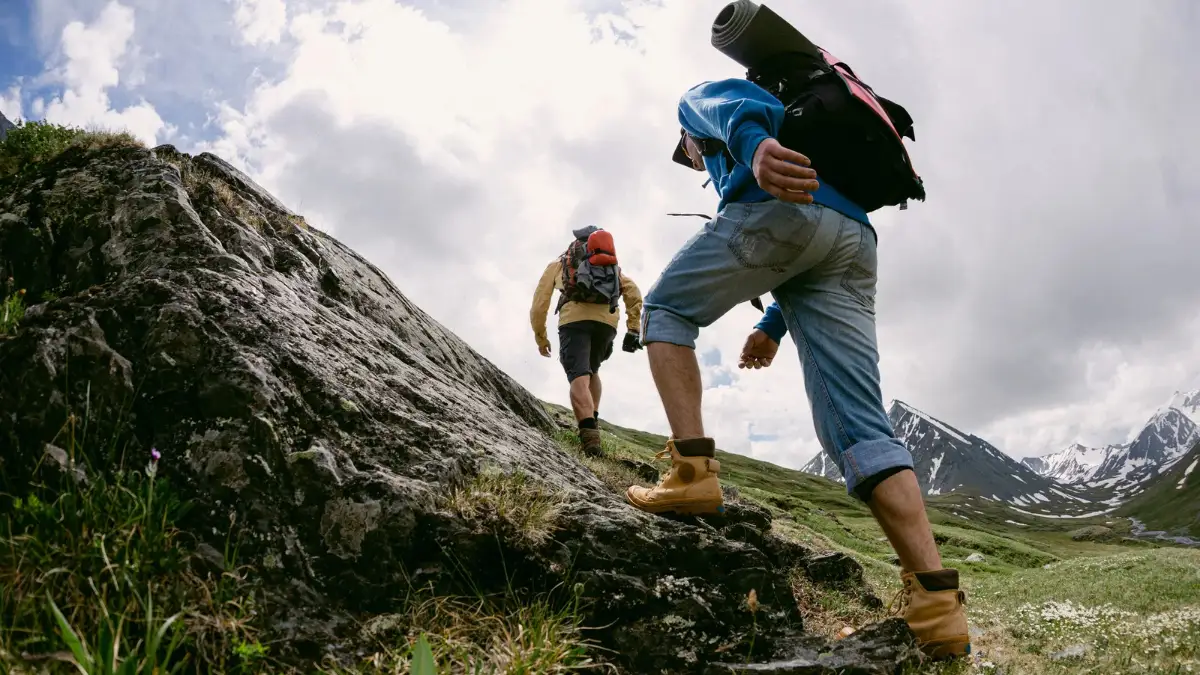
The best cardio exercises for high altitude trekking are hill walking, easy running, cycling, swimming, and stair climbing. Keep most sessions at a pace where you can still talk, and add one short interval session a week.
Already active and only have eight weeks? Follow weeks 5 to 12.
Acclimatizing During a High Altitude Trek: Rules That Keep You Safe
To acclimatize during a high altitude trek, climb slowly, add rest days, and sleep lower than the highest point you reached that day. Fitness helps, but your body still needs time to adapt to thinner air, and being fit does not let you skip that.
- Go slowly. Once you are above 3,000 metres (about 9,800 feet), keep the rise in your sleeping altitude to roughly 500 metres (about 1,600 feet) a night. This is what CDC and Wilderness Medical Society guidance suggests.
- Add rest days. Build in an extra day for roughly every 1,000 metres (about 3,300 feet) you climb. That pause is one of the simplest ways to prevent altitude sickness, because it gives your body time to catch up.
- Climb high, sleep low. Walk to a higher point by day, then return down to sleep. Your sleeping altitude should still rise gradually over the trek.
- Take it easy on arrival. If you fly or drive to a high starting point, avoid sleeping much above about 2,750 metres (about 9,000 feet) on the first night, and rest for a day or two.
Nepali guides say “bistari, bistari” and Kilimanjaro guides say “pole, pole.” Both mean slowly, slowly, and both are good advice.
High Altitude Trekking Packing List for Beginners
Packing for a high altitude trek is about staying warm, protected from the sun, and comfortable for days on the trail. This packing list covers what beginners need, without the extras that weigh you down.
- Clothing: moisture-wicking base layers, a fleece mid-layer, a warm insulated jacket, a waterproof shell jacket and trousers, trekking trousers, a warm hat, a sun hat, a buff or neck gaiter, gloves, and warm trekking socks (a few pairs).
- Footwear and gear: broken-in trekking boots, trekking poles, a daypack with a rain cover, and a headlamp with spare batteries.
- Sleeping bag: a bag rated for the coldest night, if your route doesn’t supply one.
- Sun and health: UV-rated sunglasses, high-SPF sunscreen and lip balm, a basic first aid kit with blister care, your prescription medicines, water bottles or a hydration bladder, and purification tablets.
- Documents and extras: passport, permits, insurance details, small-note cash, a power bank, and snacks you actually like.
High Altitude Trek Checklist: Final Preparation Before You Leave
Use this checklist to make sure nothing is missed before you fly. Some items, like the medical check-up and booking your guide, should be done weeks or months ahead.
- Medical check-up done, and any medication (such as Diamox) sorted with your doctor
- Travel insurance covers your maximum altitude, including helicopter evacuation
- Permits and bookings confirmed
- Itinerary includes rest days and a gradual ascent
- Licensed guide booked (and a porter if your route needs one)
- Boots broken in and daypack tested with weight
- Copies of your passport, permits, and insurance kept separately from the originals
- Emergency contacts shared with someone at home
- Guide told about any medical conditions
Final Thoughts
To prepare for trekking at high altitudes, start eight to twelve weeks ahead, move slowly once you are up there, and be honest with your guide about how you feel. You don’t need to be an elite athlete, just patient and consistent.
Train the way you will trek: long days, steady pace, real boots, real pack. Look after the basics, like water, food, warmth, and sleep. And remember that turning back, or taking an extra rest day, never ruins a trip. Ignoring a warning sign can.
Get the preparation right, and what is left is the best part: quiet trails, thin cold air, and mountains that make every step feel worth it.
Ready to plan your trek? Contact Nepal Gateway Trekking and our team will help you choose a route with the right pace, rest days, and an experienced guide.
FAQs
How do I prepare for a high altitude trek?
Train for eight to twelve weeks with cardio, leg strength, and long loaded hikes. See your doctor, pick a route with a gradual ascent and rest days, practise hydration, and pack properly. Above all, plan to go slowly.
How fit do you need to be for high altitude trekking?
Steady fitness matters more than speed. If you can walk uphill for several hours with a light pack and repeat that the next day, you are in good shape. Aerobic stamina and strong legs matter more than raw power.
How many weeks should I train before a high altitude trek?
Most beginners should train for eight to twelve weeks. If you are already active, eight weeks may be enough. If you are starting from scratch, follow the full twelve-week plan, with a lighter final week to rest before departure.
Does physical fitness prevent altitude sickness?
No. Good physical fitness helps you manage the physical demands of trekking, but it does not prevent altitude sickness. Even experienced and highly fit trekkers can develop altitude-related illnesses.
What is considered high altitude for trekking?
For trekkers, high altitude generally begins at 2,500 metres (about 8,200 feet) and runs up to 3,500 metres (about 11,500 feet), which is the threshold where mild altitude symptoms can first appear. 3,500 to 5,500 metres (about 11,500 to 18,000 feet) is very high altitude, where oxygen is noticeably thinner and the risk of altitude sickness rises significantly. Anything above 5,500 metres (about 18,000 feet) is extreme altitude, mainly for experienced mountaineers.
How do you avoid altitude sickness while trekking?
Ascend gradually, build in rest days, and avoid sleeping much higher than the night before. Drink plenty of fluids, skip alcohol early on, eat well, and never go higher while you have symptoms. You can lower your risk a lot, but you can’t remove it, and fit people get altitude sickness too.
What are the early signs of altitude sickness?
Acute mountain sickness usually starts with a headache plus nausea, dizziness, or unusual tiredness, often strongest after waking up. Mild symptoms often settle if you stop climbing and rest. Tell your guide straight away if something feels off.
What are HACE and HAPE, and what should I do?
HACE is brain swelling, with confusion, severe headache, unusual behaviour, or stumbling. HAPE is fluid in the lungs, with breathlessness at rest, a persistent cough, or chest tightness. Both are medical emergencies, so descend immediately and get medical help. Never send a confused or very unwell person down alone.
Does Diamox help prevent altitude sickness?
Acetazolamide, known as Diamox, can help your body acclimatize, but it doesn’t replace a gradual ascent. Ask your doctor well before departure whether it suits you and what dose to use. Tingling fingers and frequent urination are common side effects.
Can a beginner do a high altitude trek?
Yes. Many beginners complete high altitude treks successfully when they train beforehand, choose a well-paced itinerary, hire an experienced guide, and listen to their body. The key is patience, not speed, and honesty about symptoms.
How many hours should beginners walk when training for a high-altitude trek?
Beginners can start with 30–45 minutes of walking and gradually increase the duration. As the trek approaches, include longer hikes of several hours with a loaded daypack to prepare for consecutive trekking days.