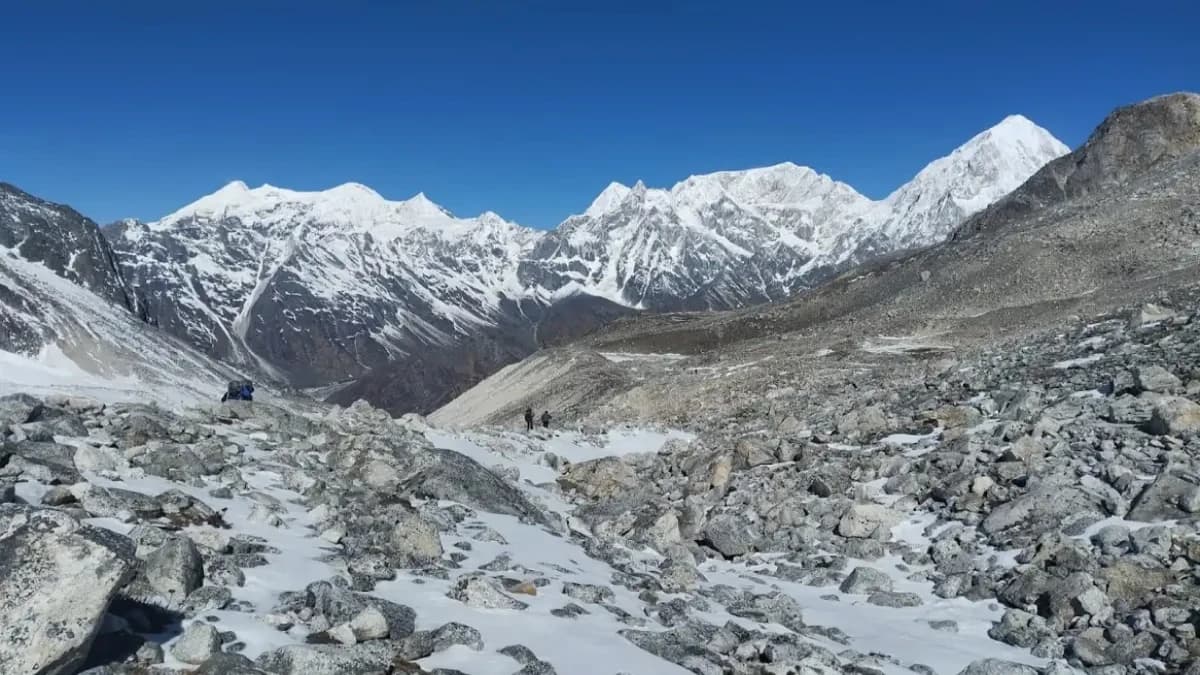
Quick Answer
- Top 7 Passes: Thorong La (5,416 m / 17,769 ft), Cho La (5,420 m / 17,782 ft), Renjo La (5,360 m / 17,585 ft), Kongma La (5,535 m / 18,159 ft), Larkya La (5,106 m / 16,752 ft), Mesokanto La (5,330 m / 17,486 ft), and Tashi Lapcha (5,755 m / 18,881 ft).
- Highest Technical Pass in Nepal: Sherpani Col (6,155 m / 20,193 ft), followed by Amphu Labtsa (5,845 m / 19,177 ft) and Tashi Lapcha (5,755 m / 18,881 ft).
- Highest Non-Technical Pass: Kongma La (5,535 m / 18,159 ft).
- Best for First-Timers: Thorong La (Annapurna) and Renjo La (Everest) — both non-technical with clear trails.
- Toughest Trekking Passes: Kongma La and Cho La (glacier sections, loose rock).
- Guide & Permit Required: Larkya La (Manaslu Restricted Area), Mesokanto La (remote route-finding), and Tashi Lapcha (technical gear).
- Best Seasons: Spring (March–May) and Autumn (September–November).
The top 7 mountain passes in Nepal are Thorong La (5,416 m / 17,769 ft), Cho La (5,420 m / 17,782 ft), Kongma La (5,535 m / 18,159 ft), Renjo La (5,360 m / 17,585 ft), Larkya La (5,106 m / 16,752 ft), Mesokanto La (about 5,330 m (17,486 ft)), and Tashi Lapcha (5,755 m / 18,881 ft). Each one sits above 5,000 m (16,404 ft), links two valleys and is the highlight of a high-altitude trek. Tashi Lapcha is the exception, as it is a technical crossing for experienced climbers.
In Tibetan, “La” simply means pass. For centuries these crossings carried salt, wool and grain between Nepal and Tibet. Today they carry trekkers, and crossing one is usually the hardest and most memorable day of any trip.
This guide covers altitude, difficulty, route, best season and the trek each pass belongs to, so you can pick the right one from these high mountain passes in Nepal for your fitness and experience.
Mountain Passes in Nepal at a Glance
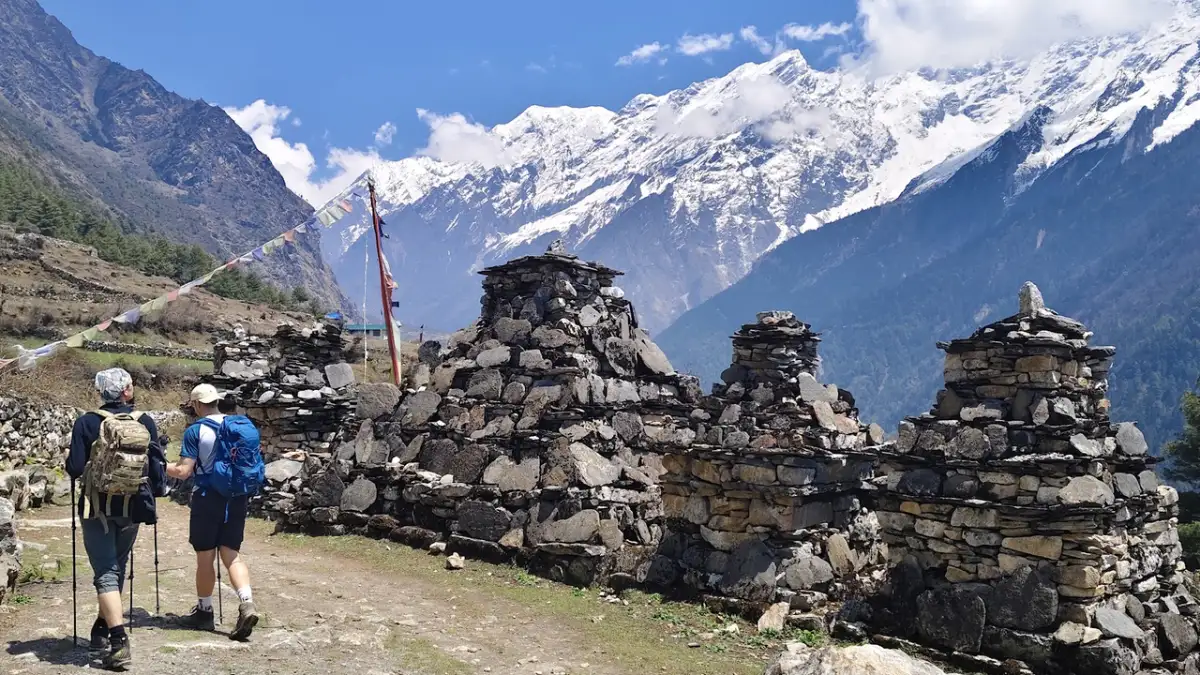
Here is the Nepal trekking passes list in one table, with altitude, route and difficulty for each pass.
|
Pass |
Altitude |
Region |
Connects |
Difficulty |
Technical gear |
|
Thorong La |
5,416 m / 17,769 ft |
Annapurna |
Manang to Muktinath |
Moderate to hard |
None (microspikes in snow) |
|
Cho La |
5,420 m / 17,782 ft |
Everest |
Dzongla to Thagnak |
Hard |
Microspikes or crampons (seasonal) |
|
Renjo La |
5,360 m / 17,585 ft |
Everest |
Gokyo to Lungden (then Thame) |
Moderate to hard |
None |
|
Kongma La |
5,535 m / 18,159 ft |
Everest |
Chhukhung to Lobuche |
Hard |
Microspikes in icy or snowy conditions |
|
Larkya La |
5,106 m / 16,752 ft |
Manaslu |
Dharamsala to Bimthang |
Moderate to hard |
Microspikes in snow |
|
Mesokanto La |
about 5,330 m / 17,486 ft |
Annapurna |
Tilicho Lake to Jomsom |
Hard |
None (carry camping gear; guide advised for route-finding) |
|
Tashi Lapcha |
5,755 m / 18,881 ft |
Rolwaling / Khumbu |
Rolwaling to Thame |
Very hard |
Ropes, harness, ice axe, crampons |
What Are the Mountain Passes in Nepal?
Nepal’s passes are natural gaps between high ridges that locals, traders and shepherds used for centuries to move between valleys. Today, trekkers cross them for the views, the sense of achievement and the chance to link two valleys in a single loop.
You will find them in three main regions:
- Annapurna region: Thorong La and Mesokanto La
- Everest (Khumbu) region: Cho La, Renjo La and Kongma La
- Manaslu and Rolwaling regions: Larkya La and Tashi Lapcha
Not every pass is equal. Most are non-technical trekking passes that a fit, well-acclimatized hiker can cross with a guide. Tashi Lapcha is the exception and needs ice axes, crampons and rope experience.
7 Best Mountain Passes to Trek in Nepal
These are the famous mountain passes in Nepal, ordered by popularity and accessibility rather than height. The first five are the standard trekking passes. Mesokanto La and Tashi Lapcha are for experienced trekkers. Each entry lists altitude, difficulty, best season and the trek that includes it.
1. Thorong La Pass (5,416 m / 17,769 ft)
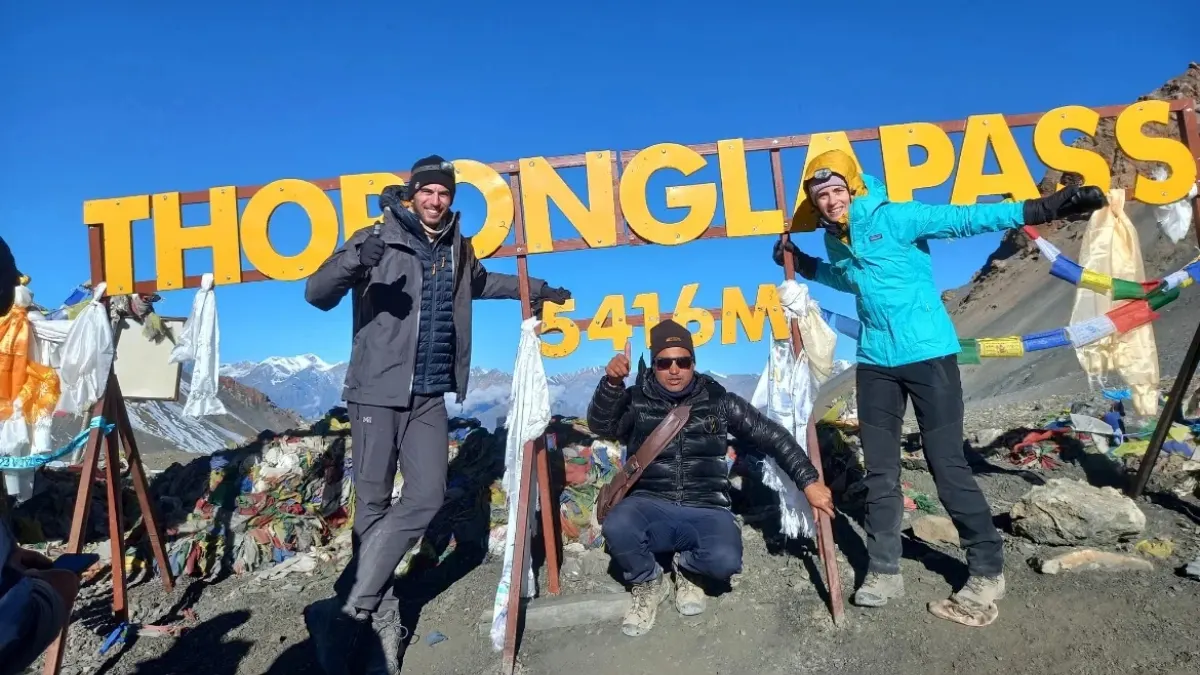
Thorong La is the highest point of the Annapurna Circuit trek and the most crossed high pass in Nepal. It links the Manang valley with the sacred town of Muktinath, and it needs no technical gear in good conditions.
- Difficulty: Moderate to hard
- Region: Annapurna
- Best season: March to May, September to November
The difficulty here is altitude and length, not terrain. Most trekkers sleep at Thorong High Camp, around 4,850 m (15,912 ft), and leave in the dark to cross before the afternoon wind picks up. The crossing day usually runs eight to ten hours.
The descent to Muktinath drops more than 1,500 m (4,921 ft) in one go, and it punishes knees more than the climb punishes lungs.
At the top you get prayer flags, a small tea stop in good weather, and a wide view of the Annapurna himalaya and Dhaulagiri ranges. Muktinath, on the far side, is a pilgrimage site for both Hindus and Buddhists.
Tip: Spend an extra night in Manang before the crossing. It makes the pass day much easier.
2. Cho La Pass (5,420 m / 17,782 ft)
Cho La connects Dzongla, on the main Everest Base Camp trek, with Thagnak in the Gokyo valley. It is the pass most people picture when they think of high-pass trekking in the Khumbu. It is hard because of a glacier section and loose rock near the top.
- Difficulty: Hard
- Region: Everest
- Best season: March to May, September to November
This section is described from Dzongla to Thagnak. The climb is a steep rocky scramble where falling stones are a real risk, followed by a stretch of glacier on the far side.
If you cross from Gokyo instead, the glacier comes first and the rocky scramble is on the descent. Depending on the season, you will want microspikes or crampons. Early spring and winter can leave the route icy and snow-covered.
The reward is a close view of Cholatse, Ama Dablam and Lobuche East. Many itineraries cross Cho La from Gokyo toward Everest Base Camp, so you finish at Base Camp rather than starting there.
Tip: Ask your lodge owner about ice and snow on the glacier the evening before, and leave early so you are across before the rock and ice soften.
The Everest Base Camp and Chola Pass Trek is the usual way to include this crossing.
3. Renjo La Pass (5,360 m / 17,585 ft)
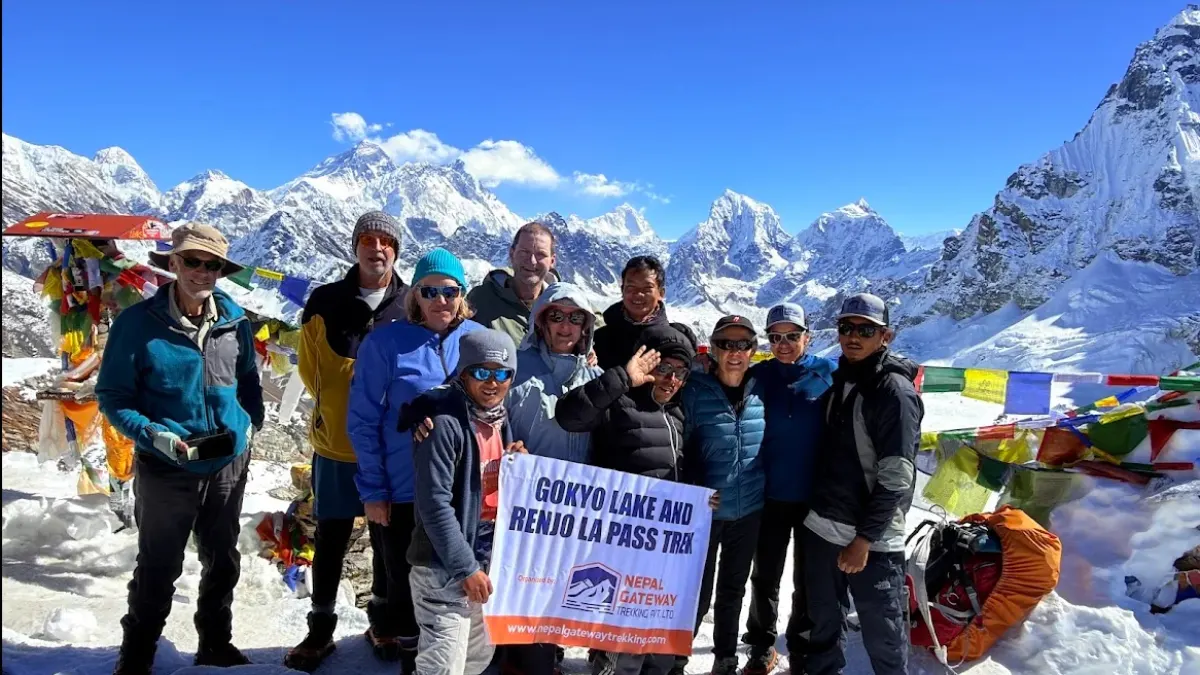
Renjo La is the most scenic and the most manageable of the Everest passes. It connects Gokyo with the Bhote Koshi valley near Lungden and Thame, and there is no glacier to cross.
- Difficulty: Moderate to hard
- Region: Everest
- Best season: March to May, September to November
The trail is well defined and partly stepped on the western side, but it is still a crossing above 5,000 m (16,404 ft), so acclimatization matters.
From the top you can see Everest, Lhotse, Makalu and Cho Oyu in one frame, with the Gokyo lakes below. That panorama is why many trekkers rank Renjo La above the other two Khumbu passes.
It is also a good first high pass if you want the views without the technical sections.
Tip: Climb Gokyo Ri the day before. It helps you acclimatize and gives you a preview of the view you will see from Renjo La.
The Gokyo Lake and Renjo La Pass Trek is the usual way to cross it.
4. Kongma La Pass (5,535 m / 18,159 ft)
Kongma La is the highest and one of the most challenging passes on the Everest Three Passes Trek. It connects Chhukhung with Lobuche across rocky moraine, with steep and exposed sections along the route.
- Difficulty: Hard
- Region: Everest
- Best season: March to May, September to November
Plenty of trekkers on the Three Passes route drop this one because of the effort. That is a shame, because the view from the top is the best of the three for the Khumbu Glacier, Lhotse, Nuptse, Makalu and Ama Dablam.
Services on the climb are minimal, so you carry your own water and snacks and start early. Microspikes help when the upper section is icy or snowy.
Tip: Pack lunch and at least a liter of water before leaving Chhukhung. There is nowhere to buy anything until the far side.
5. Larkya La Pass (5,106 m / 16,752 ft)
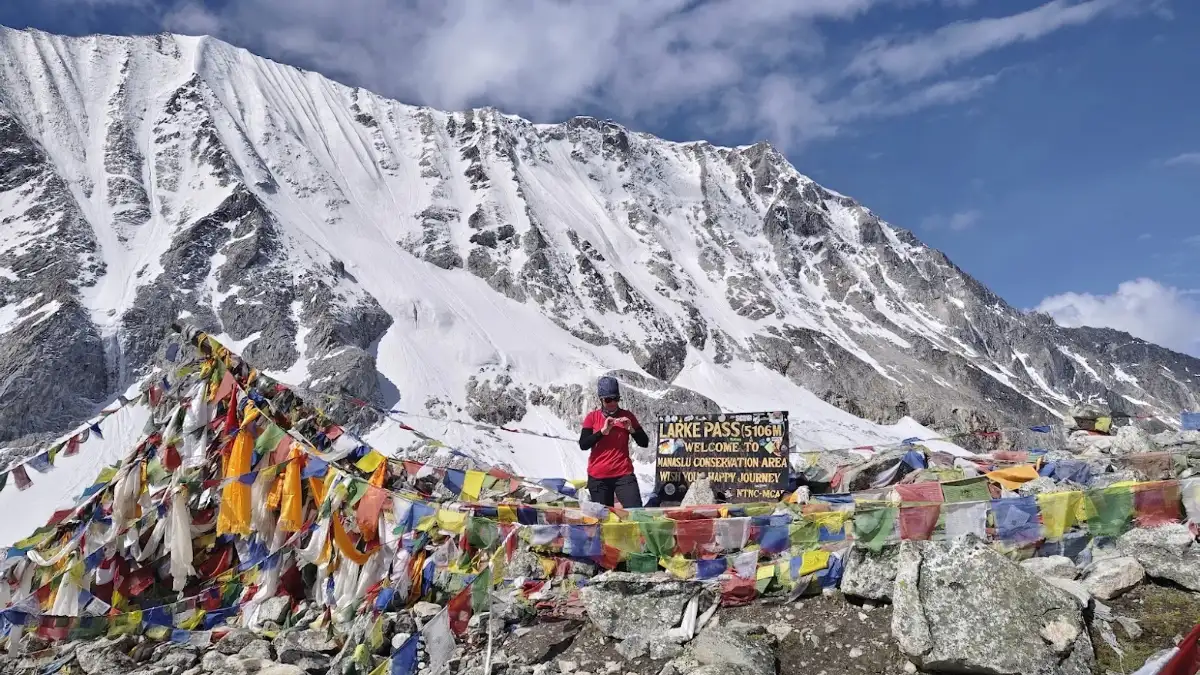
Larkya La is the high point of the Manaslu Circuit trek and one of the longest crossings in Nepal. It is lower than the Everest passes, but the day is long and the weather can turn quickly.
- Difficulty: Moderate to hard
- Region: Manaslu
- Best season: March to May, September to November
Some itineraries and maps list it at 5,160 m (16,929 ft), while the figure most commonly quoted is 5,106 m (16,752 ft). Either way, the crossing links the Budhi Gandaki and Marsyangdi valleys and takes most of a day, often eight to ten hours from the last lodge to the next.
The ascent is long rather than steep, and the descent is steeper.
Views take in mount Manaslu (8,163 m / 26,781 ft), Himlung Himal, Cheo Himal and Annapurna II. Because the route passes through restricted areas, a licensed guide and special permits are required.
Tip: Leave Dharamsala well before sunrise. The wind usually builds by late morning, and snow can make the final climb much slower.
6. Mesokanto La Pass (around 5,330 m / 17,486 ft )
Mesokanto La links Tilicho Lake with Jomsom and is the most remote of the Annapurna crossings. It is a camping route with loose scree and little infrastructure, so it suits experienced trekkers only.
- Difficulty: Hard
- Region: Annapurna
- Best season: April to May, October to November
Some sources list the altitude as higher than about 5,330 m / 17,486 ft, so treat this figure as approximate.
Most Annapurna Circuit trekkers visit Tilicho Lake (4,919 m / 16,138 ft) as a side trip and then walk back to the main trail. Crossing Mesokanto La is the alternative: you continue past the lake and drop toward Jomsom, avoiding Thorong La altogether.
The trade-off is loose terrain, landslide-prone slopes and sections where you need to find your own route. The payoff is solitude and a close view of a lake that ranks among the highest lakes in the world.
Tip: Go with a guide who knows the route, and carry food and camping gear for the full crossing. Check landslide conditions around Tilicho before you commit.
If you want the lake without the pass, the Annapurna Circuit with Tilicho Lake Trek is the standard option.
7. Tashi Lapcha Pass (5,755 m / 18,881 ft)
Tashi Lapcha is the most demanding pass on this list. It connects the Rolwaling valley with Thame in the Khumbu, and crossing it involves glaciers, crevasses and steep snow, with fixed ropes in places.
- Difficulty: Very hard (technical)
- Region: Rolwaling / Khumbu
- Best season: April to May, October to November
This is a mountaineering-grade crossing, not a trekking pass. You need rope skills, crampons and an ice axe, plus a guide who has done it before.
Most people build in extra days for acclimatization and weather. It is also one of the quietest routes in the Himalaya.
Tashi Lapcha is a technical and demanding high-altitude crossing, not a standard trekking pass. It requires careful planning, suitable equipment, and experienced support.
Tip: If you have never used crampons and fixed ropes, practice on a smaller snow and ice route first. Do not make this your first technical crossing.
If you have experience and want something more serious than the Everest Three Passes, the Rolwaling Tashi Lapcha Pass Trek is the way to approach it.
Which Mountain Pass in Nepal Is Right for You?
The right pass depends on your fitness, your time and how comfortable you are at altitude. If this is your first high pass, Thorong La and Renjo La are the two that most trekkers start with. Both are non-technical and well supported, though neither is easy at more than 5,000 m (16,404 ft). If you are comparing the best mountain passes in Nepal for a first trip, they are a sensible place to begin.
- First high pass: Thorong La (clear trail, teahouses up to High Camp, no technical gear) or Renjo La (well-defined trail, no glacier).
- Strong trekker with some altitude experience: Larkya La (guide and permit required), Cho La (glacier section) or Kongma La (long and exposed).
- Experienced, comfortable camping and route-finding: Mesokanto La.
- Mountaineering experience only: Tashi Lapcha.
Still weighing up which pass to choose? Contact Nepal Gateway Trekking with your experience level and preferred season, and we will help you choose a pass and plan the route.
When is the Best Time to Cross Mountain Passes in Nepal?
Spring (March to May) and autumn (September to November) are the best seasons to cross the high passes. Skies are clearer, winds are calmer and trails are in better shape.
|
Season |
Months |
Conditions on the passes |
Suitable for |
|
Spring |
March to May |
Warm days, clear mornings, rhododendron forests at lower altitude |
Thorong La, Cho La, Renjo La, Kongma La and Larkya La from March; Mesokanto La and Tashi Lapcha from April |
|
Autumn |
September to November |
Most stable weather and best visibility; busiest lodges in October and early November |
All passes except Mesokanto La and Tashi Lapcha in September; best season for first-timers |
|
Winter |
December to February |
Very cold, with snow and ice; short days, many higher lodges closed, and some passes can close after heavy snow |
Experienced trekkers with proper gear |
|
Monsoon |
June to August |
Heavy rain, cloud, landslides and poor views |
Not recommended for any of the seven passes |
Tashi Lapcha and Mesokanto La have a narrower window of April to May and October to November. Tashi Lapcha needs stable snow and weather for the glacier, and Mesokanto La needs dry, settled ground to limit landslide and scree risk.
Permits Needed for Trekking Passes in Nepal
Permit requirements for Himalayan passes in Nepal depend on the region, and some need more paperwork than others.
- Annapurna passes (Thorong La, Mesokanto La): Annapurna Conservation Area permit. TIMS requirements have changed over time, so confirm with your agency. Carry copies of all permits, as you will pass checkpoints.
- Everest passes (Cho La, Renjo La, Kongma La): Sagarmatha National Park permit and the Khumbu Pasang Lhamu Rural Municipality entry permit.
- Larkya La: Manaslu Restricted Area Permit and conservation area permits. A licensed guide and a registered trekking agency are required, and a minimum group size usually applies.
- Tashi Lapcha: Permits for the Rolwaling side and Sagarmatha National Park on the Khumbu side. A qualified guide is needed for the technical crossing, and extra permission may apply.
Most permits are arranged in Kathmandu or Pokhara, and a trekking company usually handles them as part of your booking. Fees and rules change, so ask them to confirm the current list before you go.
How to Prepare for High Altitude Trekking in Nepal?
Most trouble on a high passes trek in Nepal starts days earlier, with a rushed ascent, the wrong gear or ignored symptoms. These points help you avoid all three.
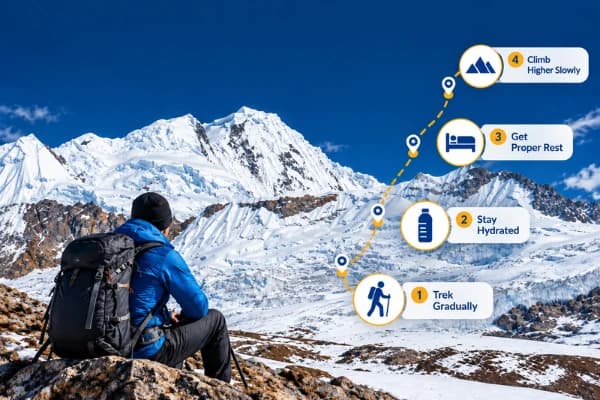
- Acclimatize properly: Above roughly 3,000 m (9,843 ft), keep the gain in sleeping altitude to about 300 to 500 m (984 to 1,640 ft) a day, and take a rest day every few days. A fast ascent is the most common cause of altitude sickness.
- Start before dawn: Wind builds in the afternoon on nearly every pass, and snow and ice get softer and less stable as the day warms.
- Pack for cold and sun: Layers, a warm hat, gloves, sunglasses, sunscreen and a headlamp for the early start. Add microspikes for Cho La, Kongma La, Larkya La and Thorong La when there is snow or ice.
- Eat and drink well: Drink plenty of water and eat even when your appetite drops. Both help you cope with altitude.
- Carry poles: They take real load off your knees on long descents like Thorong La, and they help on loose scree.
- Use a guide for remote or technical passes: Larkya La, Mesokanto La and Tashi Lapcha are routes where local experience matters.
- Know when to turn around: Worsening headache, nausea, confusion or loss of coordination mean you descend, whatever the schedule says. Never ascend with symptoms, and never leave someone with symptoms alone.
This is general guidance, not medical advice. Talk to a doctor before a high-altitude trip, especially if you have health conditions.
Final Thoughts
Every one of the top mountain passes in Nepal gives you something different, from the easy rhythm of Thorong La to the wild remoteness of Mesokanto La. The right one comes down to your fitness, your altitude experience and how much challenge you want. Thorong La and Renjo La are the most welcoming places to start. Cho La, Kongma La and Larkya La reward strong trekkers who have already spent time above 4,000 m (13,123 ft), and Larkya La also needs a guide and a permit. Mesokanto La and Tashi Lapcha are for experienced trekkers and mountaineers.
Whichever pass you pick, give yourself spare days and be willing to turn back. The mountains will still be there next season, and a well-planned itinerary matters more than speed.
Not sure which mountain pass is right for you? Tell us your dates and experience level, and Nepal Gateway Trekking will build the route around them.
FAQs About Mountain Passes in Nepal
What are the highest mountain passes in Nepal?
The highest technical pass in Nepal is Sherpani Col (6,155 m / 20,193 ft), followed by Amphu Labtsa (5,845 m / 19,177 ft) near Island Peak. Among the seven passes in this guide, Tashi Lapcha (5,755 m / 18,881 ft) is the highest. For non-technical passes requiring no ropes or climbing gear, Kongma La (5,535 m / 18,159 ft) is the highest, followed by Cho La (5,420 m / 17,782 ft) and Thorong La (5,416 m / 17,769 ft).
Which mountain pass is the hardest to cross in Nepal?
Tashi Lapcha is the hardest of the seven, because it needs mountaineering skills. Among the non-technical passes, Kongma La and Cho La are generally considered the toughest, and Mesokanto La is hard because it is remote and needs route-finding.
Which is the most famous trekking pass in Nepal?
Thorong La is the most famous trekking pass in Nepal, because it is the high point of the Annapurna Circuit and needs no technical gear. It is still moderate to hard, with altitude, cold and a crossing day of eight to ten hours. Most trekkers cross from Manang to Muktinath so they have time to acclimatize, and the steep descent is tough on the knees.
How hard is Thorong La?
Thorong La is moderate to hard. It needs no climbing gear, but the altitude, the cold and a crossing day of eight to ten hours make it demanding. Most trekkers cross from Manang to Muktinath so they have time to acclimatize, and the steep descent is tough on the knees.
When is the best time to cross mountain passes in Nepal?
March to May and September to November are the best windows. Autumn is the most popular, and spring is a good second option. Mesokanto La and Tashi Lapcha have a narrower window of April to May and October to November. Winter crossings need extra experience and gear.
Which mountain passes are best for beginners?
Thorong La and Renjo La are the most accessible. Both are non-technical, but neither is a true beginner pass. You still need a gradual itinerary and good fitness, and any pass above 5,000 m (16,404 ft) should be treated as a serious trek.
Do I need a guide to cross a high pass in Nepal?
A guide is required for Larkya La and strongly advised for Mesokanto La and Tashi Lapcha. For the others it is not always mandatory, but it makes route-finding, acclimatization and emergencies much easier. Check the latest trekking rules with your operator.