TL;DR
- Mount Everest summit temperature: Around −36°C (−33°F) in January and −19°C (−2°F) in July, on average.
- Everest Base Camp temperature: Daytime temperatures in spring typically range from −5°C to 5°C (23°F to 41°F), while nighttime temperatures often fall below freezing.
- Coldest month: January is typically the coldest month on Everest, with strong winds making conditions feel even colder.
- Temperature by altitude: The higher you climb, the colder conditions generally become. Temperatures at the summit can be much lower than at Base Camp.
- Best time to trek: Spring (March–May) and autumn (September–November) generally offer favourable conditions for the Everest Base Camp trek.
- Best time to summit: Climbers commonly target weather windows in May, when winds may ease temporarily.
- How to stay safe: Wear insulated, layered clothing, protect exposed skin, acclimatize properly, and recognize the warning signs of frostbite, hypothermia, and altitude sickness.
Everest is the highest point on Earth, and the cold gets more extreme with every step up the mountain. The summit (8,848.86 m / 29,032 ft) averages about −36°C (−33°F) in January and around −19°C (−2°F) in July, and wind chill makes it feel far colder. Everest Base Camp (5,364 m / 17,598 ft) is milder: roughly −5°C to 5°C (23°F to 41°F) by day in spring and well below freezing at night.
Below you'll find temperatures by altitude, season, and trek stop, plus what the cold means for your gear and safety.
This blog simplifies everything, such as altitude cold, wind chill, seasons, and survival tips.
Why Is Mount Everest So Cold?
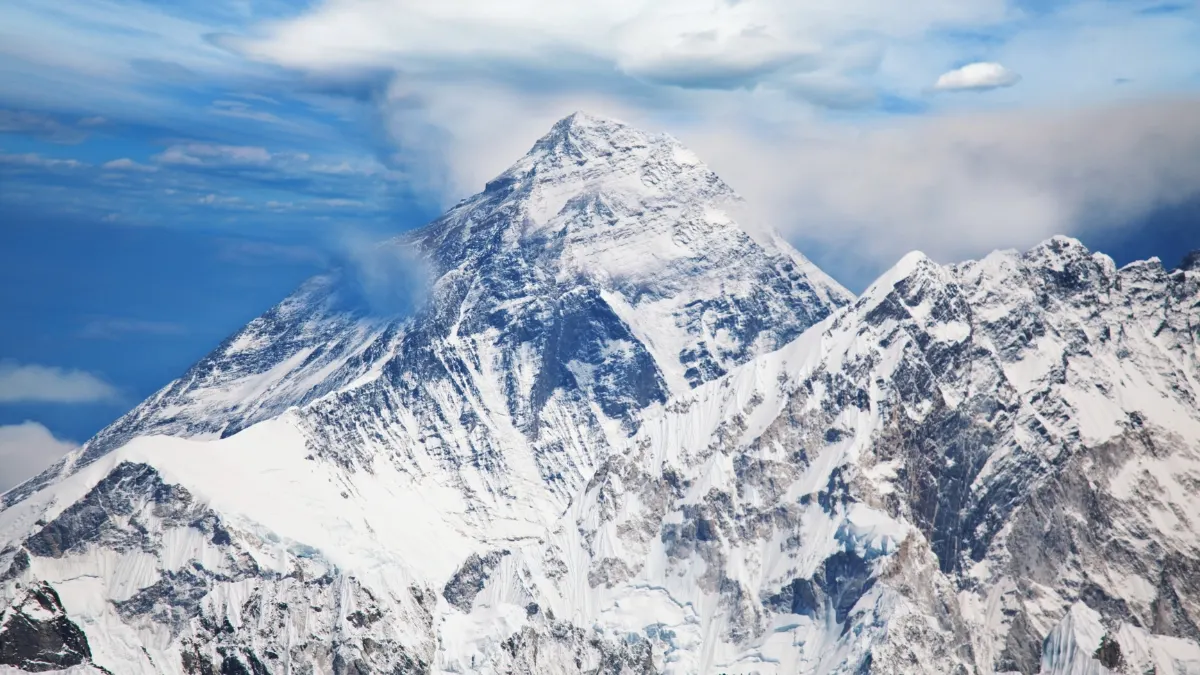
People often imagine cold places, but Everest is on a different level. The moment you hear the wind up there, you realize why climbers revere this mountain so much. And to answer the question, how cold is Mount Everest? Mount Everest is cold in a way that seems unreal until you experience it.
Three factors work together to make Mount Everest so cold: altitude, low air pressure, and wind. Each one makes the others worse, which is why Everest feels colder than the thermometer suggests.
1. Altitude: about 6.5°C colder per 1,000 m
Air cools as it rises by about 6.5°C for every 1,000 m (roughly 3.5°C per 1,000 ft). That is an average, and real conditions vary with weather and season. Starting from Base Camp, the typical drop looks like this:
|
Location |
Height above Base Camp |
Approx. drop vs. base camp |
|
Camp 2 (6,400 m) |
+1,036 m |
about 7°C (12°F) |
|
Camp 3 (7,200 m) |
+1,836 m |
about 12°C (21°F) |
|
Camp 4 (7,900 m) |
+2,536 m |
about 16°C (29°F) |
|
Summit (8,848.86 m) |
+3,485 m |
about 23°C (41°F) |
The summit is therefore around 23°C colder than Base Camp before wind is counted.
2. Low air pressure
At Base Camp, air pressure is about half of sea level. At the summit it falls to about one-third. Each breath holds roughly a third as much oxygen, so the body struggles to make and keep heat. Blood flow to the hands and feet drops first, which is why fingers and toes freeze before anything else.
Thin air also holds very little heat, even when the sun is strong. Climbers often feel the sun burning their face while the air around them stays far below freezing.
This low pressure is also why supplemental oxygen is used high on the mountain and why altitude sickness and cold injuries often appear together.
3. Jet stream and wind
In winter, the jet stream sits directly over Everest, and summit winds can exceed 160 km/h (100 mph). In late spring it shifts north as the monsoon approaches, and the wind eases for a short time. That brief calm is the summit window, usually mid-to-late May.
Lower down, wind also follows a daily pattern. In the Everest region, winds are lighter overnight and strengthen in the morning as the sun heats the valley. Wind is why the cold feels much worse than the thermometer reading, because it strips heat from exposed skin faster than still air. The wind chill table below shows how much.
A simple example:
If the temperature is −20°C but the wind hits your face at high speed, it can feel like −40°C. You don’t just feel cold, you feel the cold trying to reach your bones.These forces shape Mount Everest's weather conditions and influence everything from breathing to decision-making. Packing warm layers, understanding season changes, and knowing the coldest months on Mount Everest can make the difference between a comfortable journey and a tough one.
4. Summit (8,848.86 m / 29,032 ft)
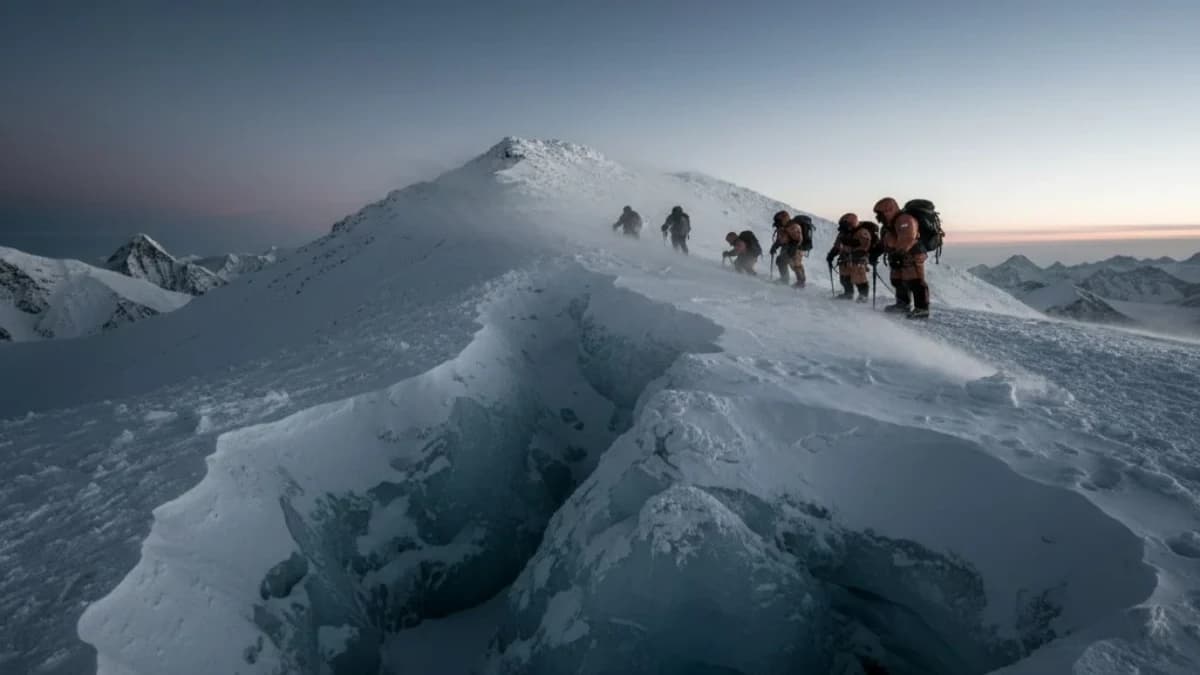
During the spring climbing season, summit-day temperatures are commonly −20°C to −30°C (−4°F to −22°F). Winter nights can fall below −40°C (−40°F), and wind chill can be far lower. Most summit pushes happen in mid-to-late May, when winds ease briefly.
Temperature by altitude: quick table
|
Location |
Altitude |
Day |
Night |
|
Base Camp |
5,364 m / 17,598 ft |
−5 to 5°C (23 to 41°F) |
−10 to −1°C (14 to 30°F) |
|
Camp 1 |
6,065 m / 19,898 ft |
−10 to −5°C (14 to 23°F) |
−20 to −8°C (−4 to 18°F) |
|
Camp 2 |
6,400 m / 20,997 ft |
−15 to −8°C (5 to 18°F) |
−25 to −12°C (−13 to 10°F) |
|
Camp 3 |
7,200 m / 23,622 ft |
−25 to −18°C (−13 to 0°F) |
−35 to −25°C (−31 to −13°F) |
|
Camp 4 |
7,900 m / 25,919 ft |
−25 to −20°C (−13 to −4°F) |
−35 to −25°C (−31 to −13°F) |
|
Summit |
8,848.86 m / 29,032 ft |
−30 to −20°C (−22 to −4°F) |
below −40°C (−40°F) |
Mount Everest Temperature Overview
If you ever talk to people who have been to the Everest region, you’ll hear them say the same thing: “The weather changes before you finish your tea.” That’s the easiest way to understand the Mount Everest temperature. It doesn’t stay still. It moves, shifts, and surprises you, almost like the mountain is breathing..
Day and Night: A Cold That Comes and Goes
During the day, the sun feels warm, especially at the lower trails. You might even loosen your jacket for a while. But once the sun slips behind the tall walls of ice, the cold returns quickly. It doesn’t wait. It falls over everything, including tents, rocks, and your breath, as if someone turned off the heat all at once.
Even Everest Base Camp loses warmth quickly when night arrives. And when you move higher, the change becomes sharper. The higher you go, the faster the warmth disappears. This is why climbers pay so much attention to sunrise and sunset.
Altitude: The Mountain’s Silent Rule
Everest teaches one simple rule: “The higher you climb, the colder it becomes.”
It doesn't matter if the sky appears clear or if the wind feels gentle at first. As you climb, the air becomes thinner, and thin air cannot retain heat. If you're not careful, you'll feel the cold in your fingers first, then your cheeks, and finally your bones.
How cold is it on the top of Mount Everest? The short answer is colder than most people imagine and colder than most places on Earth.
Why Everest’s Temperatures Shift So Quickly?
The high Himalayas act like giant walls that catch and redirect air. Sometimes warm pockets drift in during the afternoon, only to disappear just as quickly. Even guides from Solukhumbu say, “Don’t trust the sun too much here.” They know how fast the Mount Everest weather conditions can turn.
And when altitude mixes with wind, the cold becomes more intense like the kind that makes you pull your scarf up without thinking.
How Cold Is Mount Everest at Different Altitudes?
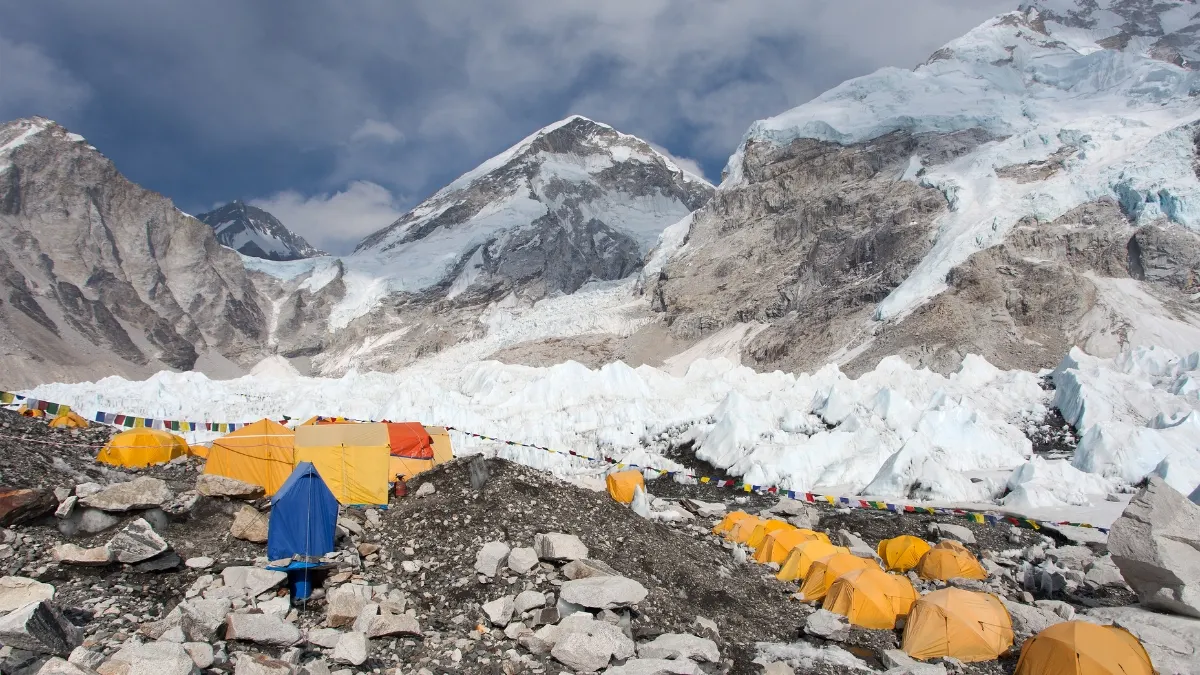
When people ask, "How cold is Mount Everest?" the truth is that the answer changes with every step you take upward. The mountain doesn’t keep one fixed temperature. It shifts from gentle chill to biting cold, almost like moving through different worlds stacked on top of each other.
Let’s walk through each altitude slowly, the way a real trekker would feel it: one camp at a time.
Base Camp (5,364 m)
Base Camp is usually the first place where trekkers truly feel Himalayan cold. It’s chilly, yes, but not frightening. During the day, the sun still gives some comfort. At night, though, the cold settles quietly around the tents. It’s the kind of cold that reminds you to zip your sleeping bag all the way up.
Typical temperatures:
- Day: roughly −5°C to 5°C
- Night: about −10°C to −1°C
The best season to travel here is spring (March-May), and the off-season to avoid is summer and winter.
Little tip: Hot tea helps more than people expect. Even warming your hands around the cup makes Base Camp feel friendly.
You can explore Gokyo Lake with Everest as well with proper preparations and guided treks.
Camp One (6,065 m)
Climbing toward Camp 1 feels like stepping into a more serious zone. The wind gets colder, and even simple tasks feel slower. Here, you start noticing the altitude more than before. Breathing deep takes effort, and fingertips cool faster.
Temperatures:
- Day: around −10°C to −5°C
- Night: usually −20°C to −8°C
Best season: Spring, when the weather behaves gently.
Avoid: Summer storms and winter freezes.
Did you know?
Many climbers say tying bootlaces feels harder here; not because the knot is difficult, but because fingers numb quickly.
Camp Two (6,400 m)
Camp 2 is often a major stop for acclimatization. Climbers stay longer here, so they really feel the cold settling in. The cold here doesn’t just sit around you; it tries to creep into your gear. You may notice your breath turning thicker, almost smoky.
Temperatures:
- Day: around −15°C to −8°C
- Night: around −25°C to −12°C
Altitude note: Headaches are common. Drinking warm soup helps more than people expect. The best season to travel here is spring (March-May), and the off-season to avoid is summer and winter.
Explore the common symptoms of altitude sickness on high altitude and be safe adapting the proper guidance and help.
Camp Three (7,200 m)
As you approach Camp 3, the cold starts to feel sharper, like tiny needles brushing your face. This is where many climbers slow down. Even adjusting your backpack or removing snow from your boots takes extra time.
Temperatures:
- Day: roughly −25°C to −18°C
- Night: around −35°C to −25°C
Best season: Spring
Avoid: Winter and summer storms
Camp Four (7,900 m)
Camp 4 sits just below the death zone. The air is thin, and every movement feels heavier.
If your body feels weak here, it’s wiser to go down rather than push ahead. This is where staying warm becomes a matter of survival, not comfort.
Temperatures:
- Day: −25°C to −20°C
- Night: −35°C to −25°C
Best season: Spring
Avoid: Winter and unpredictable summer weather
Small detail: The wind here can make unzipping your backpack feel like a battle. You have to work with the cold, not against it.
If you get altitude sickness and symptoms are severe evacuation is only option. You should head back to lower base camps with support.
Summit (8,848 m)
This is the highest point on Earth, and the cold here feels like it belongs to another planet. The summit sits in the death zone. The air is thin, the body moves slower, and the cold becomes something you respect deeply. This is where the temperature on Mount Everest summit can drop to levels most people will never feel in their lives.
Typical temperatures:
- Day: usually −20°C to −30°C
- Night: often colder than −40°C, especially in winter
Best season: Late April to early May
Avoid: Winter and monsoon
A moment climbers describe: Even water bottles kept under jackets can freeze. This little fact alone answers the question: How cold is Mount Everest?
A Simple Table to Picture the Cold
This table illustrates how temperature changes as you climb the mountain:
|
Place |
Day |
Night |
|
Base Camp (5,364 m) |
around −5°C to 5°C |
roughly −10°C to −1°C |
|
Camp 1 |
about −10°C to −5°C |
around −20°C to −8°C |
|
Camp 2 |
about −15°C to −8°C |
around −25°C to −12°C |
|
Camp 3 |
roughly −25°C to −18°C |
around −35°C to−25°C |
|
Camp 4 |
around −25°C to −20°C |
around −35°C to −25°C |
|
Summit |
usually −20°C to −30°C |
may drop below −40°C |
How Wind Chill & Jet Streams Affect Climbers on Everest?
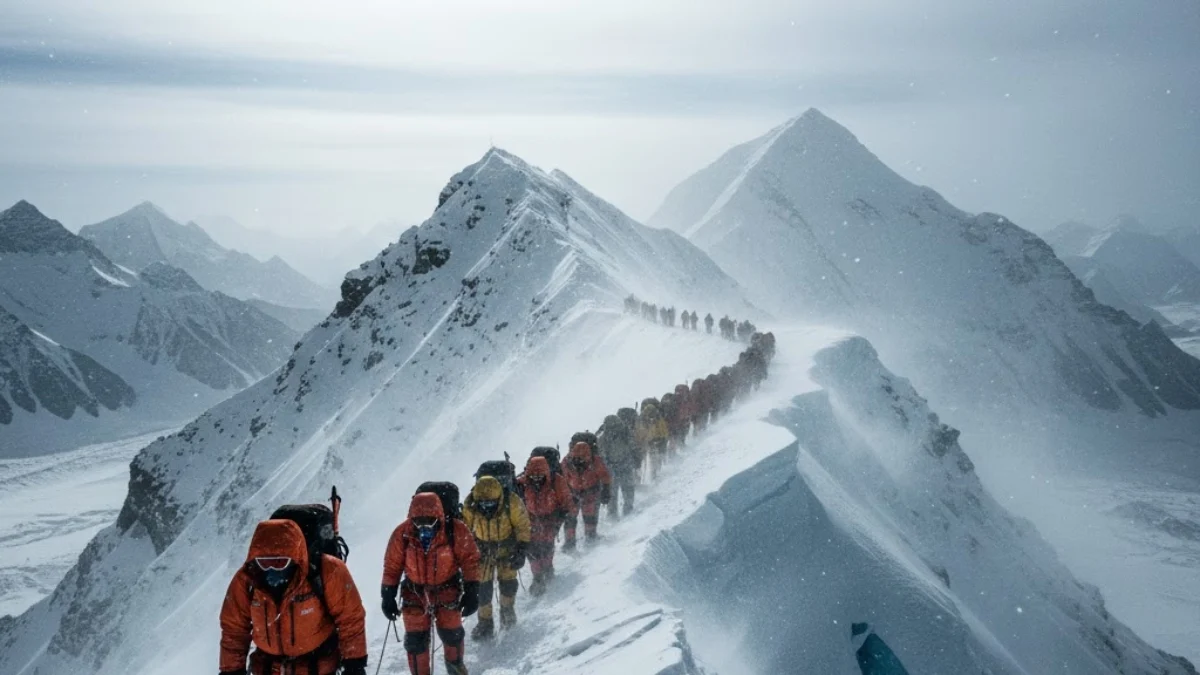
Wind chill is how cold the air feels on your skin when moving air strips heat from your body. On Everest, a strong gust can make −20°C (−4°F) feel closer to −35°C (−31°F). Even trekkers who only reach Base Camp notice it: one gust can stiffen your fingers in seconds.
How much colder does wind make it?
Approximate wind chill at different air temperatures and wind speeds:
|
Air temperature |
30 km/h (19 mph) |
50 km/h (31 mph) |
100 km/h (62 mph) |
|
−10°C (14°F) |
about −20°C (−4°F) |
about −22°C (−8°F) |
about −25°C (−13°F) |
|
−20°C (−4°F) |
about −33°C (−27°F) |
about −35°C (−31°F) |
about −40°C (−40°F) |
|
−30°C (−22°F) |
about −46°C (−51°F) |
about −49°C (−56°F) |
about −54°C (−65°F) |
|
−40°C (−40°F) |
about −59°C (−74°F) |
about −63°C (−81°F) |
about −69°C (−92°F) |
These are estimates from the standard wind chill formula, which is calibrated at sea level. Thin air at altitude carries less heat, and real summit conditions vary, so treat the numbers as a guide rather than exact readings.
How the jet stream changes the wind
Wind speed on Everest depends on where the jet stream sits. In winter it passes directly over the summit, and winds can exceed 160 km/h (100 mph). In late spring it moves north, and the wind eases for a short time, which is when most summit attempts happen. A clear morning can turn dangerously windy within hours if the jet stream shifts.
Why wind matters for safety
Wind raises almost every risk on the mountain, even when the air temperature looks manageable.
- Frostbite: at a wind chill around −28°C (−18°F), exposed skin can freeze in about 30 minutes. At −40°C (−40°F) or lower, it can freeze in about 10 minutes or less. The nose, cheeks, fingers, and toes go first.
- Hypothermia: wind drains core body heat faster than still air. Early signs are shivering, clumsiness, and confusion.
- Slower thinking: cold combined with low oxygen dulls judgment and slows reactions.
- Missteps on icy ridges: gusts can knock climbers off balance, and numb hands and feet make footing harder.
- Exhaustion: fighting wind burns energy quickly, which leaves less in reserve for staying warm.
The practical rule is to cover all exposed skin and wear a windproof outer shell over your insulating layers.
The Dangers of Extreme Cold on Everest
People often ask How cold is Mount Everest?, but the real worry isn’t just the number, it’s what that cold does to the body. Everest’s cold is different from anything we feel in Kathmandu winters. Up high, the air is thin, the wind is sharp, and every mistake becomes bigger.
Frostbite: When skin freezes fast
In the upper camps, the Mount Everest temperature drops so quickly that uncovered skin can freeze in minutes. Fingers, toes, and noses are the first to suffer. Many climbers say the cold feels like needles touching the skin. This is why survival in Mount Everest cold depends on keeping every part of the body covered.
Hypothermia: A silent danger
Hypothermia arrives quietly. A climber may feel unusually tired or confused. The thin air makes this even worse. When the high altitude temperature Everest falls below −30°C, the body struggles to stay warm, even inside thick clothing.
Altitude sickness and cold
Cold and low oxygen work together in a difficult way. Headaches and dizziness worsen, especially around Camp Two or Camp Three. Simple tasks slow down because the cold stiffens hands and weakens focus.
The death zone: where cold meets thin air
The death zone on Everest is the altitude above about 8,000 m (26,247 ft), where air pressure is roughly one-third of sea level. The body cannot acclimatize there and begins to deteriorate. It's defined by oxygen, not temperature, but the cold makes it more dangerous: frostbite, hypothermia, and impaired judgment set in faster. Most climbers use supplemental oxygen from Camp 3 or Camp 4 upward.
Summit temperatures in the death zone can fall below −40°C (−40°F) in winter, and wind makes it feel colder. Climbers limit their time here for this reason, because the body cannot stay long.
How Climbers Survive the Freezing Temperatures on Everest?
When people ask, "How cold is Mount Everest?" The truth is simple: the mountain is cold enough to challenge even trained climbers. But with the right habits and gear, they stay safe in the harsh Mount Everest weather conditions.
Layering: The simplest and strongest defense
Climbers wear clothes in layers, not just one thick jacket. Initially, they wear a warm base layer, followed by an insulating layer, and lastly, a windproof shell. This traps heat and protects skin from the sharp wind chill that makes the high altitude temperature Everest feel far colder.
Proper gloves, boots, and face protection
Hands and feet freeze first, especially when the temperature on Mount Everest summit drops near 30°C or lower. Climbers use insulated boots, warm socks, thick gloves, and face masks to stop frostbite.
Sleeping warm at night
Climbers protect their bodies from the cold by using insulated mats and high-altitude sleeping bags. Even in the best season, nights at Camp Three or Camp Four can be bitterly cold, so this step is crucial for Survival in Mount Everest cold.
Eating and drinking more than usual
Warm soup, noodles, tea, or anything containing heat and energy is beneficial. Cold causes your body to burn fuel faster. Staying hydrated also minimizes altitude symptoms. Throughout the day, many climbers melt snow to collect water.
Using oxygen at higher camps
In the death zone, the air is thin and the cold becomes harsher. Supplemental oxygen helps the body stay warm and alert. Without it, the combination of freezing wind and low oxygen can slow thinking and movement.
Mental strength and smart decisions
In order to survive, climbers also pay attention to their bodies. A life can be saved by turning around when the weather changes or when they feel weak. On Everest, bravery sometimes means taking a step back rather than moving forward.
Like Mount Everest, Ama Dablam is also famous among the trekkers. You can see Ama Dablam while your Everest expedition.
Best Time to Climb Considering Temperature
Understanding How cold is Mount Everest? becomes easier once you look at the seasons. The mountain changes throughout the year, and each season brings its own mix of cold, wind, and surprise.
Spring (March to May): the summit window
Spring is the main climbing season. Most summit pushes happen in mid-to-late May, when the jet stream moves north and the wind eases for a short time. Summit-day temperatures are about −20°C to −30°C (−4°F to −22°F). Base Camp is milder, around −5°C to 5°C (23°F to 41°F) by day.
Summer and monsoon (June to August)
The summit averages about −19°C (−2°F) in July, which is the mildest period of the year at the top. But heavy clouds, snow, and poor visibility make climbing unsafe, and trails turn slippery. Few expeditions go during this time.
Autumn (September to November)
Autumn follows the monsoon, with clear skies and stable weather. It is a peak trekking season, especially October and November. Nights are colder than in spring, and temperatures keep dropping through the season. Very few summit attempts are made.
Winter (December to February)
Winter is the coldest period. The summit averages about −36°C (−33°F) in January, with jet-stream winds that make it feel much colder. Very few attempts are made, and trekking to the higher villages becomes difficult.
Month-by-month temperatures
|
Month |
Summit avg (°C / °F) |
Base Camp avg (°C / °F) |
Conditions |
|
January |
−36°C / −33°F |
−17°C / 1°F |
Coldest month, extreme winds |
|
February |
−35°C / −31°F |
−15°C / 5°F |
Severe cold and wind |
|
March |
−32°C / −26°F |
−12°C / 10°F |
Warming begins, and trekking season starts. |
|
April |
−27°C / −17°F |
−8°C / 18°F |
Expeditions arrive, acclimatization rotations |
|
May |
−21°C / −6°F |
−4°C / 25°F |
Summit window, lightest winds |
|
June |
−18°C / 0°F |
−1°C / 30°F |
Monsoon arrives, cloud and snow |
|
July |
−19°C / −2°F |
0°C / 32°F |
Monsoon peak, poor visibility |
|
August |
−19°C / −2°F |
0°C / 32°F |
Wet, slippery trails |
|
September |
−22°C / −8°F |
−3°C / 27°F |
Monsoon fades, skies clearing |
|
October |
−27°C / −17°F |
−8°C / 18°F |
Peak trekking, clear and stable |
|
November |
−31°C / −24°F |
−13°C / 9°F |
Clear but colder, sharp night drops |
|
December |
−34°C / −29°F |
−16°C / 3°F |
Winter sets in, strong winds |
Choosing the right season: For trekking to Base Camp, spring and autumn offer the most stable weather. For a summit attempt, mid-to-late May is the safest window, though it is still extremely cold. Summer and winter are best avoided.
Everest Base Camp Trek Temperatures by Stop
Most people who visit Everest never go above Base Camp, so the cold you will actually feel is on the trek. These are typical night temperatures in the main trekking seasons, spring (March to May) and autumn (October to November). Winter nights are colder.
|
Stop |
Altitude |
Typical night temp (°C / °F) |
|
2,860 m / 9,383 ft |
3°C to 9°C / 37°F to 48°F |
|
|
3,440 m / 11,286 ft |
−2°C to 4°C / 28°F to 39°F |
|
|
3,867 m / 12,687 ft |
−5°C to 1°C / 23°F to 34°F |
|
|
4,410 m / 14,468 ft |
−9°C to −2°C / 16°F to 28°F |
|
|
Lobuche |
4,910 m / 16,109 ft |
−13°C to −6°C / 9°F to 21°F |
|
5,164 m / 16,942 ft |
−15°C to −8°C / 5°F to 18°F |
|
|
Kala Patthar (sunrise) |
5,644 m / 18,517 ft |
−18°C to −10°C / 0°F to 14°F |
Gorak Shep (5,164 m / 16,942 ft) is usually the coldest night of the trek, with temperatures typically falling to between −15°C and −8°C (5°F to 18°F). It sits on an exposed flat beside the Khumbu Glacier, so the cold settles quickly after sunset.
Final Thoughts
When people ask How cold is Mount Everest?, the answer depends on the season and the altitude. The Mount Everest temperature shifts quickly, and the wind makes the cold feel stronger, especially higher up. Even so, many trekkers and climbers say the experience is worth it because the Himalayas offer moments you never forget.
Therefore, with the right season, proper gear, and a trusted team, the cold becomes something you can manage. And when you finally see Everest standing tall, the chill in the air feels like a small price to pay. Even the temperature on Mount Everest summit becomes part of the story you’ll proudly share later. If you want to witness the beauty of Mount Everest from distant, Contact Nepal Gateway Trekking to book your next Everest Base Camp Trek in Nepal.
FAQ
How cold is it at Everest Base Camp?
Base Camp is cold, especially at night. In spring, days are about −5°C to 5°C (23°F to 41°F) and nights are about −10°C to −1°C (14°F to 30°F). In winter it is much colder, with January averaging around −17°C (1°F).
What is the coldest month on Mount Everest?
January is typically the coldest month, and the whole period from December to February is very cold. Strong winds in winter make climbing almost impossible.
How cold does it get at the summit?
The summit averages about −19°C (−2°F) in July and about −36°C (−33°F) in January. Extreme winter lows can approach −60°C (−76°F), and wind chill makes it feel colder still.
How do climbers stay safe in the cold?
Climbers use warm layers, insulated gloves, good sleeping bags, and plenty of hot drinks. They also use oxygen higher up because the thin air makes the cold feel stronger.
Is Everest getting warmer?
Average daily temperature near Base Camp has stayed roughly stable in recent years, according to a Nature Geoscience study of the Pyramid weather station. Nights have warmed while days have cooled, which researchers link to stronger downslope winds. The glaciers in the region are still melting.
What sleeping bag do I need for the Everest Base Camp trek?
Tea houses are unheated, so bring a sleeping bag rated to about −15°C to −20°C (5°F to −4°F). Nights at higher stops like Gorak Shep are the coldest part of the trek.
Is Everest colder than Antarctica?
No. Everest is the highest mountain on Earth, not the coldest place. Antarctica's recorded low is about −89°C (−128°F) at Vostok Station.