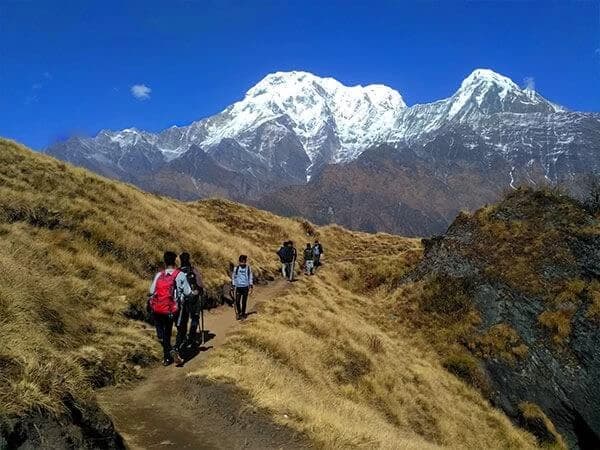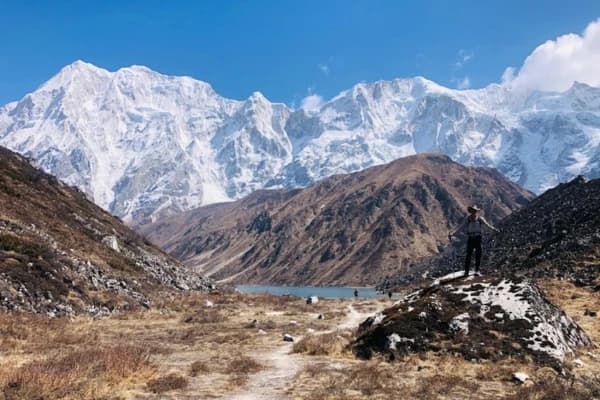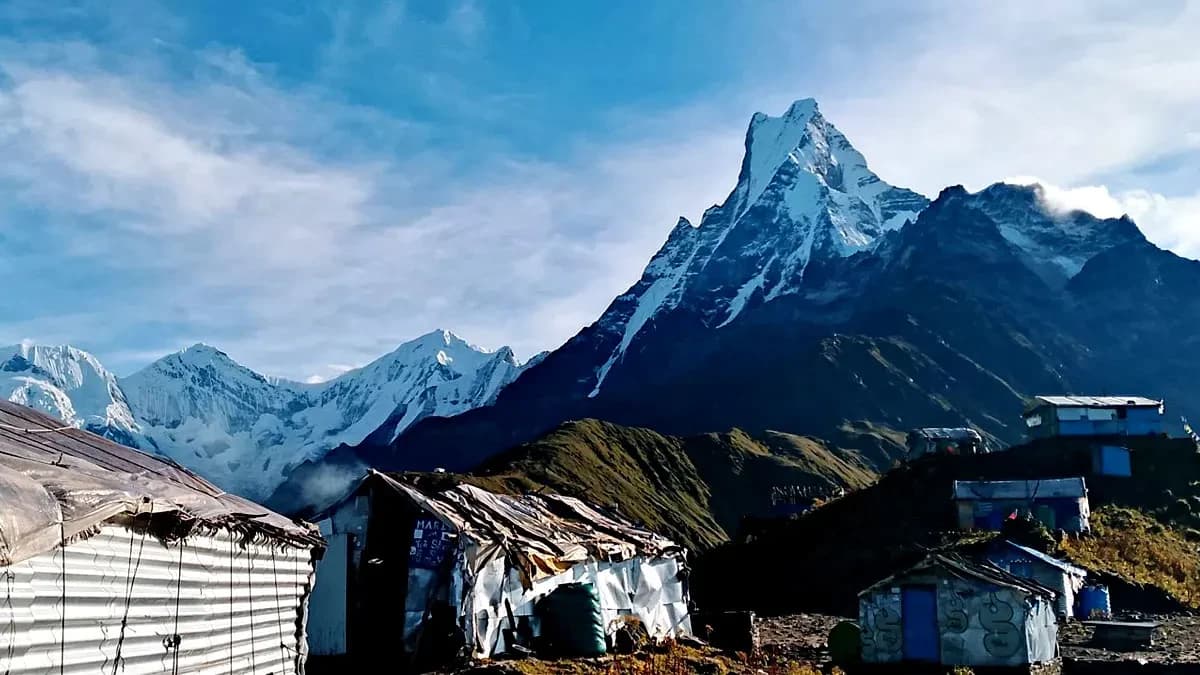
Picking between the Mardi Himal Trek vs Ghorepani Poon Hill Trek mostly comes down to how tough you want the trek to be, how high you want to go, and what kind of experience you’re after in the Annapurna region. Poon Hill is shorter and easier. The sunrise at 3,210 meters is the highlight; watching the mountains slowly light up is something else. That’s why it’s so popular with beginners and families.
Mardi Himal Trek is a bit different. It goes higher, around 4,500 meters, and the trail gets you closer to Machhapuchhre. There’s a ridge section too, which makes it feel more adventurous. So yeah, a lot of trekkers end up comparing Mardi Himal vs Poon Hill Trek before making a choice.
Both treks start near Pokhara and take you into the Annapurna landscape, but the vibe is different. Poon Hill focuses on cultural villages and wide panoramic views. Mardi Himal feels quieter, with fewer people on the trail, plus you get more time walking through forests and open mountain scenery. When people ask Which trek is better, Mardi Himal or Poon Hill, it really comes down to whether they want an easier cultural trek or a more adventurous mountain route.
If you need a hand planning, a registered agency like Nepal Gateway Trekking can sort out licensed guides, permits, and make sure your Annapurna trek goes smoothly.
|
Trekker’s Note:There’s still the “Solo Trekking Ban.” A licensed guide is required on both routes. If you show up at Kande (Mardi) or Birethanti (Poon Hill) without one, you could be turned back or even fined. As of 2026, this is all tracked digitally. You can’t get your TIMS card or ACAP permit unless you book through a registered agency and trek with a licensed guide. |
Quick Comparison Table: Mardi Himal Trek vs Ghorepani Poon Hill Trek

If you want a quick look at how these two popular short treks stack up, this table makes it easy. The info here is based on typical itineraries starting from Pokhara and what most guided packages offer.
|
Feature |
Ghorepani Poon Hill Trek |
Mardi Himal Trek |
|
Duration |
5–8 days |
9–11 days |
|
Max Elevation |
3,210m at Poon Hill |
4,500m at Mardi Himal Base Camp |
|
Difficulty |
Easy to moderate |
Moderate to challenging |
|
Best For |
Beginners, families, short trips |
Adventure seekers, fit trekkers |
|
Views |
Wide Himalayan panoramas including Annapurna and Dhaulagiri |
Up-close views of Machhapuchhre and Annapurna South |
|
Crowd Level |
Can get busy in spring and autumn |
Quieter trails, fewer trekkers |
|
Starting Point |
Nayapul |
Kande or Phedi |
|
Average Cost (Guided) |
Around USD 640 |
Around USD 780 |
Basically, if you want something short, easy, and social, Poon Hill is your pick. If you’re looking for more adventure, higher mountains, and quieter trails, Mardi Himal is the way to go.
What This Comparison Means for You?
If you’re looking for a shorter and easier trek with that famous sunrise view, the Ghorepani Poon Hill trek is usually the easier choice.
But if you prefer higher altitude, fewer trekkers on the trail, and ridge walks that feel closer to the mountains, the Mardi Himal trek gives you a more adventurous experience.
Both treks require the Annapurna Conservation Area Permit and a TIMS card. And since both treks start near Pokhara, they’re pretty convenient if you’re looking for a short Himalayan getaway.
This little comparison just makes it easier to decide, think about your time, fitness, budget, and the kind of mountain views you want to soak in.
Overview of Each Trek: Mardi vs Poon Hill
Both Mardi Himal and Ghorepani Poon Hill start from the Pokhara, but they feel pretty different once you hit the trail.
Mardi Himal Trek – The Ridge Adventure
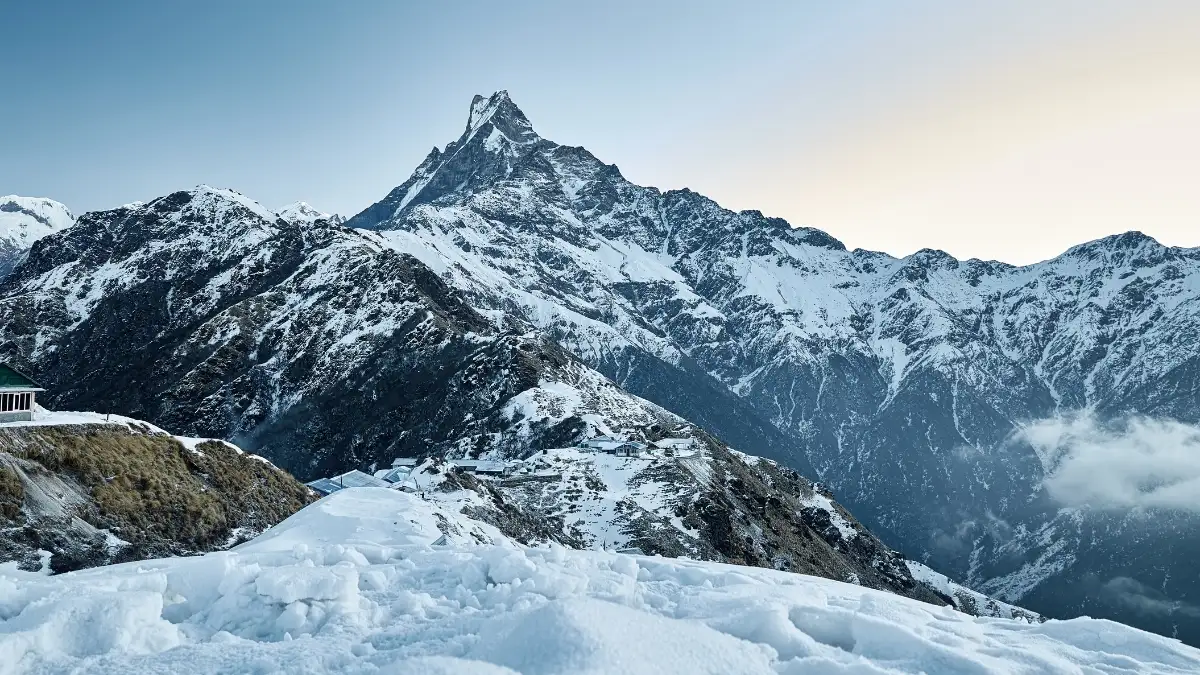
The Mardi Himal Trek is quieter and feels more adventurous. You’ll head up to the Upper Viewpoint at 4,200 meters and then make it to Base Camp at 4,500 meters. The Ridge Walk is the highlight, narrow alpine ridges that give you close-up views of Machhapuchhre and Annapurna South.
The trail winds through forests and high alpine terrain, and the lodges along the way are small, family-run, and pretty basic. This one is really for trekkers who want to get immersed in the mountains and enjoy some peace and quiet.
Key Highlights:
- Upper Viewpoint: 4,200m (great for photos)
- Base Camp: 4,500m
- Ridge walking above 3,500m with amazing close-up mountain views
- Less crowded, very peaceful atmosphere
- Accommodation: small, family-run lodges with basic facilities
- Best for fit trekkers, photographers, and adventure seekers
Ghorepani Poon Hill Trek – The Cultural Classic
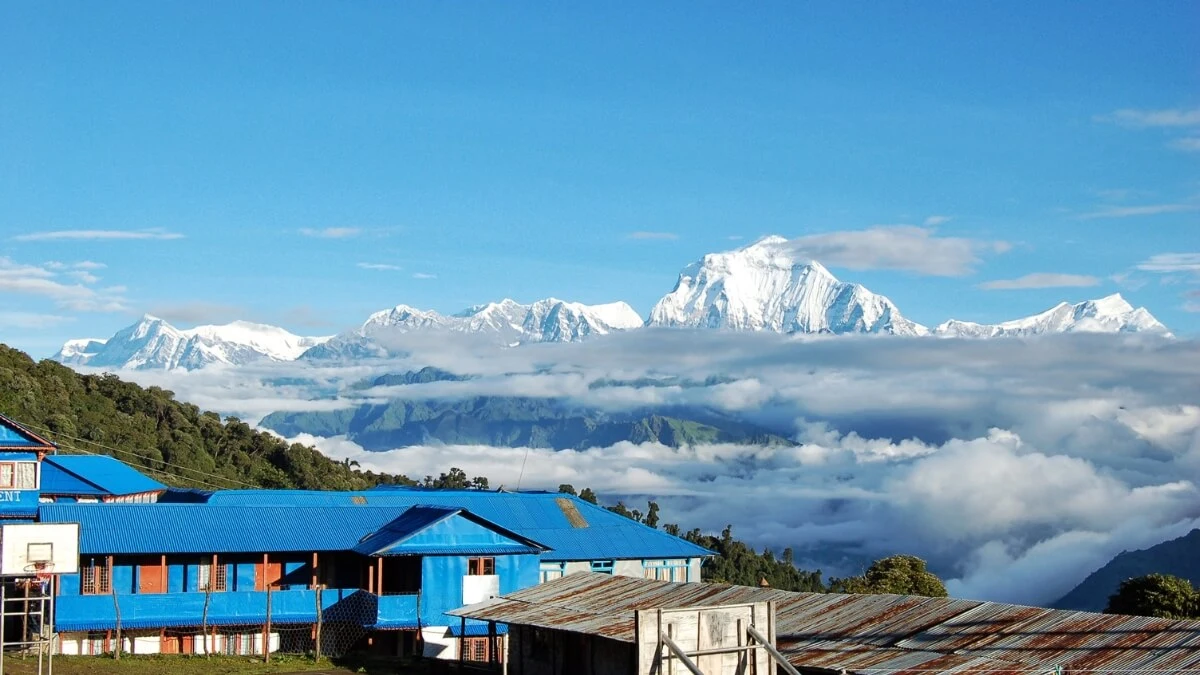
The Ghorepani Poon Hill Trek is pretty easy to get into and feels more social on the trail. The big draw is the sunrise at 3,210 meters, it’s one of those views that just stops you in your tracks, with Annapurna and Dhaulagiri all around. You can even take a jeep up to Banthanti to skip some of the dusty road at the start, which is nice if you want to save your legs.
The trail goes past the famous Ulleri stone steps and winds through lively villages like Ghandruk. Along the way, there are little cafes, tiny museums, and teahouses that are actually pretty comfy, they have hot meals and Wi-Fi, which is a bonus. This trek is really great if you’re a beginner, going with family, or just want a short trek that mixes culture and gorgeous mountain views.
Key Highlights:
- Sunrise at Poon Hill: 3,210m with full 360° Himalayan views
- Rhododendron view of Ghorepani Trek in spring
- Well-kept loop trail with jeep-accessible start
- Ulleri stone steps: 3,200 steps for a moderate challenge
- Passes through Gurung and Magar villages like Ghandruk
- Accommodation: cozy teahouses with hot meals and Wi-Fi
- Best for beginners, families, and short trekking trips
Mardi Himal Trek vs Ghorepani Poon Hill Trek Difficulty – Which Trek is More Difficult?
When you compare Mardi Himal Trek vs Ghorepani Poon Hill Trek, the difference in difficulty mostly comes down to altitude, terrain, and how much effort you’re ready to put in. Mardi Himal is definitely the tougher one, it goes higher, has narrow ridges, and some exposed alpine sections. Poon Hill is easier, with well-kept trails and gentler climbs that most beginners can handle.
Key Points:
- Altitude: Mardi Himal Base Camp reaches 4,500 meters, while Poon Hill tops out at 3,210 meters. Higher altitude means a bigger chance of Acute Mountain Sickness.
- Terrain: Poon Hill mainly has stone paths and the famous 3,200-step Ulleri section. Mardi Himal goes through forest trails, alpine meadows, and those narrow ridge walks.
- Physical Challenge: Mardi Himal needs more stamina and careful pacing. Poon Hill is pretty manageable for beginners and families.
Difficulty Comparison Table
|
Feature |
Ghorepani Poon Hill Trek |
Mardi Himal Trek |
|
Max Altitude |
3,210m (Poon Hill) |
4,500m (Base Camp) |
|
Altitude Risk |
Minimal |
Moderate; risk of AMS above 3,500m |
|
Terrain |
Well-paved stone paths, Ulleri steps, gradual ascents |
Forest trails, alpine meadows, narrow ridges, exposed sections |
|
Physical Challenge |
Easy to Moderate |
Moderate to Challenging |
|
Best For |
Beginners, families |
Trekkers with moderate fitness, adventure seekers |
Is Mardi Himal Harder Than Poon Hill?
Yeah, Mardi Himal is definitely the tougher trek. It climbs up to 4,500 meters and has some pretty steep ridge sections, so you’ll need more stamina and a bit of hiking experience. Poon Hill is much easier, which is why it’s great for beginners.
If you’re mostly worried about how hard it’ll be, Poon Hill is the safer bet. But if you’re up for a bigger challenge and want closer mountain views, Mardi Himal is the trek to go for.
If you are beginners and want to explore more Nepali Himalayas, learn the best five trek for beginners in Nepal and also if you are interested to know how difficult is the Mardi Himal Trek, you can Contact Nepal Gateway Trekking for your queries.
Mountain Views of Mardi and Poon Hill – Panorama vs Close-Up Experience

One of the biggest reasons trekkers compare Mardi Himal Trek vs Ghorepani Poon Hill Trek is the mountain view. Both offer spectacular scenery, but the style of experience is very different.
Poon Hill Panorama
The highlight of the Ghorepani trek is the early morning hike to Poon Hill at 3,210 meters.
From the top, you get a wide 360 degree Himalayan panorama that includes:
- Annapurna I
- Dhaulagiri
- Annapurna South and other surrounding peaks
The sunrise photography here is iconic. As the first light hits the snow peaks, the mountains turn golden. Because the viewpoint is open and wide, it is perfect for landscape photography and group viewing.
This trek gives you a grand, distant perspective of multiple Himalayan giants at once. You can learn some photography tips to if you are trekking for photos.
Mardi Himal Mountain Immersion
The Mardi Himal Trek gives you a whole different mountain experience. Instead of just seeing peaks from far away, you’re walking right under them.
The most striking part is being so close to Machhapuchhre. The trail winds along ridges, and Machhapuchhre feels huge, like it’s right there with you.
Some things you’ll notice along the way:
- Walking right under Machhapuchhre’s south face
- Ridgelines and viewpoints above 3,500 meters
- Open alpine meadows with nothing in the way
- That feeling of actually being inside the mountains, not just looking at them
- The views hit differently, especially around High Camp and Base Camp, it’s intense and really immersive.
Which trek has better mountain views?
It really comes down to what you prefer. If you’re into wide, sweeping panoramic views of multiple Himalayan ranges, Poon Hill is your go-to. But if you want close-up, dramatic mountain vibes with fewer crowds, Mardi Himal gives a much more memorable experience.
Crowds and Atmosphere of Mardi Himal and Ghorepani Poon Hill
The vibe on the trail really makes a difference when choosing between these two short treks in the Annapurna region.
Ghorepani Poon Hill Trek:
- Super popular, especially during spring and autumn
- Gets crowded with families, students, and first-time trekkers
- Sunrise at Poon Hill? Can be pretty packed
Mardi Himal Trek:
- Way quieter and less commercialized
- Not many people on the trail
- Peaceful ridge walks where you really feel in nature
- Perfect if you want some alone time in the mountains
So yeah, if you like busy trails and villages full of life, Poon Hill is your jam. But if you want peace, fewer people, and a more tucked-away Himalayan feel, Mardi Himal is the one.
Accommodation, Comfort, Cost, and Solo Trekking: Mardi Himal vs Poon Hill
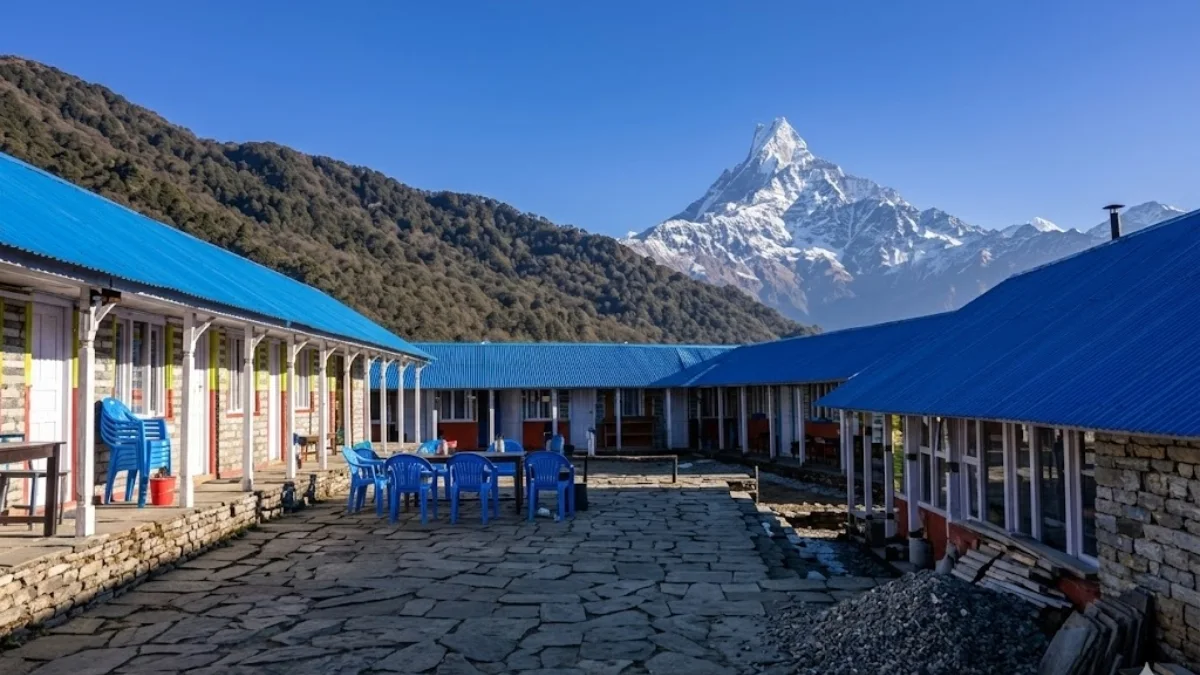
When you’re looking at Mardi Himal Trek vs Ghorepani Poon Hill Trek, things like accommodation, cost, and trekking rules really matter. Both treks have safe places to stay, but they’re quite different when it comes to comfort, style, and regulations.
Accommodation and Comfort
Ghorepani Poon Hill Trek:
- Teahouses are well-developed, many with attached or shared bathrooms
- Hot showers and Wi-Fi are available at lots of stops
- Some lodges even have heated dining rooms and electric blankets
- Food menus are wider and more consistent
- Often called the “teahouse luxury” trek, great for beginners, families, and first-timers
Mardi Himal Trek:
- Lodges at Forest, Low, and High Camp are smaller, often on narrow ridges
- Shared bathrooms and basic facilities; food options get limited higher up
- More rustic and communal, with less focus on creature comforts
- Gives you a more immersive nature experience and peace
Cost Overview
Package Costs:
- Poon Hill: Around USD 640 for 5–8 days, including guide, permits, accommodation, meals, and transport
- Mardi Himal: Around USD 780 for 9–11 days, including guide, permits, accommodation, meals, and transport. The cost is higher because of the longer trek and altitude premiums for food and gas
Permits:
- Annapurna Conservation Area Permit (ACAP): NPR 3,000 (~USD 23)
- TIMS Card: NPR 2,000 (~USD 15)
Transport:
- Kathmandu to Pokhara by bus or flight, then a local drive to the trailhead
So basically, Mardi Himal ends up a bit more expensive because it’s longer, higher, and there are fewer lodges. Poon Hill is more budget-friendly and better if comfort is your priority.
Official Solo Trekking Rule (2023 Update)
Since April 2023, solo trekking isn’t allowed in any national parks or conservation areas, including the Annapurna Conservation Area. So, if you’re a foreign trekker, you’ll need to hire a licensed guide on both the Poon Hill and Mardi Himal routes.
Even though checkpoints might be a bit relaxed sometimes on Poon Hill, the rule officially applies to both treks.
Accommodation, Comfort, and Cost Comparison
|
Feature |
Ghorepani Poon Hill Trek |
Mardi Himal Trek |
|
Official Guide Policy |
Mandatory for foreign trekkers (since 2023) |
Mandatory for foreign trekkers (since 2023) |
|
Typical Package Cost |
~USD 640 |
~USD 780 |
|
Accommodation Type |
Standard teahouses, some with heated dining rooms |
Family-run lodges, basic and rustic |
|
Hot Showers & Wi-Fi |
Available in most villages |
Limited at higher camps |
|
Food Options |
Wider and consistent menu |
Limited menu, especially at High Camp |
|
Crowd Level |
High, very social |
Moderate, quieter, but High Camp can get crowded during peak season |
|
Max Altitude |
3,210m |
4,500m |
|
Difficulty |
Easy – Moderate |
Moderate – Strenuous |
|
Terrain |
Stone stairs, rhododendron forests |
Narrow ridgelines, steep climbs |
|
Best For |
First-time trekkers, families, comfort seekers |
Experienced trekkers, adventure seekers, nature immersion |
Key Takeaways
- Both treks now officially require a licensed guide for foreign trekkers.
- Poon Hill is more comfortable and beginner-friendly.
- Mardi Himal is higher, tougher, and gives closer mountain views, but facilities are limited.
- During peak season, High Camp on Mardi Himal can feel surprisingly busy since there are few lodges.
Cultural Experience on the Treks
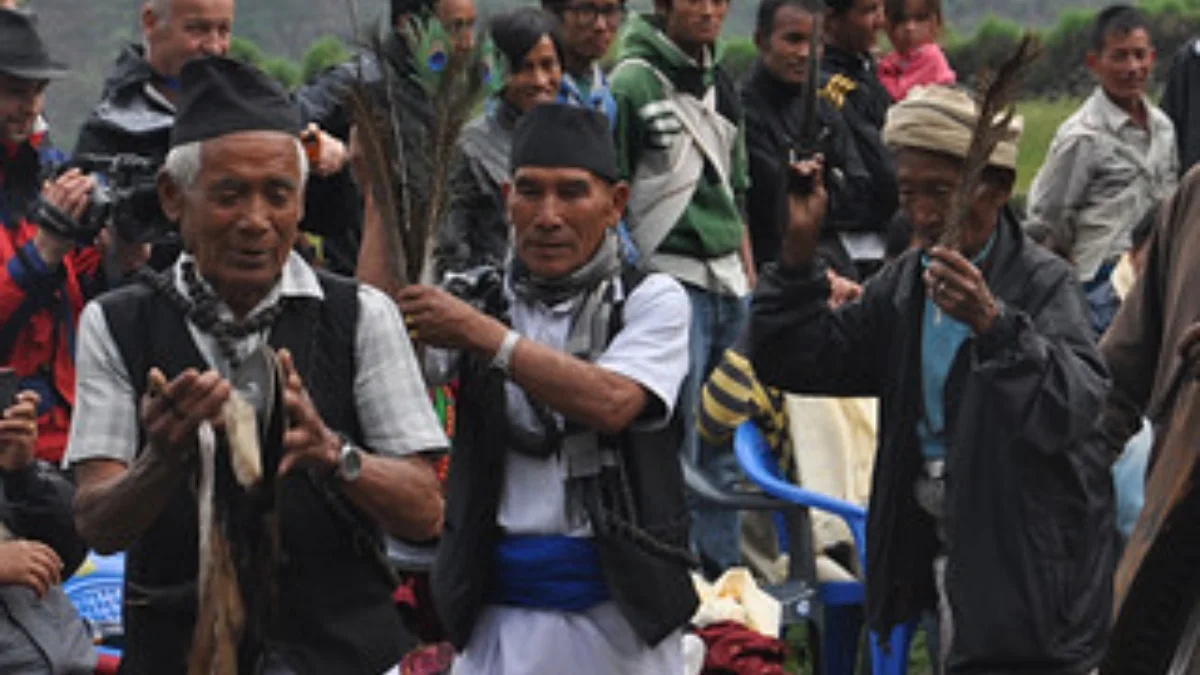
Culture is another way these two treks are different.
- On the Ghorepani route, you pass through traditional Gurung and Magar villages. Ghandruk stands out with its stone houses, narrow lanes, and well-preserved local architecture. Along the way, you can see daily village life, farming routines, and get a feel for the local hospitality.
- Mardi Himal, on the other hand, has fewer villages. The trek focuses more on nature and mountain views than on interacting with local communities.
So, if soaking up culture and village life matters to you, Poon Hill is the way to go. But if you’re after wilderness and fewer people, Mardi Himal is a better fit.
Best Time to Trek: Mardi Himal vs Ghorepani Poon Hill
The best time to trek really makes a difference, for trail conditions, safety, and those mountain views. Generally, spring and autumn are the top seasons for both treks. Winter and the monsoon need extra caution.
Best Time Comparison:
|
Season |
Ghorepani Poon Hill Trek |
Mardi Himal Trek |
|
Spring (Mar–May) |
Blooming rhododendrons, mild temps, clear mountain views |
Clear skies, alpine meadows, great ridge and peak views |
|
Autumn (Sep–Nov) |
Stable weather, crisp skies, perfect for sunrise photos |
Best for close-up peak views and ridge visibility |
|
Winter (Dec–Feb) |
Quieter trails, lower altitudes are accessible |
Snow on higher sections; needs experience and proper gear |
|
Monsoon (Jun–Aug) |
Heavy rain, slippery trails, limited visibility; not recommended |
Rain, landslides, risky trails; not recommended |
If you want to know more about the perfect time for these treks, read our blog:
Who Should Choose Which Trek: Mardi Himal vs Ghorepani Poon Hill
Picking between Mardi Himal and Poon Hill mostly depends on your fitness, how many days you’ve got, and what kind of Himalayan adventure you’re looking for.
Go for Poon Hill if:
- You’re a beginner, or it’s your first trek
- Traveling with family or children.
- You have limited time (3–4 days).
- You prefer comfort with well-developed teahouses and amenities.
- You enjoy wide panoramic mountain views rather than close-up peaks.
Poon Hill offers easier trails, cultural village interactions, and the iconic sunrise panoramas of the Annapurna region without requiring high-altitude trekking experience.
Choose Mardi Himal If:
- You want higher altitude trekking up to 4,500 meters.
- You prefer fewer crowds and a quieter, hidden-gem route.
- You love dramatic close-up mountain views, especially of Machhapuchhre.
- You have moderate fitness and some prior trekking experience.
Mardi Himal is ideal for adventure seekers who enjoy alpine ridge walks, immersive mountain scenery, and a more challenging trekking experience.
Can You Combine Mardi Himal and Poon Hill?
Yes, you can! It’s possible to combine the Mardi Himal Trek and Ghorepani Poon Hill Trek into a 10–14 day adventure for a fuller Annapurna experience.
The combined route usually links through Tadapani or Landruk, connecting the Poon Hill loop to Mardi Himal Base Camp.
This is perfect if you want both the wide, sweeping views from Poon Hill and the up-close, dramatic mountains of Mardi Himal. Along the way, you’ll pass through forests, villages, alpine meadows, and rugged ridges.
The whole trek stays within the Annapurna Conservation Area, so it’s safe and regulated.
Just keep in mind that it needs a bit of planning, acclimatization, food, and accommodation, especially at the higher camps, which are important.
If you have the time, this combined trek is a fantastic way to get the ultimate Annapurna experience: culture, epic sunrises, and some serious mountain immersion.
Final Thoughts
Both Mardi Himal and Ghorepani Poon Hill give you unforgettable trekking experiences, but each has its own vibe. Poon Hill is perfect if you want comfort, cultural villages, and those classic panoramic sunrises. Mardi Himal is better if you’re after peace, higher altitudes, and up-close mountain views.
If you want a safe and smooth trek, Nepal Gateway Trekking is a solid pick. Our team knows the trails really well, gives expert advice, and provides licensed guides, so you can enjoy your Annapurna adventure without stress. Just reach out to us and start planning your trek!
Frequently Asked Questions: Mardi Himal vs Ghorepani Poon Hill
Is Mardi Himal Trek harder than Poon Hill?
Yes, Mardi Himal is definitely tougher. You’re going up to 4,500 meters, and the ridges are steeper, so it takes more energy and stamina compared to Poon Hill.
Which trek is better for beginners?
If it’s your first trek or you just want something easier, go with Poon Hill. The trails are gentler, the altitude isn’t too high, and it’s super beginner-friendly.
Which trek has better mountain views?
Depends on what you like. Poon Hill gives you those classic wide Himalayan panoramas, while Mardi Himal gets you up close to the mountains for some seriously dramatic views.
Which trek costs more?
Mardi Himal usually costs a bit more because it’s longer, higher, and you need a guide. Poon Hill is cheaper and easier on the wallet.
Is altitude sickness an issue on Mardi Himal?
It can be, yes. Once you’re above 3,500 meters, you’ll want to take it slow and let your body adjust to avoid any altitude problems.
Do I need permits for these treks?
Yep, both treks need an Annapurna Conservation Area Permit (ACAP) and a TIMS card, basically the standard paperwork for trekking in the area.
Which trek is less crowded?
Mardi Himal is way quieter. You’ll see fewer trekkers, so it feels peaceful and a lot more private.
Can families do the Poon Hill Trek?
Totally! Poon Hill is perfect for families and older trekkers. The trails are easy, the teahouses are comfy, and the pace is relaxed.