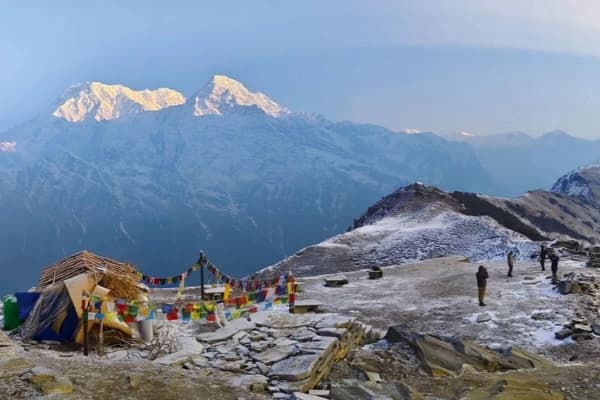
Most people consider Manang Village to be just a rest stop on the Annapurna Circuit. A place to sleep before the big pass. But that's missing the whole point. Manang is something else. It's windy, dry, rocky, and ancient. The mountains around it are massive, like nothing you've seen.
They've survived at over 3,500 meters for centuries, cut off from the world for most of the year. This is a village shaped by isolation, by Tibetan Buddhist faith, by yak herds, and by the raw Himalayan landscape. Once you spend a night or two here, it stays with you.
Quick Overview of Manang Village, Nepal
- Manang is a high-altitude Himalayan village located in the Marshyangdi River valley along the famous Annapurna Circuit trekking route.
- The village is known for its dry, rain-shadow landscape, dramatic mountain scenery, and strong Tibetan Buddhist influence.
- Manang is an important acclimatization stop before crossing Thorong La Pass, one of the highest mountain passes in Nepal.
- The region has a deep history connected to ancient Himalayan trade routes, yak caravans, and mountain survival.
- Daily life in Manang is shaped by isolation, spirituality, harsh winters, yak herding, and high-altitude living traditions.
- Traditional stone houses, monasteries, prayer flags, and Himalayan culture make Manang different from most villages in Nepal.
Where Is Manang Village Located?
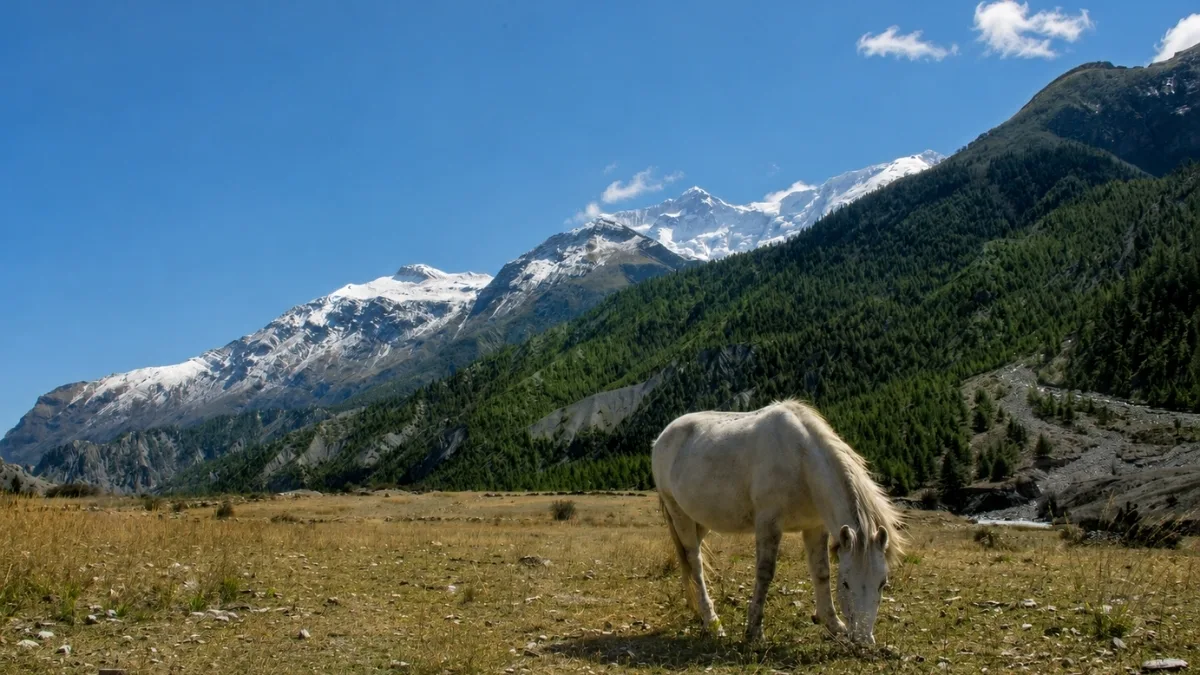
Manang Village sits in Manang District, Gandaki Province, in the north-central part of Nepal. It lies deep inside the Marshyangdi River Valley, behind the Annapurna Massif, at an elevation of roughly 3,519 meters (11,545 feet) above sea level.
The coordinates are approximately 28.67°N, 84.02°E, north of the Annapurna range and well into the high-altitude trans-Himalayan zone.
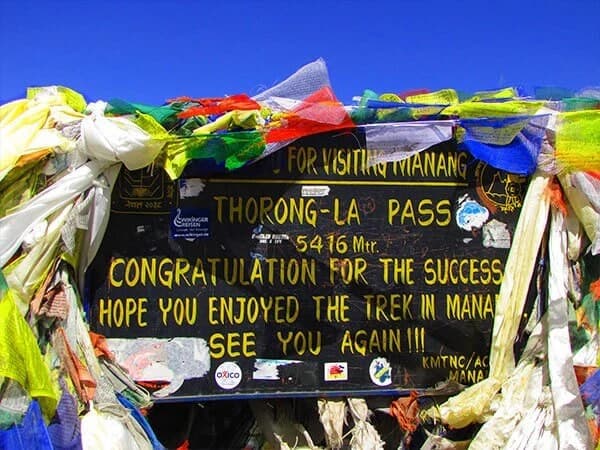
It's positioned along the classic Annapurna Circuit trekking route, sitting between Chame and the famous Thorong La Pass (5,416m). That pass is the highest point of the entire circuit, and Manang is the last major village before trekkers attempt it.
|
Detail |
Info |
|
District |
Manang District, Gandaki Province |
|
Elevation |
3,519 m (11,545 ft) |
|
Valley |
Marshyangdi River Valley |
|
Nearest Pass |
Thorong La Pass (5,416 m) |
|
Trek Route |
Annapurna Circuit |
Why Manang Looks So Different From Other Villages in Nepal
Walk into most Nepali villages, and you'll see green terraces, tropical trees, and lush hillsides. Then you arrive in Manang, and everything changes. It's brown. Rocky. Dry. The hills look more like the Tibetan plateau than anything in the lowlands. Strong sun, no shade, big sky. This isn't damage. It's just geography at work.
The Rain-Shadow Effect of the Annapurna Range
Here's basically how it works. The Annapurna range is so tall and wide that it physically blocks monsoon clouds coming from the south. By the time moisture hits the northern slopes, most of it has disappeared.
So Manang receives very little rainfall compared to places like Pokhara or Ghandruk. That's why the Manang landscape is dry and sparse, technically classifying it as a Himalayan desert.
The sunlight is intense, the air is thin, and the terrain resembles Tibet far more than it does the green Nepal most people picture. This rain-shadow environment directly shapes everything from what people grow to how their houses are built to the types of animals they raise.
The Story of the Manangi People
The Manangi people are the original inhabitants of this valley, and their history is fascinating. They're a Tibetan-origin community with deep roots in trans-Himalayan trade. For centuries, the Manangis ran trade caravans between Tibet and India. Yaks and mules carried salt, wool, and grains across some of the world's most difficult terrain.
These activities gave them a unique, semi-independent status. In fact, Nepal's rulers historically gave Manangi traders special trade privileges because of how skilled and connected they were.
That trading spirit still shows. Manangis have a reputation for being entrepreneurial, educated, and well-traveled even by modern standards. Their culture is distinct from hill communities in the south.
Tibetan Buddhist traditions, language dialects, food, and architecture all of it carries the stamp of the high Himalayan world rather than the Hindu hill culture further south.
Buddhism and Spiritual Life in Manang
Walk through the village and you'll immediately notice it. Prayer flags strung between rooftops. Mani walls are long stone walls carved with Buddhist mantras. The distant sound of monks chanting in the morning.
Tibetan Buddhist culture is central to life in Manang. It's not just religion it's how people understand the mountains, the seasons, and their place in the world.
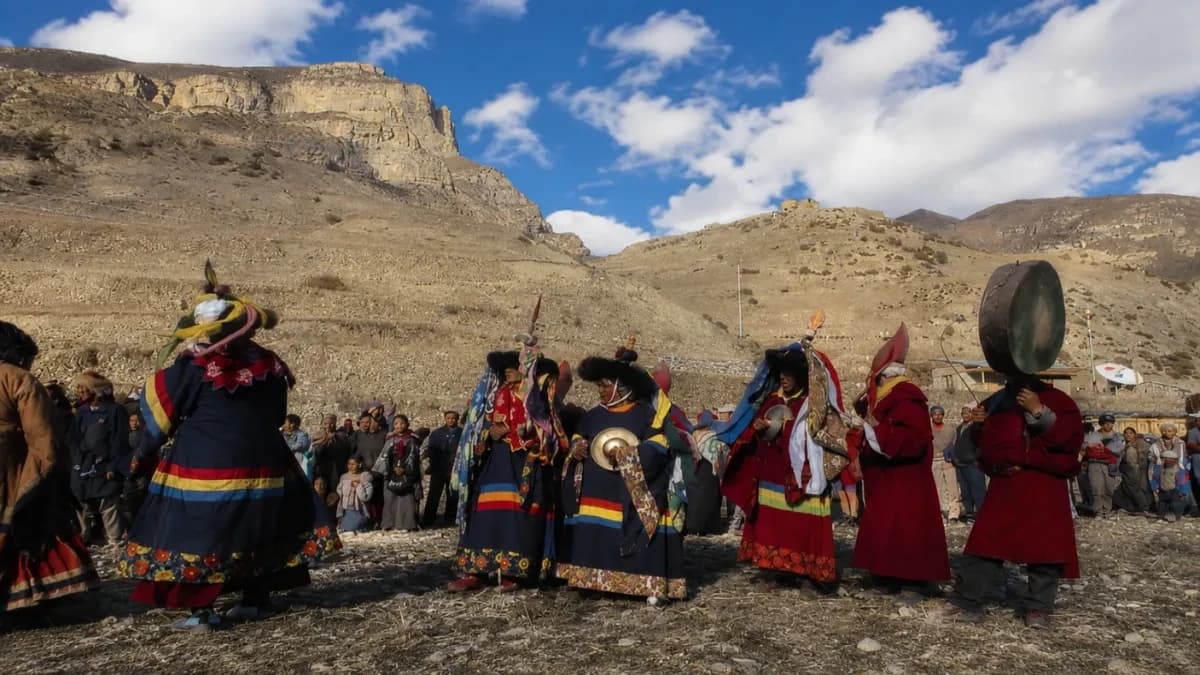
Monasteries serve as spiritual anchors for the community. Religious festivals bring the whole village together. And even in everyday conversations, there's a calm, unhurried quality that feels rooted in something much older than tourism.
Braga Monastery and Ancient Himalayan Beliefs
Braga Monastery is one of the oldest and most important monasteries in the Annapurna region. It is about two kilometers from the village of Manang. It's believed to be over 500 years old. The monastery is built into a dramatic cliff face and contains ancient religious art, statues, and thangka paintings.
It's a living place of worship, not a museum. Monks still practice here, and the local community still gathers for prayers and festivals.
If you visit Manang, going to Braga is not optional. It's essential.
Plan your Annapurna Circuit trek with Nepal Gateway Trekking our local guides know Braga and every sacred site along the route.
Traditional Houses and Himalayan Architecture In Manang
Manang's houses look nothing like what you'd discover in Kathmandu or the Terai. They're built for survival, not aesthetics. Stone walls, flat roofs, and tiny windows. That's the basic formula.
The thick stone keeps warmth inside during freezing nights. Flat roofs double as storage or drying space for crops. Small windows limit heat loss. Houses are often packed closely together, which helps protect against the wind.
Key features of Manang houses include the following:
- Thick stone construction to insulate against extreme cold
- Flat roofs used for drying buckwheat, potatoes, and firewood
- Low doorways that help retain warmth inside
- Compact village layout that acts as a wind barrier
- Minimal decoration: these are working homes, not showpieces
How Do People Live in Manang During Winter?
Winter in Manang is brutal. Temperatures drop well below freezing. Snow blocks roads. The tourist season ends completely.
So what do people actually do?
Many families migrate to lower altitudes, like Kathmandu, Pokhara, or even India, during the harshest months. This seasonal migration has been part of Manangi life for generations.
Those who stay focused on survival:
- Food storage: potatoes, dried grains, and preserved meats prepared in advance
- Yak products yak butter, milk, and meat become dietary staples
- Firewood and animal dung used for heating and cooking
- Community winters bring people closer together inside thick-walled homes
Life slows down. That's okay. The Manangis have been reading the mountain's rhythm for centuries.
Farming, Yaks, and Daily Survival in the High Himalayas
At over 3,500 meters, farming is hard. Really hard. The growing season is short, the soil is dry, and options are limited. But Manangis makes it work. Terraced fields around the village produce buckwheat, barley, potatoes, and some vegetables. These crops can handle the altitude and the dry climate.
Yak herding is just as important as farming. Yaks provide:
- Milk and butter for food
- Wool and hides for clothing and trade
- Transport for heavy loads across high terrain
- Dung for fuel during cold months
Yaks are basically the Swiss Army knife of the Himalayas.
Beyond farming, tourism and trekking now form a big part of the local economy. Teahouses, lodges, guide work, and porter services the Annapurna Circuit brings thousands of trekkers through Manang each year, and that income matters.
Explore the Annapurna Circuit with local experts at Nepal Gateway Trekking and support communities like Manang directly.
Why Trekkers Stop in Manang Before Thorong La Pass
Every serious trekker heading toward Thorong La Pass stops in Manang for at least one full rest day. This isn't laziness. It's smart. At 3,519 meters, the air in Manang has significantly less oxygen than at sea level. Go too fast, and altitude sickness hits with headaches, nausea, dizziness, and, in serious cases, conditions that need immediate medical attention.
Acclimatization in Manang works like a charm:
- Spend 1–2 nights at Manang altitude
- Do a short hike to a higher elevation (Ice Lake, Gangapurna viewpoint), then sleep lower
- Drink plenty of water and avoid alcohol
- Visit the Himalayan Rescue Association medical post in Manang if feeling unwell
- Don't rush crossing Thorong La with altitude sickness is genuinely dangerous.
- Eat well and rest, even if you feel fine
The rule in mountaineering is to climb high and sleep low. Manang makes the climb easy. Day hike up, then come back to the village to sleep.
A Day in Manang Village
Mornings here are cold and clear. The sky turns orange behind Gangapurna and Annapurna III before the sun even touches the village. Prayer flags ripple in the wind. A monk somewhere is chanting. Yak bells clang faintly from the hillside.
By 7am, bakeries start warming up. Trekkers fill teahouses with steaming cups of ginger tea and Tibetan bread. There's a quiet energy, people moving, but slowly. Midday is warmer. The afternoon wind picks up strongly, which is normal here. Trekkers take acclimatization hikes to Ice Lake or Gangapurna.
Locals go about their business tending animals, carrying loads, and managing guesthouses. By evening, the wind dies down. Mountains glow pink in the alpenglow. The village gets quiet. Hushed. No traffic noise, no city sounds. Just wind, stars, and the occasional dog. It's the kind of silence that feels rare now.
The Silence and Feeling of Being in Manang
This experience is difficult to describe, but people who've been here will understand exactly what I mean. There's something about being at altitude, surrounded by mountains that are bigger than anything you've ever seen, in a village that operates completely on its own terms it does something to your brain.
The air is thin. You walk slower. You breathe more carefully. Everything slows down. And in that slowness, you start noticing things you usually miss. The color of morning light on stone. The sound of a prayer flag in the wind is soothing. The way a yak just looks at you with total indifference.
Many travelers say Manang is the most memorable place on the Annapurna Circuit, not for one dramatic moment, but for the atmosphere. The feeling of being somewhere genuinely remote and real. That feeling is rare. And it's worth going slowly enough to actually feel it.
Food Culture in Manang Village
High altitude means your body burns more calories just to stay warm. So food in Manang is hearty, warm, and practical.
Popular dishes and drinks you'll find here:
- Dal Bhat rice and lentil soup, the Nepali staple that fuels trekkers across the country
- Thukpa Tibetan noodle soup, perfect for cold evenings
- Tibetan bread, thick, fried flatbread usually eaten with honey or jam
- Yak butter tea is an acquired taste, salty and rich, but keeps you warm and gives energy
- Soups and stews vegetable and meat soups are common and filling
- Apple products the Manang region is known for apple orchards; apple pie, apple brandy, and apple cider appear on many menus
Most people bring in supplies by vehicle (or still by mule in some areas), so prices are higher than in lower villages. That's just the reality of living at altitude.
Popular Places Around Manang Village
Beyond the village itself, the surrounding area has some stunning spots for day treks and exploration:
- Gangapurna Lake, a glacier-fed turquoise lake just above the village, with Gangapurna Mountain reflecting in the water. A 30-minute walk from the main village.
- Ice Lake (Kicho Tal) is a tough 4–5 hour trek up to around 4,600 meters, but the view of the Annapurnas from up there is worth every step.
- Braga Village and Monastery are 2 km from Manang, quieter, with the ancient monastery built into the cliff face.
- Gangapurna Glacier viewpoint you can see the glacier up close from several spots near the village.
- Praken Gompa, a small monastery above the village, is reachable by a short hike and offers panoramic views.
- These spots double as acclimatization treks, so they're both useful and beautiful. Win-win.
ContactNepal Gateway Trekking to add these hidden gems to your Annapurna Circuit itinerary.
How Roads and Tourism Are Changing Manang?
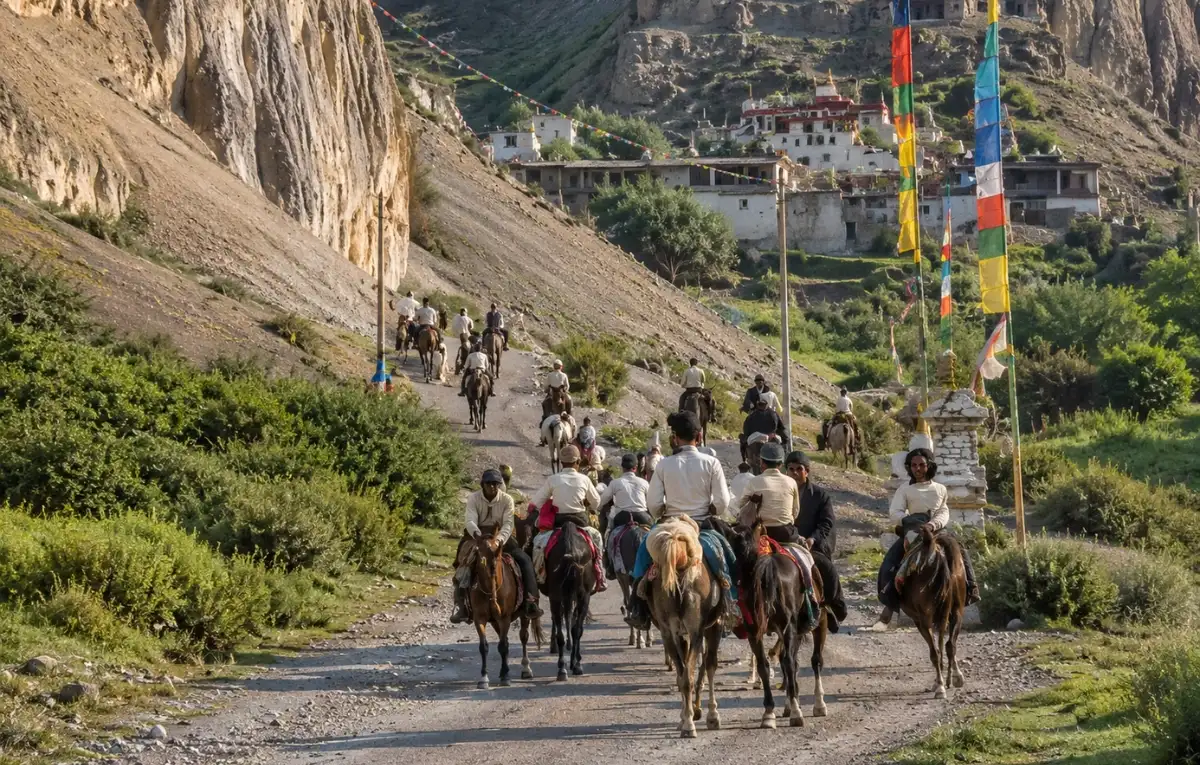
Ten years ago, reaching Manang meant walking for days. Now, a jeep road from Besisahar through Chame connects Manang to the outside world by vehicle. That changes things fast. On the positive side, easier access to medical care, supplies, and markets.
Better livelihood options for locals. More visitors means more income from lodges and services. But there are tradeoffs. The traditional mule transport system is declining.
The quiet, isolated character of the village is slowly shifting. More lodges, Wi-Fi, and charging points make it become more like everywhere else. The Manangi people are navigating these changes carefully. Many want development and connection.
Others want to hold onto what makes Manang Manang. It's a balancing act the whole Himalayan region is facing right now.
How to Reach Manang from Kathmandu or Pokhara?
Reaching Manang is much easier today thanks to the road connection through Besisahar and Chame.
From Kathmandu
Travel route: Kathmandu to Besisahar to Chame to Manang
- Kathmandu to Besisahar: 6–8 hours
- Besisahar to Manang by jeep: 8–10 hours
- Total travel time: Around 1–2 days
From Pokhara
Travel route: Pokhara to Besisahar to Chame to Manang
- Pokhara to Besisahar: 4–5 hours
- Jeep ride to Manang: 8–10 hours
- Total travel time: Around 1–2 days
Many trekkers also reach Manang while walking the famous Annapurna Circuit trail.
Best Time to Visit Manang Village
Spring and autumn are your best bets. The Manang weather in these seasons is cold at night but manageable during the day, with the clearest mountain views.
|
Season |
Months |
Conditions |
|
Spring (Best) |
March – May |
Clear skies, stable weather, blooming rhododendrons on the way up |
|
Autumn (Best) |
September – November |
Crisp air, excellent visibility, peak trekking season |
|
Winter |
December – February |
Heavy snow, road closures possible, very cold; not recommended |
|
Monsoon |
June – August |
Trails can be muddy with lower visibility; upper Manang is drier than most |
Permits and Entry Requirements for Manang
You need two permits to trek through Manang:
- An Annapurna Conservation Area Permit (ACAP) is required for all trekkers entering the Annapurna Conservation Area. Protects the region's wildlife and ecosystems.
- A TIMS card (Trekkers' Information Management System) is required for all trekkers in Nepal. Helps with safety and tracking.
Both are available in Kathmandu (tourism board office) or Pokhara before you start the trek. There are checkpoints along the route where these are verified. Have them accessible.
Nepal Gateway Trekking can handle all your permits and logistics so you can just focus on the experience.
Final Thoughts
Manang Village is not just a dot on a trekking map. It's a living, breathing settlement that's been clinging to these mountains for centuries, shaped by wind, thin air, Tibetan Buddhist faith, and the kind of resilience you only develop when the outside world isn't coming to help anytime soon.
The landscape is unlike anything else in Nepal. The culture is deep and genuine. And the feeling of being there, slow, quiet, and raw, stays with most people long after the trip ends.
Whether you're a trekker, a culture lover, or just someone curious about how people actually live at the edge of the world, Manang is worth your time.
Ready to experience Manang for yourself?
ContactNepal Gateway Trekking to plan your Annapurna Circuit journey with experienced local guides who know Manang, its culture, and its mountains deeply. We handle permits, logistics, and everything in between so your only job is to show up and explore.
FAQs
Why is Manang called a rain shadow region?
Manang lies behind the Annapurna range, which blocks heavy monsoon clouds from the south. This creates a dry climate with rocky hills and far less rainfall than most parts of Nepal, making it one of Nepal's most unique Himalayan desert landscapes.
Who are the Manangi people?
The Manangi people are the traditional inhabitants of Manang. Their culture is strongly shaped by Tibetan Buddhism, ancient Himalayan trade routes, and centuries of high-altitude mountain living. Historically, they were renowned traders across the trans-Himalayan region.
Why do trekkers stay in Manang before the Thorong La Pass?
Trekkers stop in Manang to acclimatize to the altitude before attempting Thorong La Pass (5,416 m). Spending a rest day here significantly lowers the risk of altitude sickness on the crossing.
What food is commonly eaten in Manang?
Popular foods include dal bhat, thukpa (Tibetan noodle soup), Tibetan bread, soups, apple products, and yak butter tea, all energy-rich and warm, which is precisely what you need at altitude.
Why are houses in Manang built with flat roofs?
Flat roofs and thick stone walls help homes handle strong sunlight, heavy snow, and extreme cold. The flat roof also doubles as storage and drying space for crops and firewood.
Can you drive to Manang Village?
Yes, Manang is now accessible by jeep via a mountain road from Besisahar through Chame. That said, weather can affect road conditions, especially in winter and monsoon seasons.
What are the best places to visit around Manang?
Top spots include Ice Lake (Kicho Tal), Gangapurna Lake, Braga Monastery, Praken Gompa, and various mountain viewpoints used for acclimatization hikes.
What makes Manang different from other villages in Nepal?
Manang stands out because of its dry Himalayan desert landscape, Tibetan Buddhist culture, ancient trade history, distinctive stone architecture, and a high-altitude lifestyle that's simply unlike anywhere else in Nepal.