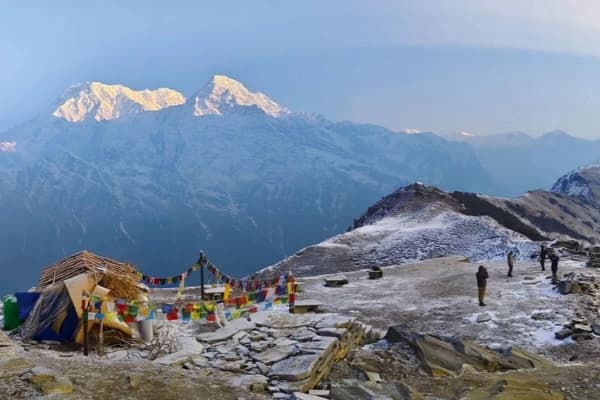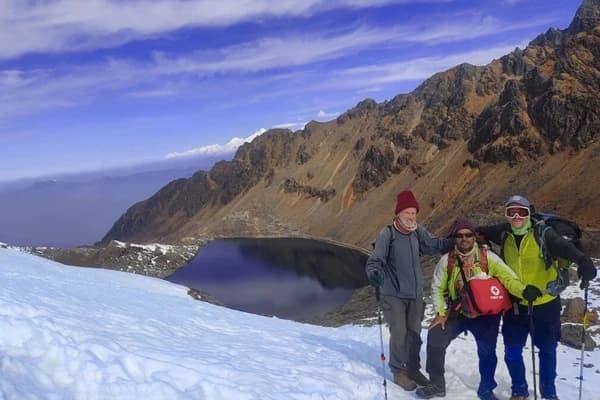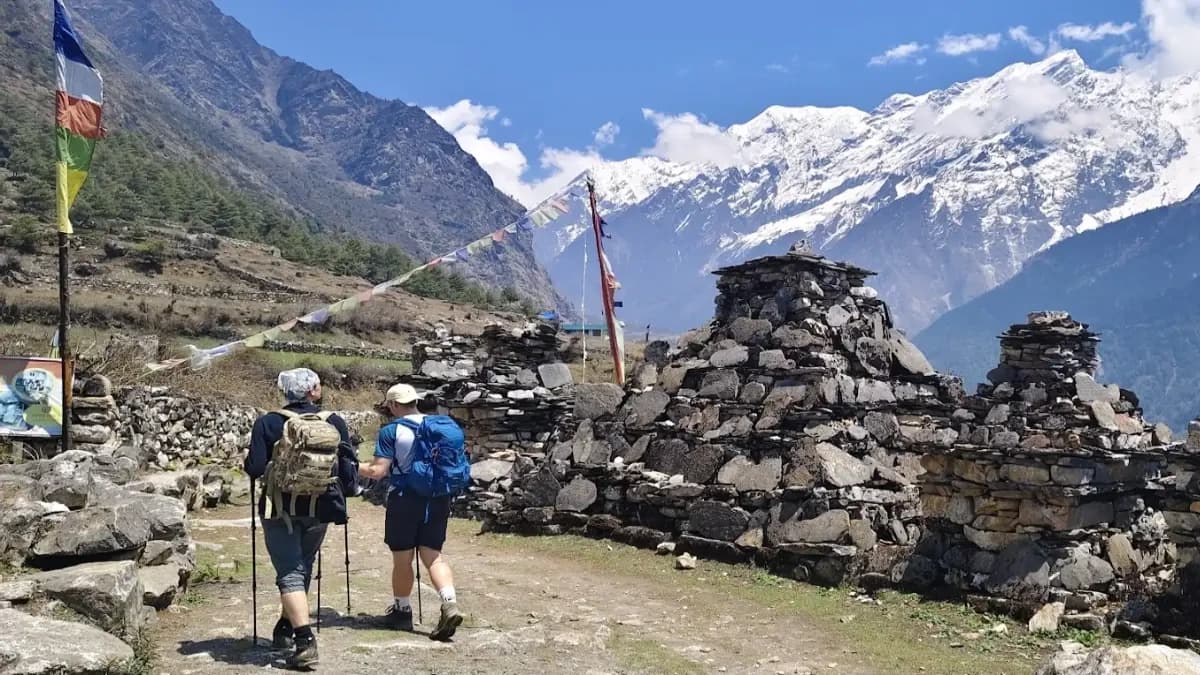
The Manaslu Circuit combined with Tsum Valley is one of the most rewarding treks in Nepal: raw, remote, and genuinely off the beaten path. But getting in isn't as simple as booking a flight and lacing up your boots. The Manaslu region is a government-controlled restricted zone.
Before you set foot on the trail, you need multiple permits, each issued by a different authority and each covering a different part of the route. A lot of trekkers don't realize how many permits are actually involved until they're already trying to book.
This guide covers everything you need to know about Manaslu Circuit Tsum Valley Trek permits: what they are, what they cost, where to get them, and how to avoid the mistakes that slow people down. All information is based on official guidelines from the Department of Immigration of Nepal.
Not sure which permits you need for your Manaslu Circuit Tsum Valley Trek? Please speak with the Nepal Gateway Trekking team, and we will take care of all the necessary permits for you.
Manaslu Circuit Tsum Valley Trek Permits: Quick Overview & Key Rules
- You need 5 permit: Manaslu RAP, Tsum Valley RAP, MCAP, ACAP, and Chumnubri permit
- Solo trekking is allowed but you need at a licensed guide. At least 2 trekkers are recommended.
- Permits can only be arranged through a registered trekking agency
- Total cost is around USD 250–300+, depending on season and duration
- Required documents: passport, visa, photos, and itinerary (insurance recommended)
- Restricted permits are issued weekly; extra days cost extra
- Permits are checked at multiple checkpoints during the trek
- Trekking without permits can lead to fines, being turned back, or no rescue support
- Best tips: Apply early, carry copies, and add buffer days
In short: get your permits properly, obey the rules, and enjoy a safe, hassle-free trek in one of Nepal’s most remote regions.
What Permits Are Required for the Manaslu Circuit Tsum Valley Trek?
For the combined Manaslu Circuit Tsum Valley Trek, you'll need five permits in total. Skip even one and you risk getting turned back at a checkpoint, which would be a pretty awful end to a trip you've spent months planning.
Manaslu Restricted Area Permit (RAP)
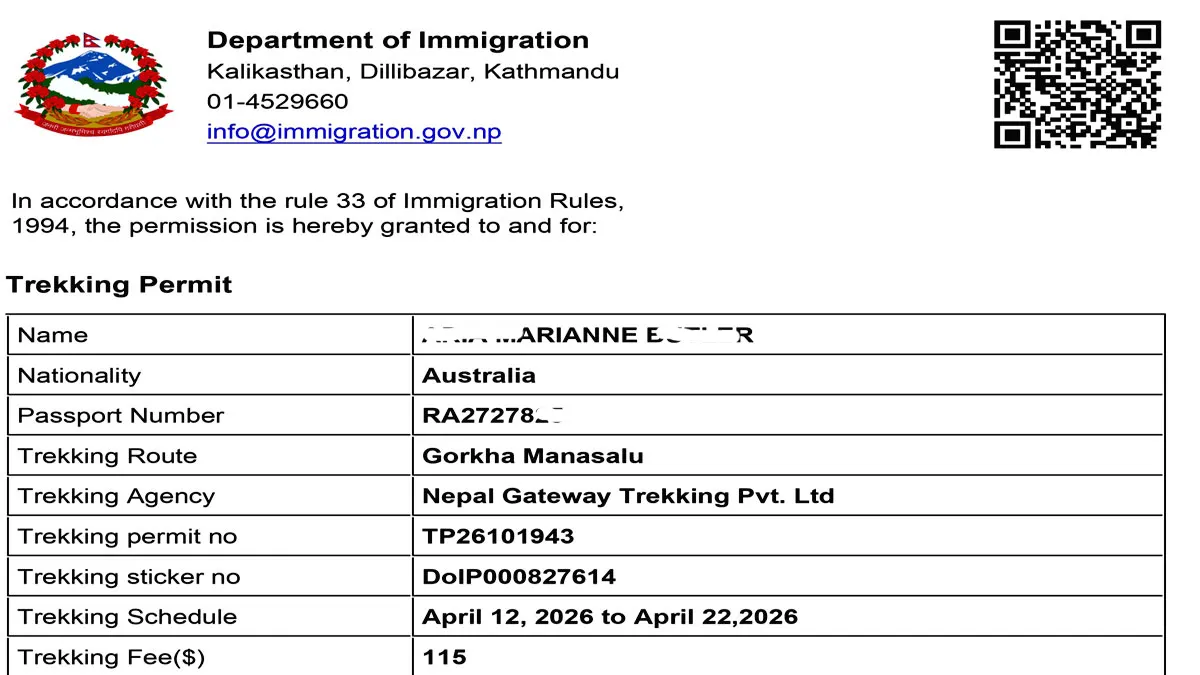
This permit is the big one. The Manaslu Restricted Area Permit is mandatory for anyone entering the Manaslu Conservation Area along the circuit route. Manaslu sits on the Nepal-Tibet border, and the whole region is classified as a restricted trekking zone. The government limits access to protect both the sensitive ecosystem and the semi-nomadic communities living here. You cannot get this permit on your own. It must be processed through a registered trekking agency, and you need to be in a group of at least two people.
Tsum Valley Restricted Area Permit
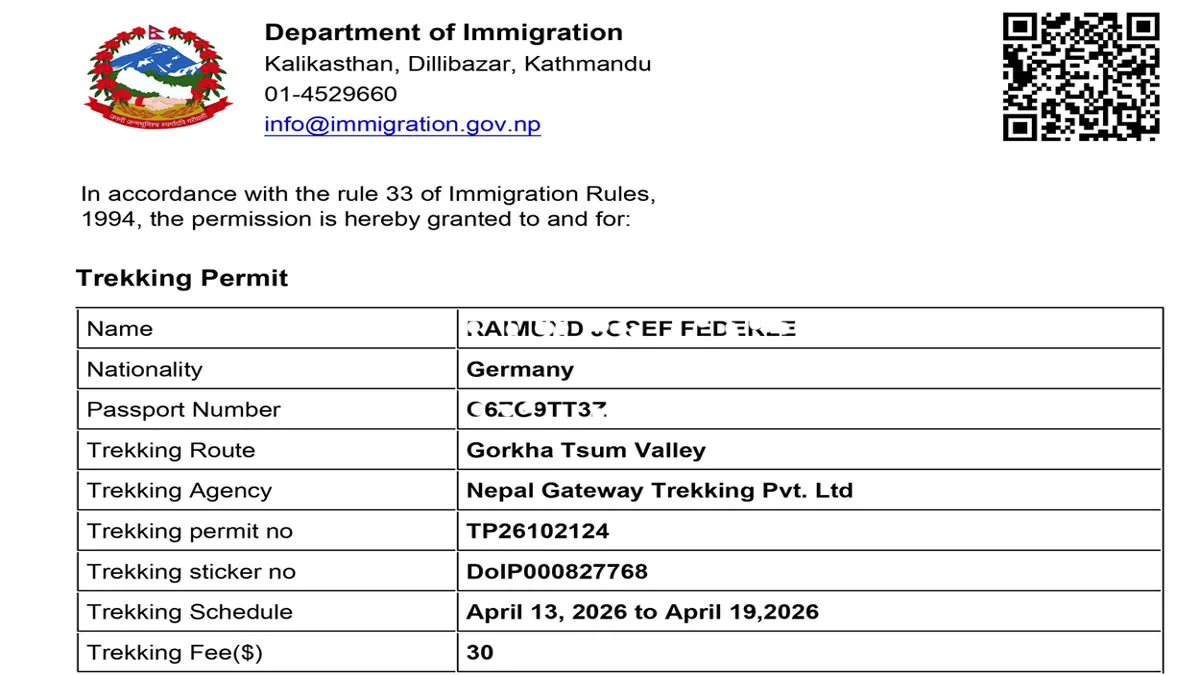
If you're doing the full route that includes Tsum Valley, you need a separate Tsum Valley Restricted Area Permit. Tsum Valley is its own restricted zone, a sacred Himalayan pilgrimage area with Tibetan Buddhist culture that's been largely preserved precisely because of these entry restrictions.
This fee adds an additional cost on top of the Manaslu RAP. Don't assume one covers the other; they don't.
Manaslu Conservation Area Permit (MCAP)
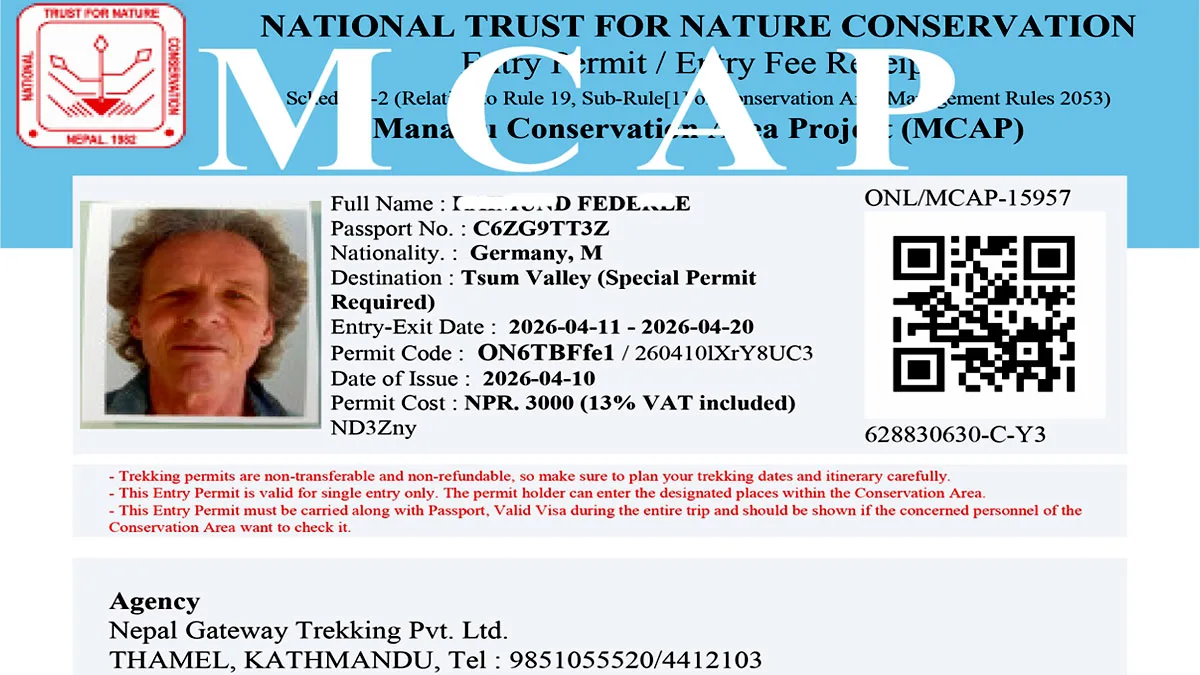
The Manaslu Conservation Area Permit (MCAP) covers the conservation zone itself. Think of it as an environmental protection fee. The funds go toward maintaining trails, protecting wildlife, and supporting conservation efforts in the region. This fee is separate from the Restricted Area Permit, and you need both.
Annapurna Conservation Area Permit (ACAP)
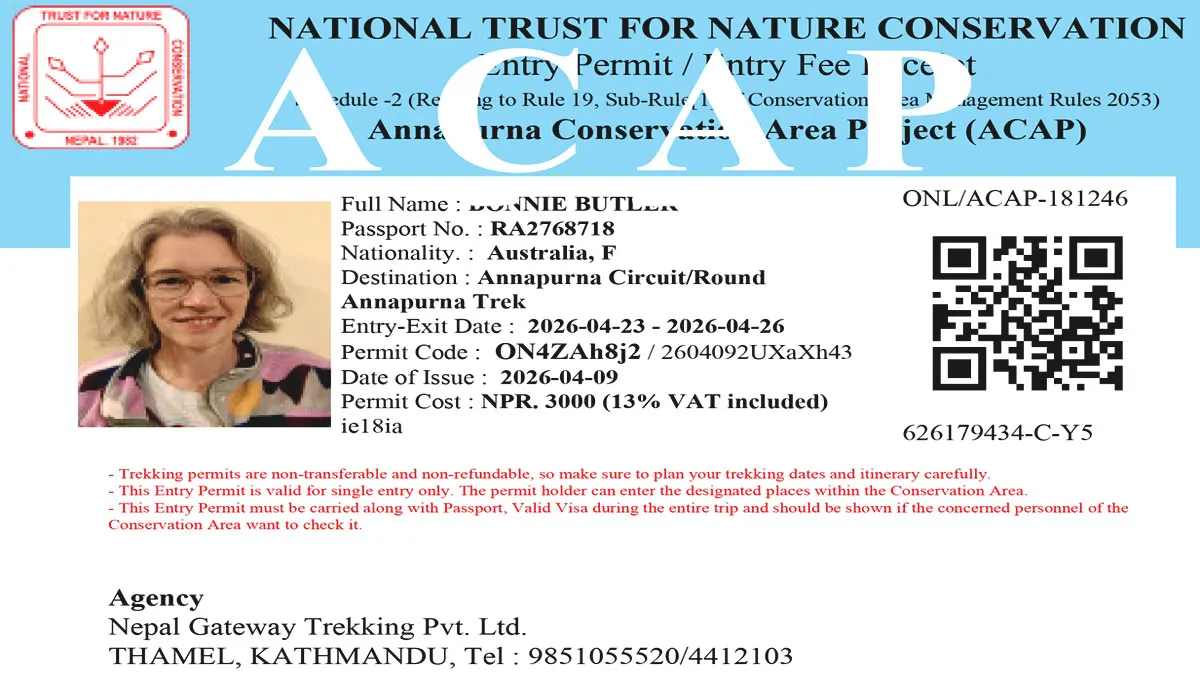
If your route crosses over the Larkya La Pass and descends into the Annapurna region, which most Manaslu Circuit trekkers do, you'll need the Annapurna Conservation Area Permit (ACAP) as well. So yes, you're paying for two conservation permits on this trek. It's just how the route works.
Chumnubri Rural Municipality Permit
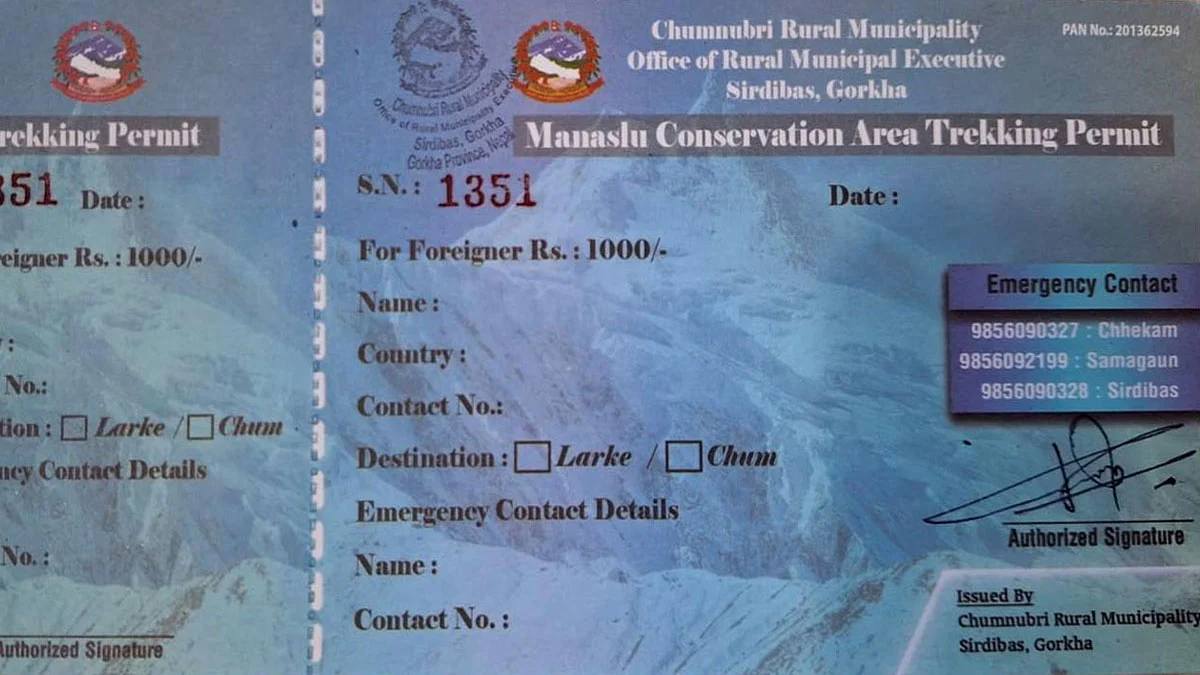
The Chumnubri Rural Municipality Permit is a local development fee collected by the municipality that governs this area. The money supports local infrastructure: roads, schools, and health posts. It's a small fee that directly benefits the communities you'll be walking through.
Manaslu Circuit Tsum Valley Trek Permits Cost: Full Price Breakdown
Here's what you're looking at for permit costs. Note that the Manaslu Restricted Area Permit cost changes depending on the season.
|
Permit |
Foreign Nationals | SAARC Nationals | Nepali Citizens |
|
Manaslu RAP (Sept–Nov) |
USD 100/week + $15/extra day | USD 100/week | Not Required |
|
Manaslu RAP (Dec–Aug) |
USD 75/week + $10/extra day | USD 75/week | Not Required |
|
Tsum Valley RAP (Sept–Nov) |
USD 40/week + $7/extra day | USD 40/week | Not Required |
|
Tsum Valley RAP (Dec–Aug) |
USD 30/week + $7/extra day | USD 30/week | Not Required |
|
Manaslu Conservation Area Permit (MCAP) |
NPR 3,000 (USD 23) | NPR 1,000 (USD 8) | NPR 100 |
|
Annapurna Conservation Area Permit (ACAP) |
NPR 3,000 (USD 23) | NPR 1,000 (USD 8) | NPR 100 |
|
Chumnubri Rural Municipality Permit |
NPR 1,000–2,000 (USD 8–15) | NPR 1,000–2,000 | NPR 200 |
Peak season (September to November) costs more for the restricted area permits. If you're trekking in spring (March to May), you'll pay the lower RAP rate. MCAP and ACAP fees stay the same year-round.
The Chumnubri permit fee is typically paid in NPR at the local entry point. Your agency will confirm whether this has changed.
Know the best time to trek Manaslu Tsum Valley and plan your adventure to the off beaten trial with Nepal Gateway Trekking.
Manaslu Trek Permit Rules
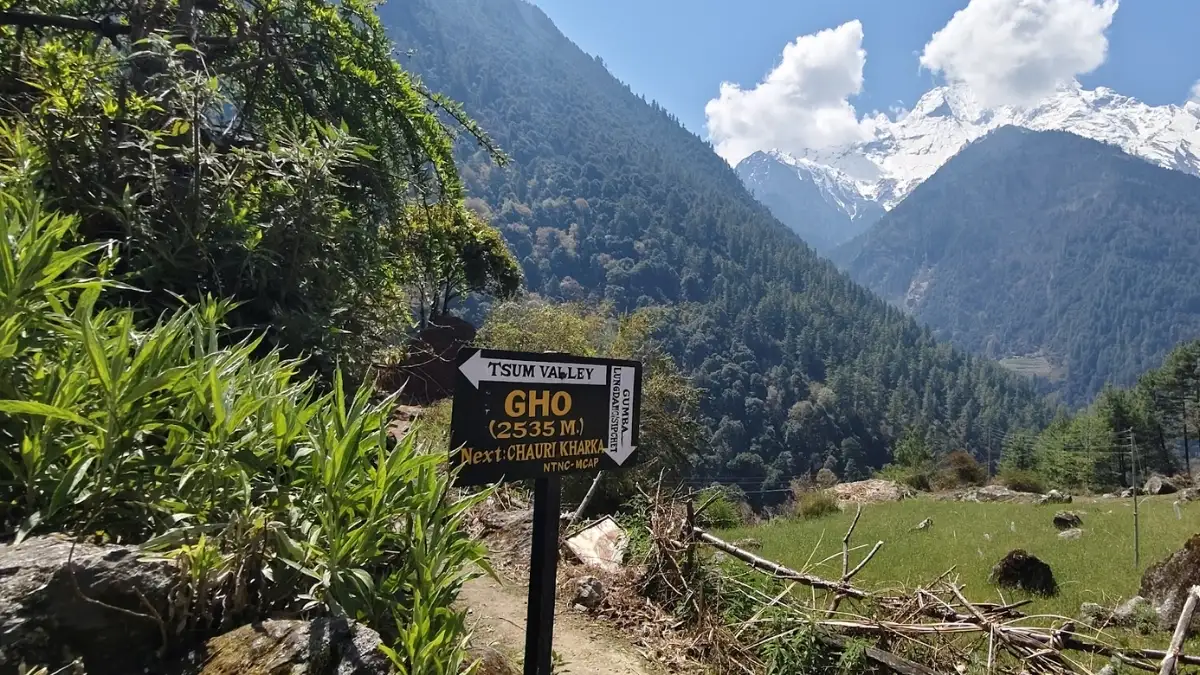
This area catches a lot of trekkers off guard. The rules here are stricter than most other trekking regions in Nepal. Know them before you go.
- Solo Trekking Permit: Solo foreign trekkers can now apply for a Restricted Area Permit (RAP) individually. You no longer need a second person to "buddy up" or meet a minimum group size to get the permit.
- Licensed Guide Is Mandatory: Not optional, a government-licensed guide must accompany you throughout.
- Registered Agency Required: You cannot apply for permits directly; it must go through an approved agency.
- Guide-to-Trekker Ratio: One guide per group; larger groups may need additional guides.
- Emergency Responsibility: Your trekking agency is officially responsible for your safety in restricted zones.
- Digital Processing: Applications are now submitted electronically, making the process faster than before.
These rules aren't just formalities; they exist to keep you safe in one of Nepal's most remote and high-altitude regions. Follow them, book through a legitimate agency, and your permit process will be the smoothest part of the entire trek.
|
Feature |
Old Rule (Pre-March 2026) | New Rule (Current) |
|
Min. Trekkers |
2 foreigners required | 1 foreigner allowed |
|
Guide |
Mandatory | Mandatory |
|
Agency |
Mandatory | Mandatory |
What are the required documents for the Manaslu trek permit?
Submitting incorrect documents can delay your entire permit process by several days. So before you approach any agency, make sure you have everything ready:
- Valid passport: Minimum 6 months' validity beyond your trek dates
- Nepal visa: minimum 15 days validity; most agencies recommend 30 days to be safe
- Passport-size photos: bring at least 4–6 copies; different permits need separate photos
- Travel insurance: not legally required but strongly advised given the altitude and remoteness
- Trekking itinerary: your agency will prepare this as part of the permit application
One thing worth noting: make sure your passport photos are recent. Immigration offices sometimes reject older photos that don't match your current appearance; it's a small detail that can hold everything up. Get these sorted in advance, and the permit process moves fast. Most Kathmandu agencies wrap it up within 1–3 working days.
You might like: Manaslu Tsum Valley Trek Complete Guide
How Long Are Manaslu Trek Permits Valid?
The restricted area permits for both Manaslu and Tsum Valley are issued per week. If your trip runs longer, you pay for additional weeks. Extra days beyond your last full week are charged per day: USD 10–15/day for the Manaslu RAP depending on the season and USD 7/day for the Tsum Valley permit.
The MCAP and ACAP are valid for the duration of your registered itinerary; no weekly extensions are needed for those.
Practical tip: Always add 1–2 buffer days to your permit. Weather delays, altitude issues, trail conditions things happen on mountain treks. Running out of permit validity in a restricted zone is a situation you genuinely do not want to be in.
Where to Get the Manaslu Circuit Tsum Valley Trek Permits From?
All permits for this trek are processed through registered trekking agencies in Kathmandu. You can't walk into an immigration office and get these yourself; that's not how restricted area trekking works in Nepal.
Each permit comes from a different issuing authority:
The Manaslu RAP and Tsum Valley RAP are both issued by the Department of Immigration in Kathmandu. The MCAP and ACAP are issued through the Nepal Tourism Board office.
The Chumnubri Rural Municipality Permit is slightly different; it can sometimes be collected at the local entry point, though most agencies handle it in advance so you don't have to consider it on the trail.
Since each permit involves a different office and a different set of requirements, having a registered agency manage the whole process just makes sense.
Please ensure that your agency is properly registered with both the Department of Immigration of Nepal and the Nepal Tourism Board, and allow them to handle the rest.
How to Get Manaslu Trek Permits: Step-by-Step Process
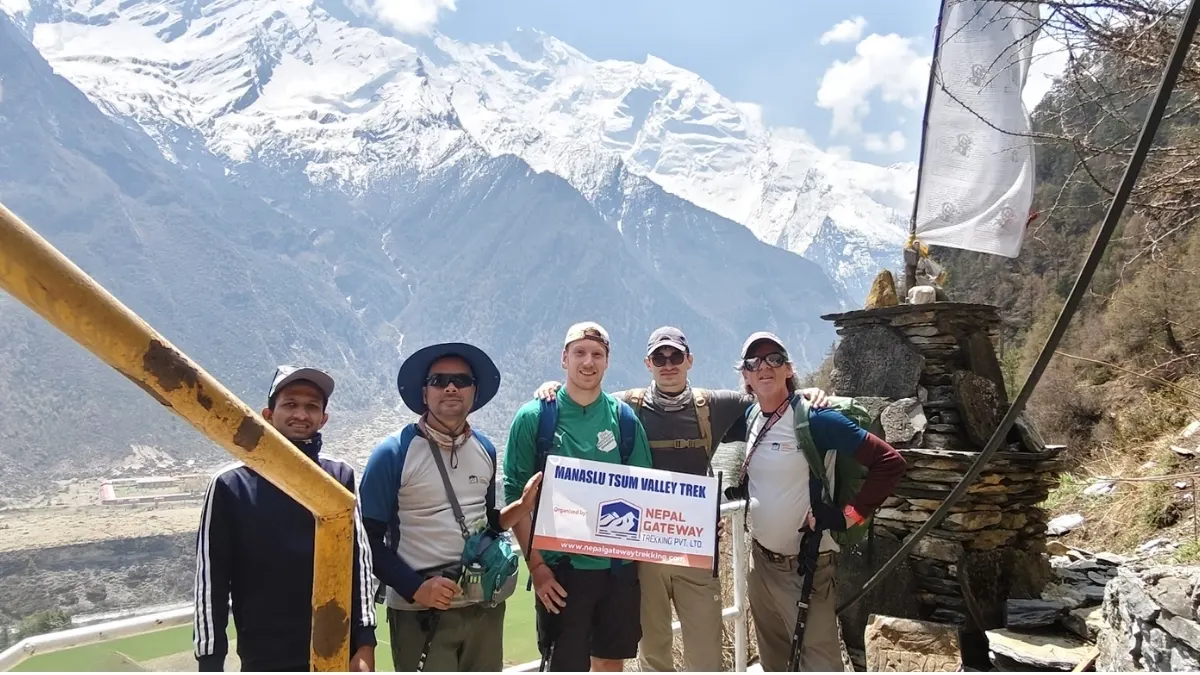
Getting permits for the Manaslu Circuit isn't as complicated as it sounds. The process is straightforward, and your agency does most of the heavy lifting. Here's how it works:
Step 1: Choose a Registered Trekking Agency
This is the most important step. Make sure the agency is registered with both the Department of Immigration Nepal and the Nepal Tourism Board. Ask to see their registration before signing anything.
Step 2: Submit Your Documents
Hand over your passport copy, Nepal visa copy, and passport-size photos. Your agency will prepare the official itinerary and permit application forms on your behalf.
Step 3: Agency Submits the Application
Your agency handles everything from this point, submitting documents, coordinating with immigration, and tracking the permit status. Processing usually takes 1–3 working days in Kathmandu.
Step 4: Collect Permits Before the Trek Starts
Permits must be in hand before you leave Kathmandu or, at minimum, before you reach the first checkpoint. Don't leave the city without them.
The whole process is simple when you have the right agency. Get your documents ready, let them handle the rest, and make sure every permit is in hand before you head out.
Want us to handle your entire Manaslu Circuit Tsum Valley trek permits process? Book your trek with Nepal Gateway Trekking, and we'll take care of everything: documents, permits, and beyond.
Can You Apply for the Manaslu Circuit Trek Permit Online?
This is one of the most commonly searched questions, and the answer is no, not directly related. Individual trekkers cannot apply for Manaslu Circuit trek permits in Nepal through any online portal. The Manaslu and Tsum Valley restricted area permits require physical processing through a registered trekking agency. That's just how the system works for restricted zones.
Some agencies have online inquiry or booking forms on their websites, but that's just booking the service, not the permit itself. The actual application still goes through the physical immigration office in Kathmandu via the agency. There's no official government portal for this, so don't waste time searching for one. Stick to a legitimate registered trekking agency, and the whole process is straightforward.
Where Are the Permit Checkpoints on Manaslu?
You'll pass through multiple checkpoints along the Manaslu Circuit and Tsum Valley route. Permits are checked at each one, so keep them accessible, not buried at the bottom of your pack.
Here are the key checkpoint locations you'll encounter:
- Arughat / Soti Khola: Entry checkpoint at the very start of the trek
- Jagat: one of the most important checkpoints: Restricted area permits are closely verified here
- Deng: Another checkpoint further up the route
- Namrung: Checked before you enter the higher altitude sections
- Samdo / Dharmasala: Checkpoint near the Larkya La Pass area
- Bhimthang: Fjnal checkpoint as you descend toward the Annapurna side
- Tsum Valley Entry: Separate checkpoints for trekkers heading into Tsum Valley
Each checkpoint logs your permit details against your passport, so make sure the names match exactly. Officers are thorough, especially at Jagat and the Tsum Valley entry points. Having both printed copies and phone photos of all your permits will save you stress at every stop along the way.
New Trekking System: Checkpoints & Tracking
Nepal has been rolling out a trekker tracking system in restricted areas. At checkpoints, your permit and passport details are logged into a central system. This isn't just bureaucracy; it's a safety measure. If something goes wrong on the trail, rescue teams know where you last checked in.
Officers cross-check names on permits against passports, so make sure everything matches exactly.
As of May 2026, Nepal has fully transitioned to a modernized tracking and checkpoint system for restricted areas like Manaslu. The days of handwritten logbooks have mostly passed, and a "Digital Safety Net" has taken their place.
Here is how the new trekking system works at the checkpoints:
- e-TIMS & QR Verification: The old paper TIMS card is now a digital permit with a QR code, scanned by officials at major checkpoints (Jagat, Philim, and Namrung) via tablet. Miss your next check-in window, and the system automatically alerts authorities in Kathmandu.
- Guide Syncing: Your guide scans their government license at every checkpoint, digitally pairing them with your group, and any group exceeding the 1:7 guide-to-trekker ratio is automatically flagged and blocked at the gate.
- Key Checkpoints: Jagat (RAP activation + municipality fee check) → Philim (MCAP permit verification) → Namrung (upper cultural zone monitor) → Samagaun (pre-Larkya La safety + guide credential check) → Dharapani (record closure + ACAP scan).
- Offline & Backup: Checkpoint devices work offline and sync automatically once connectivity is restored, so always carry printed permit copies; a phone screenshot or dead battery will not be accepted at any gate. Also carry Manaslu Tsum Valley Map.
- Insurance Link: Since March 2026, your RAP will not be issued unless your travel insurance explicitly covers helicopter evacuation up to 6,000 m, ensuring every trekker is financially covered for a high-altitude rescue.
Risks and Consequences of Trekking Without a Permit
Don't try it. Trekking without valid Manaslu Circuit Tsum Valley Trek permits are not just a rule violation; they put you at real risk. Here's what can happen:
- Fines and Penalties: You'll be charged on the spot at any checkpoint you reach. The first major checkpoint at Arughat Bazar and the stricter control post at Jagat are where most undocumented trekkers get caught. Officers here are trained specifically to verify permits before you enter the restricted zone.
- Forced to Turn Back: Officers at checkpoints, including Dovan, Deng, Namrung, and Lho, can and will send you back, ending your trek right there no matter how far you've already come.
- Legal Trouble for Your Agency: If you somehow got this far, your agency faces serious consequences too, including potential license suspension by the Nepal Tourism Board.
- Denied Entry at the Tsum Valley Junction: The entry point to Chhokangparo and Mu Gompa in Tsum Valley is a separately controlled access point. Without a Tsum Valley Restricted Area Permit, you will be physically blocked from entering this sub-region entirely.
- No Access to Rescue Services: This point is the big one; without a permit, government rescue teams have no obligation to help you in an emergency.
That last point matters more than people realize. At 5,000+ meters, crossing Larkya La Pass (5,160 m) in one of Nepal's most remote Himalayan corridors, being outside the official system means you're entirely on your own if something goes wrong.
The restricted area permit system exists for a reason; it keeps a real-time record of who is where on the trail.
That record is what guides Army checkpoints at Samagaon and Samdo, near the Tibet border buffer zone, to direct search and rescue teams to the right location when things go bad.
No permit means no record. No record at Samagaon (3,530 m), Samdo (3,860 m), or anywhere along this 177 km remote circuit means rescue teams have no verified last known position for you. In a place this remote, that is not a technicality; it is a genuinely life-threatening situation.
Easy Tips to Get Your Manaslu Trek Permits Without Problems
These aren't just general travel tips; they're the specific things that actually make a difference when dealing with restricted area permits in Nepal. Follow these and the whole process becomes a lot smoother:
- Apply Early: give your agency at least 3–5 working days before your trek start date, more during peak season when agencies are busy
- Use a Registered Agency: always go through a trekking agency approved by the Department of Immigration Nepal; this is non-negotiable for these permits
- Double-Check Your Documents: a missing photo or an expired visa can delay everything by days; verify everything before submitting
- Add Buffer Days: build 1–2 extra days into your permit plan; weather and altitude don't care about your schedule
- Carry Printed and Digital Copies: keep physical copies in a waterproof sleeve and photos of all permits on your phone
- Get Travel Insurance: It's not legally required, but in an area this remote at this altitude, skipping it is genuinely risky
- Respect Local Rules: you're entering a sacred and ecologically sensitive region; follow conservation guidelines and stay on marked trails
Small oversights in the permit process can cost you days or worse, your entire trek. These tips take five minutes to act on but can save you a serious headache down the road.
Important Notes for Trekkers
Trekking regulations in Nepal, especially for restricted areas, don't always stay the same from one season to the next. Fees get updated, new permits get introduced, and rules can shift with little warning. So before you finalize your plans, keep these points in mind:
- Permit Fees Can Change: Prices listed here are based on the most current official information, but the Nepal government has updated permit costs multiple times over the past few years. Always verify current rates with your agency or directly with the Department of Immigration before locking in your budget.
- The Chumnubri Rural Municipality Permit Is Real: It's a relatively recent addition that many older blog posts still don't mention. Don't overlook it. It's required.
- Always Check the Official Source: For the most up-to-date permit information, refer directly to the Department of Immigration Nepal's official website at immigration.gov.np before you travel.
Permit rules and costs in Nepal can shift without much notice. What's accurate today may change by the time you book. When in doubt, go straight to the official source or ask your registered trekking agency; they stay on top of these updates as part of their job.
Final Thoughts
Honestly, the permit process for the Manaslu Circuit Tsum Valley Trek sounds more complicated than it actually is once you're working with a reliable agency. Five permits, a few documents, a few hundred dollars in fees, and then you're walking through one of the least-crowded, most spectacular trekking regions in the entire Himalayas.
The rules of no solo trekking, mandatory guides, and registered agencies exist for real reasons. This isn't bureaucracy for the sake of it. The Tsum Valley is a genuinely rare place. The restrictions are part of why it still feels remote and authentic.
If anything, the permit process serves as a filter. It keeps the route from turning into a tourist highway. So rather than being annoyed by it, consider it to be part of what makes this trek worth doing.
Just make sure your agency is properly registered, get your documents in order early, carry copies of everything, and add those buffer days. If you do that, the permit side of this trek will be the least of your worries.
The mountain will give you plenty of other things to think about.
Still have questions about your Manaslu Circuit Tsum Valley Trek permits? Contact us today; our team is ready to guide you through every step of the process.
FAQs
Can I trek the Manaslu Circuit and Tsum Valley without a guide?
No. A licensed guide is mandatory throughout the entire restricted zone. Solo trekking is not permitted, and a minimum of two trekkers is required for the Restricted Area Permit.
How many permits are required for the Manaslu Circuit Tsum Valley Trek?
You need five permits: the Manaslu RAP, Tsum Valley RAP, Manaslu Conservation Area Permit (MCAP), Annapurna Conservation Area Permit (ACAP), and the Chumnubri Rural Municipality Permit.
What is the total cost of permits for the Manaslu trek?
For foreign nationals during peak season, total permit costs typically range from USD 250 to 300+, depending on your trekking duration and season.
Can I get Manaslu trek permits by myself?
No, Manaslu Circuit trek permits in Nepal can only be obtained through a registered trekking agency. Individual trekkers cannot apply directly at immigration offices.
What documents are required for Manaslu trek permits?
The documents required for a Manaslu trek permit include a valid passport, Nepal visa, passport-size photos (4–6 copies), and a trekking itinerary. Travel insurance is strongly recommended.
What is the Manaslu Restricted Area Permit (RAP)?
It's a government-issued permit required for all foreign trekkers entering the Manaslu restricted zone priced at USD 100/week during peak season and USD 75/week during off-season.