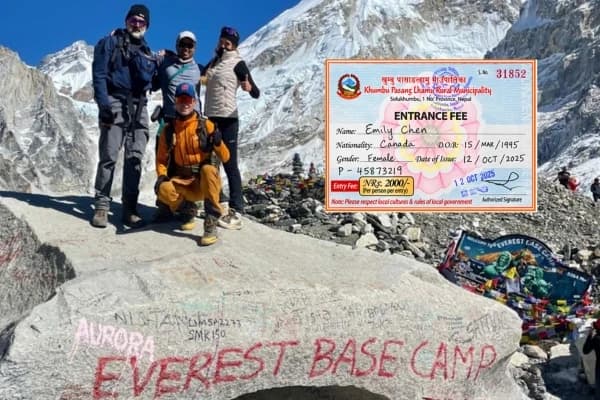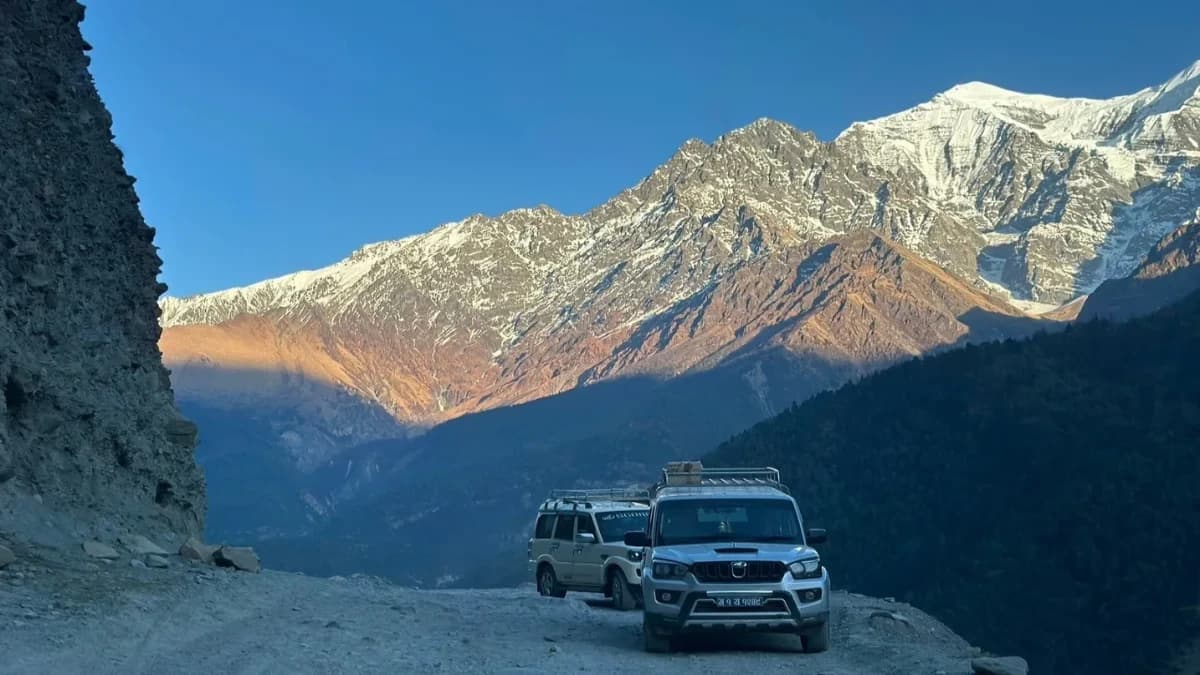
To trek to Upper Mustang, you cannot go solo and need two specific permits booked through a registered agency:
- Restricted Area Permit (RAP)
- ACAP Permit
The government requires a minimum of two trekkers per group and you must be accompanied by a licensed Nepali guide.
Upper Mustang permits cost a flat USD $50 per person, per day after 10 days. The trekkers also need the Annapurna Conservation Area Permit (ACAP), which costs NPR 3,000 for foreign nationals.
So if your trek is 16 days in the restricted area, the total RAP cost is USD $800 per person. Upper Mustang is a restricted trekking area bordering the Tibetan border.
Solo travelers are welcome, but a licensed guide is mandatory. Most trekking companies will get the permits for you in Kathmandu before you start your trek.
In this guide, we’ll walk you through the latest Upper Mustang permit costs, rules, required documents, and more before you enter the hidden kingdom of Lo Manthang.
Ready to trek Upper Mustang? Nepal Gateway Trekking handles your RAP, ACAP, guide, and full logistics so you just show up and trek. Plan Your Upper Mustang Trek
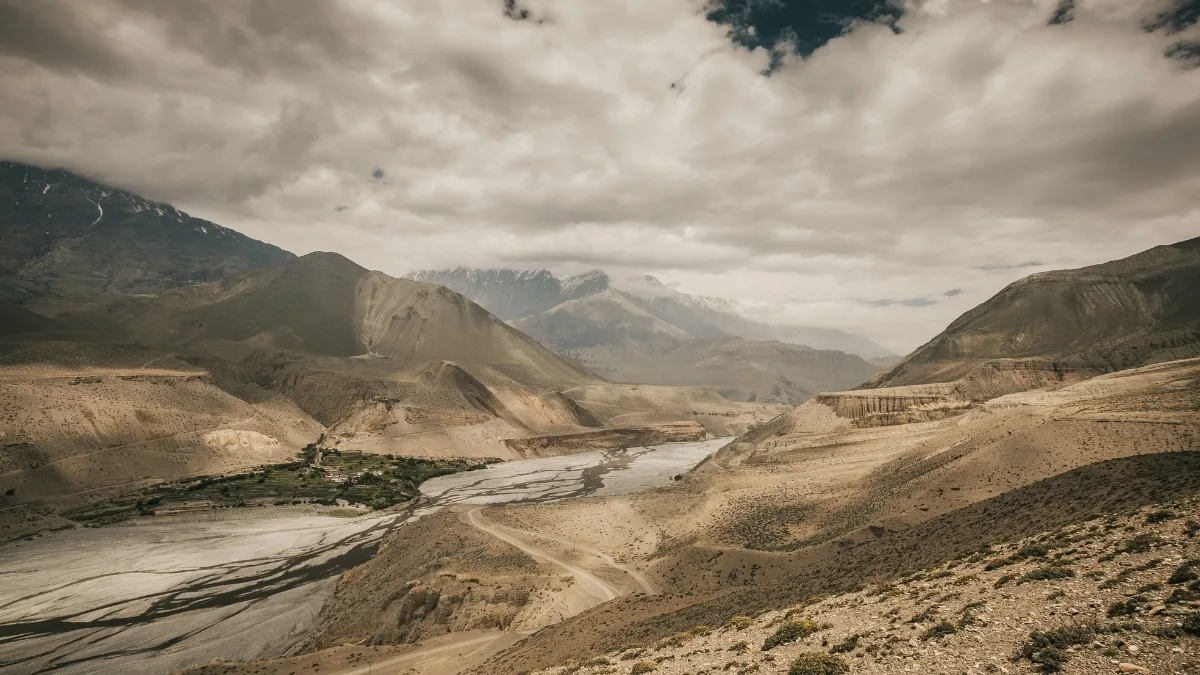
You will learn about the Upper Mustang trek permit.
- Cost of Upper Mustang Permit: USD $500 for first 10 days + USD $50 per day thereafter Cost of Mustang trek permit for 12, 14 & 16-day treks
- Upper Mustang ACAP permit fee for foreign nationals: NPR 3,000
- Permits for trekking in Upper Mustang
- Upper Mustang restricted area permit rules and validity
- Foreigners need a special permit to enter Upper Mustang.
- Solo trek rules and requirement of a licensed guide
- How to obtain the Upper Mustang permit step by step
- Enable processing offices in Kathmandu and Pokhara
- Required Documents for Permit Application
- Upper Mustang permits areas
- Important trekking rules, checkpoints, and travel restrictions
- FAQs about Upper Mustang permit prices, guides, and rules
What Permits Are Required for Upper Mustang Trekking?
You will need to obtain two permits. If you miss either one, you won't be able to pass through the checkpoints.
Here's a brief look at what's required:
- Restricted Area Permit (RAP): The main upper mustang restricted area permit that allows entry into the controlled zone
- Annapurna Conservation Area Project (ACAP) Permit is a conservation fee that covers the broader Annapurna region
- TIMS card is generally not required if you already have the RAP (more on this below)
Restricted Area Permit (RAP)
The RAP is the big one. The RAP is what actually grants you legal access to Upper Mustang. Without it, you won't get in, period. The permit covers the entire restricted zone above Kagbeni, basically the upper belt of the Mustang district. That includes Lo Manthang, the walled city that most trekkers come to see.
It's issued for a specific number of days tied to your trek itinerary. So, if your trek plan is for 12 days in the restricted area, your permit covers those 12 days. Each extra day adds to the cost.
The permit is issued by the Department of Immigration in Kathmandu, but foreign trekkers can't obtain it on their own. It has to go through a registered trekking agency. That's just how it works.
Annapurna Conservation Area Project (ACAP) Permit
The ACAP permit is a conservation fee. It covers the Annapurna Conservation Area, which is one of the largest protected areas in Nepal. Upper Mustang falls within this zone. The fee goes toward environmental protection, trail maintenance, and supporting local communities.
It's a one-time fee per trek you pay it once regardless of how many days you spend inside the conservation area. This one is much more straightforward than the RAP. And the good news is it can now be processed online through Nepal Tourism Board's official portal, which saves a bit of time.
Is a TIMS card required for Upper Mustang?
The TIMS (Trekkers' Information Management System) card is required for most standard trekking regions in Nepal. But Upper Mustang is a restricted area, so the RAP essentially replaces the TIMS requirement for this specific trek.
That said, if you're extending your trek into non-restricted areas, like trekking through the Annapurna Circuit before or after, you may need a TIMS card for those sections. So it depends on your full itinerary.
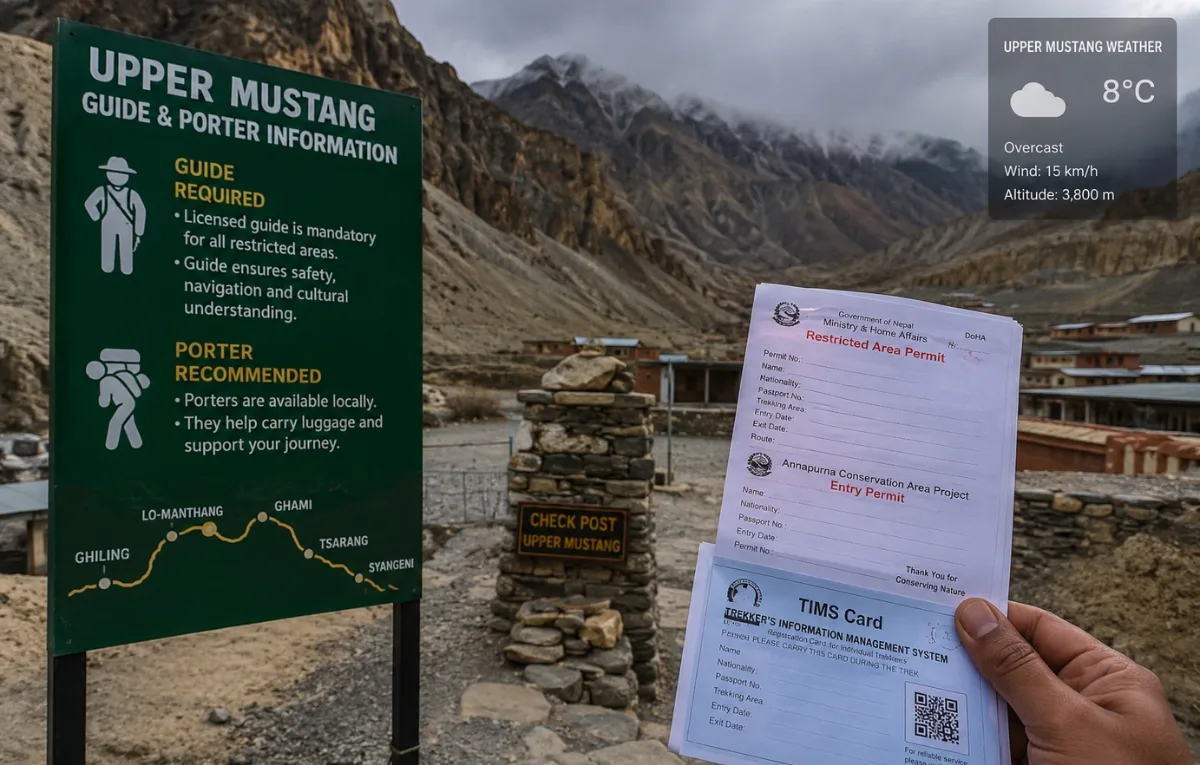
How much Does Upper Mustang Trek Permit Cost?
This is probably what most people actually want to know. So here's the full breakdown of the Upper Mustang permit cost.
Restricted Area Permit (RAP) Cost
The price for the RAP permit for trekking in Upper Mustang is currently USD $50 per person per day. The old rule that forced trekkers to pay for a minimum of 10 days (USD $500) even on shorter treks has been removed.
You now only pay for the actual number of days you're in the restricted area. That's a much more reasonable system.
|
Trek Duration in Restricted Area |
RAP Cost Per Person |
|
7 days |
USD $350 |
|
10 days |
USD $500 |
|
12 days |
USD $600 |
|
14 days |
USD $700 |
Each additional day beyond your permit period costs another USD $50. So if you want to extend, you can just budget accordingly.
Annapurna Conservation Area Permit (ACAP) Cost
|
Nationality |
ACAP Fee |
|
Foreign nationals |
NPR 3,000 |
|
SAARC nationals |
NPR 1,000 |
|
Children (under 10) |
Free |
This is a one-time fee per person, regardless of how many days you're inside the conservation area.
Upper Mustang Permit Cost for Nepali Travelers
Nepali citizens don't need the Restricted Area Permit. That's a permit category specifically for foreign trekkers. So if you're Nepali, you can travel to Upper Mustang without going through the RAP process.
Local identification may still be required at certain checkpoints, and some local entry rules around specific sites might apply. But the USD $50/day cost doesn't apply to Nepali nationals at Fall.
Lower Mustang Permit Cost vs Upper Mustang Permit Cost
This is a question that comes up a lot. Here's the simple difference: Lower Mustang, the area below Kagbeni, including Jomsom and Marpha, is not a restricted area. You don't need a RAP to trek there. Just an ACAP permit is enough, which costs NPR 3,000 for foreigners.
Upper Mustang is the restricted zone above Kagbeni. That's where the RAP kicks in.
|
Permit Type |
Lower Mustang |
Upper Mustang |
|
RAP Required |
No |
Yes (USD $50/day) |
|
ACAP Required |
Yes (NPR 3,000) |
Yes (NPR 3,000) |
|
TIMS Required |
It depends on the route. |
Usually not required |
So if you're just doing Jomsom or the lower Mustang Valley, you'll save significantly on permits.
Not sure how many permit days you need? Tell us your trek dates, and we'll calculate the exact RAP cost for your itinerary no guesswork. Contact Nepal Gateway Trekking.
How to Get an Upper Mustang Trek Permit?
The process isn't complicated, but it does require going through proper channels. Here's how it works step by step.
Step 1: Contact a registered trekking agency.
This is where it starts. Foreign trekkers cannot apply for the Upper Mustang restricted area permit independently. It has to be done through a licensed Nepali trekking agency registered with the Nepal Tourism Board.
Nepal Gateway Trekking, for example, handles the full permit application on your behalf from document submission to final permit collection. This is actually helpful because they know the process and the required formats, and they deal with the immigration office regularly. You save time and avoid mistakes that could delay your trip.
Step 2: Submit Required Documents
Your agency will ask you to submit a set of documents. Get these ready early:
- Valid passport (at least 6 months' validity)
- Nepal tourist visa (already stamped in your passport)
- Passport-sized photographs (usually 2 copies)
- Trekking itinerary with dates and route details
- Payment for permit fees
Step 3: Permit Processing Through Immigration Office
The RAP is processed at the Department of Immigration in Kathmandu. Your trekking agency submits the application on your behalf along with all required documents. Processing usually takes 1 to 3 working days. Most permits are handled in Kathmandu, though they can sometimes be arranged in Pokhara if that's your starting point.
Step 4: Receive Your Permits Before Trekking
Once approved, your agency hands you the physical permits. Don't lose them. You'll be showing them at multiple checkpoints along the route, particularly at Kagbeni, which is the main entry checkpoint into Upper Mustang.
Rangers at checkpoints will record your permit details, check your guide credentials, and verify your approved itinerary. So make sure everything matches up.
Where are the Upper Mustang Permit Checkpoints?
Upper Mustang has several official permit checkpoints along the trekking route. Trekkers must show their Restricted Area Permit (RAP), ACAP permit, passport copy, and guide details at these locations.
The main checkpoint is at Kagbeni, which is the official gateway to Upper Mustang. This is where authorities verify your permits before allowing entry into the restricted region.
Other checkpoints are commonly found in villages and control areas, such as:
- Kagbeni
- Chele
- Syangboche
- Ghami
- Tsarang
- Lo Manthang
Police officers, immigration staff, or conservation officials may examine your documents during the trek. Your guide usually handles most communication at these checkpoints.
If your permit dates do not match your itinerary, or if you try to enter without a licensed guide, you may be denied entry or fined. That is why trekkers should always carry copies of their permits during the trek.
Required Documents
Just to be clear about what you need:
- Passport with at least 6 months' remaining validity
- Valid Nepal tourist visa
- Two passport-sized photos
- Trekking itinerary (your agency will help prepare this)
That's basically it on the documentation side. No need to overcomplicate it.
Skip the paperwork. Nepal Gateway Trekking submits your RAP and ACAP applications, arranges your licensed guide, and confirms your permits before you leave Kathmandu.
Can You Trek Upper Mustang Solo?
This query is one of the most searched questions about this trek. Let's clarify it. For years, solo trekkers had to scramble to find partners to enter Upper Mustang. Thankfully, Nepal officially scrapped the "group of two" rule, allowing you to apply for the permit completely on your own.
The catch? "Solo" only means you can be the only tourist in that particular place. For safety and regulation, you are still legally required to hire a licensed local guide and book through a registered agency to handle the paperwork. You get the total freedom of a custom itinerary, backed by local expertise.
Are solo travelers allowed in Upper Mustang?
Yes. Solo travelers are now allowed to trek Upper Mustang. The previous rule requiring groups of at least two has been updated. So if you want to go alone, you can as long as your permits and guide requirements are in order.
Do Solo Travelers Still Need a Guide?
Yes, they do. Even if you're trekking solo, you still need a licensed Nepali guide. The guide requirement is separate from the group size rule. These are two different things, and people often mix them up.
So just to spell it out: you can go alone as a single traveler, but you cannot go without a guide. Your trekking agency arranges the guide for you when you book your permit and trek package.
Solo trekker? We pair solo travelers with experienced licensed guides who know Upper Mustang inside out culture, trails, checkpoints, everything. So connect to Nepal Gateway Trekking now.
Guide Requirement for Upper Mustang Trek
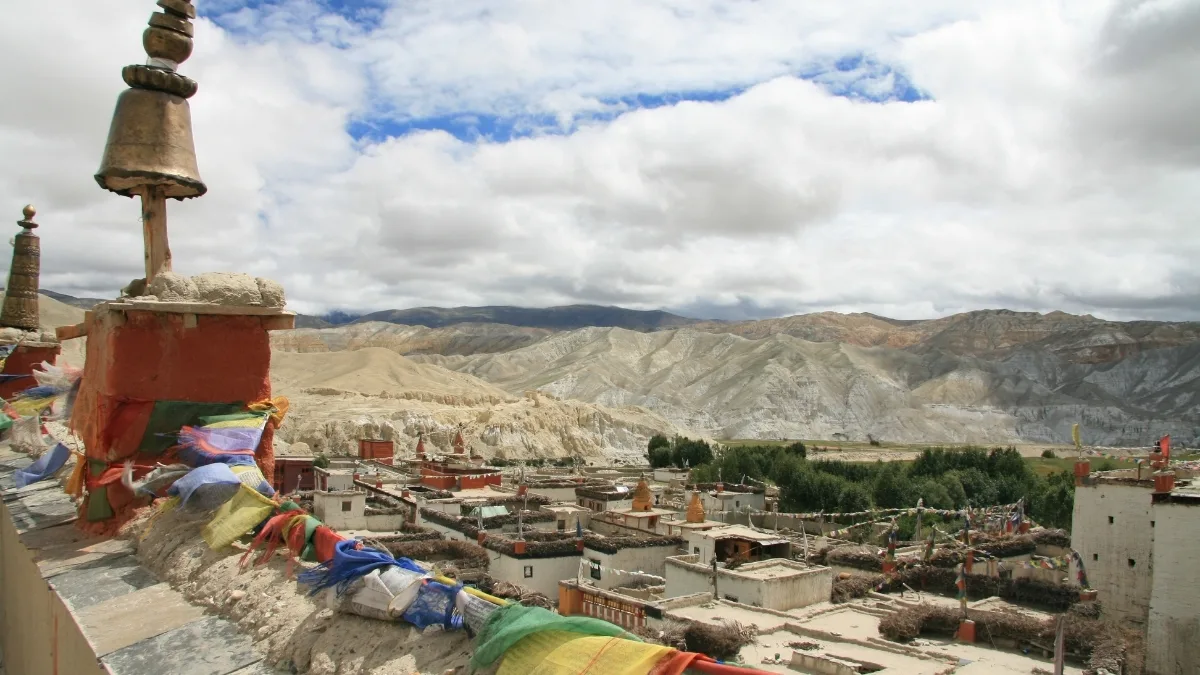 A licensed government guide is mandatory for Upper Mustang. No exceptions for foreign trekkers. Your guide must be registered with the Nepal Tourism Board and hold a valid trekking guide license. The trekking agency you book through will arrange the trek.
Going with a reputable agency like Nepal Gateway Trekking means your guide will also know the local area, speak Nepali and basic English, and understand the cultural sensitivities of the region.
Minimum Group Size Rules
The old two-person minimum rule has been relaxed. Solo travelers are now permitted to trek Upper Mustang, but the guide requirement still applies. So even if you're going alone, you need a licensed guide with you. So basically, there's no minimum group size anymore, but you still can't go fully solo without a guide. We'll cover these details more below.
Where Can You Get the Upper Mustang Permit?
Upper Mustang permits are mainly processed in Kathmandu through authorized trekking agencies. Since Upper Mustang is a restricted region, trekkers cannot apply for the Restricted Area Permit (RAP) on their own.
Your trekking company usually handles the full process, including document submission and permit approval before the trek begins.
While the RAP is issued through the Department of Immigration in Kathmandu, the Annapurna Conservation Area Permit (ACAP) can also be obtained from the Nepal Tourism Board (NTB) office or the ACAP office in Pokhara. Most trekkers arrange all permits in Kathmandu to avoid last-minute delays before heading to the trail.
Permit Offices in Kathmandu
The main place to get the Upper Mustang restricted area permit is the Department of Immigration, Kathmandu. This office is the primary authority for issuing RAP permits. The location is in Kalikasthan, Kathmandu, near Dilli Bazaar. Your trekking agency will submit documents here on your behalf.
You don't need to visit the office yourself in most cases. The Nepal Tourism Board (NTB) office in Kathmandu also handles ACAP permits if you want to process those separately.
Permit Offices in Pokhara
If you're flying directly to Pokhara before the trek, you can also process some permits, particularly ACAP, through the ACAP office in Pokhara. You can easily reach the ACAP office in Pokhara, which is near the Lakeside area.
For RAP, it's still generally more reliable to process through Kathmandu, given the government immigration office is based there.
Upper Mustang Restricted Areas Covered by the Permit
Your RAP covers specific municipalities and zones. Here's what falls under the Upper Mustang permit coverage area:
Lo Manthang Rural Municipality
Lo Manthang is the crown jewel of Upper Mustang. It's a walled city with centuries of Tibetan Buddhist history, ancient monasteries, and the palace of the Mustang royal family.
The Lo Manthang Rural Municipality includes several wards and is the core restricted zone. Most trekkers plan their itinerary specifically to reach and spend a couple of days here.
Lo-Ghekar Damodar Kunda Area
This area is a more remote part of the upper region, covering sacred religious sites and high-altitude lakes. Damodar Kunda is considered one of the holiest lakes in the Himalayan region for Hindus and Buddhists alike.
Access to this area is fully covered under the RAP, and honestly, this section sees far fewer trekkers, which makes it worth exploring if you have the time.
Baragung Muktichetra Area
This area covers sections of the trekking route that connect upper and lower Mustang. It includes parts of the trail through Muktinath and surrounding villages. Your permit allows passage through this zone as part of the standard Upper Mustang trek route.
Final Thoughts
Upper Mustang is no ordinary trek in Nepal. It’s a rare journey into a hidden Himalayan kingdom steeped in ancient Tibetan culture, dramatic desert landscapes, centuries-old monasteries, and remote mountain villages. But the area is restricted, so it’s critical to understand the permit rules before you go.
The cost of the Upper Mustang Restricted Area Permit is USD $500 for the first 10 days and USD $50 thereafter. The cost of an ACAP permit is NPR 3,000 for foreign trekkers.
A licensed guide is mandatory, and all permits have to be arranged through a registered trekking agency before entering the restricted zone.
The positive news is that it is easy when a local professional company handles the work.
Nepal Gateway Trekking handles the full permit, guide arrangement, and trekking logistics so that trekkers can enjoy the trek without unnecessary hassle. Upper Mustang is easily one of the most memorable trekking experiences in Nepal if you have the right preparation. Contact us now.
FAQs
Is a permit required for the Upper Mustang?
Yes. Foreign travelers need both the Restricted Area Permit (RAP) and the Annapurna Conservation Area Project (ACAP) permit to enter Upper Mustang legally.
How much is the permit for the Mustang Valley?
The Upper Mustang restricted area permit costs USD $50 per person per day. On top of that, you need to pay the ACAP fee, which is NPR 3,000 for foreign nationals.
Is it easy for non-Nepalese travelers to enter Upper Mustang?
Yes, but you have to obey the rules. Permits must be processed through a registered trekking agency, and a licensed guide is mandatory for the entire trek.
Do you need a permit to trek in Nepal?
Most trekking regions in Nepal require some form of permit. Restricted areas like Upper Mustang need a RAP in addition to conservation area permits.
Can I get the Upper Mustang permit online?
The ACAP permit can now be processed online through the portal of the Nepal Tourism Board. However, the Restricted Area Permit must be arranged through a licensed trekking agency in Nepal.
Is TIMS required for the Upper Mustang trek?
No. TIMS is generally not required when you already have the Upper Mustang Restricted Area Permit.
Can I trek Upper Mustang without a guide?
No. Even though solo travelers are now allowed, you still need a government-licensed Nepali guide for the trek. The guide requirement hasn't changed.
How long does it take to process the Upper Mustang permit?
Usually, it takes one to three working days after all required documents are submitted through your trekking agency.
What documents are needed for the Upper Mustang permit?
You need a valid passport, a Nepal tourist visa, passport-sized photographs, and your trekking itinerary details.
What is the best season for Upper Mustang trekking?
Spring (March–May), autumn (September–November), and even the monsoon season work well because Upper Mustang is in Nepal's rain-shadow region and gets very little rainfall compared to the rest of the country.
Why is the Upper Mustang permit expensive?
The permit fee helps regulate the number of tourists entering the region, preserve Tibetan cultural heritage, and protect the sensitive ecosystem near the Tibetan border.
Can Nepali citizens trek Upper Mustang without a permit?
Yes. Nepali citizens do not need the Restricted Area Permit. Local identification requirements and site-specific rules may still apply, but the RAP fee doesn't apply to them.