On the Upper Mustang Trek, food and places to stay come from local teahouses and lodges that are practical, not fancy. They are simple but clean, with shared bathrooms, and give you a warm place to rest after long trekking days in the remote Himalayan desert.
Meals along the route are simple, filling, and energy-focused, designed to keep trekkers fuelled rather than spoilt for choice. Expect home-style cooking, limited menus, and food that prioritizes warmth and nutrition over variety, which suits the physical demands of trekking in Upper Mustang.
As a restricted and isolated region, Upper Mustang operates with limited supplies and challenging logistics, so expectations need to be adjusted from the start. Staying here feels less like a hotel stay and more like resting in a rustic mountain cabin or remote outpost, functional, welcoming, and built to support the journey rather than provide luxury.
Accommodation in Upper Mustang – Tea Houses & Lodges Explained
Accommodation in Upper Mustang is simple, locally operated, and purpose-built for trekkers travelling through a remote and restricted Himalayan region. Instead of comfort or luxury, tea houses and lodges focus on giving people a clean, comfortable place to sleep after a long day of trekking.
Most accommodations are run by local families and reflect the realities of Upper Mustang, limited supplies, harsh weather, and traditional building styles.These lodges are meant to be functional and help people get better, not to have modern conveniences, so you need change your expectations.
Types of Accommodation Available in Upper Mustang
Along the Upper Mustang trail, accommodation mainly falls into three categories:
- Teahouses: Small, locally run, cosy stops offering simple rooms and meals; perfect for a night’s rest after a long trek.
- Local Lodges: A bit bigger and stronger buildings made of stone and wood, offering private rooms in bigger villages.
- Family-run Guesthouses: Cozy, welcoming places where you can enjoy local hospitality and traditional life.
These places are just for resting, not for luxury. They’re built with stone, mud, and wood to keep out wind and cold nights. Inside is simple and practical. They aren’t very comfy, but they are clean and good for multi-day treks.
Rooms, Sleeping Arrangements & Heating Reality
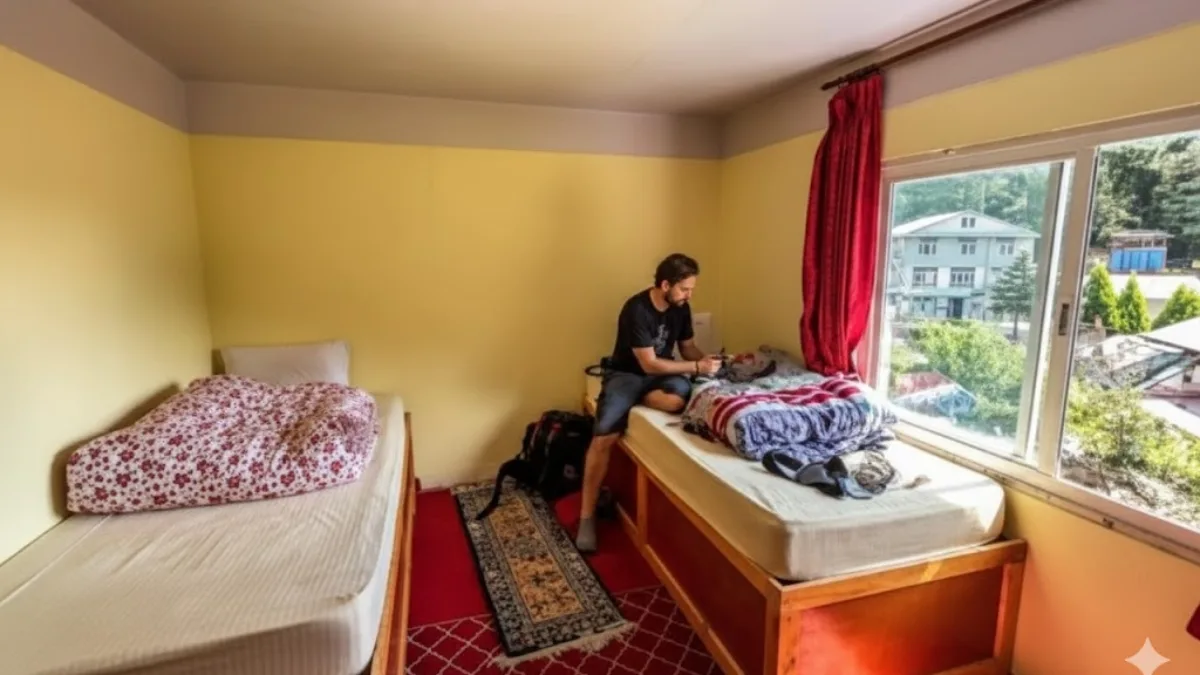
The accommodation rooms in Upper Mustang are all built in the same way, no matter how big the village is. This is because the materials used to build them and the way people live are the same all over the region. Rooms are simple and practical, created to give trekkers a quiet place to rest and recover after long walking days rather than offering comfort or decoration.
What trekkers can expect:
- Twin beds with basic foam mattresses
- Pillows and blankets provided by the lodge
- Private rooms more common in larger villages such as Ghami, Charang, and Lo Manthang
- Shared rooms more likely in smaller or less-visited settlements
- Minimal or no room heating, even during colder seasons
Because bedroom heating is rare, nighttime temperatures can drop sharply, especially in spring and autumn. Stone walls keep some warmth, but that’s not enough by itself. Make sure you know the best time to do the Upper Mustang Trek so you can be better prepared.
Bathrooms, Hygiene & Hot Showers
Bathroom facilities in Upper Mustang are basic but manageable, reflecting the region’s dry climate and limited water supply. Most lodges have common bathrooms that are kept clean and in good shape for trekking.
Mostly shared bathrooms
- Availability of both squat and western-style toilets
- Hot showers available in many villages
- Water is typically solar- or gas-heated
- Hot showers are paid separately
Due to water scarcity in this high-altitude desert, hygiene standards are realistic rather than luxurious. Lodges save water and fuel, so showers are limited and might not be available on cold or cloudy days. It’s important to keep this in mind since water and energy are scarce in Upper Mustang.
Electricity, Charging & Internet Connectivity
- Upper Mustang has electricity, but it is still restricted and unreliable because it depends on solar power and is in a remote area.
- Charging facilities available in most lodges, usually at an extra cost
- Electricity mainly generated through solar systems
- WiFi is rare, with the best chances in Kagbeni and Lo Manthang
- Weak or no cellular coverage in many villages along the route
Because internet access and mobile signals are unreliable, trekkers should plan to stay mostly offline. Downloading maps, travel documents, and emergency contacts in advance is essential for a smooth trekking experience in Upper Mustang. Upper Mustang Trek Map will help you in your trek.
Common Dining Areas & Social Experience
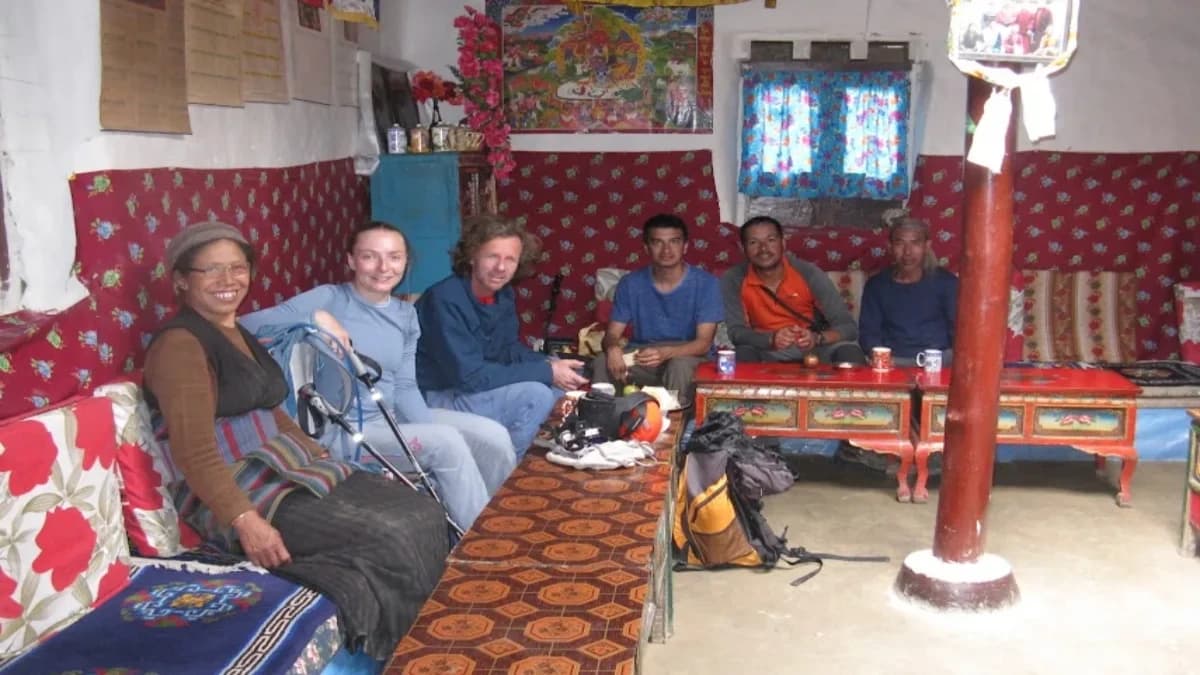
Every lodge in Upper Mustang has a common dining area, which is the main part of life on the trek. After long days on the trail, these places are more than just for eating. They give you warmth, a place to rest, and a chance to meet other trekkers. Sitting here with a hot meal, talking and laughing with others, makes a feeling of community you’ll remember long after the trek ends.
Most dining areas have stoves to keep everyone warm. You can eat, rest, and talk with other trekkers. Evenings are the best time, with stories and new friends.
Some basic toiletries can be bought, and limited laundry might be available in bigger villages depending on supply and weather.
These shared spaces give both comfort and company, making them one of the most memorable parts of the Upper Mustang trek. Even though the facilities are simple, the warmth from the stove and the people around you makes the trek special and shows what local lodge life is like.
Food During Upper Mustang Trek – What Trekkers Actually Eat?
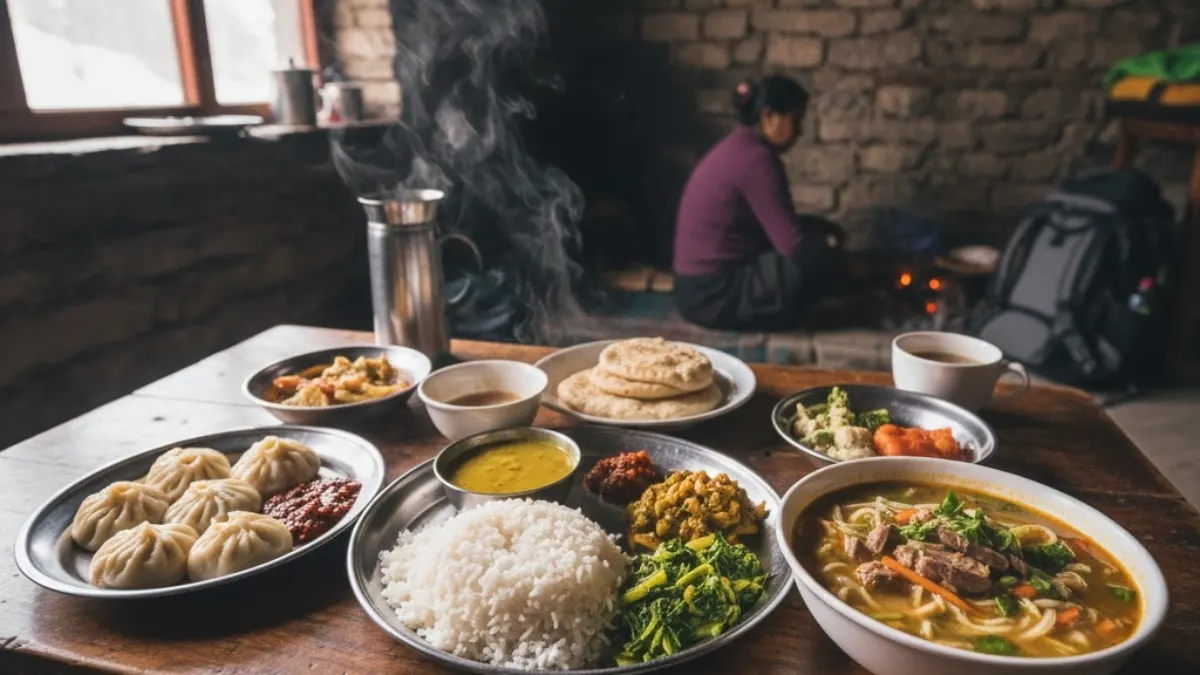
Trekking in Upper Mustang isn’t just about the stunning landscapes, it’s also about the meals that keep you going. Food here is simple, hearty, and made to fuel long days of walking in a high-altitude desert environment. Most teahouses and lodges provide Nepali and Tibetan food that is meant to give you energy, warmth, and comfort after a long day on the trails.
In bigger villages, you might be able to get Western dishes like pasta, eggs, or sandwiches. But the best part is eating traditional foods like dal bhat, thukpa, and butter tea. Meals are filling and useful because the place is far away and has few resources. Cooking is more about acquiring food than making it look nice.
The Staple Diet – Dal Bhat & Why It’s Recommended
Dal Bhat is the cornerstone of trekking meals in Upper Mustang. Simple, filling, and high-energy, it’s designed to keep trekkers strong in the high-altitude desert environment.
- Unlimited refills: You can eat as much as you need, which is crucial after a long, exhausting day on the trail.
- High-energy: packed with rice, lentils, and vegetables, it provides sustained energy for trekking in thin air.
- Easily digestible: Gentle on the stomach, helping prevent discomfort at high altitudes.
- Best choice at altitude: Offers the right balance of carbs, protein, and fat, making it the most practical meal for trekkers.
Dal Bhat is more than just a meal; it’s a practical and reliable choice that fuels trekkers while giving a taste of traditional Nepali cuisine.
Nepali & Tibetan Local Specialties
Upper Mustang offers unique local flavours that reflect both Nepali and Tibetan culinary traditions, giving trekkers an authentic taste of the region.
- Tibetan bread: Soft, warm bread with jam or honey on top is a great snack to have between hiking stops to give you energy.
- Thukpa: A hearty noodle soup, warming the body and refreshing tired muscles after a cold, long day on the trail.
- Butter tea: A traditional, high-calorie drink that helps maintain energy and keeps you warm in the chilly Himalayan desert.
- Barley-based foods: Nutritious and filling, these foods are ideal for sustaining energy during high-altitude trekking.
Trying these native dishes adds depth and cultural richness to your trip, making every meal a chance to interact with Mustang's distinct history.
Western & General Food Options in Tea Houses
For trekkers who prefer familiar tastes, many teahouses offer Western-style meals alongside local options.
- Breakfast: Porridge, pancakes, eggs, cornflakes, and chapati offer a filling and familiar start to the day.
- Lunch & Dinner: Options like pasta, pizza, fried rice, momo, and sandwiches give trekkers a break from local cuisine while still providing energy for trekking.
- Potato dishes: Boiled, fried, roasted, mashed, or hash browns serve as simple, comforting sides that are easy to digest at altitude.
These Western options aren't as common as local foods, but they add diversity and a taste of home for people who are on longer trips.
Soups, Desserts & High-Altitude Comfort Foods
Soups and desserts play a comforting role after long days in Upper Mustang’s harsh environment.
- Garlic soup: Warming and believed to boost immunity, making it ideal after cold, tiring days.
- Mushroom & tomato soups: nutritious, easy to digest, and soothing for tired stomachs.
- Apple pie & rice pudding: sweet treats that bring warmth, comfort, and a sense of indulgence after a long day of trekking.
These comfort foods may be simple, but they’re especially satisfying at altitude, offering both nourishment and emotional comfort.
Drinks Available at Upper Mustang Teahouses
Beverages in Upper Mustang cover a range of local and familiar choices to help trekkers stay hydrated and energized.
- Tea varieties: Black, ginger, mint, and milk teas provide warmth and refreshment, perfect after cold trekking mornings.
- Instant coffee & hot chocolate: quick energy boosters to help start the day or recharge between stops.
- Soft drinks & beer: Available in larger villages for a treat or to unwind in the evenings.
- Bottled vs purified water: Trekkers are advised to stick to safe, purified, or bottled water to avoid illness at altitude.
Even if there aren't as many drink options as in cities, they are stable, soothing, and good for hiking, which keeps people hydrated and happy. Planning a trip to Nepal? Make sure you try these famous Nepali foods and drinks during your journey. Start planning your travel experience today.
Food and Accommodation by Village in Upper Mustang Trek
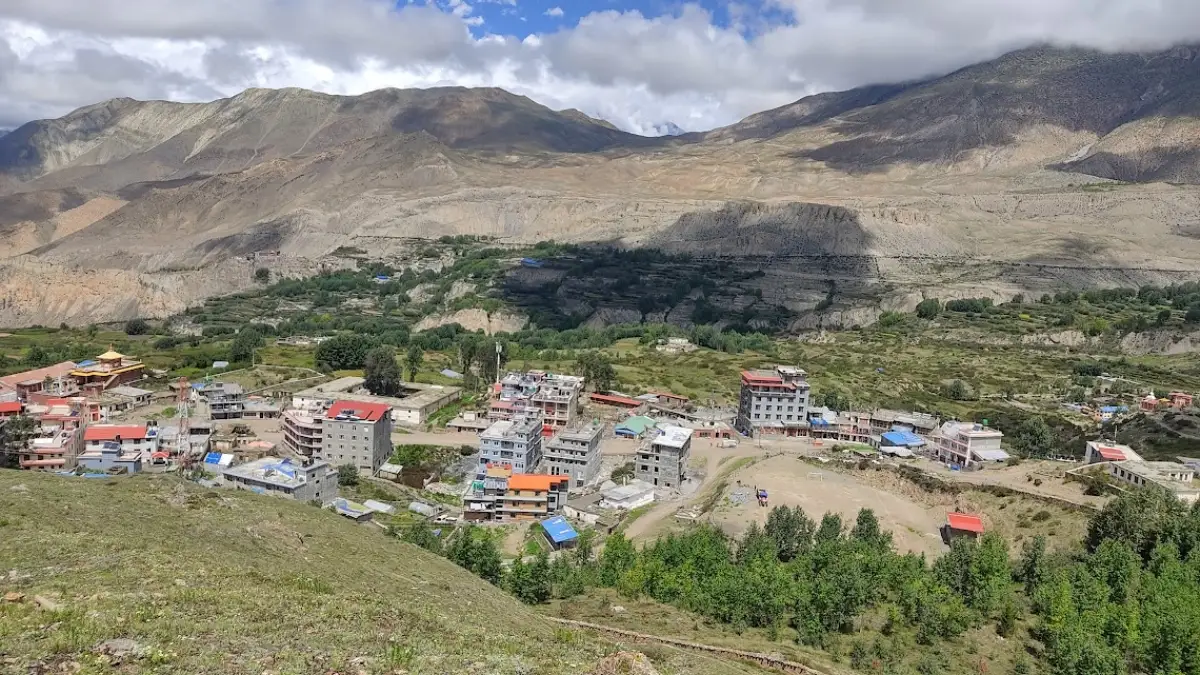
Food quality and accommodation standards change as you move through Upper Mustang. Some villages offer a wider variety of meals and more comfortable lodges, while others are very basic, reflecting the remote and restricted nature of the region. Planning ahead helps trekkers know what to expect at each stop.
|
Village |
Food Variety |
Accommodation Quality |
Notes |
|
Kagbeni |
Best before restricted area |
Good lodges |
Entry hub |
|
Samar |
Very limited |
Very basic |
Simple overnight stop |
|
Gelling |
Limited |
Basic |
Few options |
|
Ghami |
Moderate |
Good teahouses |
Some private bathrooms |
|
Charang |
Moderate |
Clean & adequate |
Tibetan-style buildings |
|
Lo Manthang |
Best on trek |
Best lodges |
Private bathrooms available |
Which Villages Offer the Best Lodging in Upper Mustang?
Certain villages along the Upper Mustang Trek stand out for their comfort, amenities, and food quality. Knowing where these key stops are can help trekkers plan their daily stages efficiently and enjoy a more comfortable journey.
- Lo Manthang: The best overall stop on the trek, offering well-maintained lodges, private bathrooms, and the widest range of food options.
- Kagbeni: It is the main entry point, with improved infrastructure and luxurious lodges, making it a great place to get ready before going into the restricted region.
- Ghami & Charang: Mid-route villages with clean teahouses and basic private rooms, providing reliable rest between longer trekking days.
These standout villages provide trekkers with essential rest and nourishment, making them key points to plan around while exploring the Upper Mustang region.
Cost of Food and Accommodation in Upper Mustang Trek
Travelling through Upper Mustang requires budgeting for both meals and lodging. Costs are modest but tend to rise slightly at higher-altitude villages due to limited supplies and transportation challenges.
|
Expense |
Cost (USD) |
|
Meals |
5–15 per meal |
|
Room |
10–50 per night |
|
Daily Total |
20–40 per day |
These costs reflect the region’s remote and restricted nature, helping trekkers plan their budget effectively and enjoy a smooth journey. Read the latest Upper Mustang Fee and plan your trek today.
Why Prices Increase With Altitude?
As you climb higher into Upper Mustang, meals and lodging get more expensive because the area is remote and has few resources. Hikers can plan better and appreciate the work that goes into each meal and place to stay if they know why prices go up.
Factors contributing to higher costs:
- Supplies transported by mules: Mules or porters have to carry all the food, fuel, and merchandise across vast distances, which makes the price go up.
- Limited agricultural production: Villages produce only basic crops, so most food must be imported from lower regions.
- Fuel scarcity: Heating and cooking rely on limited firewood, gas, or solar fuel, which are more costly at altitude.
- Restricted area logistics: Special permits and regulations for the restricted region increase operational expenses.
- Seasonal access challenges: harsh winters and blocked trails can delay deliveries, making supplies rarer and more expensive.
By understanding these challenges, trekkers can better appreciate the value of the meals and lodges provided along the route.
Final Thoughts – What to Expect From Food & Accommodation in Upper Mustang
In Upper Mustang, food and lodging are basic and useful. There isn't any luxury, but the lodges and teahouses are comfortable enough for hikers in a remote, high-altitude area.
The experience is more about cultural richness than convenience. Traditional meals, local hospitality, and communal dining create memories that go beyond modern comforts.
Trekkers who arrive prepared for basic facilities and embrace the local way of life often enjoy the journey far more, finding both nourishment and cultural immersion along the way. Contact Nepal Gateway Trekking to take you to the Upper Mustang Trek.
FAQ – Food and Accommodation in Upper Mustang Trek
What food is available during the Upper Mustang Trek?
During the Upper Mustang Trek, trekkers can enjoy Dal Bhat, Tibetan dishes, noodles, rice, soups, potatoes, and simple Western meals. These options are filling, high-energy, and designed to keep you fueled for long days at high altitude.
Are tea houses hygienic in Upper Mustang?
Yes, tea houses are simple, but they are usually clean and safe.
Which village has the best accommodation?
Lo Manthang has the best places to stay along the trek because the lodges are well-kept, have private bathrooms, and serve more meals. Kagbeni and other villages offer decent comfort, but Lo Manthang is the best for quality and convenience.
Why should trekkers avoid meat?
Trekkers are advised to avoid meat because it is transported long distances and may not remain fresh. Relying on vegetarian or local dishes is safer and easier on the stomach at high altitude.
How much should I budget daily?
Trekkers should plan to spend about $20 to $40 a day on meals and lodging. Costs depend on the village and the meal you choose, so it's best to prepare ahead to prevent surprises.
Is WiFi available in Upper Mustang?
There isn't much WiFi, and it's mostly only available in Kagbeni and Lo Manthang. Cell phone service is spotty in many villages, so trekkers should plan ahead and download maps and other important documents before they leave.