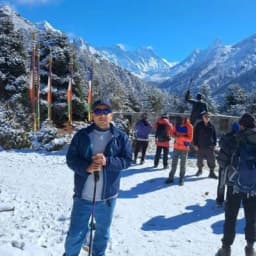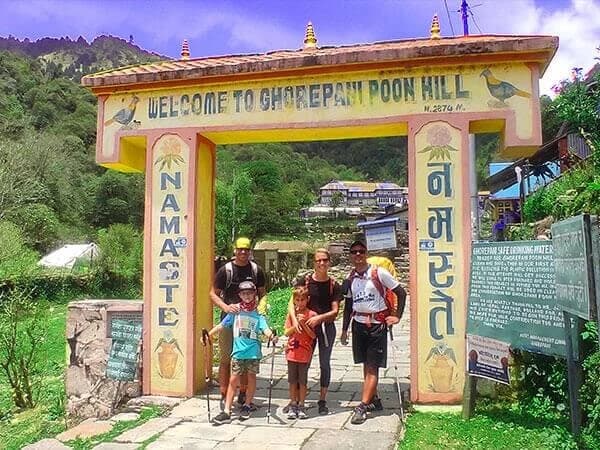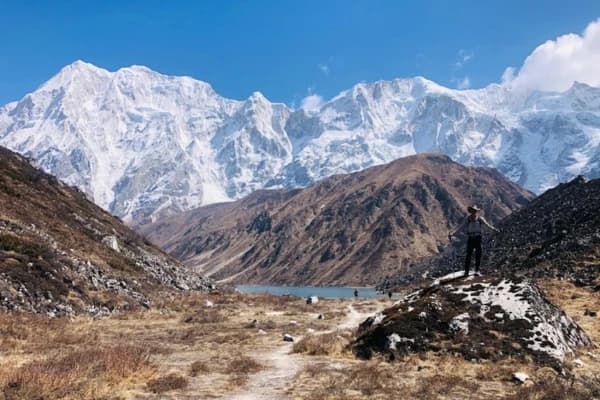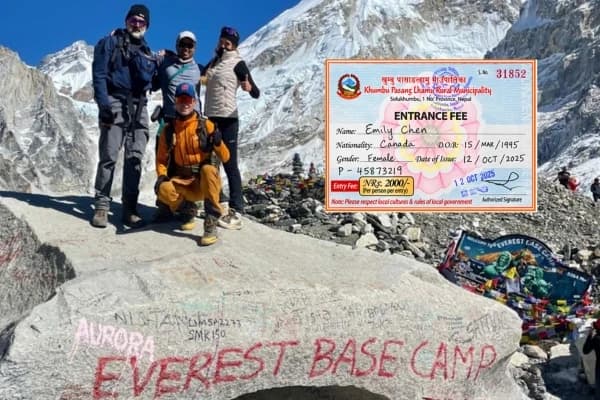
The Ghorepani Poon Hill Trek in Spring, from March to May, is one of the best times to hit this famous Himalayan trail. The Annapurna foothills just burst into color with rhododendron forests in full bloom, birds everywhere, and the villages buzzing with life. Plus, the snow-capped peaks are still there, looking stunning against the clear skies.
The weather is pretty mild too, so it’s perfect for beginners, families, or anyone who just wants to take photos without freezing. And it’s not just nature, spring is festival season in these parts, so you’ll catch local celebrations that make the trek feel even more alive. All in all, the Poon Hill trek in spring is a total sensory treat.
Spring Highlights of the Ghorepani Poon Hill Trek
Spring really brings the Ghorepani Poon Hill Trek to life. Unlike autumn, which people love for those crystal-clear views, spring is all about blooming forests, active wildlife, and the rich local culture. Trekking between March and May gives you a full-on sensory experience, not just mountain views.
Rhododendron Forests in Full Bloom
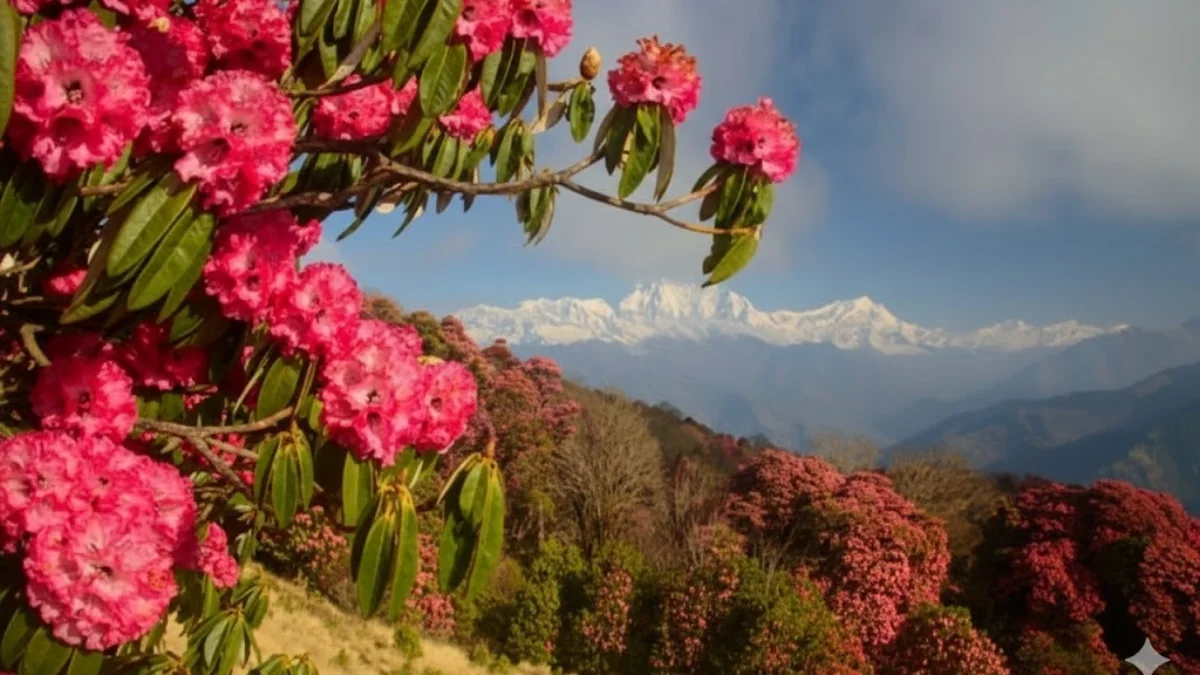
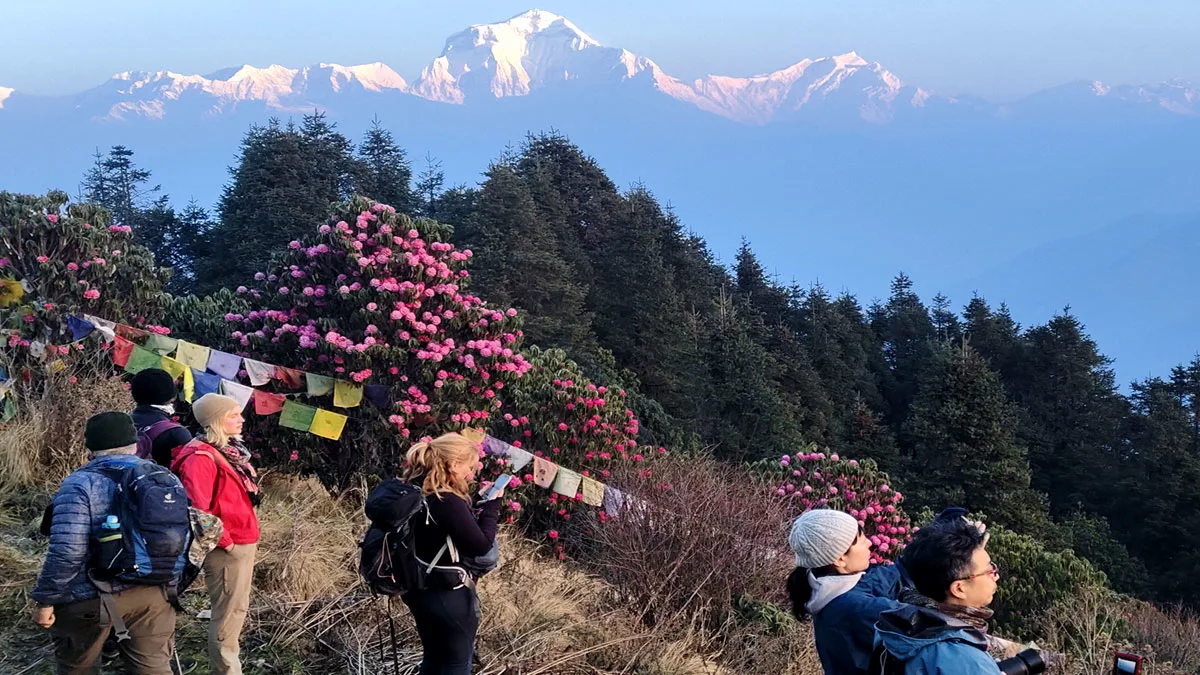
Spring is peak time for the rhododendron bloom, and the trail from Ulleri to Ghorepani and Tadapani turns into this amazing “Red Tunnel.” You’ll see deep crimson, soft pinks, whites, and even some purples along the way.
As you climb higher, magnolias and wild orchids start popping up, too. If you go between late March and mid-April, you’ll catch the flowers at their absolute best. This is why many say spring is the best time for Poon Hill.
Poon Hill Sunrise View
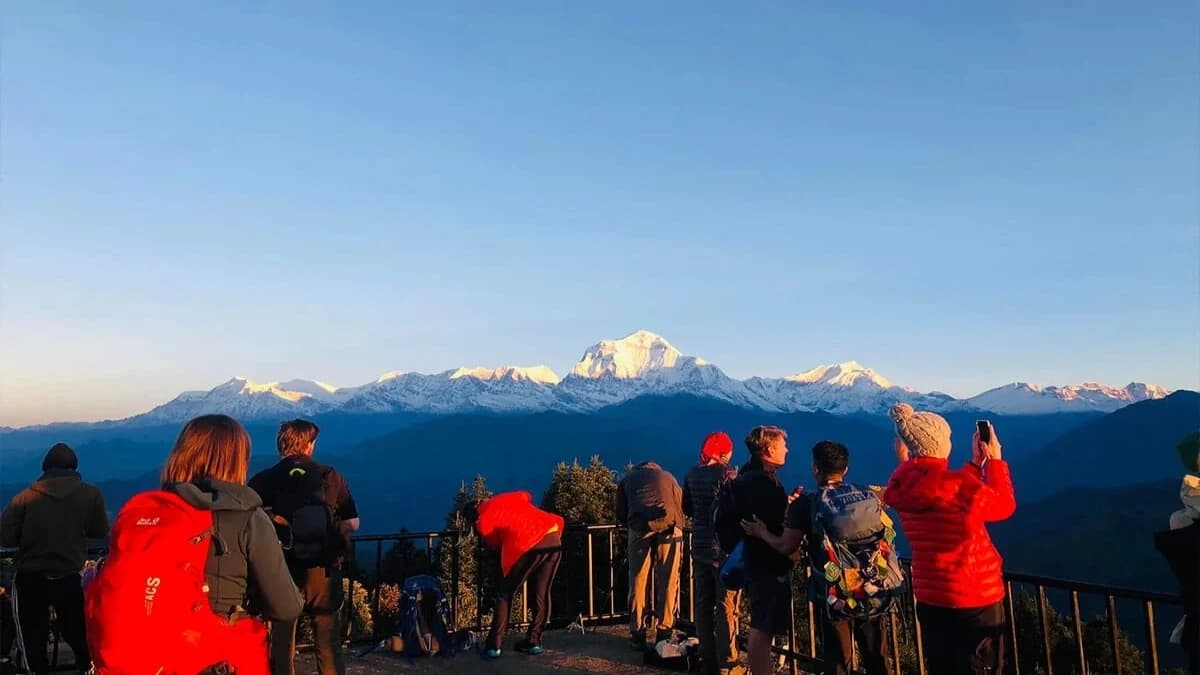
At 3,210 meters, the sunrise at Poon Hill is just magical. Spring mornings are usually clear, giving you solid views of the snow-capped peaks. Key mountains you can spot include:
- Dhaulagiri (8,167 m)
- Annapurna (8,091 m)
- Machhapuchhre (Fishtail)
The light changes the mountains from icy blue to golden in just minutes, so waking up around 4:30–5:00 AM is a must if you want those epic photos.
Ideal Trekking Weather
Spring weather is pretty chill, moderate temps, stable trails, and none of that messy monsoon mud. Here’s a rough idea:
|
Elevation |
Daytime |
Nighttime |
Notes |
|
Lower trails (1,000–2,000 m) |
15°C – 20°C |
8°C – 12°C |
Comfortable for walking |
|
Ghorepani (2,860 m) |
10°C – 15°C |
0°C – 5°C |
Ideal for overnight stays |
|
Poon Hill (3,210 m) |
— |
0°C to -2°C |
Sunrise hike; bring a light jacket |
It’s beginner-friendly and great for families. Just a heads-up, the UV index at Ghorepani can hit 6–8 even if it feels cool, so don’t skip sun protection.
Wildlife, Waterfalls & Living Valleys
As the snow melts, the Annapurna Conservation Area Project comes alive. Birds are everywhere, waterfalls are flowing strongly, and terraced fields in villages like Ghandruk turn this bright green. It really feels like the trail is alive, not just a path you’re walking on.
Cultural Festivals in Spring
Spring also lines up with some big Nepali festivals:
- Holi (March 2, 2026):Pokhara and the villages go all out with colors, music, and local gatherings.
- Nepali New Year (April 14, 2026, Baisakh 1): Villages celebrate with melas, traditional dances, and rituals, especially in Gurung and Magar communities.
These festivals give the trek a whole new layer, you’re not just seeing natural beauty, you’re experiencing culture in full swing.
Beyond the Bloom: Birdwatching
Spring on the Ghorepani Poon Hill Trek isn’t only about rhododendrons or big mountain views. It’s also about the little moments that happen before most people are even awake. If you get up around 4:30 AM, the forests wake up too, bursting into the Himalayan dawn chorus. It’s peak breeding season, so birds are super active and full of song before the sun even peeks over the peaks.
From your teahouse balcony or while heading up the trail to Poon Hill, you’ll hear these layered calls stacking up into what feels like a full-on forest symphony. You don’t need fancy gear, just step outside quietly with a cup of tea or pause along the path and soak it in.
Some of the birds you might spot include:
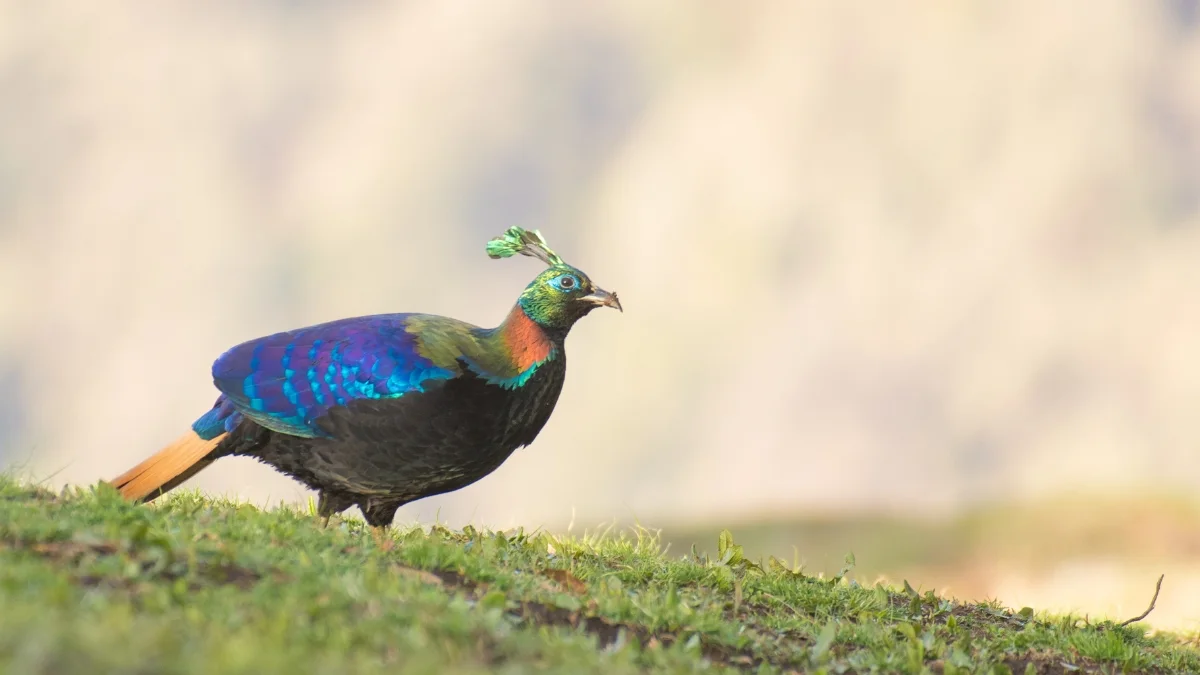
- Himalayan Monal – Nepal’s national bird, often hanging out in forest clearings
- White-throated Laughingthrush – noisy flocks hopping through the trees
- Rufous Sibia & Green-tailed Sunbird – usually near flowering trees
- Spotted Forktail – found close to streams and waterfalls
Spring mornings also give you the best light for photos. Honestly, this is where the Ghorepani Poon Hill Trek really shines; it’s not just summits and sunrises, it’s a whole ecosystem that’s wide awake long before dawn.
If you are into the exotic himalayan animals, you must visit Nepal for your adventerous trek.
Weather and Temperature of Ghorepani Poon Hill in Spring
Spring, from March to May, is one of the nicest times to do the Ghorepani Poon Hill Trek. The weather stays mostly mild, the skies are often clear, and everything around you just feels alive. Trails are dry, wildlife is more active, and those famous rhododendrons start lining the route with color. It’s a great season for nature lovers, photographers, and people doing their first trek in the mountains.
Location-Based Temperatures
- Ghorepani (2,874 m): Day 10–15°C | Night 0–5°C
- Poon Hill Summit (3,210 m): Day 5–12°C | Night 0 to -2°C
- Lower Trails (Nayapul, Ulleri): Day 15–25°C | Night 8–12°C
Monthly Weather Table
|
Month |
Weather Highlights |
Trail Conditions |
Daytime Temp |
Night Temp |
Notes |
|
March |
Transition from winter |
Mostly dry, crisp air |
10–20°C |
0–5°C |
Some snow patches at higher altitudes early in the month |
|
April |
Peak trekking month |
Clear skies, ideal walking |
12–22°C |
2–5°C |
Prime rhododendron bloom; best month for photography |
|
May |
Warmest spring month |
Pre-monsoon humidity, occasional showers |
15–25°C |
5–8°C |
Afternoon clouds possible; slightly warmer trail conditions |
Pro Tip: Early morning hikes up to Poon Hill for sunrise can feel cold, even in spring. Bring a lightweight down jacket, gloves, and layers so you’re comfortable while waiting for those views of Annapurna, Dhaulagiri, and Machhapuchhre to light up.
Cultural Highlights of Ghorepani Poon Hill Trek: Festivals and Traditions in Spring
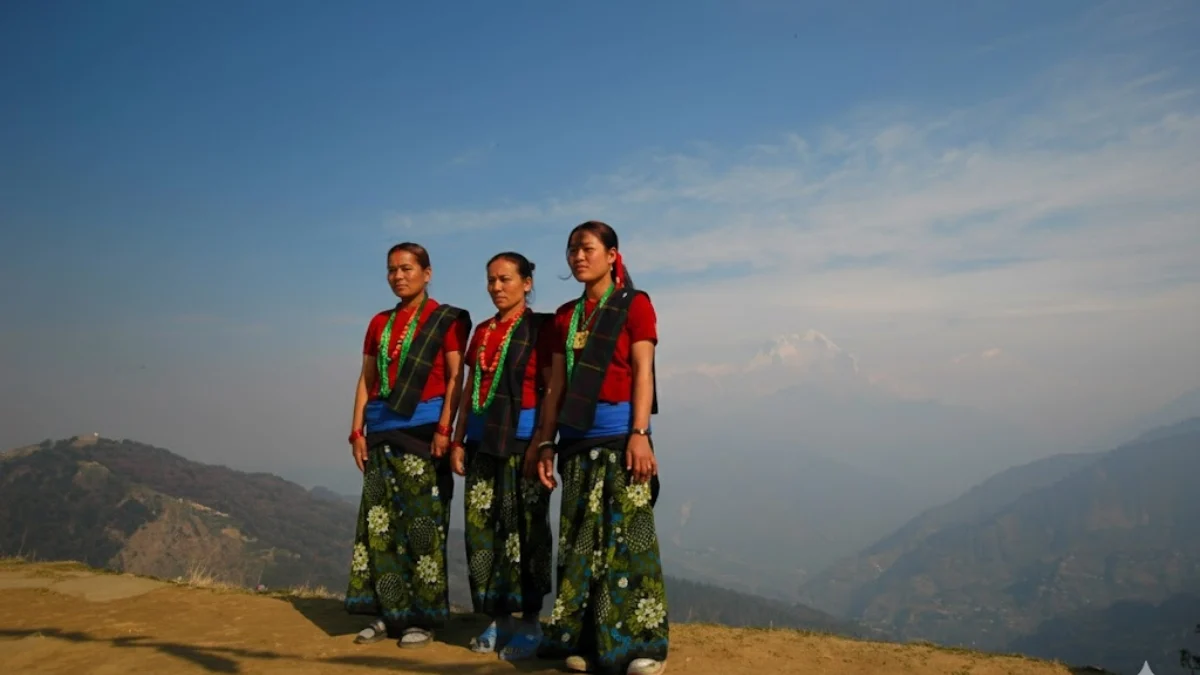
Spring on the Ghorepani Poon Hill trek is not only about blooming rhododendrons or chasing Himalayan sunrises. It’s also the season when local culture feels close, personal, and very real. Villages get busier, people stay outdoors longer, and everyday routines play out right in front of you as you walk through the trail.
You’re not just hearing about Nepalese traditions anymore; you’re watching them happen as you walk through the trail.
Understanding these cultural highlights adds a whole new layer to your Ghorepani Poon Hill Trek in Spring, especially for nature lovers, photographers, and first-time trekkers who want more than just mountain views.
Holi – March
Holi in March is loud, colorful, and honestly a lot of fun. Villages along the trail celebrate with splashes of color, music playing in the background, and people gathering just to enjoy the moment. If your trek lines up with it, this easily becomes one of the most memorable parts of the spring season.
Daily Life in Gurung and Magar Villages
Spring is work season in the hills. Fields turn bright green, farmers are busy planting or harvesting, livestock are being looked after, and stone houses stay active all day. Walking through Gurung and Magar villages during this time gives you a real look at everyday life, not just a quick stop between viewpoints.
Local Rituals and Community Gatherings
Even without big festivals, village life doesn’t slow down. You might come across small gatherings, hear folk songs in the evening, or see people sharing stories after dinner. These moments feel simple, but they’re often what trekkers remember the most.
Spiritual Sights Along the Trail
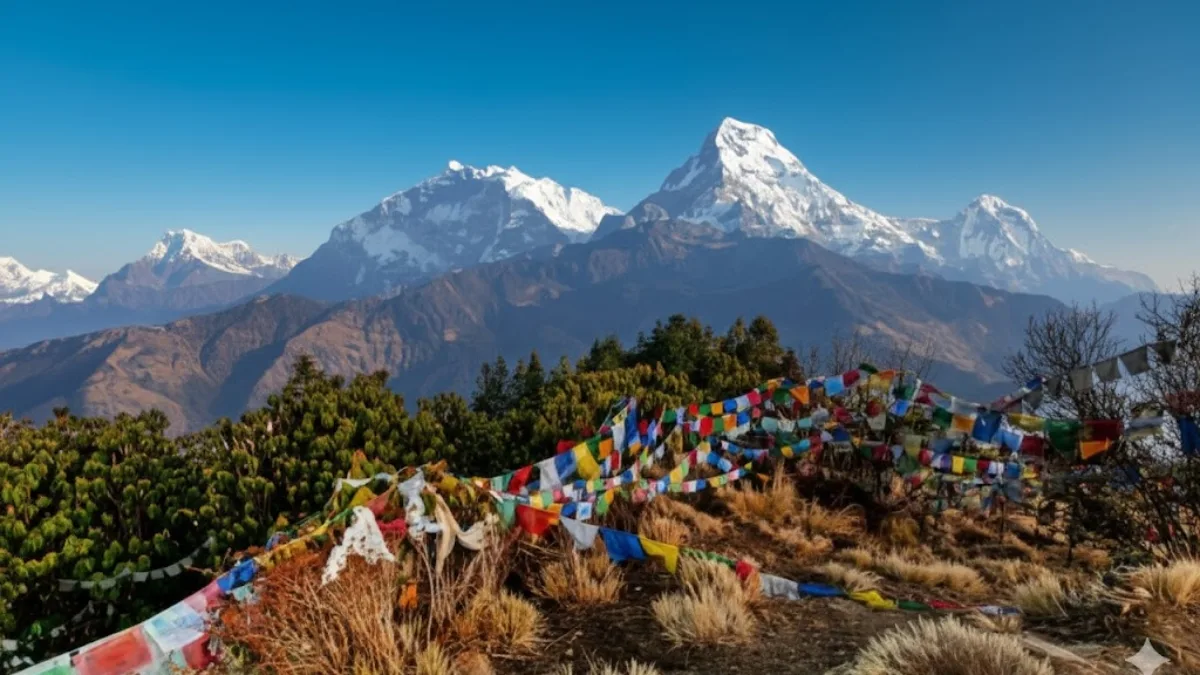
Prayer flags, chortens, and small shrines appear all along the route. Guides usually explain what they mean and why they’re placed there, which helps you understand the spiritual side of the Annapurna region as you walk.
Crowd Dynamics on the Ghorepani Poon Hill Trek in Spring
Spring is the second-busiest season for the Ghorepani Poon Hill Trek, just behind autumn when the trails get really packed. But honestly, it really depends on the month and even the time of day. So, if you plan your start times and stops a little, you can avoid the busiest crowds and still enjoy the trek at your own pace.
1. Trekker Traffic by Month
- Early March: Trails are pretty quiet. It’s perfect if you want to snap photos without people in every frame or catch the first blooms of the season.
- April: This is peak season. The weather is great, the Rhododendron bloom at Poon Hill is at its fullest, and the trails can get busy, especially at sunrise and sunset spots.
- Late May: A bit calmer than April, but still busy. It’s warmer, and you might notice some pre-monsoon haze creeping in the afternoons.
2. Trail vs Village Crowding
|
Section |
Spring Observations |
Tips for Trekkers |
|
Ulleri & Ghorepani |
Busy during sunrise |
Head out 30–45 minutes before the main crowd. You’ll get quieter trails and way better photo spots |
|
Tadapani & Ghandruk |
Moderate crowds |
Arrive mid-afternoon to grab rooms easily and enjoy a calmer vibe |
|
Offbeat (Muldai Viewpoint) |
Almost empty |
Add a 1-day extension if you want solitude and full 360° panoramic views |
Seasonal Variations
- Early March: Trails are peaceful, fewer trekkers, and some early flowers popping up.
- April: Busy everywhere. Villages feel lively, and the rhododendrons are at their peak.
- Late May: Still busy, but not as crazy as April. The air can get a little hazy in the afternoons thanks to pre-monsoon clouds.
Crowd Tips for Spring Trekkers
- Start early: Sunrise is magical but crowded. Beat the crowd for quiet trails and better photos.
- Timing matters: Get to Ghorepani or other stops by mid-afternoon to grab rooms without stress.
- Think early spring: Late February to early March has fewer people, good views, and early blooms if you don’t mind cooler mornings.
Spring gives the trails energy, busy teahouses, and lots of interaction with fellow trekkers. But with early starts, flexible timing, and a little planning, you can enjoy all the fun without feeling overwhelmed while sticking to your Poon Hill trek itinerary. Carry your Poon Hill trek map so that you donot get lost in the woods.
Classic 8-Day Ghorepani Poon Hill Trek in Spring
If you want to trek Poon Hill in spring, here is the standard 8 days itinerary. You can also customize your trek from the help of our team of Nepal Gateway Trekking
- Day 1: Arrival in Kathmandu (1,310 m)
- Day 2: Kathmandu to Pokhara (820 m)
- Day 3: Pokhara to Nayapul, Trek to Tikhedhunga and Ulleri (2,050 m)
- Day 4: Ulleri to Ghorepani (2,860 m)
- Day 5: Ghorepani to Poon Hill (3,210 m) and Trek to Tadapani (2,685 m)
- Day 6: Tadapani to Ghandruk (1,950 m) and Drive to Pokhara
- Day 7: Pokhara to Kathmandu (1,310 m)
- Day 8: Departure from Kathmandu
You can check out the full details and customization options in our complete Ghorepani Poon Hill Trek Package.
Trek Difficulty & Physical Preparation For Spring Trek
- Grade: Easy to Moderate
- Key Challenge: Ulleri stone steps
- Maximum Altitude: 3,210 m
The Ghorepani Poon Hill Trek in Spring is generally easy to moderate, so it works well for beginners, families, or anyone doing their first trek. The highest point is 3,210 meters, and the altitude gain is gradual, so you don’t enter high-risk AMS zones.
The main tricky part is the Ulleri stone steps. They can be tough on your knees and stamina, but if you use trekking poles and keep a steady pace, they’re totally doable. Honestly, with just basic fitness, most people finish the trek comfortably while soaking in the Rhododendron bloom, Poon Hill, waterfalls, and Himalayan views.
Spring weather helps a lot, too. Trails are stable, temperatures are mild, and everything feels safer and easier. It’s one of those treks where you can focus more on the scenery and less on struggling with the trail.
Permits and Logistics for Ghorepani Poon Hill Trek in Spring
Trekking in the Annapurna region now comes with a few updated rules for 2026 to keep trekkers safe and protect the environment.
Required Permits
ACAP (Annapurna Conservation Area Permit)
- Status: Mandatory for all trekkers
- Cost: NPR 3,000 (~$23 USD) for foreign nationals; NPR 1,000 for SAARC nationals
- Tip: Kids under 10 don’t need to pay the ACAP fee in 2026
e-TIMS (Digital Trekkers’ Information Management System)
- Status: Mandatory
- Cost: NPR 2,000 (~$15 USD)
- Update: The old paper “Green TIMS” is gone. Now you get a digital e-TIMS with a QR code that’s scanned at checkpoints like Birethanti and Ghorepani
2026 Guide Policy: Mandatory
- Solo trekking in the Annapurna Conservation Area is no longer allowed.
- All foreign trekkers must be with a licensed trekking guide registered with a recognized agency.
Why? It keeps you safer in emergencies and helps manage the crowds, especially during the busy spring Rhododendron bloom Poon Hill season.
Estimated Budget (Daily)
- Food & Accommodation: Around USD 30–40 per day. It goes up slightly in higher spots like Ghorepani (2,860 m).
- Guide Fees: USD 25–35 per day for a licensed, English-speaking guide. This usually covers their food, insurance, and lodging too.
Pro Tip: Even though everything is digital, carry physical copies of your passport and permits. Sometimes checkpoints need them if the internet or power goes out in the mountains.
This makes your Ghorepani Poon Hill Trek in Spring smooth, safe, and fully compliant with 2026 regulations.
Read: Ghorepani Poon Hill Trek Solo Expereince by a Nepali
Accommodation and Food on the Ghorepani Poon Hill Trek in Spring
Spring (March–May) is one of the busiest and most beautiful times for the Ghorepani Poon Hill Trek in Spring. With Rhododendron bloom Poon Hill, mild weather, and clear skies, it’s easy to see why. Knowing where to stay and what to eat can make your trek way smoother, especially during this peak season.
Accommodation: Teahouses and Guesthouses
Most people stay in family-run teahouses. They’re simple but cozy, usually offering basic rooms, meals, and a chance to meet other trekkers. Ghorepani and Tadapani get especially busy in spring, so aim to reach them before sunset if you want a decent room.
What to Expect:
- Rooms: Shared or private twin rooms with foam mattresses
- Bedding: Blankets are provided; a lightweight sleeping bag (0°C rating) is handy
- Dining Area: Common space to eat, drink, and relax
- Extras: Electricity and Wi-Fi usually available for USD 3–5 per device
Popular Stops:
- Tikhedhunga: Basic guesthouses, good for your first night
- Ulleri: Lodges along the stone steps
- Ghorepani: Lots of options; stay here before the sunrise hike
- Tadapani: Mid-trail lodges with forest views
- Ghandruk: Larger teahouses with a cultural vibe
Note: Nights at higher elevations can still be chilly, so pack extra layers.
Food on the Trail
Teahouses serve more than you’d expect. There’s a mix of local and Western options to keep you fueled for spring trekking.
Local Favorites:
- Dal Bhat: Nepali staple of rice, lentils, and veggies; refills usually included
- Momos: Steamed or fried dumplings, veg or chicken
- Thukpa/Noodle Soup: Perfect for chilly mornings
Western Options:
- Pancakes, French toast, pasta, fried rice
- Tea, masala tea, or coffee
Cost: About USD 8–9 per dinner depending on location
Tips:
- Eat early; stoves close after dinner
- Drink plenty of water; spring days can feel surprisingly warm
- Prioritize protein to help your muscles recover after long walks
Spring-Specific Notes
- Peak Season: March–April sees high demand; aim for mid-afternoon arrivals to grab better rooms
- Electricity & Hot Showers: Available at larger teahouses for a small extra fee
- Bring Snacks: Energy bars or chocolate help on long days, especially since higher-altitude prices are higher
Quick Snapshot:
- Accommodation: Teahouses & guesthouses
- Nightly Cost: USD 5–15
- Hot Shower: USD 2–5
- Wi-Fi/Electricity: Small fee
- Meals: Dal Bhat, momos, soups, pancakes, pasta
- Peak Demand: March–April
Pro Tip: Bring a lightweight sleeping bag, extra layers, and your favorite snacks. It’ll make your Ghorepani Poon Hill trek March April May way more comfortable and keep your energy up for all the hiking and Poon Hill sunrise views.
Essential Packing List for Ghorepani Poon Hill Trek in Spring
Spring (March–May) on the Ghorepani Poon Hill trek is pretty much a mixed bag, in the best way. Days are mild and pleasant, mornings can be properly cold, and the trails are bursting with color thanks to blooming rhododendrons.
Packing smart makes all the difference between a comfortable trek and one where you’re constantly wishing you’d brought that one extra layer.
Clothing & Footwear
When it comes to clothes, think layers, not bulk.
- Upper body: Moisture-wicking T-shirts paired with a light fleece work perfectly for warm daytime hikes and cooler evenings. You’ll be glad you can add or remove layers easily.
- Outerwear: A lightweight down jacket is a must, especially for the early-morning Poon Hill sunrise hike when the cold really bites.
- Footwear: Well-broken-in hiking boots are non-negotiable. They give you grip and stability, which is especially helpful if the trails get muddy toward late May.
Protection & Accessories
Spring sun in the Himalayas can be surprisingly strong, even when it doesn’t feel hot.
- Sun protection: SPF 50+ sunscreen, an SPF lip balm, and polarized sunglasses help protect you from harsh UV rays at higher altitudes.
- Specialty gear: Trekking poles are highly recommended. They’re a lifesaver on steep climbs and make the long descent down the Ulleri stone steps much easier on your knees.
Spring-Specific Notes
- Early mornings are cold, so layering is key, don’t rely on a single thick jacket.
- Trails can get wet in late May, so waterproof jackets or pants are worth considering.
- Lightweight gloves and a warm hat make sunrise hikes far more comfortable (and enjoyable).
Pro Tip: Carry small, high-energy snacks and a reusable water bottle to stay fueled and hydrated during long spring days. The Annapurna region has strictly banned single-use plastic bottles in many areas for 2026, so a reusable bottle plus water purification tablets or a filter is essential.
Ghorepani Poon Hill in Spring vs. Other Seasons: Which Is Best?
Choosing the Best time for Poon Hill really depends on what you want from the trek. Some people come for flowers, some for sharp mountain photos, and some just want quiet trails. Every season gives you something different. Still, the Ghorepani Poon Hill Trek in Spring keeps coming out on top for first-timers, nature lovers, and photographers.
1. Spring (March - May): The Floral Festival
Spring is easily the most colorful time on the Poon Hill trek in spring. Forests light up with red and pink flowers, the Annapurna and Dhaulagiri ranges still hold snow, and the trails feel alive. This is also the prime Ghorepani Poon Hill trek March April May window.
- Vibe: Energetic, colorful, and lively
- Why choose it: This is peak Rhododendron bloom Poon Hill season, birds are active, and the weather feels just right for walking all day
- Trade-off: Some afternoons turn hazy, but if you start early, the Poon Hill sunrise view is usually clear and sharp
2. Autumn (September - November): The Photography Gold Standard
Autumn is all about clarity. After the monsoon washes the air clean, the mountains look bold and dramatic. It is also the busiest trekking season in Nepal.
- Vibe: Crisp, golden, and social
- Why choose it: Consistently clear skies and classic wide mountain views
- Trade-off: Heavy crowds, especially at teahouses and during sunrise hikes
3. Winter (December - February): The Silent Snowscape
Winter strips the trek down to its quiet side. Fewer people, snowy trails, and peaceful evenings in teahouses.
- Vibe: Quiet, calm, and challenging
- Why choose it: Very low crowds and beautiful snow-covered scenery
- Trade-off: Cold mornings at Poon Hill and the need for proper winter gear
4. Monsoon (June - August): The Emerald Challenge
Monsoon is not popular with beginners, but it does have its own mood. Everything turns green and wild.
- Vibe: Lush, wet, and isolated
- Why choose it: Fewer trekkers, strong waterfalls, and lower overall costs
- Trade-off: Slippery trails, leeches, and poor mountain visibility
Comparison Summary at a Glance
|
Feature |
Spring (Mar-May) |
Autumn (Sep-Nov) |
Winter (Dec-Feb) |
Monsoon (Jun-Aug) |
|
Scenery |
Rhododendron blooms, green valleys |
Golden and clear |
Snow-covered and stark |
Lush and green |
|
Visibility |
High in the morning |
Maximum |
Excellent |
Poor due to clouds |
|
Temperature |
Mild (10-25°C) |
Pleasant (10-18°C) |
Cold (2-10°C) |
Hot and humid (20-25°C) |
|
Crowds |
Moderate to high |
Very high |
Low |
Very low |
|
Ideal For |
Photographers, nature lovers, Easy treks in Nepal spring |
First-timers and photographers |
Solitude seekers |
Budget trekkers |
If you want comfort, color, and a flexible Poon Hill trek itinerary, spring usually feels like the easiest season to enjoy without pushing your limits.
Final Thought
Spring really is the sweet spot for trekking Ghorepani Poon Hill. The trails don’t feel dull for a second. Rhododendrons are everywhere, mornings start with those quiet, unreal mountain sunrises, and village life feels warm and welcoming instead of rushed. The weather helps too. Not too cold, not too hot. Just right for long walks and slow tea breaks.
At the end of the day, the Ghorepani Poon Hill Trek in Spring gives you a bit of everything. Color, culture, views, and enough comfort that you’re enjoying the walk instead of just pushing through it.
And if you want the whole thing to feel smooth and stress-free, Nepal Gateway Trekking makes it easy. From planning to the final steps of the trail, they help turn the trek into something you’ll keep thinking about long after you’re back home. Book your spring trek today!
Frequently Asked Questions
Is the Poon Hill trek suitable for beginners?
Yes, the Poon Hill trek is suitable for beginners. The Ghorepani Poon Hill Trek Spring route is one of Nepal’s easiest treks, with well-marked trails and a maximum altitude of 3,210m, making it ideal for beginners and families.
When do the rhododendrons bloom on the Poon Hill trek?
Rhododendrons bloom from late March to mid-April. Lower elevations bloom earlier, while forests around Ghorepani reach peak color by early April.
What is the temperature at Poon Hill in April?
Daytime temperatures range from 15°C to 20°C. During the sunrise hike (around 5 AM), temperatures can drop to 0°C or -2°C in April.
How many steps are there in the Ulleri climb?
There are approximately 3,200 to 3,500 stone steps in Ulleri Climb, making it the toughest section of the trek.
Do I need a sleeping bag for spring?
A lightweight sleeping bag rated to 0°C is recommended for hygiene and extra warmth, even though teahouses provide blankets.
Can I see Mount Everest from Poon Hill?
No you cannot see mount everest from Poon Hill. Everest is in a different region. From Poon Hill, you’ll see the Annapurna and Dhaulagiri ranges, including Machhapuchhre.
Is Wi-Fi and electricity available on the trek?
Yes wifi and electricity are available on ghorepani Poon Hill trek but it is very limited. Most teahouses in Ghorepani and Ghandruk offer Wi-Fi and charging for USD 3–5.
Can I trek Poon Hill without a guide?
No. As of 2026, Nepal law requires all foreign trekkers to have a licensed trekking guide for the Annapurna region. Solo (FIT) trekking is no longer permitted for safety and environmental protection.
Is there an entrance fee for the Poon Hill Viewpoint?
Yes, there is a small local entry fee of NPR 100 (~$0.75 USD) collected at the gate of the viewpoint. This is separate from your ACAP permit.