Most people come to the Himalayas dreaming about the 8,000-meter monsters. Everest. Annapurna I. All the big names. But right there in the middle of the Annapurna Massif, Hiunchuli Peak quietly holds its ground. It rises to 6,441 meters (21,132 ft), and honestly, calling it just a satellite peak doesn’t really do it justice. This mountain literally marks the entrance to the Annapurna Sanctuary, which already makes it a pretty big deal.
And yeah, it doesn’t get the same hype as its neighbors. Annapurna I has the danger factor, and Machhapuchhre has that iconic fishtail shape everyone recognizes instantly. Still, Hiunchuli Peak doesn’t fade into the background. Its huge, ice-covered eastern face and sharp ridgelines are always there, especially if you’re trekking toward Annapurna Base Camp. You walk for days, and it just keeps showing up beside you, like a silent companion watching the whole journey unfold.
What Is Hiunchuli Peak?
Hiunchuli is a prominent peak situated in the central Himalayas of Nepal. Although it is officially classified as a "trekking peak" by the Nepal Mountaineering Association (NMA), this label is somewhat deceptive.
Among the mountaineering community, it is regarded as one of the most technically demanding and "least climbed" peaks in its category due to objective hazards like rockfall and complicated route-finding.
- Meaning of the Name: The name is a compound of the Nepali words Hiun (हिउँ), meaning "snow," and Chuli (चुली), meaning "peak." It is the literal "Snow Peak," so named for the heavy snow flutings and ice walls that drape its summit year-round.
- A "Sacred" Extension: Geographically, Hiunchuli is a satellite peak extending southeast from Annapurna South. To the local Gurung people, the mountain is not just a geographical feature but a sacred entity that guards the "inner sanctuary" of the gods.
Also Read: Mountains of the South Asia
Where Is Hiunchuli Peak Located?
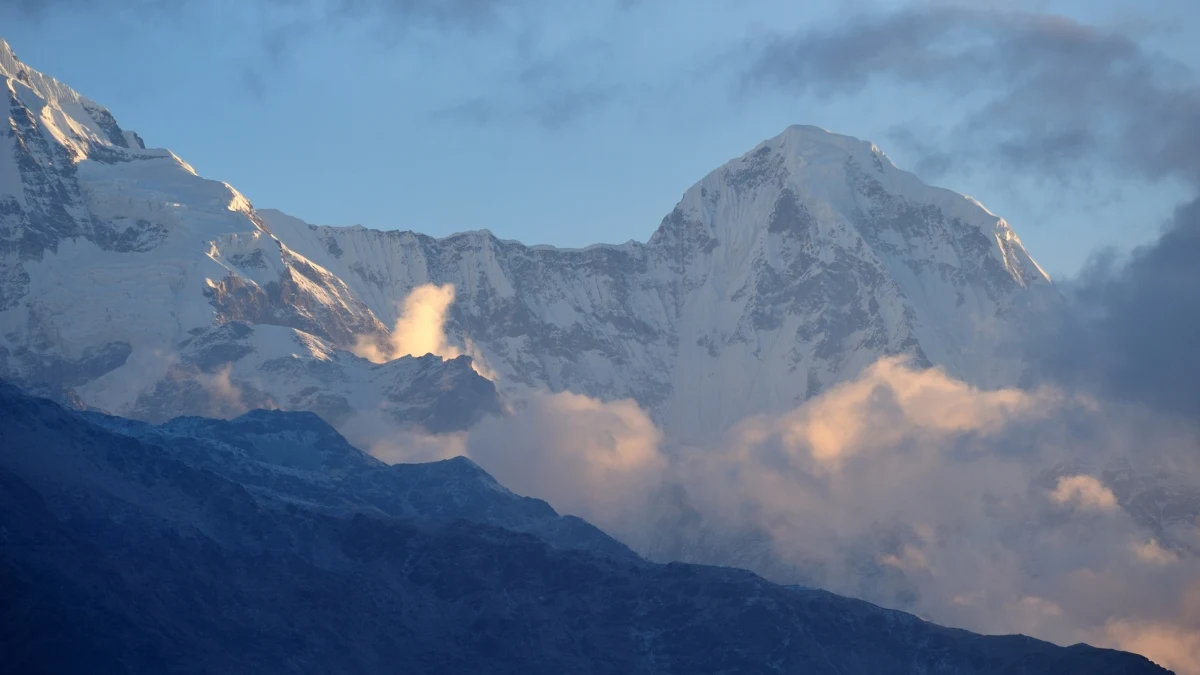
Hiunchuli Peak sits in Nepal’s Kaski District, at roughly 28.51°N and 83.85°E. It’s right along the southern edge of the Annapurna Massif, and this spot is kind of a big deal because it acts as the main entrance to the Annapurna Sanctuary. So if you’re heading toward that inner basin, this mountain is basically standing there first, setting the tone.
Position Within the Annapurna Himal
Geographically, Hiunchuli Peak is planted at the southern tip of the massif. Together with Annapurna South, it forms a huge south-facing wall that feels almost like a barrier when you see it in person. Its position, around 28°30′37″N and 83°51′07″E, places it right on the edge where the lower valleys end and the high-altitude wilderness really begins.
The "Gates" to the Sanctuary
This is where things get interesting. Hiunchuli Peak is often called the Guardian of the Gate, and once you see the layout, it makes total sense. Paired with Machhapuchhre across the valley, it narrows the Modi Khola into the only natural passage into the Annapurna Sanctuary. One moment you’re walking through green bamboo forests, and the next, the landscape opens up into ice, rock, and towering walls. That shift feels dramatic, and Hiunchuli Peak is a big reason why.
Also Read: Can Beginner do Annapurna Circuit Trek?
How High is Hiunchuli Peak?
Hiunchuli Peak stands at 6,441 meters, which puts it in the fourth position among Nepal’s trekking peaks. That number sounds impressive on its own, but honestly, the height doesn’t tell the whole story. What really sets this mountain apart is where it sits, how it looks, and how much presence it has when you’re anywhere near the sanctuary.
Table: Hiunchuli Peak Overview
|
Feature |
Details |
|
Elevation |
6,441 m (21,132 ft) |
|
Parent Range |
Annapurna Massif |
|
First Ascent |
October 1971 (Craig Anderson & US Peace Corps Team) |
|
Permit Category |
NMA Group B (Trekking Peak) |
|
Primary River |
Modi Khola (fed by its glaciers) |
|
Local Name |
Patal Hiunchuli |
Hiunchuli Peak and the Annapurna Sanctuary
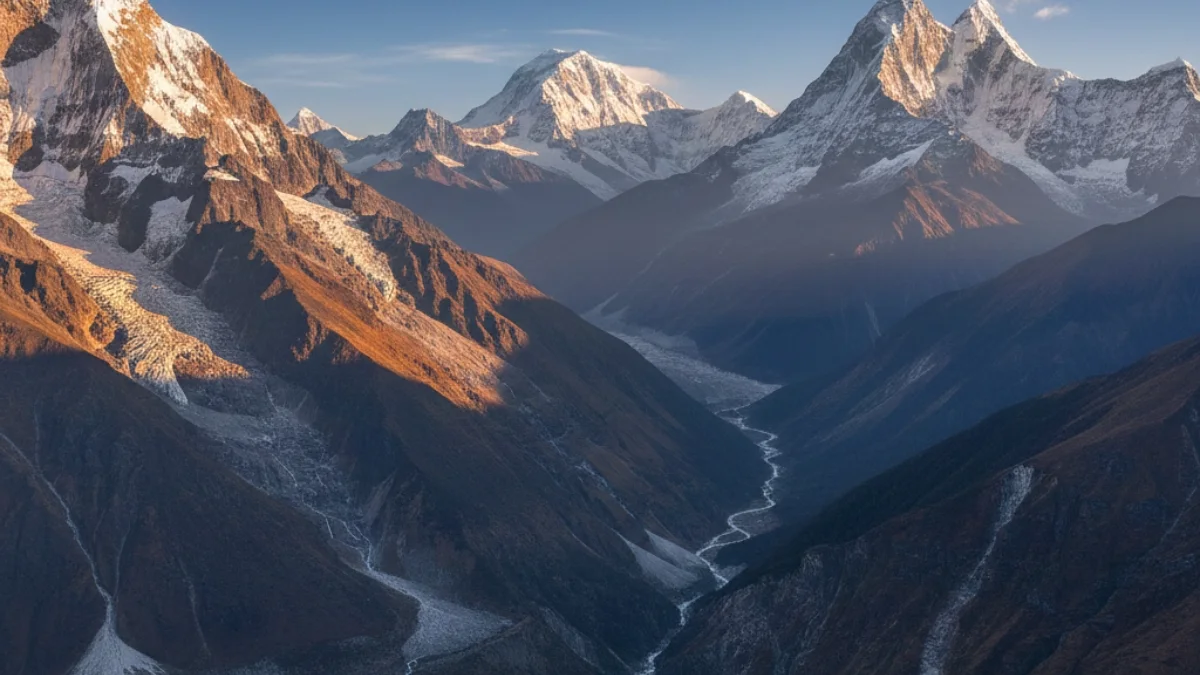
The Annapurna Sanctuary is basically a huge bowl of ice and rock sitting way up high, completely surrounded by 7,000 and 8,000-meter peaks. When you look at it on a map or see it in person, it feels sealed off from the rest of the world.
Hiunchuli Peak isn’t just hanging around the edges of this place. It actually forms one side of the Annapurna Sanctuary Gateway, helping guard the entrance to this sacred inner basin.
The Natural Amphitheater: Along with the instantly recognizable Machhapuchhre, Hiunchuli Peak creates a narrow, steep gorge that acts as the only way into the Sanctuary. The Modi Khola cuts straight through this gap, squeezing between the two mountains like it has no other option.
When you cross this point near Deurali, the change hits you fast. The green bamboo forests fade away, and suddenly you’re standing inside a massive amphitheater made of ice, rock, and towering walls on all sides.
Landscape & Glaciers: The eastern face of Hiunchuli Peak is anything but simple. It’s steep, broken, and kind of chaotic, with hanging glaciers and deep couloirs dropping toward the valley below. These glaciers aren’t just dramatic to look at.
They matter. A lot. Their meltwater feeds the Modi Khola throughout the year, which is a lifeline for Gurung and Magar villages down in the foothills. Without that steady flow, farming life below would look very different.
If you are excited to explore Hiunchuli but dont have much time, you can join short Annapurna Base Camp Trek with Nepal Gateway Trekking and enjoy your trekking in safe hands.
The Geographical Relationship: Hiunchuli vs. Annapurna South
Hiunchuli Peak often gets talked about as its own mountain, and sure, it has its own name and presence. But geologically speaking, it’s tightly connected to Annapurna South. You really can’t separate the two without missing the bigger picture.
- Scientific Context: From a geology point of view, Hiunchuli Peak is basically an extension of Annapurna South, which rises to 7,219 meters. It isn’t some standalone spike sticking out on its own. Instead, it marks the southeastern end of a long, high ridge.
That ridge forms a huge south-facing wall, and it plays a quiet but important role by shielding the inner Sanctuary from warm, moisture-heavy air coming up from the lower valleys.
- Glacial Influence: The connection doesn’t stop at rock and ridges. Water ties these two peaks together as well. Snow and ice melting off Hiunchuli’s eastern and northern slopes flow directly into the Annapurna South Glacier. That glacier feeds the Modi Khola, which means the river and the deep gorge it has carved over thousands of years exist because of ice constantly shedding from the Hiunchuli–Annapurna South massif.
Note for Trekkers: If you’re standing at Annapurna Base Camp and looking to your left, that massive wall of ice isn’t just a random mountain face. It’s the backbone of the Sanctuary itself, linking the 6,441-meter summit of Hiunchuli Peak straight up to the 7,219-meter bulk of Annapurna South. You’re literally looking at the spine holding the whole place together.
Which Peaks Are Near Hiunchuli Peak?
Hiunchuli Peak definitely doesn’t stand on its own. It sits right inside the Annapurna Massif, which honestly feels like one of the most crowded mountain neighborhoods on the planet. The southern part of the range, where Hiunchuli is located, is packed with famous names, massive walls of ice, and ridges that seem to stack one on top of another.
Major Peaks in the Hiunchuli Cluster
The landscape around Hiunchuli Peak is all sharp ridges, deep glacial valleys, and towering faces that barely give you room to breathe when you’re standing below them. These are the main peaks you’ll find clustered around it:
- Annapurna South (7,219 m): This one is often called Hiunchuli’s big brother, and that description fits pretty well. It sits just to the northwest and completely dominates the skyline. Geologically, Hiunchuli Peak is connected to Annapurna South by a high, jagged ridge, which is why it’s often considered a satellite peak rather than something totally separate.
- Machhapuchhre (6,993 m): Better known as the Fishtail Mountain, Machhapuchhre stands directly across the Modi Khola valley to the east. Together, these two peaks create the dramatic vertical gateway into the Annapurna Sanctuary. If you’ve ever seen photos of the entrance, you’ve probably seen this pair without even realizing it.
- Annapurna I (8,091 m): This is the giant of the group and the 10th highest mountain in the world. It sits deeper inside the sanctuary, roughly 13 kilometers north of Hiunchuli Peak, and its presence kind of steals the spotlight from everything around it.
- Gangapurna (7,455 m): Gangapurna rises along the northern wall of the sanctuary and is known for its wide, heavily glaciated slopes. You can often see it alongside Hiunchuli when you’re near Machhapuchhre Base Camp, especially on clear mornings.
- Singu Chuli (6,501 m) and Tharpu Chuli (5,663 m): Also called Fluted Peak and Tent Peak, these are fellow trekking peaks tucked inside the inner sanctuary. Together, they help create a full 360-degree bowl of snow and ice around Hiunchuli Peak, which is part of what makes this area feel so enclosed and dramatic.
Nepal Gateway Trekking is one of the best Annapurna Trek Agency you can trust for your Annapurna journey.
Comparison of Neighboring Peaks
To get a better sense of how these mountains stack up, here’s a simple comparison of their height and overall character:
|
Peak Name |
Elevation (m) |
Character / Visual Identifier |
|
Annapurna I |
8,091 m |
The highest peak; forms the north wall of the sanctuary |
|
Annapurna South |
7,219 m |
Huge shield-like face; parent peak to Hiunchuli |
|
Machhapuchhre |
6,993 m |
Sharp twin-summited Fishtail spire |
|
Hiunchuli |
6,441 m |
The jagged guardian of the southern gate |
|
Singu Chuli |
6,501 m |
Fluted, elegant ridges inside the basin |
Environmental & Cultural Importance Of Hiunchuli Peak in Nepal
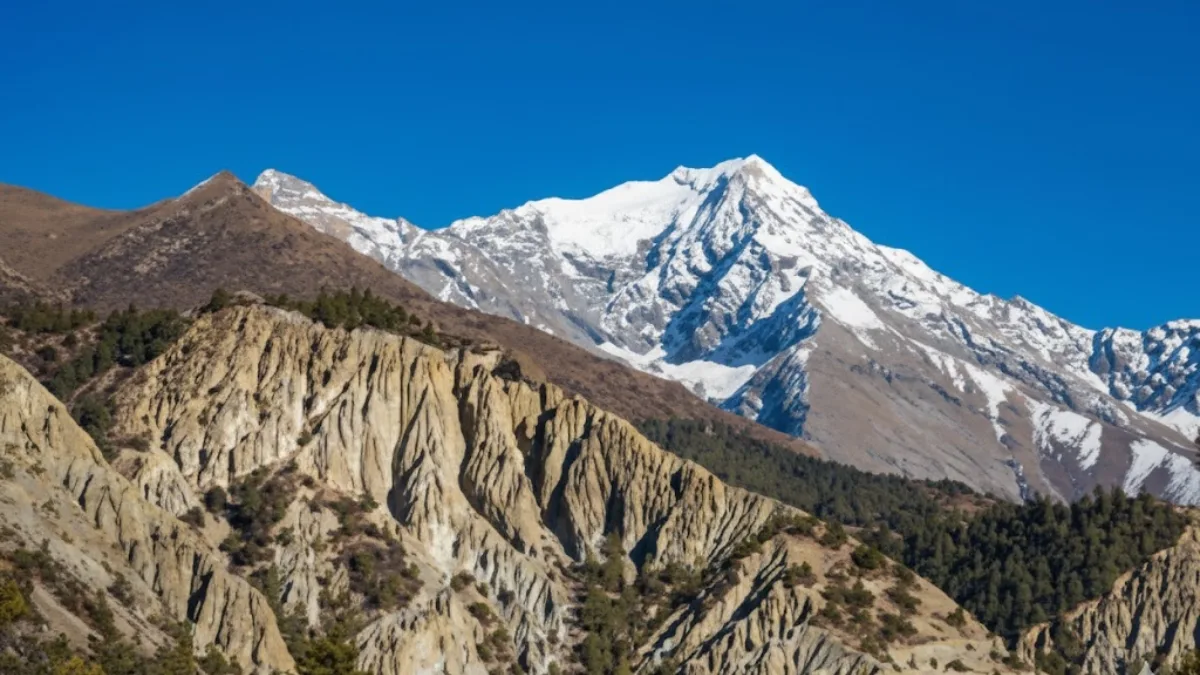
Hiunchuli Peak isn’t just a huge pile of rock and ice. It’s a big part of the local ecosystem and also really important to the spiritual life of people living in the Himalayas. The Annapurna Conservation Area Project (ACAP), which is Nepal’s first and biggest protected area, takes care of it, making sure both nature and culture stay safe.
Ecological Role within ACAP
Hiunchuli does a lot for the Annapurna region. Its steep slopes create different microclimates that support all kinds of wildlife:
- The Bamboo Zone: The lower slopes, around 2,500 to 3,000 meters, are packed with bamboo and rhododendron forests. Animals like the Red Panda and Himalayan Black Bear live here.
- Alpine Tundra: Once you go above the tree line, the land changes to meadows and scrub. This is where you might spot a Snow Leopard or a Himalayan Tahr clinging to the cliffs.
- Hydrological Lifeline: The mountain is basically a giant water tower. Its glaciers and snow feed the Modi Khola river, giving water to the villages and farms downstream, even in the dry winter months.
You might like to know more about exotic animals of the Nepali Himalayas.
The Sacred Gate: Cultural Heritage of the Gurung People
For the Gurung and Magar communities living around Hiunchuli, the mountain isn’t just scenery, it’s sacred. They see it as the "Guardian" of the inner sanctuary, a place where the spiritual and physical worlds meet.
The Taboos of the Sanctuary: Back in the day, the area past the “gate” formed by Hiunchuli and Machhapuchhre had strict religious rules. To keep the Beyul, or Sacred Hidden Valley, pure, travelers weren’t allowed to:
- Bring pork or buffalo meat inside
- Wear leather items like shoes or belts in the inner circle
- Hurt animals or do any kind of blood sacrifice
Spiritual Guardianship: Locals believe that the “Deities of the Sanctuary” live up on Hiunchuli’s high ridges. If you trek here, you’ll notice small shrines, called Chortens, and prayer flags at the base. They’re basically asking the mountain’s permission before entering the sacred basin.
This kind of respect has also helped protect the area naturally. Even before tourism came, these beliefs kept the inner sanctuary clean and untouched.
Can Trekkers See Hiunchuli Peak?
Yes, absolutely. Hiunchuli Peak is one of those mountains that just refuses to disappear once you enter the Annapurna region. Because it forms the southern wall of the massif, it stays right there in your view for most of the walk toward the sanctuary. Some days it feels distant and calm. Other days, especially as you get closer, it feels huge and almost intimidating.
Best Viewpoints to see Hiunchuli Peak for Trekkers
Where you see Hiunchuli Peak from really changes how it feels. From far away, it looks quiet and snowy. Up close, it turns into a wall of ice and rock that’s hard to ignore.
- Poon Hill (3,210m): This is hands down the classic viewpoint. The Hiunchuli View from Poon Hill gives you a wide, open look at the whole Annapurna range. From here, Hiunchuli sits pressed right up against Annapurna South, and you can really understand how massive that southern wall actually is.
- Tadapani: Getting to Tadapani puts you closer to Hiunchuli Peak, and suddenly the mountain feels almost personal. The jagged southeastern ridges really pop here, especially when the morning sun hits just right, casting shadows that make every ridge and couloir stand out.
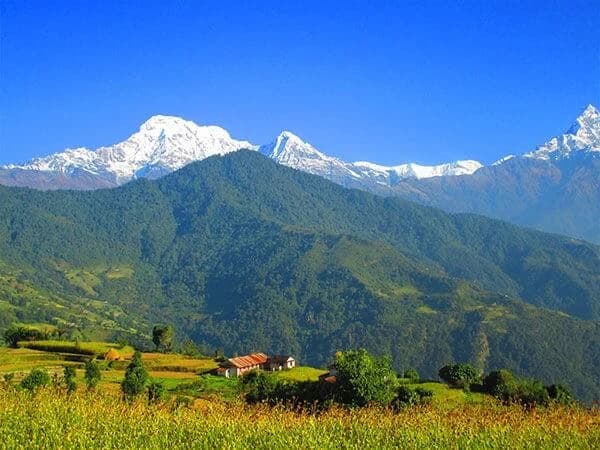
- Ghandruk Village: Right in the heart of Gurung territory, Ghandruk gives you that classic Himalayan postcard view. The stone houses sit calmly in the valley, and then there’s Hiunchuli Peak towering above, totally dominating the skyline without even trying. It’s hard not to stare.
- Deurali to Machhapuchhre Base Camp (MBC): This stretch of the trail is next-level dramatic. You’re basically walking under Hiunchuli’s eastern wall, and it’s close enough to see every steep couloir and hanging glacier above. It feels raw and a little intimidating, but in the best way. It’s dramatic, and honestly, a little humbling.
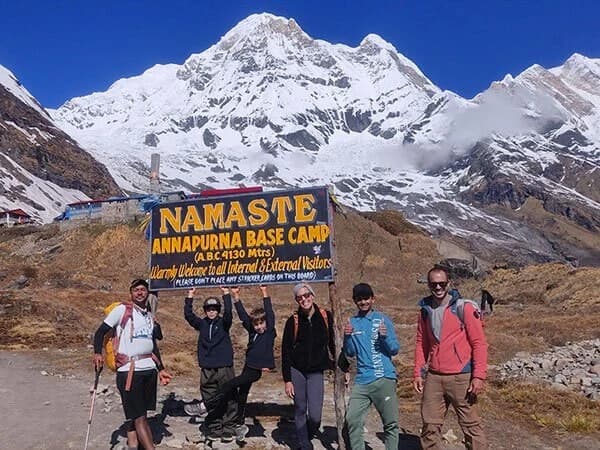
- Annapurna Base Camp (ABC): Once you step into the sanctuary, Hiunchuli Peak shows its full personality. From here, it looks like a massive, blocky fortress guarding the southern side of the basin, reinforcing why this area is known as the Annapurna Sanctuary Gateway.
Learn about Sinuwa which is the starting of Annapurna Treks.
Visibility Patterns: When is the Best Time to See Hiunchuli?
If you want the best shots or just want to actually see Hiunchuli Peak clearly, you need to get a feel for how the mountain “behaves.”
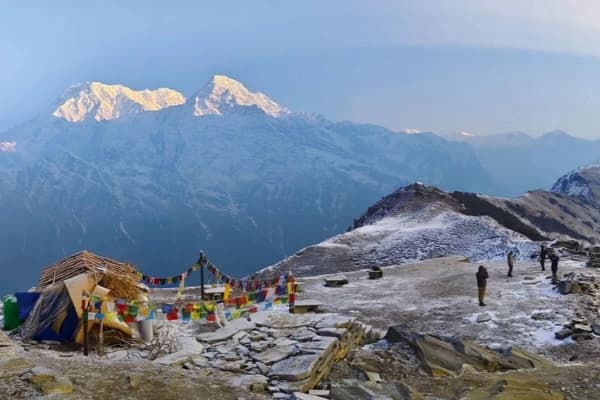
- The Sunrise "Alpenglow": Because of its southern and eastern faces, Hiunchuli is one of the first peaks to catch the morning sun. Early in the day, the snow turns a brilliant gold and pink. That glow, known as Alpenglow, is honestly magical and makes the jagged ridges pop like nothing else.
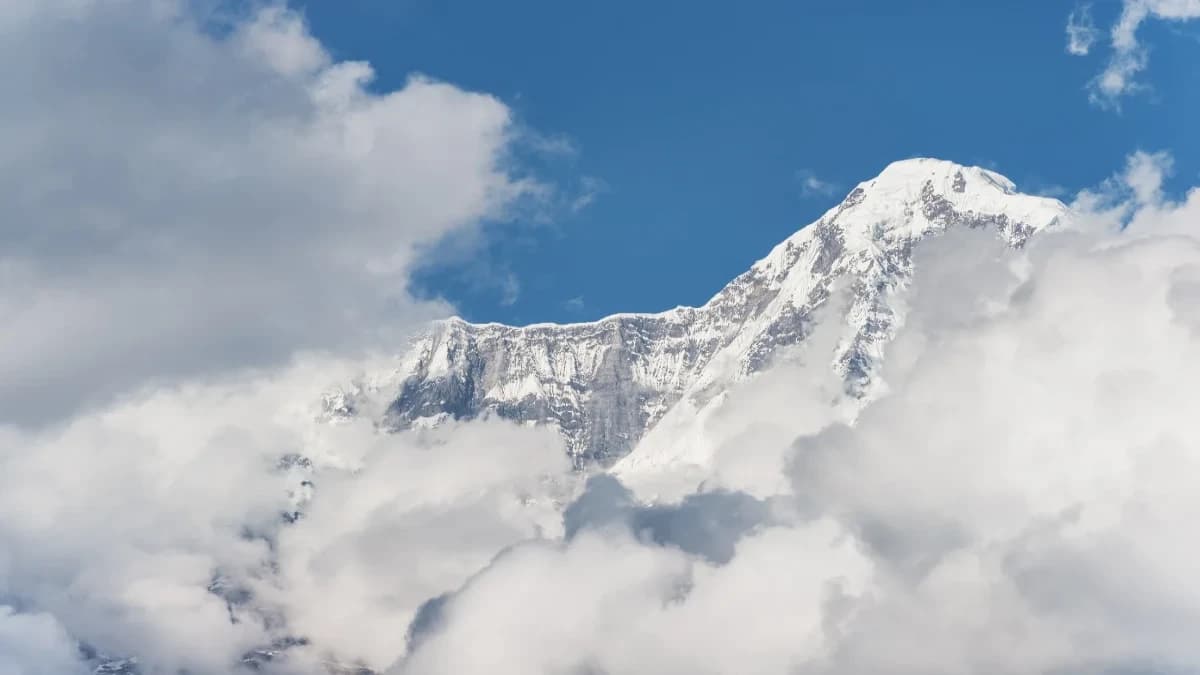
- Afternoon Cloud "Hats": Later in the day, especially in late spring or during monsoon season, the peak likes to play hide-and-seek. Moisture from the valley often drifts up, forming a misty “hat” around the summit by midday. The rest of the sky can be totally clear, but Hiunchuli’s crown is wrapped in clouds, it’s kind of dramatic.
- Seasonal Clarity: If you’re serious about seeing every ridge and glacier, aim for post-monsoon, around October and November. The air is crisp, visibility is solid, and the mountain practically jumps out at you.
Historical & Mountaineering Context
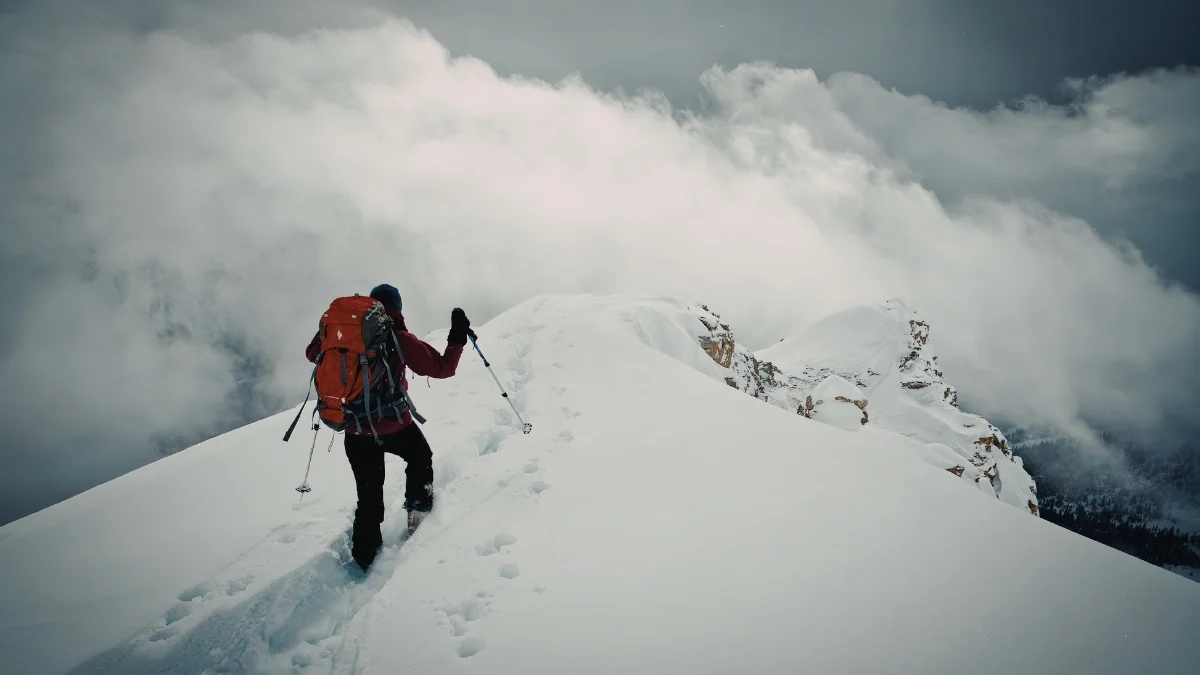
The story of Hiunchuli Peak is less about crowds and more about quiet challenges. Unlike Everest or other commercialized peaks, Hiunchuli has kept this air of mystery, untouched, wild, and a little intimidating.
Discovery and Early Exploration
The Gurung people have known Hiunchuli for centuries, of course, but the international community “discovered” it around the mid-20th century. In the 1950s, explorers like Colonel Jimmy Roberts, sometimes called the “Father of Trekking in Nepal”, started mapping the Annapurna Sanctuary. That’s when Hiunchuli got recognized as a major, though formidable, southern pillar of the massif.
The 1971 Milestone: The First Ascent
Officially, Hiunchuli’s climbing history kicks off in October 1971. The first successful ascent was by an American Peace Corps Volunteer team led by Craig Anderson. This wasn’t a flashy commercial climb, it was survey-style, meant to test the mountain itself.
They went up the Southeast Face, which is still the main route today. It’s steep, icy, and full of tricky couloirs, proving early on that Hiunchuli is really a “climber’s mountain.” You don’t just walk up it, you earn every step.
Why Hiunchuli Remains "Untouched"?
Even though it’s right near the popular Annapurna Base Camp trek, Hiunchuli Peak isn’t crowded. There are a few reasons for that:
- Objective Hazards: Rockfall and serac collapses are common. Avalanches happen. That alone scares most guiding companies from running regular trips.
- The Technical Gap: It’s officially an NMA Group B Trekking Peaks, but don’t let that fool you. The climbing difficulty is way higher than a typical walking peak like Island Peak. You need real ice-climbing skills. It’s not for casual trekkers.
- The Shadow of the Giants: At 6,441 m, Hiunchuli is overshadowed by Annapurna I and visually rivals Machhapuchhre, the sacred Fishtail. Most people coming to the region are focused on those bigger names, so Hiunchuli stays quiet, preserving its solitude.
Today, Hiunchuli stands as a symbol of the “Old Himalayas.” Wild, raw, and a mountain you can’t just stroll up. The routes demand skill, patience, and respect, no crowds, no shortcuts, just pure climbing.
Planning Your Expedition: Logistics and 2026 Regulations
Getting to Hiunchuli Peak, or even just seeing it properly, takes a bit of planning. There are rules, seasons, and a few logistics updates you need to know for 2026.
Best Time for Visibility and Photography
The mountain’s up there all year, but if you want the clearest views, Post-Monsoon, October to November, is the sweet spot. The air is crisp, the skies are clear, and the snow conditions are stable. Spring, from March to May, is beautiful too, especially with the lower slopes covered in blooming red rhododendrons. Just keep in mind that afternoon mists are more common, so timing your hike or photography session matters.
2026 Permit Requirements and Costs
Hiunchuli Peak falls under NMA Group B Trekking Peaks. For foreigners, permits are roughly $350 in Spring and $175 in Autumn. Plus, there’s a new rule: climbers must carry GPS tracking chips and have special mountain rescue insurance. It’s all part of keeping everyone safe while respecting the mountain’s challenges.
The "Hinko Cave" Landmark (3,160m)
If you’re attempting Hiunchuli, you’ll want to know about Hinko Cave. It’s a huge overhanging rock between the Himalayan Hotel and Deurali. Back in the day, early expeditions used it as a sort of Natural Base Camp. Today, it’s still a key stop, a last safe spot before entering the high-risk avalanche zone along Hiunchuli’s eastern face.
Mountaineering Challenges: The "Least Climbed" Trekking Peak
Even though it’s right near the popular ABC trail, Hiunchuli Peak doesn’t see many summits. That’s mostly because of its high "Objective Hazards", dangers that are there no matter how skilled you are.
The Southeast Face and the "Great Couloir"
The main route, set up back in 1971, goes up the Southeast Face. The toughest part? A 600-foot diagonal rock and ice gully called the Great Couloir. Lately, shifting ice has made it even trickier. You’re looking at Grade 4+ climbing and front-pointing on steep 55 degree slopes, not exactly a casual scramble.
Route Finding and Serac Dangers
Hiunchuli isn’t a peak with a "highway" of fixed ropes. Far from it. Route-finding here is tricky, and the hanging glaciers, or seracs, constantly shed ice. That makes the approach riskier than nearby Annapurna South because ice can drop anywhere along the path, and you need to be alert the whole way.
Final Thoughts
Hiunchuli Peak really is the silent guardian of the Himalayas. It might not be the tallest, but it proves that technical beauty, cultural mystery, and raw natural power matter just as much as height. In 2026, it still sits at the crossroads of ancient sacred traditions and modern safety rules, standing tall as the gateway to the Annapurna Sanctuary.
Want to experience the “Guardian of the Sanctuary” up close? Nepal Gateway Trekking can make it happen. Their local experts know all about high-altitude logistics and the stories behind the peaks, so your trek through the Annapurna range will be safe, immersive, and honestly unforgettable. Book your trek with us today!
FAQs About Hiunchuli Peak
Where is Hiunchuli Peak located?
Hiunchuli Peak is right in north-central Nepal, inside the Annapurna Massif. It’s part of the Annapurna Conservation Area, so it’s in a really protected and beautiful spot.
Is Hiunchuli Peak visible from Annapurna Base Camp?
Yes! You’ll see it forming the massive southern wall of the Annapurna Sanctuary. It’s hard to miss when you’re at ABC.
Is Hiunchuli Peak a trekking peak?
Technically, yes. The Nepal Mountaineering Association calls it a “Group B” trekking peak. But honestly, it’s pretty tough and technical, so it’s not like the usual trekking peaks that anyone can climb.
What does the name Hiunchuli mean?
The name comes from Nepali: “Hiun” means snow and “Chuli” means peak. So it literally means “Snow Peak.”
Which mountain range does Hiunchuli Peak belong to?
It’s part of the Annapurna Himal, which itself is part of the Greater Himalayas. Basically, it’s smack in the middle of some of Nepal’s most famous mountains.
Can tourists climb Hiunchuli Peak?
Yes, you can, but only with an NMA permit and proper guides. It’s rarely climbed though because it’s pretty technical and has some real hazards like ice and rockfall.
Why is Hiunchuli Peak less popular than Machhapuchhre?
Machhapuchhre gets all the attention thanks to its fishtail shape and sacred status. Hiunchuli often looks like just an extension of Annapurna South, so it doesn’t get the same fame.
Can you see Hiunchuli Peak from Ghandruk?
Yes! From the Gurung village of Ghandruk, Hiunchuli and Annapurna South dominate the skyline. It’s one of the best viewpoints in the area.
Is Hiunchuli Peak inside the Annapurna Sanctuary?
Yes. It marks the southern edge and acts as the natural gateway into the Sanctuary.