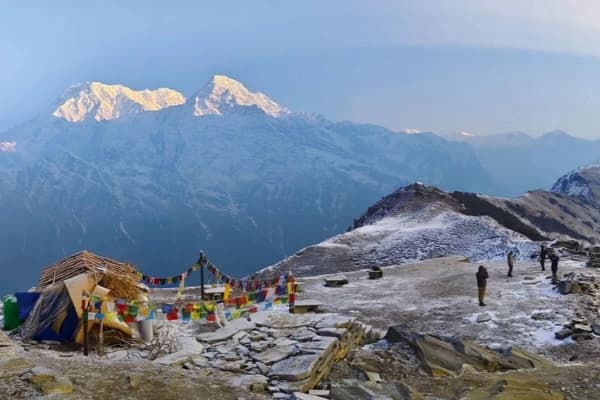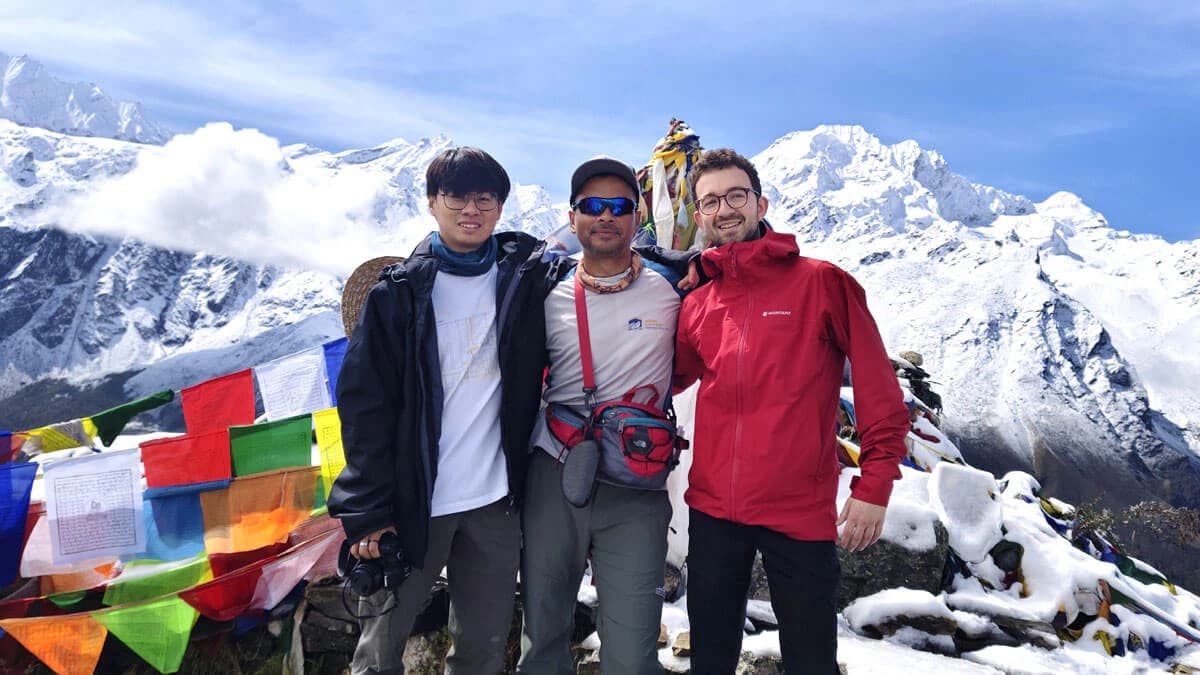
The majority of trekkers skip the Langtang Valley Trek in the monsoon, thinking that the continuous rain and cloudy skies make it the wrong season to visit. But between June and August, those who dare to come down into the valley find a very different side to the Himalayas, one that very few travelers ever see.
In the summer rains, it is a green paradise. Dense forests, roaring waterfalls on the mountainsides, full-flowing rivers, and mist drifting through the valleys make for breathtaking scenery.
The monsoon offers a great time to trek, with peaceful trails, quieter teahouses, lower travel costs, and genuine connections with local Tamang communities, unlike the busy spring and autumn trekking seasons. The cool, rain-washed forests are full of colorful birds, langur monkeys, and even the elusive red panda.
This is one of the best seasons for wildlife enthusiasts. The towering Himalayan peaks are often hidden behind dramatic clouds, but the moments when they do appear through the mist are unforgettable and feel all the more rewarding.
Langtang Valley Trek in the monsoon is not a walk in the park. Heavy rain, slippery trails, leeches, and occasional landslides need good preparation, flexibility, and the guidance of an experienced local guide. For the adventurous trekker who is prepared to face the rainy season, this trail rewards you with experiences that make the difficulties well worth it.
This guide will cover everything you need to know, from weather, trail conditions, wildlife, permits, costs, and difficulty to a full 10-day monsoon itinerary to help you plan a safe and memorable journey.
Langtang Valley Monsoon Trek: Fast Facts
- The Vibe: Empty trails, 20% to 40% price drops, rushing waterfalls, and prime wildlife sightings (Langur monkeys, exotic birds, and Red Pandas).
- The Catch: Heavy mud and high leech activity below 2,500m (Syabrubesi to Lama Hotel). Conditions improve drastically above Langtang Village.
- The Strategy: Start trekking by 6:00 AM daily to beat the heavy afternoon downpours and thick valley mist.
- Road Safety: Landslides frequently block the Pasang Lhamu Highway (Kathmandu-Syabrubesi) for 12 to 48 hours. A 10-day itinerary with buffer days is mandatory.
- Mandatory Rule: Independent solo trekking is illegal in Nepal's national parks; you must hire a licensed local guide.
- Essential Gear: Waterproof boots, breathable hardshell rain gear, trekking poles, gaiters, and a salt/tobacco leech kit.
Why Choose the Langtang Trek During the Monsoon?
Most guidebooks tell you that the rainy season (June to August) is the worst time to visit the mountains. They say this because they only focus on having perfectly clear, blue skies. But if you are a traveler who loves quiet trails, beautiful green nature, and connecting with local people, Langtang in the monsoon is actually a wonderful choice. Here is why:
Peaceful Trails and Lower Costs
The best part of trekking now is the quiet. The big crowds of tourists have disappeared, and the trails are completely peaceful. You don't have to rush to find a room at night. Instead, the local tea houses are empty and welcome you warmly. Because it is the slow season, prices for food and rooms often drop by 20% to 40%, making it the most affordable time to trek.
Nature is full of life.
While the high mountain peaks might hide behind the clouds, the valley below becomes incredibly beautiful. The rain brings the forest to life. Everything turns a bright, vivid green with fresh moss, ferns, and wildflowers. Waterfalls that are small during the rest of the year turn into roaring torrents of water crashing down the hills.
This fresh green world also brings out the animals, making it easier to spot birds, monkeys, and even the rare red panda.
Beautiful, Dramatic Views
Rainy season photos are not about simple blue skies; they are about drama. The fog and clouds move quickly through the valley, changing the view every few minutes. When the clouds suddenly part, you get amazing views, like a bright ray of sunshine hitting a wet forest or a giant snowy peak appearing out of the mist.
The fog and rain give your photos a magical, story-like feeling.
Real Connections with Local People
During the busy months, lodge owners are too busy cooking and cleaning for big groups to talk to you. In the rainy season, things are quieter. With only a few guests around, the local Tamang villagers have plenty of time to sit, chat, and share a hot cup of tea with you.
This gives you a real look into their daily mountain life and summer traditions.
A Real Adventure
Trekking in the rain is a true adventure. Walking on wet paths, listening to the roar of full rivers, and finally reaching the quiet village of Kyanjin Gompa feels like a great achievement. It requires you to be flexible, but it rewards you with a great sense of pride.
When you go home, you will have unique stories and photos that very few other travelers have.
Love the idea of an adventure but worried about monsoon logistics? We get it. Shifting mountain roads and wet trails mean you need a solid backup plan. At Nepal Gateway Trekking, we build flexible itineraries with built-in buffer days and assign licensed local guides who keep your safety first.
Monsoon Weather in Langtang Valley: Month-by-Month Breakdown
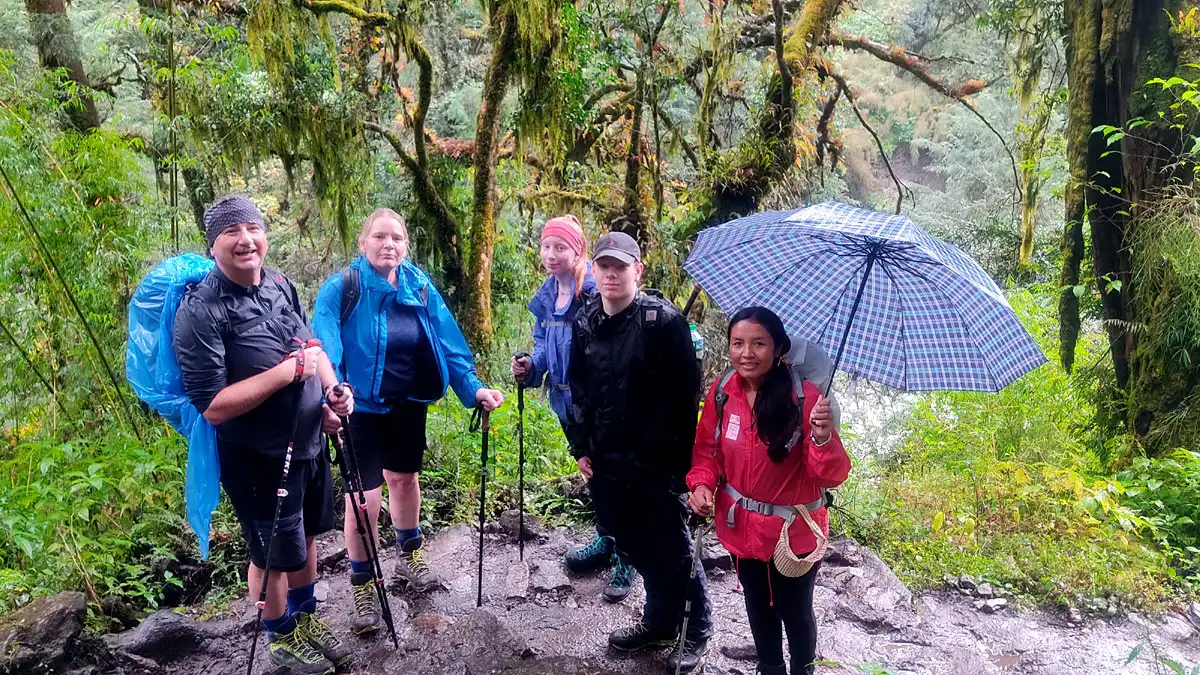
The monsoon doesn't hit all at once and stay the same for three months. June, July, and August each feel different on the trail, and picking the right window matters.
|
Month |
Average Rainfall |
Leech Activity Level |
Trail Status & Visibility |
|
June |
Moderate to Heavy (Onset) |
Rising |
Manageable trails early in the month; increasing afternoon rain showers. |
|
July |
Very Heavy (Peak Monsoon) |
Maximum |
Highly muddy lower forests; spectacular waterfalls; frequent mist. |
|
August |
Heavy but Tapering |
High (Lower elevations) |
Easing rain by late month, high alpine zones clear up faster, and pilgrim activity increases. |
June: The Monsoon Begins
June is a transition month. The first two weeks are often drier than you'd expect; morning skies stay clear longer, and afternoon showers come and go quickly. By the last week of June, the real monsoon arrives, and the lower forests between Syabrubesi and Lama Hotel start to get properly muddy.
Temperatures at lower elevations range from 15°C to 30°C. It's warm. Humid. The kind of air that feels thick when you're climbing. Get up early, and you'll be okay.
July: Peak Monsoon Impact
July is when the Langtang Valley trek in the monsoon becomes genuinely demanding. The trail from Syabrubesi up to Lama Hotel turns heavy with mud, and the Pasang Lhamu Highway can close for a day or two after serious rainfall.
The forest, though, is extraordinary in July. Bamboo thickets press in from both sides of the trail. The Langtang Khola runs loud and full. Waterfalls appear on ridgelines you'd never notice in October. It's the hardest month and the most dramatic one.
August: The Monsoon Taper
Late August is probably the best window within the monsoon season for most trekkers. Rain is still consistent, but it eases off as the month goes on, especially above Langtang Village. The high alpine terrain around Kyanjin Gompa starts to clear faster in the mornings.
By late August, you'll get longer windows of visibility, sometimes enough to see Dorje Lakpa and Langtang Lirung properly before the cloud builds. Pilgrim groups moving toward Gosainkunda for Janai Purnima add a cultural dimension you won't find in any other month.
The Daily Weather Rhythm
Whatever month you go, the daily pattern stays consistent. Mornings are clear, or at least clearer. By mid-morning, clouds start building in the valley. Heavy rain usually starts in the early afternoon and runs into the evening.
That pattern is your guide, and it means one thing above everything else: be on the trail by 6:00 AM every morning. Start early, reach your next teahouse before the rain, and rest the afternoon out. It's simple, and it works.
Knowing the weather is just the first step, you also need to know the full essentials. From navigating hidden leech zones to handling sudden road closures, our comprehensive langtang valley trekking guide has you covered.
Permits, Logistics, and Trip Costs
Trekking Langtang in the monsoon costs roughly $450 to $850 inclusive of mandatory guide fees, a $25 Langtang National Park permit, and flexible teahouse logistics, though you should budget extra for a private jeep (~$150 one-way) to safely navigate unpredictable, landslide-prone road conditions.
Arranging Transportation
Drive from Kathmandu to Syabrubesi via private 4WD jeep. Don't take a public bus in the monsoon. Jeeps handle road detours, navigate around blocked sections, and communicate with local checkpoints better than any bus operator. A one-way private jeep runs NPR 12,000–24,000 (roughly $90–$150 USD).
Required Entry Fees and Permits
Two permits are mandatory, both arranged through a registered trekking agency in Kathmandu:
|
Permit |
Cost |
|
Langtang National Park Entry Permit |
NPR 3,000 (~$23 USD) per person |
|
TIMS Card |
NPR 2,000 (~$15 USD) per person |
Want to know how much it costs to explore the beauty of Langtang Valley? To travel smoothly, you have to look past the weather and know the full operational essentials. Read our Langtang Valley Trek Cost blog now to get your personal estimate completely done before trekking.
Langtang Valley Trek Difficulty in Monsoon: The Real Challenges
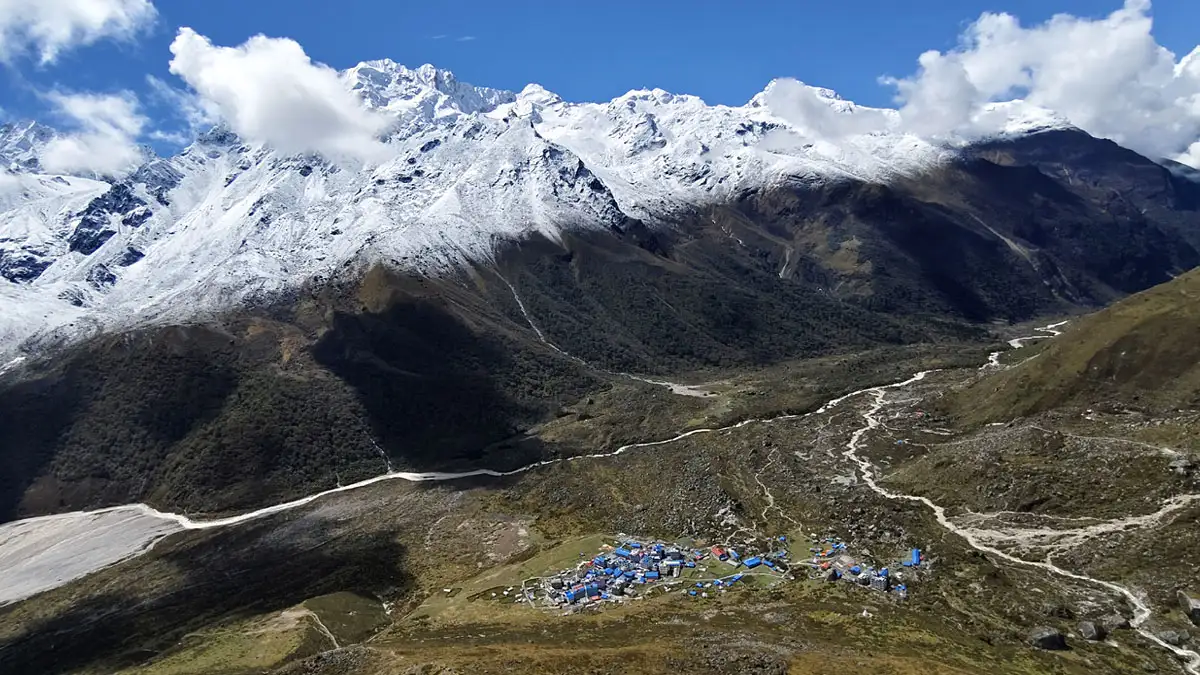
The Langtang Valley trek difficulty is higher in the monsoon than in the spring or autumn. Not because of altitude, the route to Kyanjin Gompa tops out at 3,870 m on the main trail, well within the range of any reasonably fit trekker. The challenge is environmental: water, mud, and unstable road access.
Mud and Slippery Terrain
The section from Syabrubesi (1,550m) through the forest valley up to Lama Hotel (2,480m) is the muddiest part of the entire route. Tree roots, wet stone steps, and narrow ledge trails become slick after even a few hours of rain.
This section is where the challenges of trekking in the Langtang Valley during the monsoon are felt most sharply. Trekking poles aren't optional here; use them, especially on the descents. Once you climb past the forest and reach Langtang Village (3,430 m), the valley opens into wide rocky terrain, and mud becomes much less of a problem.
Landslide Hazards on the Pasang Lhamu Highway
The bigger logistical challenge isn't actually the trail. It's the Pasang Lhamu Highway, the mountain road that connects Kathmandu to Syabrubesi.
This road runs through steep, erosion-prone terrain around Trishuli and Dhunche, and heavy monsoon rain regularly triggers localized landslides that block it for 12 to 48 hours. This is precisely why the 10-day monsoon itinerary below includes buffer days. A 7-day itinerary with no flexibility is risky during July and August. Don't do it.
The Leech Phenomenon
Leeches live in the humid forest zone below 2,500 m, the same section where the mud is worst. They wait on wet leaves and grass at the trail's edge and attach to boots, socks, and gaiters without you feeling a thing.
Their bites cause minor persistent bleeding because of a mild anticoagulant in their saliva, but they carry no diseases. Once you climb above the treeline and reach the yak pastures near Mundu Village (3,543m), they're gone completely. Until then, carry salt or a leech spray and check your ankles at every stop.
Mandatory Guide Regulation
Solo trekking by foreign nationals is prohibited. This rule has been in place since 2023 and is still fully enforced. A licensed guide is legally required, not optional.
During the monsoon, that regulation is also genuinely useful. A good local guide knows which trail sections have washed out, has contacts at teahouses further up the valley, and can read the weather coming into the upper Langtang Valley in ways that no app can. Don't skip this step.
Don't just plan around the seasons; discover the full essentials of why this region is a must-visit. Explore the Top Reasons to Choose Langtang Valley Trek and map out your next adventure today.
Essential Gear for Moisture Management During the Langtang Valley Trek in the Monsoon
Your standard trekking kit is not built for sustained monsoon humidity. Here's what to change before you go.
- Waterproof boots: Gore-Tex or equivalent, with deep tread that grips mud and wet stone. Test the waterproofing at home before departure, don't discover a leak on the Syabrubesi to Lama Hotel section.
- Hardshell jacket and waterproof pants: A proper breathable hardshell, not a cheap plastic poncho. Ponchos catch wind badly on exposed ridge sections and leave your legs completely unprotected on steep descents.
- External pack rain cover plus internal dry bags: These work as a system. The rain cover keeps the bulk of the water off. The dry bags inside protect your sleeping bag, clothes, and electronics even if water gets through. Use both.
- Gaiters: Lightweight gaiters keep mud out of your boot tops and physically block leeches from crawling up your socks. Worth every gram below 2,500m.
- Leech kit: A zip-lock bag of table salt or a small bottle of tobacco water spray. Accessible, not buried at the bottom of your pack.
- Trekking poles: Non-negotiable on the Syabrubesi to Lama Hotel section in either direction. The wet stone descents on the return are where people slip.
Before packing your gear, make sure to study a detailed Langtang Valley trek map, but remember, that's only half the battle.
Wildlife and Biodiversity During Rainy Days: Langtang Valley Trek in Monsoon
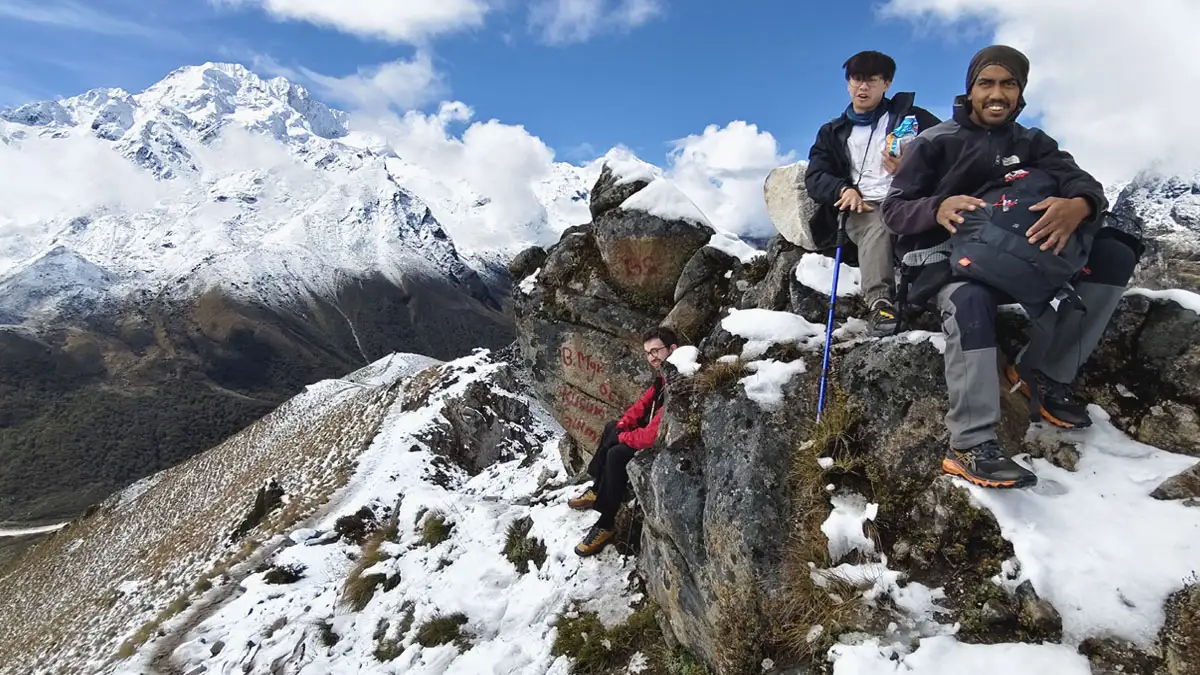
While peak-season travelers spend most of their time looking up at the high mountain peaks, monsoon trekkers find themselves looking around. As you do so, you find the Langtang Valley teeming with life. The valley becomes a bustling, wild sanctuary during the summer rains, a stark contrast to the dry autumn months.
The Red Panda: An Elusive Species
The undisputed star of the rainy season is the endangered red panda (Ailurus fulgens). These tiny rust-colored beings are found in the peaceful bamboo groves between the small forest villages of Bamboo and Changdam (called Rimche by the locals).
In June and July, the valley is very quiet, with hardly any other tourists on the trail. The peace has made the shy red pandas much bolder, and quiet walkers regularly spot them feeding on fresh bamboo shoots right close to the trail.
Wildlife sightings are never guaranteed, but you’re much more likely to see a red panda in July in the Langtang Valley than during the busy rush in October.
Monkeys & Exotic Birds
When you walk through the upper forest canopy, especially near the sections approaching Lama Hotel, you will often see large troops of Langur monkeys. You can see them flitting through trees and chattering in the still woods.
Birdwatchers get an incredible payoff in the morning mist. Many early-morning walkers are lucky enough to catch a glimpse of the magnificent Himalayan Monal, Nepal’s national bird, locally called the Danphe, rummaging in the lower brush for food and showing off its colorful feathers.
An Overdriven Valley Floor
From the ground, the entire valley floor undergoes an incredible transformation. Every day, the rain changes the landscape, covering everything with an explosion of damp mosses, lush ferns, and beautiful summer wildflowers. There is something magical in this deep green life that the dry autumn chill cannot kill.
It transforms the Langtang Valley into a totally different place that peak-season trekkers never see.
Nepal is not only limited to these species; there are many exotic animals living in the Nepali Himalayas that make these trails truly magical.
Cultural Experiences and Rainy Season Festivals in Langtang Valley
With none of the commercial weight of peak season, the Langtang Valley trek in monsoon is a deeply personal cultural experience. Teahouse families aren’t balancing fifty guests at one time; they’re often cooking for just a handful. These quiet times permit slow, real conversations around the inviting stove in the dining room.
The rainy season is a rare chance to escape the warm comfort of the teahouses and see traditional mountain life in action and the powerful local celebrations.
Janai Purnima at Gosainkunda Lake
If you time your trek to coincide with the full moon of the Nepali month of Shrawan, which falls in late July or early August, then you will be able to witness Janai Purnima, the sacred thread festival.
Thousands of Hindu and Buddhist pilgrims, accompanied by traditional Dhami/Jhakri shamans in bells and colorful headdresses, make the arduous trek up to the holy lakes of Gosainkunda at 4,380 meters.
The Langtang Gosainkunda Lauribina Pass Trek is a dedicated trek up to the lakes themselves, but those trekking in the main Langtang Valley will see these colorful groups of pilgrims congregating in Syabrubesi.
Watching them sing, chant, and slowly move up the ridge trail, totally focused on their spiritual journey, is one of the most powerful cultural sights in the region.
Real Tamang Mountain Life
In the summer months, the local Tamang people fully immerse themselves in traditional mountain farming and livestock care, blissfully unaware of mass tourism. In villages such as Ghora Tabela and Kyanjin Gompa, families can be seen working their terraced fields, harvesting seasonal crops and moving herds of yaks between high-altitude summer pastures.
This is also the peak season for drying chhurpi, the famous hard rock yak cheese. The historic cheese factory in Kyanjin Gompa, which has been in operation since the 1950s, is open throughout the year.
In October, the staff is too busy with hordes of tourists to chat, but in monsoon season, they welcome visitors warmly and have plenty of time to show you how the cheese is made.
Ropai Jatra (Paddy Plantation Festival)
In June, when the trek begins, the lower sections of the trail near Syabrubesi come alive with the Ropai Jatra, a traditional rice planting festival. You’ll see local farmers plant the year’s rice crop in the muddy terraced fields. It is a day of laughter, mudslinging, and singing of traditional Asare Asar songs.
Farmers celebrate by eating Dahi Chiura (beaten rice with yogurt) and drinking Chhyang (locally brewed rice beer). It is a joyful, communal celebration of labor and nature’s fecundity.
Monastic Peace of Summer
In the remote high-altitude settlements, the local Buddhist monasteries, or gompas, revert to their quiet, spiritual roots. The rainy season is a beautifully peaceful time, especially at places like the Kyanjin Gompa monastery.
Without the disturbance of peak-season crowds, you can sit in silence in the prayer halls, listen to the rhythmic chanting of the resident monks, and really absorb the spiritual atmosphere of the valley.
From navigating ancestral trails to arranging authentic community stays, let our local team handle every detail for you. Book your Langtang Tamang Heritage Trek with Nepal Gateway Trekking today.
Final Thoughts
A monsoon trek in Langtang Valley is not for everyone. The fall window is still your best bet for travelers who want guaranteed, uninterrupted mountain views and totally dry boots every day. Likewise, if you want to see the rainy season change a very different topography, arid rain-shadow areas such as Upper Mustang provide an alternative route.
But to the right trekker, one who is adaptable, well equipped, and really wants to see what the Himalayas look like when they are not playing to the crowds of the peak season, the Langtang Valley in the rainy season is an extraordinary revelation. The paths are quieter than you will find at any other point of the year.
Langtang National Park is at its biological best, full of lively flora and active, rare wildlife. Most importantly, Langtang Village and Kyanjin Gompa communities are able to get back to their true roots, and you have a chance to experience authentic mountain life.
Pack your gaiters, get up early every morning, trust the experience of your local guide, and let the mystical magic of the monsoon reveal a side of Nepal that few will ever see. Contact Nepal Gateway Trekking today for your adventurous Monsoon Langtang Valley Trek.
FAQs
Is it safe to trek in the Langtang Valley during the monsoon?
Yes, if you manage it correctly. Trek with a licensed guide, leave every morning by 6:00 AM to stay ahead of the afternoon rain, and use a 10-day itinerary with buffer days rather than a rushed 7-day plan. The Langtang Valley trek in monsoon has real risks, primarily landslides on the Pasang Lhamu Highway, but they're manageable with proper scheduling and a good guide.
What is the difficulty of the Langtang Valley trek in the monsoon compared to autumn?
The difficulty of the Langtang Valley trek in the monsoon is greater than in autumn, but not dramatically so. The main difference is the lower trail section between Syabrubesi and Lama Hotel, which becomes heavily muddy and leech-active. Above Langtang Village, trail conditions are comparable to those of the dry season. Trekking poles, waterproof boots, and gaiters close most of the gap.
How do you properly remove a leech on the trail?
Don't pull it off by force that can leave the mouthparts embedded in your skin. Pour table salt or tobacco water directly onto the attached leech. It drops off within seconds. Leeches are only active on the Langtang Valley trek in the monsoon below 2,500 m. Once you're above Langtang Village, they're gone.
What is the Langtang Valley trek in the monsoon season?
The round-trip Langtang Valley trek in monsoon season from Syabrubesi to Kyanjin Gompa and back is approximately 60–70 kilometers (37–43 miles). The 10-day monsoon itinerary covers this comfortably across 6 walking days, with one exploration day at Kyanjin Gompa and two buffer days for road contingencies.
Will teahouses be open in June, July, and August?
Most teahouses on the main Langtang Valley route stay open through the monsoon. Some operators reduce services in the low season, but Nepal Gateway Trekking confirms availability on your specific dates before departure. You won't be left without food or shelter on the main trail between Syabrubesi and Kyanjin Gompa.
Can I skip hiring a guide to save money?
No. Solo trekking is illegal for foreign nationals. You need a licensed guide to obtain your TIMS card and clear the park checkpoints. Beyond the legal requirement, a guide during the Langtang Valley trek in the monsoon is genuinely useful, as they know which trail sections have washed out and which teahouses are open.
What happens if a landslide blocks the road to Syabrubesi?
It happens. Usually the Pasang Lhamu Highway reopens within 12–48 hours as road crews clear the debris. The 10-day monsoon itinerary includes a dedicated buffer day for exactly this scenario. If Day 9 isn't needed for road delays, spend it in Kathmandu. Either way, you won't miss your flight.