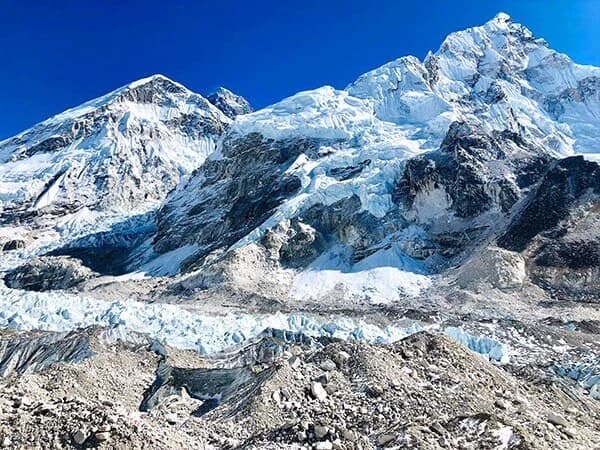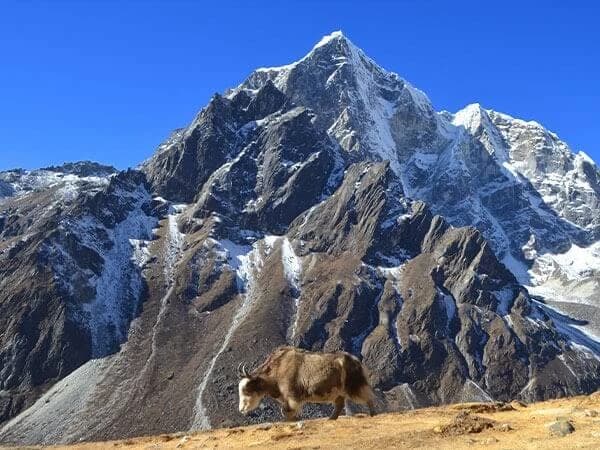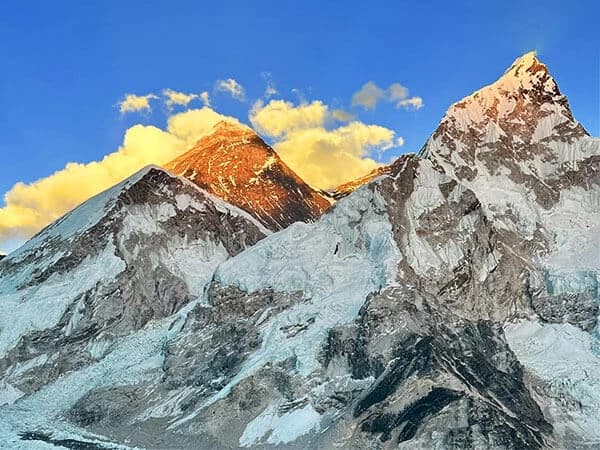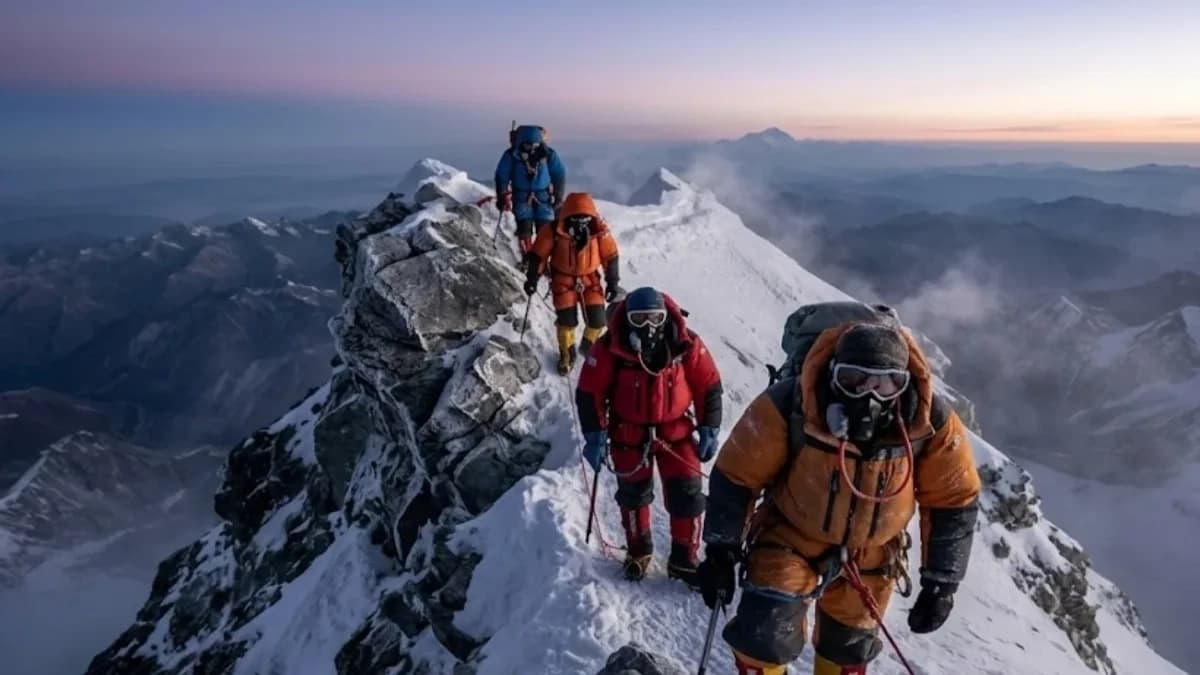
The death zone on Everest is the area above 8,000 meters (26,247 feet), where oxygen levels are too low for the human body to survive for long without support. Near the top, climbers pass through Camp 4 (South Col), the final camp before the summit, and it lies inside this dangerous zone.
At this height, oxygen is extremely low, the human body cannot fully adapt, and survival becomes a race against time.
In simple terms, your body slowly starts to shut down. Think of it like this: at sea level, breathing feels normal and effortless. But in the death zone, it feels like breathing through a thin straw while walking uphill.
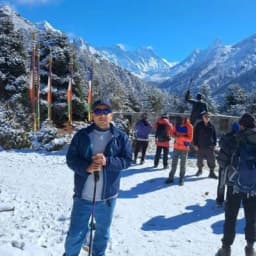
You get tired quickly, and even small steps feel hard. While the Death Zone is reserved for elite climbers, you can experience the awe of the world’s highest peak safely from its base.
Everest Summit Death Zone Facts
Here are some eye-opening facts:
- No plants or animals live here
- Oxygen is only one-third of normal
- Hundreds of climbers have died
- Many bodies remain on the mountain
- Temperatures can drop below -40°C, even during climbing season
- Strong winds can reach over 160 km/h, making it hard to stand or move
- The human body begins to shut down slowly due to extreme lack of oxygen
- Climbers can suffer from High-Altitude Cerebral Edema (brain swelling) and High-Altitude Pulmonary Edema (fluid in lungs)
- Simple tasks like walking, eating, or even thinking become very difficult
- Frostbite can happen within minutes, especially on fingers, toes, and face
- Most climbers can only stay in the Death Zone for 16–20 hours safely
One famous area is “Rainbow Valley," where colorful jackets of fallen climbers are still visible. It’s a harsh reminder: Everest is beautiful, but unforgiving.
How High Is the Death Zone on Everest?
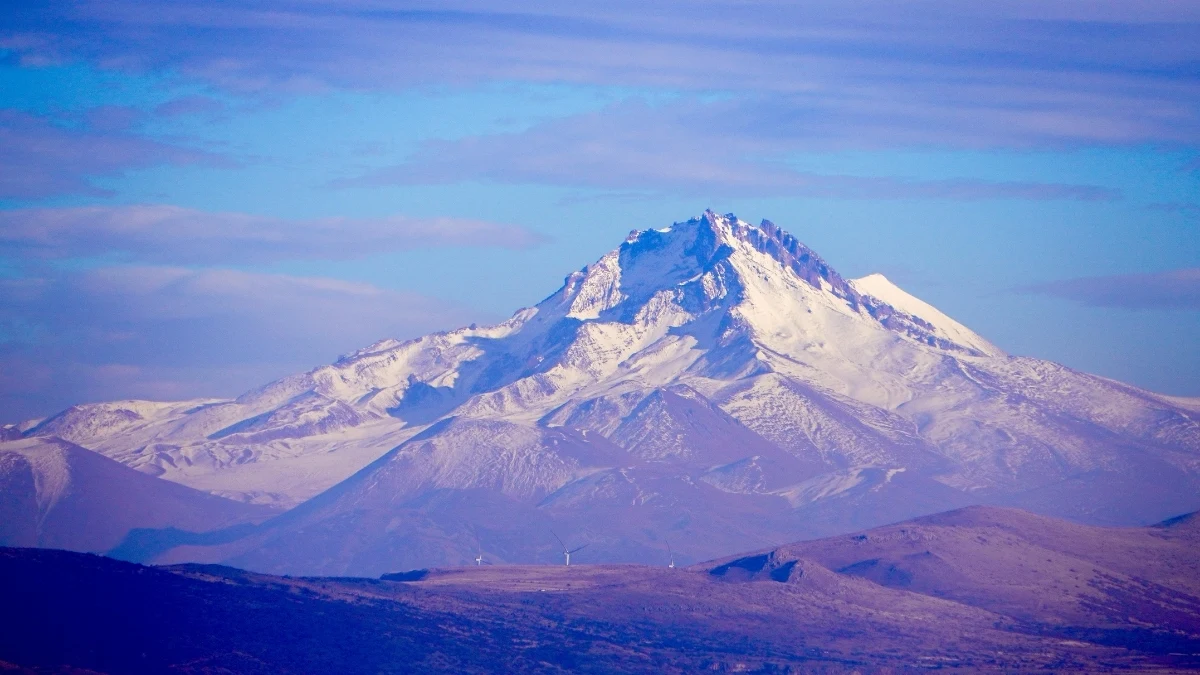
The Death Zone on Mount Everest starts at 8,000 meters (26,247 feet) and continues up to the summit at 8,848.86 meters (29,031.7 feet). While the Death Zone starts at 8,000m, the journey begins much lower.
Everest Base Camp Elevation Guide can be helpful to see the full altitude gain from Lukla to the base of the mountain.
Why Is It Called the Death Zone on Everest?
It’s called the Death Zone on Mount Everest because of what happens to the human body at extreme heights, not just because it sounds scary. Above about 8,000 meters, the air becomes so thin that your body cannot get enough oxygen to function properly.
This leads to a condition called hypoxia, where your body is basically running on very low fuel.
At this level, your body stops adapting and starts breaking down. Your brain receives less oxygen, so thinking becomes slow, and mistakes happen easily.
Your muscles weaken, your energy drops, and even simple actions like walking a few steps feel very challenging. It’s like trying to breathe through a thin straw while climbing uphill no matter how strong you are, your body struggles.
Mount Everest Oxygen Level in the Death Zone
Let’s keep it simple and clear:
|
Location |
Oxygen Level |
What it Feels Like |
|
Sea level |
100% (normal) |
Easy breathing, full energy |
|
Death Zone (above 8000m) |
30-33% |
It's very hard to breathe, body struggles |
That’s why many accidents happen here.
What does this condition mean for climbers?
- Your brain slows down: Thinking becomes foggy, like trying to solve a problem when you are half asleep
- Your body weakens: Even a few steps feel like a heavy workout
- Decision-making becomes risky: Small mistakes can turn into big problems
That’s why most accidents on Mount Everest happen in the Death Zone. It’s not just the cold or height it’s the lack of oxygen that quietly wears climbers down.
Risks of Climbing Everest Death Zone
People say climbing into Everest’s death zone is like walking a knife’s edge. And honestly? That’s not really an exaggeration. Once you’re above 8,000 meters, even tiny mistakes can kill you. The place is so brutally hostile that just staying alive becomes a full-time job.
Here are the real risks climbers face up there.
Not Enough Oxygen
This problem is the big one. At that height, every breath gives you way less oxygen than your body screams for.
- You’re working with about one-third of the oxygen you’d get at sea level.
- Your body and brain start shutting down from hypoxia without you even realizing it.
- Your decision-making fails you, which is precisely when you need it most.
- If you’re not using bottled oxygen, your survival time is measured in hours, maybe less.
Extreme Cold
We’re talking well below -30°C (-22°F), and that’s on a calm day.
- Frostbite can hit exposed skin in just minutes. Fingers, toes, and nose are gone before you know it.
- Hypothermia creeps in slowly, messing with your brain while you’re still trying to move.
- Thick gloves and boots keep you warm but turn your hands into clumsy mitts. Simple stuff like clipping a carabiner becomes a nightmare.
- Gear freezes. Zippers snap. Regulators ice up.
Strong Winds
Winds often scream past 100 km/h (60+ mph). That’s not a breeze, that’s a problem.
- You can literally lose your balance and fall.
- Wind chill makes an already deadly cold feel even worse.
- You have to shout into someone’s ear to be heard.
- Tents rip. Fixed ropes get damaged. Everything feels unstable.
Sudden Storms
The Himalayas don’t give you a weather app you can trust.
- One minute it’s clear. The next, a full blizzard.
- Whiteouts drop visibility to nearly zero. You can’t see your boots.
- Routes disappear. It’s frighteningly easy to get lost.
- If a storm hits, rescue isn’t coming. You’re stuck.
Extreme Fatigue
By the time climbers hit the death zone, they’re already wrecked from days of climbing.
- Every single step feels like a max-effort squat. Low oxygen does that.
- Your muscles weaken. Your coordination gets sloppy.
- You haven’t slept properly in days, and it shows: slow reactions, fuzzy thinking.
- Your energy tank is just gone. No reserves left.
No Immediate Help
This is the harsh truth people don’t like to talk about.
- Helicopters can’t fly that high. Not really.
- Other climbers might want to help, but they’re fighting for their survival.
- If something goes wrong and you can’t get down fast, that’s it.
- Up there, you’re on your own. Self-reliance isn’t a virtue it’s the only option.
To avoid such risk, Everest 2pm Rule is popularly used by climbers.
Effects of the Death Zone on the Human Body
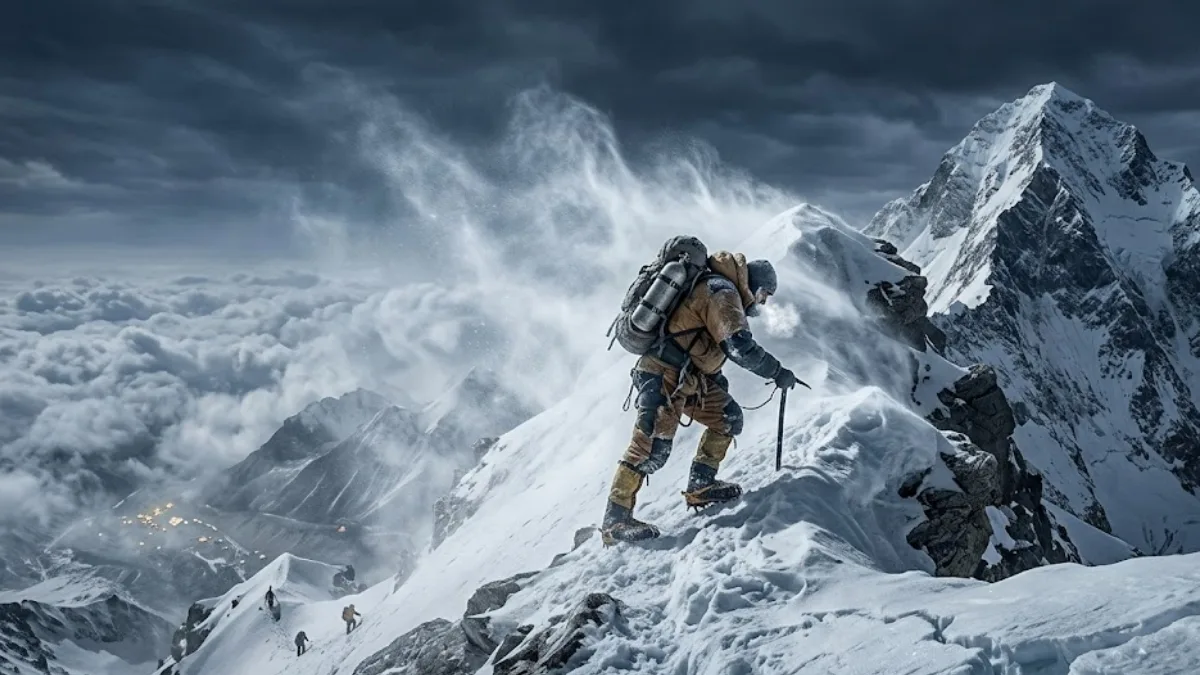
Up on Everest, once you pass 8,000 meters (about 26,247 feet), you’ve entered what everyone just calls the “death zone.” The reason is simple: there’s only about a third of the oxygen you’d get at sea level.
And here’s the scary part: your body can’t truly get used to it. No matter how fit you are, you’re running on borrowed time. The only things that keep you alive up there are moving carefully, breathing from that oxygen tank, and making snap decisions before your mind turns to mush.
Might Get Brain Problems
Lack of oxygen hits your brain first. And it happens fast.
- You get confused and disoriented, like being drunk but without the fun.
- Your judgement is no longer valid. You might ignore your turn-around time even when you know better.
- Some people start hallucinating. Voices, shadows, and people who aren’t there.
- Your memory and coordination get sloppy, which is a nightmare when one wrong step means a fall.
In the worst cases, climbers develop HACE (High Altitude Cerebral Edema), where fluid builds up and the brain swells inside the skull. The only real fix is to get down immediately. If you don’t, coma and death follow soon after.
Altitude sickness is common at high elevations, learn how to prevent it, recognize symptoms, understand what it is, and use Diamox safely before your trek.
Breathing Issues
The air is so thin up there that your lungs are working like they’re trying to suck air through a coffee stirrer.
- You’re breathing fast and shallow all the time.
- Even sitting still, you feel completely out of breath.
- Your blood oxygen levels drop to scary-low numbers.
- Sleeping is a mess because your breathing keeps stopping and starting.
Most climbers carry supplemental oxygen, but even that doesn’t make things feel normal. It just keeps you from dying.
Heart Stress
Your heart is basically running a marathon while being choked. It’s trying to pump blood that barely has any oxygen to the rest of your body.
- Your heart rate stays high even when you’re just standing there.
- Your blood pressure goes up and down unpredictably.
- Heart failure or cardiac arrest becomes a real risk.
- You get exhausted after just a few steps, and it only gets worse.
Every single step toward the summit feels like you just sprinted up a flight of stairs. And then another. And another.
Cold Injuries
Temperatures around -30°C (-22°F) are normal, but with wind, it feels even colder. The cold doesn’t just make you uncomfortable, it starts destroying tissue.
- Frostbite can hit fingers, toes, your nose, and your face in just minutes.
- Hypothermia sets in when your body can’t keep up with the heat you’re losing.
- Blood flow pulls away from your hands and feet to protect your core, which speeds up tissue damage.
- After you get down, some climbers find out they’re losing fingers or toes. In extreme cases, whole limbs.
You can wear all the fancy gear you want, but up there, the cold still finds a way in.
Serious Conditions
Spend too long in the death zone, and you’re looking at two major killers:
- HAPE (High Altitude Pulmonary Edema) fluid fills your lungs. You feel like you’re drowning because, in a way, you are.
- HACE (High Altitude Cerebral Edema) is a condition characterized by brain swelling. You get confused, lose coordination, pass out, and then die if you don’t descend.
Both are medical emergencies. There’s no waiting it out. You go down, you get oxygen, or you die. Studies on high-altitude physiology are clear: above 8,000 meters, your body can’t adapt. Cells start dying. Your energy reserves disappear.
Planning a high-altitude trek? Trust Nepal Gateway Trekking for expert guidance, safety support, and a well-prepared journey to the Himalayas.
How Long Can You Survive in the Death Zone?
On Mount Everest, most climbers can safely stay in the Death Zone for about 16 to 20 hours. Without supplemental oxygen, the survival time becomes much shorter. Why is the time so limited?
- The body is slowly shutting down due to low oxygen
- Energy drains very fast, even with small movements
- The risk of serious problems increases every hour
One famous rule is the “2 PM rule.” If a climber does not reach the summit by 2 PM, they must turn back, no matter how close they are. The Death Zone is like being on borrowed time. The longer you stay, the higher the risk.
Why So Many People Die on the Way Down from Everest?
Here’s something that surprises most people: you’re actually more likely to die after you’ve summited, not before, because
- You’ve burned through most of your oxygen. Maybe all of it.
- Your body is completely trashed. Your mind isn’t far behind.
- Decision-making slows down. You take longer to notice problems.
- You’re too weak to handle the long, technical descent.
How do climbers survive the death zone?
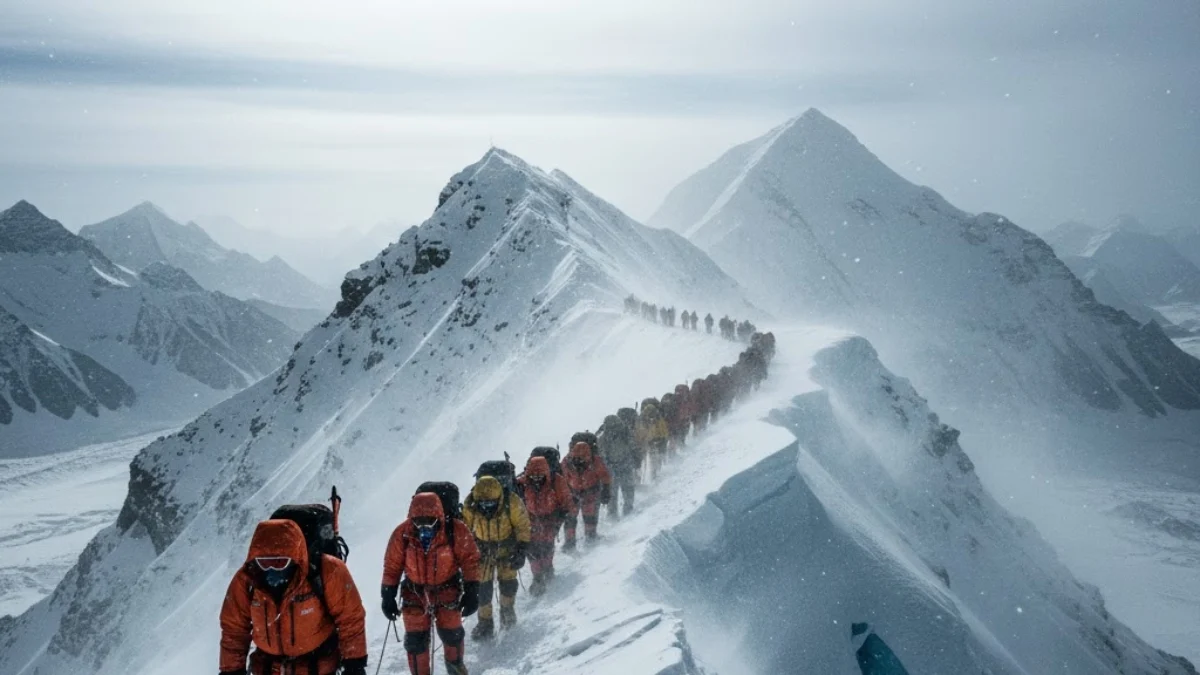
Surviving the death zone on Mount Everest is about careful preparation, discipline, and making the right decisions under extreme pressure. At altitudes above 8,000 meters, climbers rely on proven strategies to stay alive in an environment where the human body is constantly failing.
Here’s how they do it:
Acclimatization
You don’t just fly in and walk up. Before anyone even thinks about a summit push, they spend weeks teaching their body to cope with less oxygen.
- They use the “climb high, sleep low” routine. Go up during the day, then come back down to sleep.
- Move to a higher camp, then drop back down to recover. Over and over.
- This slowly boosts your red blood cell count so you can carry more oxygen.
- It also lowers your chances of getting slammed by altitude sickness.
It’s slow, boring, and exhausting. But skipping it? That’s how people die.
Supplemental Oxygen
Most climbers carry supplemental oxygen up there. It’s not cheating, it’s surviving.
- It keeps your blood oxygen levels from falling off a cliff.
- You can actually think clearly instead of making dumb, foggy decisions.
- It cuts down on the crushing fatigue that makes every step feel impossible.
- And honestly, it gives you a real chance to get back down.
Can you climb without it? Some do. But even the strongest climbers are taking a much, much riskier risk.
Fast Movement
Time is the real enemy up there. Every extra minute you spend in the death zone reduces your chances.
- Climbers move quickly but carefully, with no wasted motion and no unnecessary stops.
- They time their summit push for when the weather actually cooperates. (That’s harder than it sounds.)
- Stops are short. You rest, you breathe, and you keep moving.
- And here’s the challenging part you stick to your turnaround time. No excuses.
Many climbers have died because they were five minutes late turning around. A delayed descent is way more dangerous than not reaching the top.
Support from Sherpa climbers
Let’s be real. Most commercial expeditions wouldn’t even be possible without Sherpa climbers. Their experience and natural adaptation to altitude are incredible.
Here’s what they do:
- Fix ropes across the dangerous sections so everyone doesn’t fall off.
- Haul oxygen tanks, food, and gear up the mountain.
- Set up camps in conditions that would break most people.
- Guide climbers through terrain that looks like a nightmare.
They’re not just support. They’re the reason so many people get home.
Strong Mental Focus
Physical fitness has its limits. Up there, mental strength is what separates the people who come back from those who don’t.
- You have to stay calm when everything hurts and nothing makes sense.
- Every decision to go up, turn around, or rest for five more minutes can save or end your life.
- Panic will kill you. Overconfidence will kill you. Confusion will kill you.
- You have to know, in real time, how badly you’re falling apart.
In the death zone, thinking clearly isn’t a valuable bonus. It’s survival. Back in 1953, Edmund Hillary and Tenzing Norgay became the first people to stand on top of Everest. At the time, many people believed it couldn’t be done.
They proved that with the right prep, the right gear, and a solid team, humans can survive, even thrive, in the harshest place on Earth.
That moment transformed mountaineering. It showed the world that the death zone wasn’t an automatic death sentence. You just had to be smart, prepared, and maybe a little stubborn.
Want to explore more without the climbing risk, you can book Everest Base Camp Trek and adore the beauty of Everest safely.
Final Thoughts
The Death Zone on Mount Everest is not just a place on a map, it’s where human limits are tested to the edge. Above 8,000 meters, the air is thin, the cold bites hard, and every step feels like a battle.
It’s a place where dreams meet danger and where even the strongest climbers must respect the mountain. As the saying goes, the mountain always decides, and Everest is no different.
For those who dare to go that high, reaching the top is only half the journey. The real challenge is coming back safely. That’s why experience, preparation, and smart decisions matter more than strength alone.
If the mountains are calling you, it’s wise to start small, learn step by step, and build your way up because in the Himalayas, patience isn’t just a virtue, it’s survival.
Plan your custom Everest adventure with us today to ensure a safe and unforgettable experience. Contact Nepal Gateway Trekking.
FAQs
How high is the death zone on Mount Everest?
The Death Zone on Mount Everest begins at 8,000 meters (26,247 feet) and stretches all the way up to the summit at 8,848.86 meters (29,031.7 feet).
Why do bodies remain in the death zone?
On Mount Everest, many bodies remain in the Death Zone because bringing them down is extremely dangerous and difficult. At heights above 8,000 meters, every step feels heavy, and even healthy climbers struggle to move. Carrying extra weight, like a human body, becomes almost impossible.
What is the greatest danger in the death zone?
The most significant danger in the death zone is low oxygen (hypoxia), which prevents the body from functioning properly, along with extreme cold and strong winds.
Do all climbers enter the death zone?
Yes, all climbers have to enter the death zone if they aim to reach the summit.
How long can you stay in the Death Zone on Everest?
Most climbers can safely stay in the death zone for about 16 to 20 hours. Staying longer increases the risk of serious health issues or death due to low oxygen levels.
What happens to your body in the Death Zone?
In the death zone, the body suffers from low oxygen (hypoxia), causing confusion, weakness, breathing difficulty, and increased risk of conditions like HAPE and HACE.
Can you sleep in the Death Zone?
Sleeping in the death zone is extremely dangerous because oxygen levels are too low. Most climbers avoid sleeping and use supplemental oxygen if they must rest.