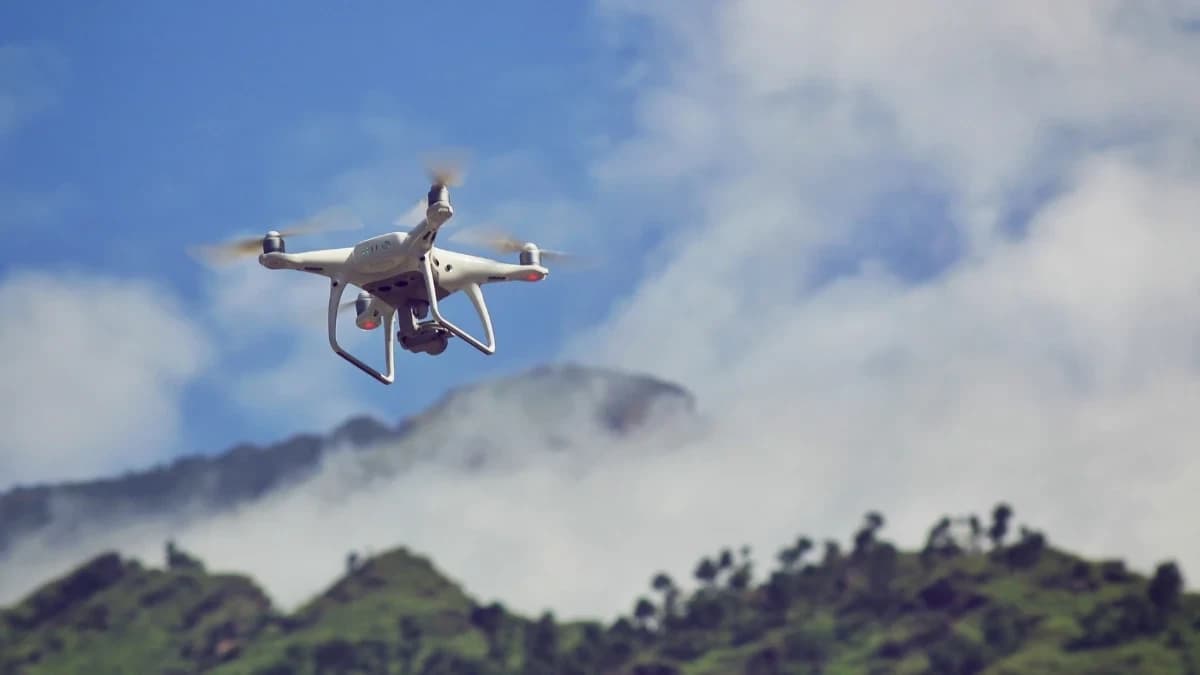
If you fly a drone in Nepal without the correct permits, your expensive gear could be confiscated immediately. In serious cases you could also face fines, legal action, and little chance of recovering your drone, especially if you are a foreign visitor.
Many travelers come to Nepal with the dream of capturing stunning aerial footage of the Himalayas, ancient temples, and remote trekking routes, only to find out that Nepal has strict regulations on drone operations.
Registration is just one part of Nepal’s drone regulations. You may need to obtain approvals from multiple authorities before taking off, depending on the weight of your drone, your flying location, and your intended activities.
This guide covers all you need to know, including CAAN drone registration, permit requirements, drone weight classes, no-fly zones, flight restrictions, and penalties for breaking Nepal's drone laws.
Quick Overview
- CAAN registration is mandatory for all drones before flying in Nepal.
- Foreign tourists must register in person at the FSSD office in Kathmandu and may need additional permits.
- Drone weight matters heavier drones require approvals from multiple government agencies.
- Maximum flight altitude is 100 meters (328 feet) above ground level.
- Drones must stay within 300 meters of the operator and remain in direct visual sight at all times.
- Flying is only allowed during daylight hours, from sunrise to sunset.
- No-fly zones include airports, borders, military areas, VVIP residences, and UNESCO heritage sites.
- National parks and conservation areas require separate permissions in addition to CAAN registration.
- Always carry printed copies of permits and approvals while operating your drone.
- Violating drone laws can result in confiscation, fines, and legal action, especially in restricted areas.
Who Regulates Drone Rules in Nepal?
CAAN, the Civil Aviation Authority of Nepal, is the main authority. All drone activity in Nepal falls under their oversight, and CAAN drone registration is the first thing you need regardless of whether you live here or you are visiting for two weeks. Nothing else moves forward without it. That said, CAAN is not the only body involved.
Nepal's drone regulations pull in the Ministry of Home Affairs, the Department of Tourism, and, in many cases, the administration of whichever national park or conservation area you want to fly in.
Most tourists find this out the hard way they get CAAN drone registration sorted and assume that is enough, then get stopped at a park gate or by local authorities because they are missing a separate clearance.
The specific CAAN department that handles drone matters is the FSSD Flight Safety Standard Department.
Planning to Bring a Drone to Nepal? Nepal Gateway Trekking can help you understand permit requirements, trekking regulations, and travel logistics before your adventure begins.
Recreational vs. Commercial Drone Use: What Applies to You?
The rules are not the same for everyone. Nepal's drone regulations split operators into three categories recreational, commercial, and government, and the requirements differ enough that it matters which one applies to you before you start any paperwork.
|
Requirement |
Recreational / Tourist |
Commercial |
Government |
|
Pilot License |
Not required |
Not required |
Required |
|
CAAN Drone Registration |
Required |
Required |
Required |
|
Remote ID |
Not required |
Not required |
Required (some cases) |
|
Drone Insurance |
Not required (recommended) |
Not required (strongly recommended) |
Not required |
|
Local/Park Permission |
Required for public spaces |
Required |
Required |
|
Multi-Agency Clearance |
Required above 2 kg |
Required |
Required |
Recreational or Hobbyist Use
You are in this category if you fly for fun, personal photography, or trek footage you are not selling to anyone. No pilot license needed. Drone remote ID is also not currently required for recreational flyers under drone rules in Nepal, though that could change, so it's worth confirming with CAAN before a trip.
What you do need is CAAN drone registration, and in any public space, you also need local administration clearance before you take off.
Commercial Drone Use
Filmmakers, survey teams, mapping companies, real estate photographers anyone getting paid to fly or monetizing their footage falls here. The registration process is the same as recreational, but your drone permit Nepal application has to accurately state the commercial purpose.
Writing "personal use" on a commercial job is a violation of drone rules in Nepal, and if you get caught, that distinction matters a lot in terms of how the penalty plays out.
Insurance is not legally required for commercial operators, but flying without it over someone's property, a cultural site, or a crowded trail is a liability risk most professionals would not take. If the drone comes down and causes damage, you are paying for it personally.
Government Drone Operations
Government operators are the one category where a pilot license is actually required. CAAN drone registration still applies, Remote ID is required in certain cases, and the multi-agency approval process applies the same as to anyone else.
If you are operating on a government contract rather than directly as a government employee, check with CAAN about which category applies to your specific situation.
How to Register Your Drone with CAAN?
Before flying a drone in Nepal, you must complete the registration process with the Civil Aviation Authority of Nepal (CAAN). The procedure differs for Nepali residents and foreign visitors, but registration is essential to ensure compliance with Nepal's drone regulations.
Depending on where you plan to fly, you may also need additional permits from local authorities, national parks, or government agencies.
For Residents and Nepali Citizens
Nepali citizens and residents can register their drones through the CAAN online registration portal. After approval, CAAN issues a unique registration number that must be clearly displayed on the drone before any flight. This identification number helps authorities confirm that the drone is legally registered under Nepal's drone regulations.
For Foreign Visitors and Tourists
Foreign visitors must complete the registration process in person at the Flight Safety Standards Department (FSSD) office in Sinamangal, Kathmandu. Unlike Nepali residents, tourists cannot register through the online portal.
To apply, you will typically need:
- A valid passport and Nepal visa
- A letter of commitment outlining your flight purpose, locations, and travel dates
- Supporting documents related to your drone operation, if applicable
- The drone itself for inspection
- A CE-marked drone that meets registration requirements
Once approved, the temporary drone permit is generally valid for up to three months. The permit is issued for the specific locations and activities listed in your application. If your travel plans change or you wish to fly in additional locations, you may need to obtain updated approval before operating the drone.
Bringing Your Drone Into Nepal Through Customs
Most guides do not cover this part at all. If you land at Tribhuvan International Airport with a drone in your bag, customs officers may flag it as an electronic device and ask you to declare it or show it. There is no import tax on drones brought in for personal use, but officers do occasionally stop travelers and ask questions.
- Keep the following in your carry-on from the moment you board your flight to Nepal:
- Printed document with your drone's make, model, and serial number
- Proof of CAAN drone registration or confirmation of your FSSD appointment
- Copies of your passport and visa
If you are bringing commercial drone equipment into Nepal for a paid job, the customs situation is different. Talk to the Department of Customs before you travel. Commercial gear entering the country for commercial work can attract different treatment, and finding that out at the airport is the worst time.
Flying a Drone During Your Trek? Avoid permit issues and restricted zones by consulting Nepal Gateway Team local experts before you travel.
Drone Weight Categories Under Nepal Drone Regulations
The amount of paperwork you need depends directly on how heavy your drone is. Nepal's drone regulations use maximum takeoff weight to assign a risk category, and that category determines which approvals you need before flying.
|
Weight Category (MTOW) |
Risk Classification |
Key Requirement |
|
Category A (Under 250 g) |
Very Low Risk |
CAAN registration + local District Administration Office (DAO) permit |
|
Category B (250 g – 2 kg) |
Low Risk |
CAAN registration + local DAO permission + flight routing |
|
Category C (2 kg – 25 kg) |
Regulated Low Risk |
CAAN + Ministry of Home Affairs + Department of Tourism clearance |
|
Category D (Above 25 kg) |
Regulated High Risk |
Strictest scrutiny, military clearance, and full multi-agency authorization |
The 2-kilogram line is the one most tourists need to pay attention to. Anything heavier than that needs sign-off from the Department of Tourism and the Ministry of Home Affairs on top of CAAN before a single flight. That process takes time, so please factor it in if your drone is a larger model.
Basic Flight Rules When Flying Drones in Nepal
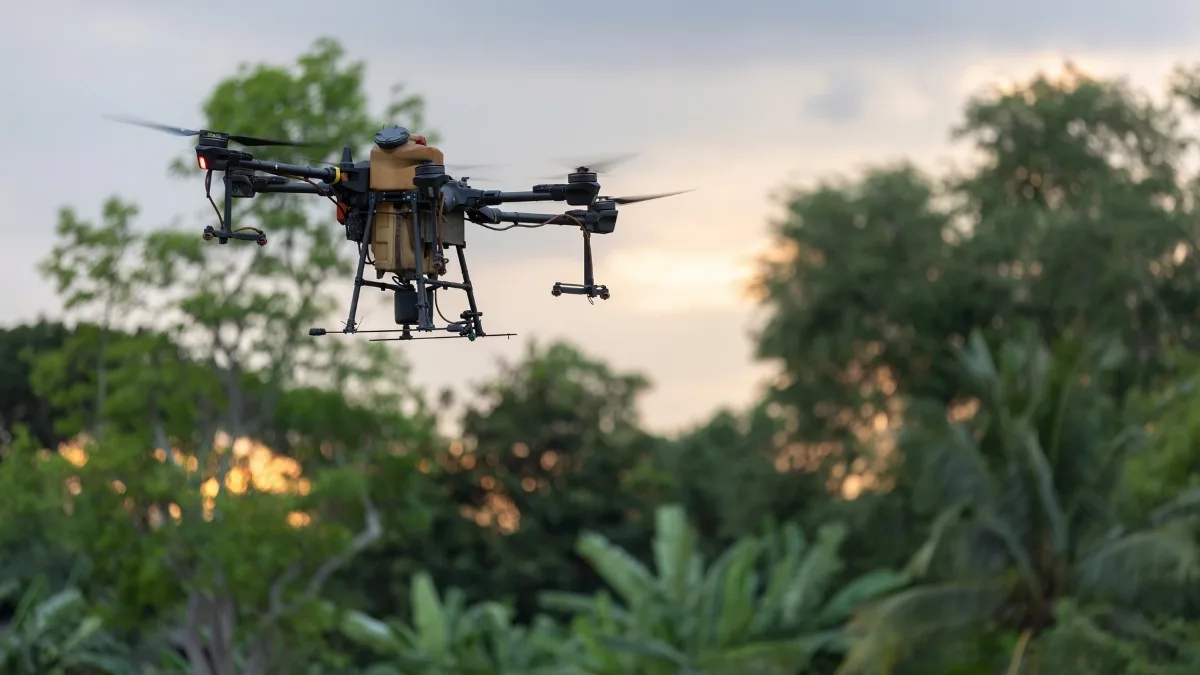
These limits apply to every operator, every drone, and every location. Flying drones in Nepal inside an approved zone with a valid permit does not change any of these they are always in effect.
|
Flight Rule |
Official Limit |
|
Maximum Altitude |
328 feet (100 meters) above ground level |
|
Maximum Horizontal Range |
300 meters from the operator |
|
Flying Hours |
Daylight only (strictly sunrise to sunset) |
|
Visual Line of Sight |
Must be maintained unaided at all times |
|
Distance from Vehicles/Structures |
Minimum 50 meters |
|
Distance from Congested Areas |
Minimum 150 meters |
|
Distance from Crowds (> 1,000 people) |
Minimum 150 meters |
|
Dropping Objects |
Prohibited (includes articles, goods, and animals) |
Three rules catch people out more than the others:
- Line of sight is strictly unaided: FPV goggles and live camera feeds do not legally count as maintaining sight. If your naked eye isn't tracking the drone, you are violating drone rules in Nepal.
- Daylight only means sunrise to sunset: Dawn and dusk low-light windows are not exceptions. If the sun isn't fully above the horizon, keep it grounded.
- 300 meters is a very tight radius: This horizontal limit is much shorter than the 500 meters allowed in many Western countries. Nepal's mountainous terrain makes tracking a drone incredibly difficult, and local authorities strictly enforce this 300-meter boundary.
Recreational Flying in Public Spaces: Nepali Residents, Read This
If you live in Nepal and fly a drone recreationally, this section is the one most relevant to your day-to-day situation. The rule that most hobbyists here either do not know or quietly ignore: any drone flight in a public space under 200 feet needs written permission from your local administration office before you take off.
You need to get written permission from your ward office, municipality office, or the relevant local government body for your area.
It applies in Ratna Park. It applies on the Pokhara lakeside. It applies at the Tundikhel. Flying drones in public in Nepal without that clearance is a violation, whether your drone is a 249-gram folder or a larger camera platform.
Small and quiet does not mean exempt. For flights inside protected areas, the local ward office has no authority you go directly to whoever runs that specific area.
|
Location Type |
Permission Authority |
|
Public parks, open spaces in cities |
Local ward/municipality office |
|
National parks (Sagarmatha National Park, Chitwan National Park, Langtang National Park) |
Respective national park administration |
|
Conservation areas (Annapurna, Manaslu) |
Conservation area management office |
|
Park authority + restricted area permit office |
|
|
Pokhara (Phewa Lake area) |
Local administration + relevant authority |
Please ensure that you obtain written clearance each time. A verbal approval from a park staff member or a phone call to a ward office is not documentation. If someone files a complaint while you are flying, a text message on your phone will not protect you.
No-Fly Zones in Nepal
No-fly zones in Nepal are not ambiguous. The boundaries are set, the radii are specific, and flying inside them without authorization is what triggers confiscation. Drone restrictions Nepal enforces around these zones are treated as security and aviation safety matters, not paperwork technicalities.
|
No-Fly Zone |
Restricted Radius |
|
All airports (including Lukla, Pokhara, mountain airstrips) |
5 km |
|
International borders (India and China) |
5 km |
|
Religious and heritage sites, UNESCO World Heritage Sites |
1 km |
|
VVIP offices and residences (President, PM, Vice President) |
1 km |
|
Military and security installations |
1 km |
|
Other safety department zones |
500 meters |
|
National parks and conservation areas |
Requires separate park permit |
|
Conflict zones |
Completely off-limits |
Avoid costly drone mistakes in Nepal. Contact Nepal Gateway Trekking for practical advice on drone regulations, permits, and trekking logistics.
UNESCO World Heritage Sites The Rule Most Photographers Miss
The 1-kilometer exclusion around heritage and religious sites is the one that catches photographers most often, because these places are precisely where people want aerial footage. In the Kathmandu Valley alone, that restriction covers:
- Pashupatinath Temple
- Boudhanath Stupa
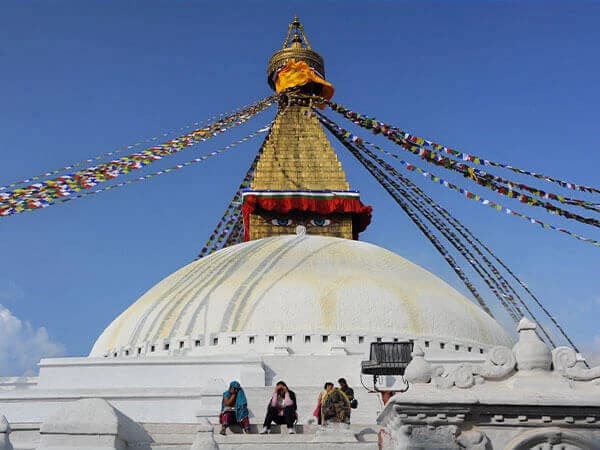
- Swayambhunath (Monkey Temple)
- Kathmandu Durbar Square
- Bhaktapur Durbar Square
- Patan Durbar Square
- Changunarayan Temple
A kilometer is not a lot of distance in a dense city. You can be in what looks like a neutral street or open area and still be inside that radius. Check a map with actual coordinates before you assume you are clear, because no-fly zones in Nepal around these sites aren't concerned about what the spot looks like from ground level.
Airport Zones Including Mountain Airstrips
The 5-kilometer airport exclusion covers every airport in Nepal, including the mountain airstrips that most people do not think of as "real" airports. Lukla's Tenzing-Hillary Airport has an active no-fly zone around it.
Trekkers who fly into Lukla and then launch a drone while walking through the village are already inside restricted airspace. This is not a technicality Lukla sees regular aircraft traffic, and the restriction exists for real reasons.
Drone Permit Cost in Nepal
The cost of a drone permit in Nepal depends on several factors, including your drone's weight, the purpose of the flight, the location where you plan to operate, and whether additional government approvals are required.
All drone operators, including Nepali citizens and foreign visitors, must first register their drones with the Civil Aviation Authority of Nepal (CAAN).
CAAN Registration and Permit Fees
- Recreational / Personal Use: Generally ranges from USD 10–50 plus 13% VAT.
- Commercial / Filming Projects: Typically range from USD 300 to 500+, depending on the project's scope and duration.
- Research / Journalistic Use: Usually falls between USD 67–200, subject to the required approvals.
Additional Regional Permit Costs
If you plan to fly in protected or restricted areas, additional permits may be required beyond your CAAN registration:
- National Parks and Conservation Areas: Approximately NPR 10,000–50,000 (USD 75–375), depending on the authority managing the area.
- Everest and Other High-Altitude Regions: Premium location fees can add NPR 50,000–150,000+ (USD 375–1,100+) to your total permit costs.
- Drones Above 2 kg (Category C and D): Additional approvals may be required, and operators may need to obtain an approved drone insurance policy.
Because permit requirements and fees can change, it is always advisable to confirm the latest costs directly with CAAN before submitting your application.
Penalties for Breaking Drone Rules in Nepal
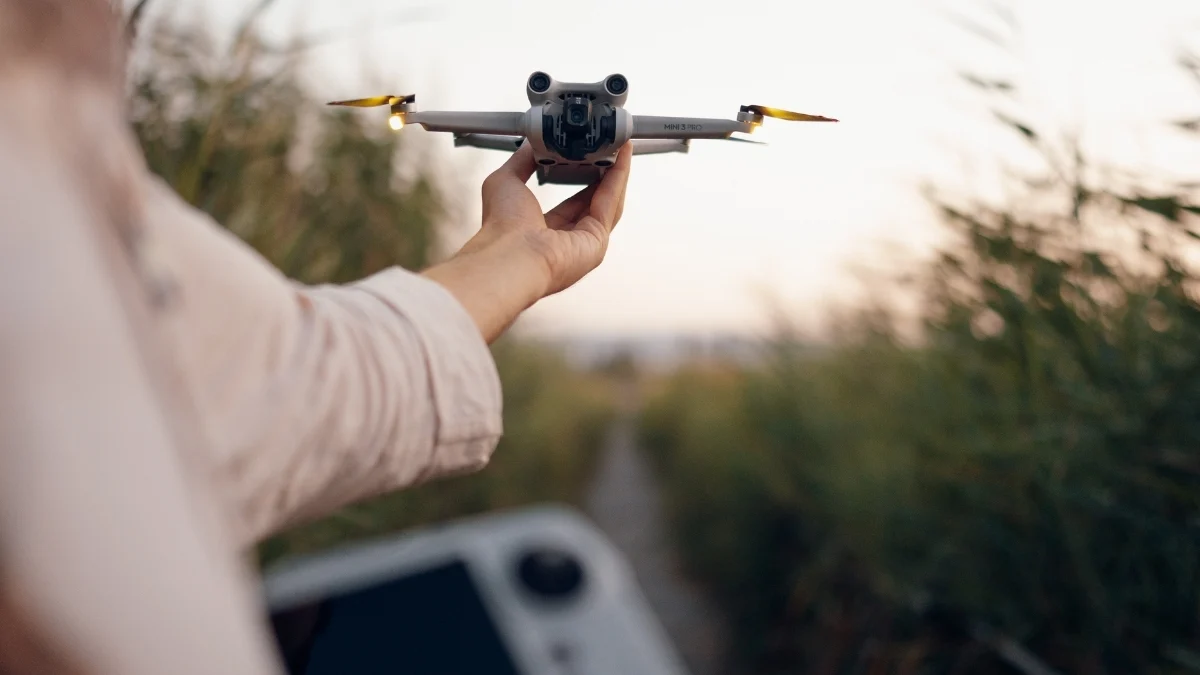
If you get caught flying without permits or in a restricted zone, you will not just receive a warning and an on-the-spot fine. The consequences under drone laws in Nepal are more serious than that.
|
Violation Outcome |
Details |
|
Equipment confiscation |
It can happen immediately, no prior warning required |
|
Financial penalties |
Fines scale with the severity of the violation |
|
Legal prosecution |
Possible for serious or repeat violations |
|
No recovery for foreigners |
Confiscated equipment is rarely returned to foreign visitors |
The legal position here puts the burden on you, not the authorities. Proving you were operating legally is your job. That is why printed permit documentation matters not a screenshot on your phone, not a PDF in your email, but a physical printout of your drone permit Nepal papers that you carry on your person during every flight.
If Your Drone Gets Confiscated, What to Do
- First contact: FSSD office at CAAN 4111115, 4111075, or 4111042
- If confiscated inside a national park: Go to the park administration, not CAAN
- What helps your case: The original printed permit, a GPS record or written log of where and when you were flying, and your letter of commitment copy
- If it goes legal, your country's embassy in Kathmandu can provide consular support and help you find a local lawyer. They cannot override Nepali law enforcement, but they can help you understand the process and who to talk to
Practical Tips for Flying Drones in Nepal
Whether you are a Nepali resident or traveling from abroad, a few habits separate people who fly without problems from people who lose their equipment or spend days sorting out paperwork they should have handled earlier.
-
Email FSSD before your trip. Requirements shift between seasons. What was accurate when someone wrote the article you read last year may not hold now. A quick email to [email protected] takes five minutes and saves you from showing up with the wrong documents.
-
Block two to three days in Kathmandu for registration. Foreign visitors cannot process the permit remotely or quickly. In person, with your drone in hand and your documents ready, you wait. Do not schedule a trek to start the day after you land.
-
Check your route against no-fly zones before you pack. Trekking corridors around Lukla, Kathmandu Valley approaches, and park buffer zones all have restricted airspace nearby. A route that looks clear on a standard map may pass through a drone restrictions zone in Nepal. Check with actual radius data.
-
Print everything. A phone dies. Cell signal disappears on a trail. Officers in remote areas are not always going to accept a screenshot. Paper copies of your permits go in your pack every single day you plan to fly.
-
National park permits are separate from CAAN registration. Sagarmatha, Langtang, Manaslu, Annapurna, and Upper Mustang each one requires its own authorization from the park administration. Your base CAAN drone registration does not cover you the moment you step inside a park boundary.
-
Nepali residents: get written clearance every time. For a recreational flight at a city park or lake, a phone call to the ward office is not sufficient. Written permission is the only version that protects you if someone complains.
-
Declare at customs proactively. If you are bringing a drone through Tribhuvan, have your serial number and documentation accessible. For personal use, the process is usually straightforward, but if you are not ready for the question, it can slow things down for everyone.
Final Thought
Flying a drone in Nepal requires more preparation than many travelers expect. From CAAN registration and local permissions to national park approvals and no-fly zones, there are several rules you must follow before taking off. Whether you're a tourist or a local resident, keeping your permits updated and carrying printed copies can help you avoid fines, confiscation, or legal issues.
Before you fly, verify the latest requirements with CAAN and the relevant local authorities. A little planning can help you enjoy Nepal's incredible landscapes legally and responsibly.
Need Help Organizing Your Nepal Adventure? Contact Nepal Gateway Trekking for expert assistance with trekking permits, itineraries, and travel planning throughout Nepal.
FAQs - Drone Laws in Nepal
Small drone registration under 250 grams: Do I need to register my drone with CAAN?
Yeah. Nepal’s drone rules do not automatically rule out small drones. If you are flying in public spaces, check with CAAN and your local authorities to see what registration and permission requirements apply to your location.
How long does it take to get a drone permit in Nepal as a tourist?
Visitors from overseas should allow at least 2–3 working days for the permit process. The registration has to be done personally at the office of the FSSD in Kathmandu with the necessary documents and the drone itself.
Can you fly a drone in Sagarmatha National Park or the Everest trekking area?
Yes, but you need to get approval from the park administration along with CAAN registration. Make sure you have the required permits before entering the park.
What happens if you fly in a no-fly zone?
Flying in a restricted area can lead to drone confiscation, fines, and potential legal action. Always check for no-fly zones and always have your permits with you on every flight.
Are there restrictions on drones in cultural and heritage sites in Nepal?
Yeah. Many religious and UNESCO heritage sites have no-fly zones. “If you fly close to these locations without permission, you may be penalized.
Do I need a drone pilot license to fly in Nepal?
Currently, most recreational and commercial drone users don’t need a pilot license. But one could be in need of government drone activities.
Do I need different permits for each place I want to fly into?
Often, yeah. It might not be enough to register with CAAN. National parks, conservation areas, public spaces, and other restricted locations may require additional approvals.
Do you need insurance to fly drones in Nepal?
While drone insurance is not a legal requirement, it is highly recommended. If your drone causes injury, property damage, or other losses, insurance can help pay for costs.
What to do while bringing a drone to Nepal through customs?
Carry documentation of your drone’s make, model, and serial number. Customs officials may want to see the drone, so it’s a sensible idea to have your paperwork handy to avoid delays.
Is It Worth Buying a Drone in Nepal?
Yes, if you plan to use it regularly for photography or travel. Nepal offers stunning aerial views, but strict regulations apply. All drones must be registered, and many areas require permits, which can add to costs. A lightweight drone under 2 kg is usually the most practical choice.