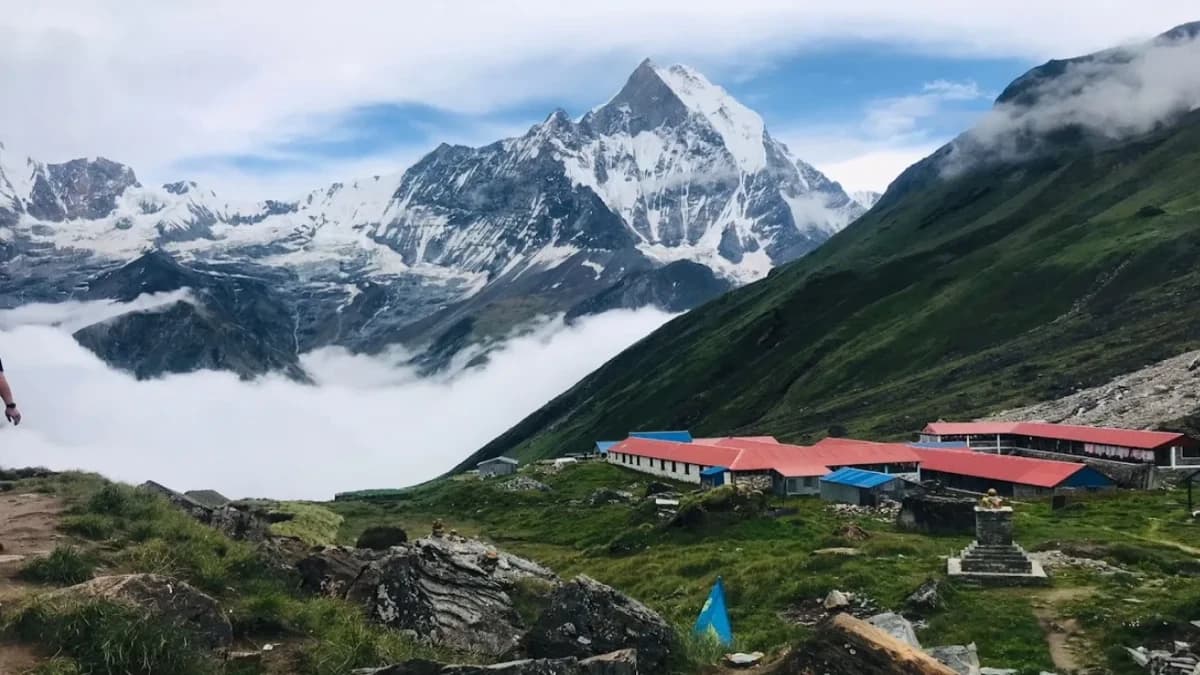
Most trekkers stress about food and sleeping more than the actual hiking. Will there be enough to eat? Will the rooms be freezing? Is the water safe? Honestly, these are fair questions. So let's clear it all up no fluff, no surprises. Everything on the ABC trek runs through the teahouse system.
There are no big hotels, no resorts. Just family-run guesthouses that feed you, shelter you, and keep you warm enough to make it to the next day.
It's basic. It's real. And once you get into the rhythm, it's actually quite enjoyable. Quick reality check food is filling and safe if you order smart. Accommodation is simple but functional. Costs are higher the higher you go. And planning ahead makes everything easier.
Want to skip the guesswork entirely? Nepal Gateway Trekking handles your permits, teahouse coordination, guide, and porter so you just focus on the mountains.
Quick Summary
- All food and lodging on the ABC trek is through family-run teahouses no hotels, no camping
- Rooms cost NPR 300–1,200 depending on altitude, often free if you eat all meals there
- Dal bhat is the best meal on the trail available everywhere, best value, unlimited refills
- Avoid all meat above Chhomrong no refrigeration, no reliable supply chain
- Never drink tap water boiled water or a filter bottle is your safest option
- No ATMs past Nayapul withdraw NPR 20,000–30,000 in Pokhara
- Budget trekkers spend roughly $15–22/day, standard $26–37/day, comfort $40–55/day
- Peak season (Oct–Nov, Mar–May) start hiking by 7 AM or risk losing your bed at ABC
Understanding the Teahouse System on the Annapurna Base Camp
Teahouses along the trail to Annapurna Base Camp are simple family-run homes, not hotels. After the famous Annapurna expedition of 1950, Gurung, Magar, and Thakali families mostly manage them now.
You’ll find them from lower villages up to ABC, but options get fewer as you climb higher inside the Annapurna Conservation Area.
This is due to strict rules that limit new buildings. Rooms are cheap, but there’s a catch you’re expected to eat where you stay. That’s how teahouses earn money. The dining hall is the main spot, warm, social, and lively. Rooms are basic and just for sleeping.
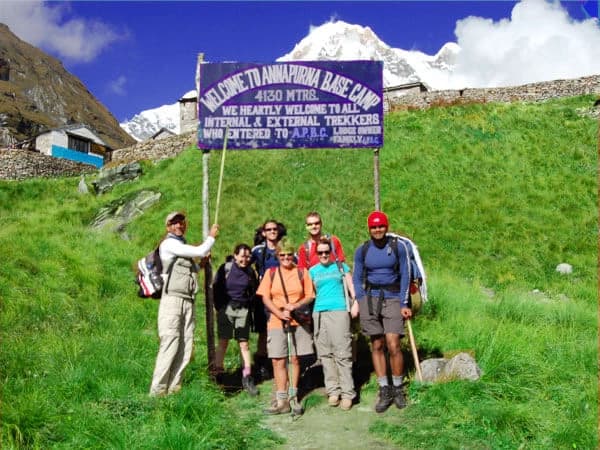
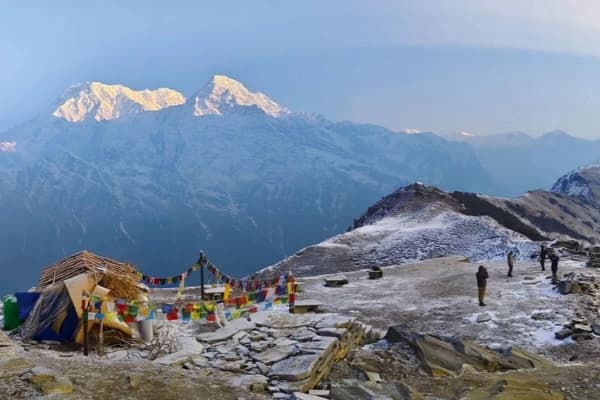
At ABC (4,130 m), you stay surrounded by peaks like Annapurna I and Machhapuchhre, a simple stay but a world-class view.
Types of Accommodation on the ABC Trek
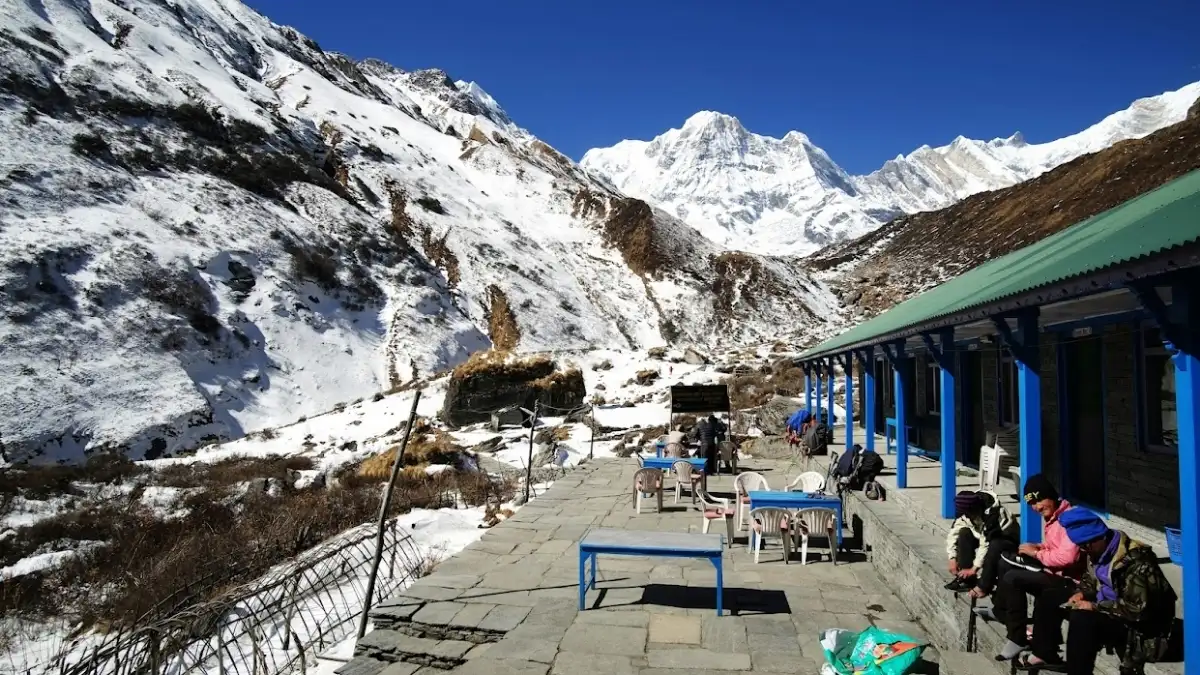
Accommodation on the Annapurna Base Camp trek is simple, practical, and made for rest, not luxury. As you go higher, facilities become more basic, so it’s best to know what to expect before you go.
Standard Twin-Sharing Room (Most Common)
This arrangement is what you will find at almost every stop. Two single beds, foam mattresses about 2–3 inches thick, a pillow, and one or two blankets. Walls are thin plywood you'll hear everything. No heating in the room. No storage furniture.
Cost: NPR 300–600 lower down and NPR 700–1,000 at Machapuchare Base Camp (MBC) and Annapurna Base Camp (ABC). Often free or deeply discounted if you commit to all meals there.
Private Single Room
Rare. Available mainly at select teahouses in Chhomrong, Ghorepani, and Ghandruk. Same basic setup, just solo occupancy. Cost: NPR 500–800. Don't count on finding one above Deurali, especially in peak season.
Room with Attached Bathroom
Only available at larger lodges in Ulleri, Ghorepani, Tadapani, Chhomrong, and Jhinu Danda. Western-style flush toilet, basin, and sometimes hot water are available. Cost: NPR 800–1,500 extra. The shared bathrooms above Deurali are completely gone. From there.
Shared Bathroom (Standard Above Chhomrong)
A separate block, usually outdoors. Mix of Western and squat-style toilets. Generally clean but cold at night. No toilet paper is provided ever carry your own. The hot water basin is available for an additional cost of NPR 100–150.
Extra Services and What They Cost
|
Service |
Below Chhomrong (NPR / USD) |
Above Chhomrong (NPR / USD) |
|
Hot shower (solar) |
NPR 150–200 ($1.1–1.5) |
Not available |
|
Hot shower (gas/boiler) |
NPR 200–300 ($1.5–2.3) |
NPR 300–400 ($2.3–3.0) |
|
Bucket shower |
N/A |
NPR 250–350 ($1.9–2.7) |
|
Device charging |
NPR 150–200 ($1.1–1.5) |
NPR 200–300 ($1.5–2.3) |
|
Wi-Fi (Everest Link) |
NPR 200–300 ($1.5–2.3) |
NPR 300–400 ($2.3–3.0) |
|
Laundry (per kg) |
NPR 100–200 ($0.8–1.5) |
Not available |
|
Extra blanket |
NPR 100–150 ($0.8–1.1) |
NPR 100–200 ($0.8–1.5) |
A few things worth knowing: Wi-Fi uses Everest Link satellite cards and is unreliable at any altitude. In winter (December–February), pipes above bamboo can freeze hot showers become bucket showers with water heated over a wood fire. Electricity is solar or hydro-powered, so charge your devices whenever you get the chance.
Accommodation Stop-by-Stop on the Annapurna Base Camp Trek Route
|
Village |
Altitude | Teahouses | Attached Bath? | Hot Shower | Room (NPR / USD) |
| Nayapul / Tikhedhunga |
1,540 m |
Many | Some | Solar | 300–500 ($2.3–3.8) |
|
Ulleri |
2,073 m | Several | Yes (some) | Solar | 400–600 ($3.0–4.5) |
|
Ghorepani |
2,860 m | Many | Yes | Solar / Gas | 500–700 ($3.8–5.3) |
|
Ghandruk |
1,940 m | Many | Some | Solar | 400–600 ($3.0–4.5) |
|
Chhomrong |
2,170 m | Most developed | Yes (some) | Gas | 500–800 ($3.8–6.0) |
| 2,360 m | Few | Shared | Gas (paid) | 500–700 ($3.8–5.3) | |
|
Bamboo |
2,310 m | Very few | Shared | Paid | 500–700 ($3.8–5.3) |
|
Dovan |
2,600 m | 3–4 only | Shared | Paid | 600–800 ($4.5–6.0) |
|
Deurali |
3,230 m | Few | Shared | Paid | 600–900 ($4.5–6.8) |
|
MBC |
3,700 m | 3–4 only | None | Bucket (NPR 300–350) | 700–1,000 ($5.3–7.5) |
|
ABC |
4,130 m | 4–5 only | None | Bucket (NPR 300–400) | 800–1,200 ($6.0–9.0) |
At ABC, only 4–5 teahouses exist. In peak season (October–November, March–May), they fill fast. Start hiking early, by 7 AM, if you want a bed at the top.
The Complete Food Menu on the Annapurna Base Camp Trek
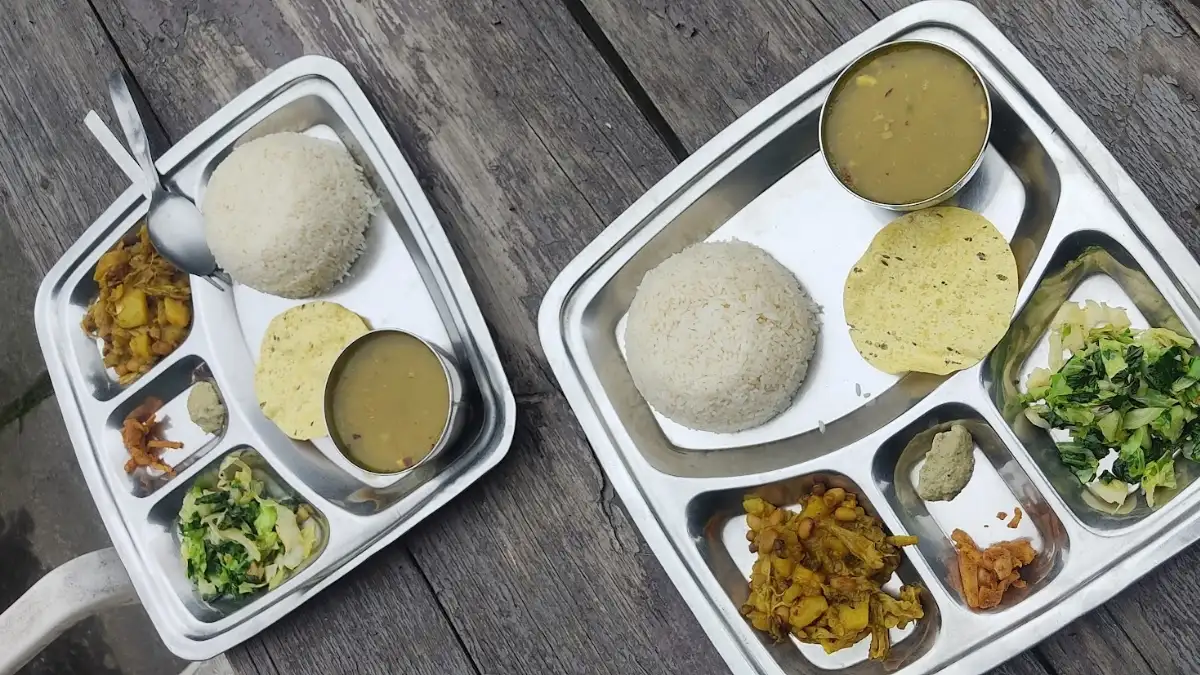
Food on the way to Annapurna Base Camp is simple, warm, and made to give you energy. Most meals are fresh and local, cooked by teahouse families using basic ingredients. As you go higher, the menu becomes shorter, but the food still does the job.
Breakfast
You can enjoy porridge with honey or banana, muesli, pancakes (plain, banana, or with jam), French toast, Tibetan bread with butter and honey, eggs any style, and hash browns at lower stops. For drinks: Nepali milk tea (chiya), ginger tea, black tea, lemon tea, Nescafé, hot chocolate, and hot lemon with honey.
Lunch and Dinner
- Local dishes: Dal bhat (the king of trail food more on this below), gundruk soup, Sherpa stew, and tarkari with rice or bread.
- Noodle and rice dishes: vegetable fried rice, egg fried rice, thukpa (Tibetan noodle broth), chow mein, Korean ramen, and macaroni soup.
- International (lower teahouses only): Pasta with tomato sauce, macaroni and cheese, basic pizza, spring rolls, sandwiches, and momo (steamed dumplings).
- Potato dishes (everywhere): Boiled potatoes, hash browns, potato soup. Potatoes are basically the universal backup at every altitude.
Dal Bhat: The Best Meal on the Trek
Dal bhat deserves its own section because it's genuinely the smartest thing you can eat on this trail. It's rice (bhat) + lentil soup (dal) + seasonal vegetable curry + fermented pickle + papad. At many teahouses, they refill everything for free. Trekkers call it "dal bhat power, 24 hours," and they're not wrong.
Why it works so well at altitude: complex carbs for sustained energy, legume protein, warm broth for hydration, and low fat so it's easy on your gut. It's available at every single teahouse at every altitude. Nothing else on the trail can say that.
Cost: NPR 400–700 lower down and NPR 600–800 at ABC. Easily the best value meal on the route. If you're only eating one thing confidently the whole trek, make it dal bhat.
Fish and Meat The Honest Truth
Fresh fish is not available anywhere on the ABC route. The trail is landlocked. If you see fish on a menu, skip it. Chicken and buffalo are listed at lower teahouses, mainly Chhomrong and below. Quality varies and isn't always reliable. Above Chhomrong?
Avoid all meat without exception. No refrigeration, no reliable supply chain. At altitude, food poisoning hits harder and faster. Eggs are the only dependable source of protein at every stop. The route is small, local, and safe throughout.
Snacks and Trail Drinks
Chocolate bars (Snickers, KitKat) cost NPR 150–300 at altitude. Granola bars NPR 200–400. Biscuits and Pringles are available at Chhomrong and below. For drinks: boiled water is safest, garlic soup every night above 3,000 m is a smart habit, and ginger and mint tea calm nausea.
Soft drinks stop being reliably available above Chhomrong. Beer is available lower down but not recommended above Chhomrong it dehydrates you and messes with sleep at altitude.
Why does the menu get simpler as you trek up the ABC Trek?
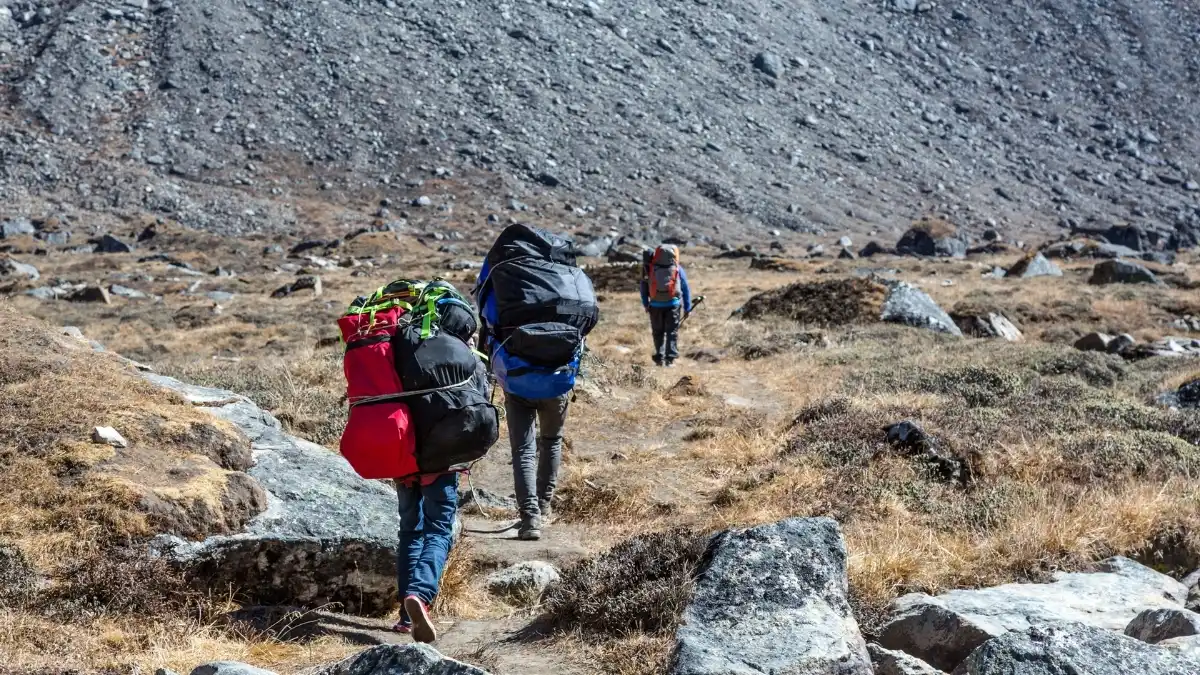
Everything above Chhomrong is 100% porter-carried. No road access. A porter carries 25–30 kg and charges by the kilo per day. The higher the teahouse, the higher the transport cost per item, which is why a Coke costs NPR 150 in Pokhara and NPR 500 at ABC.
So what gets carried? Light, shelf-stable things: eggs, lentils, rice, instant noodles, tea, and chocolate. Heavy or perishable things, like fresh vegetables, dairy, and meat, get deprioritized.
There's also a cooking physics issue most guides skip water boiling at around 86°C at 4,000 m instead of 100°C at sea level. Bread doesn't rise properly. Meat doesn't cook as safely. That's another reason why the menu naturally narrows at higher altitudes.
At ABC, basically expect dal bhat, fried rice, noodle soup, eggs, porridge, boiled water, and tea. That's your world up there. And honestly, it's enough.
Detailed Cost Breakdown of Food and Accommodation on Annapurna Base Camp Trek
|
Item |
Below Chhomrong (NPR / USD) | Bamboo–Deurali (NPR / USD) | MBC / ABC (NPR / USD) |
|
Twin room |
300–600 ($2.3–4.5) | 600–800 ($4.5–6.0) | 800–1,200 ($6.0–9.0) |
|
Breakfast |
300–500 ($2.3–3.8) | 400–600 ($3.0–4.5) | 500–700 ($3.8–5.3) |
|
Dal bhat |
400–600 ($3.0–4.5) | 500–700 ($3.8–5.3) | 600–800 ($4.5–6.0) |
|
Noodle soup |
300–500 ($2.3–3.8) | 400–600 ($3.0–4.5) | 500–700 ($3.8–5.3) |
|
Eggs |
200–350 ($1.5–2.7) | 300–450 ($2.3–3.4) | 400–550 ($3.0–4.1) |
|
Boiled water (1L) |
80–120 ($0.6–0.9) | 120–160 ($0.9–1.2) | 150–200 ($1.1–1.5) |
|
Bottled water (1L |
100–150 ($0.8–1.1) |
200–300 ($1.5–2.3) |
400–500 ($3.0–3.8) |
|
Garlic soup |
200–350 ($1.5–2.7) | 300–450 ($2.3–3.4) | 400–500 ($3.0–3.8) |
| Tea / coffee | 80–150 ($0.6–1.1) | 100–200 ($0.8–1.5) | 150–250 ($1.1–1.9) |
|
Chocolate bar |
100–150 ($0.8–1.1) | 150–250 ($1.1–1.9) | 200–300 ($1.5–2.3) |
|
Hot shower |
150–300 ($1.1–2.3) | 250–350 ($1.9–2.7) | Bucket: 300–400 ($2.3–3.0) |
Daily Budget Planning
-
Budget trekker (NPR 2,000–3,000/day (~$15–22)): Dal bhat is served twice a day, with a basic breakfast, filtered/tableted water, and no extras. The room is free, or it costs NPR 300–500 with a meal commitment.
-
Standard trekker NPR 3,500–5,000/day (~$26–37): Varied meals, a hot shower every couple days, device charging, and occasional snacks. Room NPR 500–800.
-
Comfort trekker NPR 5,500–7,500/day (~$40–55): Full three meals with extras, daily hot shower where possible, Wi-Fi, bottled drinks, best room available.
-
Total for a 7-day ABC trek (food + accommodation only): Budget: NPR 14,000–21,000 (~$105–160) Standard: NPR 24,500–35,000 (~$183–260) Comfort: NPR 38,500–52,500 (~$290–395)
-
Critical: There are no ATMs past Nayapul. Withdraw NPR 20,000–30,000 minimum in Pokhara before you leave. Keep small bills teahouses often can't break large notes.
The mountains are waiting, and your story is ready to begin. Reach out to Nepal Gateway Trekking today and take the first step toward your Annapurna Base Camp adventure.
Practical Tips Before You Go
A little preparation is very helpful on the Annapurna Base Camp trek. Think of these tips as your backup before you hit the trail.
-
Peak Season Reality: During busy months (spring and autumn), teahouses fill up fast. If you arrive late, rooms may be full, and you may have to share with other trekkers or sleep in the dining hall. It’s first come, first served, so start early.
-
Cash: No ATMs past Nayapul. Withdraw in Pokhara. Keep small bills. Some lodges in Chhomrong accept QR payment don't rely on it.
-
Accommodation: Start hiking by 7 AM in peak season. At ABC, if teahouses are full, you may need to stay at MBC. Ask for an extra blanket temperatures at ABC can drop to -10°C to -15°C overnight.
-
Food: Always eat where you sleep. Order when you arrive. Eat even when you're not hungry at altitude fuel matters for acclimatization.
-
Water: Invest in a filter bottle before the trek. It saves NPR 10,000+ over 7 days versus buying bottled water. Drink before you feel thirsty.
-
Sustainability: Use boiled water or your filter. Refuse single-use plastic. Leave no packaging waste in the mountains.
Final Thought
Nobody remembers the thin mattress. Nobody goes home and talks about the plywood walls. What they remember is the dal bhat that hit differently after eight hours of trekking. The teahouse owner who sat down and shared tea without being asked.
The moment they stepped into that glacial amphitheater, they just stopped. That's what you're actually booking when you plan this trek. Nepal Gateway Trekking handles everything else you just show up and experience it.
Ready to turn your dream into a real adventure? Contact us and let’s plan your ideal Annapurna Base Camp trek together.
FAQs
Can I book teahouses in advance on the ABC trek?
You can, but most trekkers don't. Below Chhomrong, walk-ins are fine year-round. Above Chhomrong and especially at MBC and ABC, booking 1–2 days ahead through your guide or by phone is smart during peak season (October–November, March–May). Your guide usually handles these arrangements automatically.
What happens if I don't like the food at a teahouse?
Honestly, your options are limited above Deurali. Every teahouse on the same stretch serves nearly identical menus. Your best move is ordering simple, familiar dishes like dal bhat, fried rice, and eggs rather than adventurous items that teahouses may not prepare well at altitude.
Is there a dining time at teahouses, or can I eat anytime?
Most teahouses serve breakfast from around 6–8 AM and dinner from 5–7 PM. Lunch is available if you're passing through. Arriving late and expecting a full hot meal after 8 PM is a stretch one family is cooking for everyone, so early orders get priority.
Do teahouses provide towels?
No. Towels are almost never provided. Bring a quick-dry microfiber towel from home. This detail is one of those small things that surprises first-time trekkers.
Can I eat meat safely at lower teahouses like Ghandruk or Chhomrong?
At Chhomrong and below, chicken and buffalo dishes are generally okay if the teahouse is busy and food is cooked fresh. Busy teahouses turn over ingredients faster that's your safety signal. If a teahouse is empty, stick to eggs and vegetarian dishes even at lower altitude.
Is alcohol available on the ABC trek, and is it safe to drink?
Beer (Everest, Gorkha) and local Tongba (fermented millet drink) are available at lower teahouses. Safe to drink in moderation below 3,000 m. Above that, alcohol dehydrates you, disrupts sleep quality at altitude, and increases your AMS risk. Most experienced trekkers and guides skip it entirely above Chhomrong.
How do I handle food allergies or dietary restrictions on the ABC trek?
Gluten-free is difficult but manageable. Rice-based dishes like dal bhat and fried rice are naturally gluten-free. Being vegan is very doable. Nut allergies are low risk since nuts aren't commonly used in cooking on the trail. Always tell your guide before the trek starts so they can communicate with teahouse owners ahead of time.
Will I lose weight on the ABC trek?
Most trekkers do lose some weight, especially on longer versions of the route. You're burning significantly more calories than you're likely eating. Dal bhat twice a day plus snacks is enough to keep you functional, but it's not a surplus diet. Don't try to diet on the trail eat as much as you comfortably can.
Do teahouses have menus in English?
Yes, almost universally. Menus at every teahouse on the ABC route are written in English. Some are laminated, some handwritten, but you'll have no trouble reading and ordering without Nepali language skills.
What's the earliest I can check into a teahouse?
Most teahouses let you drop your bag and claim a room from early afternoon. If you arrive at noon and rooms are available, most owners will accommodate you. Checkout is typically by 8–9 AM the next morning.
Is hot food available at all hours or only at meal times?
Outside of main meal windows, most teahouses can make simple items like boiled eggs, instant noodles, tea, and biscuits at almost any hour. A fully cooked meal outside dining hours depends on how busy and willing the family is. Don't rely on it above Bamboo.
Can I buy snacks and supplies at teahouses, or should I bring everything from Pokhara?
You can buy basic snacks, chocolate bars, biscuits, energy bars, and chips at teahouses up to Chhomrong. Above that, selection drops and prices climb. Buy your preferred trail snacks in Pokhara, where variety is better and prices are much lower. Bring enough for the upper section.
Do children or elderly trekkers have any special food considerations on the ABC trek?
The menu is naturally gentle, soft-cooked food, warm soups, and easy carbs. Dal bhat and porridge are both excellent for anyone needing easily digestible, energy-dense meals. The bigger concern for older trekkers is hydration and smaller, more frequent meals rather than food variety. Refer to our family treks in Nepal guide if you're planning with kids.
What should I do if I get food poisoning on the trek?
Stop eating solid food temporarily. Drink boiled water with oral rehydration salts (ORS). Carry a few sachets from Pokhara. Rest for a full day if possible. If symptoms include severe vomiting, diarrhea, or fever above Deurali, descend immediately and contact your guide. Food poisoning at high altitude is dangerous because dehydration compounds altitude sickness fast.
Are there any foods that specifically help with acclimatization?
Garlic soup is the most widely recommended order it every evening above 3,000 m. Beyond that, high-carb, easily digestible foods are best: dal bhat, porridge, boiled potatoes, and plain rice. Stay away from anything that taxes your digestive system. Staying well-fed and well-hydrated is honestly the best acclimatization strategy available on the trail. For more detail, read our guide on altitude sickness prevention.