If you've ever desired to visit a place that truly captivates you, not only due to the cold mountain air but also due to the overwhelming presence of everything around you, Muktinath Temple is the perfect destination.
Sitting high in the mountains of Mustang at 3,800 meters above sea level, this temple is one of the most sacred Muktinath pilgrimage sites in Nepal in the world. It's holy for both Hindus and Buddhists.
People have been coming here for centuries with prayers, hope, and a deep wish to find liberation. You can reach there by road or by trekking. Many pilgrims and travelers are now choosing a Muktinath helicopter tour to get there fast, safely, and without the stress.
This guide covers everything the real Muktinath temple locaction, significance and history, what makes this place so spiritually significant, and exactly how to reach Muktinath by helicopter from Kathmandu or Pokhara.
Quick Overview: Key Questions About Muktinath Temple
|
Question |
Answer |
|
Where is Muktinath Temple located? |
Muktinath Temple is located in the Mustang district, northern Nepal, at an altitude of around 3,800 meters. |
|
Why is Muktinath Temple important for both Hinduism and Buddhism? |
It is sacred to Hindus as a Vishnu temple for moksha and to Buddhists as Chumig Gyatsa, a holy meditation site. |
|
What makes Muktinath Temple unique (108 water spouts & eternal flame)? |
It has 108 sacred water spouts for ritual bathing and a natural eternal flame that burns continuously. |
|
What is the connection between Muktinath and Padmasambhava? |
Padmasambhava is believed to have meditated here, making it important in Buddhism. |
|
What is the fastest way to reach Muktinath Temple? |
The fastest way is by helicopter. |
|
How long does the helicopter flight take from Kathmandu and Pokhara? |
From Kathmandu: about 1.5 to 2 hours |
|
Can you visit Muktinath Temple in one day? |
Yes, you can visit and return on the same day by helicopter. |
|
How much does a Muktinath helicopter tour cost? |
From Kathmandu: around $4,000–6,000 (private) |
|
When is the best time to visit Muktinath Temple? |
Spring (March–May) and autumn (September–November) are the best times with clear weather and views. |
Where Is Muktinath Temple?
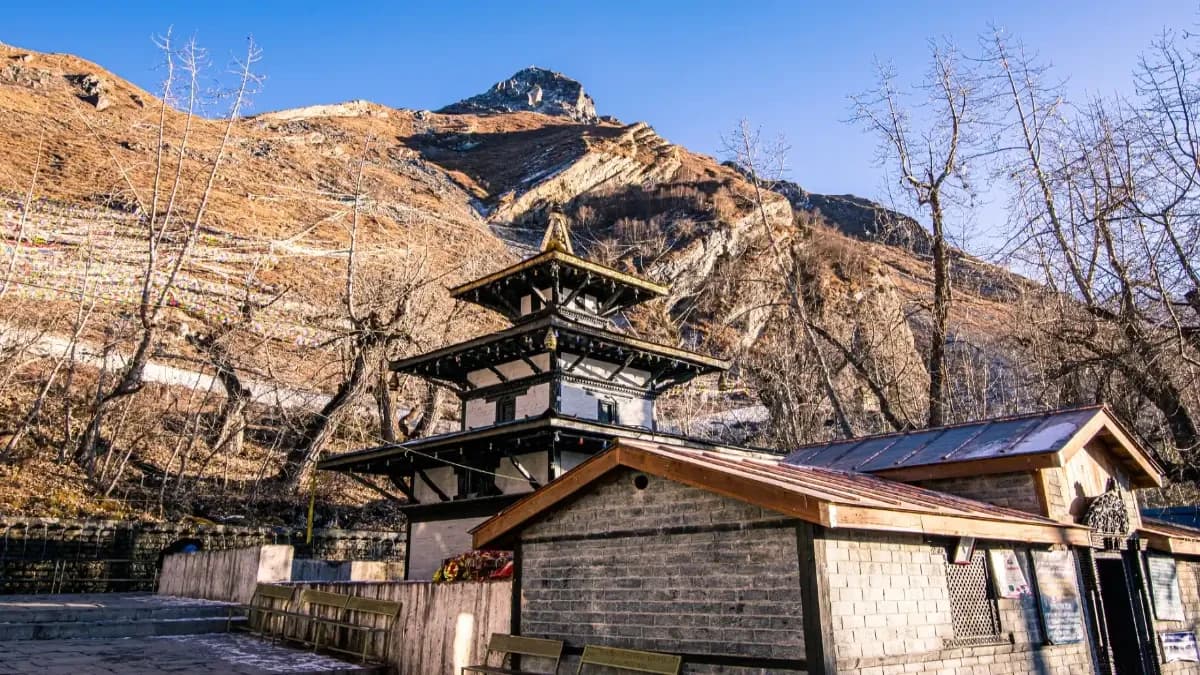
Muktinath Temple, also known as Mukti Kshetra, literally means “place of liberation.” That name alone tells you how seriously people take this place. It’s located in the Mustang district of northern Nepal, sitting high at around 3,800 meters near the famous Annapurna Circuit route.
It’s one of the most unique religious sites on the planet. Hinduism and Buddhism have coexisted here as equals for centuries two religions, one sacred spot, side by side. That genuinely doesn’t happen in many places around the world.
Hindu and Buddhist Religious Value of Muktinath Temple
-
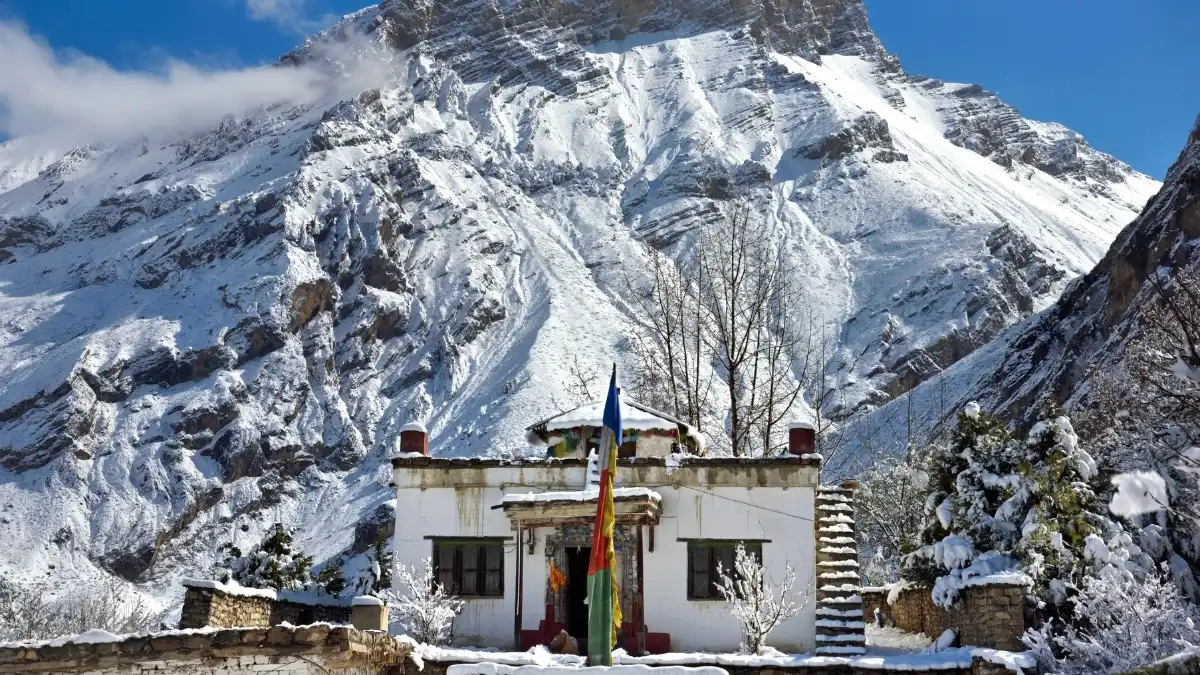
For Hindus, the Muktinath temple is dedicated to Lord Vishnu and is one of the 108 Divya Desams in Sri Vaishnavism. What makes it even more special? It is the only Divya Desam located outside India. It's also one of the eight Svayam Vyakta Ksetras, the most sacred Vishnu shrines in the world, alongside Tirupati, Badrinath, and Srirangam.
-
For Buddhists, Muktinath is known as Chumig Gyatsa, meaning "Hundred Waters" in Tibetan. It's one of the 24 Tantric places of Tibetan Buddhism, and the deity here is worshipped as Avalokiteshvara the Buddha of compassion.
-
It's also one of the 51 Shakta Pithas, where the Shakti is known as Gandaki Chandi and the Bhairav as Chakrapani. The entire complex is one of the Char Dham of Nepal, the four most sacred pilgrimage sites in the country.
So basically this place checks every single box. Sacred in Vaishnavism. Sacred in Shaktism. Sacred in Tibetan Buddhism. All at once.
History and Significance of Muktinath Temple
Muktinath is not just another temple it is a place where history and belief walk hand in hand. Sitting high in the Himalayas at about 3,800 meters, it has been a center of faith for hundreds of years. People didn’t come here for comfort they came for meaning.
Ancient Roots and Mythological Stories
The ancient Vishnu Purana's Gandaki Mahatmya describes Muktinath's significance in Hinduism. Its ancient name in Sri Vaishnava literature is Tiru Salakkiramam.
One of the most well-known legends says that Lord Vishnu attained liberation here after being freed from a curse, which is precisely why this place is called Mukti Kshetra.
The nearby Kali Gandaki River is considered the only source of Shaligram Shila in the world, sacred black stones that are nonanthropomorphic forms of Vishnu. And these aren't just plain black stones.
Different colors and patterns represent different divine forms: white is Vasudeva, black is Vishnu, green is Narayana, blue is Krishna, and golden-yellow or reddish-yellow represents Narasimha and Vamana. Pilgrims often carry these stones home as blessings.
The Buddhist Connection
Tibetan Buddhist tradition holds that Guru Rinpoche (Padmasambhava), the founder of Tibetan Buddhism, meditated at Muktinath on his way to Tibet. Before leaving, he's believed to have had a statue built in his image, which still resides in the Mharme Lhakhang Gompa.
The nuns who tend this gompa are considered Dakinis, divine goddesses known as Sky Dancers and descendants of the women taught by Padmasambhava during his stay here.
The entire temple area is also worshipped as the residence of 21 Tara and many Dakinis, giving this place deep Tantric significance that goes far beyond a regular pilgrimage site.
The Temple Structure and Historical Legacy
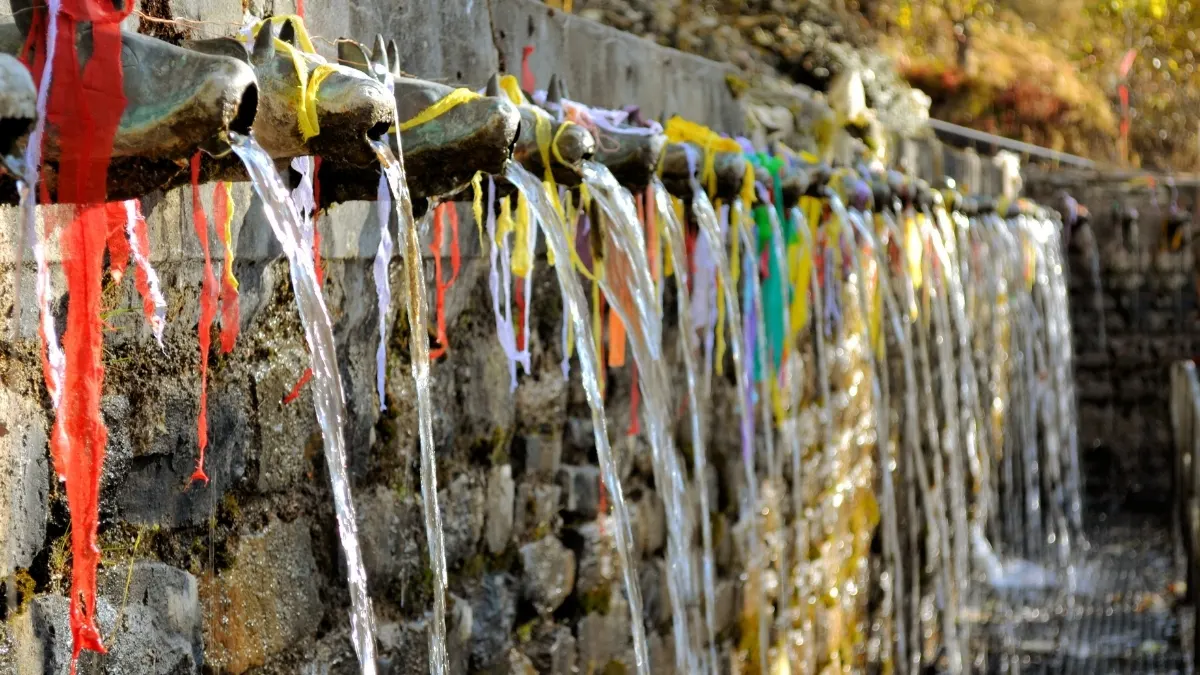
The golden murti inside the main shrine is reportedly human-sized. The outer courtyard features the iconic 108 bull-face water spouts, each symbolizing one of the 108 Divya Desams of Sri Vaishnavism.
The structure we see today is largely associated with the 19th century, but the sacred site is far older. Medieval poet-saints called Alvars sang its praises.
Thirumangai Alvar sang 10 pasurams (hymns) from the nearest reachable point, showing just how revered this place was even when it was nearly impossible to reach. The Nalayira Divya Prabandham, the 7th–9th century Vaishnava canon, also praises the temple.
What to See Inside Muktinath Temple?
Visiting Muktinath is not about seeing one building. It's a full spiritual journey with multiple sacred stops.
108 Water Spouts Mukti Dhara
The 108 bull-headed water spouts (Mukti Dhara) are the most iconic part of the entire Muktinath experience. Pilgrims bathe under each one, and yes, the water is shockingly cold, flowing straight off the Himalayas.
Why 108? It's a deeply sacred number in both Hindu and Buddhist traditions. These spouts also represent the 108 Divya Desams of Sri Vaishnavism, so bathing here symbolically means bathing in the sacred waters of all of them at once.
Mukti Kunda: The Sacred Ponds
Right near the spouts are two sacred ponds called Mukti Kunda. Pilgrims dip here as part of the purification ritual before entering the main temple. Cold. Meaningful. Worth it.
Jwala Mai Temple The Eternal Flame
Just beside the main Vishnu temple is Jwala Mai Temple, where a natural flame burns continuously. No one lights it. No fuel is added. It's sustained by a natural gas seep underground and has been burning for centuries.
The temple complex is also considered to hold all five elements, fire, water, sky, earth, and air, making it cosmically complete in Hindu belief. Honestly, witnessing a flame that nobody ignites is an experience that lingers long after you depart.
The Buddhist Gompa and Dakini Nuns
The Dakini nuns tend to the statue of Padmasambhava at the Buddhist gompa, located just a short walk away. It adds a completely different dimension to the visit Tibetan and tantric, yet deeply peaceful.
Sacred Shaligram Stones
The Kali Gandaki River nearby is the only place in the world where Shaligram stones are found. These spiral-shaped sacred stones are worshipped as forms of Vishnu. If you get a chance to walk along the riverbed and pick one up that's a blessing worth taking home.
How to Reach Muktinath Temple?
You basically have three options to reach Muktinath Temple:
|
Travel Option |
Time |
Best For |
|
Helicopter |
1.5–2 hours total |
Fast, comfortable, one-day trips |
|
Jeep/Bus Drive |
8–10 hours one way |
Budget travelers |
| Trek |
Several days |
Adventure lovers |
Helicopter vs. Jeep vs. Trek: Which Is Better?
A helicopter is the fastest and most comfortable option. You skip the rough mountain roads entirely, enjoy breathtaking aerial views, and can complete the whole trip in a single day.
The flight path over the Kali Gandaki gorge flanked by the massive 8,000m peaks of Dhaulagiri and Annapurna I is genuinely one of the most stunning aerial experiences on Earth.
Jeep is cheaper but takes 8–10 hours one way on rough, dusty roads. This trip is doable but exhausting, especially for older travelers. Trekking through the Mustang region is beautiful if you have the time and fitness.
If you're keen to explore this region on foot, the Upper Mustang Trek is one of the most rewarding routes in Nepal.
Ultimately, if your priority is time, comfort, and actually enjoying the experience, the Kathmandu to Muktinath helicopter is the clear winner.
Muktinath Helicopter Tour and Treks - Best Trekking Routes for the Muktinath Pilgrimage
If the journey to Muktinath by road seems lengthy and exhausting, a helicopter tour transforms the experience. It is the fastest, easiest, and most comfortable way to visit Muktinath Temple, especially for travelers who are short on time or traveling with family and elders.
Instead of spending 8–10 hours on rough roads or several days trekking, you can reach the temple in just a few hours.
It’s like taking a shortcut through the Himalayas, but with views that make the journey just as special as the destination. The helicopter ride is not just transport it’s an experience. You fly above deep valleys, snow-covered peaks, and remote villages that are otherwise difficult to reach.
In simple words, you get the best of both worlds: comfort and adventure in one trip.
It takes:
- Kathmandu to Muktinath helicopter: around 1 hour
- Pokhara to Muktinath helicopter: around 45 minutes
Muktinath Helicopter Tour Cost
Here's an honest breakdown of the cost of the Muktinath helicopter tour:
|
Tour Type |
Approximate Cost |
|
Shared Helicopter Tour |
$1,000–$1,500 per person |
|
Private Charter |
$3,500–$5,000 total |
What's Included
- Return helicopter flights
- Airport transfers
- ACAP and TIMS permits
- Guide assistance on the ground
What's Not Included
- Meals and snacks
- Personal expenses and temple offerings
- Optional local services (horse ride, porter)
If you're traveling as a family of 4–5, a private Muktinath helicopter charter actually becomes very cost-effective per person, plus you get full flexibility on timing.
Which Trekking Routes Connect to Muktinath?
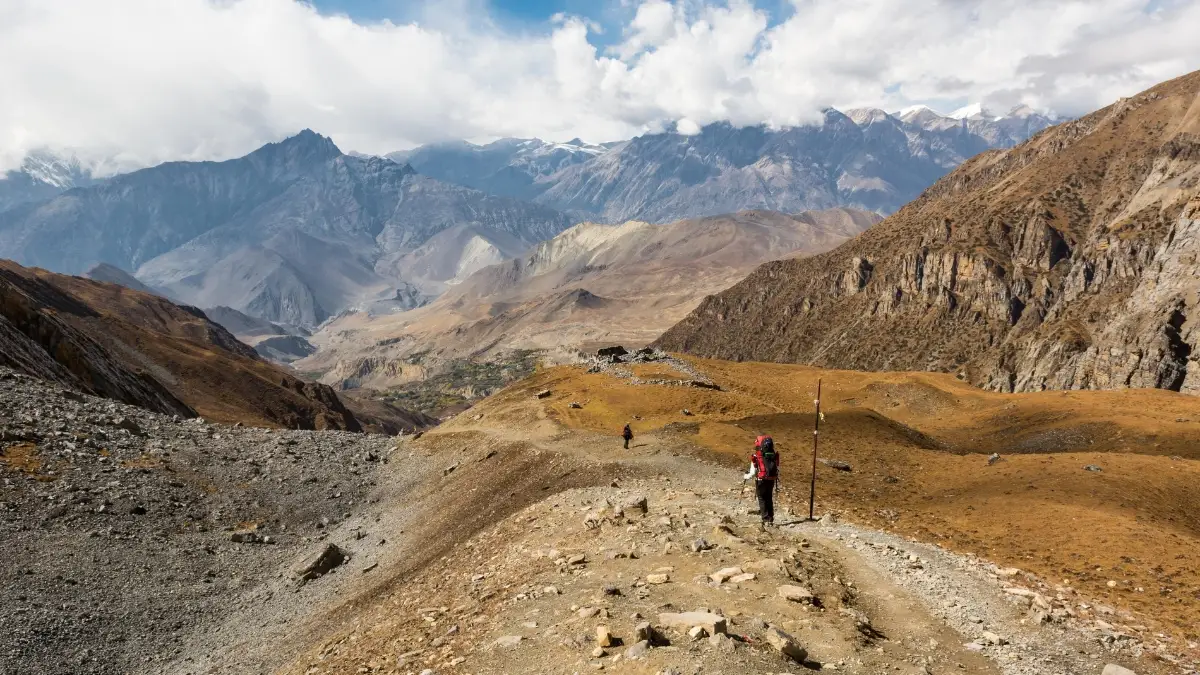
Muktinath is not just a temple it’s a key stop in the Himalayas where trekking, culture, and spirituality come together. Because of its location in Mustang, it links some of Nepal’s most famous trekking routes. Here are the main routes that connect to Muktinath:
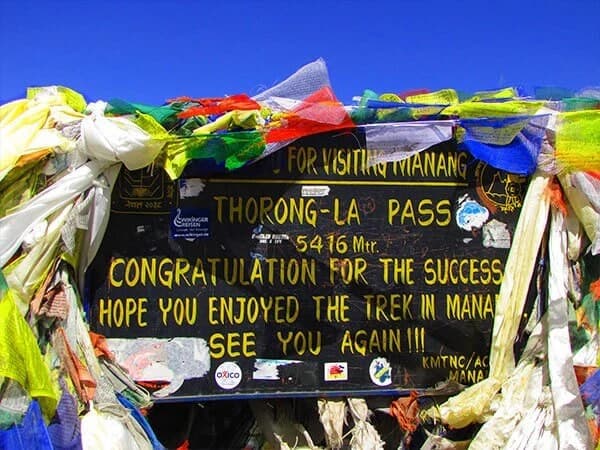
- Annapurna Circuit Trek: This trek is the most iconic route connected to Muktinath. Many trekkers see reaching the temple as a reward after crossing the tough Thorong La Pass (5,416m). The journey usually goes from Manang to Muktinath. You’ll notice a big change in scenery from green hills to dry, desert-like landscapes. It’s a mix of challenge and spiritual experience, all in one go.
- Jomsom–Muktinath Trek: This is a shorter and easier option. It’s perfect if you have limited time or mainly want a pilgrimage trip. Most people start from Jomsom and walk through places like Kagbeni. Along the way, you’ll see the Kali Gandaki Valley, apple farms in Marpha, and local culture influenced by Tibet. It’s often called a “pilgrimage trek” because many visitors are devotees.
- Upper Mustang Trek (Gateway Route): Upper Mustang is a restricted and unique region, and Muktinath acts like a gateway to it. Trekkers usually pass through Kagbeni, which is the official entry point. This route is for those who want something different ancient caves, deep traditions, and a strong Tibetan feel. Muktinath often becomes the spiritual starting or ending point of this journey.
|
Trek Name |
Primary Focus |
Best For |
|
Annapurna Circuit |
Adventure & Challenge |
Experienced trekkers, high-altitude enthusiasts. |
|
Jomsom-Muktinath |
Culture & Pilgrimage |
Families, short-term travelers, and spiritual seekers. |
|
Upper Mustang |
Exploration & History |
Photography, cultural immersion, and seekers of unique experiences are the main focus. |
When is the Best Time to Visit Muktinath Temple?
|
Season |
Months |
What to Expect |
| Spring |
March–May |
Clear skies, ideal flight conditions |
|
Monsoon |
June–August |
Rain-shadow zone, drier than most of Nepal |
|
Autumn |
September–November |
Best weather, crystal-clear mountain views |
| Winter |
December–February |
Very cold, possible snow at 3,800m |
Spring and autumn are the best times to visit Muktinath Temple. Helicopter flights run smoothly, views are stunning, and the experience is at its best. One thing worth knowing is that, because Muktinath lies in the rain shadow zone of Mustang, it stays relatively dry even during the monsoon.
That's the same reason the Upper Mustang Trek in Monsoon is a popular option when the rest of Nepal is wet.
Not sure when to travel? Read our Best Time for Trekking in Nepal guide and Spring vs Autumn Trekking in Nepal for a full seasonal breakdown.
Why Book With Nepal Gateway Trekking?
There's no shortage of tour operators out there. So why Nepal Gateway Trekking?
- Government-licensed operator with hands-on Himalayan helicopter tour experience
- Transparent pricing no hidden fees or last-minute surprises
- Flexible packages for solo travelers, couples, families, groups, and elderly pilgrims
- All permits handled ACAP and TIMS sorted, no stress for you
- Responsive local team with expertise that actually makes a difference on the ground
Whether you want a shared tour to keep costs down or a private charter for full flexibility, we have the right option for you.
Explore more of the region with our complete Mustang region treks and find out exactly where Muktinath is located before you go.
Final Word
Muktinath Temple is one of those rare places that genuinely stays with you. The cold water. The eternal flame. The Dakini nuns. The Padmasambhava statue. The Shaligram stones in the river. The view of Dhaulagiri and Annapurna rising on either side as you fly in is difficult to describe until you've actually experienced it.
Getting there doesn't have to be a struggle anymore. A Muktinath helicopter tour makes the whole journey smooth, safe, and completely accessible whether you're 25 or 75, a lifelong devotee or a first-time visitor to Nepal.
Book your next trek with Nepal Gateway Trekking today and let us handle everything so you can focus entirely on the experience. Plan your trip now.
FAQs
What is Muktinath Temple famous for?
Muktinath is famous as one of the holiest pilgrimage sites for both Hindus and Buddhists, the only Divya Desam outside India, a Shakta Pitha, and one of the 24 Tantric places of Tibetan Buddhism. The 108 sacred water spouts (Mukti Dhara) and the eternal natural flame at Jwala Mai Temple are its most iconic features.
Why is Muktinath important for Hindus?
It's one of the 108 Divya Desams of Sri Vaishnavism and one of the eight Svayam Vyakta Ksetras among the most sacred Vishnu shrines in the world. Bathing under the 108 Mukti Dhara spouts is believed to grant Moksha (liberation) from the cycle of birth and death.
Why is Muktinath important for Buddhists?
Tibetan Buddhists revere it as Chumig Gyatsa ("Hundred Waters") and one of the 24 sacred Tantric places. Guru Rinpoche (Padmasambhava) meditated here on his way to Tibet. The site is home to Dakinis, divine sky dancer goddesses, and is connected to the 21 Taras.
How much does a Muktinath helicopter tour cost?
Shared tours cost around $1,000–$1,500 per person. A private charter runs $3,500–$5,000 total. Permits (ACAP + TIMS) and transfers are typically included.
How long is the helicopter flight to Muktinath?
It takes about 1 hour from Kathmandu and 45 minutes from Pokhara to reach Muktinath from helicopter. The full-day trip, including
Can you visit Muktinath in one day?
Yes, easily. A helicopter tour is specifically designed as a same-day return trip from Kathmandu or Pokhara.
Is Muktinath safe for elderly people?
Absolutely. The helicopter tour makes it accessible for older pilgrims who can't trek. The walk from the helipad to the temple is gentle and takes 20–30 minutes. Ponies are available locally if
What is the altitude of Muktinath Temple?
The altitude of Muktinath temple is 3,800 meters (12,467 feet) above sea level, making it one of the highest temples in the world, located at the foot of the Thorong La mountain pass.
What is special about the 108 water spouts?
Each spout is shaped like a bull's head and represents one of the 108 Divya Desams of Sri Vaishnavism. Bathing under all 108 is believed to cleanse sins and bring the devotee closer to Moksha.
What permits do I need for Muktinath?
You need an ACAP (Annapurna Conservation Area Permit) and a TIMS card. Nepal Gateway Trekking handles both as part of the helicopter tour package no extra hassle for you.
What is the best time to visit Muktinath?
Spring (March–May) and autumn (September–November) are ideal. Monsoon is also more manageable here than elsewhere in Nepal since Mustang lies in a rain-shadow zone.
Is the helicopter ride to Muktinath safe?
Yes. All operators use certified helicopters with experienced mountain pilots. Oxygen cylinders are carried on board, and safety standards for Himalayan helicopter tours in Nepal are well-established.