Are you planning a trip to Mustang and unsure which region to choose? You're not alone. The Upper Mustang vs Lower Mustang debate trips up almost every traveler heading to this part of Nepal. Both are stunning. Both are worth it.
But they offer entirely different experiences, different permits, costs, difficulty levels, cultures, and landscapes.
This guide clearly lays it all out so you can choose the right one based on your time, budget, and the kind of adventure you want.
Quick Summary to Help You Decide
- Upper Mustang: Remote, high-altitude desert often called the “Last Forbidden Kingdom.” Rich Tibetan culture, ancient caves, and the walled city of Lo Manthang make it a once-in-a-lifetime experience.
- Lower Mustang: More accessible and greener, with mixed Tibetan and Thakali culture. Highlights include Muktinath and apple orchards in Marpha.
- Cost: Upper Mustang is expensive due to restricted permits (~$500+), while Lower Mustang is budget-friendly.
- Duration: Upper Mustang needs 10–14 days; Lower Mustang can be done in 5–7 days.
- Difficulty: Upper Mustang is moderate and remote; Lower Mustang is easier and beginner-friendly.
- Crowds: Upper Mustang has very few visitors; Lower Mustang is more crowded, especially in peak season.
- Best Time: Both are excellent in spring and autumn. Upper Mustang is also perfect during monsoon due to its rain-shadow location.
Key Differences Between Upper Mustang and Lower Mustang
Let's start simple. Mustang is a district in Nepal's Gandaki Province, one of 77 districts across the country. The name comes from a Tibetan word meaning "plain of aspiration." Nothing to do with the car. The district is split into two geographical sub-regions: Upper Mustang to the north and Lower Mustang to the south.
The dividing point is Kagbeni Village. Cross it heading north, and you'll enter a restricted area. Stay south, and you're in the open, accessible Lower Mustang part of the famous Annapurna Circuit.
- Upper Mustang: Arid high-altitude desert, deep Tibetan culture, restricted area permit required, low crowds, 10–14 days minimum
- Lower Mustang: Greener valleys, mixed Tibetan and Thakali culture, no special permit, beginner-friendly, 5–7 days
Both regions sit in the rain shadow of the Himalayas, which means they stay dry even during Nepal's monsoon season. That's a massive deal for trip planning.
Upper Mustang: The Last Forbidden Kingdom of Nepal
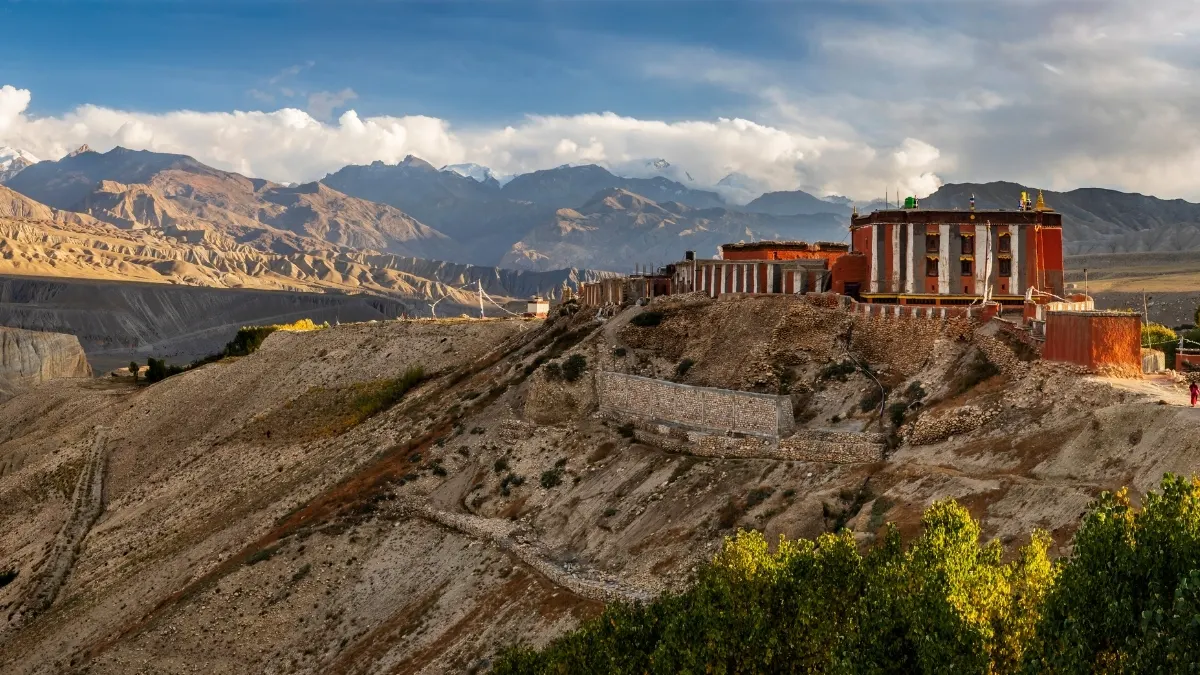
Upper Mustang is genuinely one of the most unique destinations on Earth. Ame Pal founded the Kingdom of Lo in 1380, and it remained a tributary kingdom of Nepal until Nepal abolished it in 2008. It was completely sealed off from the outside world until 1992, and that long isolation is precisely why it's so extraordinary.
Traditions here have survived more intact than in Tibet itself, after China's annexation disrupted Tibetan culture across the border. Geographically, it's dramatic.
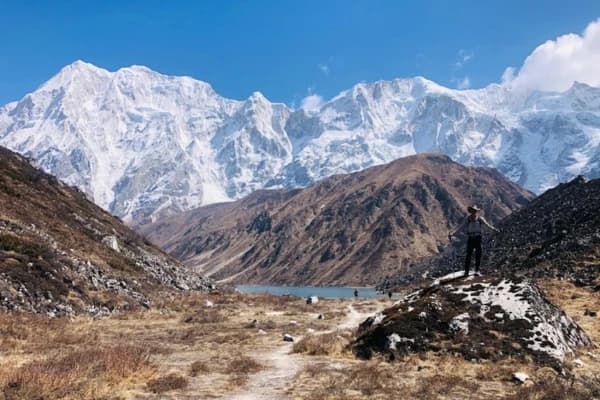
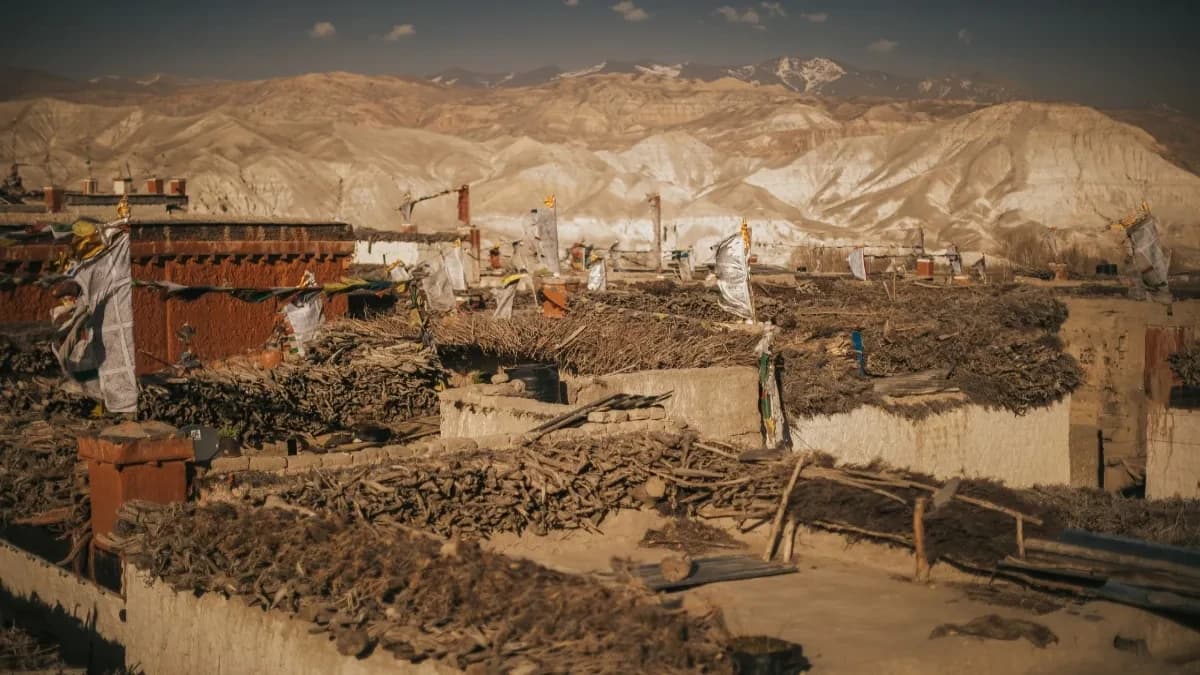
The region features high-altitude trans-Himalayan desert, eroded canyons, vivid red and ochre cliff formations, and barren plateaus that stretch toward Tibet. People often call it Little Tibet. Only around 1,000 foreign visitors per year are allowed in. That strict quota protects both the culture and the environment.
Want to understand the full picture of how this place was shaped, including its last royal ruler? Read about Jigme Dorje Palbar Bista, the last king of Mustang.
Key Highlights of Upper Mustang
- Lo Manthang is the centerpiece. Nepal's only walled city, sitting at around 3,840 m, has a 15th-century royal palace and four major monasteries, Jampa Gompa, Thubchen Gompa, Chodey Gompa, and Choprang Gompa. It's a UNESCO World Heritage candidate and considered one of Asia's best-preserved medieval fortresses.
- Sky Caves over 10,000 man-made caves carved into the cliff faces of the Kali Gandaki Valley. Inside, archaeologists have found mummified remains, ancient Buddhist paintings, manuscripts, and pottery dating back 2,000–3,000 years. The Jong Chosar caves near Lo Manthang are the most visited.
- The Tiji Festival happens every April or May with three days of spectacular masked lama dances in Lo Manthang's village square. If you can time your trip around it, do it without question.
- Lo Gekhar Monastery is one of the oldest gompas in the region.
- The Lopa people, the original ethnic Tibetan inhabitants, live in whitewashed mud-brick homes built with no south-facing windows to block the region's fierce winds. Their traditions, social structure, and daily life are extraordinary to witness.
- Plus, there is rare wildlife, including snow leopards, Tibetan wild asses, musk deer, and Tibetan gazelles.
Lower Mustang: The Accessible Himalayan Valley
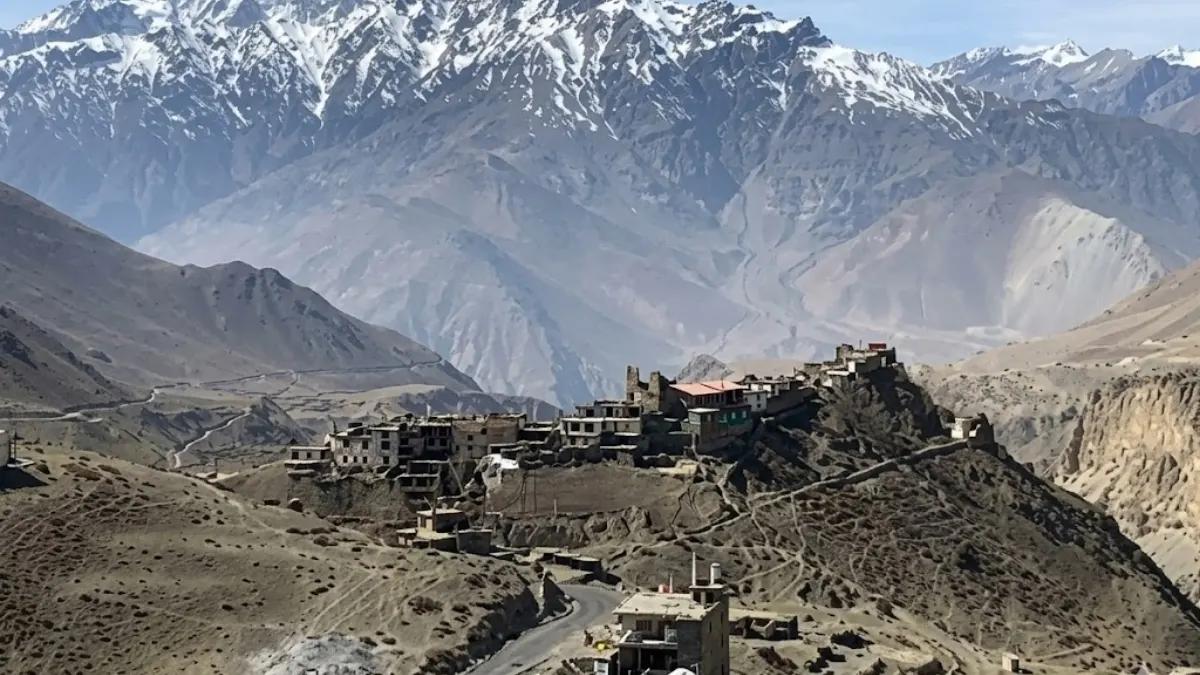
Lower Mustang is an entirely different kind of experience, and that's not a negative thing. It covers the sub-regions of Thak Satsae, Panchgaon, and Baragaon. It is more developed, greener, and far easier to reach than Upper Mustang. Most of it runs along the famous Annapurna Circuit, one of Nepal's most trekked routes.
The scenery shifts as you move north, from lush rhododendron forests and pine trees in the south, gradually giving way to rocky cliffs and drier terrain as you approach Kagbeni.
The dominant ethnic group here is the Thakali people, historically Nepal's most skilled traders and hoteliers. The culture is a blend of Tibetan Buddhism and Hindu traditions. Jomsom, the district headquarters, is the gateway, and it has a working airport with daily flights from Pokhara.
Key Highlights of Lower Mustang
- The Muktinath Temple, at 3,710 m, is sacred to both Hindus and Buddhists. Buddhists call it Chumig Gyatsa ("Hundred Waters") and revere it as one of 24 Tantric places. Hindus consider it one of the 108 Divya Desam temples. It pulls huge numbers of pilgrims from across South Asia every year.
- Marpha village is renowned for its apple orchards and apple brandy. Mustang is sometimes called the "apple capital of Nepal." Marpha is one of those places where you just want to slow down and stay an extra day.
- Kagbeni sits at the confluence of the Kali Gandaki and Jhong rivers. Medieval architecture, ancient gompas, and a genuine edge-of-the-world atmosphere characterize the region. It's also the literal gate to Upper Mustang.
- Kali Gandaki Gorge is considered the world's deepest canyon by some measurements, running between Dhaulagiri and Annapurna. The trekking through here is spectacular.
Trails are beginner-friendly, teahouses are everywhere, and jeep roads cover most of the route if you need them.
Quick Comparison Table: Upper Mustang vs Lower Mustang Trek
|
Feature |
Upper Mustang |
Lower Mustang |
|
Permit Cost |
USD 500 (10 days) |
ACAP only (~NPR 3,000) |
|
Crowd Level |
Very Low (~1,000/year) |
Moderate to High |
|
Landscape |
Desert, red cliffs, plateau |
Green valleys, orchards, gorges |
|
Culture |
Deep Tibetan Buddhist (Lopa people) |
Mixed Tibetan + Thakali |
|
Max Altitude |
3,840m (Lo Manthang) |
3,710m (Muktinath) |
|
Difficulty |
Moderate |
Easy to Moderate |
|
Duration |
10–14 days |
5–7 days |
|
Accessibility |
Remote (jeep/trek) |
Easy (flight + jeep/trek) |
|
Special Permit |
Yes, a restricted area permit. |
No |
|
Licensed Guide |
Mandatory |
Recommended, not required |
|
Monsoon Trekking |
Excellent (rain shadow) |
Good (rain shadow) |
|
Best For |
Experienced trekkers, culture seekers |
Beginners, families, short trips |
Trek Difficulty Comparison: Which One Is Easier?
Choosing the right trek is like picking the right shoes if it fits your level, the journey feels smooth if not, every step feels heavy. Both Upper and Lower Mustang are doable, but they offer very different challenges. But Lower Mustang is easier. Here’s why.
Upper Mustang Difficulty
Upper Mustang is rated moderate, but remote conditions push it harder than that rating suggests. You're walking 5–8 hours a day on rough, unpaved trails with limited rescue services anywhere nearby. Average elevation stays above 3,500m, and the Kali Gandaki corridor is genuinely one of the windiest places on Earth.
Wind here isn't a minor nuisance. It's a real physical challenge that drains energy fast. The jeep road exists now, but trekking is how you actually experience the place properly. It's not ideal for first-time altitude trekkers without solid preparation.
Lower Mustang Difficulty
Lower Mustang is easy to moderate and genuinely beginner-friendly. Daily walking is 3–5 hours on well-marked trails. Altitude stays between 2,700m and 3,710m, which is manageable for most people with basic fitness.
Teahouses are abundant, jeep options exist for most of the route, and you can even combine it with a wider Nepal itinerary without much additional planning.
Cost Breakdown: Upper Mustang vs Lower Mustang
The Upper Mustang cost vs. Lower Mustang cost difference is significant. Here's the honest breakdown.
Upper Mustang Cost Details
|
Expense |
Estimated Cost |
|
Restricted Area Permit (10 days) |
USD 500/person |
|
Additional days beyond 10 |
USD 50/person/day |
|
ACAP Permit |
NPR 3,000 |
|
Licensed guide (mandatory) |
USD 25–40/day |
|
Porter |
USD 15–25/day |
|
Accommodation (teahouse/lodge) |
USD 10–25/night |
|
Food per day |
USD 15–25 |
|
Jomsom flight from Pokhara |
USD 120–150 one way |
|
Estimated Total (10–16 days) |
USD 1,500–2,500+ |
Which One Is Cheaper, Upper Mustang or Lower Mustang?
Lower Mustang is clearly the cheaper option. You can complete a Lower Mustang trek for around USD 400–800, while Upper Mustang usually costs USD 1,500–2,500+. The main reason is the expensive Restricted Area Permit and the mandatory guide in Upper Mustang.
Lower Mustang is more flexible. You don’t need a special permit, and you can even travel without a guide. That makes it a great choice if you are on a budget.
Note: A licensed, government-registered guide is mandatory this is law, not a suggestion. Solo unguided travel past Kagbeni is illegal. Also worth noting: Nepal recently restructured the Upper Mustang permit fee system.
Read the latest Upper Mustang trekking fee update to understand the new USD 50/day rule before you book anything.
Let Nepal Gateway Trekking handle all your permits, guide arrangements, and logistics. Contact us for a custom Upper Mustang itinerary.
Lower Mustang Cost Details
|
Expense |
Estimated Cost |
|
ACAP Permit |
NPR 3,000 |
|
TIMS Card |
NPR 2,000 |
|
Guide (recommended) |
USD 20–35/day |
|
Accommodation |
USD 8–15/night |
|
Food per day |
USD 10–20 |
|
Jomsom flight from Pokhara |
USD 120–150 one way |
|
Jeep (Jomsom to Muktinath) |
USD 15–20/person |
|
Estimated Total (5–7 days) |
USD 400–800 |
Budget travel is genuinely possible. No special guide requirement. Independent trekking is allowed. You can also combine it with the Annapurna Circuit to spread costs further.
Itinerary Comparison: Days, Routes & Highlights
Sample Upper Mustang Itinerary (10–16 Days)
|
Day |
Route |
Highlight |
|
Day 1 |
Fly Pokhara → Jomsom |
Arrive and acclimatize |
|
Day 2 |
Jomsom → Kagbeni |
Gateway to Upper Mustang |
|
Day 3 |
Kagbeni → Chele |
Enter restricted zone |
|
Day 4 |
Chele → Syangboche |
Red cliff villages |
|
Day 5 |
Syangboche → Ghiling |
Remote desert trekking |
|
Day 6 |
Ghiling → Ghami |
Ancient chortens, mani walls, |
|
Day 7 |
Ghami → Charang |
Charang Dzong fortress |
|
Day 8 |
Charang → Lo Manthang |
Walled city arrival |
|
Day 9–10 |
Lo Manthang exploration |
Royal Palace, Sky Caves, monasteries |
|
Day 11–12 |
Return via alternate villages |
Different southward route |
|
Day 13 |
Back to Jomsom |
— |
|
Day 14 |
Fly to Pokhara |
Departure |
|
Note: |
Might take few more days |
If weather condition is bad |
See the full Upper Mustang trek map with route distances and altitude profile for detailed visuals.
Sample Lower Mustang Itinerary (5–7 Days)
|
Day |
Route |
Highlight |
|
Day 1 |
Fly Pokhara → Jomsom |
Arrival, Jomsom walk |
|
Day 2 |
Jomsom → Marpha |
Apple orchards, brandy |
|
Day 3 |
Marpha → Kagbeni |
Kali Gandaki, medieval village |
|
Day 4 |
Kagbeni → Muktinath |
Sacred temple at 3,710m |
|
Day 5 |
Muktinath → Jomsom |
Return by jeep or trek |
|
Day 6 |
Jomsom sightseeing |
Thini village, Dhumba Lake |
|
Day 7 |
Fly to Pokhara |
Departure |
Trek vs Jeep Tour vs Road Trip in Mustang
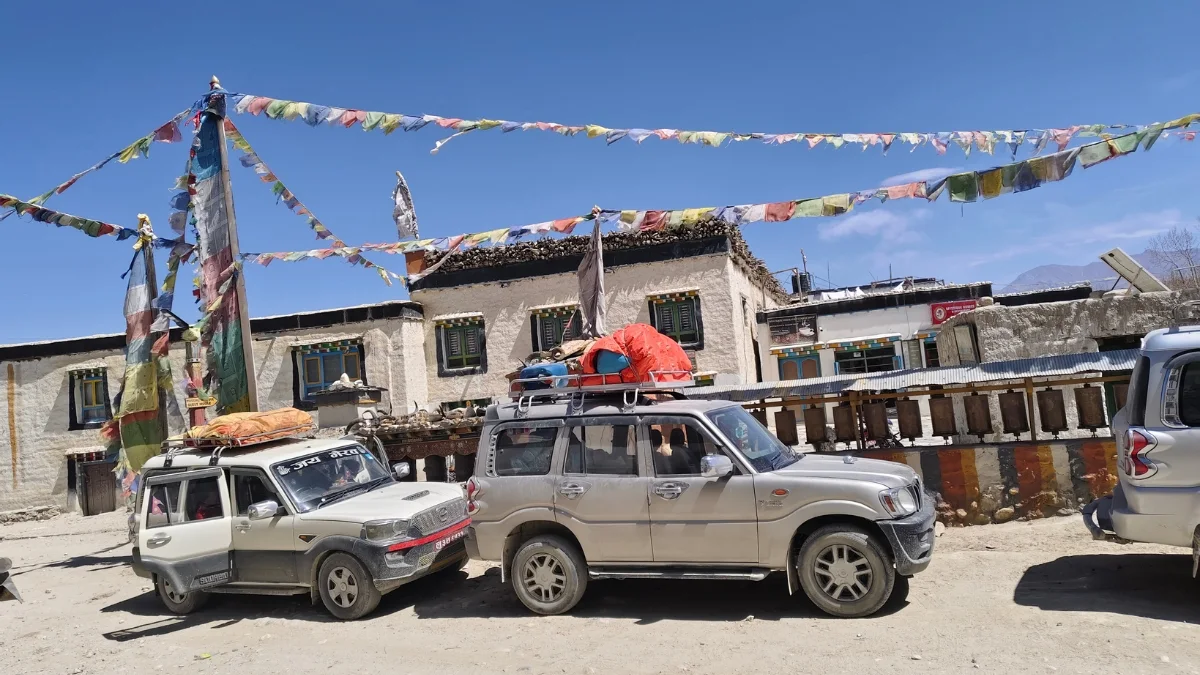
This is the Upper Mustang road trip vs. trek question many people ask, especially now that a road reaches all the way to Lo Manthang.
- Trekking gives you the full experience. Remote villages off the main road offer ridgeline views and real cultural encounters. Recommended for both regions without question.
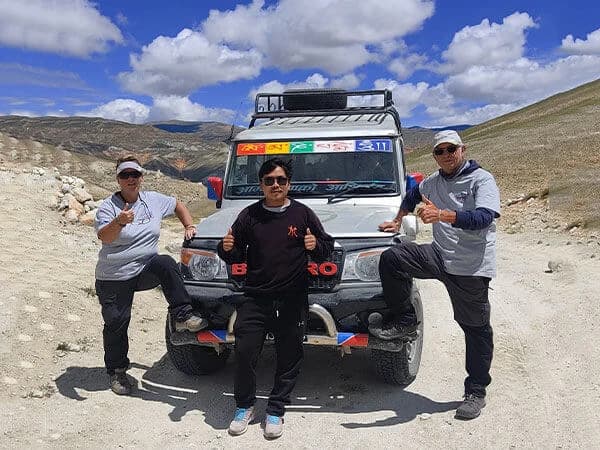
- The jeep tour on the gravel road connecting Jomsom to Lo Manthang was completed before 2015 and is suitable for high-clearance 4WD vehicles. Good if you're short on time or have physical limitations. Rough but doable.
- Motorcycle riding is popular with adventure riders. This activity is thrilling on gravel roads, but it is also demanding and not suitable for everyone.
- A helicopter tour is the fastest and most expensive and gives you aerial views of the desert landscape that are breathtaking. This option is particularly well-suited for luxury travelers or those with very limited time.
Even if you take a jeep into Upper Mustang, try to walk at least some sections. You'll miss the actual texture of the place when you're inside a vehicle.
Landscape & Scenery: Desert vs Green Valleys
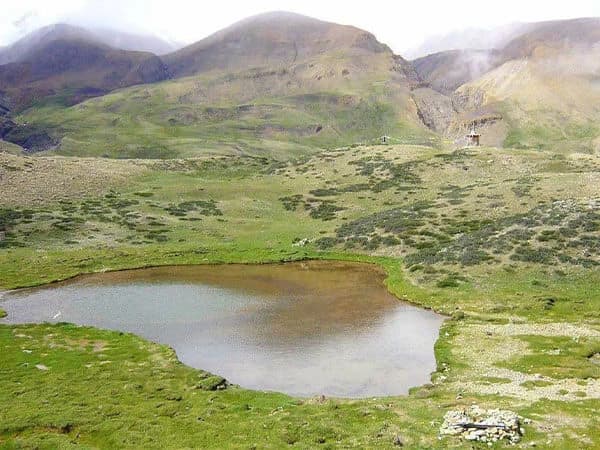
Upper Mustang is all stark, dramatic, and surreal. Vast arid valleys, eroded canyon walls in vivid red and ochre, and barren high-altitude desert plateaus that genuinely look like another planet in places. The sky caves carved into cliff sides add to the otherworldly atmosphere.
For landscape photographers, it's extraordinary, especially with almost zero tourists in frame. Lower Mustang gives you classic Himalayan scenery. Lush forests in the south that gradually give way to rocky terrain as you head north.
Apple orchards at Marpha. The jaw-dropping Kali Gandaki Gorge cuts between Dhaulagiri and Annapurna. And the mountain backdrops are seriously impossible to beat. Both regions benefit massively from the rain shadow effect the landscape stays dry even when the rest of Nepal is soaked.
If you're open to a monsoon trip, Upper Mustang is one of the best options in the whole country.
Our Upper Mustang trek in monsoon guide covers what to expect month by month.
Culture & Experience: Tibetan Roots vs Mixed Culture
Culture is the heart of any journey. In Mustang, it’s like choosing between two different stories one feels frozen in time, the other feels lively and evolving. Both are rich, but the experience is entirely unique.
Upper Mustang Lopa Culture
The Lopa people are the original inhabitants, ethnic Tibetans, still speaking Tibetan dialects, living in whitewashed mud-brick homes built with no south-facing windows to fight the valley's fierce winds. Monasteries are central to daily life. The oldest son inherits the family property; the next becomes a Buddhist monk.
The Tiji Festival every April/May draws visitors from around the world for three days of costumed lama dances that are unlike anything else in Nepal.
The Yartung festival of horse racing in September is equally spectacular. Then there are the ancient cave civilization manuscripts in Bon religion and Buddhism, dating to the 12th–14th centuries, found by archaeologists inside the sky caves.
Traditions here have survived longer than in Tibet itself. That's not a marketing line it's a historical fact, the direct result of 600+ years of isolation.
Lower Mustang Mixed Culture
Lower Mustang is dominated by the Thakali people, historically Nepal's most skilled traders and hoteliers. The culture blends Tibetan Buddhism with Hindu traditions fluidly. Muktinath pulls pilgrims of both faiths from across South Asia every year.
It's less isolated, more accessible, and more influenced by Annapurna Circuit tourism. Still, culturally rich apple jams, local brandy, and Tibetan-style gompas alongside Hindu shrines noticeably develop the area more than the raw isolation of Upper Mustang.
Best Time to Visit Upper Mustang and Lower Mustang
Here's the big advantage. Mustang is over most of Nepal: the rain shadow created by Dhaulagiri and Annapurna means both regions stay dramatically dry even during the monsoon. Average annual rainfall at Jomsom is under 260 mm it's extremely arid.
|
Season |
Months |
Conditions |
Verdict |
|
Spring |
March–May |
Dry, clear skies, Tiji Festival in May |
Best |
|
Monsoon |
June–August |
The rain shadow keeps it sunny while Nepal gets soaked |
Excellent — especially Upper Mustang |
|
Autumn |
September–November |
Clear skies, Yartung festival in September |
Best |
|
Winter |
December–February |
Cold, some routes harder, high-altitude snow |
Challenging |
Peak visitor month is May. The Tiji Festival draws serious crowds to Lo Manthang. January is the quietest by a large margin.
Mustang is one of the very few trekking destinations in Nepal you can visit year-round. If you're visiting in spring alongside the rest of Nepal's trekkers, refer to the best spring treks in Nepal to see how Mustang compares to other top options that season.
For a full month-by-month breakdown with weather data, read the Best Time to Do the Upper Mustang trek guide.
Who Should Choose Upper Mustang vs. Lower Mustang?
Choose Upper Mustang If
- You have 10–14 days minimum
- The budget allows USD 1,500–2,500+
- You want one of the world's last truly isolated cultural kingdoms
- Ancient Tibetan history, sky caves, walled cities, and desert landscapes excite you
- You want to attend the Tiji Festival or Yartung horse racing
- You've already done the Annapurna Circuit or similar treks
- You're visiting during monsoon season (Upper Mustang is genuinely perfect then)
- You want stunning photography with almost no other tourists in the frame.
Ready for Upper Mustang? We handle permits, guides, accommodation, and logistics, so it takes care of everything. Get in touch for a custom itinerary.
Choose Lower Mustang If
- You have 5–7 days
- Budget is a genuine constraint
- You're a first-time trekker or have moderate fitness
- You want to combine Mustang with the Annapurna Circuit trek route
- You're a Hindu or Buddhist pilgrim visiting Muktinath
- You're traveling with family, older companions, or kids
- You want apple orchards, Thakali culture, and solid teahouse infrastructure
Final Thoughts
Ultimately, Upper Mustang vs. Lower Mustang depends on four things: time, budget, experience, and what kind of traveler you are.
Upper Mustang is one of the genuinely extraordinary places left on Earth. You're walking through a living medieval Tibetan kingdom, exploring 2,000-year-old sky caves, and crossing arid desert plateaus with almost no one else around. If you have the budget, then the days go. You won't regret it.
Lower Mustang is not a consolation prize. Muktinath, Marpha, Kagbeni, and the Kali Gandaki Gorge are all exceptional. It's accessible, rewarding, culturally rich, and fits shorter trips perfectly. For beginners or budget travelers, it really offers more than you would expect for the price.
Both Mustang regions are unlike anything else in Nepal. And both are worth building a whole trip around.
Plan your Mustang trip with Nepal Gateway Trekking. We're a Kathmandu-based team of local experts who know Mustang inside out every trail, every permit rule, every teahouse. Whether you're heading to Lo Manthang or Muktinath, we'll build the right trip for you.
FAQs
Which is better, Upper Mustang or Lower Mustang?
Upper Mustang is best for adventure, deep cultural immersion, and dramatic desert scenery. Lower Mustang is better for beginners, families, and budget travelers. Time and budget are usually the deciding factors.
Why is Upper Mustang so expensive?
It requires a Restricted Area Permit (previously USD 500 for 10 days, now shifting to USD 50/day), a mandatory licensed guide, and booking through a registered trekking agency. All of that adds up quickly compared to Lower Mustang's simple ACAP permit.
Do I need a permit for Lower Mustang?
Yes, but just the ACAP permit and a TIMS card are both affordable and straightforward to arrange in Pokhara or Kathmandu. No restricted area permit is needed.
Can beginners trek Upper Mustang?
Technically yes, but it's not ideal. The trek is long, remote, and more physically demanding than most beginner routes. New trekkers are better off starting with something like Nepal's top beginner treks before attempting Upper Mustang.
What is the best time to visit Mustang?
Spring (March–May) and autumn (September–November) are the most popular seasons. But Mustang's rain shadow makes it excellent during monsoon too (June–August), which is genuinely rare for Nepal trekking destinations.
Is there a road to Upper Mustang?
Yes. A jeep road now connects Jomsom all the way to Lo Manthang, completed before 2015 and suitable for high-clearance 4WD vehicles. But trekking gives you a far richer experience than bouncing along in a jeep.
How many days do I need for Upper Mustang?
Minimum 10–14 days for a proper trek, including time to properly explore Lo Manthang, the sky caves, and surrounding villages. Rushing it would be a real waste.
Is lower Mustang crowded?
Yes, especially in spring and autumn. Lower Mustang is part of the Annapurna Circuit, one of Nepal's busiest trekking routes, so expect teahouses to be full and plenty of company on the trail.
Which is better for photography?
Upper Mustang wins for dramatic desert scenery, vivid red and ochre cliffs, ancient walled cities, and sky caves, with almost no other tourists in frame. Lower Mustang gives you lush green valleys, iconic Himalayan mountain backdrops, and vibrant pilgrimage scenes at Muktinath. Both are exceptional in entirely different ways.
What are the Sky Caves of Upper Mustang?
Around 10,000 man-made caves are carved into the Kali Gandaki Valley cliffs. Archaeologists have found mummified remains, ancient Buddhist paintings, and manuscripts dating back 2,000–3,000 years. The Jong Chosar caves near Lo Manthang are the main attraction and genuinely one of the most extraordinary archaeological sites in Asia.
Who are the Lopa people of Upper Mustang?
The Lopa (or Lhopa) are the original ethnic Tibetan inhabitants of Upper Mustang. They practice Tibetan Buddhism, live in whitewashed mud-brick homes, and maintain traditions tied to the ancient Kingdom of Lo. Socially organized into three groups, including a royal lineage, primarily farmers, shepherds, and merchants.