Most trekkers visiting the Annapurna region head to the famous Annapurna Base Camp or Annapurna Circuit. Few realize there's another route that offers a far more remote and historic Himalayan experience. Unlike the popular Annapurna Base Camp trek, the Annapurna North Base Camp Trek takes you into one of Nepal's least-visited valleys.
Following the historic Maurice Herzog Trail, this camping expedition leads to the northern face of Annapurna I (8,091 m), where the world's first successful ascent of an 8,000-meter mountain began in 1950.
Officially reopened in 2019, it is still among the quieter trekking experiences in the Annapurna region. Rather than busy teahouses and crowded trails, you will walk through dense forests, glacial valleys, traditional Magar and Gurung villages, and remote alpine landscapes before reaching the breathtaking Annapurna North Base Camp (4,190 m) and the sacred Panchakunda Lake.
This is a true camping adventure for trekkers who want to find solitude, history, and an authentic Himalayan experience. Our experienced local guides will handle your logistics, campsite setup, meals, and safety so you can confidently trek one of Nepal's newest trekking routes.
This Annapurna North Base Camp Trek / Annapurna North Base Camp Guide will give you all the information for planning your North ABC trek, including
-
Complete 6-day and 4-day itineraries
-
Trek difficulty and fitness needs
-
Cost breakdown
-
Permissibility
-
Best Time for Trekking
-
Transport
-
What to Bring
-
Altitude sickness tips
-
Route Map
-
North Annapurna Base Camp Vs. Classic Annapurna Base Camp Trek
If you are planning your next camping trip in the Himalayas or looking for a unique trekking experience, this guide will help you decide whether the Annapurna North Base Camp Trek is the right choice for you.
Quick Facts About the Annapurna North Base Camp Trek
|
Feature |
Details |
|
Duration |
6 days (Kathmandu to Kathmandu) |
|
Maximum Altitude |
4,190 m / 13,747 ft (North Annapurna Base Camp) |
|
Trek Distance |
Approx. 30–34 km km round trip on foot |
|
Daily Walking Hours |
5–7 hours |
|
Difficulty |
Moderate, camping trek |
|
Trek Type |
Camping (tented) |
|
Accommodation |
Hotel in Kathmandu/Pokhara, tented camps on trail |
|
Meals |
Full board on trek; breakfast in Kathmandu/Pokhara |
|
Best Season |
Spring (Mar–May) and autumn (Sep–Nov) |
|
Starting Point |
Hum Khola, via Beni and Tatopani |
|
Ending Point |
Hum Khola, return to Pokhara/Kathmandu |
|
Region |
Myagdi District, Gandaki Province |
|
Transportation |
Road: Kathmandu–Pokhara–Beni–Tatopani–Hum Khola |
|
Highest Camp |
Base camp area near Panchakunda Lake |
|
Guide Requirement |
Mandatory (licensed guide required) |
|
Permits |
ACAP permit only |
|
Group Size |
2–12 (customizable) |
|
Trip Grade |
Moderate |
Ready to turn these trek details into a real adventure? Get in touch with Nepal Gateway Trekking for a personalized Annapurna North Base Camp Trek itinerary, transparent pricing, and expert local guidance tailored to your travel plans.
Why Is the Annapurna North Base Camp Trek Becoming More Popular?
The Annapurna North Base Camp Trek (also known as North ABC Trek) is a camping trek in Nepal's Annapurna Conservation Area that approaches Annapurna I from its northern, less-visited side. Although the trail reopened only a few years ago, the Annapurna North Base Camp Trek has quickly attracted trekkers looking for something beyond Nepal's classic routes.
One reason is its rich mountaineering history. The trail follows the same route that Maurice Herzog and Louis Lachenal took before they became the first climbers to summit an 8,000-meter mountain. Walking the same valley adds a historical dimension that few trekking routes in Nepal can offer.
Another reason is the sense of solitude. While the southern Annapurna Base Camp trail welcomes thousands of trekkers every year, North ABC remains quiet for most of the trekking season. It's common to spend an entire day without meeting another trekking group.
The scenery also feels noticeably different. Instead of approaching the Annapurna Sanctuary from the south, the trail leads beneath the imposing north face of Annapurna I, passing waterfalls, alpine meadows, glacial terrain, and the sacred Panchakunda Lake.
Some of the experiences that make this trek unique include:
-
Walking the historic Maurice Herzog Trail
-
Camping in remote Himalayan landscapes
-
Visiting the sacred Panchakunda Lake
-
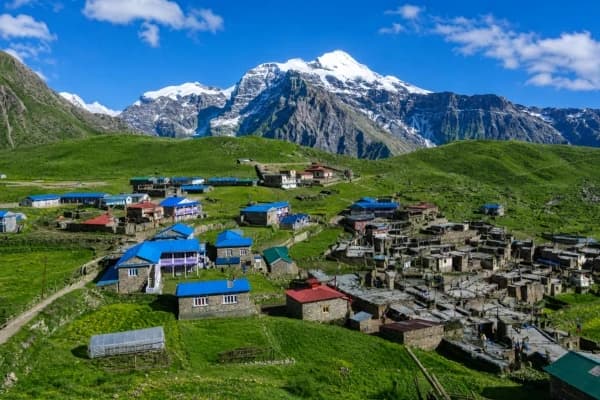
Exploring traditional Magar and Gurung villages
-
Enjoying close-up views of Annapurna I's north face
-
Trekking on one of Nepal's least-crowded routes
For trekkers who value history, wilderness, and a quieter mountain experience, Annapurna North Base Camp offers a refreshing alternative to the more established trekking routes in the Annapurna region.
Where Is Annapurna North Base Camp Located?
Annapurna North Base Camp sits in Myagdi District, Gandaki Province, inside the Annapurna Conservation Area, at an elevation of roughly 4,190 meters. The approach follows the Kali Gandaki Valley before cutting east into the Miristi Khola Valley, the drainage that runs directly beneath Annapurna I's north face.
Trekkers reach the trailhead via the village of Narchyang and the roadhead at Hum Khola, both of which they can reach by road from Beni. From Hum Khola, the trail climbs through the Miristi Khola gorge toward the historic base camp used by the 1950 French expedition.
Coordinates for North ABC fall approximately at 28.59°N, 83.85°E. Further down this guide, you will find a route map showing the full Kathmandu to Pokhara to Beni to Hum Khola approach, including the walking sections.
Annapurna North Base Camp Trek Highlights
The main draw is solitude. Where the Southern Annapurna Base Camp Trek can feel like a procession of trekkers during peak season, the Northern Annapurna Base Camp Trek routinely sees just a handful of groups on the trail at any given time.
Beyond the quiet, there's real substance to the route:
-
The historic Maurice Herzog Trail, walked by the first team to summit an 8,000-meter peak
-
Direct views of Annapurna I's north face, rarely photographed compared to the southern approach
-
Panchakunda Lake, a glacial alpine lake near the upper camps
-
A genuine camping experience, with tented camps instead of teahouse dorms
-
Magar and Gurung villages along the Kali Gandaki side that see very little tourism
-
Waterfalls, glacier views, and forest sections with a real chance of spotting wildlife
Ready to experience the historic Maurice Herzog Trail and the remote north face of Annapurna I? Speak with our trekking experts and start planning your Himalayan adventure today.
Did you know?The Annapurna North Base Camp Trek reaches an altitude of 4,190 m (13,747 ft) and follows the historic Maurice Herzog Trail, the route used during the first successful ascent of Annapurna I in 1950. Reopened to trekkers in 2019, it remains one of Nepal's least-visited trekking routes. Unlike the classic Annapurna Base Camp Trek, this trek is a fully supported camping expedition with no teahouses on the upper trail, offering a remote wilderness experience through forests, glacial valleys, and traditional mountain villages before arriving at the spectacular north face of Annapurna I. |
Major Highlights Along the Maurice Herzog Trail
-
Annapurna North Base Camp (4,190 m) Stand beneath the massive north face of Annapurna I, one of the world's highest mountains, on one of Nepal's newest trekking routes.
-
Panchakunda Lake (4,050 m): Visit this sacred high-altitude glacial lake, surrounded by rugged Himalayan peaks and alpine landscapes.
-
Maurice Herzog Trail: Follow the historic route associated with the 1950 French expedition that led to the first successful ascent of an 8,000-meter mountain.
-
Upper Narchyang Region Trek through untouched forests, alpine meadows, glacial valleys, and remote mountain wilderness that trekkers rarely visit.
-
Narchyang Waterfall: Stop at one of the Annapurna region's most impressive waterfalls before starting the trek.
-
Tatopani Natural Hot Springs: Relax in the famous natural hot springs after your drive through the Kali Gandaki Valley.
-
Traditional Gurung and Magar Villages: Experience authentic local culture, traditional stone houses, and warm mountain hospitality.
-
Panoramic Himalayan Views: Enjoy spectacular views of Annapurna I, II, Nilgiri, Dhaulagiri, Tilocho Peak, and many other snow-capped peaks throughout the journey.
-
Remote Wilderness Camping: Spend your nights camping in peaceful alpine settings beneath clear Himalayan skies, far from the crowded trekking routes.
History of the Maurice Herzog Trail
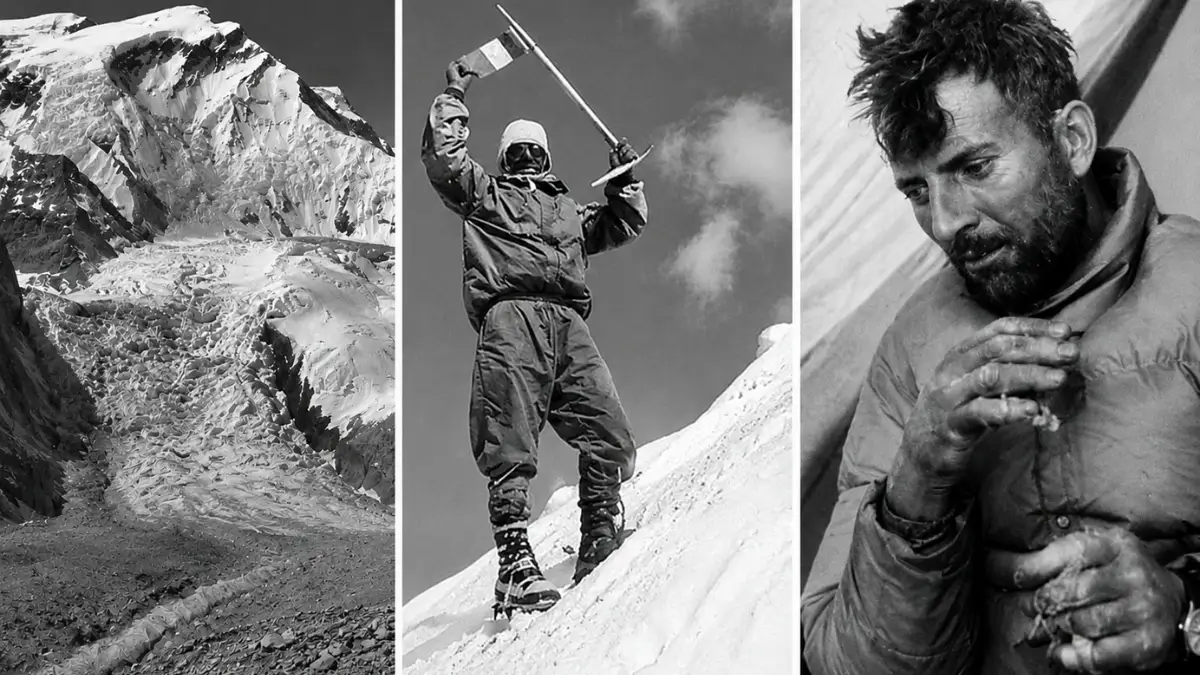
1950: Maurice Herzog and Louis Lachenal, part of a French expedition, approach Annapurna I from this northern valley and reach the summit at 8,091 meters, the first successful ascent of an 8,000-meter peak in history, predating the first Everest summit by three years. Following the expedition, very little trekking traffic used the approach trail for decades, and it largely faded from mountaineering history.
2019: Local stakeholders, including the Annapurna Rural Municipality, the Trekking Agencies Association of Nepal (TAAN), and the Annapurna Conservation Area Project, work to reopen the route for trekkers, restoring it as the North Annapurna Base Camp Trek known today. Today, the Maurice Herzog Trail remains one of the few Annapurna region routes still built around genuine mountaineering history rather than teahouse infrastructure.
Annapurna North Base Camp Trek Map
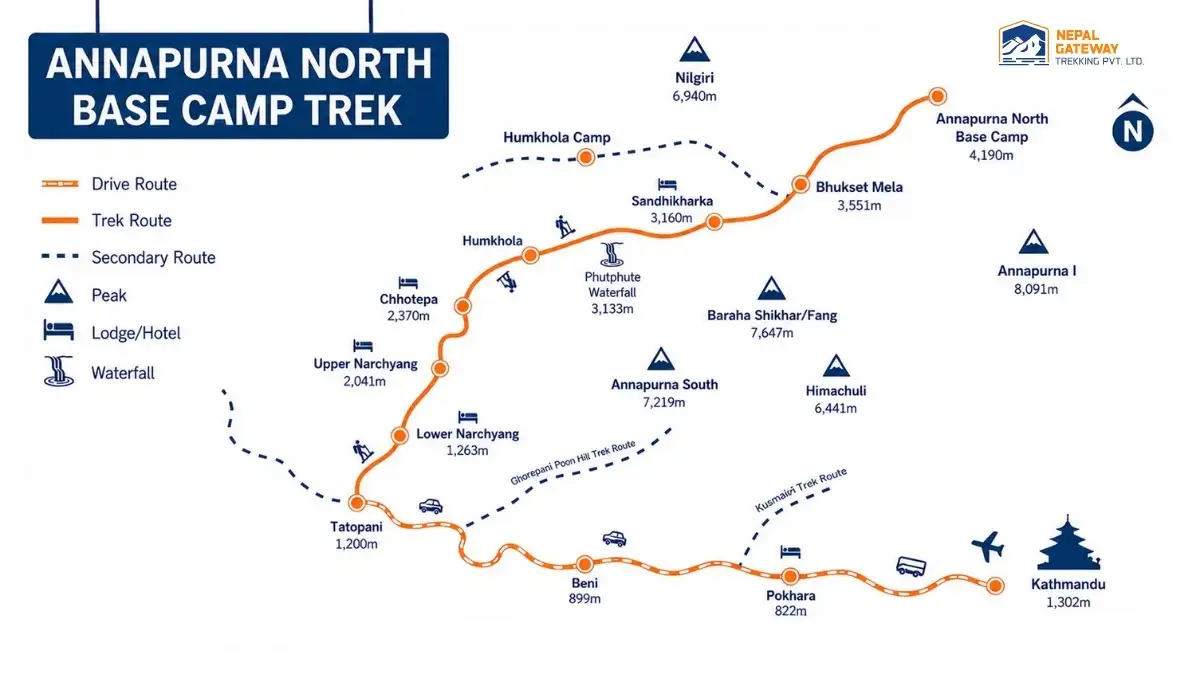
The route runs largely along the Miristi Khola and its side valleys, gradually gaining elevation through forest before opening into the high glacial terrain near the base camp. If you are downloading a digital topographic map or GPX track for your navigation devices, look for the specific entry points branching off from Narchyang rather than Ghasa.
|
Location |
Approx. Altitude |
Hiking Hours from Previous Point |
|
Hum Khola |
1,470 m |
(trailhead) |
|
Basket Mela camp |
2,300 m |
5–6 hrs |
|
Narchyang Lake area |
3,300 m |
5–6 hrs |
|
High camp |
3,800 m |
4–5 hrs |
|
North Annapurna Base Camp |
4,190 m |
3–4 hrs |
Because this is a camping trek with minimal signage, most trekkers rely on a guide familiar with the Annapurna North Base Camp trails rather than navigating independently; this isn't a route to attempt without local support.
Transportation to the North Annapurna Base Camp Trailhead
Getting to the start of the North Annapurna Base Camp trek is entirely road-based; there's no flight shortcut on this route, unlike some other Annapurna approaches.
Kathmandu to Pokhara to Beni to Tatopani to Ghasa to Narchyang to Hum Khola
Most groups drive from Kathmandu to Pokhara by tourist bus or private jeep, overnight in Pokhara, then continue by jeep through Beni, Tatopani, and Ghasa before reaching Narchyang and the roadhead at Hum Khola, where the trek on foot begins.
|
Route |
Mode |
Approx. Driving Time |
|
Kathmandu – Pokhara |
Tourist bus / private jeep |
6–7 hours |
|
Pokhara – Beni |
Private jeep |
3–4 hours |
|
Beni – Tatopani |
Private jeep |
2 hours |
|
Tatopani – Hum Khola |
Private jeep |
1.5–2 hours |
Road conditions past Beni can be rough, especially during the monsoon, so it's worth building a buffer day into your Annapurna North Base Camp Trek itinerary in case of landslides or delays.
Complete 6-Day North Annapurna Base Camp Trek Itinerary
This North Annapurna Base Camp Trek follows the historic Maurice Herzog Trail, leading to the remote North Annapurna Base Camp (4,190 m). The itinerary combines scenic drives, wilderness camping, and one of Nepal's newest trekking routes.
Day 1: Drive from Kathmandu to Pokhara
-
Distance: Approx. 200 km | Driving Time: 7–8 hours
-
Begin your journey with a scenic drive from Kathmandu to Pokhara. Along the way, enjoy views of rolling hills, rivers, terraced farmland, and distant Himalayan peaks before arriving in Nepal's beautiful lakeside city.
Day 2: Drive from Pokhara to Tatopani via Beni & Hike to Narchyang Village
-
Driving Time: 5–6 hours
-
Travel through the Kali Gandaki Valley to Tatopani. Visit the impressive Narchyang Waterfall and explore the traditional Narchyang Village before relaxing in the area's natural hot springs.
Day 3: Drive to Hum Khola & Trek to Gufaphant
-
Altitude: 3,250 m | Driving Time: 1.5 hours | Walking Time: 5 hours
-
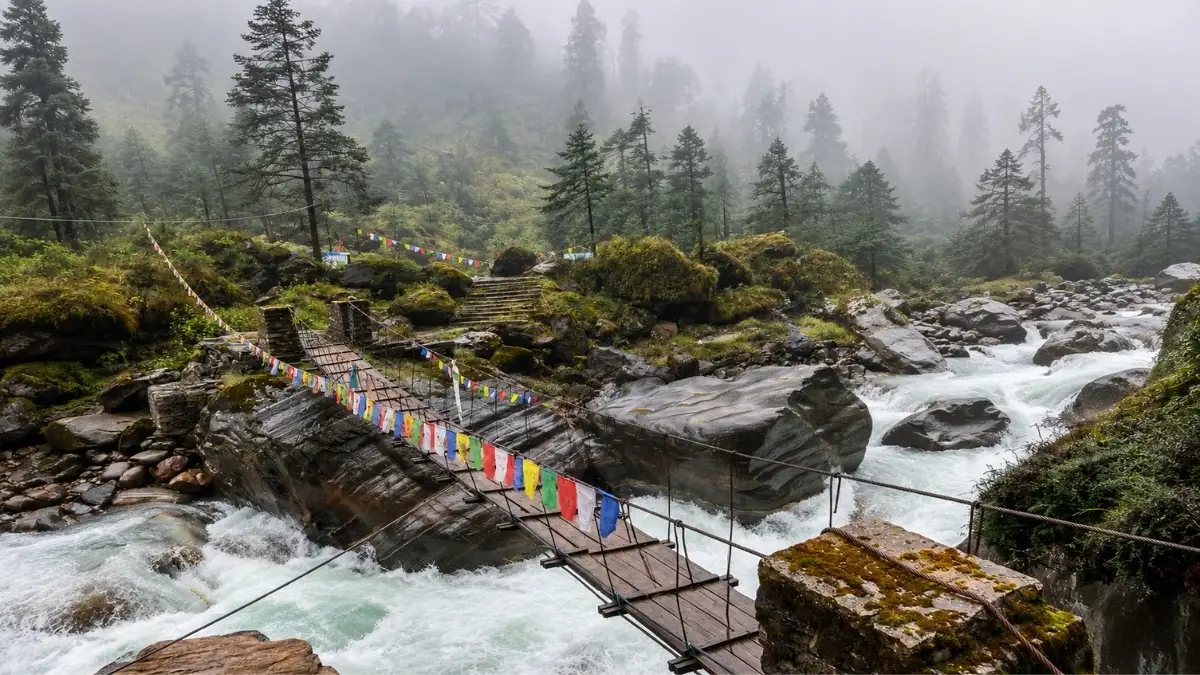
Take a jeep ride to Hum Khola before beginning your trek through dense oak and pine forests. Follow the scenic trail beside mountain rivers to reach the peaceful campsite at Gufaphant.
Day 4: Trek from Gufaphant to Bhusket Mela via Panchakunda Lake
-
Altitude: Bhusket Mela (3,551 m), Panchakunda Lake (4,050 m) | Walking Time: 6 hours
-
Climb through alpine meadows and glacial terrain toward the sacred Panchakunda Lake while enjoying dramatic mountain scenery before camping at Bhusket Mela.
Day 5: Sunrise Hike to North Annapurna Base Camp & Trek to Hum Khola
-
Highest Altitude: 4,190 m | Walking Time: 6–7 hours
-
Start early for a sunrise hike to the remote North Annapurna Base Camp beneath the towering north face of Annapurna I. After enjoying panoramic Himalayan views, descend through alpine landscapes back to Humkhola.
Day 6: Drive to Pokhara
-
Driving Time: 7–8 hours
-
Leave the mountains behind and drive back to Pokhara, marking the end of your North Annapurna Base Camp adventure.
4-Day Annapurna North Base Camp Trek: Alternative Short Itinerary
Short on time but still want to experience the Maurice Herzog Trail? This 4-day Annapurna North Base Camp Trek offers a faster adventure to the historic Annapurna North Base Camp while covering the trek's main highlights, including Panchakunda Lake, breathtaking Himalayan views, and the remote wilderness of the Annapurna region. It is ideal for trekkers with limited time who are prepared for longer trekking days.
Day 1: Drive from Kathmandu to Beni & Tatopani
- Begin your journey with a scenic drive from Kathmandu through Pokhara, Beni, and Tatopani.
Day 2: Drive to Hum Khola & Trek to Bhusket Mela (3,530 m)
-
Trail Distance: Approx. 8 km
-
Drive to Hum Khola before trekking through dense forests and deep river valleys. Around 75% of today's trail is a steady uphill climb, while the remaining section follows gentle forest paths with beautiful mountain scenery.
Day 3: Trek to Panchakunda Lake & Annapurna North Base Camp (4,190 m), Then Descend to Sadikharka (3,220 m)
-
Trail Distance: 14–16 km
-
The most rewarding day of the trek begins with a challenging ascent across rocky glacial moraines to Annapurna North Base Camp. Enjoy breathtaking views of Annapurna I and the sacred Panchakunda Lake before descending through alpine meadows to Sadikharka.
Day 4: Trek to Hum Khola, Drive to Tatopani & Return to Kathmandu
- Complete the final descent to Hum Khola before driving through Tatopani and continuing back to Kathmandu.
Like this itinerary? We can customize the trek based on your schedule, fitness level, and travel preferences. Get in touch with Nepal Gateway Trekking for a personalized Annapurna North Base Camp Trek plan.
Daily Elevation & Distance Table of Annapurna North Base Camp Trek
|
Day |
Distance |
Elevation Gain/Loss |
Duration |
|
Day 1: Kathmandu/Pokhara |
Approx. 200 km (drive) |
1,400 m/822 m |
7–8 hrs (drive) |
|
Day 2: Pokhara/Tatopani/Narchyang |
Approx. 125 km (drive) + short walk |
822 m/approx. 1,650 m |
5–6 hrs (drive) + short walk |
|
Day 3: Hum Khola/Gufaphant |
Approx. 8 km |
+367 m (2,883 m/3,250 m) |
6 hrs |
|
Day 4: Gufaphant/Panchakunda Lake/Bhusket Mela |
Approx. 10–12 km |
+801 m/-499 m (3,250 m/4,050 m/3,551 m) |
7/8 hrs |
|
Day 5: Bhusket Mela/North Annapurna Base Camp/Hum Khola |
Approx. 12–14 km |
+639 m/-1,307 m (3,551 m/4,190 m/2,883 m) |
6–7 hrs |
|
Day 6: Hum Khola/Pokhara |
Approx. 170 km (drive) |
2,883 m/822 m |
7–8 hrs (drive) |
-
Total trekking distance: Approximately 30–34 km
-
Maximum altitude: 4,190 m (North Annapurna Base Camp)
-
Starting trekking altitude: 2,883 m (Hum Khola)
-
Highest elevation gain in a day: Approx. 801 m
-
Total ascent during the trek: Approx. 1,800 m
-
Total descent during the trek: Approx. 1,300 m
Note: Distances and walking times are approximate and may vary depending on trail conditions, weather, group pace, and campsite locations.
Annapurna North Base Camp Trek Difficulty
The Annapurna North Base Camp Trek is rated moderate, but the camping element makes it feel more demanding than a similarly graded teahouse trek. There's no technical climbing and no fixed ropes, but you're managing trail conditions, river crossings, and occasional landslide-damaged sections without the safety net of lodges to retreat to.
Weather in the Miristi Khola gorge can shift fast, and because this is a remote camping route, your trek leader's judgment on when to push on or hold a camp matters more here than on the busier southern trail.
Can Beginners Do It?
Beginners with reasonable fitness and at least one prior multi-day trek can manage the Annapurna North Base Camp Trek, provided they're comfortable with camping and have realistic expectations about facilities. It's not the right first trek for someone who has never spent a night above 3,000 meters.
Recommended Training
Start training 4–6 weeks out with cardio (brisk walking, jogging, and stair climbing), building toward comfortably covering 8–10 km with a daypack.
Add hill sessions if you have access to them, since the gorge sections involve sustained climbing and descending. Checklist before you go: multi-day hiking experience, comfort with basic camping, no untreated cardiac or respiratory conditions, and travel insurance that covers high-altitude evacuation.
Who Is This Trek Best For?
The Annapurna North Base Camp Trek suits trekkers who've done at least one teahouse trek in Nepal before and want something quieter and more self-contained. It's a strong fit if you enjoy camping, don't mind a support crew handling logistics, and want mountain views without the queues that build up on South ABC in October and April. It's a weaker fit for first-time trekkers with no altitude experience or anyone who specifically wants the comfort of teahouses, wifi, and hot showers every night.
Altitude Sickness & Acclimatization Guide
Acute Mountain Sickness (AMS) is a risk on any trek above 3,000 meters, and Annapurna North Base Camp at 4,190 meters puts this route squarely in that range. Altitude sickness symptoms include headache, nausea, dizziness, and fatigue that doesn't improve with rest. The itinerary above builds in an acclimatization day at Narchyang Lake camp (3,300 m) before pushing higher, which is the single most effective prevention step. Beyond that:
-
Drink 3–4 liters of water daily
-
Ascend gradually and avoid rushing between camps
-
Consider Diamox only after discussing it with a doctor before departure
-
Watch for worsening symptoms rather than just discomfort
Warning signs that require immediate descent include confusion, loss of coordination, or breathlessness at rest. Your guide should carry a pulse oximeter and know the nearest evacuation options this is worth confirming before you book.
Best Time to Visit Annapurna North Base Camp
Spring (March–May) and autumn (September–November) are the best seasons for the Annapurna North Base Camp Trek, offering the clearest mountain views and the most stable trail conditions.
Spring brings rhododendron blooms through the lower forest sections and comfortable daytime temperatures. Autumn follows the monsoon and typically has the clearest skies of the year, making it the strongest season for photography of Annapurna's north face.
Winter is possible but colder and quieter still, with snow likely at higher camps. Monsoon season (June–August) brings the highest risk of landslides on the jeep approach and reduced visibility on the trail, so it's generally not recommended for this route.
Weather & Temperature by Month
|
Month |
Day Temp |
Night Temp |
Weather |
Visibility |
|
March |
15°C |
2°C |
Mild, occasional showers |
Good |
|
April |
18°C |
4°C |
Warm, clear |
Good |
|
May |
20°C |
6°C |
Warm, hazy pre-monsoon |
Moderate |
|
June |
20°C |
8°C |
Monsoon onset |
Poor |
|
July |
19°C |
9°C |
Heavy rain |
Poor |
|
August |
19°C |
9°C |
Heavy rain |
Poor |
|
September |
17°C |
6°C |
Clearing |
Moderate |
|
October |
15°C |
2°C |
Clear, stable |
Excellent |
|
November |
12°C |
-2°C |
Clear, cold nights |
Excellent |
|
December |
8°C |
-6°C |
Cold, possible snow |
Good |
|
January |
6°C |
-8°C |
Cold, snow likely |
Good |
|
February |
8°C |
-6°C |
Cold, clearing |
Good |
Accommodation, Camping & Food
The Annapurna North Base Camp Trek is a real wilderness camping adventure. Unlike the popular southern Annapurna Base Camp route, which has plenty of teahouses and lodges, the northern trail does not have any permanent accommodation except for the last village. The trek starts from Hum Khola, and your trekking group will set up camp each night. This is the trek for the traveler who wants to see the remote Himalayas.
Camping Facilities
Most of your accommodation on the trek will be in twin-sharing tents provided by your trekking operator. A full camping crew accompanies the expedition, carrying the equipment, setting up the tents, cooking the meals, and breaking camp each morning.
A typical campsite consists of:
-
Sleeping tents, twin sharing (comfortable)
-
A large dining tent for the group’s meals and gatherings
-
A kitchen tent where chefs cook fresh food
-
Separate toilet tent with basic facilities
-
Staff, guides, and support crew tents
Campsites are in remote alpine locations, so facilities are basic but well organized. Be sure to bring a warm four-season sleeping bag as nighttime temperatures at higher elevations often dip below freezing.
Food on the Trail
Most trekking packages include full-board meals, which means you will receive breakfast, lunch, and dinner during the expedition.
The menu for a typical day is:
Breakfast:
-
Oatmeal or porridge
-
Tibetan flat bread or chapati
-
Egg
-
Pancakes
-
Tea/Coffee
Midday Meal:
-
Dal bhat (rice, lentil soup, vegetables and curry)
-
Rice fried
-
Noodles Macaroni Soup
Dinner:
-
Dal Bhat (Rice and Lentils)
-
Dishes of potatoes
-
Noodles or pasta
-
Seasonal produce
-
Hot Soup Chai
The most common meal is the famous dal bhat, as it is nutritious, filling, and often comes with unlimited refills. We also carry ingredients for simple international dishes whenever possible on trek crews.
Water for Drinking:
Once you get past the remote section of the trail, there are no shops selling bottled water. Usually, water is taken from mountain streams and made safe by the following:
-
Boiling water purification tablets
-
Mobile Filtration Systems
-
Trekking companies generally provide treated drinking water during the expedition. We would strongly recommend that you carry a reusable water bottle or an insulated flask.
Charging and Electricity
Once out of Hum Khola, there is hardly any electricity. What you can expect is the following:
-
No reliable charging points
-
No campsite power outlets
-
No battery backup except what is carried by your trekking team
Pack the power for the whole trek:
-
Large-capacity power banks
-
Additional camera batteries
-
Optional solar chargers
-
Charge all electronic devices before you get to the trailhead.
Mobile Network & Internet
- Shortly after leaving the roadhead, mobile reception becomes unreliable.
What to expect during most of the trek:
-
No Wi-Fi
-
Little or no cell service
-
No Internet connection
-
Let family and friends know you may not be able to communicate until you get back down to lower elevations.
Toilet and Hygiene Facilities
There are no permanent toilets along the remote sections of the trail. The camping crew usually provides the following:
-
Toilet Tents
-
Basic toilet setups according to Leave No Trace principles
-
Handwashing water, if available
Note: There are no hot showers available on the camping portion of the trek. Most trekkers make use of wet wipes, biodegradable soap, and a quick personal hygiene regime until they get back to villages with basic guesthouses.
What You Can Expect
Camping on the Annapurna North Base Camp Trek is easy and comfortable, as it is designed for remote mountain travel rather than luxury. You may not have the modern luxuries of Wi-Fi, hot showers, and electricity, but you will have an authentic Himalayan wilderness experience surrounded by towering peaks, pristine glaciers, and untouched landscapes. Leave the logistics to a professional camping crew so you can focus on enjoying one of Nepal’s most remote trekking adventures.
Permits & Guide Requirements
The Annapurna North Base Camp Trek requires only the Annapurna Conservation Area Permit (ACAP); there's no Restricted Area Permit needed since the route doesn't fall inside a restricted zone.
-
ACAP permit: approximately NPR 3,000 (about USD 25) for foreign nationals
-
A licensed guide is mandatory, a requirement in place across Nepal's independent trekking routes since 2023
-
Documents needed: passport copy, passport-sized photos, and the completed permit application
Permits are processed through a licensed trekking agency, which handles the paperwork alongside route planning for your North Annapurna Base Camp Trek.
Annapurna North Base Camp Trek Cost
Because the trek is a customizable, tailor-made itinerary rather than a fixed departure, the exact North ABC Trek cost depends on group size, camping equipment quality, and the season you travel. As a general guide:
|
Group Size |
Approx. Cost per Person (USD) |
|
Solo |
USD 700–800 |
|
2–4 pax |
USD 600–550 |
|
5+ pax |
USD 500–550 |
Nepali and SAARC nationals typically pay reduced permit fees compared to other foreign trekkers, which slightly affects the overall cost of the Annapurna North Base Camp Trek.
What's Included
-
Twin-sharing hotel accommodation in Kathmandu and Pokhara
-
Full-board camping accommodation and meals on the trek
-
Licensed English-speaking trekking guide
-
Porters for luggage
-
Camping equipment (tents, kitchen crew)
-
All ground transportation as per the itinerary
-
ACAP permit
-
Staff insurance
-
First aid kit
What's Excluded
-
Nepal entry visa
-
International flights
-
Travel insurance (including high-altitude evacuation cover)
-
Personal trekking gear
-
Tips and gratuities
-
Personal expenses (drinks, souvenirs, extra snacks)
-
Extra accommodation due to early arrival, late departure, or itinerary changes
Essential Packing List
Packing the right gear is essential for the Annapurna North Base Camp Trek. Since this is a remote camping trek with changing mountain weather, you'll need clothing and equipment that will keep you warm, dry, and comfortable throughout the journey.
-
Clothing: 2–3 moisture-wicking T-shirts, 1 thermal base layer (top and bottom), 1 fleece jacket, 1 insulated down jacket, 1 waterproof jacket, 1 pair of rain pants, 2 trekking pants, a warm hat, a sun hat, gloves, and 3–4 pairs of hiking socks.
-
Footwear: Waterproof trekking boots (well broken in) and lightweight camp shoes or sandals.
-
Sleeping Gear: A 4-season sleeping bag rated to at least -10°C (14°F).
-
Electronics: Headlamp, 1–2 power banks, charging cables, and a camera (optional).
-
Documents: Passport, ACAP permit, travel insurance, passport-size photos, and cash (Nepali Rupees).
-
Toiletries & Medical Kit: Toothbrush, biodegradable soap, sunscreen, lip balm, personal medications, blister pack, basic first-aid supplies, and water purification tablets.
-
Trekking Accessories: Trekking poles, UV-protection sunglasses, a 30–40L daypack, a reusable water bottle, and a rain cover for your backpack.
Flora, Fauna & Local Culture
The lower valley sections of the Annapurna North Base Camp Trek pass through rhododendron forest and bamboo groves before giving way to alpine vegetation near the higher camps. Wildlife sightings can include blue sheep, the Himalayan monal (Nepal's national bird), and occasionally the Himalayan black bear or musk deer at higher elevations.
Culturally, the route runs through Magar and Gurung villages along the Kali Gandaki Valley, communities with a long history tied to trade routes through this part of Gandaki Province. Local cuisine centers on dal bhat, along with seasonal produce grown on the valley's terraced farms, and village festivals occasionally coincide with the trekking seasons.
Best Viewpoints on the Annapurna North Base Camp Trail
The best sunrise views come from the camp closest to Annapurna North Base Camp, where early light hits Annapurna I's north face directly. Panchakunda Lake offers strong reflection shots on calm mornings, and clear autumn nights are well suited to Milky Way photography given the total absence of artificial light.
Drone use inside the Annapurna Conservation Area requires prior permission. Check current ACAP drone regulations before you pack one. A versatile zoom lens covers most trail shots. A wider lens is better suited to the lake and glacier scenes. Autumn generally delivers the sharpest, haze-free conditions for photography on this route.
How is the Annapurna North Base Camp trek different from the Annapurna Base Camp Trek?
|
Factor |
North Annapurna Base Camp Trek |
Annapurna Base Camp Trek (South) |
|
Crowds |
Very low |
High, especially Oct–Nov |
|
Difficulty |
Moderate, camping-based |
Moderate, teahouse-based |
|
Accommodation |
Camping |
Teahouses |
|
History |
Maurice Herzog Trail (1950) |
Traditional Sanctuary route |
|
Views |
Annapurna I north face |
Full Annapurna Sanctuary panorama |
|
Cost |
Generally higher (camping logistics) |
Generally lower (teahouse infrastructure) |
|
Transportation Road only |
Road only |
Road, some fly-in options |
|
Guide |
Mandatory |
Mandatory since 2023 |
|
Best for |
Experienced trekkers seeking solitude |
First-timers and repeat trekkers alike |
Responsible Trekking Guidelines
The Annapurna North Base Camp Trek traverses fragile alpine ecosystems and remote mountain communities. By trekking responsibly, you help protect the environment and support the people who call this region home.
-
Pack up all non-biodegradable trash. Leave no trace
-
Bring a reusable water bottle to avoid single-use plastic.
-
Protect fragile alpine vegetation by camping only in established campsites.
-
Learn the local customs and traditions in Magar and Gurung villages.
-
Ask permission before photographing local people.
-
Buy from the village shops wherever possible to help local communities.
-
Stay well back from wild animals and do not disturb their natural environment.
-
Use water responsibly, as higher camps have limited water sources.
Emergency & Rescue Information
Helicopter evacuation is available from most points along the Annapurna North Base Camp Trek route in the event of a serious altitude or medical emergency, provided your travel insurance covers high-altitude helicopter rescue.
The nearest health facilities are in Beni and Pokhara. This route is both a significant distance from the upper camps and farther from town, which is why prevention and early descent are more important here than on treks that are closer to town.
Before departure, confirm your trek leader's emergency communication setup (satellite phone or equivalent) and make sure your insurance policy explicitly covers evacuation at altitudes above 4,000 meters.
Essential Travel Tips
Here are some practical tips to remember before you start the Annapurna North Base Camp Trek:
-
There are no ATMs beyond Beni, so bring enough Nepalese rupees with you.
-
Buy a Nepali SIM in Kathmandu or Pokhara, but don’t expect much, if any, mobile network near the upper camps.
-
Bring at least one power bank; there are no charging facilities once you start the camping trek.
-
Always stay hydrated on your trek and carry a reusable water bottle.
-
Buy travel insurance that covers high-altitude trekking and helicopter rescue.
-
Keep important documents such as your passport and permits in a waterproof pouch.
-
Dress in layers; mountain weather changes quickly.
-
Always respect local customs and your guide’s safety instructions.
-
At the end of the trek, it is customary and appreciated to tip the guides, porters, and support crew.
Choose Annapurna North Base Camp with Nepal Gateway Trekking
Nepal Gateway Trekking works with licensed local guides who know the Maurice Herzog Trail firsthand, backed by an experienced camping crew and rugged mountain equipment suited to the route's remote conditions. Every Annapurna North Base Camp Trek itinerary we run is flexible around your dates and group size, with transparent pricing and 24/7 emergency support throughout your trip.
Best Side Trips for the North Annapurna Base Camp Trek
If you have time, consider adding side trips to your North Annapurna Base Camp Trek for an even more rewarding experience. These are wonderful places for cultural experiences, scenic beauty, and more to explore in the Annapurna region.
-
Panchakunda Lake (13,287 ft) is one of the major highlights of the trek, a holy glacial lake located just below North Annapurna Base Camp. It is surrounded by rugged peaks and alpine landscapes, making it a stunning place for photography and a peaceful place to enjoy the mountain scenery.
-
Narchyang Waterfall: The trek starts with a visit to the spectacular Narchyang Waterfall, one of the tallest waterfalls in the Annapurna region. The powerful cascade and scenic surrounds are worth a stop.
-
Tatopani Hot Springs: Relax your muscles in the natural hot springs of Tatopani after the trek. After days of hiking, people love to recover in the warm, mineral-rich waters.
-
Pokhara: Adventure in Pokhara gets more. You can go boating on Phewa Lake, visit the World Peace Pagoda, visit Davis Falls and Gupteshwor Cave, or try adventure activities such as paragliding and zip-lining.
-
Muktinath Temple: Moving further north along the Kali Gandaki Valley, you can visit the sacred Muktinath Temple, a major pilgrimage site for both Hindus and Buddhists. Stunning mountain backdrop and 108 water fountains.
-
Khopra Ridge Trek: The Khopra Ridge trek is a good extension for trekkers with more time. Offering panoramic views of Annapurna, Dhaulagiri, Nilgiri, and Machhapuchhre, this less-crowded route features an optional hike to the sacred Khayar Lake.
-
These side trips can be combined with the North Annapurna Base Camp Trek for a longer, more varied Himalayan experience, giving you the opportunity to see even more of the Annapurna region’s natural beauty, culture, and history.
Final Thoughts
The Annapurna North Base Camp Trek is a different side of the Annapurna region defined by solitude, history, and real wilderness rather than busy teahouse trails. This expedition takes you along the historic Maurice Herzog Trail, through remote valleys, traditional villages of the Magar and Gurung, pristine forests, and high-altitude terrain before arriving at the spectacular north face of Annapurna I and sacred Panchakunda Lake.
Good preparation and a willingness to camp in remote mountain environments are required for this trek, but the reward is an authentic Himalayan experience that few trekkers ever get to enjoy. This guide has covered all that you need to confidently plan your adventure, from understanding the itinerary, permits, and costs to preparing your gear and choosing the best season.
Ready to begin your adventure? Contact Nepal Gateway Trekking today to customize your North Annapurna Base Camp Trek itinerary and book your next Himalayan expedition.
Frequently Asked Questions
How difficult is the Annapurna North Base Camp Trek?
The Annapurna North Base Camp Trek is rated as a moderate but physically demanding camping trek. While it requires no technical climbing skills, mountaineering gear, or fixed ropes, it features rugged, newly cleared trails, steep ascents through a tight gorge, and remote camping setups with zero lodge amenities. You should be in good cardiovascular shape and prepared to hike between 5 and 7 hours a day at altitudes scaling up to 4,190 meters.
How long does the Annapurna North Base Camp Trek take?
The standard Annapurna North Base Camp Trek itinerary is a 6-day itinerary that includes all travel to and from Kathmandu, travel to and from the trailhead, acclimatization, and the full trekking route. Depending on road access and your schedule, shorter, customized itineraries may be available.
What permits are required for the Annapurna North Base Camp Trek?
You will need an Annapurna Conservation Area Permit (ACAP) for the trek. This route does not require a Restricted Area Permit. Your trekking agency generally takes care of all the required permits before the trek starts.
What is the best time for trekking to Annapurna North Base Camp?
The best seasons are spring (March to May) and autumn (September to November), when the weather is stable, mountain views are clear, and trekking conditions are ideal. In winter, it snows heavily, and in the monsoon season, there is a risk of landslides and poor visibility.
What to carry for the Annapurna North Base Camp Trek?
Bring warm layers, waterproof hiking boots, a cold-weather sleeping bag, a down jacket, hiking poles, a headlamp, any personal medications you require, and a first-aid kit. A large part of the trek is camping, so it is highly recommended to have reliable cold-weather gear and travel insurance (with helicopter evacuation coverage).
What distinguishes the Annapurna North Base Camp Trek from the normal Annapurna Base Camp Trek?
The Annapurna North Base Camp Trek is an offbeat camping adventure that traces the historic Maurice Herzog Trail with fewer crowds and up-close views of Annapurna I's north face. On the other hand, the classic Annapurna Base Camp Trek is a well-established teahouse trek with easier logistics, more facilities, and a busier trail.