If you've spent any time researching the Everest Base Camp trail, you've probably seen the name Tengboche pop up again and again. It's not just another stop on the trekking map it's the place most people quietly admit changed how they felt about the whole journey.
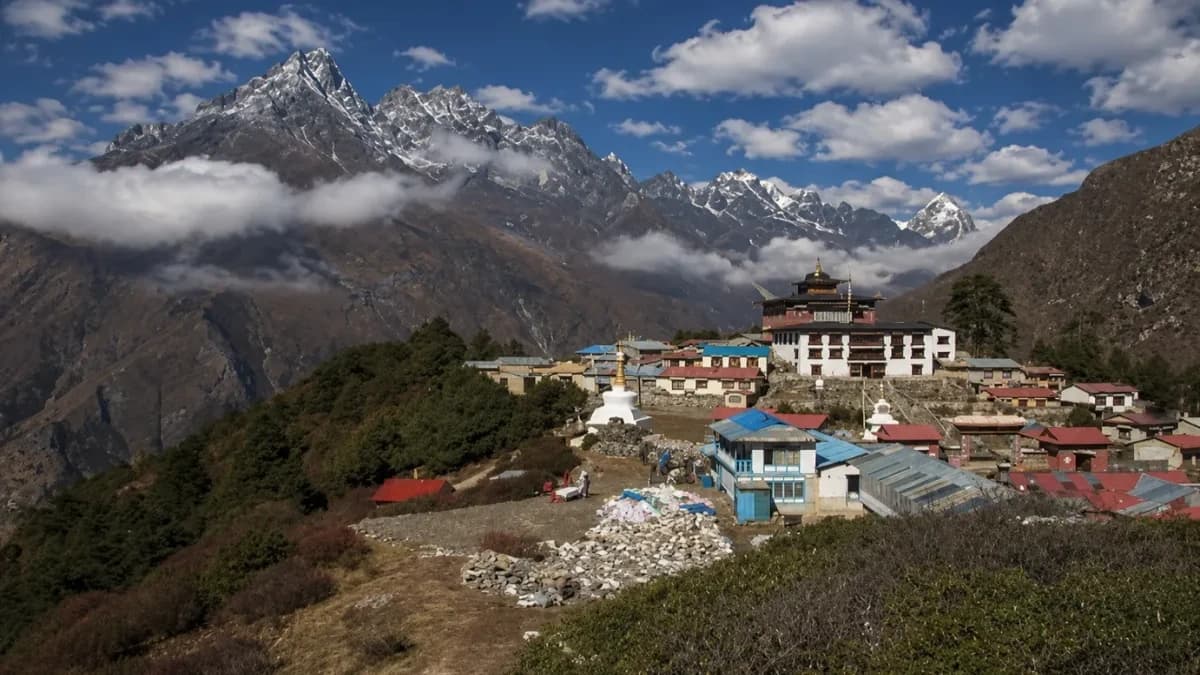
Tengboche sits on a high open ridge in the Khumbu region, and the moment you walk into that courtyard with Ama Dablam standing right in front of you, you understand why. It is a small town with handful of lodges, a bakery, and some yak pastures surround the famous Tengboche Monastery, the largest in the Khumbu region and the spiritual home of the local Sherpa people.
It is inside the Sagarmatha National Park, so the setting is about as dramatic as Himalayan scenery gets prayer flags snapping in the wind, snow peaks on every side, and monks chanting somewhere behind thick wooden doors.
This guide walks through everything worth knowing about Tengboche: the monastery's history, the culture, the weather, what there is to actually do there, and practical details for anyone planning a visit.
Tengboche at a Glance
|
Detail |
Information |
|
Location |
Khumbu region, Solukhumbu district, Koshi Province |
|
Elevation |
3,867 meters (12,687 ft) |
|
Coordinates |
Roughly 27.83°N, 86.70°E |
|
Municipality |
Khumbu Pasang Lhamu Rural Municipality |
|
Best known for |
Tengboche Monastery, Everest views, Sherpa culture |
|
Protected area |
Sagarmatha National Park (UNESCO World Heritage Site) |
|
Nearest airport |
Lukla (Tenzing-Hillary Airport) |
|
Nearest larger town |
|
|
Main religion |
Tibetan Buddhism (Nyingma tradition) |
|
Best time to visit |
March–May and late September–November |
Where Is Tengboche?
Tengboche sits inside the Khumbu Pasang Lhamu Rural Municipality, right inside the boundaries of Sagarmatha National Park. It's perched on a ridge above the Imja Khola valley, which honestly is part of why it feels so dramatic. You're not tucked into a forest, you're out in the open with mountains on basically every horizon.
In terms of getting there, Tengboche, Nepal, is roughly a five to six hour walk from Namche Bazaar and about two days on foot from Lukla, which is where most people fly in from Kathmandu. There's no road. None. Everything that reaches the village building materials, food, fuel comes up on the backs of porters or yaks or, occasionally, by helicopter.
Nearby villages include Deboche (just below Tengboche, home to a small nunnery), Pangboche, and further down, Namche Bazaar, which functions as the main trading hub for the whole region.
Discover the beauty of Tengboche Monastery, breathtaking Himalayan views, and authentic Sherpa culture with a professionally guided Everest region trek. Nepal Gateway Trekking will help you to plan a safe and unforgettable adventure.
Why Is Tengboche Famous?
A few things stack up to make Tengboche one of the most talked-about stops in the Everest region. First, there's the monastery itself. Tengboche Monastery is the largest gompa in the Khumbu, and it's basically the spiritual headquarters for Sherpa Buddhism in the area.
Second, the views from the village are genuinely some of the best on the entire trek. You get Everest, Ama Dablam, Lhotse, Nuptse, and Thamserku more or less in one sweep, no straining required.
Then there's the cultural side. Tengboche is where a lot of trekkers get their first real, unfiltered look at Sherpa life not a staged version for tourists, but actual daily rituals and actual monks going about actual routines.
Add in the wildlife of Sagarmatha National Park, the photography opportunities (sunrise over Ama Dablam from the monastery courtyard is something people talk about for years), and the sense of quiet that settles in once the trail traffic thins out, and you start to understand the reputation.
History of Tengboche
Buddhism reached the Khumbu Valley roughly 350 years ago, and the region quickly became dotted with small hermitages and meditation sites tied to early lamas. According to local tradition, the high lama Sangwa Dorje once meditated at the site where Tengboche now stands and left a footprint on a rock there, a sign, the story goes, that this ridge was meant for something bigger.
That something bigger didn't arrive until 1916, when Lama Gulu, acting on guidance from his teacher Ngawang Tenzin Norbu of Rongbuk Monastery in Tibet, founded Tengboche Monastery on that exact spot. It quickly became the first celibate monastery in the Solu-Khumbu area, which set it apart from a lot of the smaller local gompas.
Tengboche village grew up around the monastery in a fairly organic way guesthouses for pilgrims first, then, over the decades, infrastructure for the steady wave of mountaineers and trekkers heading up toward Everest.
By the time Sir Edmund Hillary and Tenzing Norgay made their historic 1953 ascent, Tengboche was already established as a place where climbers stopped to receive blessings before heading higher. That tradition hasn't really changed.
Interesting Facts About Tengboche
-
It's the largest monastery in the Khumbu region
-
Sits at 3,867 meters, well above where most trees can grow
-
Located entirely within Sagarmatha National Park
-
Home to the colorful Mani Rimdu Festival each autumn
-
Offers panoramic views of Everest and Ama Dablam from a single spot
-
Has no road access at all everything arrives on foot
-
Home to roughly 60 resident monks
-
Connected to the story of Hillary and Tenzing Norgay's 1953 Everest summit
-
Famous for its bakery, oddly enough, almost as much as its religious significance
Tengboche Monastery: The Spiritual Heart of the Khumbu
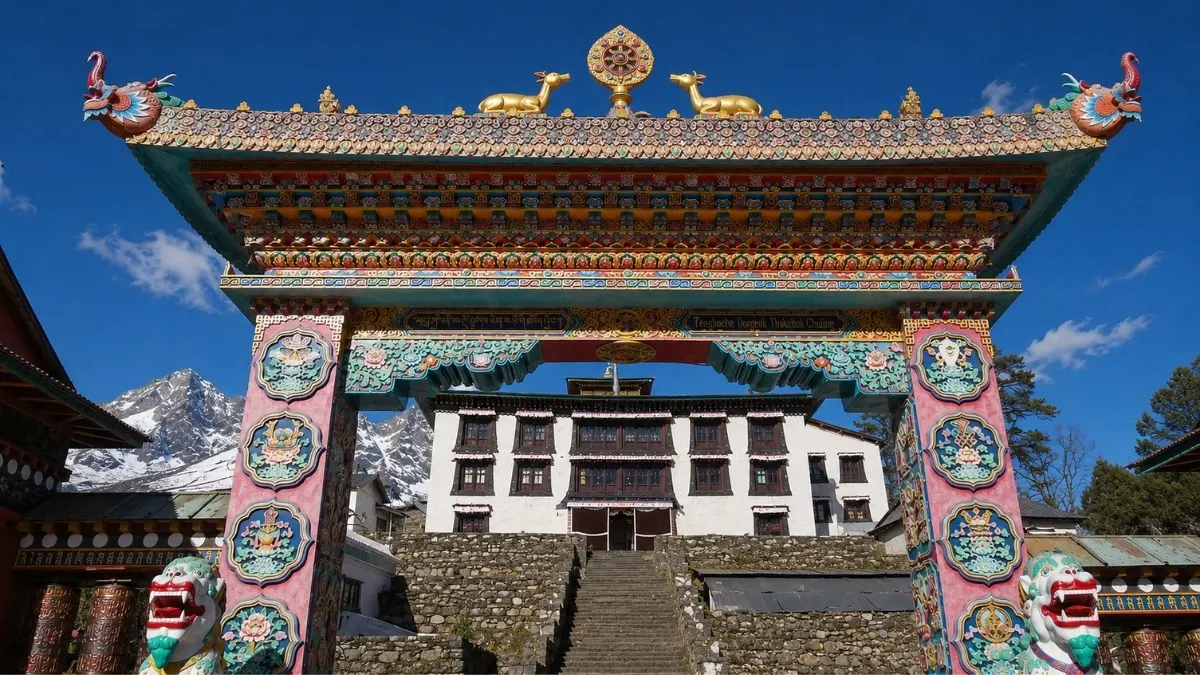
Located at an elevation of 3,867 meters (12,687 feet), Tengboche Monastery is the most important Buddhist monastery in Nepal's Khumbu region. Surrounded by breathtaking views of Mount Everest, Ama Dablam, Lhotse, Nuptse, and Thamserku, it serves as both a sacred place of worship and a cultural landmark for the Sherpa people.
For centuries, the monastery has been a place where monks, pilgrims, trekkers, and mountaineers come together to pray, reflect, and seek blessings before continuing their journeys into the high Himalayas. A visit to Tengboche Monastery offers a unique opportunity to experience the region's deep spiritual traditions alongside its spectacular mountain scenery, whether you're trekking to Everest Base Camp or simply exploring the Khumbu Valley.
History of Tengboche Monastery
The monastery was founded in 1916 by Lama Gulu, with construction funded by three wealthy local sponsors and built with help from skilled carpenters brought in from Lhasa. It follows the Nyingma tradition, which is the oldest of the four main schools of Tibetan Buddhism and maintains a direct lineage connection to Rongbuk Monastery in Tibet, considered its "mother" monastery.
Things haven't been smooth the whole way through, though. In 1934, a major earthquake leveled much of the structure, and Lama Gulu died not long after. His successor took on the rebuild with support from the wider Sherpa community.
Then in 1989, disaster struck again an electrical fault sparked a fire that destroyed the main hall, along with irreplaceable murals, scriptures, and statues. The rebuilding that followed drew support from around the world, including the Sir Edmund Hillary Trust and several international foundations, and the monastery you see today is largely a product of that 1990s reconstruction.
Religious Importance
Tengboche Monastery functions as the day-to-day religious center for the Sherpa community across the Khumbu. Monks hold prayers twice daily, early morning and late afternoon, and visitors are usually welcome to sit quietly at the back and listen.
It's also become tradition for climbers attempting Everest and nearby peaks to stop here for a blessing before heading up to higher camps. There's something fairly grounding about watching a group of mountaineers, kitted out in expedition gear, sitting cross-legged on the stone floor waiting their turn.
Architecture of the Monastery
The main prayer hall houses a large Buddha statue along with murals painted after the 1989 fire, done in the traditional Tibetan style with the kind of bold reds and golds you'd expect. Outside, you'll find prayer wheels lining the courtyard, mani walls carved with Buddhist scripture, and chortens scattered around the grounds.
The building blends Tibetan religious architecture with construction techniques adapted for the brutal Himalayan winters thick stone walls, small windows, and steep timber roofing.
Visiting the Monastery
A few etiquette basics matter here. Always walk clockwise around mani walls and chortens. Dress modestly, shoulders and knees covered. Photography is generally fine in the courtyard, but check before photographing inside the prayer hall, as the rules shift depending on whether a ceremony is in progress.
Small donations are appreciated and go toward the upkeep of the building. And honestly, just keep your voice down. It's a working monastery, not a museum.
Geography and Climate
Tengboche sits on an exposed ridge at 3,867 meters, surrounded by rhododendron and juniper forest lower down and increasingly sparse alpine terrain as you climb higher. The Imja Khola river runs through the valley below.
Because of the altitude and exposure, weather here shifts fast clear blue skies in the morning can turn to clouds and snow flurries by mid-afternoon, particularly outside the main trekking seasons.
Average daytime temperatures sit somewhere between 10 and 15°C in spring and autumn, dropping well below freezing at night even in the warmer months. Winter (December–February) brings regular snowfall and overnight temperatures that can plunge to -15°C or colder.
Mountain Views from Tengboche
This view is the part people remember most. From the monastery courtyard, the panorama takes in Mount Everest, Ama Dablam, Lhotse, Nuptse, Thamserku, Tawache, and Kangtega pretty much all in a single sweeping view without needing to move.
Ama Dablam is the standout, mainly due to its sharp, distinctive pyramid shape sitting almost directly behind the village. Sunrise is the classic time to be in the courtyard the light hits the peaks first while the village itself is still in shadow, and the colors shift fast over maybe twenty minutes.
Sunset is quieter and arguably just as good, with fewer people around and a softer, slower light.
Sherpa Culture and Lifestyle in Tengboche
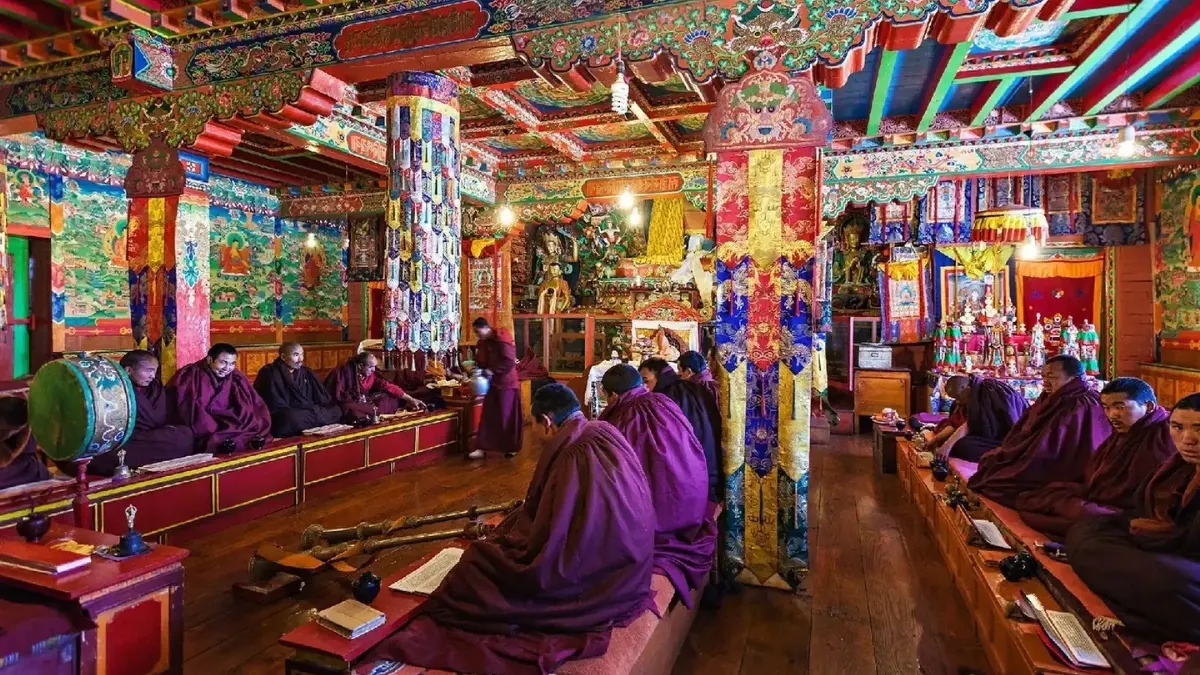
Here, Sherpa identity is deeply tied to Tibetan Buddhism, with the monastery at its center. Family life tends to be close-knit, with multiple generations often sharing a household, and hospitality is something of a point of pride guests are fed and looked after almost reflexively.
Traditional houses are built from stone with timber framing, designed to hold up against heavy snow loads. Clothing in the village mixes traditional woven garments with modern trekking gear, especially among younger Sherpas who work in tourism.
The local language is Sherpa, a Tibetic language, though Nepali and basic English are widely spoken in the tourism trade.
Local food leans heavily on what can survive the altitude and short growing season potatoes, barley, dairy from yaks, and simple, warming dishes like thukpa and dal bhat. Community decisions and major events still often run through the monastery, which shows how central it remains to daily life here.
Economy and Livelihood of Tengboche Village
Although Tengboche is a small Himalayan village, its economy plays an important role in supporting both the local Sherpa community and the thousands of trekkers who pass through each year.
Tourism is the primary source of income, but many families continue to rely on traditional occupations such as yak herding and farming to supplement their livelihoods.
Living in a remote mountain environment presents unique challenges, including limited infrastructure and seasonal employment, yet the community has adapted by combining sustainable tourism with long-standing cultural traditions.
Tourism as the Main Source of Income
Tourism is, without much competition, the backbone of Tengboche's economy now. Guesthouses, tea houses, the famous Tengboche Bakery, and a handful of small souvenir shops cater to the steady flow of trekkers passing through during peak seasons.
Employment Opportunities
Most working-age locals are connected to tourism in some way as guides, porters, lodge owners, kitchen staff, or running small transport and logistics support for trekking groups. Employment is heavily seasonal, picking up sharply in spring and autumn and going quiet over winter and monsoon.
Traditional Livelihoods
Before tourism took over, and still alongside it today, families relied on yak herding, potato and barley farming, and small-scale handicrafts and weaving. Many households still keep a few yaks or do some farming even while running a guesthouse, partly as a backup and partly because it's just part of life here.
Challenges Faced by the Community
There's no road into Tengboche, which means every supply has to be carried in, making basic goods expensive. Electricity is limited and often solar- or micro-hydro-based; healthcare access is minimal (the nearest proper clinic is down in Khunde or Namche), and winters can be brutally isolating once the trekking crowds disappear.
Sustainable Development
Local and international groups have worked on water and sanitation projects, eco-tourism initiatives, and broader conservation efforts tied to Sagarmatha National Park.
The monastery itself has leaned into this too, installing solar power to supplement its hydro supply and working with conservation groups on managing environmental risks tied to glacial melt in the surrounding valleys.
Wildlife and Nature Around Tengboche
Sagarmatha National Park is genuinely rich in biodiversity for somewhere this high and harsh. Look for the Himalayan tahr grazing on steep slopes, musk deer in the forested sections lower down, and, if you're very lucky, a snow leopard, though sightings are rare enough to be almost mythical among trekkers.
Birdlife is easier to spot. The Himalayan monal (Nepal's national bird, locally called "danphe") shows up with its almost absurdly bright plumage, and lammergeiers, massive bearded vultures, are a common sight wheeling over the ridgelines.
Lower down near the village, rhododendron forests put on a serious show in spring, mixed in with pine and juniper. Higher up, vegetation thins fast into alpine scrub and bare rock.
Mani Rimdu Festival
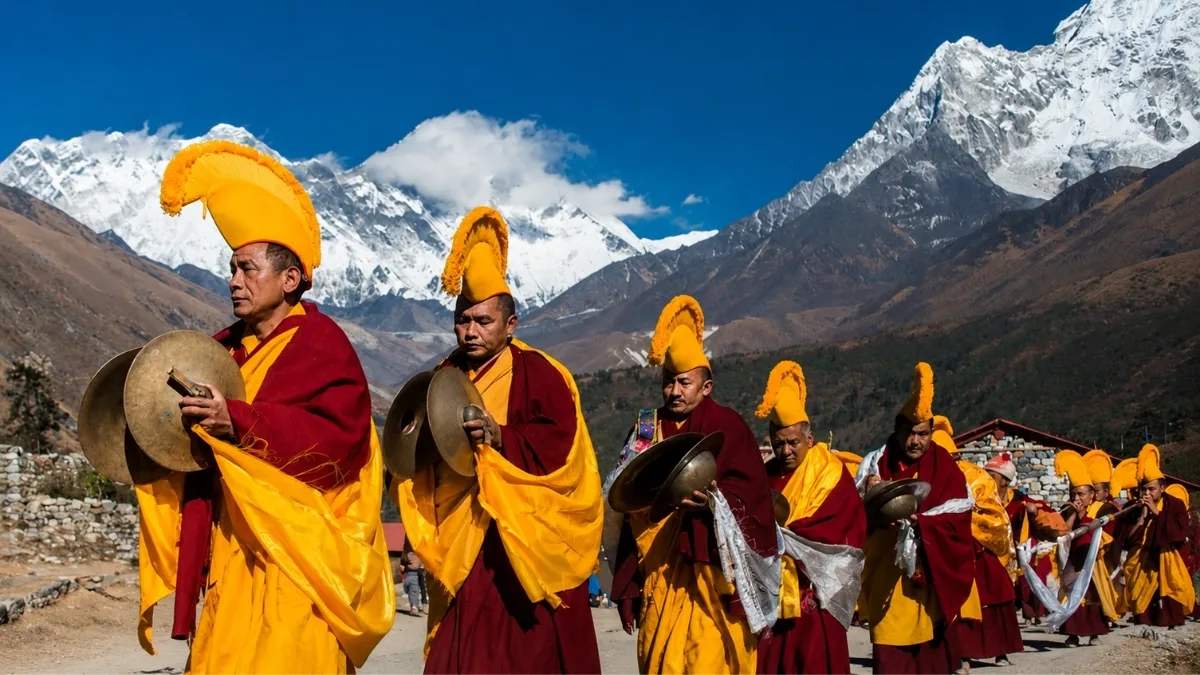
The Mani Rimdu Festival is Tengboche's biggest cultural event, held each autumn usually October or November, timed to the Tibetan lunar calendar. It runs over several days and centers on masked dances performed by monks, reenacting the triumph of Buddhism over older demonic forces, alongside chanting, ritual, and community feasting.
It's genuinely one of the best cultural experiences anywhere in the Himalayas, and it happens to fall right in peak trekking season, which is either a happy coincidence or great planning, depending who you ask.
If your trip dates are at all flexible, building your trek around the festival is worth the effort and worth bringing a proper camera, since the costumes and masks are spectacular.
Things to Do in Tengboche
-
Visit the monastery and sit in on morning or evening prayers
-
Watch sunrise or sunset over Ama Dablam from the courtyard
-
Wander the village and chat with locals running the lodges
-
Spend an hour at Tengboche Bakery (yes, it's as good as people say)
-
Keep an eye out for wildlife on the forested trails just below the village
-
Photograph the mountain panorama Everest, Lhotse, Nuptse, all in one frame
-
If your timing lines up, catch part of the Mani Rimdu Festival
When is the Best Time to Visit Tengboche?
|
Season |
Weather |
Visibility |
Activities |
Crowd Level |
|
Spring (Mar–May) |
Mild, occasional snow at altitude |
Generally good, rhododendrons blooming |
Trekking, photography |
High |
|
Summer/Monsoon (Jun–Aug) |
Wet, cloudy, leech-prone trails lower down |
Poor, frequent cloud cover |
Limited trekking |
Low |
|
Autumn (Sep–Nov) |
Cool, dry, stable |
Excellent |
Trekking, Mani Rimdu Festival, |
Very high |
|
Winter (Dec–Feb) |
Cold, snow likely |
Often clear but freezing |
Quiet trekking, harder conditions |
Low |
For most people, the best time to visit Tengboche is either spring, when the rhododendrons bloom and the weather is reasonably stable, or autumn, when the mountain views are clearest and you can catch the Mani Rimdu Festival. Autumn is generally better for photography, but it is also the busiest time on the trail.
Weather in Tengboche Throughout the Year
Daytime temperatures in spring and autumn generally sit in the 10–15°C range, dropping sharply after sunset. Monsoon months bring heavy rain lower down the valley and persistent cloud cover that can blot out mountain views for days at a stretch.
Winter is cold and dry overall, with periodic snowfall, and night temperatures regularly drop well below freezing. If you're planning around views specifically, late October through November tends to deliver the most consistently clear skies.
Accommodation and Visitor Facilities
Tengboche has a handful of tea houses and guesthouses, simple by city standards but generally clean and warm enough once the wood stove gets going in the dining room. The Tengboche Bakery is something of a local institution fresh bread and pastries at 3,867 meters is a strange and welcome surprise for most trekkers.
Wi-Fi is available in most lodges, usually for a small fee, though speeds are inconsistent. Mobile coverage works reasonably well through Nepal's main networks. Charging costs extra in most places since power runs on solar or micro-hydro.
Drinking water is available but should be treated or purchased, and basic first aid is on hand at most lodges, though anything serious means heading down to Namche or further.
How to Reach Tengboche?
Most visitors fly into Lukla from Kathmandu, then trek roughly two days to reach Tengboche, usually with an overnight stop in Namche Bazaar along the way. There's no road access, so walking or occasionally a helicopter for those short on time is the only option. From Namche, it's about five to six hours on foot to reach the village, with a fairly steep climb in the final stretch up to the ridge.
Whether you're visiting Tengboche as part of the Everest Base Camp Trek or exploring the Khumbu region, our experienced local guides can create the perfect itinerary for your adventure. Get Your Free Trek Consultation
Responsible Tourism in Tengboche
Respecting monastery rules matters more here than almost anywhere else on the trail this is a living religious site, not a tourist attraction built for visitors. Supporting local guesthouses and businesses directly helps the community far more than larger outside operators.
Stick to Leave No Trace principles, especially around waste, since everything that comes up the trail has to go back down somehow. Keep a respectful distance from wildlife, and where possible, choose tour operators with a genuine track record of supporting conservation and local employment in the region.
Why Visit Tengboche?
Strip it back, and Tengboche offers a combination that's genuinely hard to find anywhere else serious Buddhist heritage, some of the best mountain views in the entire Everest region, real Sherpa culture rather than a tourist version of it, decent wildlife spotting, and a level of quiet that's surprisingly rare on a trail this popular.
Whether you're there for the spirituality, the photography, or just the walk itself, it tends to leave an impression that outlasts the trek.
Final Thoughts
Tengboche isn't the highest point on the Everest Base Camp trek, and it's definitely not the hardest day of walking. But if you ask people who've done the trek what stuck with them most, you'll find that Tengboche comes up a lot more often than you'd expect.
It's the monastery, that first clear view of Ama Dablam, or just the quiet after a long day of walking.
Either way, it's one of those places that's genuinely worth slowing down for, not just passing through on the way to somewhere higher. If you're putting together an Everest region itinerary, it's worth building in proper time here rather than treating it as a quick stop even an extra hour in that courtyard makes a difference.
Planning to explore the Everest region? Nepal Gateway Trekking can help you discover Tengboche and nearby Himalayan destinations through well-planned itineraries, experienced local guides, and authentic cultural experiences. Contact us to start planning your journey.
Frequently Asked Questions
Where is Tengboche located?
Tengboche is a mountain village in the Khumbu region of Nepal’s Solukhumbu District in the Sagarmatha National Park. It is located on the popular Everest Base Camp trekking route between Namche Bazaar and Dingboche and is one of the most visited stops in the Everest region.
Why is Tengboche special?
Tengboche is renowned for the historic Tengboche Monastery, the biggest and most important Buddhist monastery in the Khumbu region. It is also famous for panoramic views of Mount Everest, Ama Dablam, Lhotse, and Nuptse and for its intimate association with Sherpa culture and Himalayan Buddhism.
Tengboche height
Tengboche is located at an altitude of 3,867 m (12,687 ft) above sea level. This is an important acclimatization stop for trekkers heading to Everest Base Camp.
Who constructed the Tengboche Monastery?
Tengboche Monastery was established in 1916 by Lama Gulu, following the instructions of his teacher, Ngawang Tenzin Norbu from the Rongbuk Monastery in Tibet. It is still one of the most important Buddhist monasteries of Nepal, rebuilt after earthquakes and fires.
Animals near Tengboche
In the forests and alpine terrain around Tengboche you might see Himalayan tahr, musk deer, Himalayan monal, lammergeier, and occasionally the elusive snow leopard. These species are protected in the Sagarmatha National Park.
When is the best time to visit Tengboche?
Spring (March to May) and autumn (late September to November) are the best times to visit Tengboche. During these periods, the weather is generally stable, the mountain views are clearest, and trekking conditions are perfect. Another attraction for visitors in autumn is the colorful Mani Rimdu Festival.
How do people in Tengboche make a living?
Tourism is the main source of income for the local community, with many people involved in running tea houses, lodges, and guiding and portering services. Traditional activities such as herding yaks, cultivating potatoes and barley, and handicrafts support the local economy.
Is Tengboche located in Sagarmatha National Park?
Tengboche is in the Sagarmatha National Park, Nepal’s first national park and a UNESCO World Heritage Site. The park contains unique Himalayan ecosystems, wildlife, glaciers, and the rich Sherpa cultural heritage of the region.