If you're planning the Everest Panorama View Trek, the single biggest factor that shapes your experience isn't your fitness or your gear it's timing. Get the season right, and you'll have Everest, Ama Dablam, and Lhotse laid out in front of you like a postcard. Get it wrong, and clouds do the talking.
Autumn (September to November) and Spring (March to May) are the best seasons for the Everest Panorama View Trek. Both offer stable weather, clear skies, and strong mountain visibility. But each season has a different character, and the right one depends on what you're actually after.
This guide covers the best month for the Everest View Trek and breaks it all down season by season, month by month, so you can plan with confidence.
Understanding the Everest Panorama View Trek Climate
The Everest region sits at high altitude, and the weather there is very different from Kathmandu. At lower trail sections around Lukla and Phakding, temperatures are fairly manageable. But by the time you're near Tengboche (3,860m), the air gets noticeably thinner and colder.
Everest Panorama Trek Weather shifts dramatically across the four seasons, not just in temperature but in visibility, precipitation, and overall trekking experience. Understanding those patterns is what allows you to choose the right window.
Elevation and Weather Conditions Along the Trek
The trek moves through elevations ranging from roughly 2,860m at Namche Bazaar up to 3,860m at Tengboche. Although this altitude is not considered extreme, it is sufficient for a clear morning to quickly become cold and windy. Weather windows also tend to be shorter what looks like a blue-sky day can shift by early afternoon, especially in spring.
How Himalayan Weather Affects Mountain Views
Mountain views on this trek are almost entirely weather-dependent. Even on a "clear" day, Mount Everest can disappear behind cloud build-up by noon. The best viewing is almost always in the early morning sunrise light, calm air, and no haze. Seasons that offer more stable, drier conditions naturally produce more of those mornings.
Everest Panorama View Trek Weather and Visibility by Season
Here's a quick overview before we go deeper into each season.
|
Season |
Months |
Temp Range (Daytime) |
Visibility |
Crowds |
|
Autumn |
Sep–Nov |
10°C–20°C |
Excellent |
High |
|
Spring |
Mar–May |
12°C–25°C |
Very Good |
Moderate–High |
|
Winter |
Dec–Feb |
-5°C–10°C |
Good |
Low |
|
Monsoon |
Jun–Aug |
10°C–18°C |
Poor |
Very Low |
Autumn (September to November) - Best Month for Everest View Trek
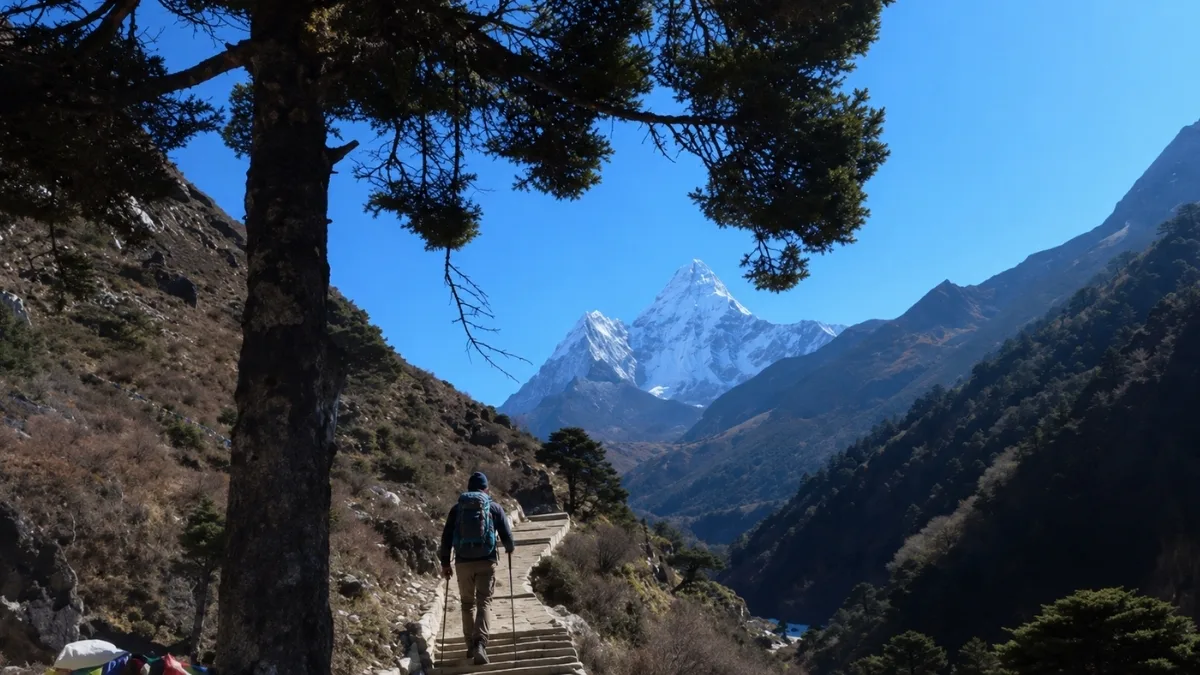
This period is the sweet spot. After the monsoon clears out, the air in the Everest region becomes remarkably dry and clean. The Everest View Trek in autumn is popular for good reason the visibility is unmatched, the temperatures are comfortable, and the trail conditions are solid. Daytime temperatures hover around 12°C–20°C at lower elevations.
The skies go a deep blue, and on a clear morning, Everest, Ama Dablam, and Lhotse come into view with almost startling sharpness. Photographers love this season. First-time trekkers love this season. Basically everyone loves this season, which is also why the trails get busy.
October is the peak of the peak. Teahouses fill up, Lukla flights book out early, and you'll share the trail with many people. Worth planning ahead.
Spring (March to May) - Best for Scenery
The Everest View Trek in Spring offers a complete and entirely new mood. The trail comes alive rhododendron forests along the lower sections burst into red, pink, and white blooms, and the whole landscape feels more vibrant and green.
Daytime temperatures are warmer, sometimes reaching 20°C–25°C at lower elevations. Mornings are still cold, especially near Tengboche, but the days are longer and more pleasant.
Visibility is excellent, though spring can bring the occasional afternoon cloud or light shower as the season progresses toward May. April tends to be the most balanced spring month, warm enough to be comfortable, clear enough for stunning Everest views, and busy enough to feel lively without being overwhelming.
Winter (December to February) - Quiet but Cold
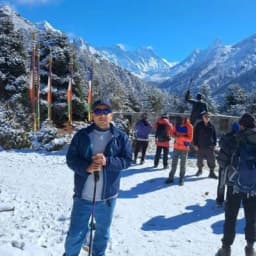
Winter on the trek is cold. Nights can drop well below freezing, and the higher you go, the more you'll feel it. Snow on the trails isn't unusual from January onward. That said, winter has its appeal. The trails are genuinely quiet, and the mountain views on clear days are sharp and dramatic.
Snow-covered landscapes around Tengboche look stunning. If you're someone who hates crowds and doesn't mind packing extra layers, this season can be surprisingly rewarding. Just know that teahouse options may be limited, and winter more frequently disrupts Lukla flights.
Monsoon (June to August) - Least Recommended
Honestly, this is the one season to avoid if you can. Heavy rainfall, persistent cloud cover, leeches on the trail, and frequent flight delays make monsoon trekking frustrating rather than enjoyable.
Mountain views are blocked for most of the day, and the whole point of this trek, those Himalayan panoramas, is largely inaccessible. If monsoon is your only option, it's not impossible, but go in knowing the limitations.
Your journey to the roof of the world starts here. Explore our top-rated Sagarmatha Packages on Nepal Gateway Trekking and customize your private tour.
Month-by-Month Guide to Everest Panorama View Trek
This breakdown gives you a practical look at the weather for the Everest View Trek by month. Use it to narrow down your ideal travel window.
|
Month |
Weather |
Visibility |
Crowds |
|
January |
Very cold, snow possible |
Good on clear days |
Very low |
|
February |
Cold but improving |
Good |
Low |
|
March |
Mild, occasional showers |
Good–Very Good |
Moderate |
|
April |
Warm, mostly clear |
Very Good |
Moderate–High |
|
May |
Warm, pre-monsoon clouds building |
Good |
Moderate |
|
June |
Monsoon begins with heavy rain |
Poor |
Very low |
|
July |
Peak monsoon |
Very Poor |
Very low |
|
August |
Monsoon tapering |
Poor |
Very low |
|
September |
Post-monsoon clearing |
Very Good |
Moderate |
|
October |
Crystal clear, ideal |
Excellent |
Very High |
|
November |
Clear, getting colder |
Excellent |
High |
|
December |
Cold, early winter |
Good |
Low |
Why Autumn Offers the Best Everest Panorama Views?
Post-monsoon air is simply cleaner in Autumn. The rain washes dust and haze out of the atmosphere, and what's left is that sharp, crystalline quality you see in all the stunning Everest photos. The Everest View Trek in Autumn consistently delivers the most reliable panoramic visibility of any season.
Here's what makes it unique:
- Post-monsoon clarity skies are at their most transparent
- Stable weather, fewer abrupt changes compared to spring
- Dry trails comfortable underfoot and safe on descents
- Strong morning light ideal for photography from sunrise viewpoints
- Comfortable trekking temperatures not too hot, not too cold
Crystal-Clear Views of Everest, Ama Dablam, and Lhotse
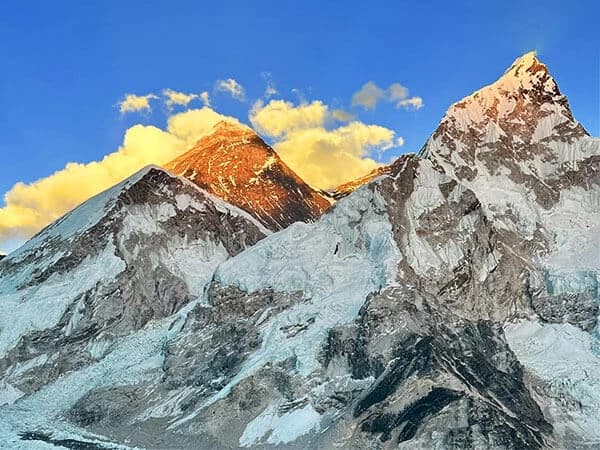
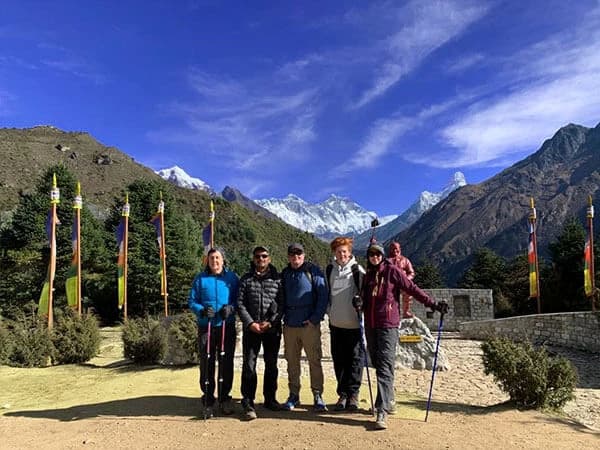
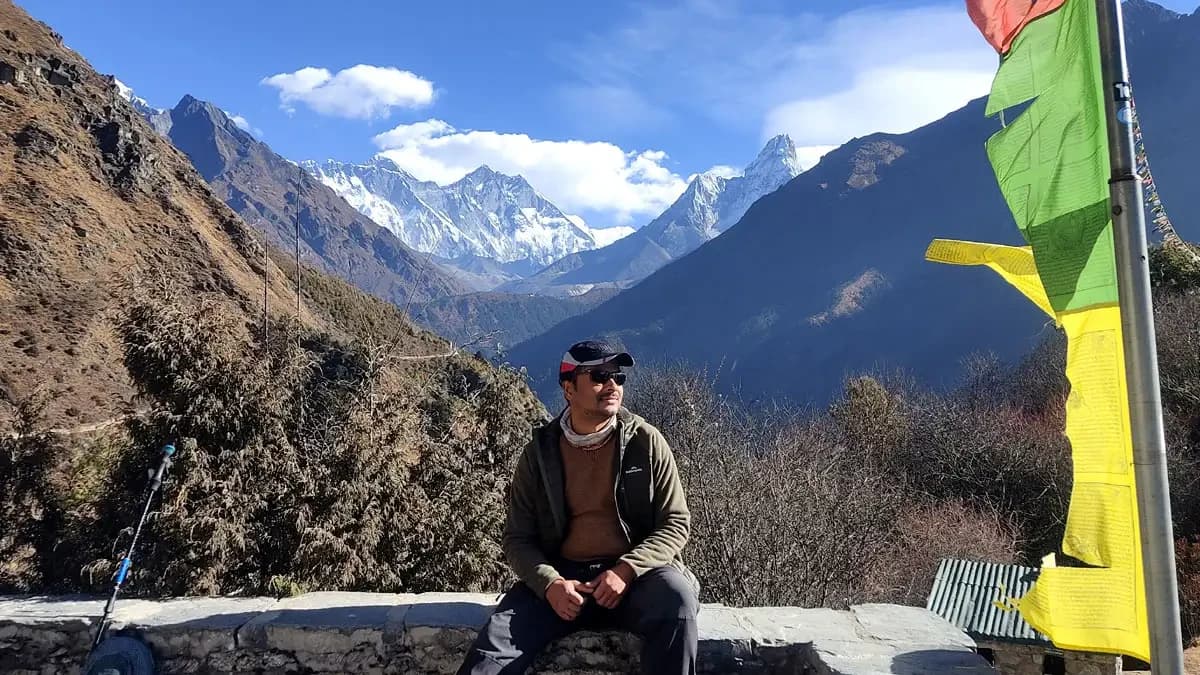
On a clear October morning near Tengboche or the Everest View Hotel above Namche, you can see Everest, Ama Dablam, and Lhotse simultaneously. The depth and scale of those peaks on a blue-sky autumn day are genuinely difficult to put into words. It's one of those moments that sticks.
Stable Weather and Comfortable Temperatures
Daytime temperatures in the 12°C–20°C range mean you're comfortable trekking in layers without sweating through them. Nights are cool but manageable with a decent sleeping bag. The rhythm of the day clear mornings, maybe light clouds by afternoon, and clear again by evening is consistent enough to plan around.
Mani Rimdu Festival at Tengboche Monastery
October and November bring the Mani Rimdu festival to Tengboche Monastery. This Sherpa Buddhist celebration with masked dances, prayer ceremonies, and community gatherings adds a cultural dimension to the trek that most trekkers find genuinely memorable. If your schedule overlaps, it's worth the timing.
Why October Is the Most Popular Month?
Put it all together best visibility, ideal temperatures, cultural festivals, peak trail conditions, and October become obvious. It's the most requested month for a reason. Just book flights and teahouses early availability goes fast.

Why Spring Is the Most Scenic Time for the Everest Panorama Trek?
If autumn is the clearest season, but spring is the most visually dramatic season for the Everest Panorama Trek. The landscape transforms in spring in a way that no other season matches. The forests along the lower trail sections come alive with color, looking bare and muted in winter.
Rhododendron Forests in Full Bloom
The rhododendron forests below Namche Bazaar and along the approach trail are a genuine highlight in spring. Shades of red, pink, and white burst through the green. It looks almost unreal against the backdrop of snow-capped peaks. Photographers who visit in April often say it's their favorite trekking scenery in Nepal.
Longer Days and Better Trekking Conditions
Spring days are longer than autumn, which means more daylight for trekking, more flexible schedules, and more time to soak in views. The extra warmth makes early mornings less brutal than in late autumn, and the overall comfort level is high.
Everest Region During Climbing Season
Spring is Everest expedition season. If you're trekking in April or May, you may well cross paths with expedition teams heading toward Everest Base Camp. There's an energy in the Khumbu during climbing season, a quiet intensity that adds something to the experience, especially if you're into mountaineering culture.
Why April Is a Favorite Among Trekkers?
April hits the sweet spot in spring warm enough for comfortable trekking, clear enough for great views, vibrant with rhododendrons, and active with expedition teams passing through. It tends to be slightly less packed than October, making it a strong choice if you want great conditions without maximum crowds.
Explore our detailed spring trekking guide and start planning your journey today with Nepal Gateway Trekking's Everest Base Camp Trek in Spring Guide.
Which Season Has the Clearest Views of Mount Everest?
If pure visibility is your priority, autumn wins. The atmosphere after a monsoon is drier and more transparent. Here's the ranking:
- October–November: Best overall visibility, sharpest mountain definition
- September: Strong clarity, especially from mid-month onward
- March–April: Very good, occasional pre-monsoon haze in late April
- December–February: Good on clear days, but cloud and snow possible
- May: Decent early in the month, worsening as monsoon approaches
- June–August: Poor; mountains frequently obscured
Best Months for Photography
October and November are the top months for mountain photography. The light quality in the autumn golden hour glow on Ama Dablam and the sharp shadows on Everest's ridgeline are exceptional. April is a close runner-up, with the added bonus of rhododendrons in the foreground.
Best Months for Sunrise Views
October gives you the most consistently clear sunrise windows. The Hotel Everest View above Namche offers one of the most celebrated sunrise panoramas on this route, and it delivers most reliably in autumn.
Best Months for Unobstructed Himalayan Panoramas
October, November, and September in that order. After September, you get increasingly cold mornings but still excellent clarity through November.
Best Time for Everest Panorama View Trek Based on Your Travel Style
Not everyone has the same goal when they trek. Here's a quick guide to match the best season for the Everest View Trek to your specific priorities.
Best Time for First-Time Trekkers
October or April is best for first-time trekkers. Months offer the most balanced combination of excellent weather, reliable views, and active teahouses. First-timers benefit from being on the trail during a busy season more trekkers around mean more support infrastructure and a livelier atmosphere.
Best Time for Nature Lovers
April. With the rhododendron forests in full bloom, the greening of the lower valleys, the warmth, and the birdsong, spring is the most sensory-rich time to be on the trail.
Best Time for Peaceful Trails and Fewer Crowds
November (late) or January–February. You trade some warmth and trail activity for genuine solitude. Late November still has decent views before winter sets in.
Best Time for Comfortable Weather
April and October tie for the most comfortable trekking temperatures, neither too hot nor bitterly cold, with manageable conditions at both lower and higher elevations.
What Can You See During the Everest Panorama View Trek in Each Season?
The Everest Panorama View Trek passes through some of the most spectacular scenery in the Himalaya, but what you actually see depends heavily on when you go.
Everest, Ama Dablam, and Lhotse Views
These three peaks are the main attraction. Ama Dablam in particular is one of the most photogenic mountains on Earth, and it's visible for much of the trek. Clearest in autumn, still excellent in spring.
Rhododendron Forests During Spring
Below Namche and along lower trail sections, the forests are striking in March and April. The color contrast of red and pink blooms against grey rock and snow peaks is one of Nepal trekking's signature images.
Autumn Himalayan Landscapes
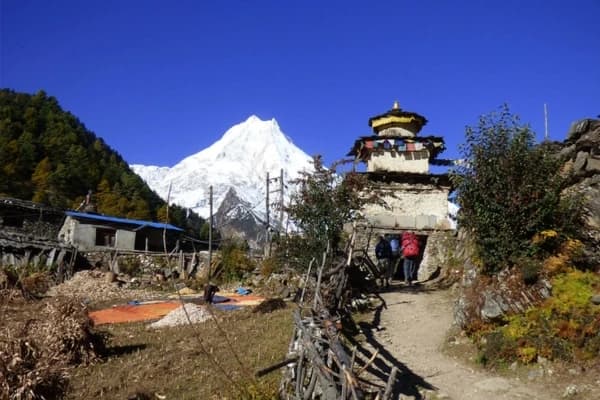
Post-monsoon, the valley floors are still green from the rains, but the air is crisp and the skies are electric blue. The combination of green meadows, golden light, and white peaks looks almost too perfect.
Winter Snow-Covered Scenery
January and February bring a stillness to the Khumbu that's hard to find in busier seasons. Snow-dusted ridgelines, empty trails, frost on the rhododendron branches winter has its own quiet beauty.
Tengboche Monastery and Sherpa Culture
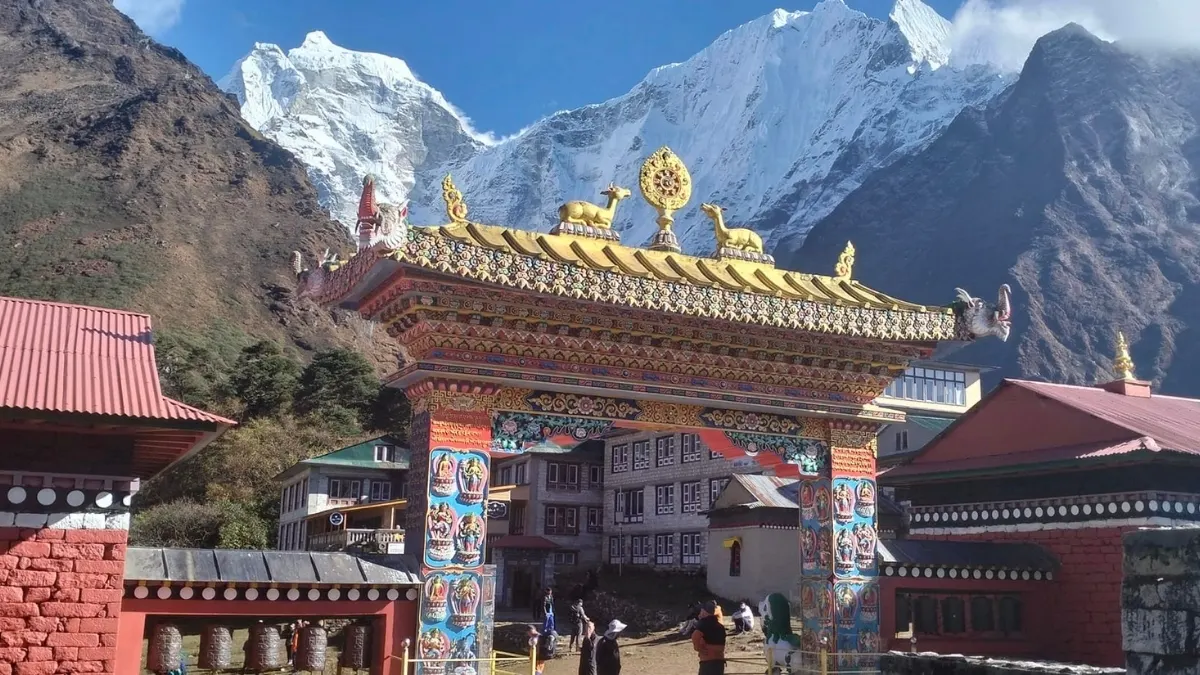
Tengboche Monastery sits at the heart of the trek and is worth visiting in any season. In October, the Mani Rimdu festival brings color and ceremony. Year-round, the monastery and surrounding villages offer a window into Sherpa Buddhist culture that feels genuine rather than touristy.
Don't worry about the logistics. Our local trekking team will ensure Ultimate Everest Trekking Checklist & Permit Guide to make your trip stress-free
When Should You Avoid the Everest Panorama View Trek?
June through August brings heavy, persistent rainfall. Trails become slippery and muddy, stream crossings can be dangerous after heavy rain, and leeches appear on lower sections.
Most importantly, the cloud cover blocks mountain views for most of the day, which defeats the main purpose of this trek. Therefore, you should avoid the Everest Panorama View Trek in June. Other times and factors are
Winter Weather Considerations
December through February is manageable but demanding. Night temperatures at Tengboche can fall to -15°C or lower. Teahouses may have limited heating, and some close entirely. Lukla flights become less reliable. Be prepared, or consider visiting in a different season.
Lukla Flight Delays and Weather Disruptions
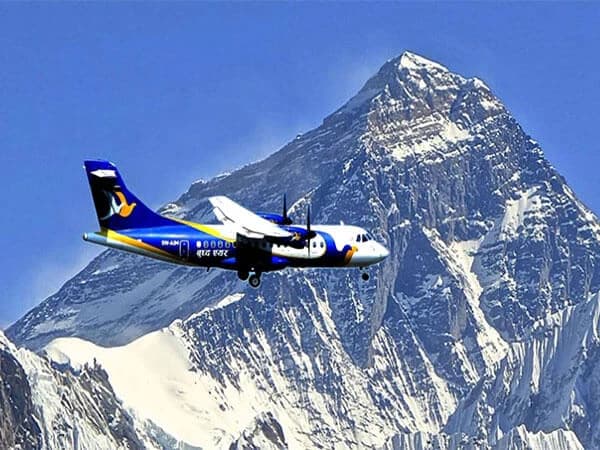
This rule applies year-round but is worst in monsoon and winter. Lukla is renowned for its short runway and weather-dependent operations. Please build buffer days into your itinerary, with at least one extra day on either end. Most experienced trekkers add two. Missing your flight out of Lukla because of fog or wind is more common than people expect.
Concerned about the Everest Panorama View Trek difficulty? Let our local experts help you prepare for a safe and enjoyable adventure.
Final Thought
The best time for the Everest Panorama View Trek is during autumn (September to November) and spring (March to May). These seasons offer the clearest mountain views, stable weather, comfortable temperatures, and the best overall trekking experience.
If you want clear panoramas of Everest, Ama Dablam, and Lhotse, autumn is the best choice, while spring rewards trekkers with blooming rhododendron forests and vibrant Himalayan landscapes.
Ultimately, the right season depends on your travel preferences, but both autumn and spring provide unforgettable views and ideal trekking conditions.
Whether you're a first-time trekker, photographer, or nature lover, planning your trek during these months will give you the best chance to experience the beauty of the Everest region at its finest.
Ready to experience breathtaking Himalayan panoramas? Contact Nepal Gateway Trekking today to plan your Everest Panorama View Trek with expert local guides, personalized itineraries, and the best seasonal recommendations.
FAQs
What is the best time for the Everest Panorama View Trek?
Autumn (September to November) and Spring (March to May) are the best seasons for the Everest Panorama View Trek. These months offer clear skies, stable weather, comfortable temperatures, and excellent views of Everest and other Himalayan peaks.
Which month offers the clearest views of Mount Everest?
October is often considered the best month for mountain views. The skies are usually clear after the monsoon, providing excellent visibility and stunning panoramic views of Everest.
Is autumn or spring better for the Everest Panorama View Trek?
Both seasons are excellent. Autumn offers clearer mountain views and drier trails, while spring brings blooming rhododendrons, warmer temperatures, and colorful landscapes.
Can I do the Everest Panorama View Trek during winter?
Yes, the trek is possible during winter. You can enjoy quieter trails and clear skies, but temperatures can be freezing, especially at night and in the early morning.
Is the Everest Panorama View Trek recommended during the monsoon?
The monsoon is generally the least favorable season due to heavy rainfall, cloudy skies, and slippery trails. Frequent cloud cover often limits mountain views.
What is the weather like during the Everest Panorama View Trek in spring?
Spring brings mild temperatures, blooming rhododendron forests, and generally clear mountain views. It is one of the most popular seasons for trekking in the Everest region.
What is the weather like during the Everest Panorama View Trek in autumn?
Autumn offers stable weather, crisp air, and some of the clearest Himalayan views of the year. The dry conditions make trekking comfortable and enjoyable.
Which season is best for photography on the Everest Panorama View Trek?
Autumn is considered the best season for photography because of its clear skies and excellent visibility. Spring is also a stunning choice for capturing colorful flowers and mountain scenery.