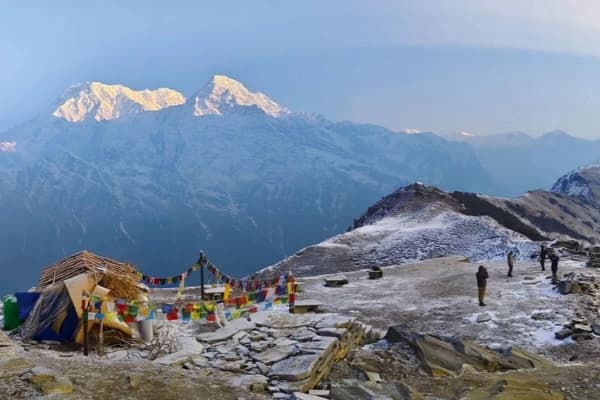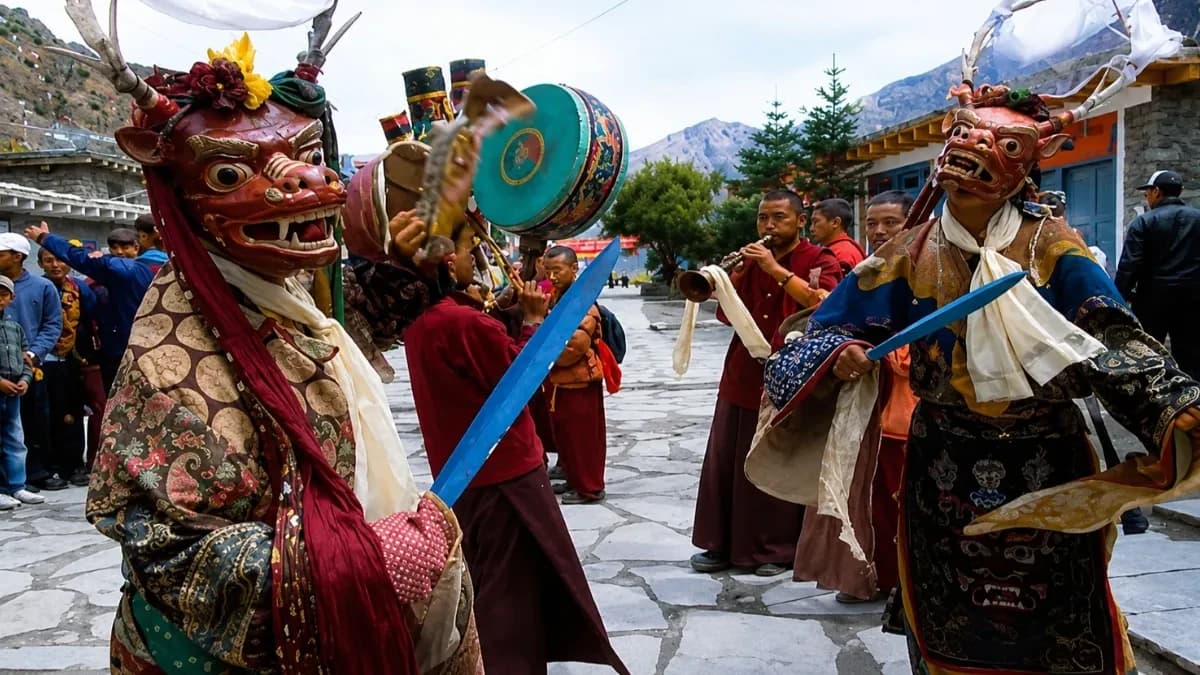
Mani Rimdu is a major Tibetan Buddhist festival held every year in the Everest region's monasteries. It's famous for colorful masked dances, detailed sand art, and sacred ceremonies that draw in pilgrims and travelers eager to experience real Sherpa culture.
This festival is mainly associated with Tengboche and Thame in the Khumbu region, as well as Chiwang in Solu. The dates follow the Tibetan lunar calendar, so they vary each year and differ by monastery.
You don't need a religious background to attend, just good timing and a bit of planning. Many travelers build the trip around the festival specifically; others catch it as a bonus while trekking toward Everest Base Camp.
Quick Overview
Mani Rimdu is a major Tibetan Buddhist festival of the Sherpa communities in Nepal's Everest region, celebrated mainly at Tengboche, Thame, and Chiwang. Rooted in the Nyingma tradition, the festival honors Buddhist teachings through prayers, the creation and destruction of a sand mandala, the Wong blessing ceremony, Jinsak fire offerings, and colorful masked Cham dances. The festival follows the Tibetan lunar calendar, so dates vary each year and by monastery. Visitors can attend the public celebrations, but should check dates early, arrange permits and accommodation, prepare for Tengboche's 3,867 m altitude, and respect monastery rules and local customs.
What is the Mani Rimdu Festival?
Mani Rimdu is a sacred Tibetan Buddhist celebration held every year in the monasteries of Nepal's Everest (Khumbu) region. It is the biggest religious event of the year for the local Sherpa community, blending deep spiritual rituals, community gatherings, and vibrant public performances into a 19-day journey.
Rooted in the Nyingma school of Tibetan Buddhism, Mani Rimdu is fundamentally a celebration of empowerment. The tradition traces back to the early 20th century at Tibet's Rongbuk Monastery before it was brought across the high Himalayas to Nepal. Before anything opens to the public, senior lamas spend weeks in private prayer and intense meditation, ultimately sharing the spiritual merit they've built with the entire community.
The name itself reflects this purpose:
- "Mani" refers to the mantra of Chenrezig, the Buddha of Compassion (Om Mani Padme Hum).
- Masked Dances symbolically reenact Guru Rinpoche’s historic victory over negative forces to establish Buddhism in the Himalayas.
Celebrated by the Sherpa people (also known as people of the Himalayas), an ethnic group of Tibetan origin who settled in the Khumbu region centuries ago, Mani Rimdu serves as both a religious obligation and a cultural anchor. While monks handle the private ceremonies alone, the final three days open up to villagers, cultural enthusiasts, and travelers alike, offering a rare window into living Himalayan traditions performed essentially unchanged for generations.
Where is the Mani Rimdu Festival Celebrated?
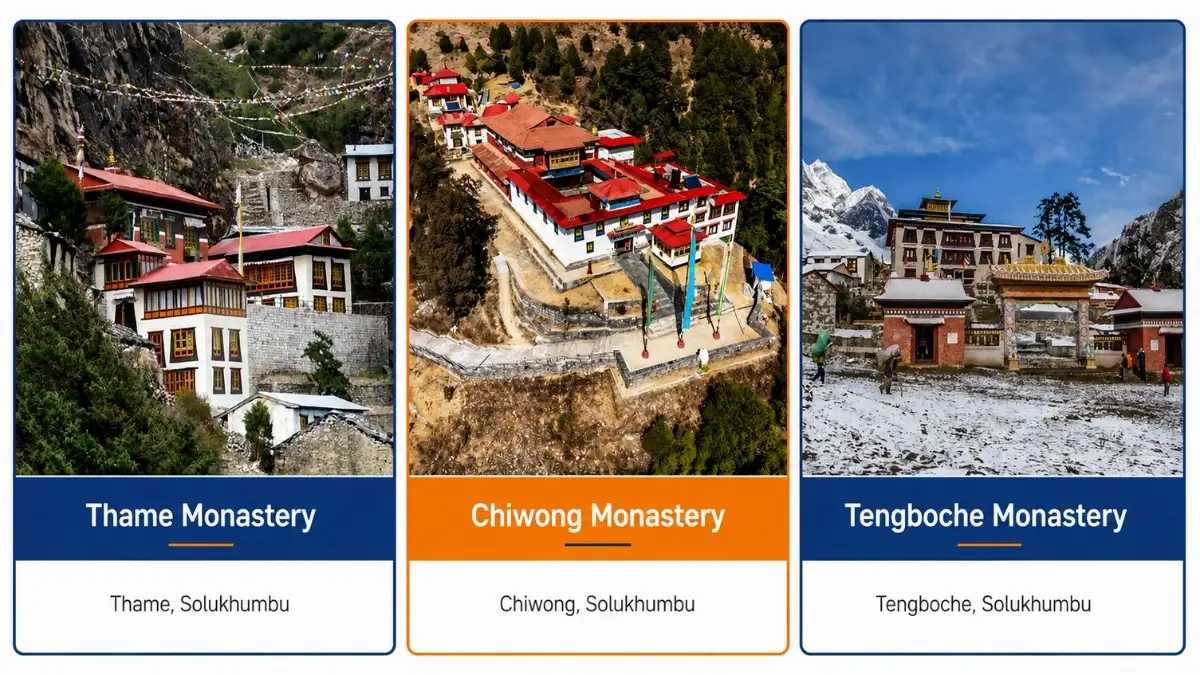
Mani Rimdu is celebrated at three monasteries in Nepal's Solu-Khumbu district, each with its own community and timing:
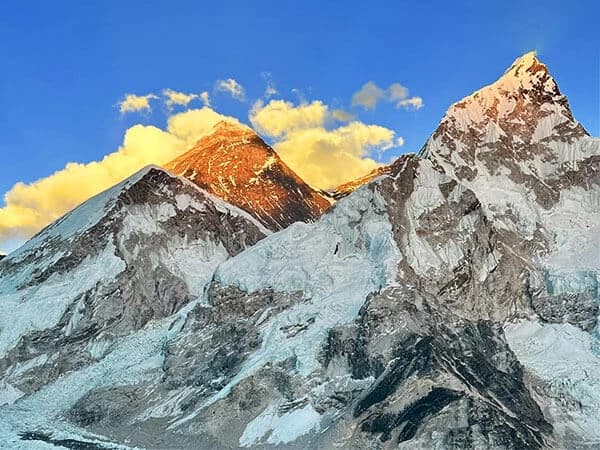
- Tengboche Monastery: The largest and most famous celebration, and the main reason most travelers plan around the Tengboche Monastery festival. At roughly 3,867 meters, with Everest, Ama Dablam, and Lhotse in view, it draws the biggest crowds of pilgrims, monks, and international visitors.
- Chiwong Monastery: Near Junbesi in the Solu region, smaller and far less touristed, offering a quieter version of the same rituals.
- Thame Monastery: West of Namche Bazaar, another lower-key alternative for travelers who'd rather skip the crowds.
Tengboche remains the one, most guides and itineraries are built around, but Chiwong and Thame are genuinely worth considering if you want the ritual without the crowd.
Mani Rimdu Festival Date 2026/27
The Mani Rimdu festival date isn't fixed on the Gregorian calendar. It follows the Tibetan lunar calendar and traditionally falls around the full moon of the ninth Tibetan month, usually October or November. Each monastery's head lama confirms the exact dates closer to the time, which is why you'll see slightly different dates floating around different travel sites.
|
Year |
Public Festival Days |
Monastery |
|
2026 |
Late October (most commonly cited: October 26–28, 2026; some sources list Oct 24–26 or Oct 26–29) |
Tengboche |
|
2027 |
Not yet confirmed expected late October/November 2027 |
Tengboche |
Because the date shifts with the lunar calendar, always confirm with the monastery or a local trekking agency close to your travel dates. This is one detail worth double-checking rather than trusting a single source. Chiwong and Thame monasteries hold their own celebrations on separate dates within the same lunar month, so if Tengboche's dates don't line up with your trip, one of the others might.
The public days are only the visible part. The full ritual cycle runs 19 days, starting with private monastic preparation, sand mandala construction, prayer, and initiation rites roughly two and a half weeks before the public festival opens.
If you want to live the festival, you can rely on Nepal Gateway Trekking, we guide many tourist to their destination. Our itineraries and packages are suitable and can be customized.
History of the Mani Rimdu Festival
The story of Mani Rimdu begins in Tibet, within the Nyingma tradition of Tibetan Buddhism. Its religious practices are closely linked to Mindroling Monastery in Central Tibet, while the festival tradition was later developed by Ngawang Tenzin Norbu, a Nyingma lama associated with the Everest region. Historical research places the early form of Mani Rimdu in the northern Everest area in the early 20th century, around 1907–1910.
The festival is connected with the teachings of Guru Rinpoche (Padmasambhava), the revered 8th-century Buddhist master who is traditionally credited with helping establish Buddhism in Tibet. The dances and ceremonies tell religious stories and represent the victory of Buddhist teachings over negative forces. At Tengboche, the Nepal Tourism Board describes the masked dances as representing the victory of Buddhism over Bon and the triumph of good over evil.
From Tibet, the Mani Rimdu tradition made its way into Solu-Khumbu, where it became part of Sherpa religious life. The exact date when the festival was first performed at Tengboche is not completely certain. An academic study places its transmission to Solu-Khumbu around 1940, while an earlier study suggests the first Tengboche performance may have taken place around 1930. This is why it is better not to treat a single year, such as 1938, as an established fact.
Today, Mani Rimdu is celebrated at Tengboche and Thame monasteries in Khumbu, as well as Chiwang Gompa in Solu. Each monastery follows the same broad religious tradition, although the way the ceremonies and dances are performed can vary. UNESCO notes that the rituals themselves have remained largely unchanged, even as local participation has declined and more visitors now attend the celebrations.
Mani Rimdu Festival Significance
Here's the thing about Mani Rimdu that most outsiders miss: it's not just colorful masks and prayers. What's actually happening is deeper. For Sherpa families, this festival is how they practice their faith, strengthen their community, and remind themselves what they believe in. It pulls together scattered villages across Khumbu, Namche, Thame, and Tengboche, all gathering for something that matters to them. It's spiritual, yes, but it's also practical. It's their yearly reset.
- Good literally defeats evil in front of everyone's eyes: The masked Cham dances show this. Deities fight demons, wisdom overcomes ignorance, but it's not abstract philosophy. People watch it happen, generation after generation. Kids learn what their faith actually means by seeing it performed
- It's all about compassion, not just ceremony: The whole festival centers on Chenrezig, the Buddha of Compassion. That's not random. The rituals, the prayers, and the blessings, they're all aimed at generating good will and merit, shared for the benefit of everyone. Even non-Buddhists attending get that sense that something genuinely kind is happening
- The Wong empowerment ceremony actually changes how people feel protected: Families believe the blessings bring health, protection, and good fortune for the coming year. Whether you're a devoted Buddhist or just someone from the village wanting to feel safe, you show up for this. People take it seriously
- It's one of the few times the entire region comes together: Khumbu isn't one town. Villages are scattered across mountains. Monks stay in monasteries. Traders move constantly. But during Mani Rimdu at Tengboche or Thame? Everyone shows up in the same place at the same time. That alone matters for a community
- It's how Sherpa people stay Sherpa: Between tourism booming, young people leaving for Kathmandu, and modern life getting complicated, Mani Rimdu is the annual moment where tradition gets reinforced. It's not a museum display. It's living proof that these practices still belong to people's actual lives
The Rituals That Actually Make Mani Rimdu Work (Explained Simply)
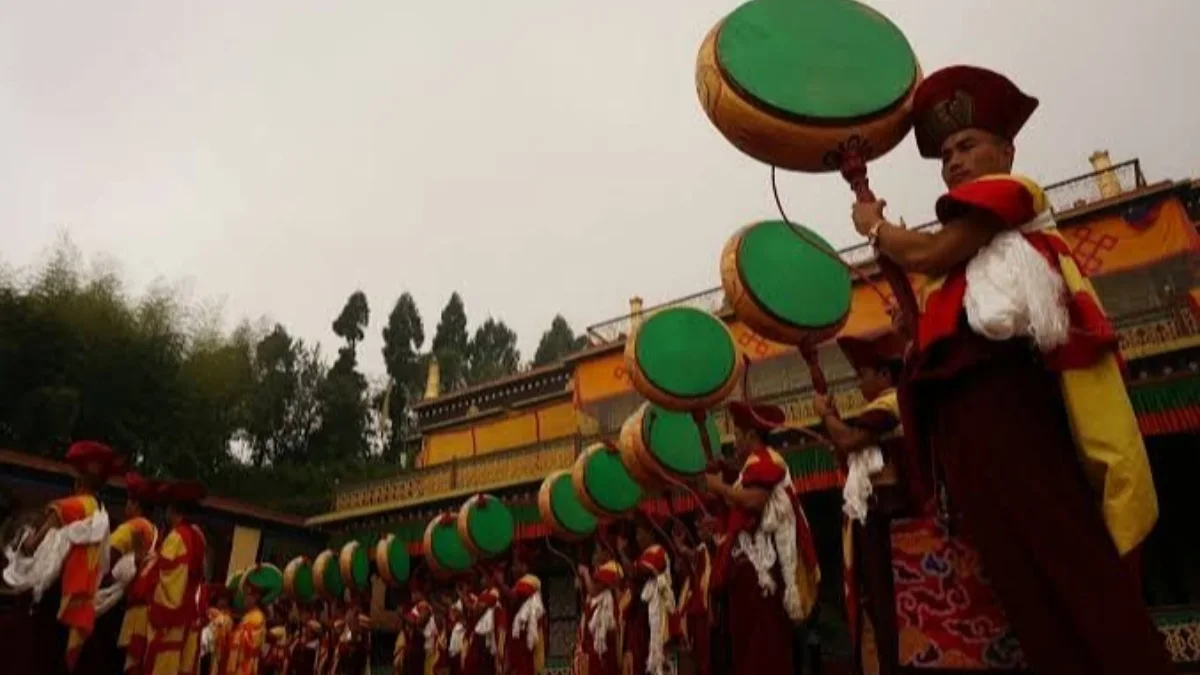
If you've never been to a Buddhist monastery or learned anything about this culture, Mani Rimdu probably sounds pretty mysterious. So lets break down what actually happens, step by step, like I'm explaining it to someone who's never heard of any of this before.
The sand mandala: imagine building something beautiful, then destroying it on purpose
Okay, so before the festival really starts, monks at Tengboche or Thame monasteries sit down and start making this huge, intricate picture using colored sand. Think of it like the world's most complicated sand drawing at the beach, except they're using special sand and making patterns so detailed it takes days to finish. One grain of sand at a time. They're literally placing tiny grains to create this massive design.
Why spend all that time on something that takes that much effort? Because here's the Buddhist thing: once they finish it, they destroy it. They sweep it all up, put the sand in a container, walk down to the river, and pour it in. Gone.
If you're thinking, "That's a total waste," I get it. But for Sherpa families, it's the opposite. The whole point is that nothing lasts forever. Not this sand picture, not your house, not your life, nothing. By making something beautiful and then getting rid of it, they're teaching themselves not to get too attached to things. It sounds sad, but it's actually freeing when you think about it.
Wong: the day when you get blessed and blessed pills
Now, Wong is basically Blessing Day. Imagine a big ceremony where monks are doing prayers and rituals, chanting, and burning incense—the whole thing. And then they hand out these tiny red pills called Rilbu to people who show up.
These pills aren't medicine. They're blessed, meaning monks have said prayers over them and treated them as sacred. Sherpa families believe that receiving one of these pills gives them protection and good luck for the whole year. Some people carry them; some people keep them on their altar at home. The pill itself doesn't do anything physical, it's about belief. It's like spiritual insurance.
If you visit Wong, you can go and watch, but you have to be respectful. You're not just sitting there taking photos. You're part of something people take seriously.
Jinsak: fire ceremony that's basically spiritual cleaning
After the main festival winds down, there's a ceremony called Jinsak where monks make a fire and burn offerings while chanting. Think of it like... spiritual spring cleaning. You know how you feel lighter after cleaning out your closet? That's the idea, except it's spiritual.
Monks believe that fire purifies things. So during Jinsak, they're basically saying prayers and offerings into this fire, and the idea is that negative stuff, obstacles, bad energy, problems, gets burned away. Is there actually something magical happening? Probably not in a scientific way. But people leave feeling like they've let go of something that was bothering them. And sometimes that psychological shift is what actually matters.
Every monastery does it their own way
Here's something interesting: if you go to Mani Rimdu at Tengboche, it might look slightly different than if you go to Thame or Chiwang. Same core rituals, different order, or small variations. That's normal for living traditions. They're not frozen in time. The essence stays the same, but it adapts a bit.
Tibetan Buddhist Masked Dances
The masked dances locally called Cham dances are usually the highlight for visiting travelers. Monks in elaborate silk costumes and painted wooden or papier-mâché masks, representing deities, protectors, and demons, perform a series of choreographed dances in the monastery courtyard.
Each dance tells a story rooted in Buddhist teaching, most commonly the triumph of wisdom over ignorance and destructive forces. Traditional instruments, long horns, cymbals, drums, conch shells accompany the performance, building an atmosphere that's hard to describe until you've stood in that courtyard yourself.
Beyond the spectacle, the dances function as a teaching tool. For centuries they've conveyed Buddhist philosophy to villagers who couldn't read scripture, turning complex teachings into a performance anyone could follow.
How to Actually Experience the Mani Rimdu Festival?
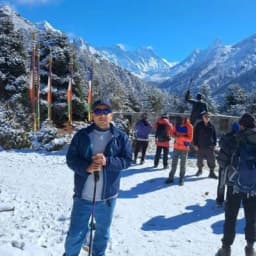
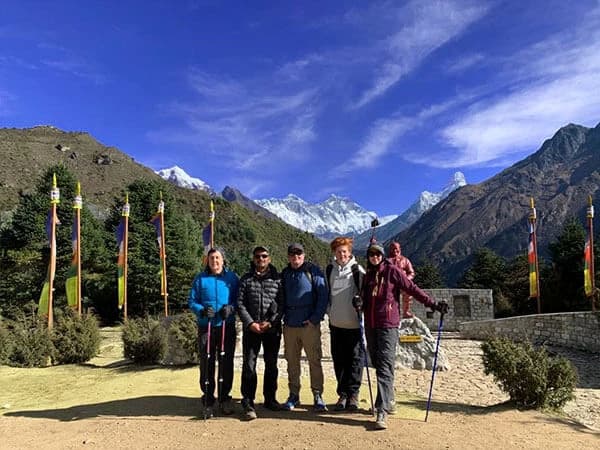
Mani Rimdu sits high in the Khumbu mountains, which means you can't just show up on a whim. You need to plan your trek around the festival dates, give yourself time to acclimatize to the altitude, and understand what the journey actually involves. Most people fly into Lukla, trek through Phakding and Namche Bazaar, and make their way up to Tengboche Monastery, where the celebration happens. If you're thinking about going, you need to know what you're signing up for.
When does Mani Rimdu Actually Happen?
This is where it gets complicated. Mani Rimdu follows the Tibetan lunar calendar, so the dates shift every year. You can't just pick October and hope, you need to check the exact dates before booking anything. The upside: it usually falls during autumn trekking season when the weather is solid and mountain views are clear. The downside: because it's peak season anyway, accommodation fills up fast and flights to Lukla get expensive.
The trek to Tengboche Takes Three to Four Days
You fly from Kathmandu to Lukla, then trek on foot from there. The route goes:
- Lukla → Phakding → Namche Bazaar → Tengboche.
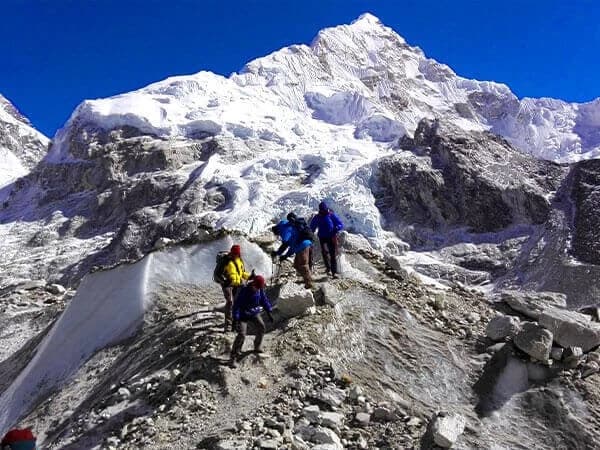
Sounds simple, but most people underestimate this part. Tengboche sits at 3,867 meters, that's genuinely high. Rush up too fast and you'll get altitude sickness, feel like garbage, and waste your time at the festival recovering. Those three to four days aren't just about distance. They're about letting your body adjust to thin air.
Accommodation Books up Weeks in Advance
Tengboche has teahouses and lodges. Deboche, nearby, has more options. But during Mani Rimdu, everyone wants to stay close to the monastery. Places fill up quickly, I mean weeks in advance. Book early or you'll end up farther away walking up to the festival every morning, or settling for less-than-ideal accommodation.
Photography has rules. Respect them.
You'll see incredible scenes, monks, dancing, mountains in the background. Take photos. But ask first before getting close-ups of monks or locals. During indoor prayers or ceremonies, don't photograph at all. Follow what the organizers tell you. This isn't a performance being put on for your camera.
What Permits Do You Need?
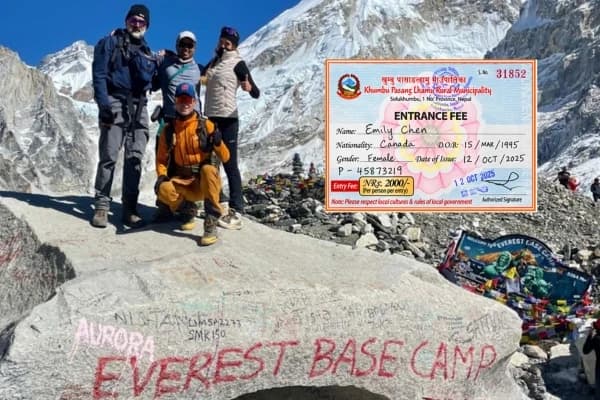
Trekking to Tengboche requires two permits, neither is optional.
- Sagarmatha National Park Entry Permit: Tengboche is inside Sagarmatha National Park. You get this at Monjo or other designated points along the trek. It's required to be here legally.
- Khumbu Pasang Lhamu Rural Municipality Entry Permit: This covers entry into the Khumbu region itself. You can get it at Lukla or Monjo. Costs and rules change yearly, so check before you leave. If you book with a trekking agency, they handle both permits for you.
Things You'll Actually Need to Know Before Experiencing the Mani Rimdu Festival
- Arrive early if you want a good spot: The monastery courtyard fills up fast during main ceremonies. People stake out spots hours before events start. If you want to see without standing in the back, come early.
- Carry cash. Lots of it.: ATMs become unreliable once you pass Namche. Bring Nepali rupees for lodges, food, guides, offerings—everything. Credit cards won't help you up there.
- Bring warm clothes: Tengboche gets cold at night, even in autumn. Thermal layers, a jacket, a hat. You'll spend time outside during ceremonies and you'll be grateful for these things.
- Understand what you're witnessing matters to people: Monks are conducting real ceremonies. Sherpa families are there for spiritual reasons, not entertainment. Keep quiet during prayers, listen to instructions, and try to actually understand what's happening instead of just filming it.
- Start planning a month ahead: Festival season means booked flights, full teahouses, and complicated logistics. Sort your Kathmandu-to-Lukla flights, reserve lodges, arrange permits, decide if you're going solo or with an agency. Do this early so you can actually enjoy the festival instead of scrambling the week before.
Final Thoughts
The Mani Rimdu Festival is more than a colorful spectacle , it's a living expression of Sherpa culture and Tibetan Buddhist spirituality, kept alive for generations high in Nepal's Everest region. From the sand mandala's slow construction to the masked dances and the closing fire puja, every ritual carries centuries of meaning.
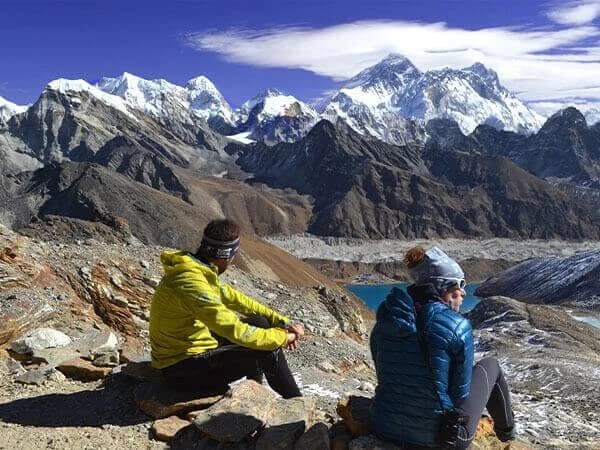
Whether you're trekking to Everest Base Camp or planning your trip specifically around the ceremony, Mani Rimdu offers a rare look at a tradition that's changed remarkably little over time and a chance to witness it firsthand in one of the most striking mountain settings on earth. You can reach out to Nepal Gateway Trekking to book your trek today.
FAQs About the Mani Rimdu Festival
Can anyone attend the Mani Rimdu Festival?
Yes, visitors are welcome. Just know you're stepping into a religious ceremony, not a performance. Be respectful, follow instructions from monks, and treat it like you're a guest in their spiritual space.
Do I need to be Buddhist to attend Mani Rimdu?
Not at all. Plenty of visitors aren't Buddhist. Some come for the culture, some want a spiritual experience, some just happen to be trekking. What matters is showing respect, not what you believe.
Can I take photos during the Mani Rimdu Festival?
Outdoor dances are fair game, photograph freely. But ask before getting close-ups of monks or locals. And when you're inside the monastery during prayers, put the camera away. Don't negotiate this one.
What should I wear to the Mani Rimdu Festival?
Pack warm layers because Tengboche sits at 3,867 meters and it gets cold, especially at dawn and dusk. Around the monastery, dress modestly, cover shoulders and knees. It's about showing respect for the space.
Can children attend the Mani Rimdu Festival?
Children can come if they can sit quietly during prayers and stay close to you. They'll love the masked dances, but they need to understand that some areas are for monks only.
How crowded does Tengboche get during Mani Rimdu?
It gets packed. Local Sherpa, trekkers, and visitors all show up at once. Teahouses and viewing spots fill up weeks in advance. If you want decent accommodation, book early.
What should I bring to Mani Rimdu?
Pack for high-altitude trekking: warm layers, good shoes, sun protection, and water. Bring enough cash in Nepali rupees since ATMs don't work reliably up there. A small offering for the monastery is nice too.
Can I attend Mani Rimdu if this is my first trek?
You can, but give yourself time. The challenge isn't the trekking, it's the altitude. Three to four days from Lukla to Tengboche lets your body adjust. Rush it and you'll either get sick or arrive exhausted, which ruins the experience.