The Ghorepani Poon Hill Trek is an easy to moderate trek, so you don't need to be an experienced trekker to do it. Still, it isn't a walk in the park. You’ll spend several hours on the trail each day, with plenty of stone steps and some uphill climbs along the way.
The trek takes you up to 3,210 meters at Poon Hill and most days involves roughly 5 to 7 hours of walking. The climb from Tikhedhunga to Ulleri includes more than 3,000 stone steps, making it one of the toughest parts of the trek. The early-morning climb from Ghorepani to Poon Hill can also leave your legs feeling it.
The good news is that there’s no technical climbing involved. If you can handle a long walk and don't mind taking your time on the steeper parts, you should be fine. Doing some regular walking and taking the stairs more often before your trip can also make the trek feel much easier. This blog will make you understand the Ghorepani Poon Hill Trek difficulty in detail.
Quick Insights
If you’re looking for the basics before getting into the details, here’s what the Ghorepani Poonhill Trek difficulty looks like at a glance:
- Difficulty: Easy to Moderate
- Highest point: 3,210 m at Poon Hill
- Trekking duration: 8 days
- Total distance: Around 41 km
- Total ascent: Around 3,000 m
- Total descent: Around 2,000 m
- Hardest section: Ghorepani to Poon Hill
- Technical climbing: No
- Best for: Beginners, women, children, families, and reasonably fit trekkers
The trail itself isn’t complicated, but don’t underestimate the stairs. Some days can feel long, especially when you’re walking uphill for hours. You don’t need climbing skills for this trek; having enough stamina to keep walking and taking things at your own pace matters much more.
How Difficult Is the Ghorepani Poon Hill Trek?
The Ghorepani Poonhill Trek difficulty is on the easier side compared with many other treks in the Annapurna region. The trail is fairly easy to follow, there is no technical climbing, and the highest point is 3,210 metres. So, you don’t need any special mountaineering skills to complete it.
What makes the trek tiring is mainly the amount of walking. You’ll come across plenty of stone steps, uneven sections, and uphill climbs. The long staircase section around Ulleri can be tough on the legs, while the early-morning climb from Ghorepani to Poon Hill can feel harder simply because you’re starting before sunrise.
Compared with routes such as Mardi Himal, Annapurna Base Camp, Khopra Danda, and the Annapurna Circuit, Poon Hill is a much easier choice for beginners. It also works well for families and trekkers who want a shorter introduction to the Himalayas.
You don’t need previous trekking experience. If you can comfortably walk for several hours and handle some uphill sections, you should be able to manage the trek. A bit of walking or stair practice before your trip will make those long days much easier on your legs.
What Makes the Ghorepani Poon Hill Trek Challenging?
The Ghorepani Poon Hill Trek difficulty is mostly about stamina, not technical climbing. You won’t need ropes, climbing gear, or any special mountaineering skills. But you will be walking for several hours a day, climbing thousands of stone steps, and dealing with some uneven parts of the trail.
A few sections tend to feel harder than the rest, especially if this is your first trek in Nepal.
1. The Relentless Stone Staircases (The Ulleri Climb)
The stairs leading up from Tikhedhunga to Ulleri are probably the part you’ll notice most. This section features around 3,200 steep, uneven stone steps winding up a steep ridge. It’s a serious leg burner that gains roughly 400 to 500 meters of elevation in a couple of hours. There’s no need to rush them, take a break at the local teahouses along the steps when you need one and keep a pace that feels comfortable.
2. 5 to 7 Hours of Daily Walking
Walking times vary by day, but the main trekking days can take around 5 to 7 hours (covering roughly 9 to 12 km per day) on the trail. That might sound like a lot, but you’ll have plenty of time for dal bhat lunch stops, tea breaks, photos, and rest along the way. The important thing is building the cardiovascular endurance to stay on your feet for a good part of the day across undulating terrain.
3. Uneven and Rough Trails
The trail isn’t a modern paved walkway. You’ll navigate irregular stone steps, exposed tree roots, and dusty or muddy dirt paths depending on the season. Going downhill can sometimes be harder on your joints than going up, especially when your legs are already tired. A sturdy pair of broken-in trekking shoes can help, and trekking poles are useful on steep descents.
4. The Pre-Dawn Climb to Poon Hill
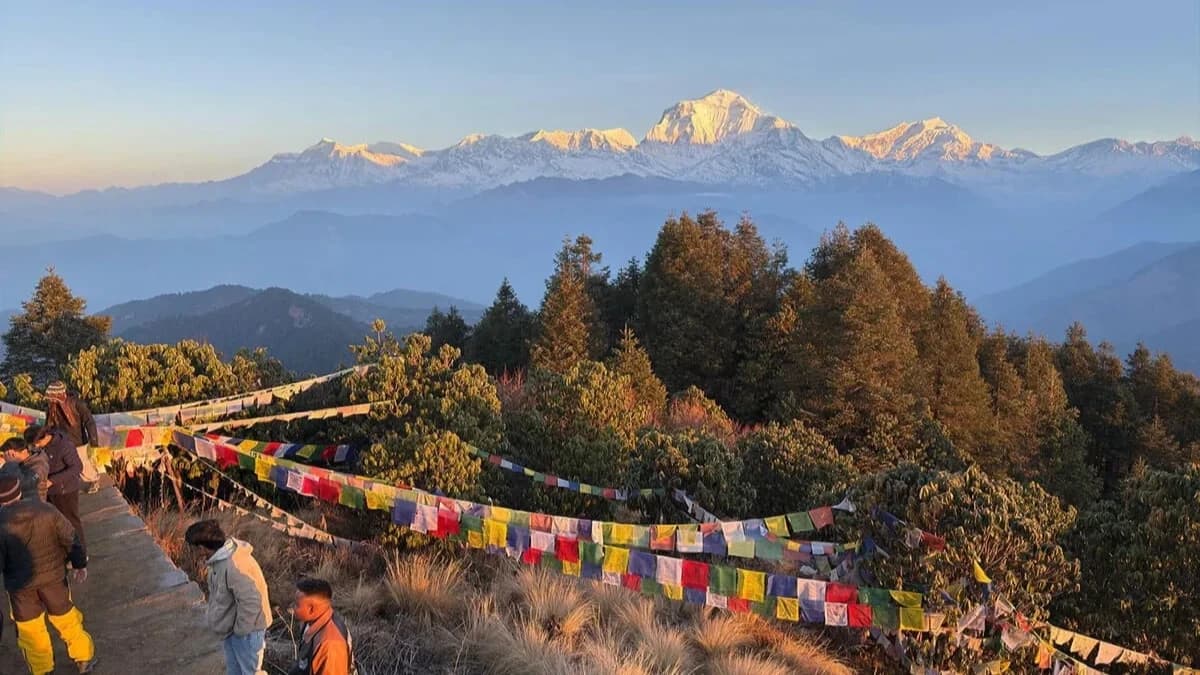
Most trekkers leave Ghorepani early in the morning so they can reach Poon Hill before sunrise. The climb is short but steep in places. The climb can feel harder at that hour because you are pushing uphill in the chilly pre-dawn dark (the early start can feel tough because it is often cold and dark), and your body hasn’t fully warmed up. The early start can be tough, especially in the cold, but the sunrise views of the Annapurna and Dhaulagiri ranges make the effort worthwhile.
Can Beginners Do the Ghorepani Poon Hill Trek?
Yes, you can. The Ghorepani Poonhill Trek is a good option if this is your first trek in Nepal. You don’t need previous trekking experience, and there’s no technical climbing involved.
What most beginners notice is the walking. Some days are fairly long, and the stone steps around Ulleri can be tiring if you’re not used to walking uphill for a long time. You don’t have to be super fit, but having a basic level of fitness will make the trek much more enjoyable.
It also helps to do a little preparation before you leave. Try going for regular walks, use the stairs instead of the lift when you can, and add a few uphill walks to your routine. You’ll probably find the trail much easier once your legs are used to it.
So, you don’t need to be an experienced trekker. If you can comfortably walk for several hours, take your time on the steeper sections, and listen to your body, you should be able to handle the trek.
Planning your trek in Nepal? Choose Nepal Gateway Trekking and let our experienced local team help you choose an adventure that suits you.
Is Ghorepani Poon Hill Trek Suitable for Families With Kids?
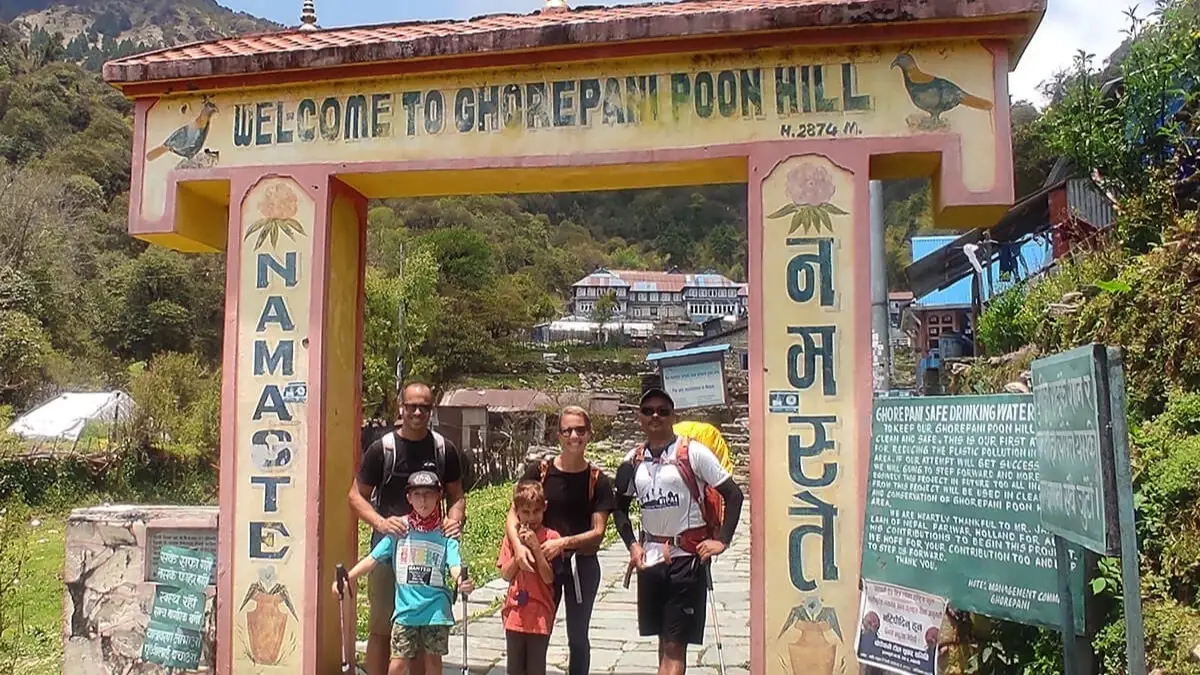
Yes, the Ghorepani Poonhill Trek can work well for families with children, especially if your kids are used to walking and spending time outdoors. It’s not a technical trek, so you won’t need climbing skills or special equipment.
The part that can be difficult for children is the number of stone steps. Some uphill sections are quite steep, and younger kids may get tired sooner than adults. There’s no need to hurry, though. Take plenty of breaks, keep the walking pace comfortable, and give them time to enjoy the villages and scenery along the way.
Poon Hill sits at 3,210 meters, which is lower than many of the popular high-altitude treks in Nepal. Still, you should take the altitude seriously and give everyone enough time to rest.
Before the trip, regular walks and a little stair practice can help. And when you’re actually on the trail, let the kids set the pace. If they’re comfortable walking for several hours and you plan the days sensibly, Poon Hill can be a fun first Himalayan trek for the whole family.
Are you planning solo Ghorepani Poon Hill Trek? Read our Ghorepani Poon Hill solo trek experience to discover trail insights, safety tips, and what it's really like to conquer the Himalayas on your own terms!
Acclimatization and Safety on the Poon Hill Trek
The highest point on the Ghorepani Poonhill Trek is 3,210 meters at Poon Hill. You may notice the air getting a little thinner as you climb, but the altitude is still much lower than on many of Nepal’s higher trekking routes.
Most trekkers don’t stay at Poon Hill for very long. You usually get up early, walk to the viewpoint for sunrise, spend some time taking in the mountain views, and then head back to Ghorepani. Even so, it’s worth paying attention to how you feel as you gain altitude.
A few simple things can help:
- Take your time: There’s no prize for reaching the top quickly. Walk at a pace that feels comfortable.
- Drink enough water: Keep drinking throughout the day, especially while walking uphill.
- Take breaks: If your legs are tired or you feel out of breath, stop for a while.
- Pay attention to your body: A mild headache or tiredness can happen, but don’t ignore symptoms such as dizziness, nausea, or feeling unusually unwell.
- Tell your guide: If something doesn’t feel right, speak up. Don’t try to hide symptoms just to keep going.
For most people, the long walking days and steep stone steps are more noticeable than the altitude on this trek. Good preparation, a steady pace, and knowing when to rest can make the whole experience much more comfortable.
Are you curious about how high you will go and how to handle the altitude? Read our Ghorepani Poon Hill Trek Elevation guide for a complete breakdown of daily heights, acclimatization tips, and what to expect on the trail!
Which Day Is the Hardest on Ghorepani Poon Hill Trek?
There isn’t one day that feels hardest for everyone. It really depends on your fitness, walking speed, and how comfortable you are with uphill trails. For many trekkers, though, the Tikhedhunga to Ulleri section and the early climb from Ghorepani to Poon Hill are the parts that test the legs the most.
|
Trekking Section |
Difficulty |
What Makes It Challenging? |
|
Tikhedhunga to Ulleri |
Moderate |
The long stone staircase and steady climb to Ulleri can be tiring, especially if you’re not used to walking uphill. |
|
Ulleri to Ghorepani |
Easy–Moderate |
You continue gaining height through forest and village trails, with plenty of uphill walking along the way. |
|
Ghorepani to Poon Hill to Tadapani |
Moderate–Hard |
The early climb to Poon Hill comes first, followed by a fairly long descent to Tadapani. |
|
Tadapani to Ghandruk |
Easy–Moderate |
This section is generally more relaxed, although the downhill stretches can still leave your legs feeling tired. |
If you’re worried about the Ghorepani Poonhill Trek difficulty, don’t focus too much on which day is “hardest.” The trek is more about managing your energy from one day to the next. Walk at a steady pace, take breaks when you need them, and don’t feel pressured to keep up with faster trekkers.
Is Ghorepani Poon Hill Trek More Difficult Than Other Annapurna Treks?
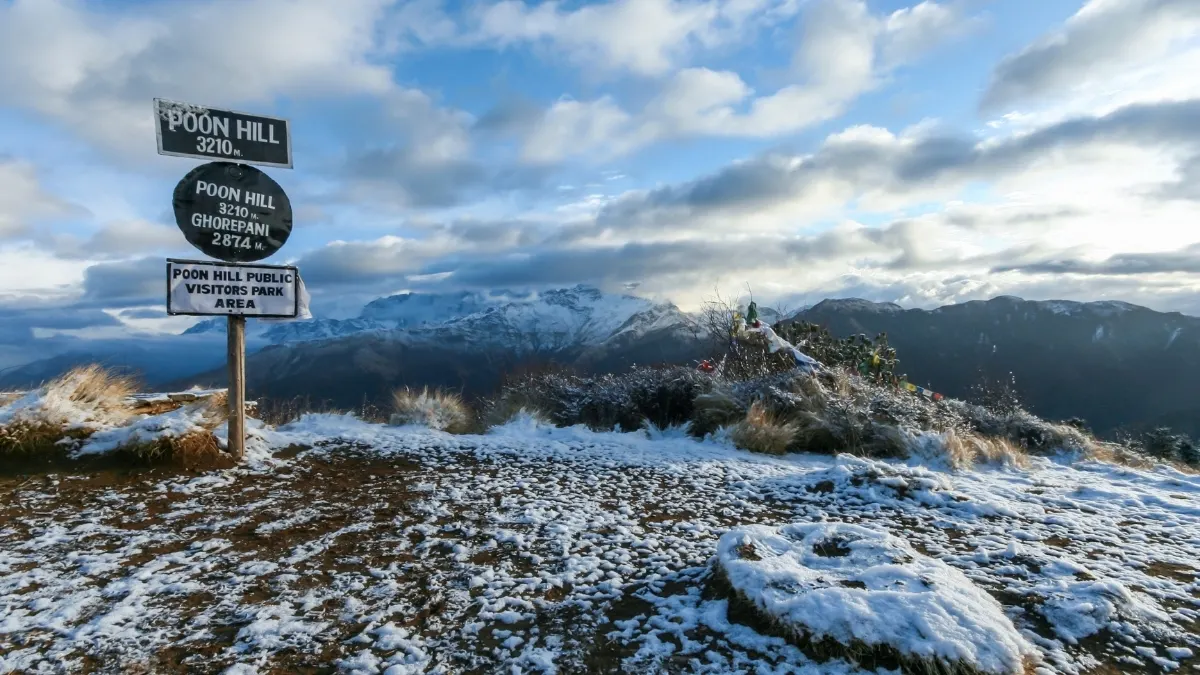
If you’re comparing the Ghorepani Poonhill Trek with other popular Annapurna trekking routes, Poon Hill is generally the easier option. It’s shorter, stays at a lower altitude, and doesn’t involve crossing a high mountain pass.
Here’s a quick look at the main differences:
- Lower altitude: Poon Hill reaches 3,210 meters. That is much lower than Mardi Himal at around 4,500 metres, Annapurna Base Camp at 4,130 metres, and Thorong La on the Annapurna Circuit at 5,416 metres.
- Shorter trek: A Poon Hill trip can usually be completed in around 5 to 7 days, depending on your itinerary. ABC generally takes about 7 to 10 days, while the Annapurna Circuit can take two weeks or more.
- Less demanding overall: You’ll still have plenty of stairs, uphill walking, and long days, but the overall physical demand is lower than on the longer Annapurna routes.
- No technical climbing: You don’t need climbing skills or special mountaineering equipment for Poon Hill. A good pair of trekking shoes and basic preparation are enough for most trekkers.
- Some trails overlap: The stone staircase around Ulleri is also used by trekkers heading toward Annapurna Base Camp, so you may recognize parts of the route if you’ve looked at the ABC itinerary.
- Good for first-time trekkers: If this is your first Himalayan trek, Poon Hill gives you a chance to experience mountain villages, forests, teahouses, and big Annapurna views without committing to a long, high-altitude journey.
So, Poon Hill is not completely effortless. Your legs will still know you’ve been trekking, especially after the stairs around Ulleri. But compared with ABC, Mardi Himal, and the Annapurna Circuit, it is usually the more manageable choice.
|
Trek |
Difficulty |
Approx. Highest Point |
Best For |
| Ghorepani Poon Hill | Easy–Moderate | 3,210 m | Beginners, families, and short Himalayan treks |
| Mardi Himal |
Moderate |
Around 4,200–4,500 m |
Trekkers with good fitness, quieter trails, and mountain views |
|
Annapurna Base Camp |
Moderate–Hard |
4,130 m |
Trekkers looking for a longer Himalayan experience |
|
Khopra Danda |
Moderate |
Around 3,660 m |
Trekkers seeking quieter trails and Dhaulagiri views |
|
Annapurna Circuit |
Moderate–Hard |
5,416 m at Thorong La |
Trekkers looking for a longer, high-altitude Himalayan adventure |
How to Make the Ghorepani Poon Hill Trek Easier?
The trek is already manageable for most reasonably fit people, but a few simple things can make the tougher sections much easier:
- Train on stairs before the trip.
- Keep your backpack light.
- Use trekking poles on steep descents.
- Start the harder sections early.
- Take breaks before you're completely exhausted.
- Wear shoes with good grip.
- Don't rush the Poon Hill sunrise climb.
Final Thoughts
The Ghorepani Poonhill Trek is a great option if you want to experience the Himalayas without signing up for a long or overly demanding trek. It has its tough moments, especially the stone steps and the early climb to Poon Hill, but you don’t need to be an experienced trekker to enjoy it.
A little walking before your trip can help a lot. Once you’re on the trail, take your time, stop when you need a break, and don’t worry about matching someone else’s pace.
For a first trek in Nepal, it’s hard to beat the experience. You’ll walk through forests, pass small mountain villages, meet local people, and wake up early for a sunrise with the Annapurna and Dhaulagiri ranges in front of you.
Planning your Ghorepani Poon Hill Trek? Contact Nepal Gateway Trekking to talk with our local team about the route, itinerary, and trek preparation.
Frequently Asked Questions About Ghorepani Poon Hill Trek Difficulty
How many hours do you walk each day on the Poon Hill Trek?
Most days, you’ll spend around 5 to 7 hours walking. That doesn’t mean you’ll be walking non-stop for seven hours, though. You’ll stop for breakfast, lunch, tea, photos, and plenty of short breaks. Some days feel easier than others, especially if the trail is mostly downhill.
What is the highest point of the Ghorepani Poon Hill Trek?
The highest point is Poon Hill, at 3,210 metres. Most people wake up early and walk up to the viewpoint before sunrise. Once the sun comes up and you’ve had enough time to enjoy the views, you head back to Ghorepani.
Is the Ghorepani Poon Hill Trek safe for women?
Yes, it is a popular trek among women. The trail passes through villages and you’ll usually come across other trekkers along the way. If you’re travelling alone and aren’t comfortable trekking by yourself, having a local guide can make the trip easier and more comfortable.
Can children do the Ghorepani Poon Hill Trek?
They can, but it depends on the child. The trek isn’t technically difficult, but there are plenty of stone steps and uphill sections. Younger children may get tired faster, so it’s better not to plan long walking days. Give them time to rest and don’t try to keep up with a fixed pace.
Can I find guided trekking services for the Ghorepani Poon Hill route?
Yes, there are plenty of local guides and trekking companies offering trips to Poon Hill. You can hire a guide just for the trek or choose a package that includes things such as transport, accommodation, meals, permits, and a porter. For first-time trekkers, having someone who knows the trail can take away a lot of the stress.
Which is the best time of year for an easier Ghorepani Poon Hill trek?
For pleasant trekking weather, spring and autumn are usually the best choices. March to May is a best time for Ghorepani Poon Hill Trek if you want to see rhododendrons in bloom. September to November usually brings clearer skies and good mountain views. October and November are especially popular.
Is Ghorepani Poon Hill suitable for beginners with no prior experience?
Absolutely. You don't need to have done a Himalayan trek before. The main thing is being able to walk for several hours and handle uphill sections. The stone stairs can be tiring, but you can take them slowly. Even a few weeks of regular walking and stair practice before the trip can help you feel much more comfortable on the trail.