If you're planning the Ghorepani Poon Hill Trek, elevation is the first thing you need to understand. It shapes everything how hard the trek feels, how many days you need, and whether your body handles the altitude well.
This guide covers it all Ghorepani altitude, Poon Hill altitude, elevation gain, walking distances, and real tips to handle the climb. Let's get into it.
Ghorepani Poon Hill Trek Elevation at a Glance Quick Table.
|
Location |
Elevation |
|
Nayapul (Start) |
1,070 m / 3,510 ft |
|
Tikhedhunga |
1,540 m / 5,052 ft |
|
Ulleri |
2,050 m / 6,726 ft |
|
Ghorepani |
2,874 m / 9,429 ft |
|
Poon Hill (Highest Point) |
3,210 m / 10,531 ft |
-
Total elevation gain: ~2,140 m
-
Difficulty: Moderate beginner-friendly
-
Altitude sickness risk: Low to moderate
-
Best for: First-time trekkers in Nepal
Ghorepani Poon Hill Trek Elevation Overview
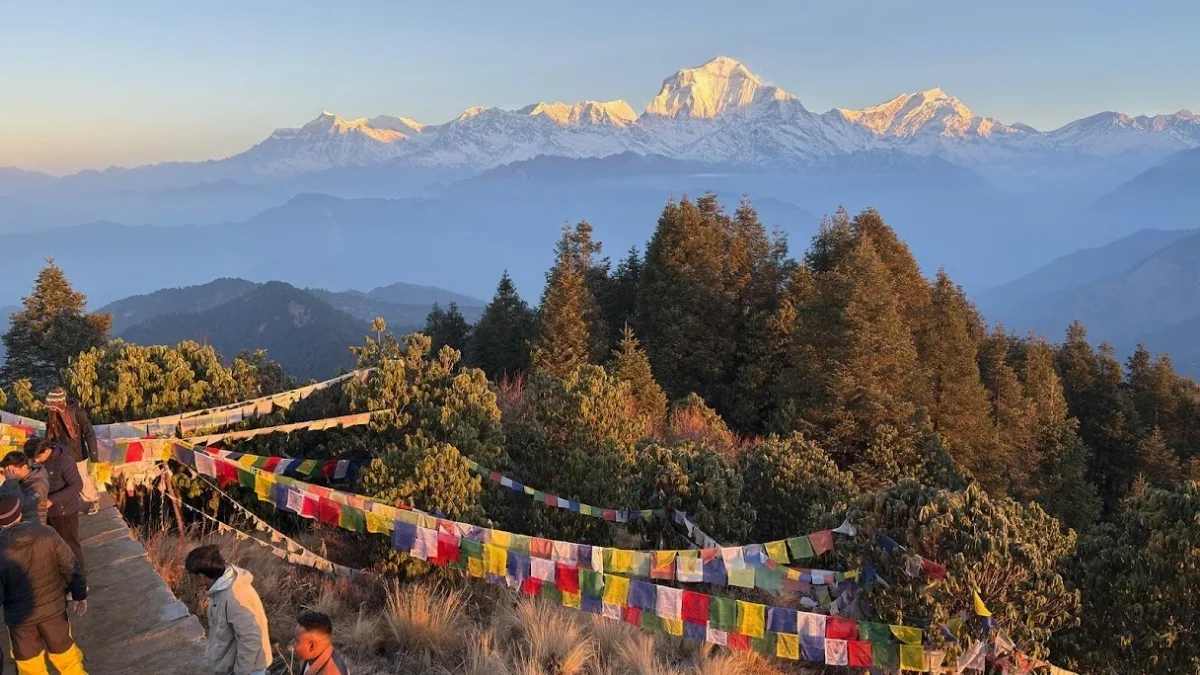
Before starting the trek, it is important to understand how the elevation changes throughout the route. The Poon Hill trek begins at a relatively low altitude and gradually climbs through villages, forests, and mountain trails until reaching the highest point at Poon Hill.
Compared to other famous treks in Nepal, the elevation is considered moderate, which makes the trek more beginner-friendly and easier to manage. This gradual altitude gain is one of the main reasons why the trek is popular among first-time Himalayan trekkers.
Starting Elevation: Nayapul (1,070 m / 3,510 ft)
The trek officially kicks off at Nayapul, sitting at 1,070 meters. It's a small roadhead town, nothing fancy. But it marks the beginning of your climb into the Annapurna foothills.
Highest Elevation: Poon Hill (3,210 m / 10,531 ft)
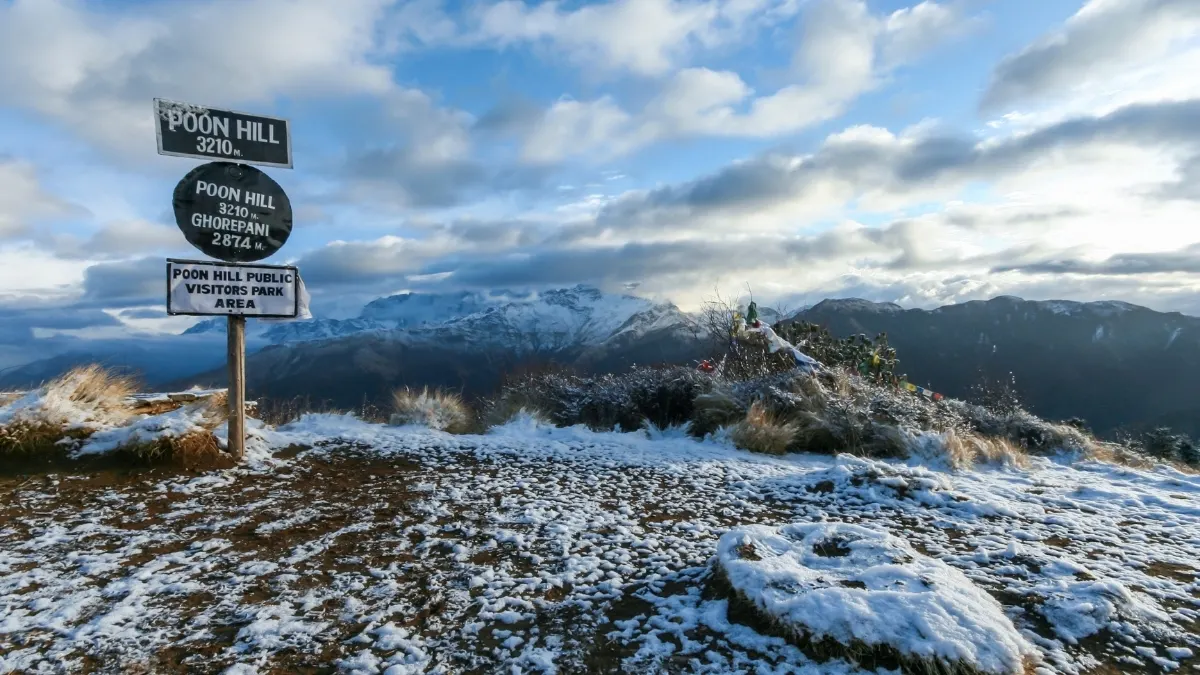
Poon Hill is the crown of this trek. At 3,210 meters, it's the highest point you'll reach, and honestly, the views from up there make every uphill step worth it.
Total Elevation Gain of the Full Trek (~2,140 m)
From Nayapul to Poon Hill, you gain roughly 2,140 meters in total. That's a solid climb spread across multiple days, which is precisely why the trek feels manageable rather than brutal.
Why This Trek Is Considered Moderate in Altitude
The Ghorepani Poon Hill Trek elevation tops out at 3,210 meters. That's high enough to feel the altitude but low enough that most healthy people handle it fine.
Compare that to Everest Base Camp at 5,364 meters or Annapurna Base Camp at 4,130 meters the Poon Hill trek is noticeably easier on your lungs.
How It Compares to Other Nepal Treks
|
Trek |
Highest Altitude |
|
Poon Hill Trek |
3,210 m |
|
4,500 m |
|
|
Annapurna Base Camp |
4,130 m |
|
3,870 m |
|
|
Everest Base Camp |
5,364 m |
Poon Hill is very beginner-friendly. For a direct comparison, see our Mardi Himal Trek vs Ghorepani Poon Hill Trek guide.
Day-by-Day Ghorepani Poon Hill Trek Elevation Profile
The elevation on the Poon Hill trek changes gradually from day to day, which is one reason why this trek is considered beginner-friendly. Starting from lower elevations, the trail slowly climbs through villages like Tikhedhunga, Ulleri, and Ghorepani before reaching the highest point at Poon Hill.
Understanding the daily altitude gain helps trekkers prepare mentally and physically for each section of the journey, especially the steep uphill climbs and early morning hike to Poon Hill.
Day 01: Arrival in Kathmandu (1,310 m)
You land in Kathmandu at 1,310 meters. It's a light day for hotel check-in, maybe some local sightseeing in Thamel or around Pashupatinath and Boudhanath. Your body starts adjusting to Nepal's altitude without any stress.
Day 02: Drive from Kathmandu to Pokhara (820 m)
The drive takes about 6–7 hours by tourist bus. Interestingly, Pokhara sits lower than Kathmandu at just 820 meters. So this is actually a slight elevation drop, your easiest "trekking" day by far.
Day 03: Drive to Nayapul and Trek to Ulleri via Tikhedhunga (2,050 m)
This section is where the real climb begins. You drive from Pokhara to Nayapul (1,070 m) and start trekking.
- Nayapul: 1,070 m
- Tikhedhunga: 1,540 m
- Ulleri: 2,050 m
The elevation gain on Day 3 alone is around 980 meters. You'll hit the famous Ulleri staircase on this day more on that below. It's steep, it's long, and it's the moment most trekkers realize this trek is serious. Make sure you know the signs of altitude sickness before this day begins.
Day 04: Trek from Ulleri to Ghorepani (2,874 m)
A long uphill day through dense rhododendron forests. The trail is beautiful but relentless you're gaining roughly 824 meters from Ulleri to Ghorepani. By the time you arrive at Ghorepani, your legs will know they've worked.
The good news? Tea houses here are cozy, the food is warm, and you sleep well at this altitude.
Day 05: Hike to Poon Hill (3,210 m) and Trek to Tadapani (2,685 m)
The highlight of the whole trek. You wake up around 4–5 AM, grab a headlamp, and push 336 meters up to Poon Hill (3,210 m) for the sunrise. It's about 1.5 km and takes 45 minutes to an hour. The path consists of steep stone stairs that are dark and cold, making it slightly breathless but 100% worth it.
After sunrise, you descend toward Tadapani (2,685 m). The descent is gentle, and the forest is gorgeous, leading ultimately toward the beautiful Gurung settlement of Ghandruk village.
Day 06: Trek to Ghandruk Village (1,950 m) and Drive to Pokhara
A big elevation drop today. You trek down to Ghandruk village at 1,950 meters, home to the Gurung people and their rich culture, with stunning mountain views all around. Then it's a drive back to Pokhara. Your knees will feel this descent more than your lungs.
Day 07: Drive Back to Kathmandu (1,310 m)
Tourist bus from Pokhara to Kathmandu. The trek is officially done. You're back to 1,310 meters and probably already planning your next trek.
Day 08: International Departure
Final departure from Kathmandu. Time to head home tired legs, full memory card, big smiles.
Planning the trek yourself? Explore our complete Ghorepani Poon Hill Trek with route details, permits, and daily walking hours.
Complete Elevation Chart From Nayapul to Poon Hill
|
Trek Location |
Elevation |
|
Nayapul |
1,070 m / 3,510 ft |
|
Tikhedhunga |
1,540 m / 5,052 ft |
|
Ulleri |
2,050 m / 6,726 ft |
|
Ghorepani |
2,874 m / 9,429 ft |
|
Poon Hill |
3,210 m / 10,531 ft |
|
Tadapani |
2,610 m / 8,563 ft |
|
Ghandruk |
1,940 m / 6,365 ft |
Where the Steepest Elevation Gain Happens
- Tikhedhunga to Ulleri (~510 m gain): This is the brutal staircase section. Over 3,000–3,500 stone steps packed into a short distance. Your legs will burn here.
- Ulleri to Ghorepani (~824 m gain): the long forest grind. It's not as steep as the staircase, but it goes on for hours. Many trekkers find this section mentally harder than the stairs.
What the Elevation Chart Tells Trekkers
The chart is more useful than it looks:
- Daily altitude progression: You know exactly what's coming each morning
- Difficulty planning spot the hard days (Day 3 and 4) versus easier ones
- Acclimatization understanding: See where the altitude starts to matter (above Ghorepani)
- Energy management pace yourself based on what's ahead that day
Ghorepani Altitude Explained
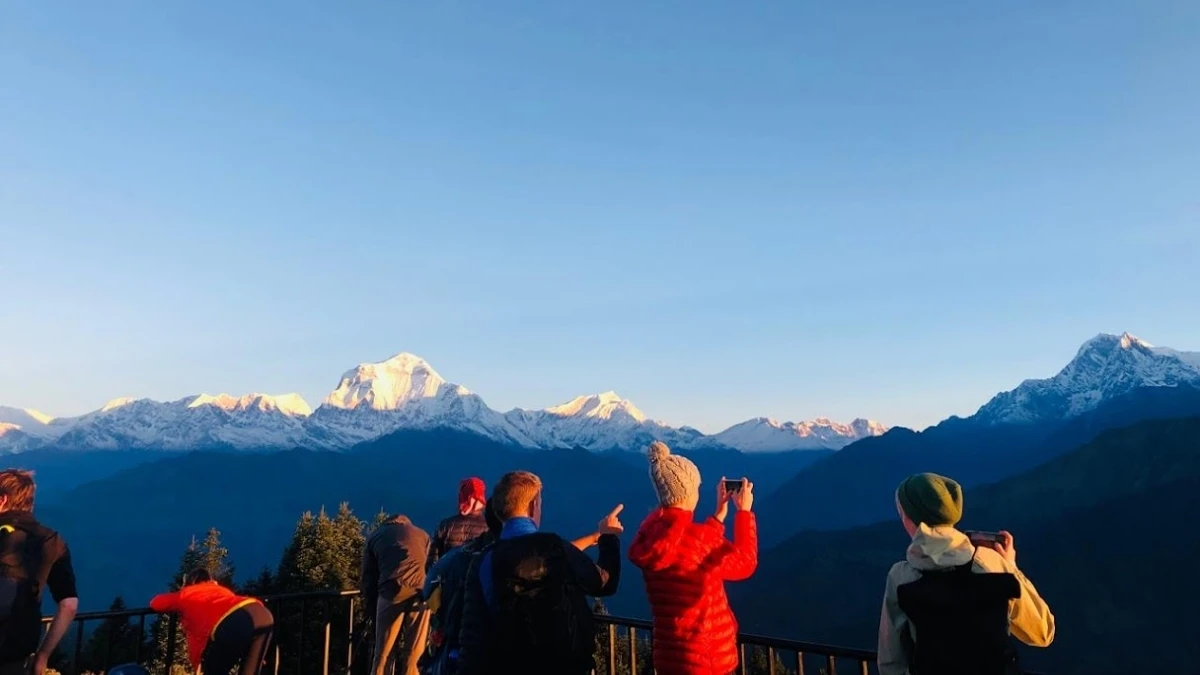
Ghorepani is the main overnight stop before the famous Poon Hill sunrise hike. At 2,874 meters, it is high enough to feel the altitude while remaining manageable, similar to the overnight villages on the other best treks in the Annapurna region.
Understanding Ghorepani's elevation helps you prepare for the uphill climb, colder temperatures, and changing mountain conditions.
Ghorepani Elevation in Meters and Feet
Ghorepani sits at 2,874 meters (9,429 feet). It's a small mountain village perched in the hills, and it's the base camp for your Poon Hill sunrise hike.
How Ghorepani Compares to Other Trek Villages in Nepal
Ghorepani is higher than most beginner trek destinations. Namche Bazaar on the Everest Base Camp route sits at 3,440 m, so Ghorepani is lower. But it's higher than Chhomrong (2,170 m) on the Annapurna Base Camp trail. It's a solid mid-altitude village.
Why Trekkers Overnight at Ghorepani
- Acclimatization is smart sleeping at 2,874 m before pushing to 3,210 m the next morning it follows the same principle built into longer routes like the Annapurna Circuit Trek. Your body adjusts overnight.
- Poon Hill sunrise logistics: You simply can't do the sunrise hike without sleeping here first.
- Tea house experience: The lodges in Ghorepani are some of the most comfortable on this route. Good food, warm beds, and mountain views.
Steepest Elevation Sections: Where the Trek Gets Hard
Tikhedhunga to Ulleri The Famous Staircase Climb
This section has over 3,000–3,500 stone steps climbing roughly 510 meters in a very short distance. Most trekkers say this portion is the single hardest hour of the whole trek. It hits you early on Day 3 before you even break in your legs properly.
If you want to compare how this stacks up against a more demanding climb, read about the most challenging treks in Nepal it puts the Ulleri staircase in useful perspective. Go slow. Take breaks. Don't rush it.
Ulleri to Ghorepani The Long Forest Haul
After Ulleri, you still have ~824 meters of climbing over 4–5 hours to reach Ghorepani. The trail passes through beautiful rhododendron forests with waterfalls and occasional mountain views, but the uphill is relentless.
This section is harder mentally than physically. The staircase is behind you, but the climb just keeps going.
Why Day 2 of Trekking Is the Most Physically Demanding
Day 3 of the overall itinerary (Day 2 of actual trekking) presents the greatest challenge, as it goes from Tikhedhunga to Ulleri to Ghorepani. You're climbing from 1,540 m to 2,874 m. That's 1,334 meters of total elevation gain in a single day. No other day comes close.
Altitude Sickness on Ghorepani Poon Hill Trek
Even though the Poon Hill trek is considered moderate in altitude, some trekkers can still feel mild altitude sickness symptoms as they climb above 2,500 meters. Understanding the risks, symptoms, and prevention methods is important for staying safe and comfortable during the trek.
Is 3,210 Meters High Enough to Cause Altitude Sickness?
Yes, it can. Once trekkers reach Ghorepani (2,874 m) and continue towards Poon Hill (3,210 m), they enter a zone where some individuals experience symptoms. The risk is low to moderate on this trek. Most healthy trekkers complete it without any serious symptoms. But it's not zero.
To understand exactly why, read our full explainer on what high-altitude sickness is and how it develops above 2,500 meters.
Common Symptoms Trekkers Report on This Route
- Headache (the most common one)
- Fatigue that feels out of proportion to the effort
- Mild dizziness
- Disrupted or restless sleep at Ghorepani
These are mild AMS (Acute Mountain Sickness) symptoms. They're uncomfortable but manageable if you catch them early.
Who Is Most at Risk
- Trekkers who ascend too fast without rest days
- People who are poorly hydrated
- Anyone with a history of previous AMS
- Trekkers who skip sleep and push through exhaustion
How to Prevent Altitude Sickness on This Trek
- Walk slowly, seriously, slower than you think you need to
- Drink 3–4 liters of water per day. Altitude dehydrates you faster than you realize
- No alcohol, especially at Ghorepani before the Poon Hill push
- Sleep properly don't stay up late chatting in the tea house
- Carry Diamox (acetazolamide) if your doctor recommends it.
Read our guide on whether Diamox is necessary for high-altitude treks before making a decision
Red Flag Symptoms When You Must Descend Immediately
These symptoms are not the type that can be pushed through:
- Severe, worsening headache that doesn't respond to paracetamol
- Vomiting
- Loss of coordination or balance
- Confusion or disorientation
- Breathlessness at rest
If any of these hit, descend immediately. Don't wait until morning.
Overall Difficulty Rating (Moderate, Suitable for Beginners)
The elevation profile of the Poon Hill trek is genuinely manageable for first-timers and is consistently listed among the best treks for beginners in Nepal. The altitude never gets high enough to create serious acclimatization problems, and the trek is short enough that fatigue doesn't build up over too many days.
Most Physically Demanding Sections by Elevation
- Tikhedhunga to Ulleri (staircase ~510 m)
- Ulleri to Ghorepani (forest climb ~824 m)
- Ghorepani to Poon Hill (short but steep ~336 m before dawn)
How Altitude Affects Your Breathing and Energy Output
Above 2,500 meters, the air is noticeably thinner. You might feel slightly breathless on uphills even if you're fit. Your body works harder to get the same amount of oxygen, so tasks that feel easy at sea level take more effort here. That's normal. Go slower, breathe deeper.
Note: Minimum Fitness Level Needed You don't need to be an athlete. But you should be able to walk 5–6 hours a day on uneven terrain. If you can climb stairs at a decent pace and you exercise a few times a week, you'll be fine. For those who are completely sedentary, begin training 4–6 weeks prior to the trek.
Still have questions about the Ghorepani Poon Hill Trek elevation, altitude, or difficulty? Contact Nepal Gateway Trekking for personalized trekking advice, itinerary planning, and expert recommendations based on your fitness level.
Tips to Manage Elevation on the Poon Hill Trek
- Walk slowly and maintain a steady pace, especially after Ulleri
- Avoid rushing on steep uphill sections
- Drink 3–4 liters of water daily
- Carry electrolyte tablets to stay hydrated
- Drink water even when you do not feel thirsty
- Wear proper layers for changing mountain temperatures
- Carry a warm jacket for the early-morning Poon Hill hike
- Use gloves, hats, and thermal layers during colder months
- Sleep early at Ghorepani before the sunrise hike
- Avoid alcohol and smoking at higher altitude
- Allow your body time to acclimatize naturally
- Trek during spring or autumn for the most comfortable conditions
H2: Best Time of Year for Comfortable Altitude Conditions
- Spring (March–May): warm days, rhododendrons in full bloom, excellent mountain visibility.
- Autumn (Sept–Nov): crisp skies, the best visibility of the year, and stable weather for a full season-by-season breakdown
See our guide on spring vs autumn trekking in Nepal.
Both seasons are ideal. Winter (Dec–Feb) is possible but cold at altitude. Monsoon (June–Aug) is not recommended trails get muddy and views are obscured.
Are you still deciding when to go? Read our month-by-month guide to the best time for trekking in Nepal.
Mountains Visible From Poon Hill (3,210 m)
This is the payoff. Standing at 3,210 meters at sunrise, you get a 360-degree panorama of the Annapurna Himalaya and some of the world's highest peaks:
|
Dhaulagiri |
8,167 m |
|
Annapurna I |
8,091 m |
|
Annapurna South |
7,219 m |
|
Machhapuchhre (Fishtail) |
6,993 m |
|
Hiunchuli |
6,441 m |
|
Dhaulagiri |
8,167 m |
Best visibility conditions? Clear post-monsoon mornings in October and November are legendary. Winter mornings (December–January) also offer razor-sharp views when skies are cloud-free.
Final Thoughts
The elevation of the Ghorepani Poon Hill Trek, rising from 1,070 m at Nayapul to 3,210 m at Poon Hill, is one of the most rewarding altitude journeys you can do in Nepal as a beginner. If you're ready for more after this trek, compare it with the Annapurna Base Camp Trek's difficulty as a natural next challenge.
Is it easy? Not exactly. The Ulleri staircase will humble you. The Ulleri-to-Ghorepani grind is relentless. And that 4 AM wake-up call in the cold is a test of willpower.
But at the end of the day, when you're standing on Poon Hill watching the Annapurna and Dhaulagiri massifs turn gold in the sunrise, you'll know every meter of that climb was worth it.
Ready to experience the sunrise from Poon Hill? Explore our Ghorepani Poon Hill Trek packages or contact our Nepal gateway trekking experts for a customized itinerary.
FAQs
What is the highest elevation on the Ghorepani Poon Hill Trek?
The highest point is Poon Hill at 3,210 meters (10,531 feet). That's where the famous sunrise viewpoint sits.
What is the altitude of Ghorepani village?
Ghorepani sits at 2,874 meters (9,429 feet). It's the last overnight stop before the Poon Hill summit hike.
What is the total elevation gain of the entire Poon Hill Trek?
From Nayapul (1,070 m) to Poon Hill (3,210 m), the total elevation gain is approximately 2,140 meters.
How much elevation gain is there from Ghorepani to Poon Hill?
Around 336 meters of elevation gain over roughly 1.5 km of trail. It takes 45 minutes to an hour. Steep, but short.
How difficult is the Ulleri to Ghorepani climb?
It's the longest uphill section of the trek, about 824 meters of gain over 8–9 km and 4–5 hours of walking. The trail passes through rhododendron forest and is physically demanding but doable at a steady pace.
Can altitude sickness happen at 3,210 meters?
Yes, it can. The risk is low to moderate, but anything above 2,500 m puts you in altitude sickness territory. Mild symptoms like headaches and fatigue are possible. Serious AMS is rare on this trek but not impossible. Take your time, stay hydrated, and be aware of the warning signs.
Can unfit or first-time trekkers handle the elevation?
Yes, most can. This trek is one of the best starting points in Nepal precisely because the altitude stays manageable. That said, you should be able to walk 5–6 hours daily and handle sustained uphill sections. Some basic fitness preparation is very helpful.
What is the elevation of Nayapul where the trek starts?
Nayapul sits at 1,070 meters (3,510 feet). It's a small roadhead town about 1.5 hours' drive from Pokhara.
How does Poon Hill's altitude compare to Everest Base Camp's?
Poon Hill tops out at 3,210 m. Everest Base Camp sits at 5,364 m that's over 2,100 meters higher. The altitude challenge on the Poon Hill trek is significantly lower, making it far more accessible to beginners and casual trekkers.
Is acclimatization needed for the Poon Hill Trek?
A formal acclimatization day isn't required the way it is on higher treks. But the day-by-day elevation gain is naturally gradual enough to let your body adjust. Sleeping at Ghorepani (2,874 m) before pushing to Poon Hill (3,210 m) acts as a natural acclimatization step.