Every trekker researching the Khumbu region eventually lands on the same fork in the road: Gokyo Lakes Trek vs Everest Base Camp Trek. Both routes leave Kathmandu on the same short, white-knuckle flight into Lukla.
Both push past 5,000 meters into the thin mountain air. And both run as 14-day, moderate-grade itineraries on paper. But once you're past Namche Bazaar, the two trails barely overlap.
This guide settles the Gokyo Lakes Trek vs. Everest Base Camp Trek question using the actual itinerary, pricing, and route data from Nepal Gateway Trekking's own Everest Base Camp and Gokyo packages, rather than rough averages.
We'll cover duration, cost, altitude, difficulty, crowds, and whether you should attempt Everest region trekking that combines both rather than picking one and wondering about the other.
Gokyo Lakes Trek vs Everest Base Camp Trek: Quick Answer
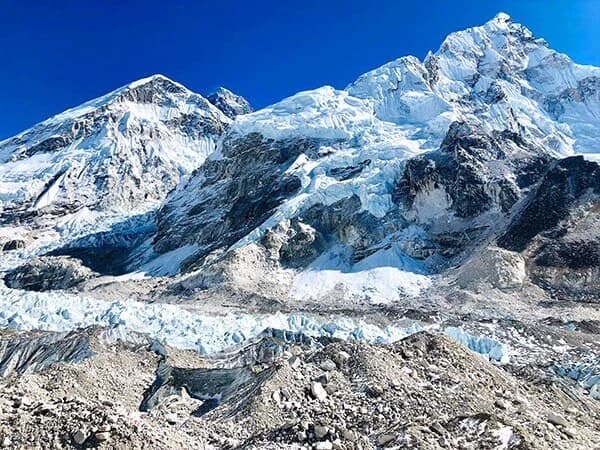
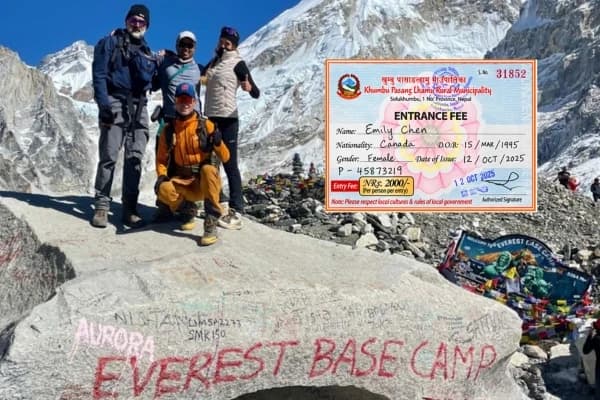
The Everest Base Camp Trek follows the trail mountaineers have used since Tenzing Norgay's and Edmund Hillary's first ascent in 1953. It runs through Namche Bazaar, Tengboche Monastery, and Dingboche before reaching the Base Camp marker at the foot of the Khumbu Glacier and the Kala Patthar viewpoint at 5,545 meters, the trek's highest point.
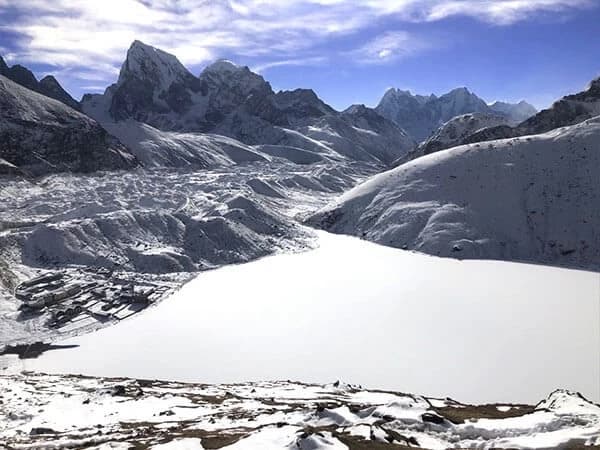
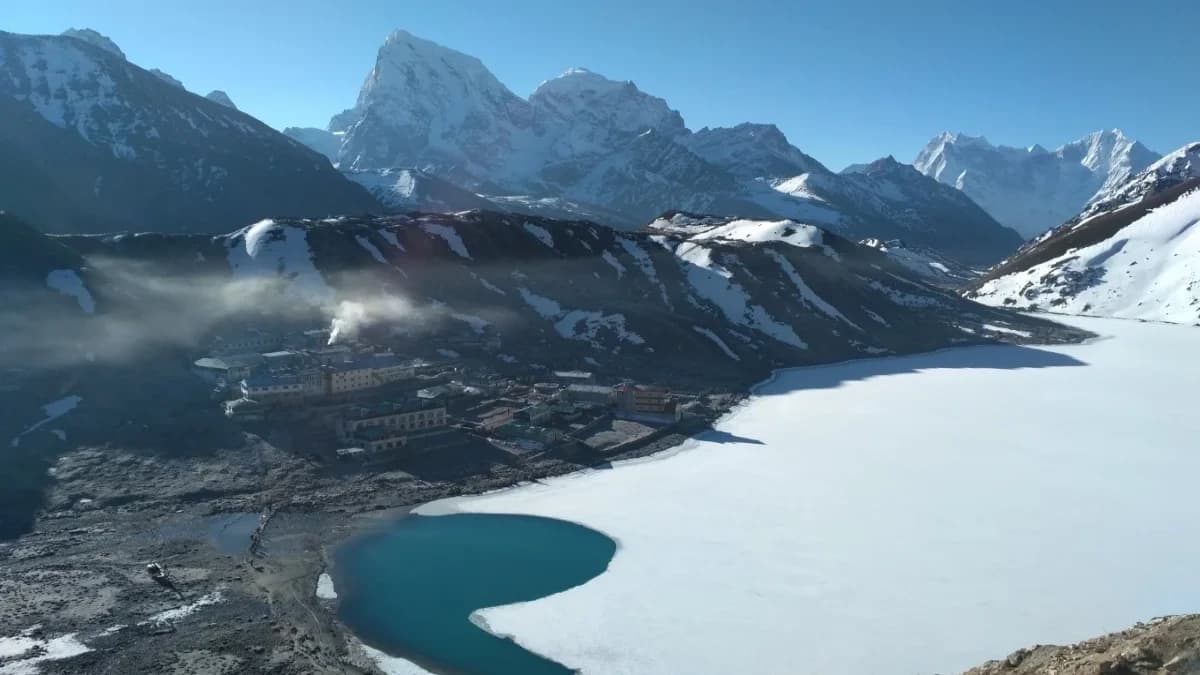
The Gokyo Lakes Trek shares the same opening days through Namche and Tengboche, then branches off through the quieter village of Phortse toward a chain of six glacial lakes (part of a wider system of 19 lakes in the valley) sitting beneath Cho Oyu, with the trail skirting the Ngozumpa Glacier, Nepal's largest.
The payoff is Gokyo Ri at 5,357 meters, a summit that delivers a 360-degree view of four 8,000-meter peaks: Everest, Lhotse, Makalu, and Cho Oyu.
Still deciding? Compare our detailed Everest Base Camp and Gokyo Lakes trek itineraries to see which route best matches your travel style, fitness level, and available time.
Everest Base Camp Itinerary
The Everest Base Camp itinerary we run lasts 14 days, including two built-in acclimatization stops:
- Day 1–2: Arrive Kathmandu, fly to Lukla, trek to Phakding
- Day 3–4: Trek to Namche Bazaar, acclimatization day with a side hike to Hotel Everest View
- Day 5–7: Tengboche Monastery, on to Dingboche, second acclimatization day with an optional climb of Nangkartshang Peak (5,083m)
- Day 8–10: Lobuche, then Everest Base Camp and back to Gorak Shep, followed by sunrise on Kala Patthar and descent to Pheriche
- Day 11–14: Namche, Lukla, fly back to Kathmandu, departure
A guide who has run this Everest Base Camp itinerary dozens of times will explain that the final push from Lobuche to Base Camp and Kala Patthar over two consecutive days is the most physically and emotionally demanding part of the whole trip.
Gokyo Lakes Trek Duration Actually Involves
The Gokyo Lakes Trek duration on our standard package also runs 14 days, following the identical opening route through Namche and Tengboche before diverging:
- Day 1–4: Kathmandu, Lukla, Phakding, Namche Bazaar with acclimatization
- Day 5–6: Tengboche Monastery, then a short detour to the quieter village of Phortse
- Day 7–9: Dole, Machhermo, arrive at Gokyo village beside the lake at 4,790 m.
- Day 10–11: Pre-dawn climb of Gokyo Ri, descend to Dole, then on to Namche via Khumjung and Khunde
- Day 12–14: Lukla, fly to Kathmandu, departure
Because this Gokyo Lakes Trek duration shares its first five days with the Everest Base Camp route before branching at Tengboche rather than Namche, you actually get a taste of both trails before the paths properly separate, something most generic comparisons miss.
Gokyo Lakes Trek and Everest Base Camp Trek at a Glance
|
Factor |
Everest Base Camp Trek |
Gokyo Lakes Trek |
|
Standard Duration |
14 days |
14 days (can be tightened to 11–13) |
|
Trip Grade |
Moderate |
Moderate |
|
Max Altitude |
5,545m (Kala Patthar) |
5,357m (Gokyo Ri) |
|
Trekking Distance |
Approx. 130 km round trip |
Approx. 100 km round trip |
|
Starting Price (solo) |
US$1,420 |
US$1,400 |
|
Group Price (10–16 pax) |
US$1,270 |
US$1,250 |
|
Permits Required |
Sagarmatha National Park Permit + Khumbu Pasang Lhamu Municipality Permit |
Same two permits |
|
Best Season |
March–May & September–November |
March–May & September–November |
|
Accommodation |
Hotel in Kathmandu, teahouse on trek |
Hotel in Kathmandu, teahouse on trek |
When trekkers ask us to settle the Everest Base Camp vs. Gokyo Lakes debate in one sentence, we usually say this: Everest Base Camp offers a landmark, Gokyo offers a landscape, and both have the same moderate difficulty rating on paper.
Everest Base Camp Trek Difficulty vs Gokyo Lakes Trek Difficulty
Both treks officially carry a Moderate trip grade, so neither is dramatically harder than the other on paper. That said, the two routes earn their difficulty differently. Everest Base Camp Trek difficulty comes mostly from sustained altitude exposure over roughly 130 kilometers, with the hardest stretch being the final two days above 5,000 meters.
Gokyo Lakes Trek difficulty, by comparison, builds from covering around 100 kilometers in 9 to 10 kilometers of daily walking, plus the extra detour days through Phortse, Dole, and Machhermo before you even reach the lakes.
If you're weighing Everest Base Camp trek difficulty against Gokyo on a single-trek basis, they land close enough that fitness and acclimatization habits matter more than which trail you pick.
Where the difficulty gap actually opens up is if you extend Gokyo into the Cho La Pass route to reach Everest Base Camp as well, since stacking the 5,420-meter pass crossing on top of the Kala Patthar climb pushes the combined trip well past either standalone trek.
Gokyo Lakes Trek Cost vs Everest Base Camp Trek Cost
The Gokyo Lakes Trek cost on our departures starts at US$1,400 per person for solo trekkers, dropping to US$1,320 for groups of 2 to 4, US$1,280 for 5 to 10, and US$1,250 for groups of 10 to 16. The Everest Base Camp Trek cost starts slightly higher at US$1,420 solo, scaling down to US$1,340, US$1,300, and US$1,270 at the same group sizes.
Both packages include round-trip Lukla flights, all required permits, twin-sharing teahouse accommodation, three meals a day on the trail, a licensed guide, a porter shared between two trekkers, and two to three nights in a Kathmandu hotel.
Neither the Gokyo Lakes Trek cost nor the Everest Base Camp pricing includes travel insurance, your Nepal visa, alcoholic or hot drinks on the trail, or tipping, so budget those separately on either route.
Can't choose between the two? Consider combining both routes through the spectacular Cho La Pass for the ultimate Everest region adventure. Join with Nepal Gateway Trekking now.
Crowds and Solitude in the Khumbu Region
Both treks share the same crowded opening days through Namche Bazaar, since every trekker in the Khumbu region passes through this checkpoint regardless of final destination. The real difference shows up after Tengboche.
Everest Base Camp continues through the increasingly busy stops of Dingboche, Lobuche, and Gorak Shep, all of which fill up fast in March-May and September-November.
Gokyo, once it branches off through Phortse, sees noticeably less trail traffic, since most trekkers in the Khumbu region default to the Everest Base Camp trail. For anyone who wants the Himalayan experience without the crowd noise around Base Camp, this fork at Tengboche is often the key choice.
Why Everest Base Camp Still Wins Hearts?
There's a reason Everest Base Camp remains the most requested trek in the Khumbu region. Standing at the Base Camp marker beside the Khumbu Glacier, then watching the sunrise hit Everest, Lhotse, and Nuptse from Kala Patthar the next morning, creates moments that end up framed on someone's wall for decades.
The trail also runs entirely inside Sagarmatha National Park, a UNESCO World Heritage Site, and crosses the towering Hillary suspension bridge, the tallest in Nepal. Add stops at Tengboche Monastery, where monks hold prayer ceremonies open to passing trekkers at 6am and 3pm, and the cultural depth here goes well beyond the photo at the marker stone.
Why Gokyo Lakes Deserves More Attention?
Many experienced trekkers quietly prefer Gokyo, and the view from Gokyo Ri is the main reason. It delivers a single sweep across Everest, Lhotse, Makalu, and Cho Oyu, four 8,000-meter peaks at once, something the Everest Base Camp route's Kala Patthar viewpoint doesn't quite match.
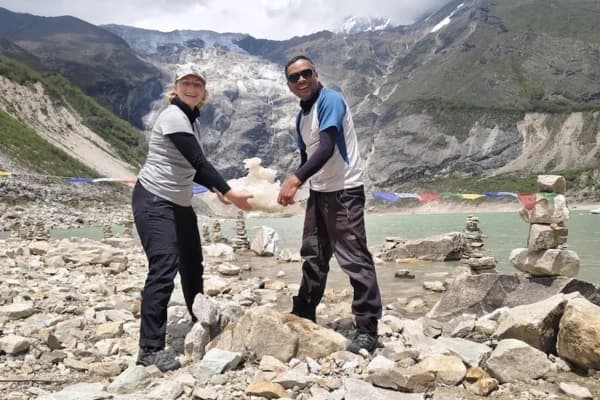
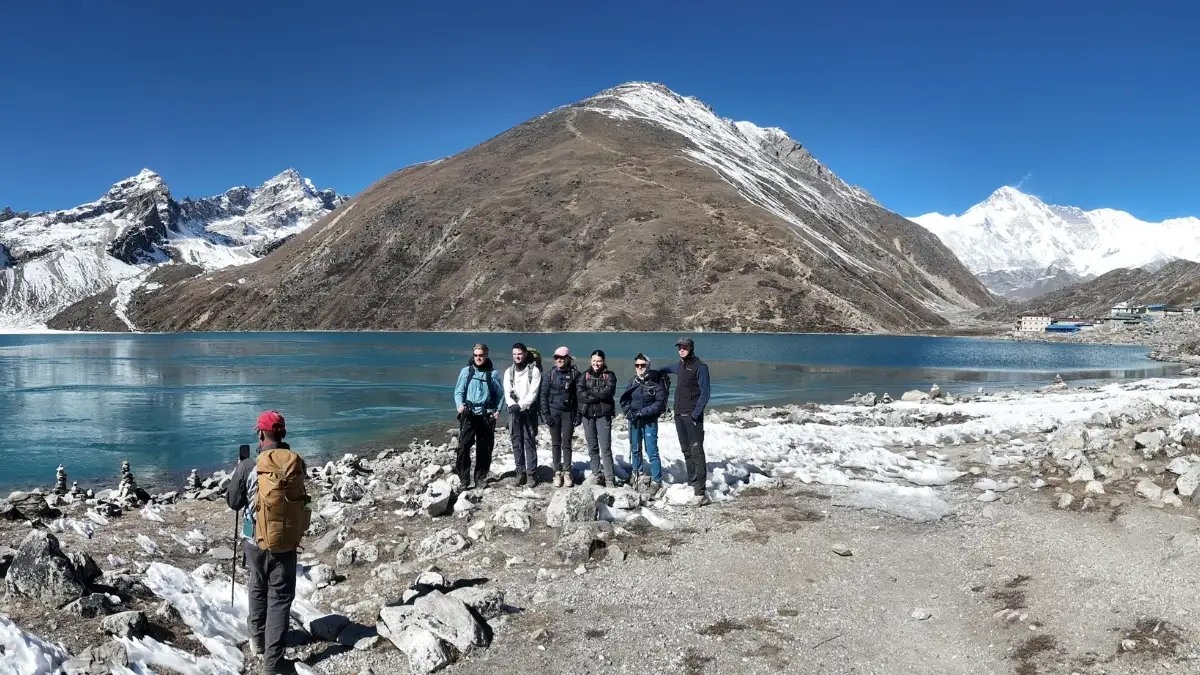
Then there are the lakes. The turquoise waters of the main Gokyo Lake at 4,790 meters stop most trekkers mid-step, set against the Ngozumpa Glacier.
Because the route detours through Phortse rather than continuing straight through Dingboche, you also get a quieter, more traditional Sherpa village experience that the busier Everest Base Camp corridor doesn't offer in quite the same way.
Gokyo is just the beginning, discover what makes these hidden alpine gems the most spectacular highest lakes in Nepal.
Everest Base Camp vs. Gokyo Lakes: Which Should You Choose?
The right trek depends on what you're looking for in the Everest region.
Choose the Everest Base Camp Trek if:
- You want to reach the world's most famous trekking destination.
- Standing at Everest Base Camp is a lifelong dream.
- You want to follow the classic Everest trail used by thousands of trekkers every year.
- You don't mind busier trails and teahouses during peak season.
- You want to experience both Everest Base Camp and the famous Kala Patthar viewpoint.
Choose Gokyo Lakes Trek if:
- You prefer quieter trails and fewer crowds.
- You want to see the stunning turquoise Gokyo Lakes.
- Scenic mountain views are more important than reaching Base Camp.
- You want panoramic views of Everest, Lhotse, Makalu, and Cho Oyu from Gokyo Ri.
- You enjoy a more peaceful and less commercial trekking experience.
Choose Everest Base Camp for the iconic achievement and classic Everest experience. Choose Gokyo Lakes for better scenery, fewer crowds, and a quieter trekking journey.
Still deciding which Nepal trek is right for you? If you're considering an alternative to the popular Everest routes, read our detailed guide on Manaslu Circuit Trek vs Everest Base Camp Trek to compare the difficulty, scenery, crowds, altitude, and overall trekking experience before you choose your adventure.
Final Thoughts
There's no wrong answer in the Gokyo Lakes Trek vs Everest Base Camp Trek debate, only the one that matches what you actually want from your time in the Khumbu region. Want the legacy, the Khumbu Glacier, and the most photographed viewpoint in Nepal?
Everest Base Camp delivers that without compromise. Want turquoise lakes, a quieter trail past Phortse, and a summit view across four 8,000-meter peaks? Gokyo Lakes is the better fit. And if your schedule and fitness allow it, linking both over the Cho La Pass might be the single best decision you make in your overall trekking plan for the Everest region.
Whether you're drawn to the iconic Everest Base Camp trail or the peaceful beauty of the Gokyo Lakes, Contact Nepal Gateway Trekking it will help you choose the perfect trek and handle every detail from arrival to departure.
FAQs
Is the Gokyo Lakes Trek difficulty higher than the Everest Base Camp Trek difficulty?
Not by much. Both are officially graded Moderate. The challenge of reaching Everest Base Camp comes from sustained altitude over its final days, while Gokyo's comes from covering more daily distance and extra detour villages.
What is the average Gokyo Lakes trek duration, including acclimatization days?
Our standard package runs 14 days, including acclimatization at Namche Bazaar, with a tighter 11- to 13-day version available for trekkers on a shorter schedule.
Does the Gokyo Lakes Trek cost include permits and flights?
Yes. The Gokyo Lakes Trek cost in our packages includes the Sagarmatha National Park permit, the Khumbu Pasang Lhamu Municipality permit, and round-trip Kathmandu-Lukla flights, though travel insurance and personal expenses are excluded.
Can I customize my Everest Base Camp itinerary to include Gokyo?
Yes. Many trekkers extend their Everest Base Camp itinerary into the Gokyo Lakes with Everest Base Camp Trek via Cho La Pass, turning two separate routes into one combined Everest region trekking loop, though it's a notably harder trip than either trek alone.
What's the best season for trekking in the Everest region in general?
March to May and September to November offer the clearest skies and most stable weather for both the Everest Base Camp and Gokyo routes.