As you climb higher on the Everest Base Camp trek, the air becomes freezing cold and nearly completely dry. Breathing this bone-dry, thin air above 3,500 meters dries out the lining of your lungs and airways fast. The result is the dreaded Khumbu cough, a brutal, dry, hacking cough that tears up your throat and can get so bad it can fracture ribs, ruin your sleep, and cut your trek short.
The cough is not a typical cold caused by a virus or bacteria, so standard antibiotics or cold medicine will not be effective. It won't work. Around Dingboche, when the irritation starts, each breath of freezing mountain air is like sandpaper on your raw airways.
The incessant hacking leaves you feeling depleted, robbing the body of the vital oxygen it so desperately needs to acclimatize and turning what should be a bucket-list adventure into a breathless, painful slog all the way back to Kathmandu.
This guide covers what Khumbu cough is, what causes it, the signs and symptoms, how to treat Khumbu cough on the trail, and how to prevent Khumbu cough before it starts, as well as when a cough goes from a nuisance to something you need to act on.
To protect your airways and lungs and to complete your journey successfully, wear a buff to keep in warmth and moisture, drink aggressively, use steam inhalation, and descend if symptoms become severe.
QUICK REVIEW:
- Khumbu cough is a dry, persistent cough caused by breathing cold, dry, high-altitude air, not by a virus or bacteria.
- Symptoms include a scratchy throat, dry hacking cough, hoarse voice, chest soreness, and coughing that worsens at night or during exertion.
- Prevent it by wearing a buff over your nose and mouth, staying well hydrated, breathing through your nose, trekking slowly, and following proper acclimatization.
- Treat it with warm fluids, steam inhalation, throat lozenges, rest, and reduced trekking pace. Antibiotics usually do not help.
- Most trekkers recover within 3–7 days after descending to lower elevations, with symptoms often improving within 24–48 hours.
- Seek immediate medical help if you develop severe shortness of breath, a wet cough, high fever, low oxygen levels, or chest pain, as these may indicate HAPE or another serious condition.
- The best protection is proper preparation, gradual ascent, and following a well-planned acclimatization schedule throughout your Everest trek.
Why Is It Called Khumbu Cough?
The name "Khumbu cough" comes from the Khumbu region of Nepal, home to Mount Everest and the famous Everest Base Camp Trek. The Khumbu region is one of the places where trekkers are most likely to develop this persistent dry cough due to the high altitudes, cold temperatures, and very dry air.
The term has been used for many years by Sherpas and experienced mountaineers and local guides to describe the cough that often develops as trekkers spend increased time at high altitude.
It was the association of the condition with the Everest region that led to its name. Many trekkers come to the Khumbu with no respiratory troubles, but after a few days trekking through villages like Namche Bazaar, Tengboche, Dingboche, Lobuche, and Gorak Shep, they begin to develop a dry hacking cough.
As they climb higher, the air is colder and drier, and they are working harder. Such conditions can irritate the airways and make the cough more obvious.
Similar altitude-related coughs can occur on other popular Himalayan trekking routes, including the Annapurna Circuit and Manaslu Circuit, but the term "Khumbu cough" has become the widely recognized name due to its strong association with the Everest Base Camp trail.
The name is the term most commonly used today by trekkers, guides, and trekking professionals to describe this common high-altitude respiratory condition.
What Causes Khumbu Cough?
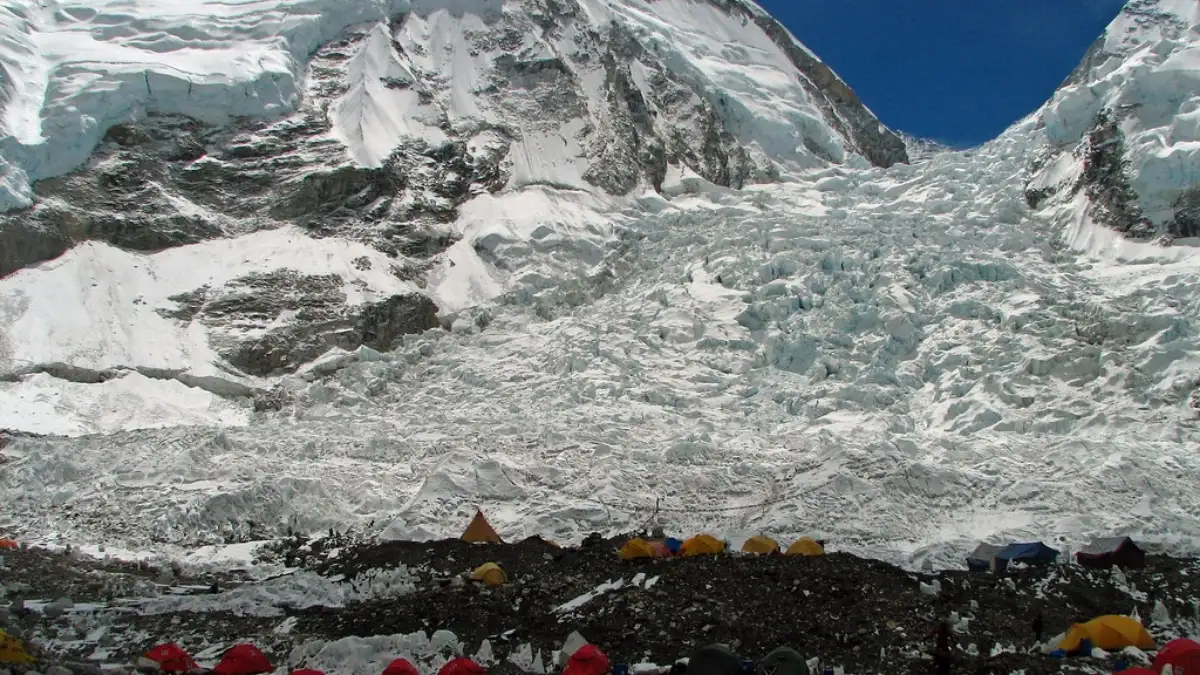
Khumbu cough is a respiratory condition caused by extreme environmental conditions at high altitudes, especially above 2,500 meters (8,200 feet). It is not bacterial or viral but a natural response to the cold, dry air and decreased humidity that is typical in mountainous areas such as the Khumbu Valley in Nepal.
As you climb, the air becomes thinner and has less moisture in it. When you’re working hard, say, on a walk to Everest Base Camp, you’ll begin breathing quicker to compensate for the reduced concentrations of oxygen.
This means more cold, dry air passes through your airways, gradually drying and irritating the lining of your throat and lungs. This irritation causes a dry cough that is persistent and often worsens with activity or at bedtime.
Other environmental factors that may contribute to the condition include dusty trails, strong mountain winds, and prolonged exposure to freezing temperatures. The higher you go and the longer you stay, the greater the chance of getting the Khumbu cough.
Studies in the Everest region estimate that between 22% and 42% of trekkers will develop Khumbu cough while trekking at altitudes of around 4,200 to 4,900 meters. While the cough can be annoying and persistent, it usually gets better when you go down to lower elevations where the air is warmer, denser, and more humid.
Common Causes of Khumbu Cough
- Breathing cold, dry mountain air
- Low humidity at high altitude
- Increased breathing due to reduced oxygen levels
- Irritation and drying of the airways
- Dusty trekking trails and strong winds
- Prolonged exposure to elevations above 2,500 meters
- Physical exertion during long days of trekking
Planning the Everest Base Camp Trek? Learn how to avoid altitude sickness before it starts with our complete prevention guide.
Who Is Most at Risk of Developing Khumbu Cough?
Many trekkers feel that being in excellent physical shape will prevent them from getting sick on the trail. But with Khumbu cough, your cardiovascular fitness doesn’t matter as much as you might think.
The trigger is environmental, not physical stamina, so regular marathon runners and seasoned athletes are just as vulnerable as average trekkers. The greatest danger is for those who climb too fast, do not drink enough water, or do not protect their airways from the harsh mountain climate.
|
Risk Factor |
Why It Elevates Your Risk |
|
Fast Ascent |
Rushing up the trail leaves your body with zero time to acclimatize. Your breathing rate stays dangerously high, forcing your lungs to process massive volumes of freezing air. |
|
Mouth Breathing |
Physical exertion forces you to gasp through your mouth. This bypasses your nose, your body's built-in humidifier, delivering raw, sub-zero air straight to your bronchi. |
|
Poor Hydration |
High altitude dehydrates you rapidly through sweat and respiration. If you don't drink enough water, your body cannot produce the protective mucus layer needed to lubricate your airways. |
|
Cold & Dry Weather |
The higher you climb, the less moisture the air holds. This bone-dry air acts like sandpaper, rapidly evaporating moisture from the lining of your respiratory tract. |
|
Asthma / Pre-existing Conditions |
If you have asthma or hyper-reactive airways, your lungs are already prone to constriction and inflammation. The mountain air acts as an immediate trigger. |
|
Smoking / Vaping |
Smoking damages the tiny hair-like structures (cilia) in your airways that clear out dust. This behavior makes your lungs highly vulnerable to trail debris and dry conditions. |
If you suffered from Khumbu cough on a previous Himalayan trek, you are highly likely to get it again. Your respiratory tract may naturally be more sensitive to cold, dry air. If you have a history of high-altitude hacking, do not adopt a "wait and see" approach. You must actively plan your gear, hydration, and trekking pace around airway protection from the very first day in Lukla.
Khumbu Cough Symptoms
Khumbu cough symptoms typically start with a scratchy throat and progress to a persistent dry cough that worsens at night and after physical exertion. Most trekkers notice it building gradually over several days rather than appearing all at once.
Symptoms include:
- Dry Hack (Persistent): A harsh, non-productive cough with little to no mucus, caused by irritation to the environment, not a virus.
- “Sandpaper” throat: A constant feeling of dryness, burning, or scratchiness at the back of the throat that feels completely dried out and does not get better when you drink water.
- Morning Hoarseness: A hoarse, rough, or weak voice in the morning because of breathing freezing, unhumidified air in tea houses overnight.
- Nighttime Spikes: Violent coughing episodes that worsen dramatically at night when lying down, disrupting sleep cycles.
- Chest Wall Soreness: A diffuse pain and tenderness throughout the ribs and intercostal muscles due to the constant physical stress of coughing.
- Clear or White Mucus: Occasional coughing up of a thin, clear fluid. This condition is the body being stressed too much and trying to lubricate the airways as much as possible. This is NOT an infection.
- No Systemic Illness: No fever, no chills, and no flu-like body aches, distinctly different from bronchitis or influenza.
- Serious Complications (In advanced cases): Intense, localized chest pain indicating strained intercostal muscles or minor rib fractures from violent coughing fits.
Not every cough at high altitude is Khumbu cough. Understanding how elevation affects your body can help you recognize serious altitude-related symptoms early. Read our complete Everest Base Camp Trek elevation guide before your trek.
Normal Symptoms of Khumbu Cough
A dry cough, a hoarse voice, and mild throat irritation that gets noticeably worse after a day of trekking are the typical, expected signs of Khumbu cough. These symptoms are uncomfortable but manageable, and they don't come with fever or the flu-like fatigue you'd expect from an infection.
Warning Signs That Need Immediate Medical Attention
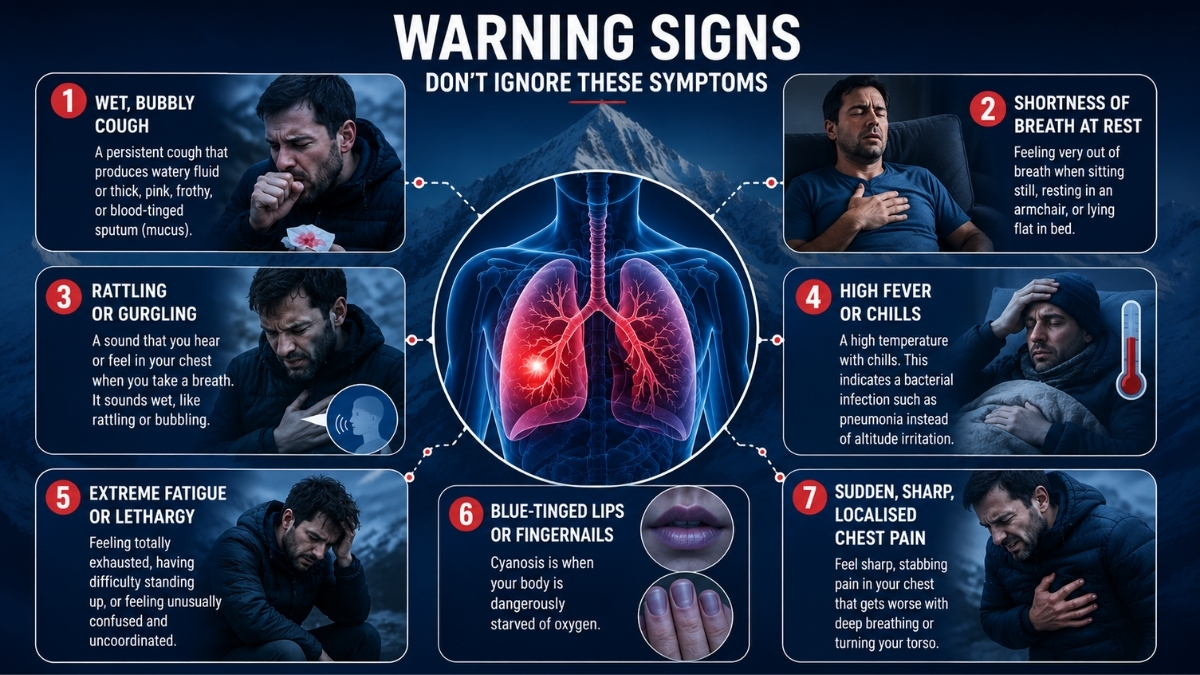
The expected dry, annoying cough that accompanies the Everest Base Camp Trek can be a warning sign. But never write off more serious respiratory symptoms as "just the cough." If you have any of these red flags along with your cough, it’s a medical emergency requiring urgent assessment, supplemental oxygen, and immediate descent:
- Wet, Bubbly Cough: A persistent cough that produces watery fluid or thick, pink, frothy, or blood-tinged sputum (mucus).
- Shortness of Breath at Rest: Feeling very out of breath when sitting still, resting in an armchair, or lying flat in bed.
- Rattling or Gurgling: A sound that you hear or feel in your chest when you take a breath. It sounds wet, like rattling or bubbling.
- High Fever or Chills: A high temperature with chills. This indicates a bacterial infection such as pneumonia instead of altitude irritation.
- Extreme Fatigue or Lethargy: Feeling totally exhausted, having difficulty standing up, or feeling unusually confused and uncoordinated.
- Blue-Tinged Lips or Fingernails Cyanosis is when your body is dangerously starved of oxygen.
- Sudden, Sharp, Localized Chest Pain: Feel sharp, stabbing pain in your chest that gets worse with deep breathing or turning your torso.
Why these signs matter: These severe symptoms are far out of the normal pattern of Khumbu cough. Instead, they are classic symptoms of HAPE (High Altitude Pulmonary Edema), which is a life-threatening buildup of fluid in the lungs or a serious respiratory infection that needs emergency treatment right away.
How to Prevent Khumbu Cough During Your Trek?
To best avoid Khumbu cough, you want to protect your airways from the harsh mountain environment before irritation even begins. By adopting these preventive habits from Day 1 on the trail, you can keep your respiratory tract warm and moist, which significantly reduces your risk of the high-altitude hack.
Wear a Buff or Neck Gaiter All the Time:
Wear a breathable merino wool or fleece buff over your nose and mouth when hiking and when you are resting. This holds the heat and humidity in your breath and creates a humid microclimate that pre-conditions the freezing bone-dry air before it reaches your lungs.
Nose Breathing First:
Try to breathe through your nose instead of your mouth whenever you can. Your nose is a natural filter and humidifier, while breathing through your mouth sends raw sub-zero air directly to your bronchi.
Stay Hydrated Aggressively:
Drink 4-5 liters of fluids every day. Drinking lots of fluid helps your body maintain that all-important mucus lining that protects and lubricates your respiratory tract.
Warm liquids
Warm liquids are much better than freezing water, so go for warm water, herbal teas, or garlic soup. Warm liquids will soothe your throat, prevent systemic chilling, and help break up any early airway congestion.
Go at a slow and steady pace.
Walk at a slow, sustainable pace (Bistari, Bistari). The lower your heart rate, the less you hyperventilate heavily. This means your lungs are forced to process less dry air.
Respect acclimatization plans:
Respect all the planned acclimatization days (such as in Namche Bazaar, Dingboche, etc.); let your body get used to the altitude, and your resting breathing rate will return to normal.
Limit Intense Physical Exertion
Above 4,000 Meters Once you are above 4,000 meters, do not exert yourself physically. If you push too hard, you'll begin to gasp and mouth-breathe, and this will dry out your airways immediately.
No Smoking or Vaping:
Do not smoke or vape before and during the trek. Tobacco smoke paralyzes the tiny hair-like structures (cilia) in your lungs, so they can’t clear trail dust and irritants.
Stop and rest.
Pack up: When you stop walking, put on your down jacket and pull up your neckwarmer. If you keep your throat and chest warm, you stop the sudden cooling that causes coughing fits.
The advantage of prevention:
From Lukla these habits give you a huge advantage over trekkers who wait until their throats are already raw. Your best defense is prevention: once the lining of the airway is structurally damaged by the cold, dry air, it's significantly harder to reverse the cough on the trail.
Essential Gear That Helps Prevent Khumbu Cough
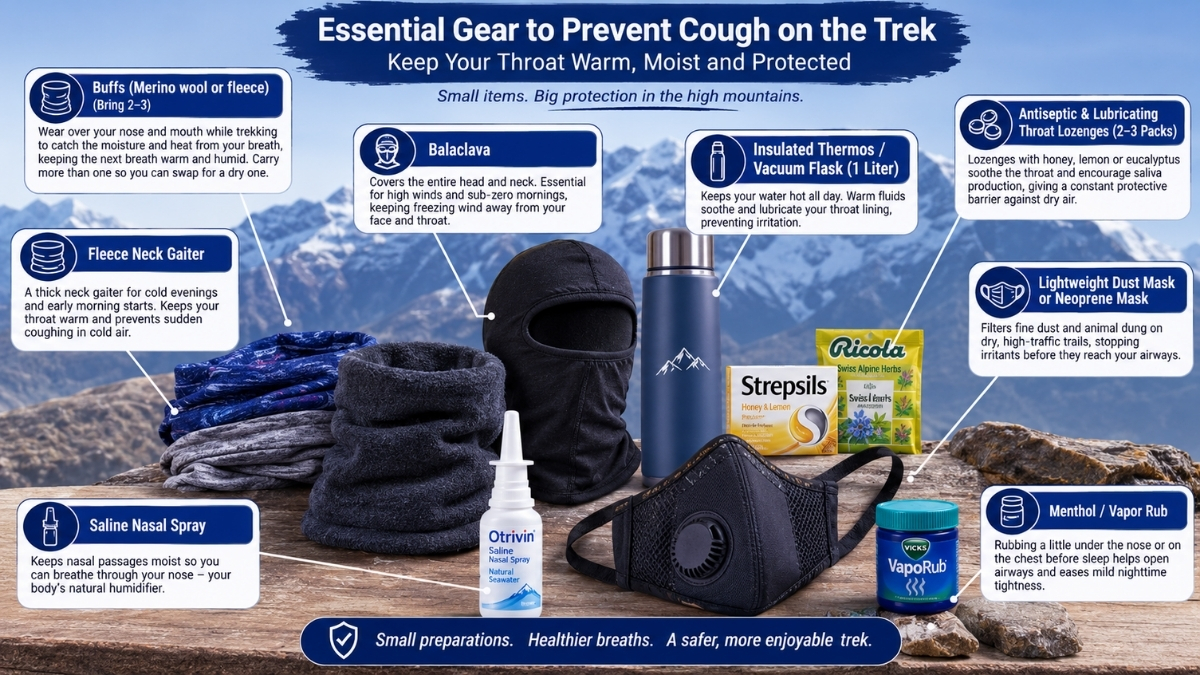
The best way to defend against the high-altitude hack is by employing the right equipment in the first place. The kit has a simple purpose: trap the moisture, heat the sub-zero air before it reaches your lungs, and protect your respiratory tract from the abrasive trail dust.
The Complete Airway Protection Equipment List
- Buffs (merino wool or fleece, bring 2-3): the most important piece of gear you can have is a lightweight buff. You wear it over your nose and mouth while trekking, catching moisture and heat from your breath to humidify the next one. More than one is provided, so you can swap it for a dry one as sweat or condensation accumulates.
- Fleece Neck Gaiter A thick, dedicated neck gaiter is a must for cold evenings in the unheated tea houses and the frigid early morning push to Everest Base Camp or Kala Pathar. It keeps your throat healthy and stops sudden spasms of coughing when exposed to cold.
- A balaclava that covers the whole face also covers the entire head and neck. It’s essential during high-wind sections or sub-zero morning departures, ensuring you don’t get any raw freezing wind leaking onto your face and throat.
- Insulated Thermos / Vacuum Flask (1 Liter): At high altitudes, standard plastic water bottles freeze rapidly. Get a good insulated flask, and keep your water steaming hot all day long. Sip warm fluids on the trail to soothe and lubricate your throat lining.
- Antiseptic & Lubricating Throat Lozenges (2-3 Packs): Obtain lozenges with active ingredients that soothe the throat (like honey, lemon, or eucalyptus). Sucking on these while trekking encourages saliva production, providing a constant protective barrier against dry air.
- Lightweight dust mask or neoprene mask: Trails are choked with fine dust and pulverized animal dung on dry, high-traffic days. A structured mask will filter out these mechanical irritants before they can scrape your vulnerable airway lining.
- Saline Nasal Spray: The dry air is drying out your nasal passages and making you switch to risky mouth-breathing. Keep your nose tissues moist with a saline spray every day so they can continue doing their job as your body’s natural humidifier.
- Menthol/Vapor Rub: Rubbing a little menthol under the nose or on the chest before sleeping can help open airways and relieve mild nighttime tightness.
Don’t think you’ll pull out your buff at Dingboche. As soon as you land in Lukla or leave Namche Bazaar, wear it over your nose and mouth. You can effortlessly prevent airway irritation in the early stages, but once your throat is already raw and bleeding, reversing it is nearly impossible.
Building your Everest packing list? Don't miss the complete Everest Base Camp Packing List covering clothing, gear, and cold-weather essentials.
How to Treat Khumbu Cough?
Khumbu cough treatment centers on warm fluids, throat lozenges, rest, and slowing your pace to reduce how hard you're breathing the cold, dry air. Most of this Khumbu cough treatment can be managed with items already in a well-packed trekking bag.
If you're figuring out how to treat Khumbu cough mid-trek, there's no cure that clears it overnight, but these steps can make it manageable enough to keep enjoying your trek.
- Drink warm fluids throughout the day
- Add honey to tea or warm water for throat relief
- Try steam inhalation at teahouses when available
- Use throat lozenges or hard candies to keep saliva flowing
- Rest more than usual if the cough is disrupting sleep
- Slow your trekking pace to reduce heavy breathing
- Humidify inhaled air with a muff or scarf
- Use basic pain relief for chest soreness if needed
None of these steps are complicated, but sticking with them consistently is what separates effective Khumbu cough treatment from a few lozenges tossed in a daypack and forgotten. Antibiotics generally do not help with high-altitude cough treatment, because Khumbu cough isn't caused by a bacterial infection.
Taking them won't speed up recovery and isn't recommended unless a doctor has diagnosed a separate infection. Effective high-altitude cough treatment relies on managing symptoms and giving your airways time to recover, not on fighting an infection that isn't there.
Can Medication Help Khumbu Cough?
The Khumbu cough, caused by the environment, cannot be cured with medication, but medication can help a lot on the trail. Medicinal throat lozenges and warm honey drinks do an impressive job of coating a sore throat and calming the reflex that causes the dry cough, and over-the-counter pain relievers such as ibuprofen can help ease soreness in the chest wall from repetitive hacking.
In severe cases, where airways are spasming, a travel doctor can write you some targeted steroid or bronchodilator inhalers to reduce the inflammation in the lungs directly. But the cough is an environmental response, not an infection, so antibiotics will be useless and altitude medications like Diamox won't help directly. If the cough gets bad or is accompanied by breathlessness at rest, medication must be skipped and descent must be immediate.
How Long Does Khumbu Cough Last?
Your Khumbu cough timeline is directly related to your altitude. The irritation is an environmental reaction, not an infection, so as soon as you get down into the thicker, warmer, more humid air, it starts to reverse itself.
- On the Ascent (Above 3,000m): Symptoms usually start in the first few days at high altitude. The dry hack seems to get progressively worse the higher you go and the longer you stay in subzero, moisture-starved air.
- When you first come down, you should feel a big improvement within 24 to 48 hours of descending below Namche Bazaar, or on your return to Lukla, as the increase in atmospheric moisture begins to soothe your irritated airways.
- Back in Kathmandu (Within 1 Week): Most trekkers recover fully within 3 to 7 days of descending to lower elevations. The coughing spells will disappear entirely, but you will typically have a hoarse or scratchy voice for a few more days while your vocal cords heal completely.
- The Rare Exception: If a dry, minor cough persists for longer than two weeks after the trek, it is usually due to inflammation of the deep airway tissue (bronchial hyperresponsiveness) caused by the long-term trail damage. In these rare situations, a simple doctor visit and a temporary inhaler will clear it up fast.
Don’t worry that the cough will stick around forever. While you’re coming down, your lungs are actively healing. The best way to cut the duration of a Khumbu cough is to complete your trek and get down the mountain.
When Should You Seek Medical Help?
A dry, hacking cough is part of the Everest Base Camp Trek. But don't write off more serious respiratory symptoms as "just the cough." If you experience any of the following warning signs with your cough, stop self-treating with trail remedies and seek immediate medical attention, supplemental oxygen, and urgent descent:
- Wet, productive cough: Coughing up of constant watery fluid or thick pink, frothy, or blood-tinged sputum (mucus).
- Resting Shortness of Breath: Severe difficulty breathing when sitting up, in a tea house, or lying flat in bed.
- Chest Gurgling or Rattling: When you breathe in and out, you hear or feel a distinct bubbling, rattling, or wet sound inside your lungs.
- Persistent High Fever: A high temperature with chills and shivering, which can be a sign of a bacterial infection such as pneumonia, as opposed to irritation from the altitude
- Extreme Tiredness & Sleepiness: Feeling completely drained, not being able to get up, or odd confusion and loss of coordination.
- Low Oxygen Saturation: A sudden, steep fall in your oxygen levels on routine pulse oximeter checks that doesn’t recover even after a rest.
- Localized, Sharp Chest Pain Sudden, sharp chest pain that gets worse when you twist your torso or take deep breaths.
These are serious complaints and quite different from the usual high-altitude cough. Instead, they are classic signs of High Altitude Pulmonary Edema (HAPE) a life-threatening build-up of fluid in the lungs, or a severe respiratory infection. When your body sends such a serious signal, staying at high elevation is not the right choice. "You have to get down right now."
Worried about Khumbu cough, altitude sickness, or acclimatization? Contact Nepal Gateway Trekking, which helps reduce altitude-related risks and make your Everest adventure safer and more enjoyable.
Final Thoughts
The Khumbu cough is as common on the Everest Base Camp trek as cold mornings and sore legs. It’s a temporary, environmental response to the cold, dry mountain air, not a viral or bacterial infection, and can be dealt with completely through proper trail habits.
You can reduce the severity of the Khumbu cough by aggressively hydrating, pacing your ascent, and protecting your airways with a simple buff from day one. Most trekkers make a full recovery within a week of coming down, but never forget that you should not endure severe respiratory symptoms. Listen to your lungs, protect your breath, and enjoy the journey safely.
Planning the Everest Base Camp Trek? Nepal Gateway Trekking offers experienced guides, carefully planned itineraries, and proper acclimatization schedules to help you trek safely and confidently.
Frequently Asked Questions
What is Khumbu cough?
The Khumbu cough is a persistent dry cough caused by breathing cold, dry air at high altitude, especially above 2,500 meters. It commonly affects trekkers in Nepal's Khumbu region and usually improves after descending.
What causes Khumbu cough?
Cold, dry air, low humidity, increased breathing during trekking, and dusty mountain trails irritate the airways, triggering a persistent dry cough.
Is Khumbu cough contagious?
Khumbu cough is not contagious; it is caused by environmental conditions, not bacteria or viruses, so it cannot spread to your trekking group.
How can I prevent Khumbu cough?
Wear a buff or neck gaiter, stay hydrated, breathe through your nose, walk at a steady pace, and acclimatize properly.
What is the best treatment for Khumbu cough?
The most effective high-altitude cough treatment combines warm fluids, steam inhalation, throat lozenges, rest, and protecting your airways from cold air.
Can I continue trekking with a Khumbu cough?
Many trekkers continue with mild symptoms while monitoring their condition. If symptoms become severe or breathing becomes difficult, descend immediately and seek medical care.