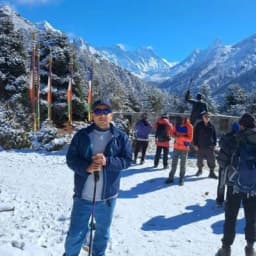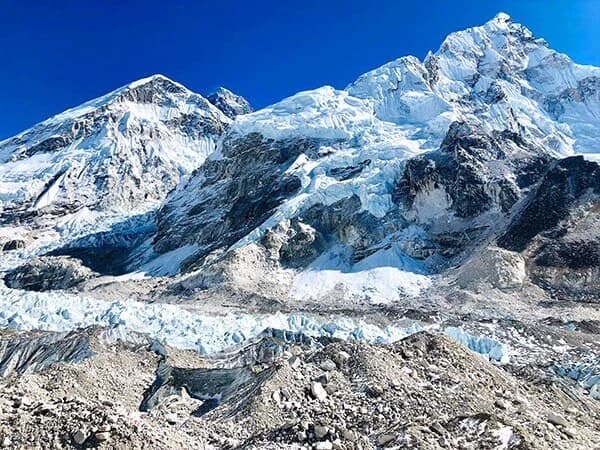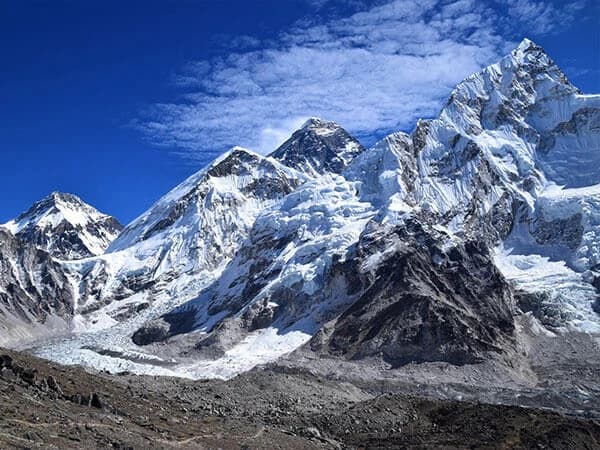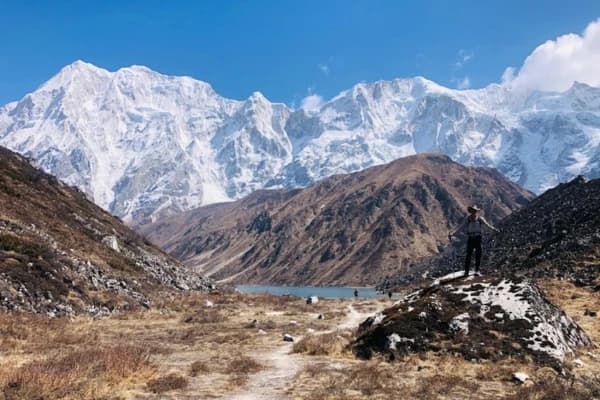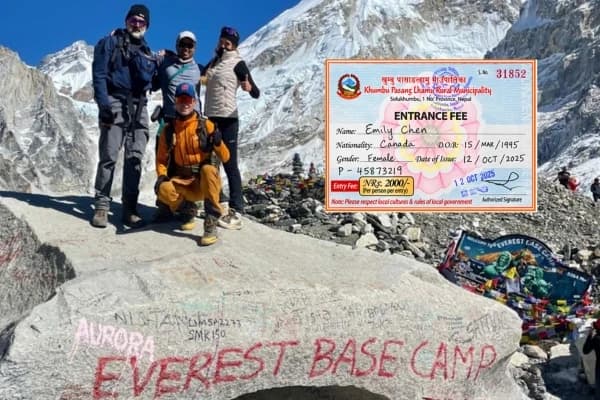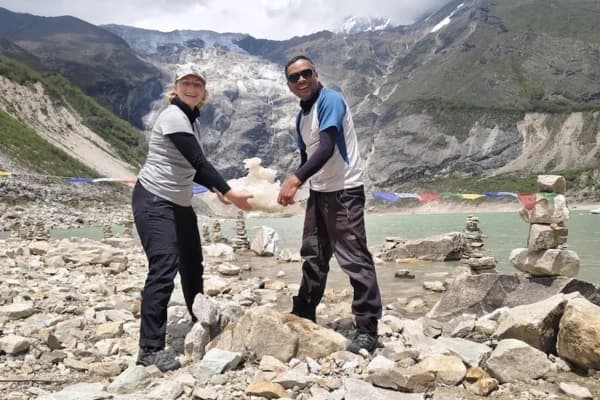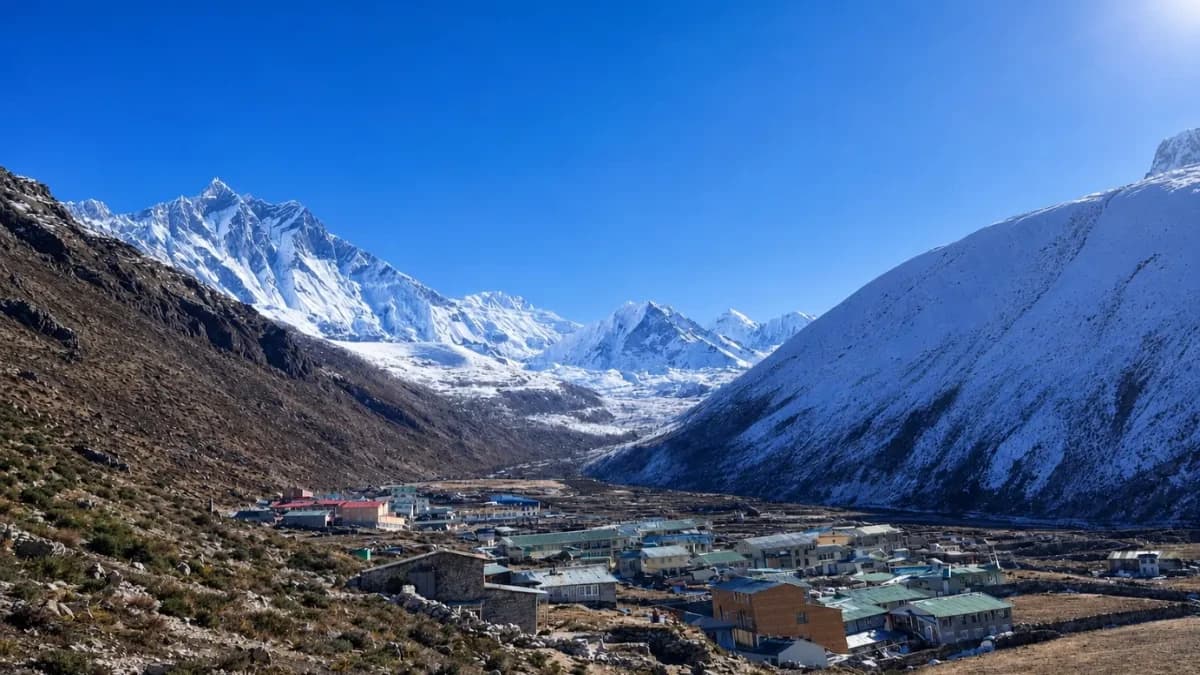
Gorakshep is your last sleeping place before going to Everest Base Camp, and it is at an altitude of 5,164 meters. There is no village higher on the entire trail than Gorakshep. All trekkers going to Everest Base Camp or Kala Patthar stop here for at least one night, usually two, and for most people this is the coldest, hardest, and most memorable stop on the entire Everest Base Camp Trek.
Upon arrival at Gorakshep, the air is thin, temperatures are freezing, and at such a high altitude, even the simplest tasks are a challenge. Many trekkers underestimate these conditions, so you must prepare yourself properly to have a safe and enjoyable experience.
Gorakshep is more than a stop on the trail. It is the last settlement before Everest Base Camp, the gateway to Kala Patthar and one of the highest seasonal villages in the world. It also has historical significance in mountaineering as the first Everest Base Camp for early Himalayan expeditions.
If you are planning to visit this wonderful Himalayan settlement or just finding out about Gorakshep, this guide has all you need to know, including its importance and history, when to go, where to stay, the weather, facilities, and practical travel advice. Based on our experience of guiding trekkers in the Everest region, we have included sound information to help you prepare with confidence.
Gorakshep at a Glance
|
Information |
Details |
|
Altitude |
5,164 m (16,942 ft) |
|
Province |
Koshi Province |
|
District |
Solukhumbu |
|
Region |
Khumbu |
|
National Park |
|
|
Coordinates |
27.9881° N, 86.8597° E |
|
Distance to Everest Base Camp |
Approx. 3 km |
|
Distance to Kala Patthar |
Approx. 3–4 km |
|
Distance from Lobuche |
Approx. 4.5 km |
|
Accommodation |
Basic teahouses |
|
Best Seasons |
Spring & Autumn |
What is the meaning of the name Gorakshep?
The name "Gorakshep" is commonly translated as "Dead Ravens" in Nepali, a reference to the area's harsh environment, where the extreme altitude, freezing temperatures, and lack of vegetation make it difficult for wildlife to survive. The settlement is also commonly spelled Gorak Shep, and you'll often see both names used interchangeably in guidebooks, maps, and trekking itineraries. In Nepali, it is written as गोरकशेप or गोरक्षेप.
Unlike other Himalayan villages, Gorakshep has no permanent residents, no farmland, and no permanent community. It is rather a seasonal settlement that wakes up during the spring and autumn trekking seasons. Lodge owners, guides, porters, and support staff shift here temporarily to cater to the thousands of trekkers making their way to Everest Base Camp and Kala Patthar. During the harsh winter months when the temperature plummets well below freezing and snow is a regular occurrence, many teahouses shut up shop, and Gorakshep becomes deserted until the next trekking season.
Gorakshep may be tiny and have limited facilities, but it is an important hub in the Everest region. It is the last overnight stop before Everest Base Camp and the start of the climb to Kala Patthar, one of the best vantage points for panoramic views of Mount Everest. For most visitors, reaching Gorakshep marks the end of a several-day trek through the Khumbu Valley and is one of the most memorable milestones of their Himalayan journey.
Where Is Gorakshep Located?
Gorakshep sits in the Khumbu region of Solukhumbu District, inside Sagarmatha National Park, at coordinates 27.9881° N, 86.8597° E. It lies in a flat basin surrounded by Pumori, Nuptse, and the Khumbu Glacier's western edge.
The location matters strategically. Gorakshep is close enough to both Everest Base Camp and Kala Patthar that trekkers can reach either on a single push and return the same day. Nearby landmarks include:
- Everest Base Camp roughly 3 km southeast
- Kala Patthar roughly 3–4 km, directly above the village
- Lobuche 4.5 km back down the trail
- Khumbu Glacier runs along the eastern edge of the basin
For context on where Gorakshep fits into the wider Khumbu region, it's the final stop before the trail leaves human settlement behind entirely and turns into glacial moraine.
Want to experience Gorakshep yourself? Explore our Everest Base Camp Trek package and start planning your Himalayan adventure today. Which will help you safely reach Gorakshep, Everest Base Camp, and Kala Patthar with a well-planned itinerary, proper acclimatization, and personalized support.
What Is Gorakshep's Altitude?
Gorakshep sits at 5,164 meters (16,942 feet), making it the highest overnight stop on the standard EBC itinerary. The altitude of Gorakshep is the single biggest factor in how hard this stretch of trail feels. At this height, the air holds roughly half the oxygen available at sea level, and every task, from lacing your boots to falling asleep, takes noticeably more effort.
Here's how Gorakshep compares to other major stops on the trail:
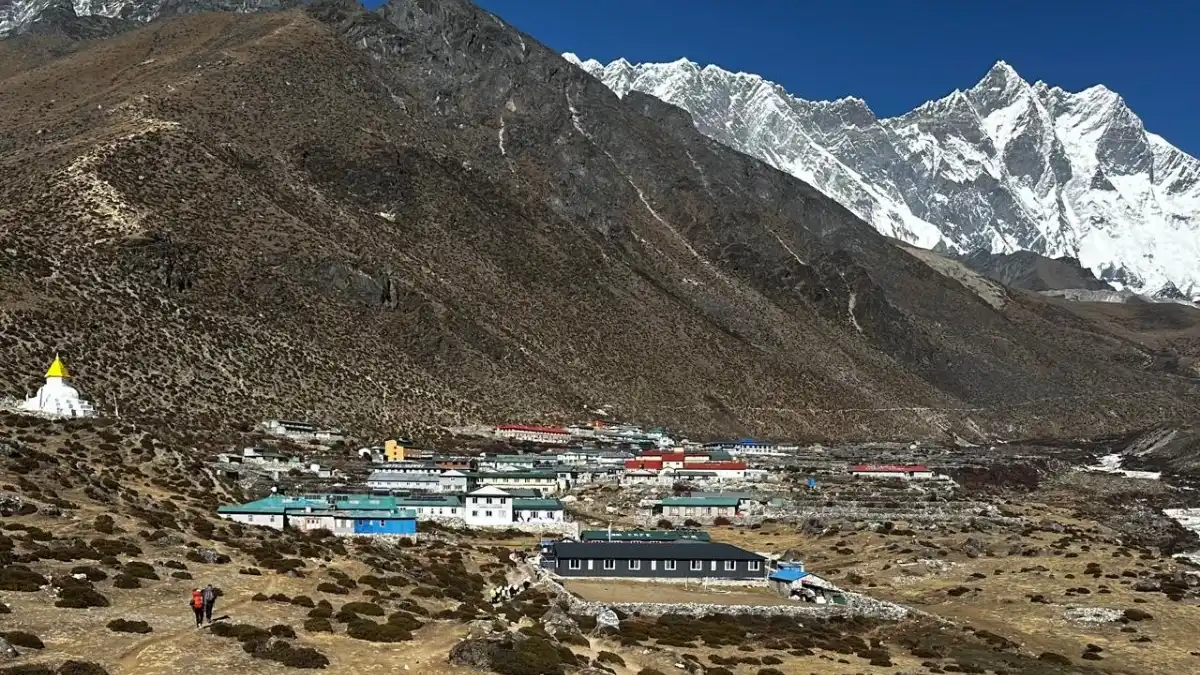
|
Location |
Altitude |
|
2,860 m |
|
|
3,440 m |
|
|
Dingboche |
4,410 m |
|
Lobuche |
4,940 m |
|
Gorakshep |
5,164 m |
|
Kala Patthar |
5,545 m |
|
Everest Base Camp |
5,364 m |
Interestingly, Gorakshep itself sits lower than both Everest Base Camp and Kala Patthar. You actually climb higher on both of your day trips out of the village than you slept the night before, which is precisely why acclimatization before arriving here isn't optional.
Our Everest Base Camp elevation guide breaks down the full day-by-day altitude gain if you want the complete picture.
Why Is Gorakshep Important For Everest Base Camp Trekkers?
Gorakshep matters because it's the only overnight base close enough to reach both Everest Base Camp and Kala Patthar within a day. Without it, trekkers would need a much longer, more exposed push from Lobuche, which almost no itinerary attempts.
It also functions as one of the most critical acclimatization checkpoints on the entire trek. Reaching Gorakshep and successfully sleeping there is, in a real sense, proof your body has handled the ascent to this point. Historically, this basin is even more significant because it once served a very different purpose.
History of Gorakshep
Gorakshep's history is richer than just its role as a modern teahouse stop. This exact spot was actually the original Everest Base Camp during the earliest Himalayan expeditions, including the Swiss Everest Expedition of 1952.
When Sir Edmund Hillary and Tenzing Norgay made their historic 1953 ascent, their expedition also staged from a base camp near this same area before the base camp itself was later relocated closer to the Khumbu Icefall for better access to the climbing route. The modern-day Everest Base Camp sits about 3 km southeast, right up against the glacier.
That history is part of why Gorakshep is so significant to trekkers today. You're not just passing through a random high-altitude rest stop; you're standing where the earliest Everest pioneers once pitched their tents.
Gorakshep Weather and Climate
Gorakshep's weather swings hard between sun and freeze, sometimes within the same hour. Daytime temperatures can feel almost mild in direct sun, while nighttime temperatures regularly drop well below freezing, even during the warmer trekking months.
- From March to May, the temperature during the day stays between 0°C and 10°C, and at night it drops to between -15°C and -5°C. Mornings are usually clear, with clouds building by early afternoon.
- Summer/Monsoon (June–August): Daytime temperatures reach 5°C to 10°C, while nights stay around -5°C to 0°C. Cloud cover and occasional snow flurries are common, and visibility can be unreliable.
- Autumn (September–November): This period is peak season for a reason. Days range from -2°C to 8°C, nights fall to -15°C to -8°C, and skies are typically at their clearest of the year.
- Winter (December–February): Days stay near -5°C to 0°C, and nights can plunge to -20°C or colder. Winds are strong and constant, though skies are often dramatically clear.
|
Season |
Day Temperature |
Night Temperature |
Conditions |
|
Spring |
0°C to 10°C |
-15°C to -5°C |
Clear mornings, afternoon cloud |
|
Summer/Monsoon |
5°C to 10°C |
-5°C to 0°C |
Cloudy, occasional snow, low visibility |
|
Autumn |
-2°C to 8°C |
-15°C to -8°C |
Clearest skies of the year |
|
Winter |
-5°C to 0°C |
-20°C or lower |
Strong winds, dry, dramatic clarity |
Water bottles left inside teahouse rooms routinely freeze solid overnight, even in October and April, so pack accordingly.
Note: Always check the latest Gorakshep weather forecast with your guide the night before summit day, since conditions here shift faster than any forecast can fully capture.
Best Time to Visit Gorakshep
The best time to visit Gorakshep is during spring (March to May) and autumn (late September to November). These seasons offer the most stable weather, clearer mountain views, and comfortable trekking conditions, making them the preferred time to explore the Everest region.
Spring (March to May) brings the second-highest trekker numbers, stable weather windows, and blooming rhododendrons lower on the trail. It's the best season if you want warmer daytime trekking temperatures without the peak-autumn crowds.
Autumn (September to November) is the single best window for visibility. Post-monsoon skies are crisp, humidity drops to nearly nothing, and your odds of an unobstructed Everest view from Kala Patthar are highest during these months.
Winter challenges trekkers with brutal night temperatures and biting wind, though the trail is nearly empty and the mountain views on clear days are unmatched. Monsoon brings the opposite problem: cloud cover that can hide the summit for days at a stretch, plus muddier trails lower down.
For photography specifically, early autumn mornings at Gorakshep and Kala Patthar consistently deliver the sharpest, most golden light on Everest's summit pyramid.
Our guide to the best time for the Everest Base Camp Trek goes deeper into month-by-month conditions if you're still choosing dates.
Accommodation Options in Gorakshep
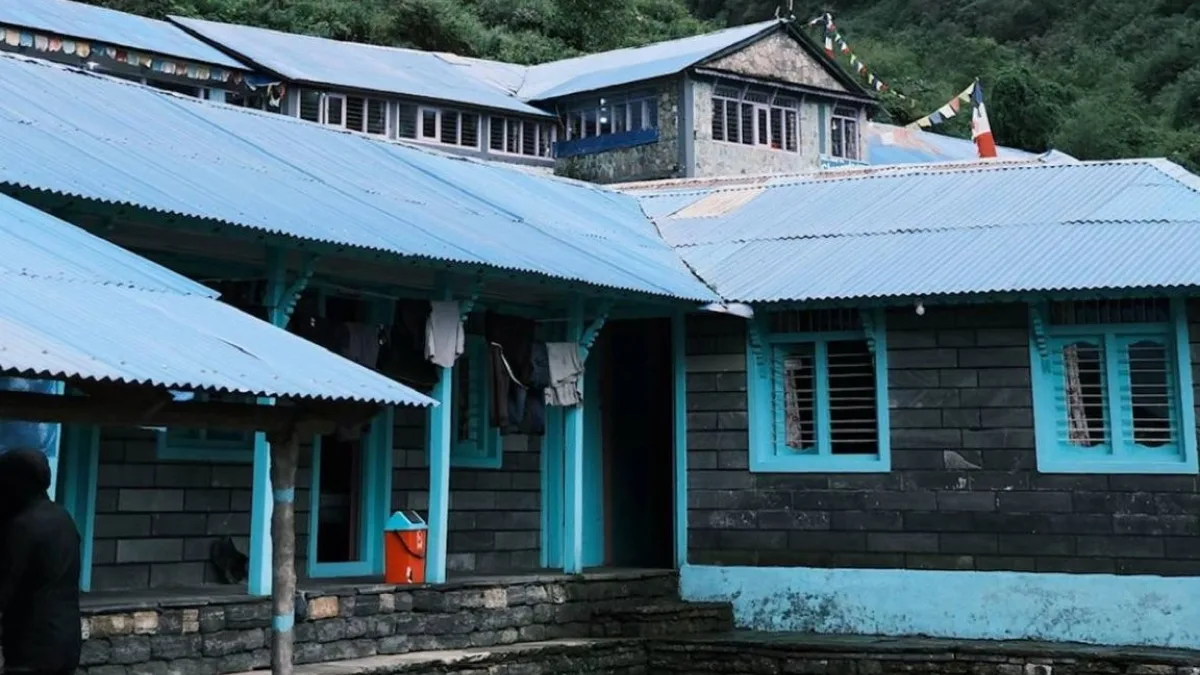
Accommodation in Gorakshep is basic by design. You're staying in simple teahouses with shared rooms, twin beds, thin mattresses, and blankets that often need supplementing with your own sleeping bag.
Here's what to expect:
- Shared rooms with twin beds, standard during peak season
- Dining halls heated by a central stove, where trekkers gather for meals and warmth
- Shared toilets, mostly squat-style, located outside the main sleeping quarters
- Electricity from solar power, limited and shared across the lodge
- Charging facilities available for a fee, usually $3–$5 per device
- Wi-Fi available at some lodges for an extra charge, though speeds are slow and unreliable
- Mobile network works intermittently with NTC or Ncell SIM cards
- Drinking water sold bottled or boiled, both priced higher than lower-altitude stops
- Heating limited to the dining hall; bedrooms are unheated
During peak spring and autumn seasons, rooms fill up fast, so booking ahead through your trekking operator matters more here than almost anywhere else on the trail. Whichever accommodation options you choose in Gorakshep, you can expect the same basic standard throughout.
Food and Facilities in Gorakshep
Food at Gorakshep follows the same teahouse system as the rest of the Everest Base Camp Trek, just pricier because everything arrives by yak or porter.
Common food options:
- Dal Bhat (rice, lentils, curry)
- Noodles and thukpa
- Garlic soup
- Black tea and milk tea
- Instant coffee
- Porridge and eggs for breakfast
Facilities available:
- Dining halls with central heating
- Device charging (paid)
- Solar-powered electricity
- Limited Wi-Fi
- Patchy mobile signal
- Bottled or boiled drinking water
- Shared toilets
- Extra blankets on request
- Basic emergency support through lodge owners and guides
Garlic soup in particular is a trail staple at this altitude; locals and guides alike swear by it for helping with acclimatization, even if the science is more folklore than fact.
Why Are Services Limited in Gorakshep?
Services in Gorakshep are limited because everything, without exception, arrives on the back of a yak, dzo, or human porter. There's no road access anywhere near this altitude, and the nearest supply point is days of walking away. That logistics chain is precisely why a bottle of water or a candy bar costs several times more here than in Kathmandu.
Fuel for cooking and heating is either kerosene or dung-based, both hauled in manually, which also limits how much hot water or heating a lodge can realistically offer. Electricity runs almost entirely on solar panels, since diesel generators are impractical to supply and maintain at this altitude.
Understanding this supply chain helps explain why prices climb steadily the higher you go, and this is covered in more detail in our guide on what you should know before trekking in Nepal.
Distance From Gorakshep to Nearby Landmarks
|
Destination |
Distance |
Approx. Time |
|
Everest Base Camp |
3 km |
2–3 hours |
|
Kala Patthar |
3–4 km |
2–3 hours |
|
Lobuche |
4.5 km |
2–3 hours |
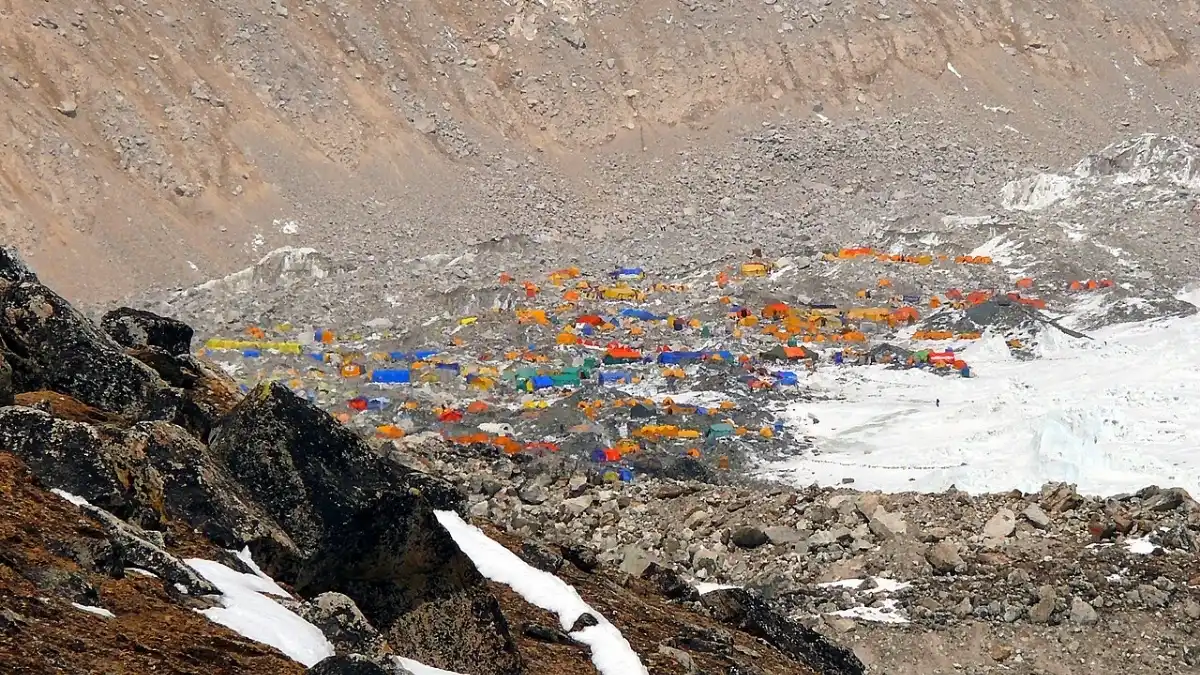
- Everest Base Camp sits roughly 3 km from Gorakshep along a rocky, boulder-strewn trail beside the Khumbu Glacier. Most trekkers do this as a there-and-back day hike, returning to Gorakshep to sleep the same night.
- Kala Patthar, the trek's most famous viewpoint, is a steep 3–4 km climb usually tackled before sunrise for the best light on Everest's summit. It's higher than Gorakshep by nearly 400 meters, so the trek from Gorakshep to Kala Patthar is a genuinely tough final push.
- Lobuche, the last stop before Gorakshep, sits 4.5 km back down the trail and is where most itineraries stage the night before the final approach.
Can you see Mount Everest from Gorakshep?
You can see part of Everest's upper slopes from Gorakshep, but not the full summit; nearby peaks like Nuptse block the direct line of sight. For the complete, unobstructed view of Everest's summit pyramid, you need to climb to Kala Patthar.
Weather plays a major role too. Even on Kala Patthar, afternoon cloud buildup can hide the peak entirely, which is precisely why nearly every guide recommends the pre-dawn climb, when skies are statistically clearest.
Our roundup of the best places to see Everest in Nepal compares Kala Patthar against other viewpoints across the region if you want alternatives.
Do People Live in Gorakshep?
No one lives in Gorakshep year-round. It's a seasonal settlement, active only during the spring and autumn trekking windows, staffed by lodge owners, guides, and porters who come up specifically for the trekking season.
Once autumn ends, most lodge owners pack up and head back down to lower villages like Pheriche or Namche Bazaar for winter. The extreme cold and near-total absence of trekkers make staying up top through deep winter impractical for anyone without a specific reason to be there.
Challenges of Staying in Gorakshep
Staying overnight in Gorakshep is genuinely difficult, and it's worth being honest about that going in. The thin air alone makes basic tasks exhausting, and altitude sickness (AMS) risk is at its highest anywhere on the standard EBC route.
Other challenges include:
- Freezing overnight temperatures, even in peak season
- Strong, cutting winds with almost no windbreaks
- Limited medical facilities, with the nearest real clinic back in Pheriche
- Power shortages during cloudy stretches when solar can't recharge
- Patchy or absent phone signal
- Basic, unheated sleeping quarters
Because of these risks, travel insurance covering high-altitude emergency evacuation isn't optional here.
Our guide for preventing altitude sickness covers symptoms and response steps in detail, and it's worth reading before you set out, not after symptoms start.
What to Pack for Gorakshep
Clothing
- Down jacket
- Thermal base layers
- Waterproof outerwear
- Insulated gloves
- Warm hat
- Wool socks
Gear
- Sleeping bag rated to at least -15°C
- Headlamp with spare batteries
- Power bank
- Insulated water bottle
- Trekking poles
- UV-protection sunglasses
Health Essentials
- Sunscreen (high SPF; UV exposure is intense at this altitude)
- Lip balm
- Water purification tablets
- Personal medications
- Basic first aid kit
Interesting Facts About Gorakshep
- As a Gorakshep village in Nepal, it has no year-round population, yet it still runs like an organized community every trekking season
- The name "Gorakshep" translates to "Dead Ravens" in Nepali
- The village sits on a dried-up glacial lakebed
- It's one of the highest seasonal settlements anywhere in the world
- This exact spot served as the original Everest Base Camp during the 1950s expeditions
- There's no road access; everything arrives by yak or porter
- Gorakshep sits inside Sagarmatha National Park, a UNESCO World Heritage Site
- Nights fall below freezing here even during peak spring and autumn trekking months
Things to Know Before Visiting Gorakshep
- Stay hydrated; dehydration worsens altitude sickness symptoms
- Walk slowly on the final approach from Lobuche; rushing at this altitude backfires
- Spend real time acclimatizing at Dingboche and Lobuche before arriving
- Carry enough Nepali rupees in cash; no ATMs exist this high up
- Charge electronics whenever a socket is available, since access is unpredictable
- Expect basic, no-frills accommodation and adjust expectations accordingly
- Book rooms early through your guide during March–May and September–November
- Prepare mentally for freezing nights, not just physically
- Respect the fragile alpine environment; pack out what you pack in
Want a worry-free journey to Gorakshep? Let our experienced mountain guides handle the permits, accommodation, transportation, and itinerary while you focus on enjoying the adventure.
Final Thoughts
Gorakshep isn't a comfortable place to spend the night, and it was never meant to be. It's a working waypoint that exists for one reason: to get trekkers within reach of Everest Base Camp and Kala Patthar, and it does that job better than anywhere else on the trail. If you take one thing from this guide, let it be this: Gorakshep's altitude matters more than any other fact here, shaping everything else: the weather, the pacing, and the risk.
Understanding its altitude, its weather, and its history before you arrive makes the whole experience easier to handle when you're standing there yourself, breathing hard in the thin air with Pumori towering overhead. Plan your acclimatization properly, pack for genuinely freezing nights, and Gorakshep becomes less of an obstacle and more of a milestone you'll talk about for years.
Gorakshep offers access to Everest Base Camp, Kala Patthar, and stunning Himalayan views. With proper planning and local expertise, your journey can be safe and rewarding. Contact Nepal Gateway Trekking to plan your Everest adventure with experienced guides.
Frequently Asked Questions
Where is Gorakshep located?
Gorakshep is located in the Khumbu region of Solukhumbu District, within Sagarmatha National Park, which is a UNESCO World Heritage Site in northeastern Nepal. The settlement is located at approximately 27.9881° N latitude and 86.8597° E longitude and is surrounded by the Khumbu Glacier and some of the world’s tallest mountains. It is the last settlement with accommodation before Everest Base Camp and an important stop for visitors exploring the Everest region.
How many miles is it from Gorakshep to Everest Base Camp?
Everest Base Camp is approximately 3 kilometers (1.9 miles) from Gorakshep. The distance doesn't seem far, but the altitude, rocky ground, and thin air make the journey more difficult than it looks. Most visitors take between 2 and 3 hours to reach Everest Base Camp from Gorakshep, depending on their pace, weather conditions, and level of acclimatization. The walk back takes on average about 1.5 to 2 hours.
How far is Gorakshep from Lobuche?
The distance from Lobuche to Gorakshep is about 4.5 kilometers (2.8 miles). This section goes along a rocky trail across glacial moraine next to the Khumbu Glacier. It usually takes 2 to 3 hours. The trail itself is not overly technical, but given the higher altitude and lack of oxygen, it’s one of the more physically challenging sections of the Everest region.
Can you see Mt. Everest from Gorakshep?
You can see parts of Mount Everest from Gorakshep, but neighboring peaks such as Nuptse partially obscure the lower slopes. Most visitors hike up to Kala Patthar, above Gorakshep, for the classic panoramic view of Everest’s summit. From here you will get some of the clearest and most spectacular views of Mount Everest, especially at sunrise or sunset when the mountain is bathed in golden light.
Is there a population in Gorakshep?
Gorakshep has no permanent year-round population. Rather, it is a seasonal settlement during the main trekking seasons in spring and autumn. During these months, lodge owners, kitchen staff, guides, and porters temporarily stay at Gorakshep to provide accommodation, food, and other essential services to trekkers. In winter, when the temperatures drop to extremes and there are fewer visitors, many of the teahouses close and the settlement is largely deserted.
What is the weather like in Gorakshep throughout the year?
Gorakshep has an alpine climate with cold temperatures throughout the year. Spring (March to May) and autumn (September to November) are usually sunny and stable during the day, but nights are below freezing. Winter (December to February) brings much harsher conditions with heavy snowfalls, high winds, and temperatures well below -15°C. Cloud cover during the monsoon season (June to early September) can often mean limited mountain visibility, and travel delays due to weather are more common. At this elevation, the weather can change quickly, so visitors should be ready for cold weather at any time of year.
What are the accommodation options in Gorakshep?
Accommodation in Gorakshep is mainly in basic teahouses and mountain lodges for trekkers. Rooms are basic, usually with twin beds and shared bathrooms Most lodges have a common dining hall where meals are served, and in the evenings trekkers gather around a warm stove. Electricity is limited and often solar-powered, and you can access Wi-Fi and charge electronic devices for a fee. In peak trekking seasons, lodges limit the number of rooms, so we highly recommend booking through a trekking company or arriving early in the afternoon.