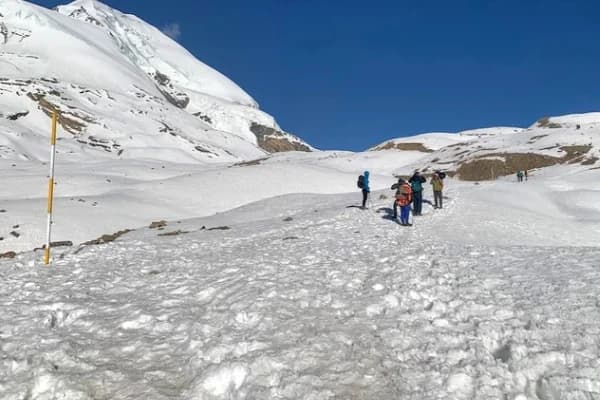
Sherpas in Everest at a Glance
Sherpas in Everest are an ethnic group of Tibetan origin from eastern Nepal, mainly the Khumbu, not just a job title. They fix ropes, set up camps, carry oxygen, guide climbers and support rescues.
- Origins: Sherpas ancestors migrated from eastern Tibet, and "Sherpa" is usually translated as "people from the east".
- Culture: Most of the Sherpas follow Tibetan Buddhism, call Everest Chomolungma and hold a puja before most expeditions.
- Altitude edge: Generations at altitude and EPAS1 gene variants help keep blood from thickening dangerously in thin air, though most still use bottled oxygen.
- Pay and risk: Climbing Sherpas are commonly reported to earn a few thousand US dollars per season and face far more danger than clients.
- Famous names: Tenzing Norgay summited in 1953, and Kami Rita Sherpa holds the record with 32 summits as of May 2026.
- For trekkers: Choose a licensed, experienced guide who is treated fairly. They don't have to be a Sherpa.
Sherpas in Everest are the reason expeditions on the mountain work at all. Long before anyone tried to climb it, they were farming, trading and raising yaks in the valleys below. Today they fix the ropes, carry the loads and make the call when the weather turns.
Yet many travelers don’t realize that Sherpa is an ethnic group, not just a job title. That small detail changes how you see the people guiding you.
This guide covers who the Sherpa people are, where they come from, how they live and what they actually do on Everest. Based on our years of leading Everest Base Camp treks, we also answer the questions people ask most, like how much they earn and why they take such risks.
Who Are the Sherpas? Their Origins and History
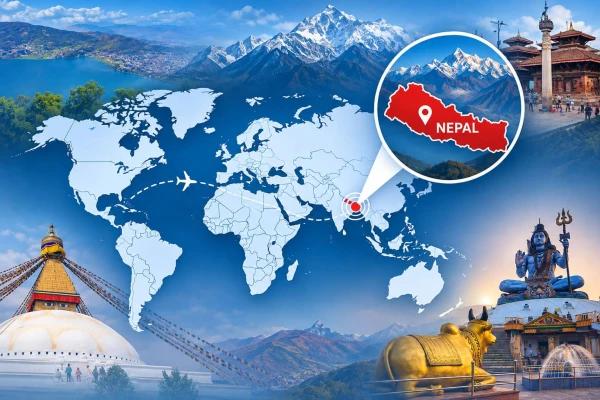
Sherpas are an ethnic group of Tibetan origin who live in the high Himalayas of eastern Nepal. Most are based in Solukhumbu, which includes the Khumbu region around Everest. Smaller communities live in Rolwaling, Helambu, Sikkim, Darjeeling and Bhutan, and many families have now moved to Kathmandu.
The name “Sherpa” is usually translated as “people from the east”, pointing to their ancestors from the Kham region of eastern Tibet.
Sherpa history begins with migration. Sources differ on the exact dates, but most place it between the 13th and 15th centuries. The reasons are debated, though religious unrest and the search for better pastures are often cited.
Once settled in Solu and Khumbu, they farmed, kept yaks and traded salt, wool and rice with Tibet. That trade helped Namche Bazaar grow into a trading hub.
Climbing came much later. Sherpas saw high peaks as the homes of gods, not goals to conquer. Early British expeditions hired many Sherpas from the Darjeeling area, and once Nepal opened to foreigners around 1950, Khumbu Sherpas became central to Everest climbs.
The turning point came on 29 May 1953, when Sherpa climber Tenzing Norgay reached the summit with Edmund Hillary. As trekking grew, many families shifted from farming toward mountaineering and lodges, and tourism is now a major source of income in the region.
Is Sherpa an Ethnic Group or a Job Title?
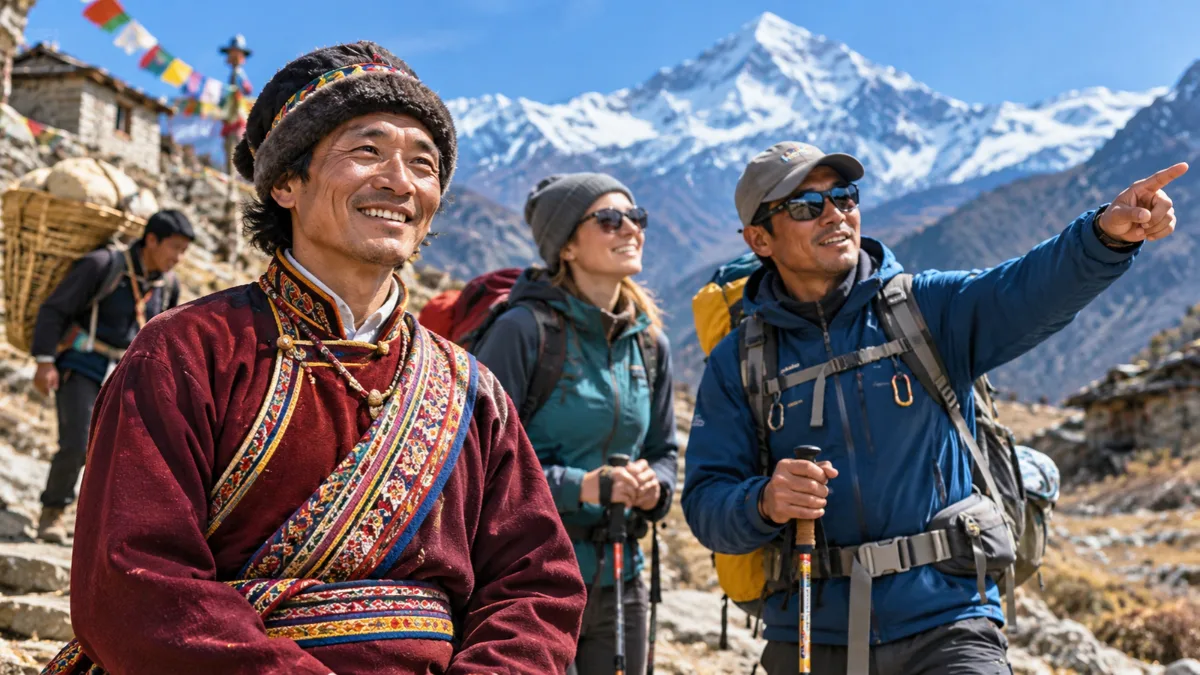
Sherpa with a capital S refers to the ethnic group. A lowercase “sherpa” is often used loosely for any trekking or expedition worker. It is also a common surname, which is why climbers like Kami Rita Sherpa carry it in their names.
So not every mountain guide in Nepal is a Sherpa. Many are Rai, Tamang, Gurung or Magar. Sherpas and Tamang people share Tibetan Buddhism, but their histories, languages and traditions differ.
Sherpa Culture: Faith, Festivals and Community
Sherpas follow Tibetan Buddhism, specifically the Nyingma school, and it shapes daily life. You see it everywhere in the Everest region: prayer flags on nearly every ridge, mani stones along the trails, chortens at village entrances and monasteries in the hills.
Their bond with the mountain is spiritual first. Sherpas call Everest Chomolungma, often translated as “Goddess Mother of the World”. Before most expeditions, a puja ceremony is held at Base Camp, where a lama prays for safe passage and the climbers receive blessings. To an outsider, it feels less like planning a conquest and more like asking permission.
Festivals You Might Catch on the Trail
- Mani Rimdu festival: Held in autumn, most famously at Tengboche Monastery, with masked dances and ceremonies. The dates follow the Tibetan lunar calendar and change each year, so check before you book.
- Dumji: A late-spring or early-summer festival honoring Guru Rinpoche (Padmasambhava) with masked dances and community gatherings.
- Losar: The Sherpa and Tibetan New Year, celebrated in late winter.
Tengboche Monastery, founded in 1916 (and rebuilt after the 1934 earthquake and 1989 fire), is the best-known spiritual center of the Khumbu. Even if you are not religious, standing in its courtyard with Ama Dablam rising behind you is memorable.
You can explore more about Tengboche while on your journey to Everest region.
Community and Family Life
Community comes first in Sherpa culture. Neighbors help build houses, and families share work during busy seasons. Many families run teahouses and lodges, farm in the off-season or have relatives abroad.
Sherpas speak their own language, closely related to Tibetan, and many younger people now speak good English from working with trekkers.
Education has improved with tourism income, but it has also pulled many young Sherpas toward cities and overseas. Villages are changing quickly.
The Role of Sherpas in Everest Expeditions
On Everest, Sherpas fix the route, carry loads and oxygen, guide climbers and handle rescues. Carrying bags is only a small part of the job, and without them, commercial climbing on the mountain would not exist in its current form.
Route Setup and Camp Building
Before any client reaches high altitude, the climbing team has already done weeks of work. Most are Sherpas, though not all. They fix ropes, pitch tents and stock the higher camps with oxygen, food and fuel, making many carries between camps to get everything in place.
The Khumbu Icefall is the most dangerous section of the route. A specialized team known as the Icefall Doctors sets the ladders and ropes each season, then keeps repairing them as the ice shifts.
Guiding and Rescue Support
Once climbers arrive, Sherpas lead the route, manage pace and watch for signs of altitude sickness or exhaustion. They also make real-time calls on weather, turnaround times and when to go down.
When something goes wrong at altitude, they are often the first responders. Many have formal rescue and technical training, and some hold international guiding certifications.
Down at Base Camp, support staff, many from Sherpa and other local communities, keep the whole team fed, warm and organized. Their work is easy to overlook, but the expedition depends on it.
Expedition Leadership
The role of sherpas in Everest expeditions is also changing. More Nepali-owned companies now manage logistics and run expeditions directly, instead of working only under foreign agencies.
Senior Sherpas often serve as sirdars, the team leaders responsible for staff, supplies and safety. The industry is slowly shifting from Sherpas assisting foreign guides toward Sherpas leading the whole operation.
Altitude, Pay and Danger
Most Sherpas still use supplemental oxygen alongside their clients, though generations of living above 3,300 meters have given them a distinct physiological edge, including variants of the EPAS1 gene that prevent blood from thickening dangerously in thin air.
Climbing Sherpas are commonly reported to earn a few thousand US dollars per season, a small fraction of what clients pay. The danger is real. In April 2014, an avalanche in the Khumbu Icefall killed 16 Nepali guides and support staff, which led to calls for better insurance. This is why we believe Nepali staff should always receive proper wages, insurance and equipment.
Trek the Khumbu with a local crew. Our guides and porters know these trails, villages and monasteries, and they are looked after properly. Explore the treks we run across Nepal and find the one that fits you. Explore treks with Nepal Gateway Trekking
How Tourism Changed Sherpa Life in the Khumbu Region
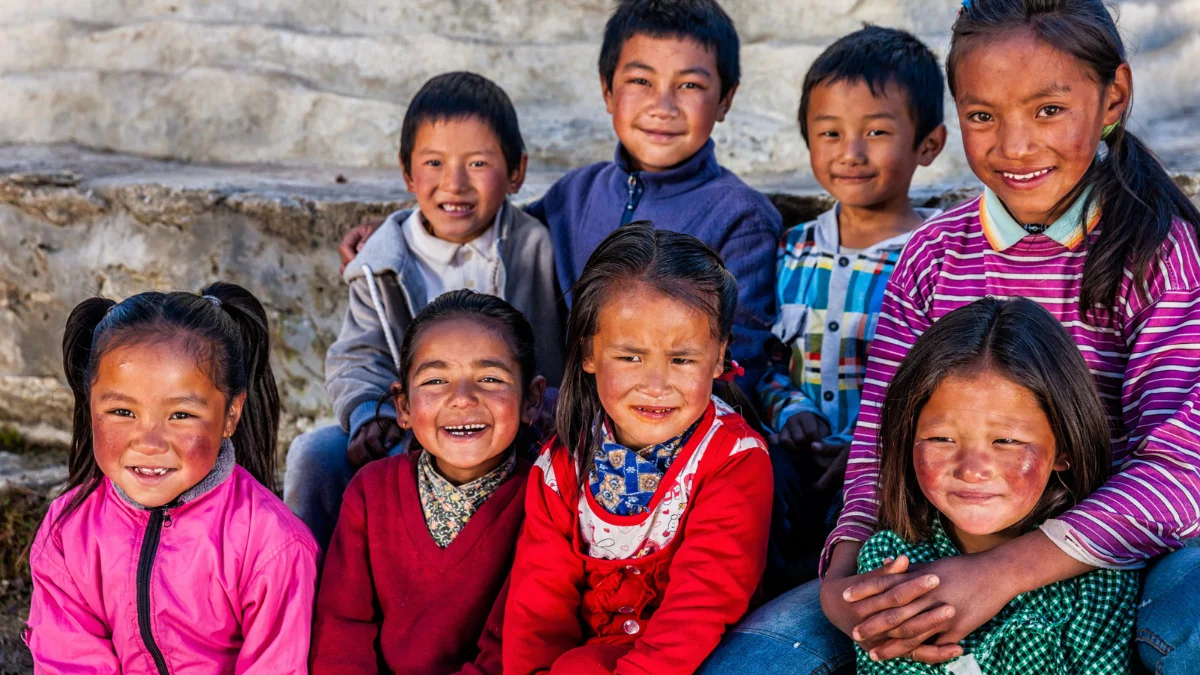
For generations, Sherpa families in the Khumbu lived off farming, yaks and trade with Tibet. Mountaineering and trekking began changing that in the 1950s, and tourism has shaped daily life ever since.
- Livelihoods: Many families now run teahouses, lodges and trekking companies, while farming has become a seasonal or side activity for many.
- Education: Schools have improved, more young Sherpas speak English, and many have the skills to run their own businesses and expeditions.
- Migration: Educated young people are moving toward Kathmandu and overseas, and some villages are losing the people who would carry their traditions forward.
- Dependence on visitors: A community this reliant on tourism is exposed when something goes wrong, as the 2015 earthquake and the pandemic showed.
- Climate change: Melting glaciers threaten both the mountain environment and the routes people work on.
- Protecting the mountain: Many Sherpas take part in cleanup campaigns to protect Chomolungma, which they still see as sacred.
Visitors are part of this story too. Where you stay, who you hire and how you behave on the trail all affect whether tourism keeps supporting the Sherpa community or wears it down.
Curious about the other ethnic groups who call Nepal’s mountains home? Read our guide on the people of the Himalayas to discover their cultures, traditions, and daily life.
Famous Sherpas Who Shaped Himalayan Mountaineering
Sherpa history on Everest is not just a story of support. Some of the biggest moments in Himalayan climbing belong to Sherpas, from the first summit in 1953 to records still being set today. Here are five Sherpa climbers whose stories show what the community has given the mountain.
- Tenzing Norgay: Tenzing reached the summit with Edmund Hillary on 29 May 1953, after several earlier attempts. He grew up in the Thame area of the Khumbu, and his success turned Sherpas from anonymous expedition workers into global names.
- Kami Rita Sherpa: Born in Thame in 1970, Kami Rita first summited Everest in 1994 as a high-altitude guide. He has held the record for most summits since 2018, and his 32nd ascent came on 17 May 2026. He treats it as a profession, not a quest for records.
- Apa Sherpa: Also from Thame, Apa summited Everest 21 times between 1990 and 2011, then retired after promising his family he would stop. His record stood as the benchmark until Kami Rita passed it in 2018.
- Pasang Lhamu Sherpa: On 22 April 1993, Pasang Lhamu became the first Nepali woman to summit Everest. She died on the descent and remains a national hero in Nepal. Her climb opened the door for the Nepali women who followed.
- Lhakpa Sherpa: Lhakpa began as a porter and became the first Nepali woman to summit Everest and return alive, in 2000. On 17 May 2026 she reached her 11th summit, the most of any woman. Her story was told in the Netflix documentary Mountain Queen.
Records like these show how much skill sits behind every expedition. Most of that expertise belongs to Sherpa and Nepali guides, and they rarely get the credit.
What to Expect When Trekking With Sherpa Guides and Porters
Many guides and porters in the Khumbu are Sherpa, though not all of them. If you are looking for a Sherpa guide in Nepal, here is what each member of the crew does, so you know what to expect.
- Your guide: A good guide sets the pace, finds the route, watches for altitude sickness and keeps an eye on the weather. They also handle logistics like teahouses and permits, and explain the culture along the way. Our guides are government-licensed, English-speaking and trained in first aid and altitude sickness prevention, which is part of why travel with us.
- Your porter: Porters carry your main bag so you can walk with a light daypack and save your energy for the altitude. On our standard packages, one porter carries the bags of two trekkers.
- Fair treatment: Porters work hard, so how they are treated matters. We follow a strict weight limit and provide proper equipment, insurance and wages above the industry standard, as part of our approach to responsible tourism. Ask any operator you are comparing the same questions.
- Typical daily rates: When hiring through an agency in Nepal, a licensed trekking guide typically costs around $30–$40 USD per day, while a trekking porter generally costs $20–$25 USD per day (excluding tips). High-altitude climbing Sherpas on major expeditions are paid seasonal wages plus summit and carry bonuses rather than standard trekking day rates.
- Questions to ask before booking: Before choosing an operator, ask whether your guide holds a valid Nepal government trekking license (and NMA or NNMGA/IFMGA certification for technical peaks), what travel insurance covers the crew, what maximum load limit applies to porters (typically 20–25 kg shared between two trekkers), and how emergency evacuations are handled.
- Tipping: Tipping is not mandatory, but it is customary and appreciated. Most groups tip at the end of the trek, often at a farewell dinner with the whole crew. You can also pass on trekking gear you no longer need.
A good crew turns a hard trek into a meaningful one. See how it works on our Everest Base Camp trek or Gokyo Renjo Pass trek.
Final Thoughts
Sherpas are not background characters in Everest’s story. They shaped it, and they still carry most of the work and most of the risk.
After years of working in this region, we have seen how much a trip changes when you take the time to understand the people behind it. A conversation in a teahouse in Namche or a puja at a monastery will stay with you longer than any summit photo.
If you trek in the Khumbu, go with respect, pay and tip fairly, and choose operators who look after their teams. That is the best way for visitors to give something back.
Planning a trek to the Everest region? Tell us your dates, fitness level and what you want to see, and we will suggest a route and answer your questions about guides, altitude and permits. Contact Nepal Gateway Trekking.
FAQs
What religion do Sherpas follow?
Sherpas follow Tibetan Buddhism, specifically the Nyingma school. You see it across the Everest region in prayer flags, mani stones, chortens and monasteries like Tengboche. Before most expeditions, a lama holds a puja ceremony at Base Camp to ask for safe passage.
Are Sherpa and Tamang the same?
No. Both groups follow Tibetan Buddhism, but their histories, languages and traditions are different.
Who has climbed Everest the most times?
Kami Rita Sherpa holds the record, with 32 summits as of May 2026. He has held it since 2018, when he passed Apa Sherpa’s 21 ascents.
Why can Sherpas climb without oxygen?
Most Sherpas do not climb Everest without oxygen. They generally use bottled oxygen on the upper mountain, though usually less than their clients. Their edge comes from a lifetime at altitude plus genetic adaptations; such as EPAS1 variants that keep hemoglobin levels from spiking dangerously, alongside cellular traits that improve energy efficiency.
Is Sherpa a caste?
No. Sherpa is an ethnic group of Tibetan origin, and Sherpas are Tibetan Buddhists, so they sit outside the Hindu caste system.
Why do Sherpas risk their lives?
Mostly for income. Expedition work pays far more than most other jobs in the Khumbu, and that money supports families, schools and lodges. The danger is real. In April 2014, an avalanche in the Khumbu Icefall killed 16 Nepali guides and support staff.
What is the life expectancy of a Sherpa?
Nepal does not publish separate life expectancy figures by ethnic group, so the general Sherpa population lives roughly as long as the national average (around 71–75 years). What is clear is that climbing Sherpas face far more risk than visiting climbers. Between 1922 and 2024, hired staff made up 130 of the 335 recorded deaths on Everest. Over 80% of Sherpa and porter deaths happen during route preparation, according to EurekAlert, and they make many more trips through the Icefall than clients do.
Do I need a Sherpa guide for the Everest Base Camp trek?
You don’t need a guide who is specifically Sherpa. What matters is that your guide is licensed, experienced and well looked after by their company. Rules on guides for trekkers have changed in recent years, so check the current requirements before you go. Most trekkers still choose a licensed guide for safety, altitude monitoring and local knowledge.
What qualifications and insurance should a Sherpa guide have?
For treks like Everest Base Camp, your guide needs a Nepal government trekking license (via NATHM/Nepal Tourism Board) and altitude first-aid training. For technical climbs, look for NMA or IFMGA/NNMGA mountaineering certification. Responsible agencies also cover their crew with medical, life, and helicopter rescue insurance.